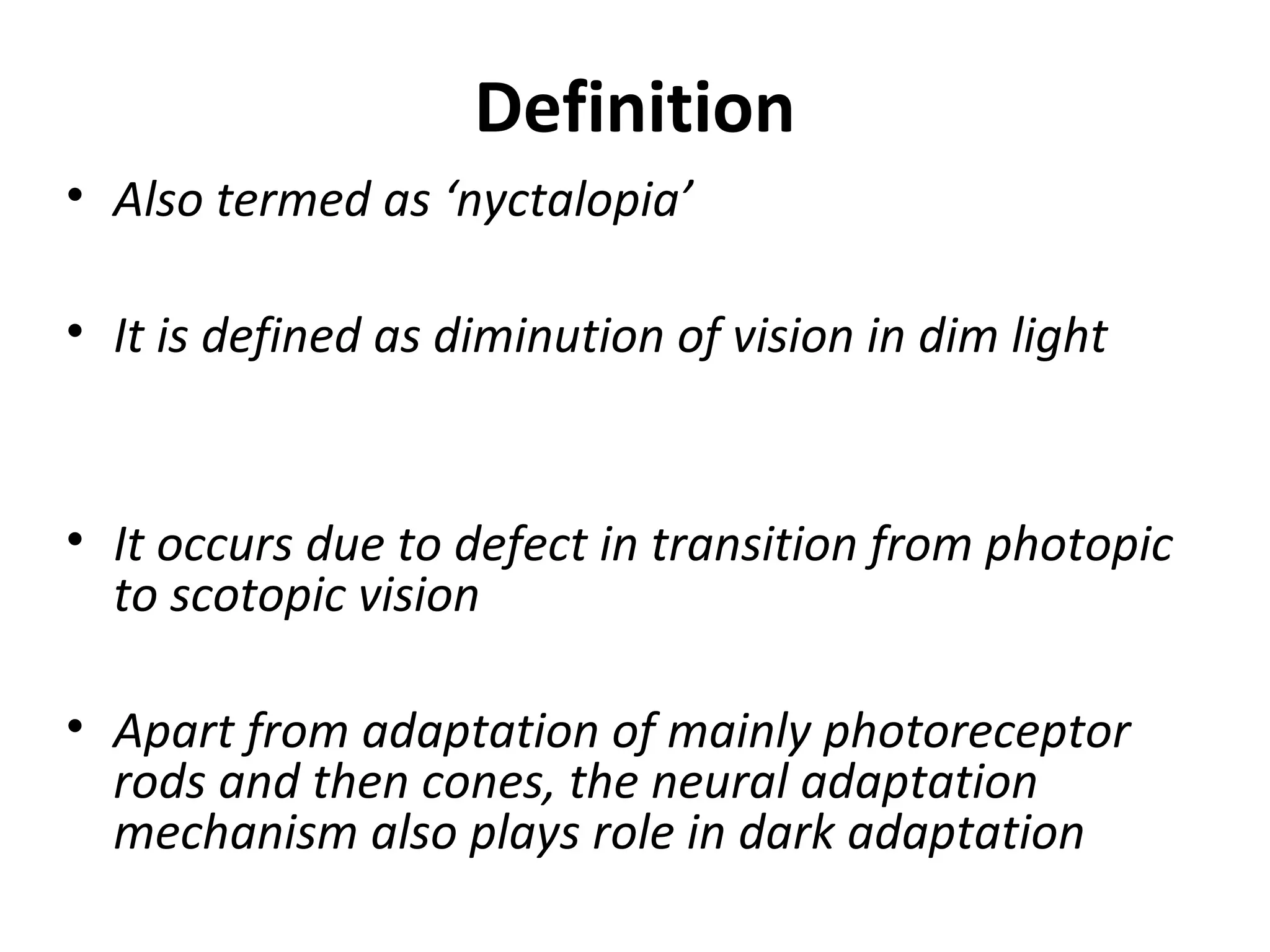
NIGHTBLINDNESS
AND
XEROPHTHALMIA
Raju Kaiti
Consultant Optometrist
Dhulikhel Hospital, KU
Definition
• Also termed as ‘nyctalopia’
• It is defined as diminution of vision in dim light
• It occurs due to defect in transition from photopic
to scotopic vision
• Apart from adaptation of mainly photoreceptor
rods and then cones, the neural adaptation
mechanism also plays role in dark adaptation
Causes
• Retinitis pigmentosa (RP)
• Vitamin A deficiency
• Gyrate atrophy of choroid and retina
• Congenital stationary night blindness (CSNB)
• Choroidermia
• Myopia
Other causes of Nyctalopia
• Glaucoma
• Optic nerve atrophy
• Cortical cataract
• Panretinal photocoagulation
• Zinc deficiency
• Drugs – phenothiazine, chloroquine,
hydroxycholoquine
Myopia
• Myopic patients also complain of night
blindness which may be the most common
cause of poor night vision
• However it is should not confused with blurring
of vision in dim light as seen in all refractive
disorders
• In very high myopes degenerative changes in
choroid and retina lead to subnormal ERG and
delayed dark adaptation
RETINITIS PIGMENTOSA
• Most frequently seen retinal dystrophy
• The term "retinitis" pigmentosa -Donders(1855)
• The term "pigmentary degeneration"-von
Graefe(1858)
• "Pigmentary retinal dystrophy" -appropriate term
Pathology
• Degeneration of retinal neuroepithelium
• particularly of rods
• Degeneration of entire retina, RPE, and also
choriocapillaris
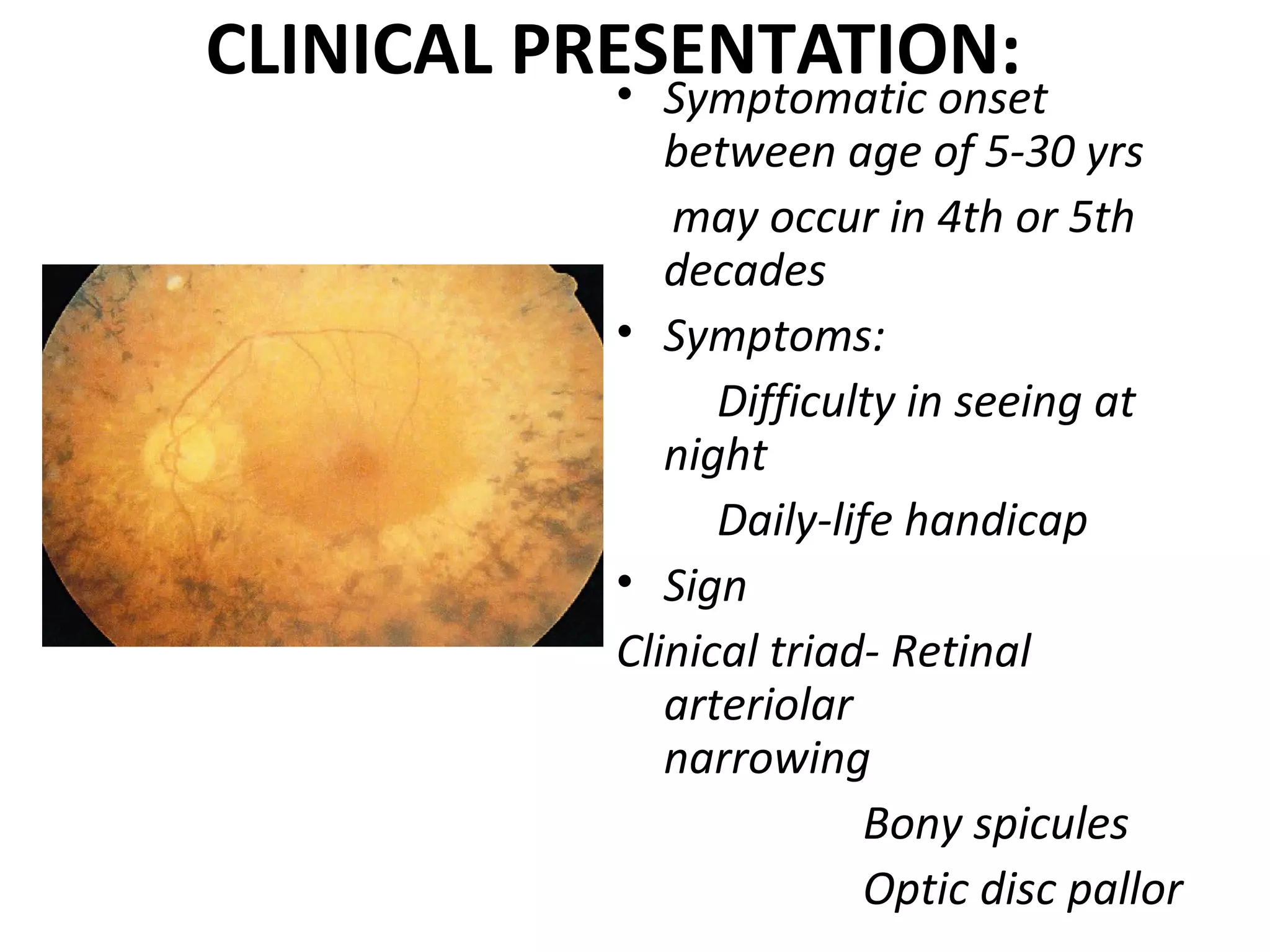
CLINICAL PRESENTATION:• Symptomatic onset
between age of 5-30 yrs
may occur in 4th or 5th
decades
• Symptoms:
Difficulty in seeing at
night
Daily-life handicap
• Sign
Clinical triad- Retinal
arteriolar
narrowing
Bony spicules
Optic disc pallor
Clinical features of RP
• Incidence in 1:4000
• Night blindness is one of the hallmark symptoms in RP
which usually begin in first or second decade of life
• Visual field loss is second hallmark of RP which is
insidious and progressive
• Central vision loss
• Light flashes
• Loss of color vision
• Hearing loss – associated in 30 % RP patients
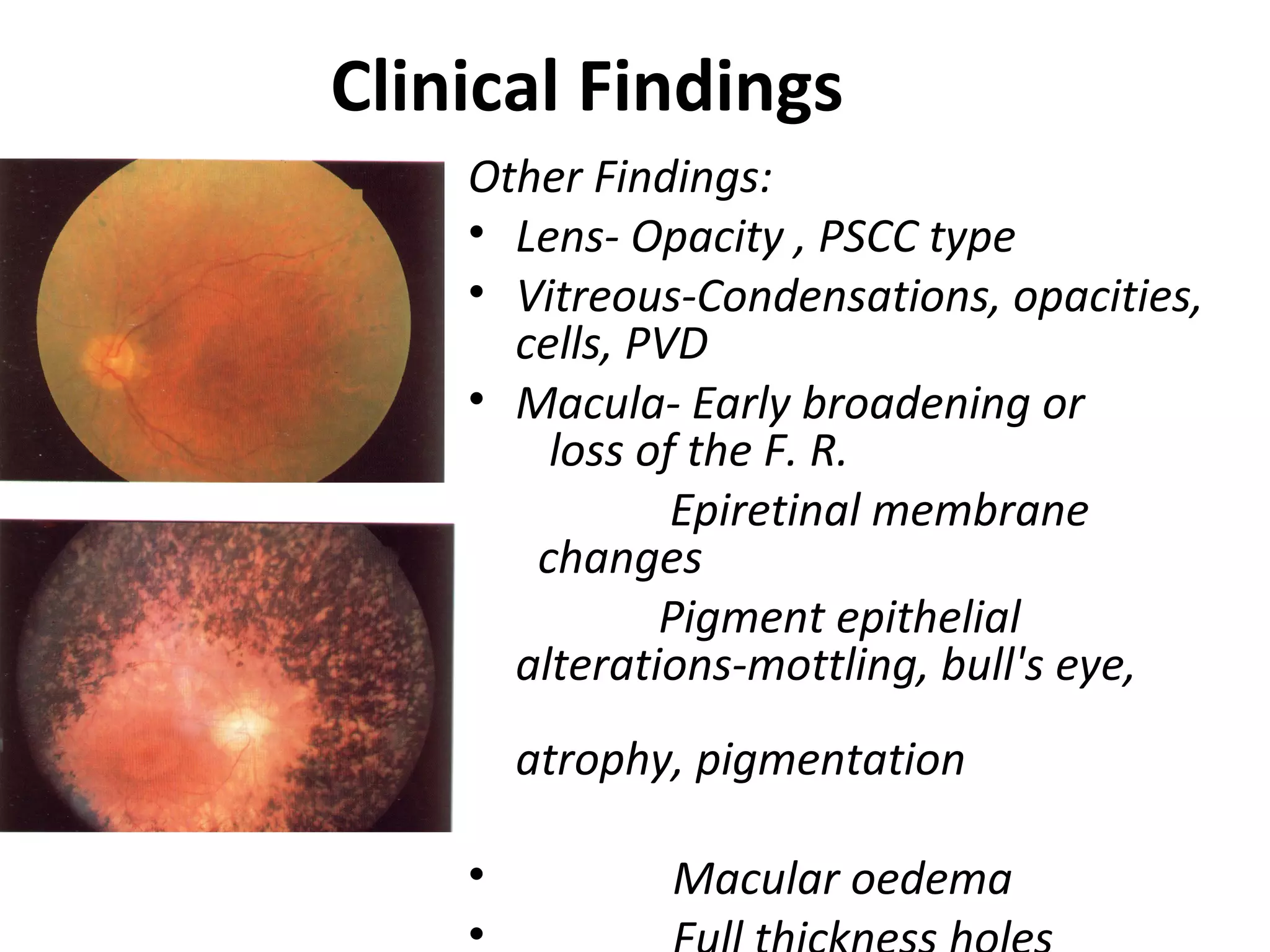
Clinical Findings
Other Findings:
• Lens- Opacity , PSCC type
• Vitreous-Condensations, opacities,
cells, PVD
• Macula- Early broadening or
loss of the F. R.
Epiretinal membrane
changes
Pigment epithelial
alterations-mottling, bull's eye,
atrophy, pigmentation
• Macular oedema
•
Vitamin A deficiency
• Primary cause of childhood blindness in Nepal
• Night blindness is a very sensitive although not
very specific indicator of vitamin A deficiency
• Vitamin A forms rhodopsin also known as visual
purple present in photoreceptor rods
• The sensitivity of rods is approximately
proportional to antilogarithm of rhodopsin
concentration
• Deficiency hence impairs functioning of photoreceptor
rods leading to night blindness
CHOROIDEREMIA
• X-linked recessive disease
• Granularity and depigmentation of the RPE
can be seen around the peripheral fundus.
• Full-field ERGs are reduced in amplitude and
delayed in b-wave implicit time with minimally
increased dark-adaptation thresholds, and full
visual fields
CHOROIDEREM
IA
CHOROIDEREMIA
In more advanced stages dark-adaptation
thresholds are further increased and the visual fields
become constricted;
Female carriers of this disease may demonstrate
fundus changes that include patchy depigmentation
of the RPE.
However, carriers typically retain normal visual
acuities and normal final dark-adapted rod
thresholds
GYRATE ATROPHY OF CHOROID
AND RETINA
GYRATE ATROPHY OF CHOROID
AND RETINA
inherited by an autosomal recessive mode of
transmission
Patients usually present in early adolescence
with night deficiency and loss of peripheral
vision.
Ocular findings include myopia, constricted
visual fields, elevated dark-adaptation
thresholds, reduced ERG responses and
chorioretinal atrophy distributed circumferentially
around the peripheral fundus
Stationary forms of night
blindness
• Life long stable abnormality of scotpic vision having
early onset
Subtypes:
• CSNB with normal fundus
• CSNB with abnormal fundus
CSNB with normal fundus
• X-linked
• AD
• AR
Stationary forms of night
blindness
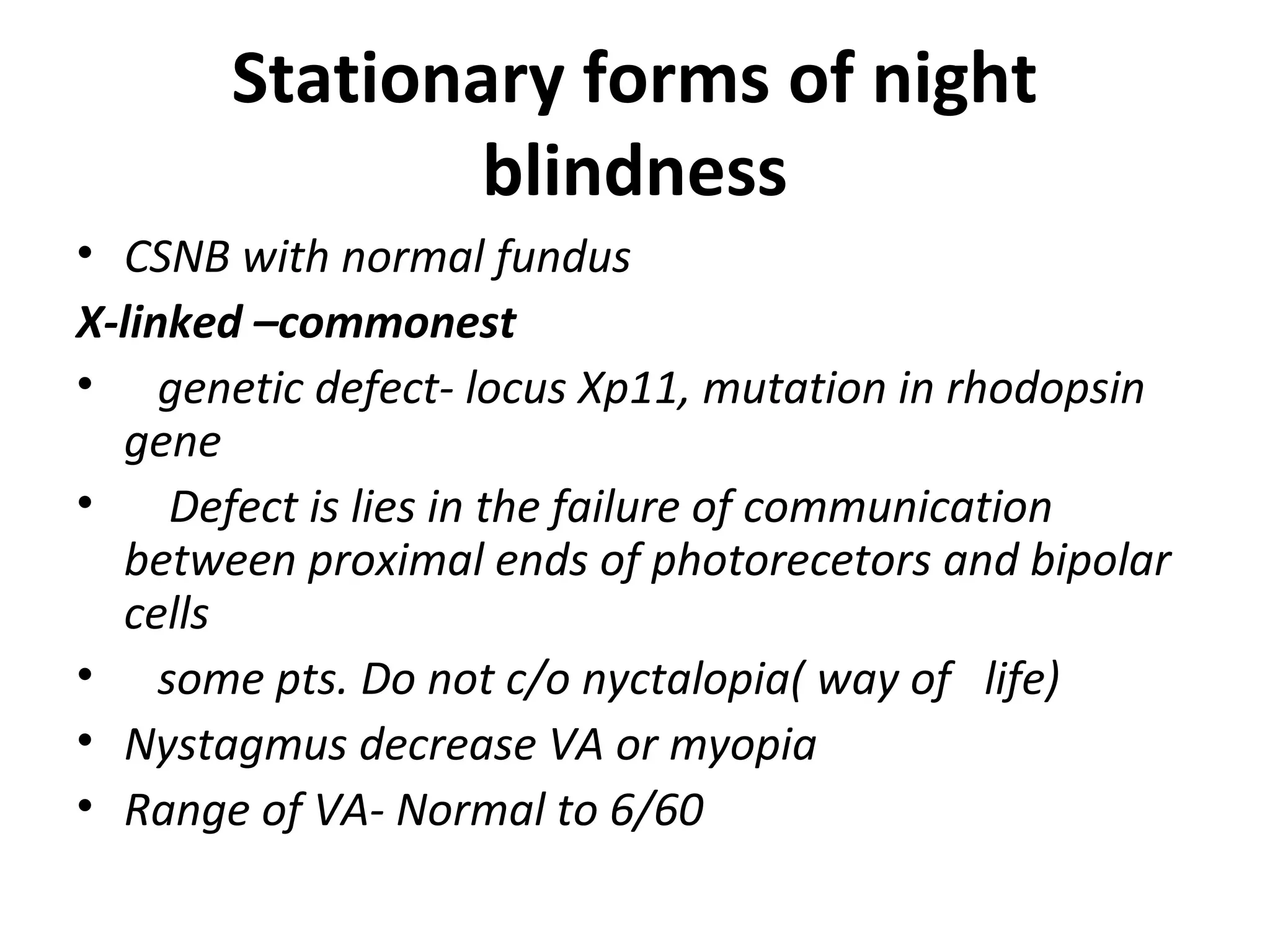
• CSNB with normal fundus
X-linked –commonest
• genetic defect- locus Xp11, mutation in rhodopsin
gene
• Defect is lies in the failure of communication
between proximal ends of photorecetors and bipolar
cells
• some pts. Do not c/o nyctalopia( way of life)
• Nystagmus decrease VA or myopia
• Range of VA- Normal to 6/60
CSNB
• CSNB with abnormal
fundus
Fundus Albipunctatus
(AR)
Oguchi’s Disease (AR)
Mizuo’s phenomenon
Approach to NB
Taking History ( complaints)
1. Night blindness
(How do they present to us?)
Progressive (RP)
Stationary (CSNB)
Sudden( paraneoplastic process)
Age of onset – imp. Younger (x-linked RP, CSNB)
Contd…..
2. Visual loss :
Gradual , progressive
Age of onset
3. Visual field constriction:
peripheral or central
How can they present to us?
Medical History
• Operations ( Intestinal surgeries, removal of
polydactyl)
• Liver diseases
• Use of medicine- Hydroxycholoquine or
phenothiazine
• Hearing status( RP, Usher’s Syndrome,choroideremia,
Refsum’s)
• Mental retardation( BBS,LMS)
• Renal disease (BBS)
• Heart disease (KSS, Refsum’s)
Family History
• Any NB in past 3 consecutive generation
(Dominant RP)
• Anyone in the family affected by retinal
degeneration
• Consanguinity
General Examination
wt. loss- vit A deficiency
truncal obesity –(Bardet-
Biedl Syndrome)
Systemic evaluation:
CVS- Kearn-Sayre Syndrome( ECG- Heart block)
P/A- Colostomy, surgical scars
ENT- Hearing loss ( Usher’s, RP, Choroideremia)
NS – Mental retardation( Bardet-Biedl Syndrome, Gyrate
Atrophy Choroidermia, LMS) ,Spastic paraplegia (LMS)
Urogenital- hypogenitalism( Bardet- Biedl syndrome)
Musculo-Skeletal –Polydactyl (Bardet- Biedl syndrome,
LMS), muscle weakness(Gyrate Atrophy), deformity
(Choroidermia)
Skin – Melanoma ( paraneoplastic cause)
Ocular Evaluation
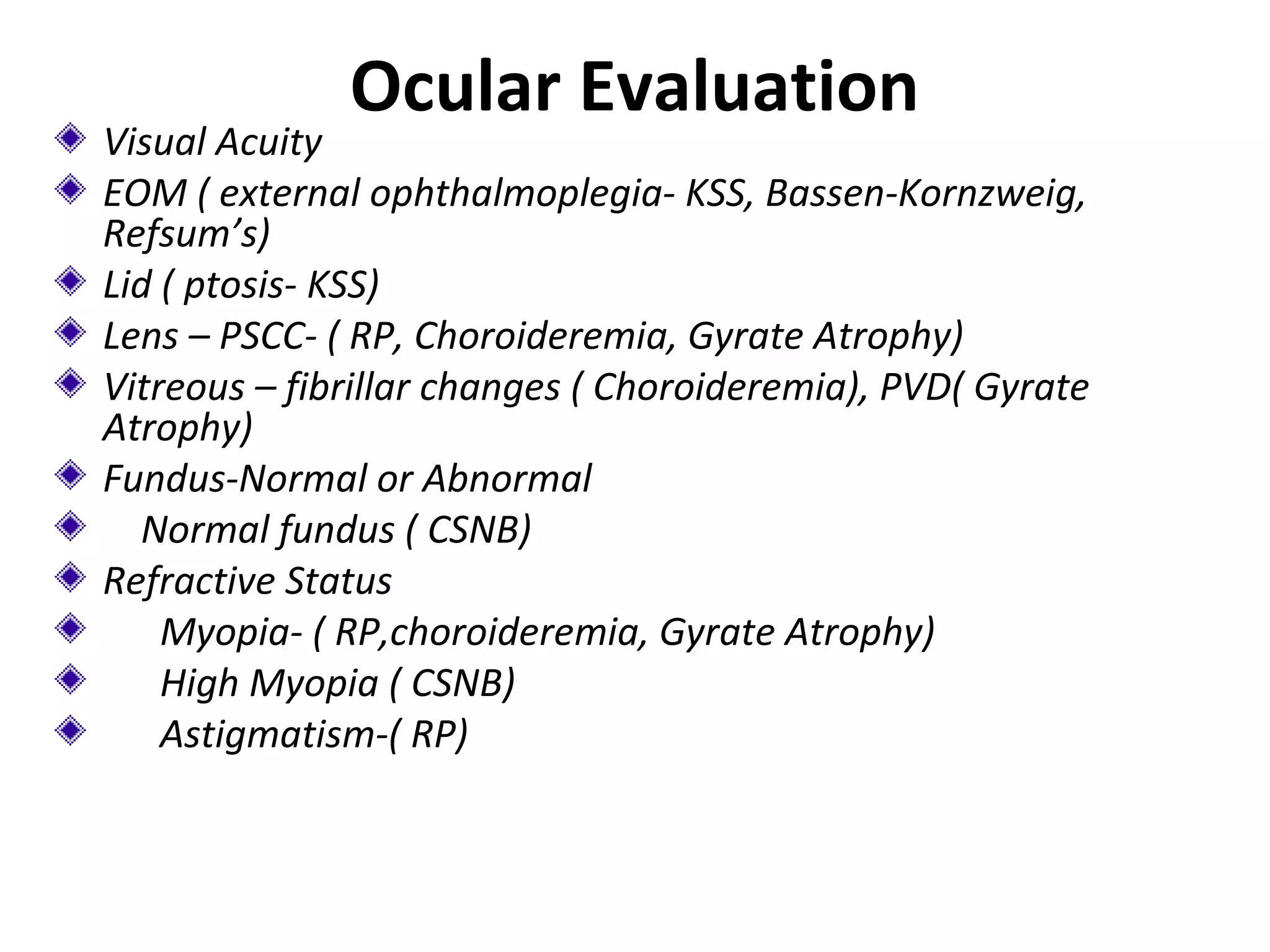
Visual Acuity
EOM ( external ophthalmoplegia- KSS, Bassen-Kornzweig,
Refsum’s)
Lid ( ptosis- KSS)
Lens – PSCC- ( RP, Choroideremia, Gyrate Atrophy)
Vitreous – fibrillar changes ( Choroideremia), PVD( Gyrate
Atrophy)
Fundus-Normal or Abnormal
Normal fundus ( CSNB)
Refractive Status
Myopia- ( RP,choroideremia, Gyrate Atrophy)
High Myopia ( CSNB)
Astigmatism-( RP)
Fundus Changes in cases of NB
•RP
Choroide
Gyrate atrophy
Fundus Changes
Oguchi
Investigations
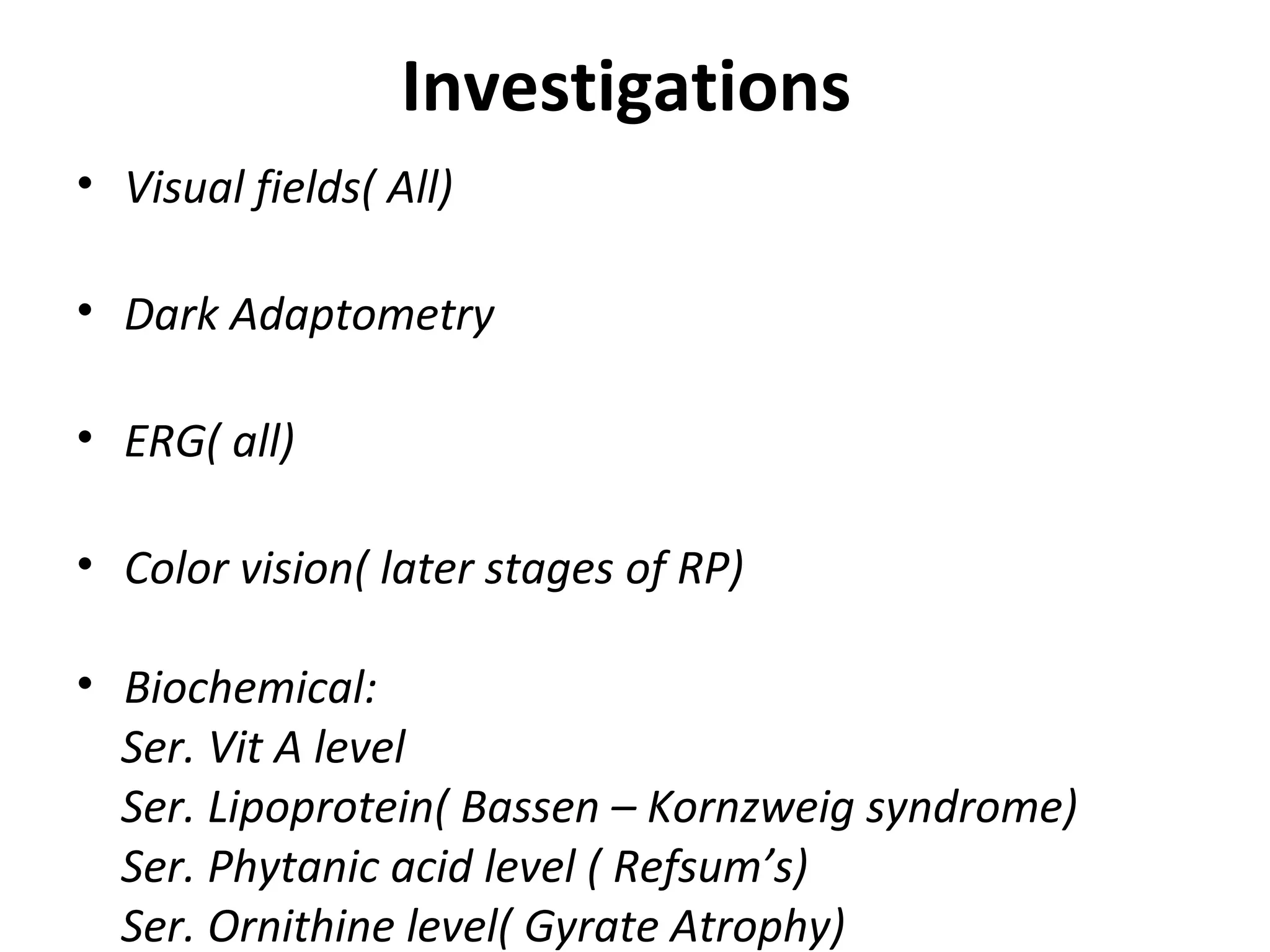
• Visual fields( All)
• Dark Adaptometry
• ERG( all)
• Color vision( later stages of RP)
• Biochemical:
Ser. Vit A level
Ser. Lipoprotein( Bassen – Kornzweig syndrome)
Ser. Phytanic acid level ( Refsum’s)
Ser. Ornithine level( Gyrate Atrophy)
Management
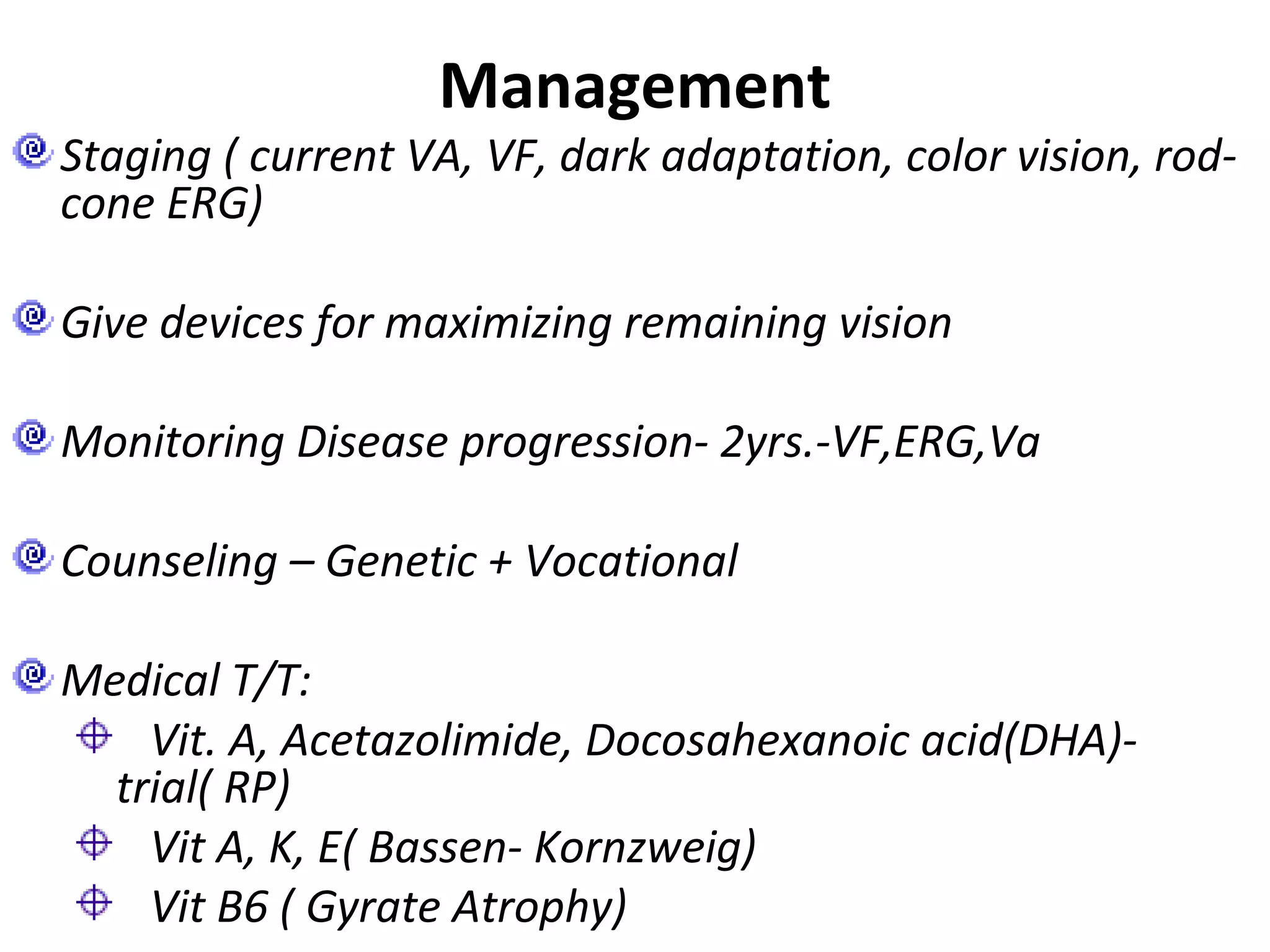
Staging ( current VA, VF, dark adaptation, color vision, rod-
cone ERG)
Give devices for maximizing remaining vision
Monitoring Disease progression- 2yrs.-VF,ERG,Va
Counseling – Genetic + Vocational
Medical T/T:
Vit. A, Acetazolimide, Docosahexanoic acid(DHA)-
trial( RP)
Vit A, K, E( Bassen- Kornzweig)
Vit B6 ( Gyrate Atrophy)
XEROPHTHALMIA
Definition:
• Xerophthalmia is the general term applied to
all the ocular manifestations of impaired
Vitamin A metabolism, from night blindness
through complete corneal destruction
XEROPHTHALMIA
• Xerophthalmia
• Xeros --- Dry
• Ophthalmia --- Eye
• literally means “dry eye,”
• Many causes of dry eye but conventionally
Xerophthalmia has become synonymous
with vitamin A deficiency.
RDA: 5000 IU for men
4000 IU for women
Sources: liver, egg yolks and dairy products, tomatoes,
yellow and green leafy vegetables, and fish liver oils.
Vitamin A helps the eyes , the skin and the
development of healthy teeth and bones.
we can also battle stress with enough of this vitamin.
Deficiency will also make susceptible to infection
Risk Factors
• Protein Energy
Malnutrition
• Measles, Chickenpox,
High Fevers
• Bronchopneumonia,
Tuberculosis, Diphtheria
• Gastroenteritis,
Dysentery, Worm
Infestations
Xerophthalmia in Nepal:
• Two sources of information
– Tribhuvan University Survey (1980-1981 AD)
– Nepal Blindness Survey (1980-1981 AD)
• Major public health problem
• 0.9% bilateral blindness due to nutritional
corneal ulceration
• Every day one child dies and one child goes
blind of xerophthalmia
Normal Vitamin A Metabolism
Dietary Vitamin A
(Carotenes in plant food)
(Retinol in animal food)
Digestion and absorption of Vitamin A from the
food Transport in intestinal lymphatics
1. Storage of Vitamin A in liver cells as retinol
2. Production of retinol binding protein (the carrier protein)
Transport of retinol bound to retinol binding protein
1. Formation of rhodopsin - used in night vision
2. Maintenance of healthy corneal and conjunctival cells
FOOD
INTESTINE
LIVER
BLOOD
EYE
Vitamin A Deficieny
Dietary deficiency
of Vitamin A
Diarrhoea; Gastroenteritis; Parasites
Not enough Vitamin A
stored in the liver
Low Vitamin A levels in the blood
Night Blindness
FOOD
INTESTINE
LIVER
BLOOD
EYE
Anorexia from
other diseases
Protein Energy
Malnutrition
Poor intestinal absorption
Not enough Retinol
Binding Protein synthesis
Xerophthalmia
Slide XE01
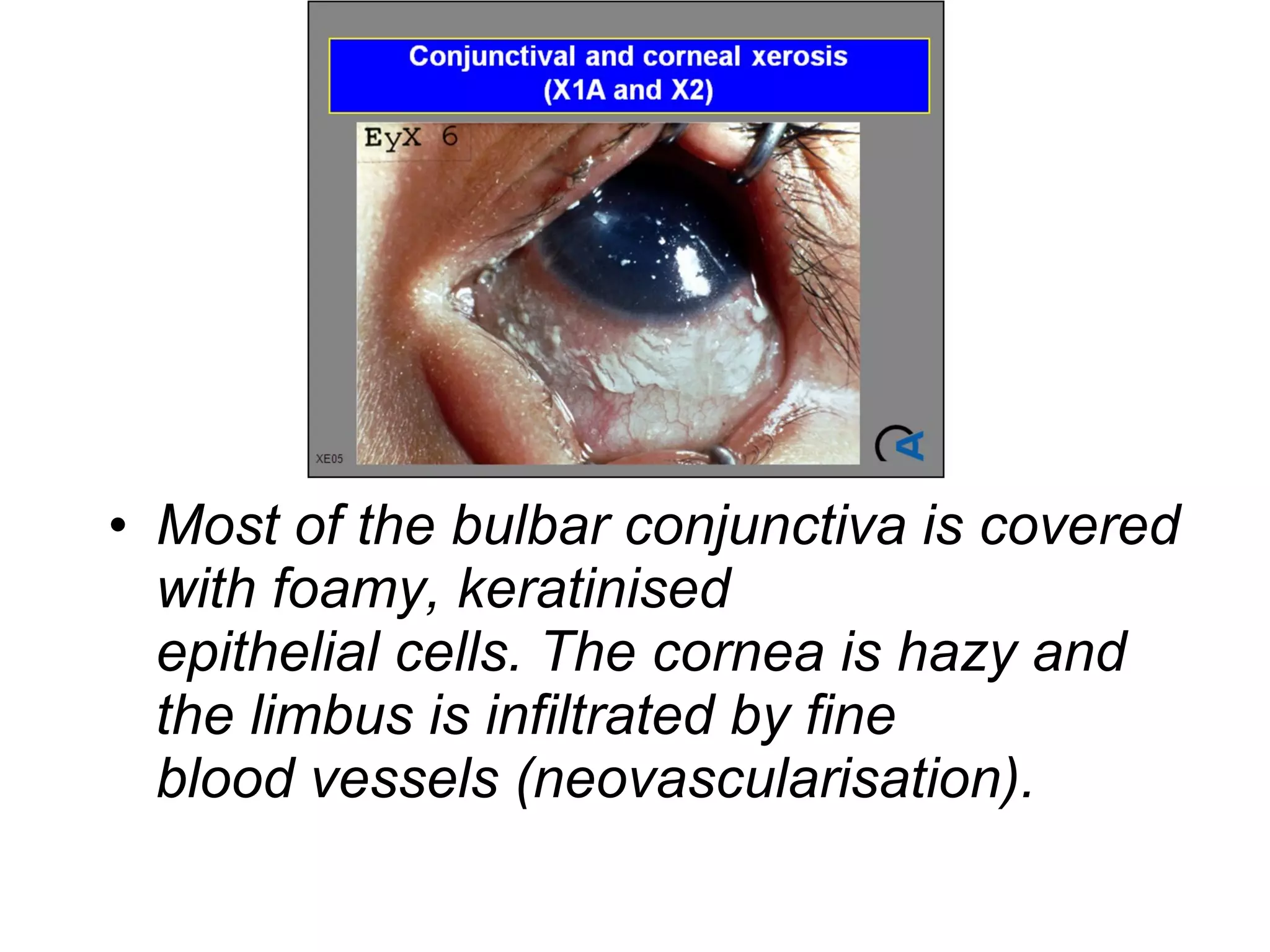
Conjunctival xerosis (X1A) and corneal xerosis (X2)
The term conjunctival xerosis (X1A) applies to any stage of
xerotic change in the conjunctiva, with thickening and
wrinkling in advanced cases as in this slide. In this case there
is also infiltration and haziness of the cornea (X2).
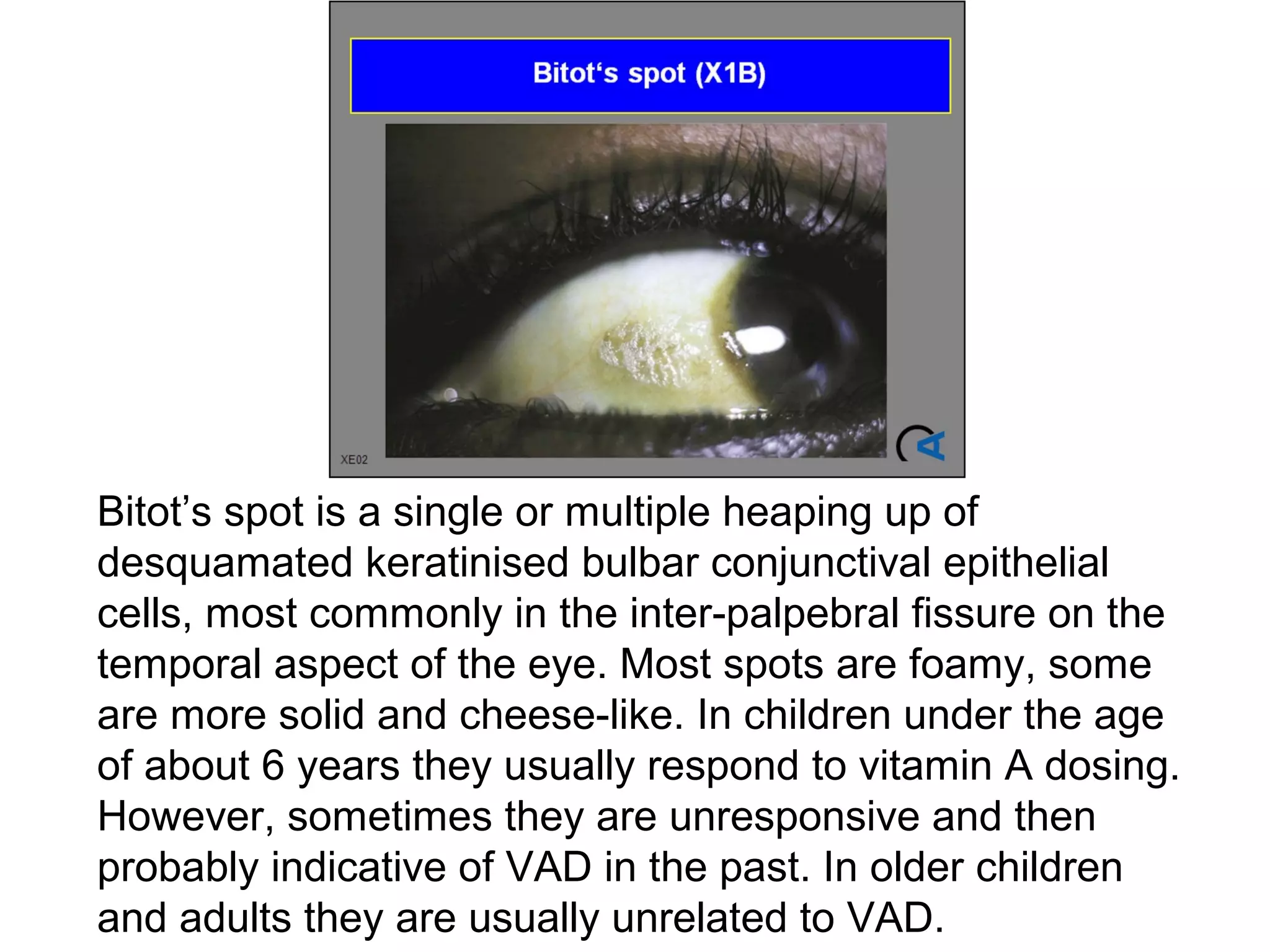
Bitot’s spot is a single or multiple heaping up of
desquamated keratinised bulbar conjunctival epithelial
cells, most commonly in the inter-palpebral fissure on the
temporal aspect of the eye. Most spots are foamy, some
are more solid and cheese-like. In children under the age
of about 6 years they usually respond to vitamin A dosing.
However, sometimes they are unresponsive and then
probably indicative of VAD in the past. In older children
and adults they are usually unrelated to VAD.
• Most of the bulbar conjunctiva is covered
with foamy, keratinised
epithelial cells. The cornea is hazy and
the limbus is infiltrated by fine
blood vessels (neovascularisation).
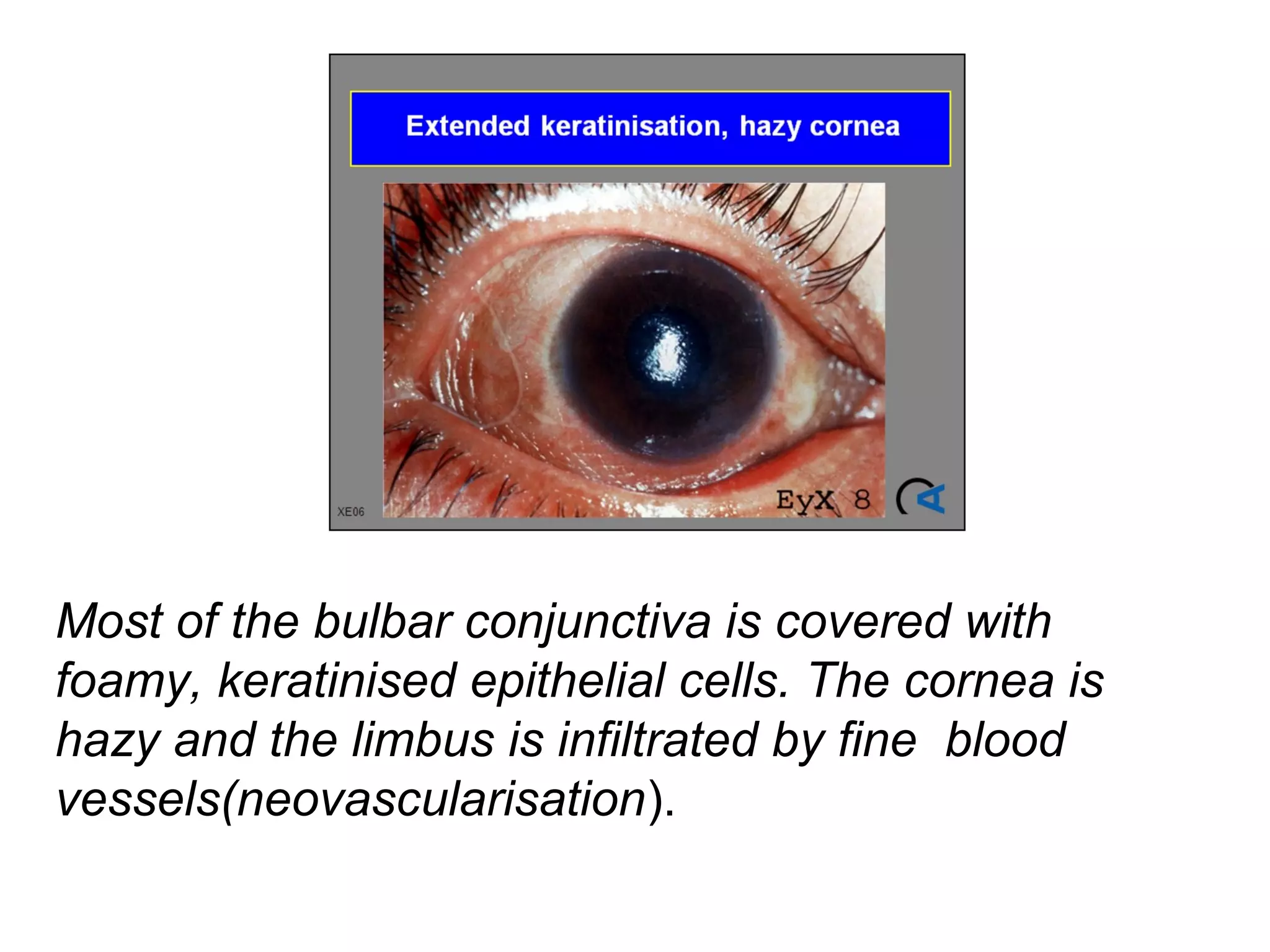
Most of the bulbar conjunctiva is covered with
foamy, keratinised epithelial cells. The cornea is
hazy and the limbus is infiltrated by fine blood
vessels(neovascularisation).
Cloudy cornea, corneal
ulcer
Keratomalacia is due to severe VAD in which the
cornea liquefies in the acute stage. On resolution
various types of corneal destruction/scarring are
inevitable, as is visual impairment
• A case that could be treated.
• An advanced state of deficiency
with keratomalacia.
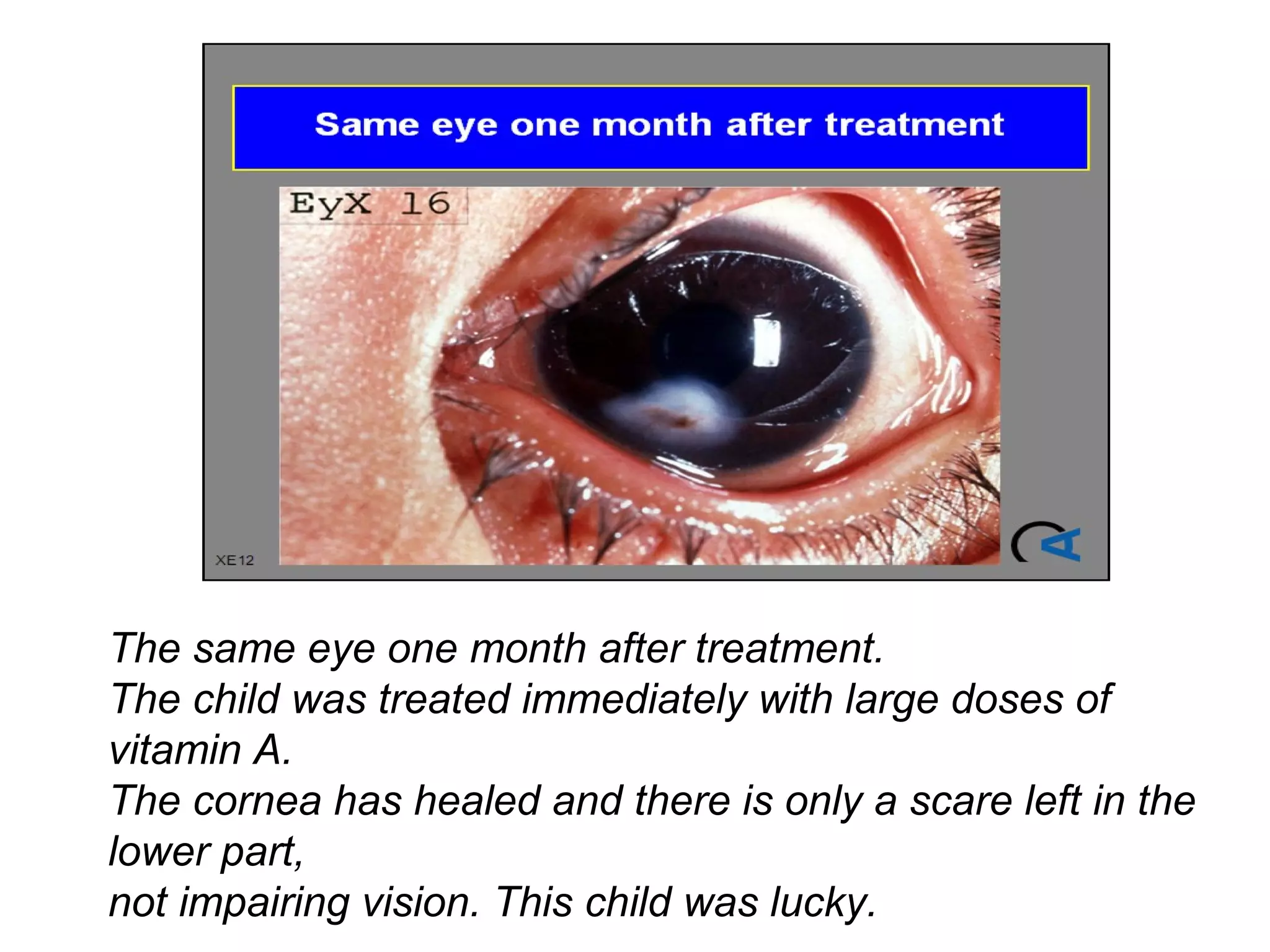
The same eye one month after treatment.
The child was treated immediately with large doses of
vitamin A.
The cornea has healed and there is only a scare left in the
lower part,
not impairing vision. This child was lucky.
Scars attributable to VAD are usually bilateral and located in
the central and inferior portion of the cornea. In the field
these inactive lesions are often one of the commonest
clinical pieces of evidence of a public health problem of VAD
in the past. However, a careful history must be taken to
exclude those not related to VAD in the past; they might
result from injury or infectious eye disease.
Plate 1: Xerophthalmic fundus in a 24-year-old otherwise
well nourished Indonesian woman who presented with
night blindness, constricted visual fields and severe
conjunctival and corneal xerosis.
Plate 2: Two months after vitamin A therapy the small
yellowish-white retinal lesions in the patient in Plate 1
have largely disappeared
Eye Changes
1. Conjunctiva
X1A
X1B
+ XN
1. Cornea
X2
X3A
X3B
XS
1. Retina
XN
XF
Warning Sign
Medical + Ophthalmological
Emergency
First Sign of Xerophthalmia
The Recommended Doses of
Vitamin A
• Prophylactic Schedule:
Dose By Mouth
mg I.U.
– All Children 110 200,000
Every 4 -6 months
– Mothers 110 200,000
Just after giving birth
For children less than 1 year of age, reduce dose by one half
The Recommended Doses of
Vitamin A
• Treatment Schedule:
If the children is severely ill with gastroenteritis or unable to swallow,
the first dose should be intramuscular injection water soluble
Emergency
Treatment of
Children with
Xerophthalmia
or Corneal
Ulcers
Day / Week Dose By Mouth
mg I.U.
Day 1 110 200,000
Day 2 110 200,000
Day 14
(2-4 Weeks)
110 200,000
National Vitamin A Programme
• Children : 6 months - 5 years (3.5 Million)
• Twice a year : April 18 & 19
October 18 & 19
• Coverage :75 districts - 85%
• FCHV : 48,000
• Reduction of Child Mortality : 20-25 thousand
Prevention of Xerophthalmia
• Distribution of Massive Dose Capsules
• Fortification of Foods
• Horticulture and Agriculture
• Nutrition and Health Education
i. Late Weaning
ii. Early Supplementation
iii. Mass Media Radio, TV
iv. Changing Eating Habits
• Immunization
Treatment of Xerophthalmia
A. MEDICAL
1. Vitamin A Massive Dosing
• Oral: Day 1, 2, 14 - 200,000 I.U.
• Injection: 1st
Day Only - 100,000 I.U.
Water Miscible
No oily preparation
If not available: Give food rich in Vitamin A
2. Supportive Therapy
• Fluids
• Proteins
• Control of Infection
• Deworming
Treatment of Xerophthalmia
A. MEDICAL
3. Eye
• Antibiotcs, Mydiatrics
• Pad specially in X3A, X3B
• Avoid Exposure: Antibiotic Ointment
• Methyl Cellulose Drops
A. SURGERY
1. Conjunctivoplasty
2. Keratoplasty
a. Prophylactic
b. Optical
A. REHABILITATION
Prevention of Vitamin A
deficiency
– Breastfeeding
– Vitamin A
supplementation
– Food fortification
– Promotion of
vitamin A-rich diets
THANK
YOU…………………

Nightblindness and xerophthalmia

  • 1.
  • 2.
    Definition • Also termedas ‘nyctalopia’ • It is defined as diminution of vision in dim light • It occurs due to defect in transition from photopic to scotopic vision • Apart from adaptation of mainly photoreceptor rods and then cones, the neural adaptation mechanism also plays role in dark adaptation
  • 3.
    Causes • Retinitis pigmentosa(RP) • Vitamin A deficiency • Gyrate atrophy of choroid and retina • Congenital stationary night blindness (CSNB) • Choroidermia • Myopia
  • 4.
    Other causes ofNyctalopia • Glaucoma • Optic nerve atrophy • Cortical cataract • Panretinal photocoagulation • Zinc deficiency • Drugs – phenothiazine, chloroquine, hydroxycholoquine
  • 5.
    Myopia • Myopic patientsalso complain of night blindness which may be the most common cause of poor night vision • However it is should not confused with blurring of vision in dim light as seen in all refractive disorders • In very high myopes degenerative changes in choroid and retina lead to subnormal ERG and delayed dark adaptation
  • 6.
    RETINITIS PIGMENTOSA • Mostfrequently seen retinal dystrophy • The term "retinitis" pigmentosa -Donders(1855) • The term "pigmentary degeneration"-von Graefe(1858) • "Pigmentary retinal dystrophy" -appropriate term Pathology • Degeneration of retinal neuroepithelium • particularly of rods • Degeneration of entire retina, RPE, and also choriocapillaris
  • 7.
    CLINICAL PRESENTATION:• Symptomaticonset between age of 5-30 yrs may occur in 4th or 5th decades • Symptoms: Difficulty in seeing at night Daily-life handicap • Sign Clinical triad- Retinal arteriolar narrowing Bony spicules Optic disc pallor
  • 8.
    Clinical features ofRP • Incidence in 1:4000 • Night blindness is one of the hallmark symptoms in RP which usually begin in first or second decade of life • Visual field loss is second hallmark of RP which is insidious and progressive • Central vision loss • Light flashes • Loss of color vision • Hearing loss – associated in 30 % RP patients
  • 9.
    Clinical Findings Other Findings: •Lens- Opacity , PSCC type • Vitreous-Condensations, opacities, cells, PVD • Macula- Early broadening or loss of the F. R. Epiretinal membrane changes Pigment epithelial alterations-mottling, bull's eye, atrophy, pigmentation • Macular oedema •
  • 10.
    Vitamin A deficiency •Primary cause of childhood blindness in Nepal • Night blindness is a very sensitive although not very specific indicator of vitamin A deficiency • Vitamin A forms rhodopsin also known as visual purple present in photoreceptor rods • The sensitivity of rods is approximately proportional to antilogarithm of rhodopsin concentration • Deficiency hence impairs functioning of photoreceptor rods leading to night blindness
  • 11.
    CHOROIDEREMIA • X-linked recessivedisease • Granularity and depigmentation of the RPE can be seen around the peripheral fundus. • Full-field ERGs are reduced in amplitude and delayed in b-wave implicit time with minimally increased dark-adaptation thresholds, and full visual fields
  • 12.
  • 13.
    CHOROIDEREMIA In more advancedstages dark-adaptation thresholds are further increased and the visual fields become constricted; Female carriers of this disease may demonstrate fundus changes that include patchy depigmentation of the RPE. However, carriers typically retain normal visual acuities and normal final dark-adapted rod thresholds
  • 14.
    GYRATE ATROPHY OFCHOROID AND RETINA
  • 15.
    GYRATE ATROPHY OFCHOROID AND RETINA inherited by an autosomal recessive mode of transmission Patients usually present in early adolescence with night deficiency and loss of peripheral vision. Ocular findings include myopia, constricted visual fields, elevated dark-adaptation thresholds, reduced ERG responses and chorioretinal atrophy distributed circumferentially around the peripheral fundus
  • 17.
    Stationary forms ofnight blindness • Life long stable abnormality of scotpic vision having early onset Subtypes: • CSNB with normal fundus • CSNB with abnormal fundus CSNB with normal fundus • X-linked • AD • AR
  • 18.
    Stationary forms ofnight blindness • CSNB with normal fundus X-linked –commonest • genetic defect- locus Xp11, mutation in rhodopsin gene • Defect is lies in the failure of communication between proximal ends of photorecetors and bipolar cells • some pts. Do not c/o nyctalopia( way of life) • Nystagmus decrease VA or myopia • Range of VA- Normal to 6/60
  • 19.
    CSNB • CSNB withabnormal fundus Fundus Albipunctatus (AR) Oguchi’s Disease (AR) Mizuo’s phenomenon
  • 20.
    Approach to NB TakingHistory ( complaints) 1. Night blindness (How do they present to us?) Progressive (RP) Stationary (CSNB) Sudden( paraneoplastic process) Age of onset – imp. Younger (x-linked RP, CSNB)
  • 21.
    Contd….. 2. Visual loss: Gradual , progressive Age of onset 3. Visual field constriction: peripheral or central How can they present to us?
  • 22.
    Medical History • Operations( Intestinal surgeries, removal of polydactyl) • Liver diseases • Use of medicine- Hydroxycholoquine or phenothiazine • Hearing status( RP, Usher’s Syndrome,choroideremia, Refsum’s) • Mental retardation( BBS,LMS) • Renal disease (BBS) • Heart disease (KSS, Refsum’s)
  • 23.
    Family History • AnyNB in past 3 consecutive generation (Dominant RP) • Anyone in the family affected by retinal degeneration • Consanguinity
  • 24.
    General Examination wt. loss-vit A deficiency truncal obesity –(Bardet- Biedl Syndrome)
  • 25.
    Systemic evaluation: CVS- Kearn-SayreSyndrome( ECG- Heart block) P/A- Colostomy, surgical scars ENT- Hearing loss ( Usher’s, RP, Choroideremia) NS – Mental retardation( Bardet-Biedl Syndrome, Gyrate Atrophy Choroidermia, LMS) ,Spastic paraplegia (LMS) Urogenital- hypogenitalism( Bardet- Biedl syndrome) Musculo-Skeletal –Polydactyl (Bardet- Biedl syndrome, LMS), muscle weakness(Gyrate Atrophy), deformity (Choroidermia) Skin – Melanoma ( paraneoplastic cause)
  • 26.
    Ocular Evaluation Visual Acuity EOM( external ophthalmoplegia- KSS, Bassen-Kornzweig, Refsum’s) Lid ( ptosis- KSS) Lens – PSCC- ( RP, Choroideremia, Gyrate Atrophy) Vitreous – fibrillar changes ( Choroideremia), PVD( Gyrate Atrophy) Fundus-Normal or Abnormal Normal fundus ( CSNB) Refractive Status Myopia- ( RP,choroideremia, Gyrate Atrophy) High Myopia ( CSNB) Astigmatism-( RP)
  • 27.
    Fundus Changes incases of NB •RP Choroide Gyrate atrophy
  • 28.
  • 29.
    Investigations • Visual fields(All) • Dark Adaptometry • ERG( all) • Color vision( later stages of RP) • Biochemical: Ser. Vit A level Ser. Lipoprotein( Bassen – Kornzweig syndrome) Ser. Phytanic acid level ( Refsum’s) Ser. Ornithine level( Gyrate Atrophy)
  • 30.
    Management Staging ( currentVA, VF, dark adaptation, color vision, rod- cone ERG) Give devices for maximizing remaining vision Monitoring Disease progression- 2yrs.-VF,ERG,Va Counseling – Genetic + Vocational Medical T/T: Vit. A, Acetazolimide, Docosahexanoic acid(DHA)- trial( RP) Vit A, K, E( Bassen- Kornzweig) Vit B6 ( Gyrate Atrophy)
  • 31.
  • 32.
    Definition: • Xerophthalmia isthe general term applied to all the ocular manifestations of impaired Vitamin A metabolism, from night blindness through complete corneal destruction
  • 33.
    XEROPHTHALMIA • Xerophthalmia • Xeros--- Dry • Ophthalmia --- Eye • literally means “dry eye,” • Many causes of dry eye but conventionally Xerophthalmia has become synonymous with vitamin A deficiency.
  • 34.
    RDA: 5000 IUfor men 4000 IU for women Sources: liver, egg yolks and dairy products, tomatoes, yellow and green leafy vegetables, and fish liver oils. Vitamin A helps the eyes , the skin and the development of healthy teeth and bones. we can also battle stress with enough of this vitamin. Deficiency will also make susceptible to infection
  • 35.
    Risk Factors • ProteinEnergy Malnutrition • Measles, Chickenpox, High Fevers • Bronchopneumonia, Tuberculosis, Diphtheria • Gastroenteritis, Dysentery, Worm Infestations
  • 36.
    Xerophthalmia in Nepal: •Two sources of information – Tribhuvan University Survey (1980-1981 AD) – Nepal Blindness Survey (1980-1981 AD) • Major public health problem • 0.9% bilateral blindness due to nutritional corneal ulceration • Every day one child dies and one child goes blind of xerophthalmia
  • 37.
    Normal Vitamin AMetabolism Dietary Vitamin A (Carotenes in plant food) (Retinol in animal food) Digestion and absorption of Vitamin A from the food Transport in intestinal lymphatics 1. Storage of Vitamin A in liver cells as retinol 2. Production of retinol binding protein (the carrier protein) Transport of retinol bound to retinol binding protein 1. Formation of rhodopsin - used in night vision 2. Maintenance of healthy corneal and conjunctival cells FOOD INTESTINE LIVER BLOOD EYE
  • 38.
    Vitamin A Deficieny Dietarydeficiency of Vitamin A Diarrhoea; Gastroenteritis; Parasites Not enough Vitamin A stored in the liver Low Vitamin A levels in the blood Night Blindness FOOD INTESTINE LIVER BLOOD EYE Anorexia from other diseases Protein Energy Malnutrition Poor intestinal absorption Not enough Retinol Binding Protein synthesis Xerophthalmia
  • 39.
    Slide XE01 Conjunctival xerosis(X1A) and corneal xerosis (X2) The term conjunctival xerosis (X1A) applies to any stage of xerotic change in the conjunctiva, with thickening and wrinkling in advanced cases as in this slide. In this case there is also infiltration and haziness of the cornea (X2).
  • 40.
    Bitot’s spot isa single or multiple heaping up of desquamated keratinised bulbar conjunctival epithelial cells, most commonly in the inter-palpebral fissure on the temporal aspect of the eye. Most spots are foamy, some are more solid and cheese-like. In children under the age of about 6 years they usually respond to vitamin A dosing. However, sometimes they are unresponsive and then probably indicative of VAD in the past. In older children and adults they are usually unrelated to VAD.
  • 42.
    • Most ofthe bulbar conjunctiva is covered with foamy, keratinised epithelial cells. The cornea is hazy and the limbus is infiltrated by fine blood vessels (neovascularisation).
  • 43.
    Most of thebulbar conjunctiva is covered with foamy, keratinised epithelial cells. The cornea is hazy and the limbus is infiltrated by fine blood vessels(neovascularisation).
  • 44.
  • 45.
    Keratomalacia is dueto severe VAD in which the cornea liquefies in the acute stage. On resolution various types of corneal destruction/scarring are inevitable, as is visual impairment
  • 47.
    • A casethat could be treated. • An advanced state of deficiency with keratomalacia.
  • 48.
    The same eyeone month after treatment. The child was treated immediately with large doses of vitamin A. The cornea has healed and there is only a scare left in the lower part, not impairing vision. This child was lucky.
  • 49.
    Scars attributable toVAD are usually bilateral and located in the central and inferior portion of the cornea. In the field these inactive lesions are often one of the commonest clinical pieces of evidence of a public health problem of VAD in the past. However, a careful history must be taken to exclude those not related to VAD in the past; they might result from injury or infectious eye disease.
  • 50.
    Plate 1: Xerophthalmicfundus in a 24-year-old otherwise well nourished Indonesian woman who presented with night blindness, constricted visual fields and severe conjunctival and corneal xerosis. Plate 2: Two months after vitamin A therapy the small yellowish-white retinal lesions in the patient in Plate 1 have largely disappeared
  • 52.
    Eye Changes 1. Conjunctiva X1A X1B +XN 1. Cornea X2 X3A X3B XS 1. Retina XN XF Warning Sign Medical + Ophthalmological Emergency First Sign of Xerophthalmia
  • 53.
    The Recommended Dosesof Vitamin A • Prophylactic Schedule: Dose By Mouth mg I.U. – All Children 110 200,000 Every 4 -6 months – Mothers 110 200,000 Just after giving birth For children less than 1 year of age, reduce dose by one half
  • 54.
    The Recommended Dosesof Vitamin A • Treatment Schedule: If the children is severely ill with gastroenteritis or unable to swallow, the first dose should be intramuscular injection water soluble Emergency Treatment of Children with Xerophthalmia or Corneal Ulcers Day / Week Dose By Mouth mg I.U. Day 1 110 200,000 Day 2 110 200,000 Day 14 (2-4 Weeks) 110 200,000
  • 55.
    National Vitamin AProgramme • Children : 6 months - 5 years (3.5 Million) • Twice a year : April 18 & 19 October 18 & 19 • Coverage :75 districts - 85% • FCHV : 48,000 • Reduction of Child Mortality : 20-25 thousand
  • 56.
    Prevention of Xerophthalmia •Distribution of Massive Dose Capsules • Fortification of Foods • Horticulture and Agriculture • Nutrition and Health Education i. Late Weaning ii. Early Supplementation iii. Mass Media Radio, TV iv. Changing Eating Habits • Immunization
  • 57.
    Treatment of Xerophthalmia A.MEDICAL 1. Vitamin A Massive Dosing • Oral: Day 1, 2, 14 - 200,000 I.U. • Injection: 1st Day Only - 100,000 I.U. Water Miscible No oily preparation If not available: Give food rich in Vitamin A 2. Supportive Therapy • Fluids • Proteins • Control of Infection • Deworming
  • 58.
    Treatment of Xerophthalmia A.MEDICAL 3. Eye • Antibiotcs, Mydiatrics • Pad specially in X3A, X3B • Avoid Exposure: Antibiotic Ointment • Methyl Cellulose Drops A. SURGERY 1. Conjunctivoplasty 2. Keratoplasty a. Prophylactic b. Optical A. REHABILITATION
  • 59.
    Prevention of VitaminA deficiency – Breastfeeding – Vitamin A supplementation – Food fortification – Promotion of vitamin A-rich diets
  • 60.