• LEARNING TARGETS:
Wind
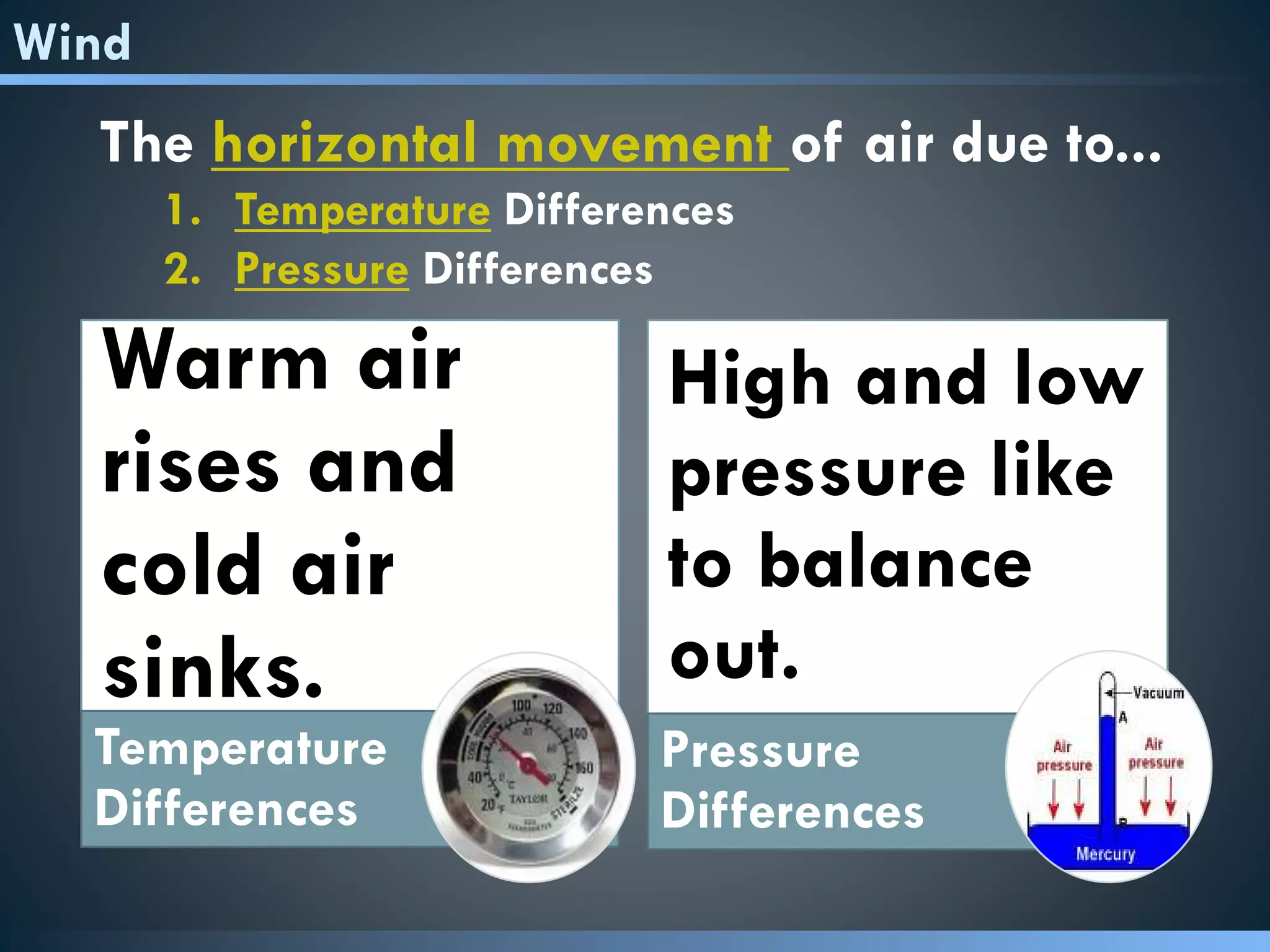
The horizontal movement of air due to...
1. Temperature Differences
2. Pressure Differences
Warm air
rises and
cold air
sinks.
Temperature
Differences
High and low
pressure like
to balance
out.
Pressure
Differences
The cooler air moves
into to take the place
of warmer air.
More Dense
Higher Air Pressure
Molecules move
slower and get closer
together.
Colder Air SinksLess Dense
Molecules move Faster
and get farther apart.
Warmer Air Rises
Less Air Pressure
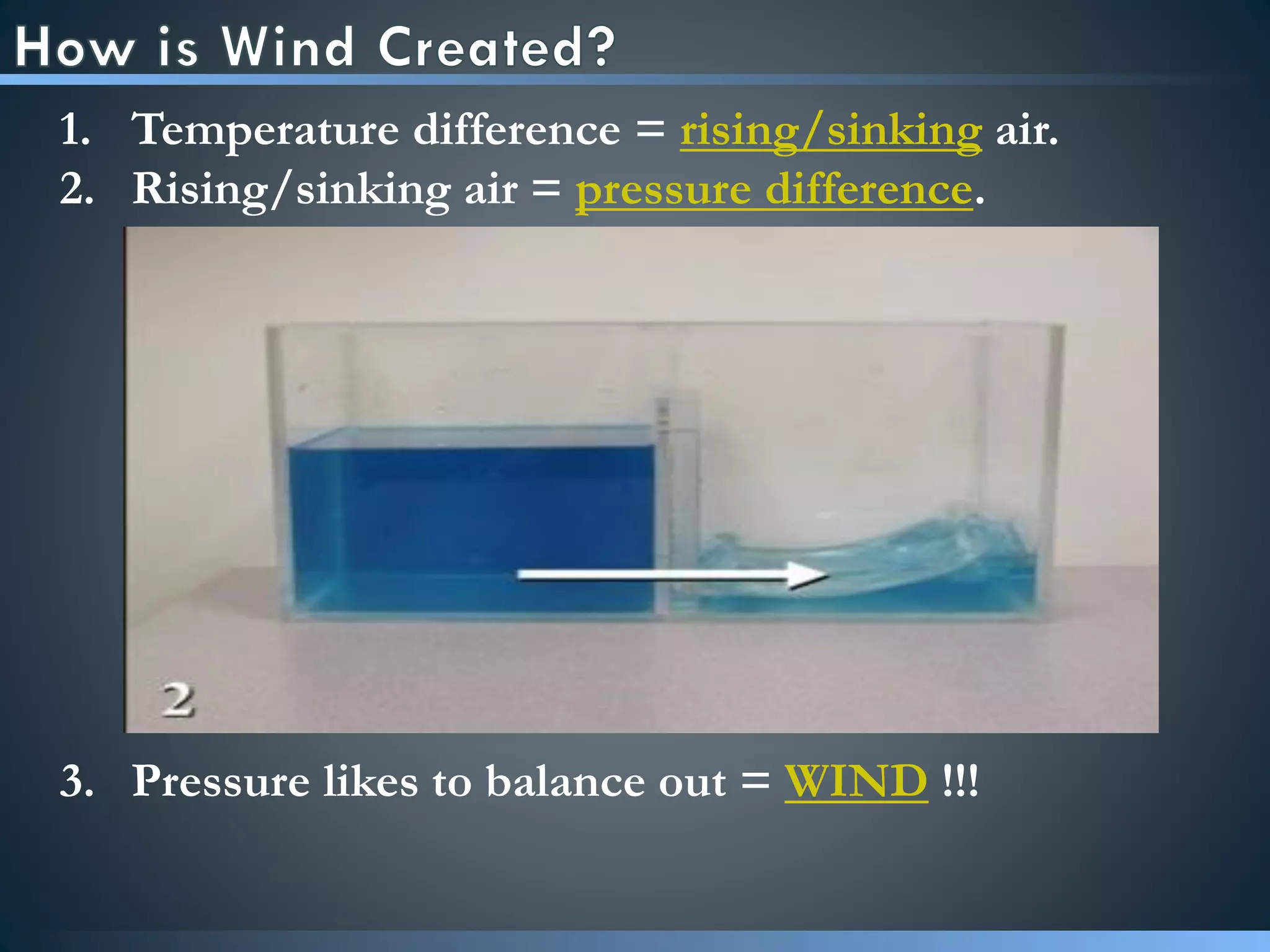
1. Temperature difference = rising/sinking air.
2. Rising/sinking air = pressure difference.
3. Pressure likes to balance out = WIND !!!
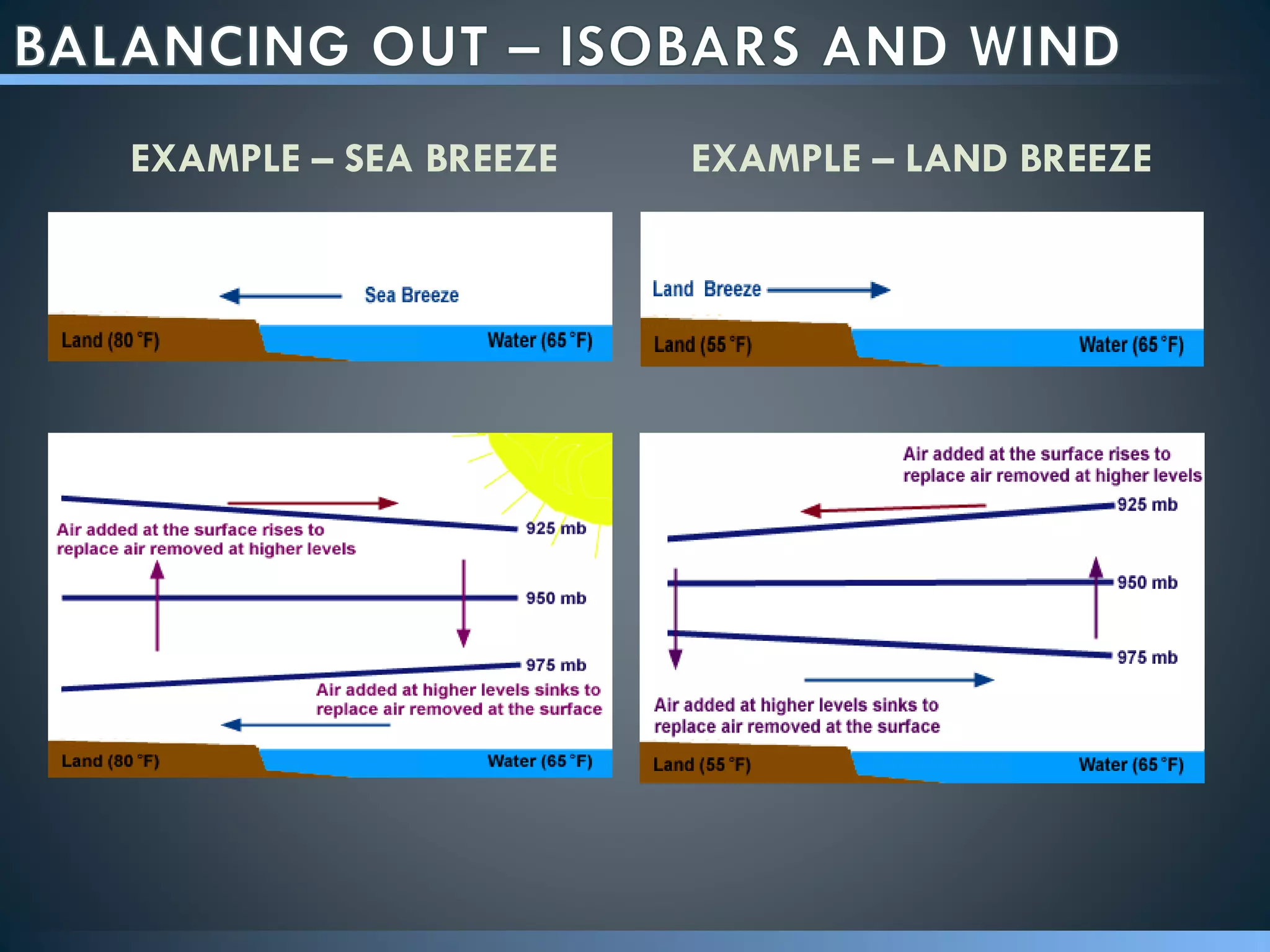
EXAMPLE – SEA BREEZE EXAMPLE – LAND BREEZE
Wind Trends
• Air Rises
Low Pressure
• Air Sinks
High
Pressure
Pressure
• Always flows from a higher pressure to a lower
pressure.
Wind Trends
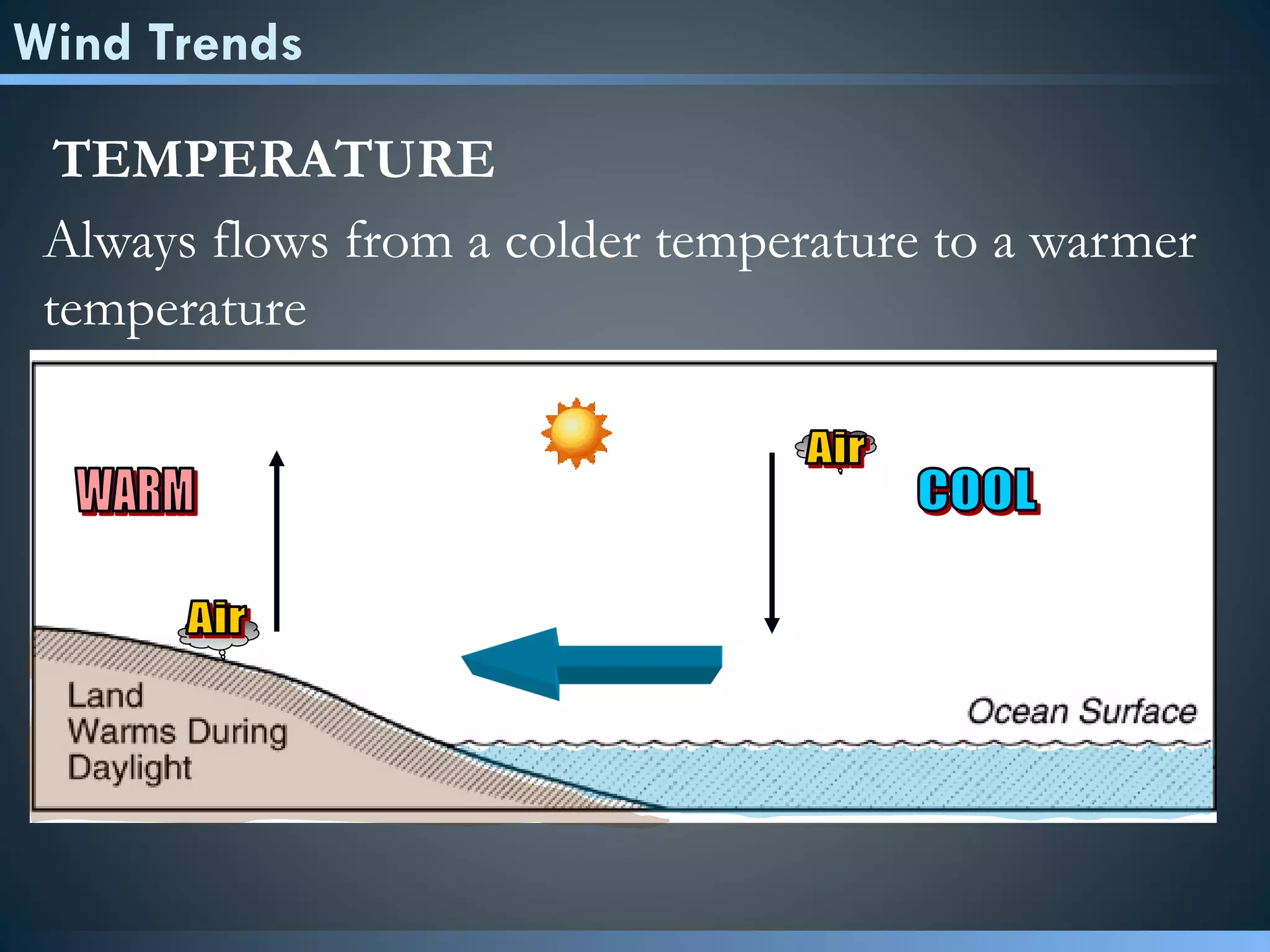
Always flows from a colder temperature to a warmer
temperature
TEMPERATURE
Where does this occur?
Wind current on a…
1. Local scale.
2. Global scale
WINDS ARE NAMED FROM WHERE THEY COME FROM!
SEA BREEZE Mountain BREEZE Prevailing
Westerlies
NE Trade
Winds
Polar
EasterliesLand BREEZE Valley BREEZE
LOCALIZED WINDS GLOBAL WINDS
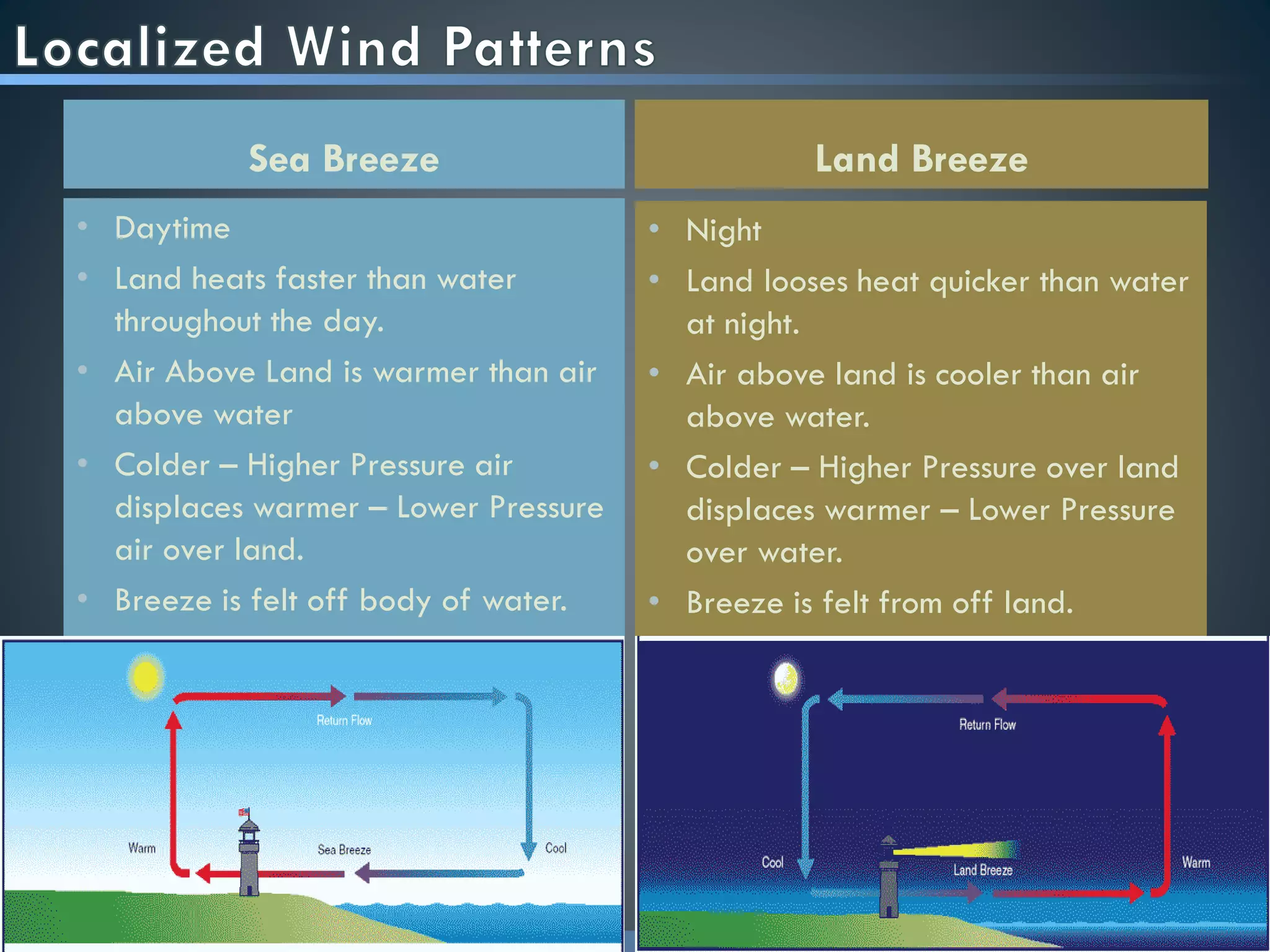
Sea Breeze
• Daytime
• Land heats faster than water
throughout the day.
• Air Above Land is warmer than air
above water
• Colder – Higher Pressure air
displaces warmer – Lower Pressure
air over land.
• Breeze is felt off body of water.
Land Breeze
• Night
• Land looses heat quicker than water
at night.
• Air above land is cooler than air
above water.
• Colder – Higher Pressure over land
displaces warmer – Lower Pressure
over water.
• Breeze is felt from off land.
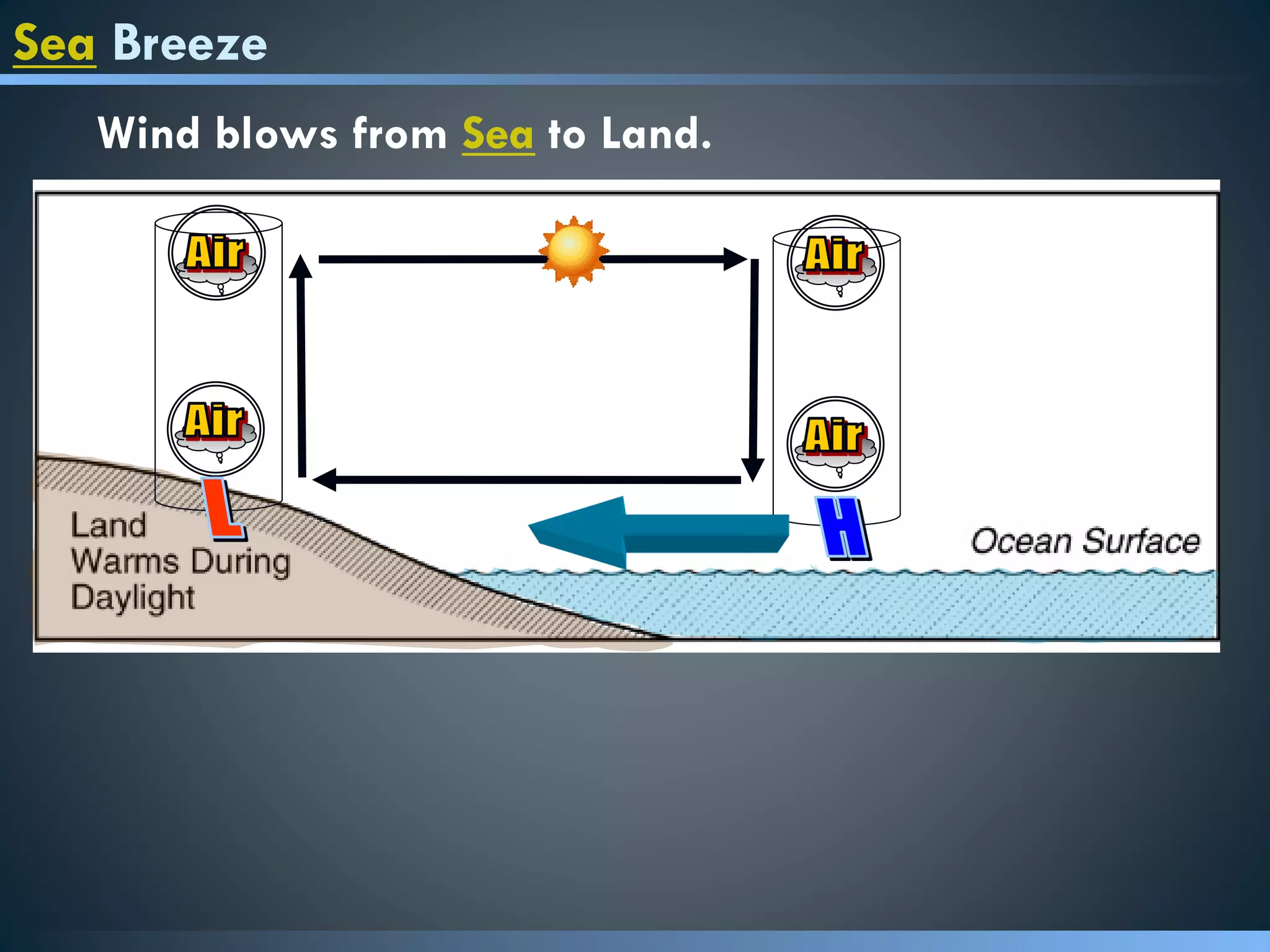
Sea Breeze
Wind blows from Sea to Land.
Land Breeze
Wind blows from Land to Sea.
Valley Breeze
• Daytime
• The shape of the land heats valley
faster than sides of Mountain due
to the striking angle of the sun.
• The colder air – High pressure just
above valley floor displaces
warmer air (Lower Pressure)
making the warmer air rise up the
sides of the mountain.
• Breeze is felt coming up the
Mountain.
Mountain Breeze
• Night
• The shape of the land develops this
breeze.
• Air cools off during the night inside
and down the mountain.
• Colder (H) displaces the warmer (L)
air allowing the warmer air to rise
inside the center of the valley.
• Breeze is felt coming down
mountain.

Local Wind

  • 1.
  • 2.
    Wind The horizontal movementof air due to... 1. Temperature Differences 2. Pressure Differences Warm air rises and cold air sinks. Temperature Differences High and low pressure like to balance out. Pressure Differences
  • 3.
    The cooler airmoves into to take the place of warmer air. More Dense Higher Air Pressure Molecules move slower and get closer together. Colder Air SinksLess Dense Molecules move Faster and get farther apart. Warmer Air Rises Less Air Pressure
  • 4.
    1. Temperature difference= rising/sinking air. 2. Rising/sinking air = pressure difference. 3. Pressure likes to balance out = WIND !!!
  • 5.
    EXAMPLE – SEABREEZE EXAMPLE – LAND BREEZE
  • 6.
    Wind Trends • AirRises Low Pressure • Air Sinks High Pressure Pressure • Always flows from a higher pressure to a lower pressure.
  • 7.
    Wind Trends Always flowsfrom a colder temperature to a warmer temperature TEMPERATURE
  • 8.
    Where does thisoccur? Wind current on a… 1. Local scale. 2. Global scale WINDS ARE NAMED FROM WHERE THEY COME FROM! SEA BREEZE Mountain BREEZE Prevailing Westerlies NE Trade Winds Polar EasterliesLand BREEZE Valley BREEZE LOCALIZED WINDS GLOBAL WINDS
  • 10.
    Sea Breeze • Daytime •Land heats faster than water throughout the day. • Air Above Land is warmer than air above water • Colder – Higher Pressure air displaces warmer – Lower Pressure air over land. • Breeze is felt off body of water. Land Breeze • Night • Land looses heat quicker than water at night. • Air above land is cooler than air above water. • Colder – Higher Pressure over land displaces warmer – Lower Pressure over water. • Breeze is felt from off land.
  • 11.
    Sea Breeze Wind blowsfrom Sea to Land.
  • 12.
    Land Breeze Wind blowsfrom Land to Sea.
  • 14.
    Valley Breeze • Daytime •The shape of the land heats valley faster than sides of Mountain due to the striking angle of the sun. • The colder air – High pressure just above valley floor displaces warmer air (Lower Pressure) making the warmer air rise up the sides of the mountain. • Breeze is felt coming up the Mountain. Mountain Breeze • Night • The shape of the land develops this breeze. • Air cools off during the night inside and down the mountain. • Colder (H) displaces the warmer (L) air allowing the warmer air to rise inside the center of the valley. • Breeze is felt coming down mountain.