WINDS
AND
WIND SYSTEMS
WIND
 Is the movement of air, caused by
the uneven heating of the Earth
by the sun and the Earth’s own
rotation.
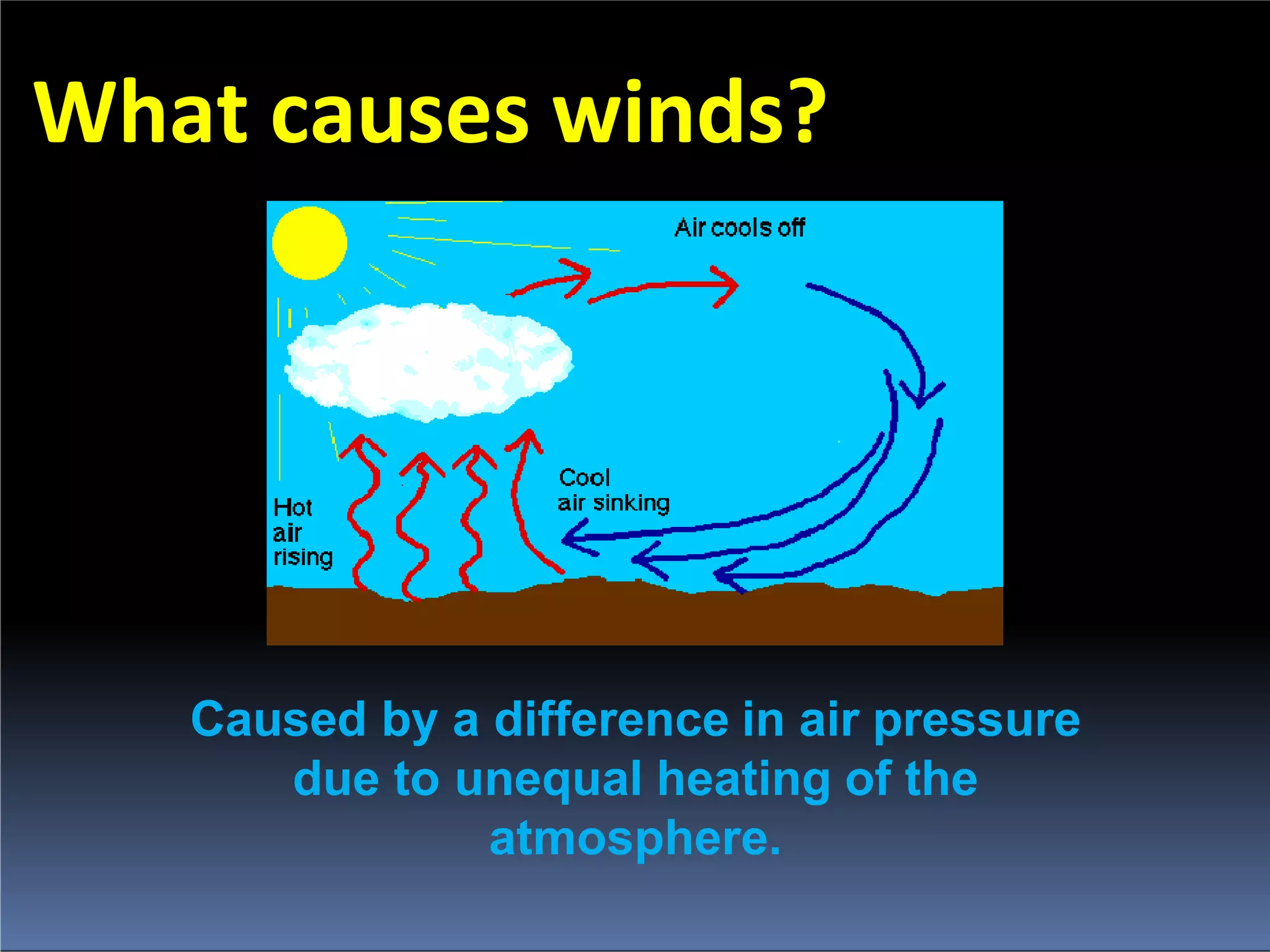
What causes winds?
Caused by a difference in air pressure
due to unequal heating of the
atmosphere.
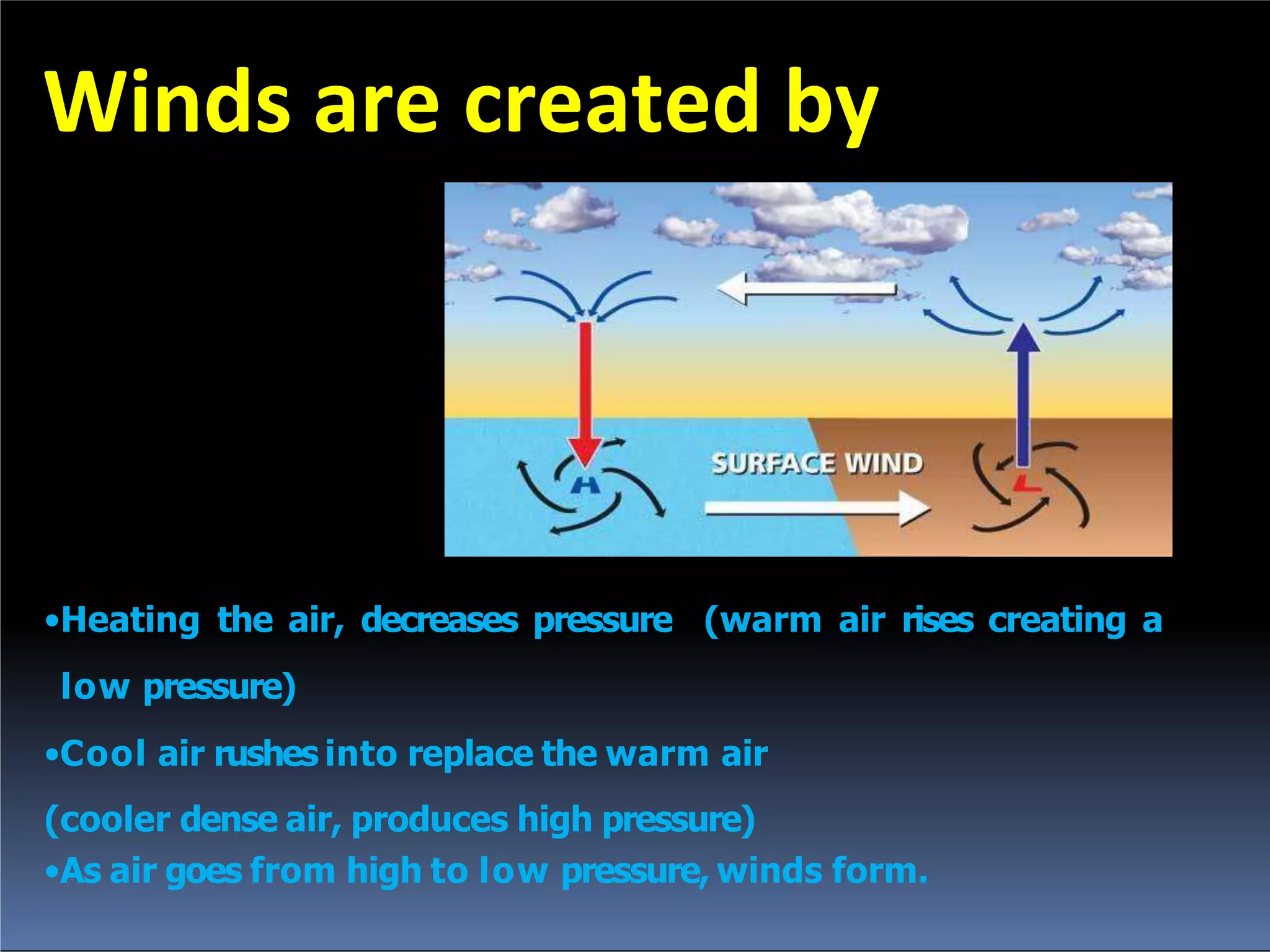
Winds are created by
•Heating the air, decreases pressure (warm air rises creating a
low pressure)
•Cool air rushes into replace the warm air
(cooler dense air, produces high pressure)
•As air goes from high to low pressure, winds form.
Wind Is Abiotic Components
Often abiotic factors are affected by other
factors. This is especially evident with wind. The
wind speed and direction affects the
temperature in humidity of an area. Very high
wind speeds, often in mountainous areas, may
lead to stunted plant growth and limit the types
of life that can thrive in the area.
Factors Affecting The Winds
PressureGradient Force
Coriolis Effect
Friction
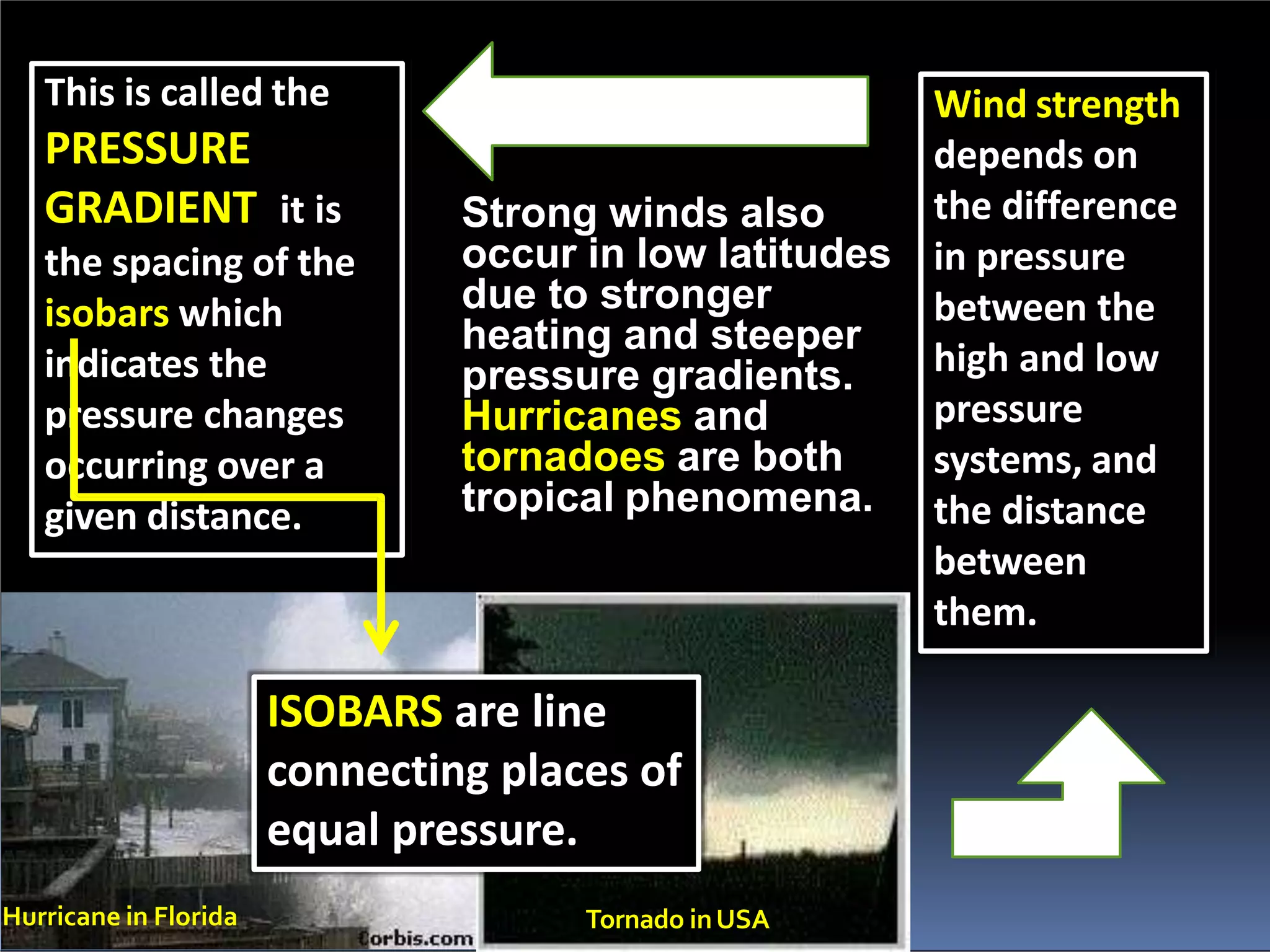
Strong winds also
occur in low latitudes
due to stronger
heating and steeper
pressure gradients.
Hurricanes and
tornadoes are both
tropical phenomena.
Hurricane in Florida Tornado inUSA
Wind strength
depends on
the difference
in pressure
between the
high and low
pressure
systems, and
the distance
between
them.
This is called the
PRESSURE
GRADIENT it is
the spacing of the
isobars which
indicates the
pressure changes
occurring over a
given distance.
ISOBARS are line
connecting places of
equal pressure.
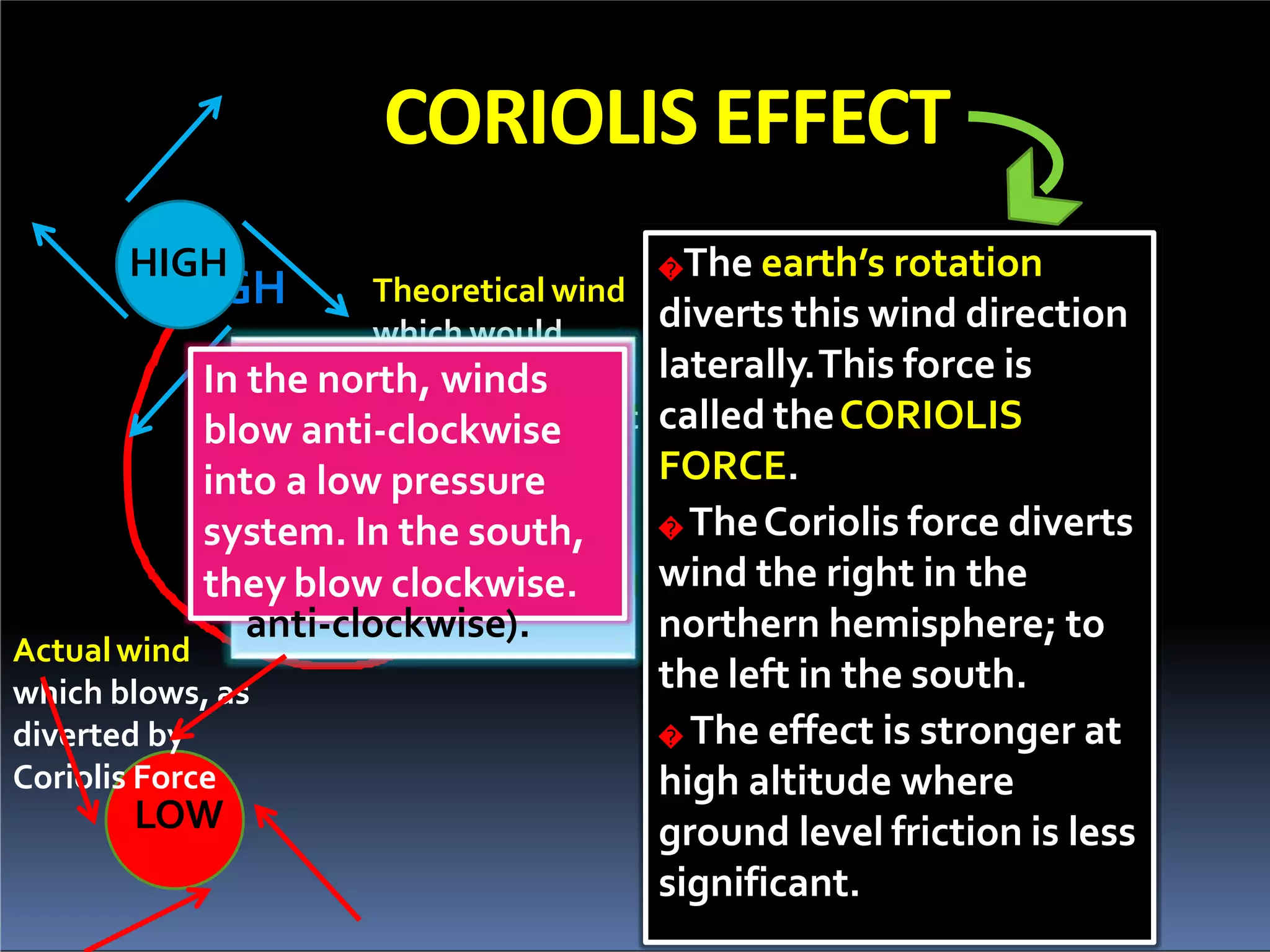
CORIOLIS EFFECT
HIGH Theoretical wind
which would
m
Actualwind
�The earth’s rotation
diverts this wind direction
laterally.This force is
t called theCORIOLIS
FORCE.
� TheCoriolis force diverts
wind the right in the
northern hemisphere; to
the left in the south.
� The effect is stronger at
high altitude where
ground level friction is less
significant.
HIGH
In the north,result
s
o
l
e
l
y
w
i
n
d
s
f
r
o
blow clockwisepressure
gradien
out from a high
pressure. (In the
south, theyLblOWow
which blows, as
diverted by
Coriolis Force
LOW
In the north, winds
blow anti-clockwise
into a low pressure
system. In the south,
they blow clockwise.
anti-clockwise).
Strong polar winds due
to low friction
Beach windbreaks reduce
wind speed by increasing
friction
TWO GENERAL TYPES OF
WINDS
 Local Winds
 Prevailing Winds
Local Winds
 winds we frequently encounter and these blow in
any direction.
 produced on a local scale by processes of heating
and cooling of lower air.
Two Categories of Local Winds
 Katabatic Wind
 a category includes local winds in hilly
or mountainous regions, where on clear
and clam nights, heat is rapidly lost by
ground radiation.
 This produces a layer of cold.
Katabatic Wind usually felt
on the great ice caps of
Greenland and Antarctica
 Convection Wind
 a category that includes land and
sea breezes.
 land and sea breezes are limited to periods of
generally warm, clear weather when regional
wind flows is weak, but they form an
important element of the summer climate
along coasts.
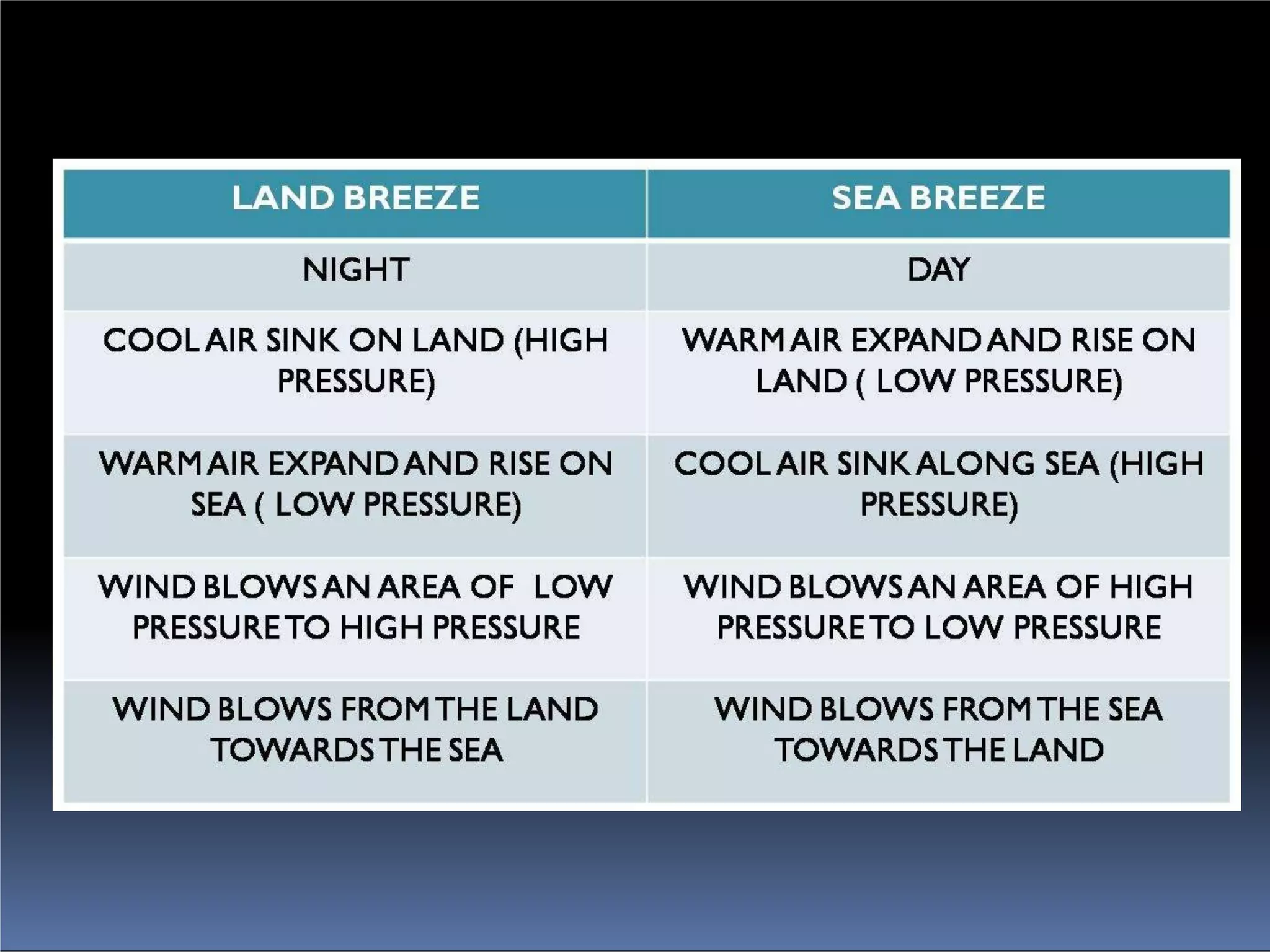
SEA BREEZE
On a warm summer day along the coast, this differential heating of land
and sea leads to the development of local winds called sea breezes. As air
above the land surface is heated by radiation from the Sun, it expands
and begins to rise, being lighter than the surrounding air. To replace the
rising air, cooler air is drawn in from above the surface of the sea. This
is the sea breeze, and can offer a pleasant cooling influence on hot
summer afternoons.
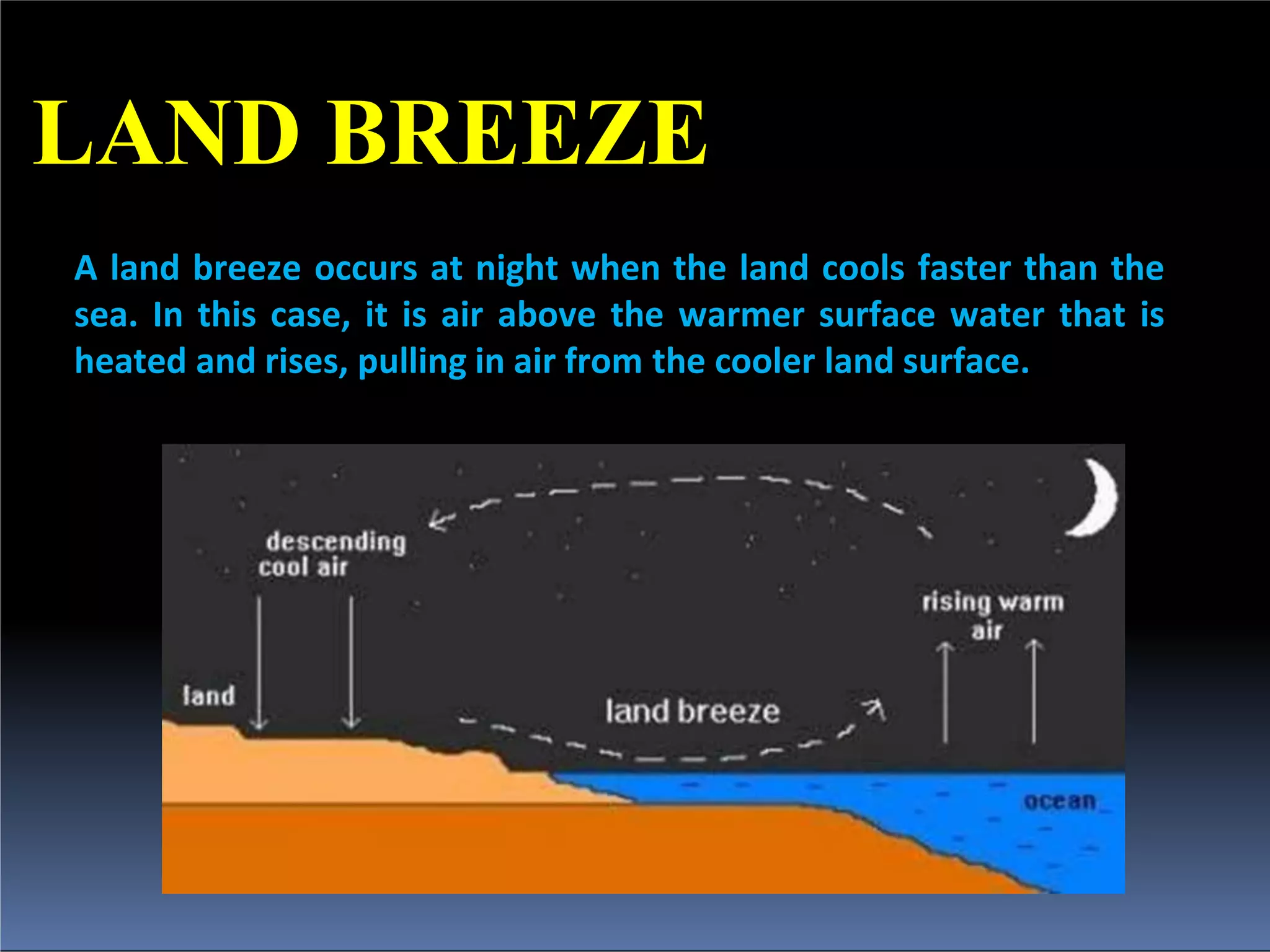
LAND BREEZE
A land breeze occurs at night when the land cools faster than the
sea. In this case, it is air above the warmer surface water that is
heated and rises, pulling in air from the cooler land surface.
Prevailing Winds
 winds that blow from the same
direction and most often travel long
distances.
 also known as PERMANENT WINDS
or PLANETARY WINDS.
 it is sub divided in to the trade
winds, anti trade winds, and polar
winds.
Two factors That Affect the
Direction Of Prevailing
Winds
Unequal heating of the
earth’s surface
Earth’s rotation
Prevailing Winds in the
Philippines
• Northeast Monsoon (Amihan)
• Southwest Monsoon (Habagat)
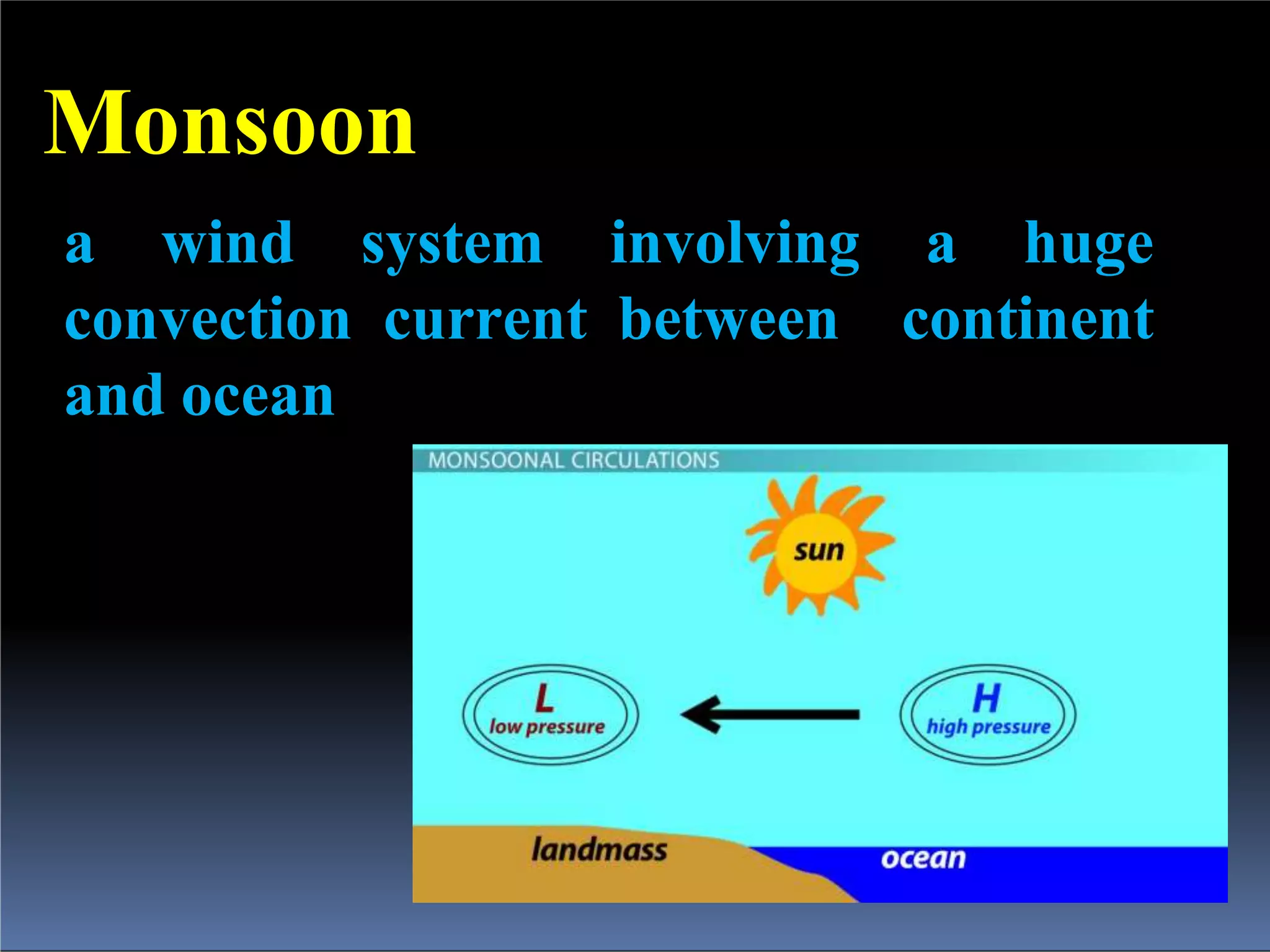
Monsoon
a wind system involving a huge
convection current between continent
and ocean
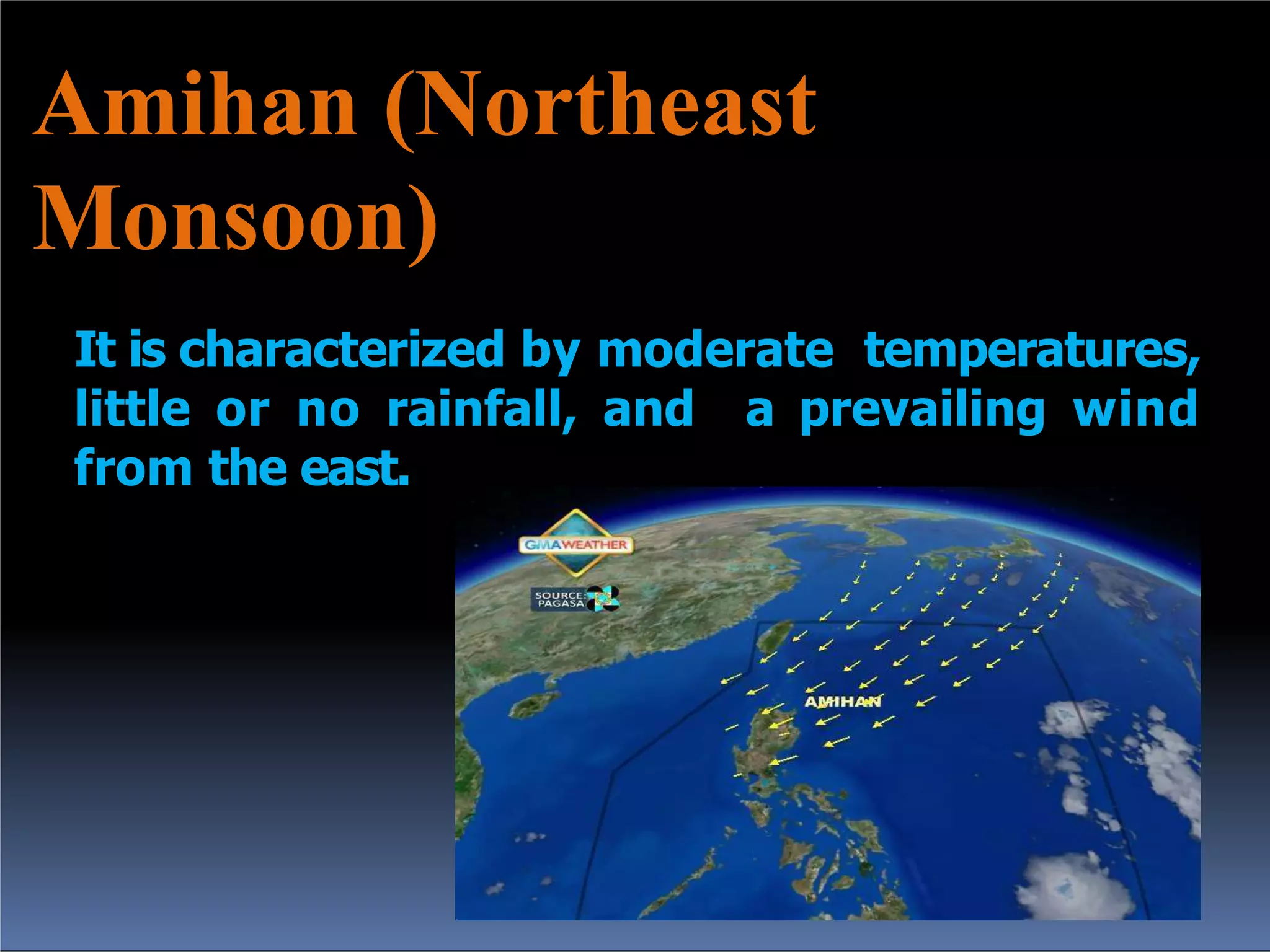
Amihan (Northeast
Monsoon)
It is characterized by moderate temperatures,
little or no rainfall, and a prevailing wind
from the east.
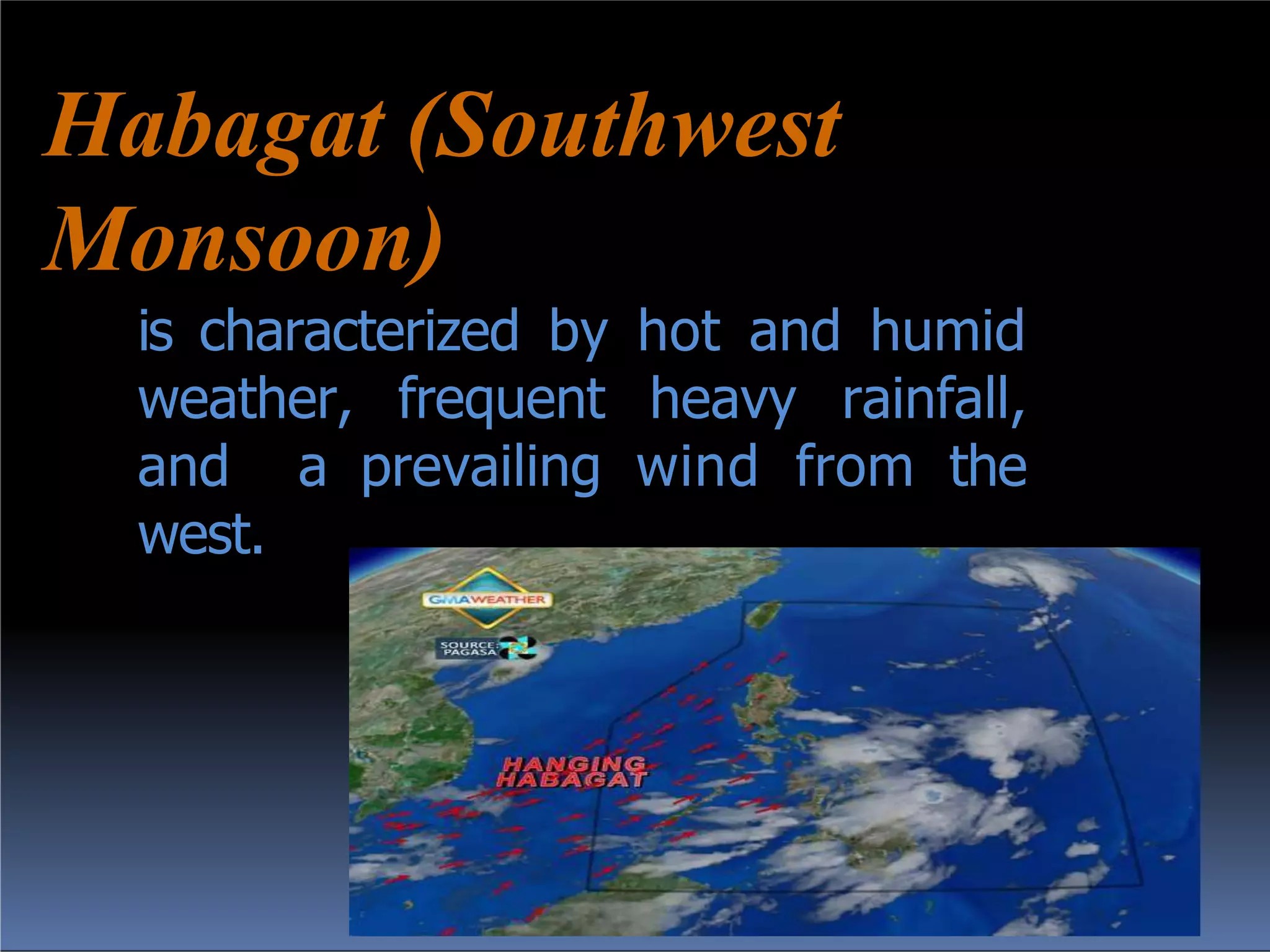
Habagat (Southwest
Monsoon)
is characterized by hot and humid
weather, frequent heavy rainfall,
and a prevailing wind from the
west.
WIND REPORT.pptx

WIND REPORT.pptx

  • 1.
  • 2.
    WIND  Is themovement of air, caused by the uneven heating of the Earth by the sun and the Earth’s own rotation.
  • 3.
    What causes winds? Causedby a difference in air pressure due to unequal heating of the atmosphere.
  • 4.
    Winds are createdby •Heating the air, decreases pressure (warm air rises creating a low pressure) •Cool air rushes into replace the warm air (cooler dense air, produces high pressure) •As air goes from high to low pressure, winds form.
  • 5.
    Wind Is AbioticComponents Often abiotic factors are affected by other factors. This is especially evident with wind. The wind speed and direction affects the temperature in humidity of an area. Very high wind speeds, often in mountainous areas, may lead to stunted plant growth and limit the types of life that can thrive in the area.
  • 6.
    Factors Affecting TheWinds PressureGradient Force Coriolis Effect Friction
  • 7.
    Strong winds also occurin low latitudes due to stronger heating and steeper pressure gradients. Hurricanes and tornadoes are both tropical phenomena. Hurricane in Florida Tornado inUSA Wind strength depends on the difference in pressure between the high and low pressure systems, and the distance between them. This is called the PRESSURE GRADIENT it is the spacing of the isobars which indicates the pressure changes occurring over a given distance. ISOBARS are line connecting places of equal pressure.
  • 8.
    CORIOLIS EFFECT HIGH Theoreticalwind which would m Actualwind �The earth’s rotation diverts this wind direction laterally.This force is t called theCORIOLIS FORCE. � TheCoriolis force diverts wind the right in the northern hemisphere; to the left in the south. � The effect is stronger at high altitude where ground level friction is less significant. HIGH In the north,result s o l e l y w i n d s f r o blow clockwisepressure gradien out from a high pressure. (In the south, theyLblOWow which blows, as diverted by Coriolis Force LOW In the north, winds blow anti-clockwise into a low pressure system. In the south, they blow clockwise. anti-clockwise).
  • 9.
    Strong polar windsdue to low friction Beach windbreaks reduce wind speed by increasing friction
  • 10.
    TWO GENERAL TYPESOF WINDS  Local Winds  Prevailing Winds
  • 11.
    Local Winds  windswe frequently encounter and these blow in any direction.  produced on a local scale by processes of heating and cooling of lower air.
  • 12.
    Two Categories ofLocal Winds  Katabatic Wind  a category includes local winds in hilly or mountainous regions, where on clear and clam nights, heat is rapidly lost by ground radiation.  This produces a layer of cold. Katabatic Wind usually felt on the great ice caps of Greenland and Antarctica
  • 13.
     Convection Wind a category that includes land and sea breezes.  land and sea breezes are limited to periods of generally warm, clear weather when regional wind flows is weak, but they form an important element of the summer climate along coasts.
  • 14.
    SEA BREEZE On awarm summer day along the coast, this differential heating of land and sea leads to the development of local winds called sea breezes. As air above the land surface is heated by radiation from the Sun, it expands and begins to rise, being lighter than the surrounding air. To replace the rising air, cooler air is drawn in from above the surface of the sea. This is the sea breeze, and can offer a pleasant cooling influence on hot summer afternoons.
  • 15.
    LAND BREEZE A landbreeze occurs at night when the land cools faster than the sea. In this case, it is air above the warmer surface water that is heated and rises, pulling in air from the cooler land surface.
  • 17.
    Prevailing Winds  windsthat blow from the same direction and most often travel long distances.  also known as PERMANENT WINDS or PLANETARY WINDS.  it is sub divided in to the trade winds, anti trade winds, and polar winds.
  • 18.
    Two factors ThatAffect the Direction Of Prevailing Winds Unequal heating of the earth’s surface Earth’s rotation
  • 19.
    Prevailing Winds inthe Philippines • Northeast Monsoon (Amihan) • Southwest Monsoon (Habagat)
  • 20.
    Monsoon a wind systeminvolving a huge convection current between continent and ocean
  • 21.
    Amihan (Northeast Monsoon) It ischaracterized by moderate temperatures, little or no rainfall, and a prevailing wind from the east.
  • 22.
    Habagat (Southwest Monsoon) is characterizedby hot and humid weather, frequent heavy rainfall, and a prevailing wind from the west.