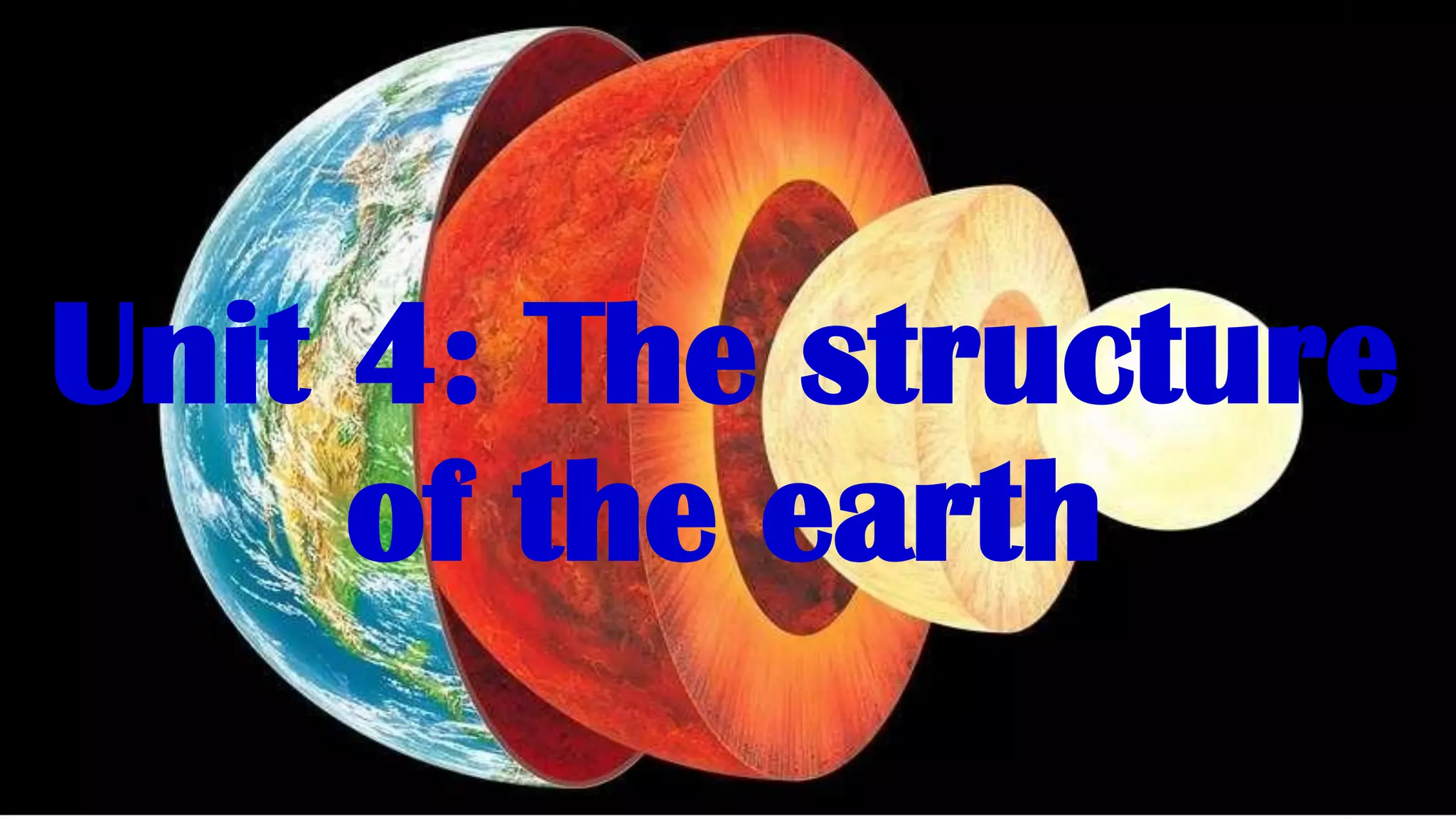
Unit 4: The structure
of the earth
LEARNING OBJECTIVES
By the end of this unit, the learner will be able
to:
1. Explain the external components of the earth.
2. Describe the internal structure of the earth.
INTRODUCTION
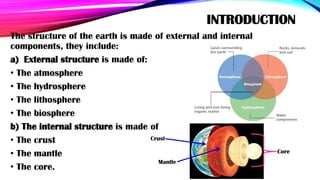
The structure of the earth is made of external and internal
components, they include:
a) External structure is made of:
• The atmosphere
• The hydrosphere
• The lithosphere
• The biosphere
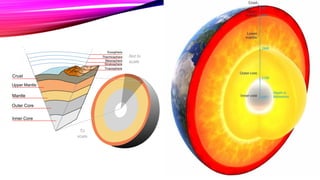
b) The internal structure is made of
• The crust
• The mantle
• The core.
Core
Crust
Mantle
EXTERNAL STRUCTURE OF THE EARTH
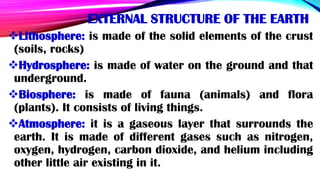
❖Lithosphere: is made of the solid elements of the crust
(soils, rocks)
❖Hydrosphere: is made of water on the ground and that
underground.
❖Biosphere: is made of fauna (animals) and flora
(plants). It consists of living things.
❖Atmosphere: it is a gaseous layer that surrounds the
earth. It is made of different gases such as nitrogen,
oxygen, hydrogen, carbon dioxide, and helium including
other little air existing in it.
INTERNAL STRUCTURE OF THE EARTH
1. Crust: This is the outermost layer of the earth’s structure. It measures about 30 km at the
continents and 5 km under the oceans. It is divided into parts:
1. Continental crust:
✓This zone makes the outermost layer of the crust. It forms the continents and is composed
of granitic rocks.
✓It is dry and has a thickness of between 35 and 40 km.
✓This layer has huge quantities of silica and aluminium minerals hence the name SIAL.
2. Oceanic crust:
✓The SIMA (oceanic crust): This is the inner layer of the crust, which forms the oceanic beds.
✓It has an average thickness of between 7 to 10 km.
✓SIMA derives its name from the component minerals silica and magnesium.
✓SIMA occurs beneath the SIAL
The crust is separated from the mantle by a transitional zone called the Mohorovicic (Moho)
discontinuity.
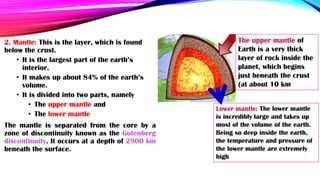
2. Mantle: This is the layer, which is found
below the crust.
• It is the largest part of the earth’s
interior.
• It makes up about 84% of the earth’s
volume.
• It is divided into two parts, namely
• The upper mantle and
• The lower mantle
The mantle is separated from the core by a
zone of discontinuity known as the Gutenberg
discontinuity. It occurs at a depth of 2900 km
beneath the surface.
Lower mantle: The lower mantle
is incredibly large and takes up
most of the volume of the earth.
Being so deep inside the earth,
the temperature and pressure of
the lower mantle are extremely
high
The upper mantle of
Earth is a very thick
layer of rock inside the
planet, which begins
just beneath the crust
(at about 10 km
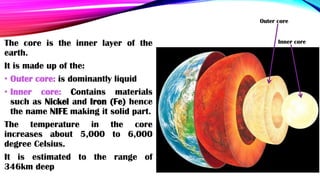
The core is the inner layer of the
earth.
It is made up of the:
• Outer core: is dominantly liquid
• Inner core: Contains materials
such as Nickel and Iron (Fe) hence
the name NIFE making it solid part.
The temperature in the core
increases about 5,000 to 6,000
degree Celsius.
It is estimated to the range of
346km deep
Outer core
Inner core
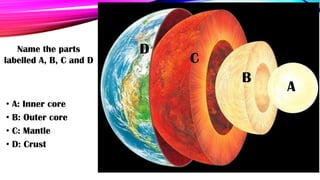
• A: Inner core
• B: Outer core
• C: Mantle
• D: Crust
A
B
C
D
Name the parts
labelled A, B, C and D

Unit 4 Internal Structure of the Earth.pdf

  • 1.
    Unit 4: Thestructure of the earth
  • 2.
    LEARNING OBJECTIVES By theend of this unit, the learner will be able to: 1. Explain the external components of the earth. 2. Describe the internal structure of the earth.
  • 3.
    INTRODUCTION The structure ofthe earth is made of external and internal components, they include: a) External structure is made of: • The atmosphere • The hydrosphere • The lithosphere • The biosphere b) The internal structure is made of • The crust • The mantle • The core. Core Crust Mantle
  • 4.
    EXTERNAL STRUCTURE OFTHE EARTH ❖Lithosphere: is made of the solid elements of the crust (soils, rocks) ❖Hydrosphere: is made of water on the ground and that underground. ❖Biosphere: is made of fauna (animals) and flora (plants). It consists of living things. ❖Atmosphere: it is a gaseous layer that surrounds the earth. It is made of different gases such as nitrogen, oxygen, hydrogen, carbon dioxide, and helium including other little air existing in it.
  • 5.
    INTERNAL STRUCTURE OFTHE EARTH 1. Crust: This is the outermost layer of the earth’s structure. It measures about 30 km at the continents and 5 km under the oceans. It is divided into parts: 1. Continental crust: ✓This zone makes the outermost layer of the crust. It forms the continents and is composed of granitic rocks. ✓It is dry and has a thickness of between 35 and 40 km. ✓This layer has huge quantities of silica and aluminium minerals hence the name SIAL. 2. Oceanic crust: ✓The SIMA (oceanic crust): This is the inner layer of the crust, which forms the oceanic beds. ✓It has an average thickness of between 7 to 10 km. ✓SIMA derives its name from the component minerals silica and magnesium. ✓SIMA occurs beneath the SIAL The crust is separated from the mantle by a transitional zone called the Mohorovicic (Moho) discontinuity.
  • 6.
    2. Mantle: Thisis the layer, which is found below the crust. • It is the largest part of the earth’s interior. • It makes up about 84% of the earth’s volume. • It is divided into two parts, namely • The upper mantle and • The lower mantle The mantle is separated from the core by a zone of discontinuity known as the Gutenberg discontinuity. It occurs at a depth of 2900 km beneath the surface. Lower mantle: The lower mantle is incredibly large and takes up most of the volume of the earth. Being so deep inside the earth, the temperature and pressure of the lower mantle are extremely high The upper mantle of Earth is a very thick layer of rock inside the planet, which begins just beneath the crust (at about 10 km
  • 7.
    The core isthe inner layer of the earth. It is made up of the: • Outer core: is dominantly liquid • Inner core: Contains materials such as Nickel and Iron (Fe) hence the name NIFE making it solid part. The temperature in the core increases about 5,000 to 6,000 degree Celsius. It is estimated to the range of 346km deep Outer core Inner core
  • 9.
    • A: Innercore • B: Outer core • C: Mantle • D: Crust A B C D Name the parts labelled A, B, C and D