By – Mr. A. L. Jamadar
 Load flow studies or Power flow studies is the
analysis
 of a power system in normal steady state
condition.
 Load flow studies basically comprises of the
determination of
◦ Voltage
◦ Current
◦ Active Power
◦ Reactive Power
 Generation supplies demand(Load) plus
losses.
 Bus voltage magnitude remain close to rated
value.
 Generation operates within specified real and
reactive power limits.
 Transmission line and transformer are not
overloaded.
 Designing a power system.
 Planning a power system.
 Expansion of power system.
 Providing guide lines for optimum operation
of power
 system.
 Providing guide lines for various power
system studies.
 A bus is a node at which many Transmission lines,
Loads
 Generators are connected.
 It is not necessary that all of them be connected to
every
 bus.
 Bus is indicated by vertical line at which no. of
 components are connected.
 In load flow study two out of four quantities
specified
 and other two quantities are to be determined by
load
 flow equation.
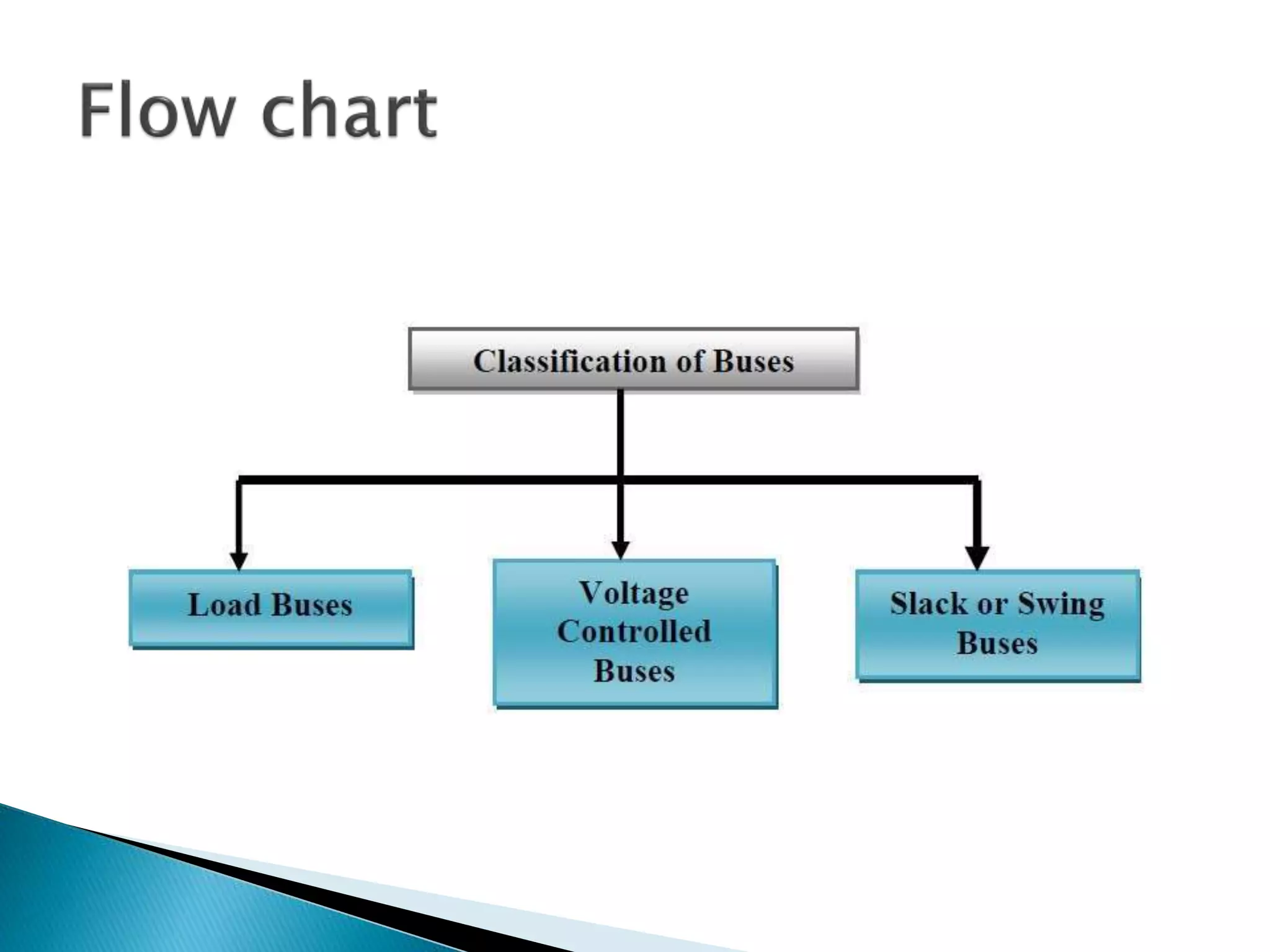
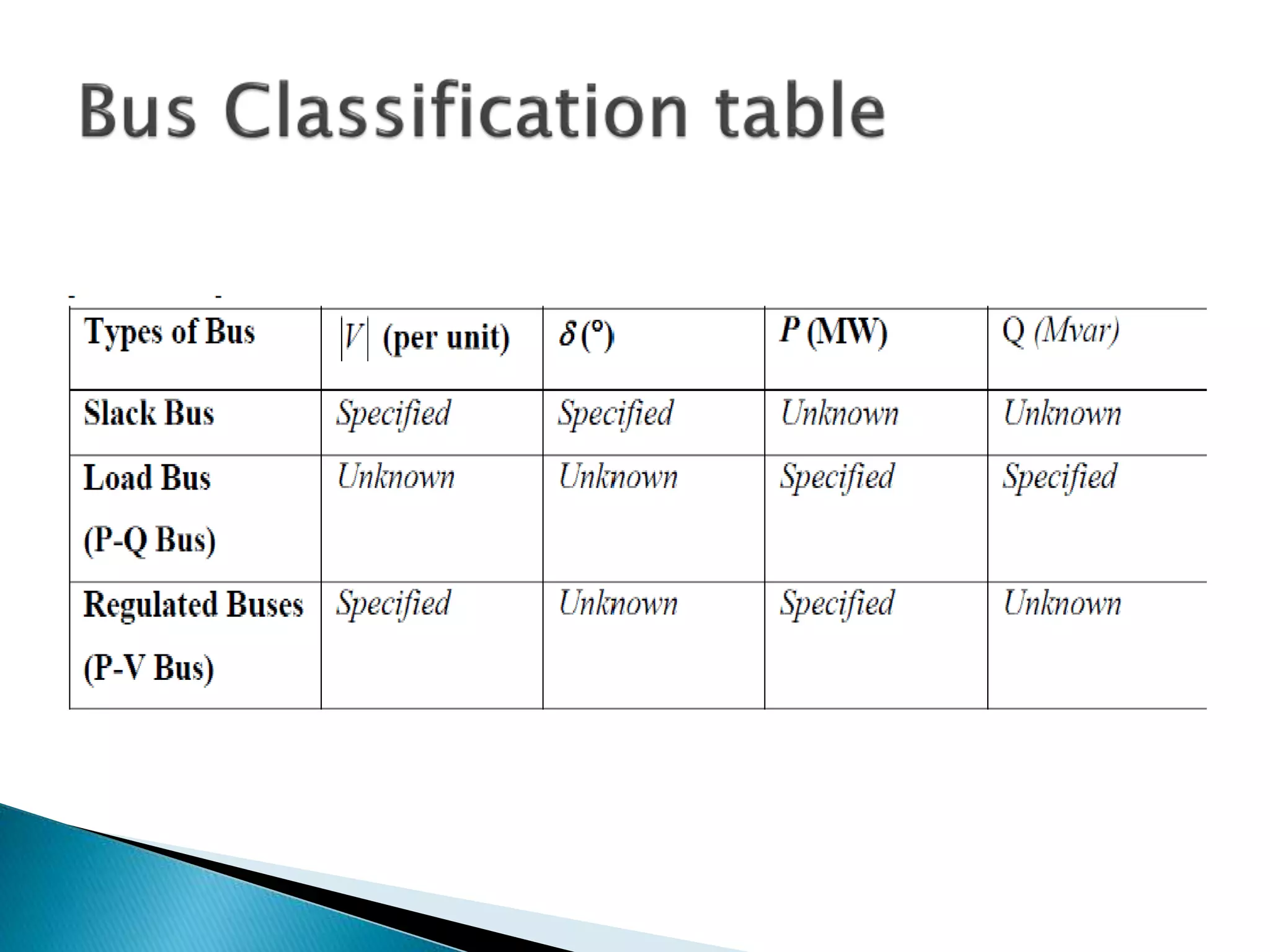
 Depending upon that bus are classified.
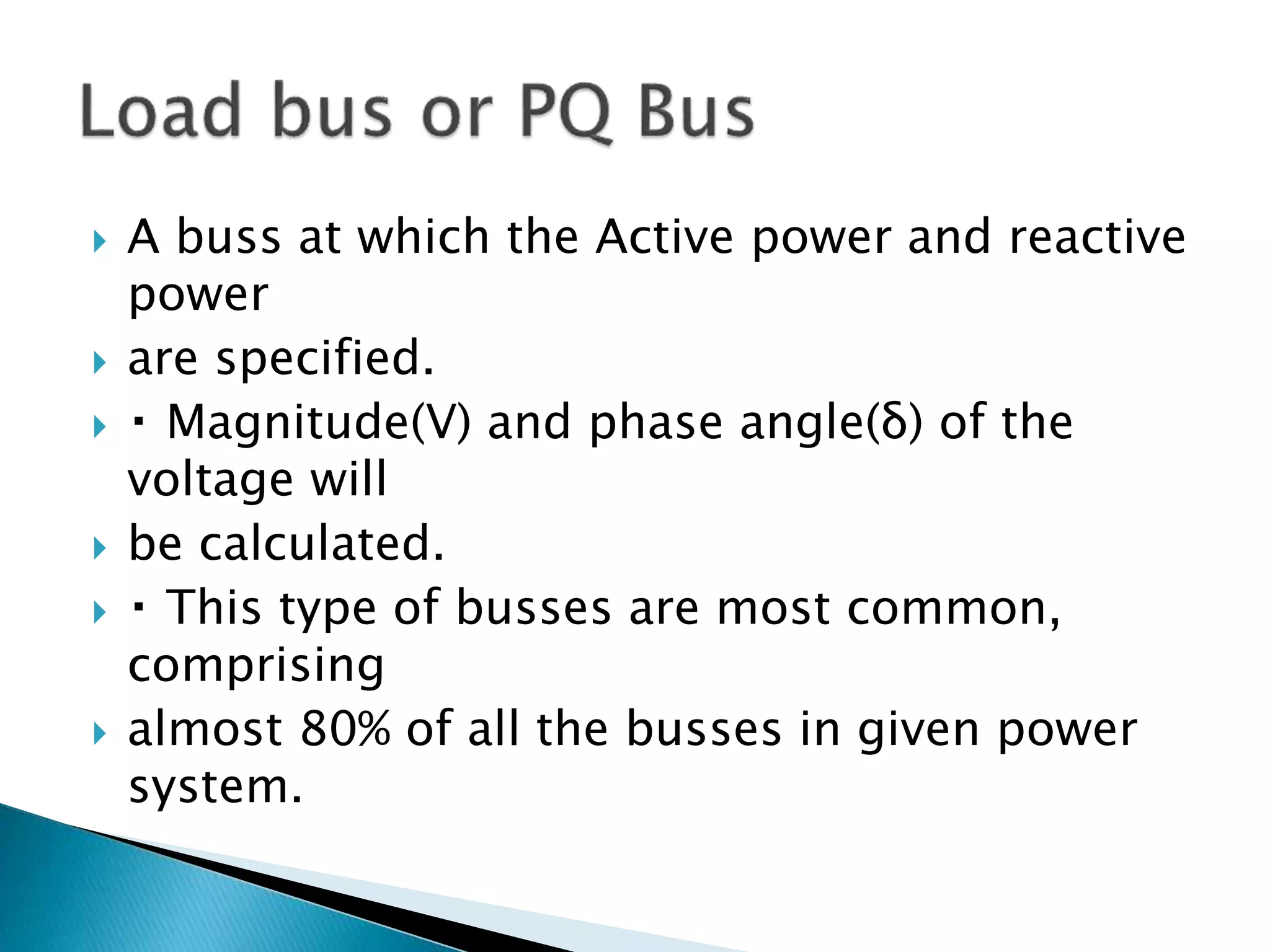
 A buss at which the Active power and reactive
power
 are specified.
 Magnitude(V) and phase angle(δ) of the
voltage will
 be calculated.
 This type of busses are most common,
comprising
 almost 80% of all the busses in given power
system.
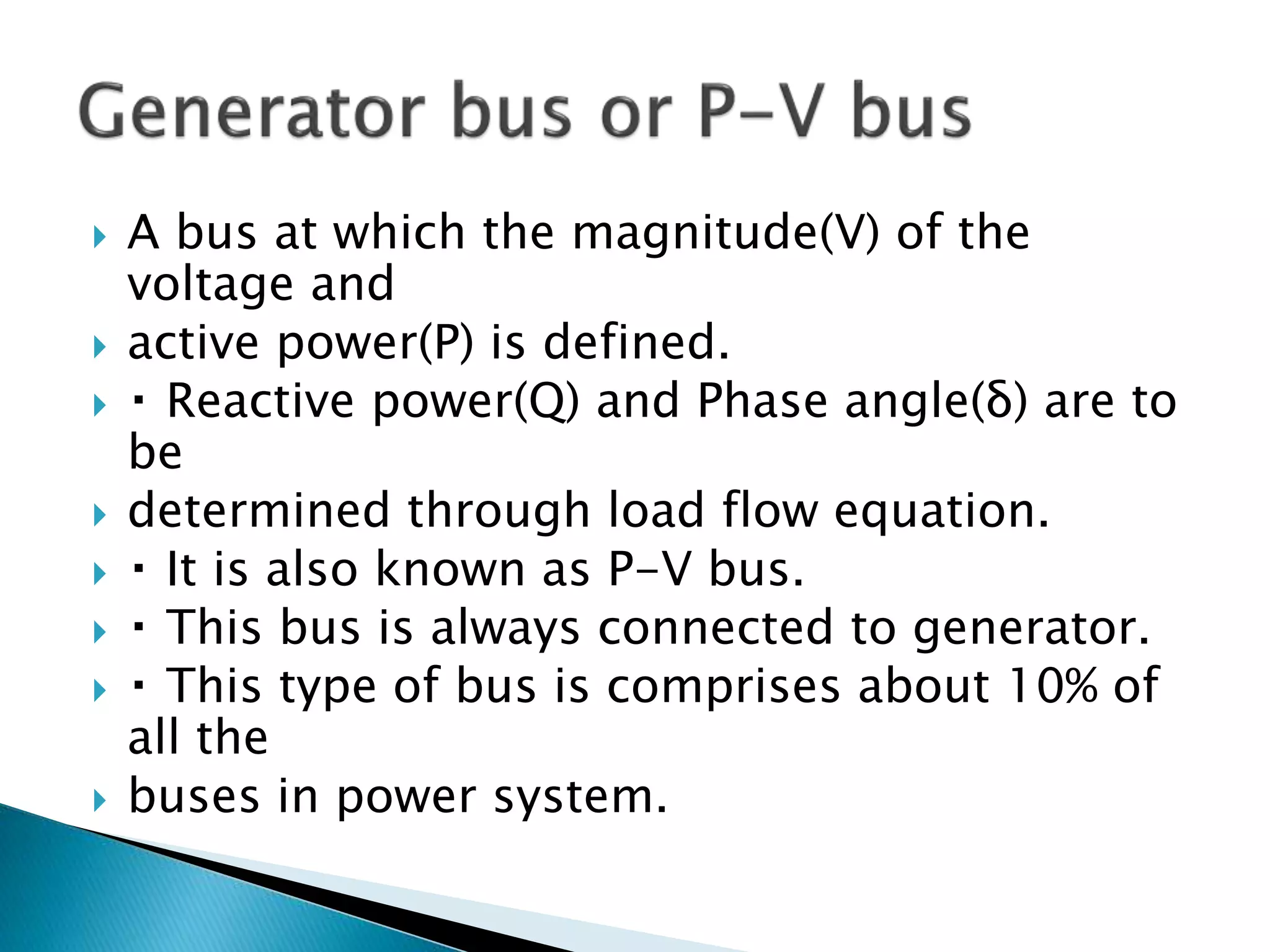
 A bus at which the magnitude(V) of the
voltage and
 active power(P) is defined.
 Reactive power(Q) and Phase angle(δ) are to
be
 determined through load flow equation.
 It is also known as P-V bus.
 This bus is always connected to generator.
 This type of bus is comprises about 10% of
all the
 buses in power system.
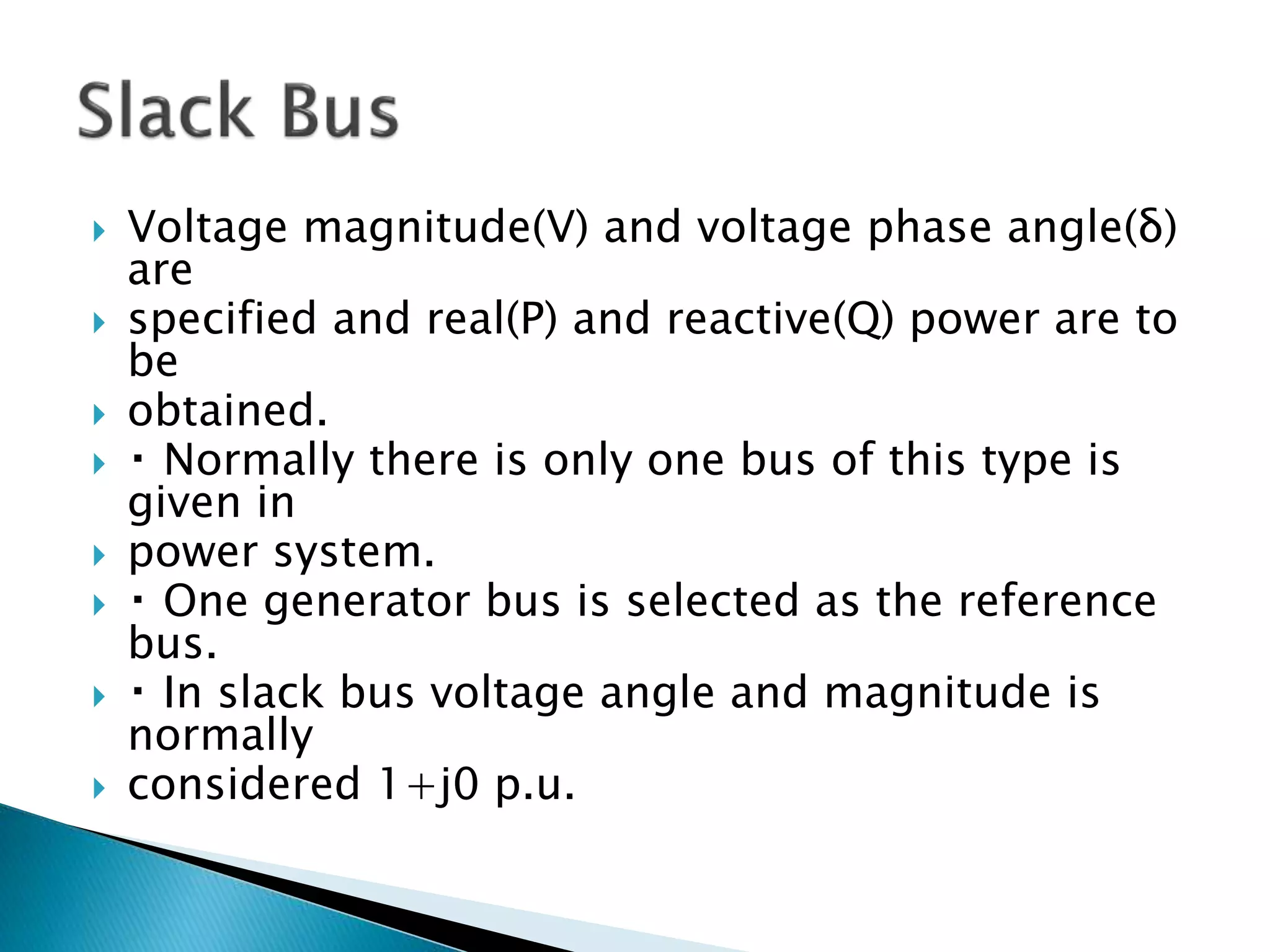
 Voltage magnitude(V) and voltage phase angle(δ)
are
 specified and real(P) and reactive(Q) power are to
be
 obtained.
 Normally there is only one bus of this type is
given in
 power system.
 One generator bus is selected as the reference
bus.
 In slack bus voltage angle and magnitude is
normally
 considered 1+j0 p.u.
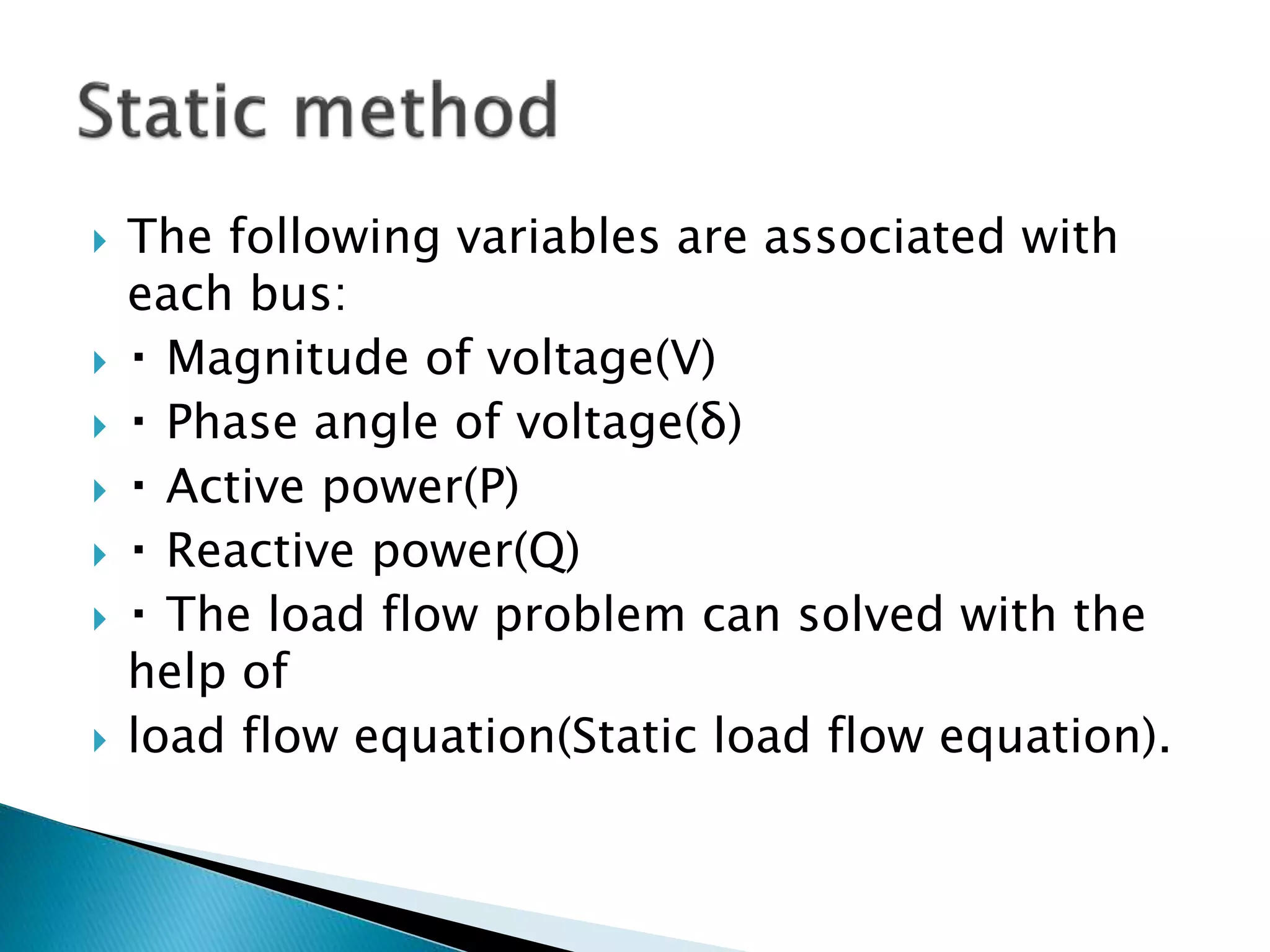
 The following variables are associated with
each bus:
 Magnitude of voltage(V)
 Phase angle of voltage(δ)
 Active power(P)
 Reactive power(Q)
 The load flow problem can solved with the
help of
 load flow equation(Static load flow equation).
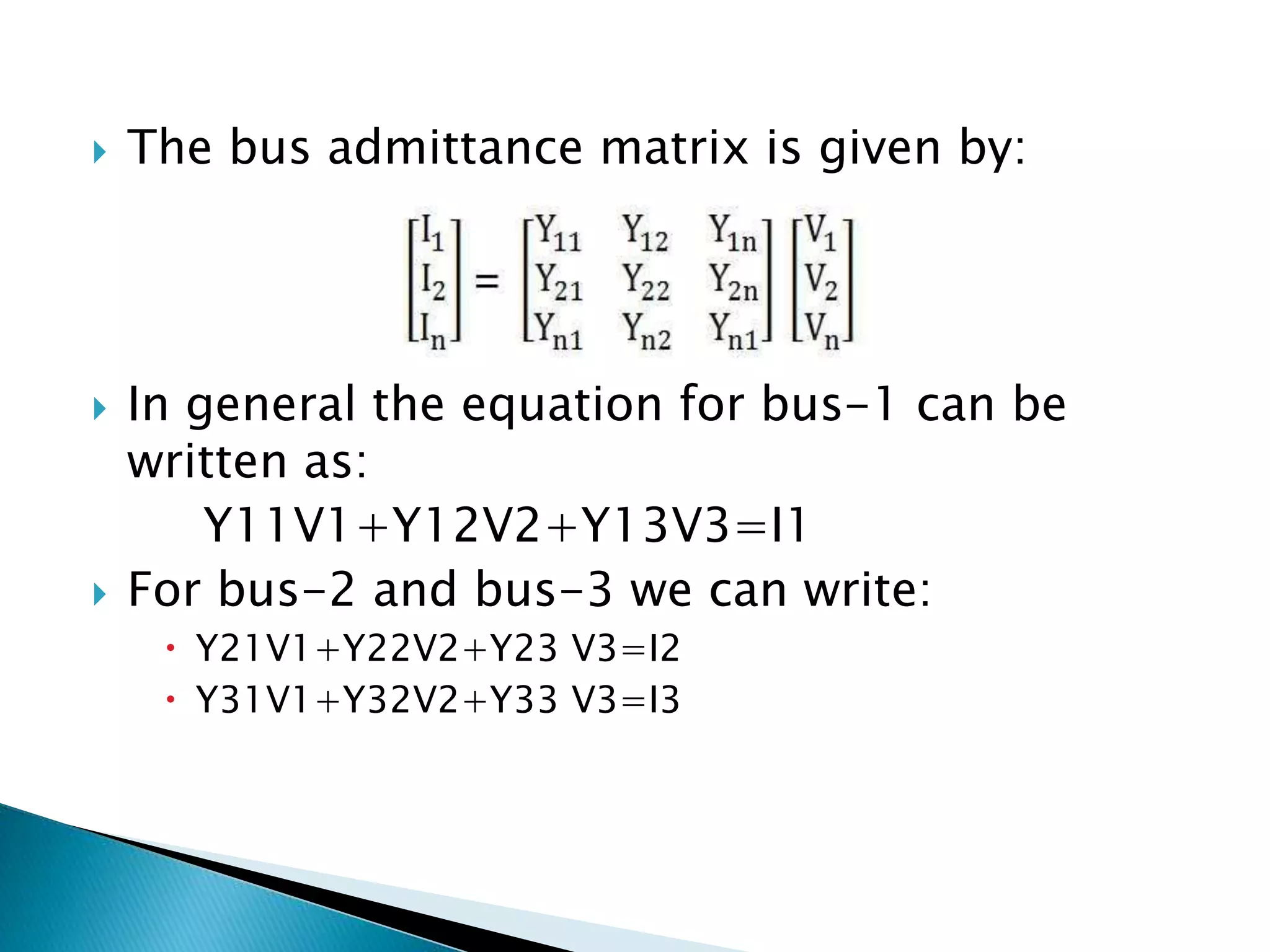
 The bus admittance matrix is given by:
 In general the equation for bus-1 can be
written as:
Y11V1+Y12V2+Y13V3=I1
 For bus-2 and bus-3 we can write:
 Y21V1+Y22V2+Y23 V3=I2
 Y31V1+Y32V2+Y33 V3=I3
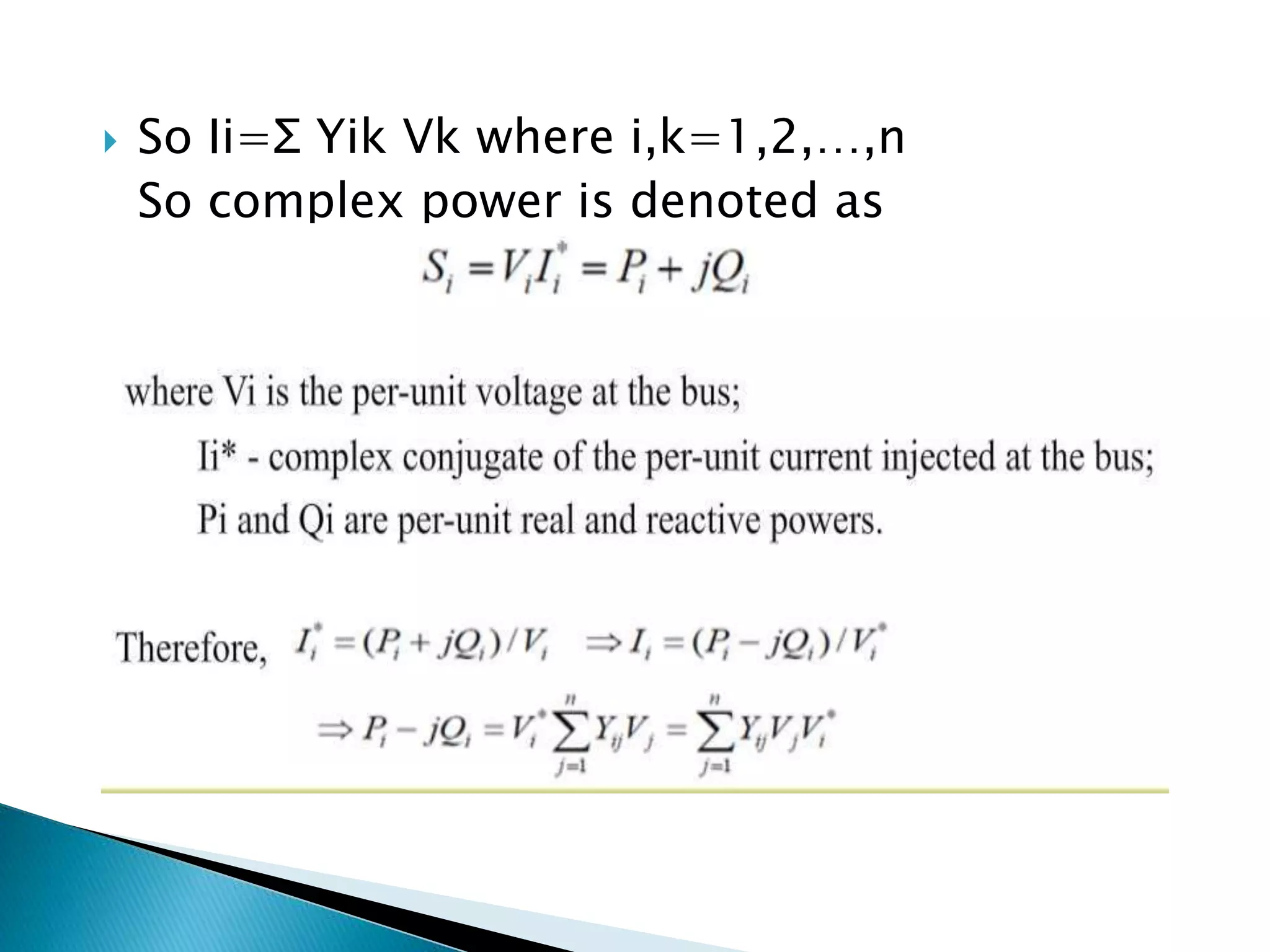
 So Ii=Σ Yik Vk where i,k=1,2,…,n
So complex power is denoted as
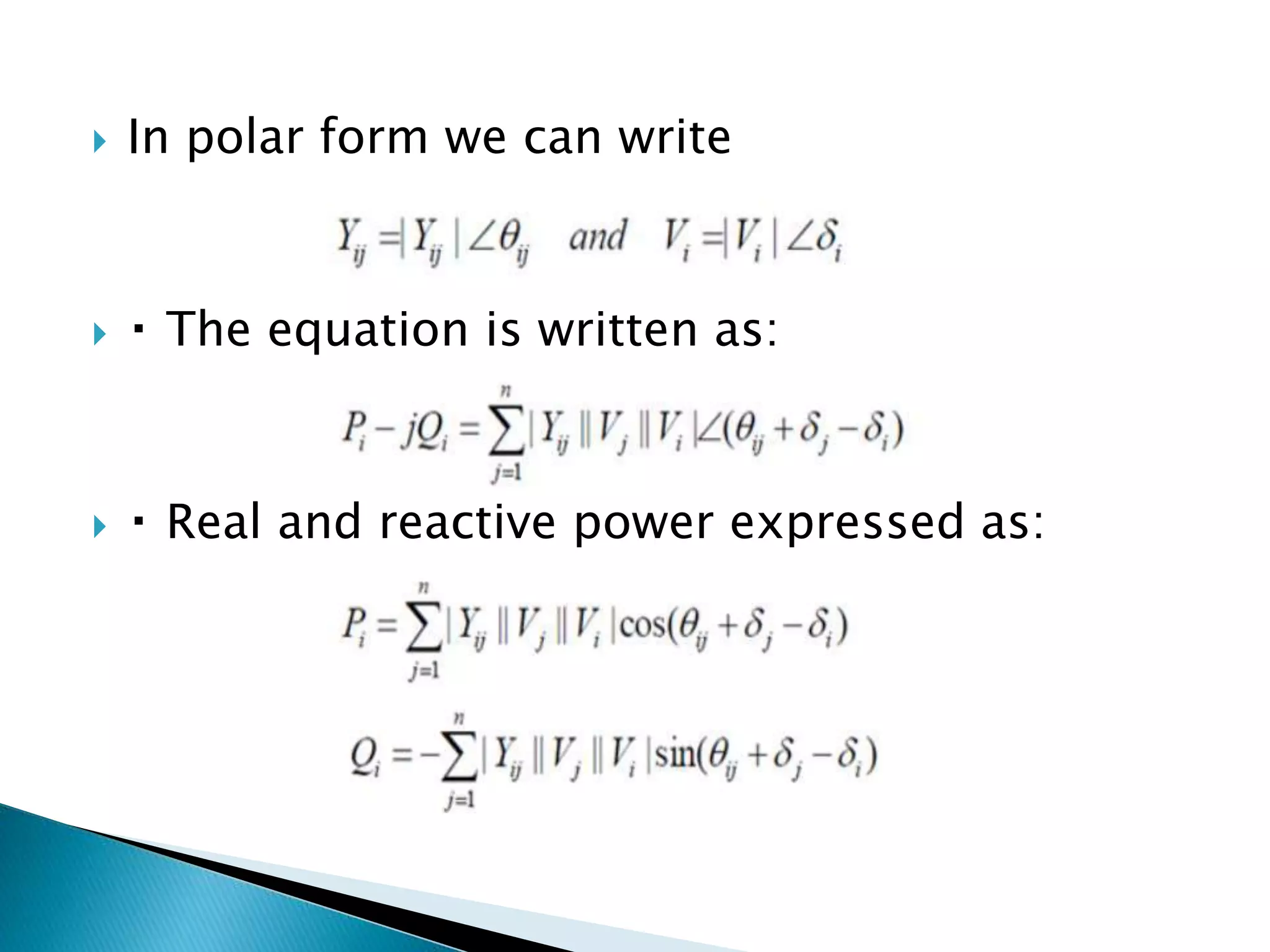
 In polar form we can write
 The equation is written as:
 Real and reactive power expressed as:

Load flow study

  • 1.
    By – Mr.A. L. Jamadar
  • 2.
     Load flowstudies or Power flow studies is the analysis  of a power system in normal steady state condition.  Load flow studies basically comprises of the determination of ◦ Voltage ◦ Current ◦ Active Power ◦ Reactive Power
  • 3.
     Generation suppliesdemand(Load) plus losses.  Bus voltage magnitude remain close to rated value.  Generation operates within specified real and reactive power limits.  Transmission line and transformer are not overloaded.
  • 4.
     Designing apower system.  Planning a power system.  Expansion of power system.  Providing guide lines for optimum operation of power  system.  Providing guide lines for various power system studies.
  • 5.
     A busis a node at which many Transmission lines, Loads  Generators are connected.  It is not necessary that all of them be connected to every  bus.  Bus is indicated by vertical line at which no. of  components are connected.  In load flow study two out of four quantities specified  and other two quantities are to be determined by load  flow equation.  Depending upon that bus are classified.
  • 7.
     A bussat which the Active power and reactive power  are specified.  Magnitude(V) and phase angle(δ) of the voltage will  be calculated.  This type of busses are most common, comprising  almost 80% of all the busses in given power system.
  • 8.
     A busat which the magnitude(V) of the voltage and  active power(P) is defined.  Reactive power(Q) and Phase angle(δ) are to be  determined through load flow equation.  It is also known as P-V bus.  This bus is always connected to generator.  This type of bus is comprises about 10% of all the  buses in power system.
  • 9.
     Voltage magnitude(V)and voltage phase angle(δ) are  specified and real(P) and reactive(Q) power are to be  obtained.  Normally there is only one bus of this type is given in  power system.  One generator bus is selected as the reference bus.  In slack bus voltage angle and magnitude is normally  considered 1+j0 p.u.
  • 11.
     The followingvariables are associated with each bus:  Magnitude of voltage(V)  Phase angle of voltage(δ)  Active power(P)  Reactive power(Q)  The load flow problem can solved with the help of  load flow equation(Static load flow equation).
  • 12.
     The busadmittance matrix is given by:  In general the equation for bus-1 can be written as: Y11V1+Y12V2+Y13V3=I1  For bus-2 and bus-3 we can write:  Y21V1+Y22V2+Y23 V3=I2  Y31V1+Y32V2+Y33 V3=I3
  • 13.
     So Ii=ΣYik Vk where i,k=1,2,…,n So complex power is denoted as
  • 14.
     In polarform we can write  The equation is written as:  Real and reactive power expressed as: