ELECTRICAL ENGINEERING
MATERIALS: CONDUCTING &
SUPERCONDUCTING MATERIALS
MR. ASIF L. JAMADAR
SOLDER MATERIALS
 What is soldering
 Solders used for electrical purpose can be divided into two groups:
1. Soft solders (melting point lower than 400⁰C)
2. Hard solders (melting point higher than 400⁰C)
 Soft solder is an alloy of tin and lead
 Hard solder is an alloy of copper and zinc
 Brazing is a soldering at high temperature 2
ELECTRICAL CONTACT MATERIALS
 Mean of term Electrical Contact
 The successful operation of electrical contact is a function of several factors
 The performance and life of contact materials are relate to voltage, current
and make & break of contact
 Circuit breaker contacts
3
 Commercially available
Electrical Contact Materials:
Pure Metals
 Alloys and Heterogeneous
Mixtures
 Copper
 Silver, Silver Alloys and Silver
Heterogeneous Mixtures
 Silver
 Copper-tungsten Heterogeneous
Mixtures
 Noble Metal Electrical Contacts
 Platinum and its Alloys
 Palladium and its Alloys
 Tungsten
 The electrical contact materials are:
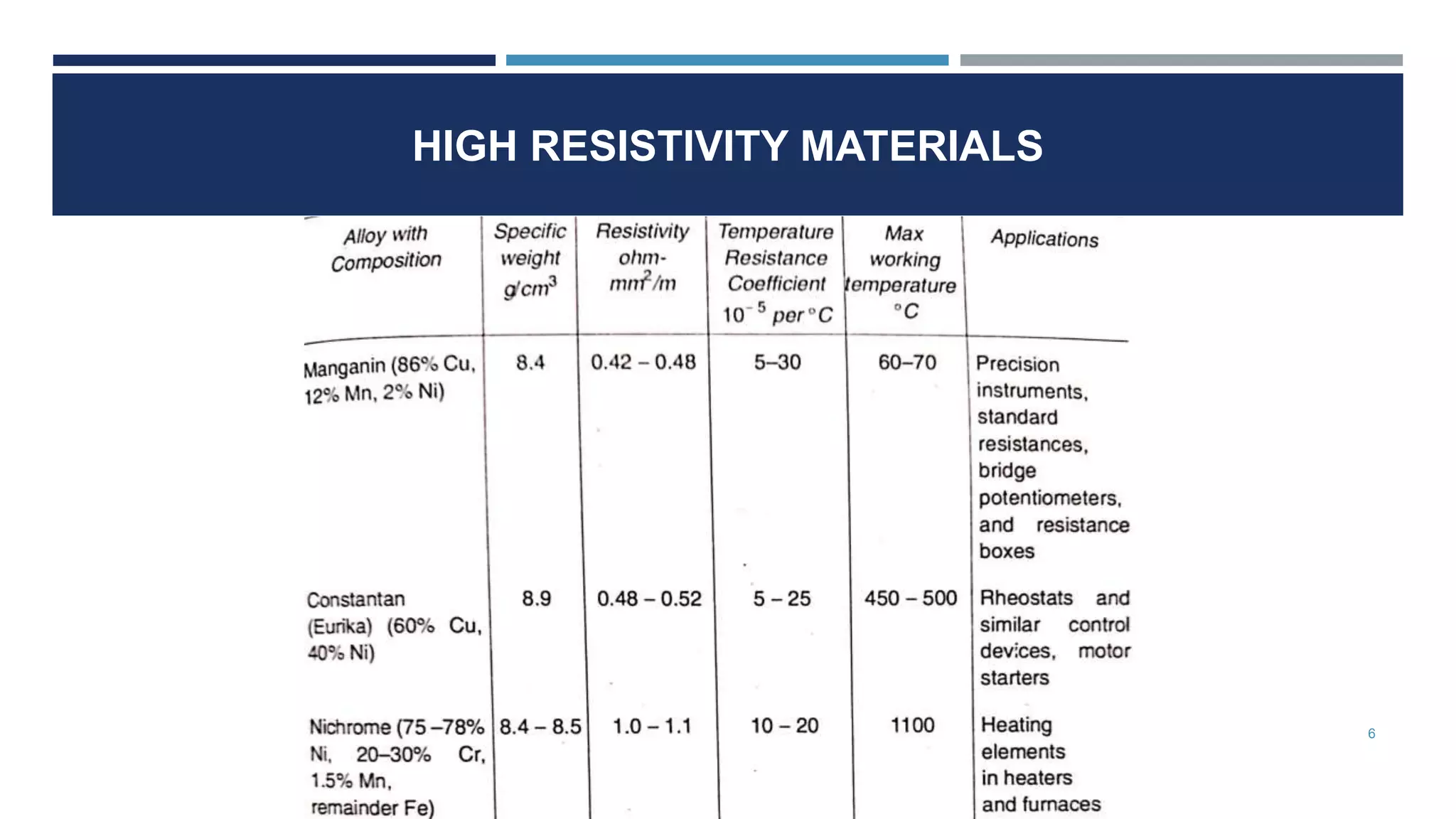
HIGH RESISTIVITY MATERIALS
6
CARBON AND GRAPHITE (CARBON BRUSHES)
7
THANK
YOU
8

Electrical Engineering Material Part-XVIII

  • 1.
    ELECTRICAL ENGINEERING MATERIALS: CONDUCTING& SUPERCONDUCTING MATERIALS MR. ASIF L. JAMADAR
  • 2.
    SOLDER MATERIALS  Whatis soldering  Solders used for electrical purpose can be divided into two groups: 1. Soft solders (melting point lower than 400⁰C) 2. Hard solders (melting point higher than 400⁰C)  Soft solder is an alloy of tin and lead  Hard solder is an alloy of copper and zinc  Brazing is a soldering at high temperature 2
  • 3.
    ELECTRICAL CONTACT MATERIALS Mean of term Electrical Contact  The successful operation of electrical contact is a function of several factors  The performance and life of contact materials are relate to voltage, current and make & break of contact  Circuit breaker contacts 3
  • 4.
     Commercially available ElectricalContact Materials: Pure Metals  Alloys and Heterogeneous Mixtures  Copper  Silver, Silver Alloys and Silver Heterogeneous Mixtures  Silver  Copper-tungsten Heterogeneous Mixtures  Noble Metal Electrical Contacts  Platinum and its Alloys  Palladium and its Alloys  Tungsten  The electrical contact materials are:
  • 6.
  • 7.
    CARBON AND GRAPHITE(CARBON BRUSHES) 7
  • 8.