ELECTRICAL ENGINEERING
MATERIALS
MR. ASIF L. JAMADAR
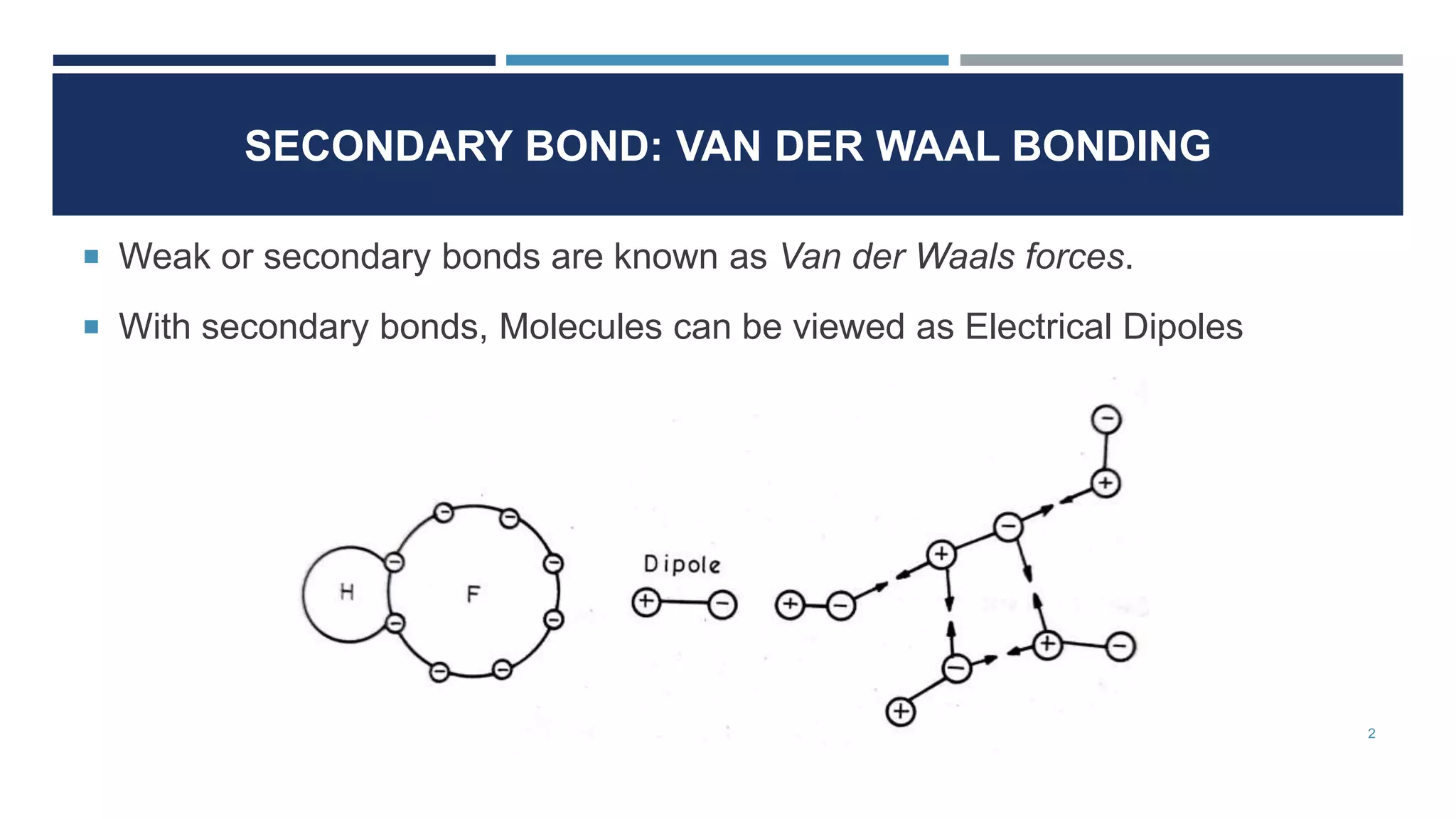
SECONDARY BOND: VAN DER WAAL BONDING
 Weak or secondary bonds are known as Van der Waals forces.
 With secondary bonds, Molecules can be viewed as Electrical Dipoles
2
3
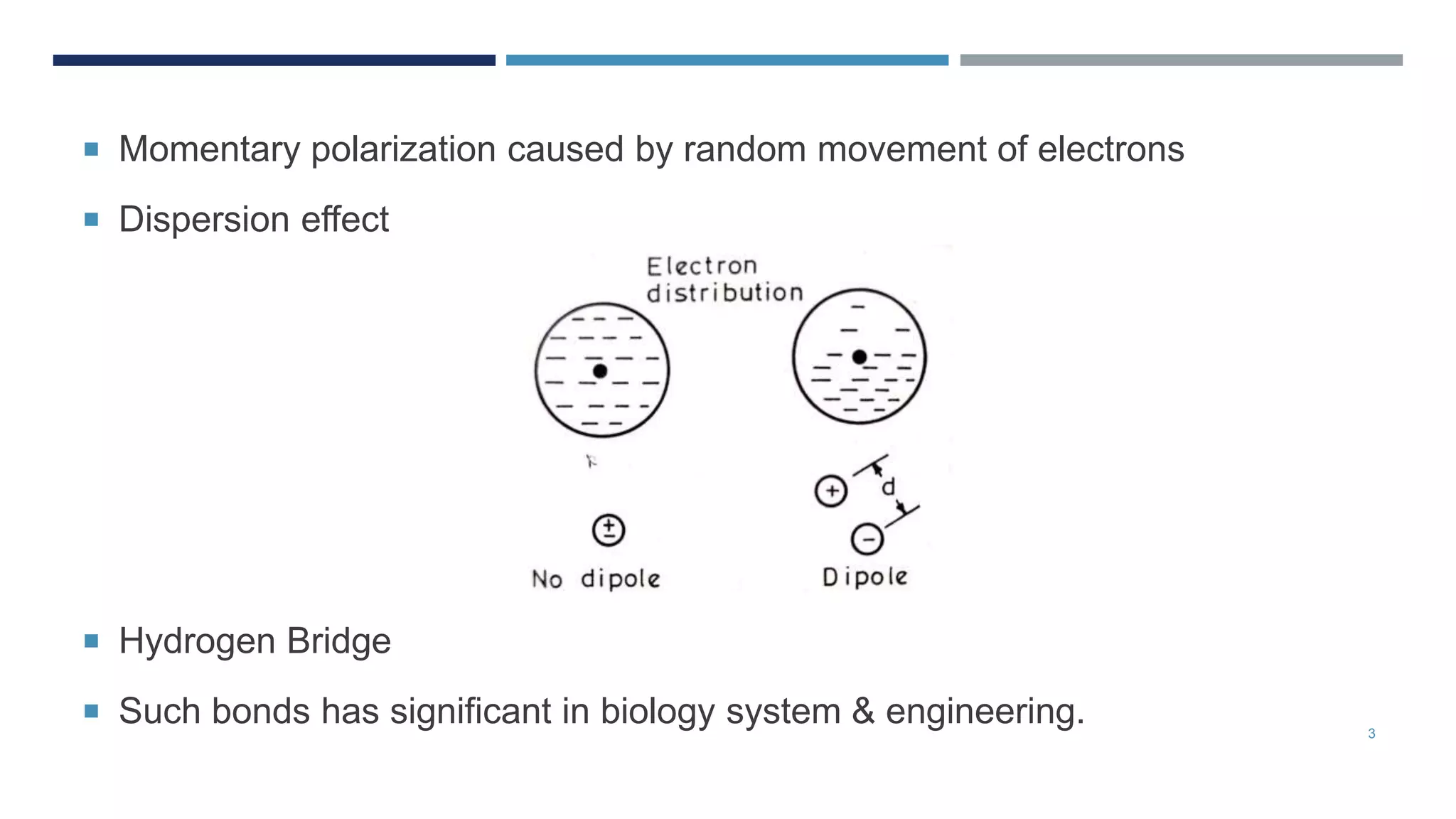
 Momentary polarization caused by random movement of electrons
 Dispersion effect
 Hydrogen Bridge
 Such bonds has significant in biology system & engineering.
ATOM ARRANGEMENT IN MATERIALS
 Significant effect on its properties
 As manner of atomic grouping, the materials are classified as
 Molecular structures
 Crystal structures
 Amorphous structures
4
CRYSTALLINE STRUCTURE OF METALS
 Metals are most important class of materials used in engineering application
 These materials have metallic bond.
 When metals solidify by cooling……
 Lattice form
 Iron is the example of allotropic change
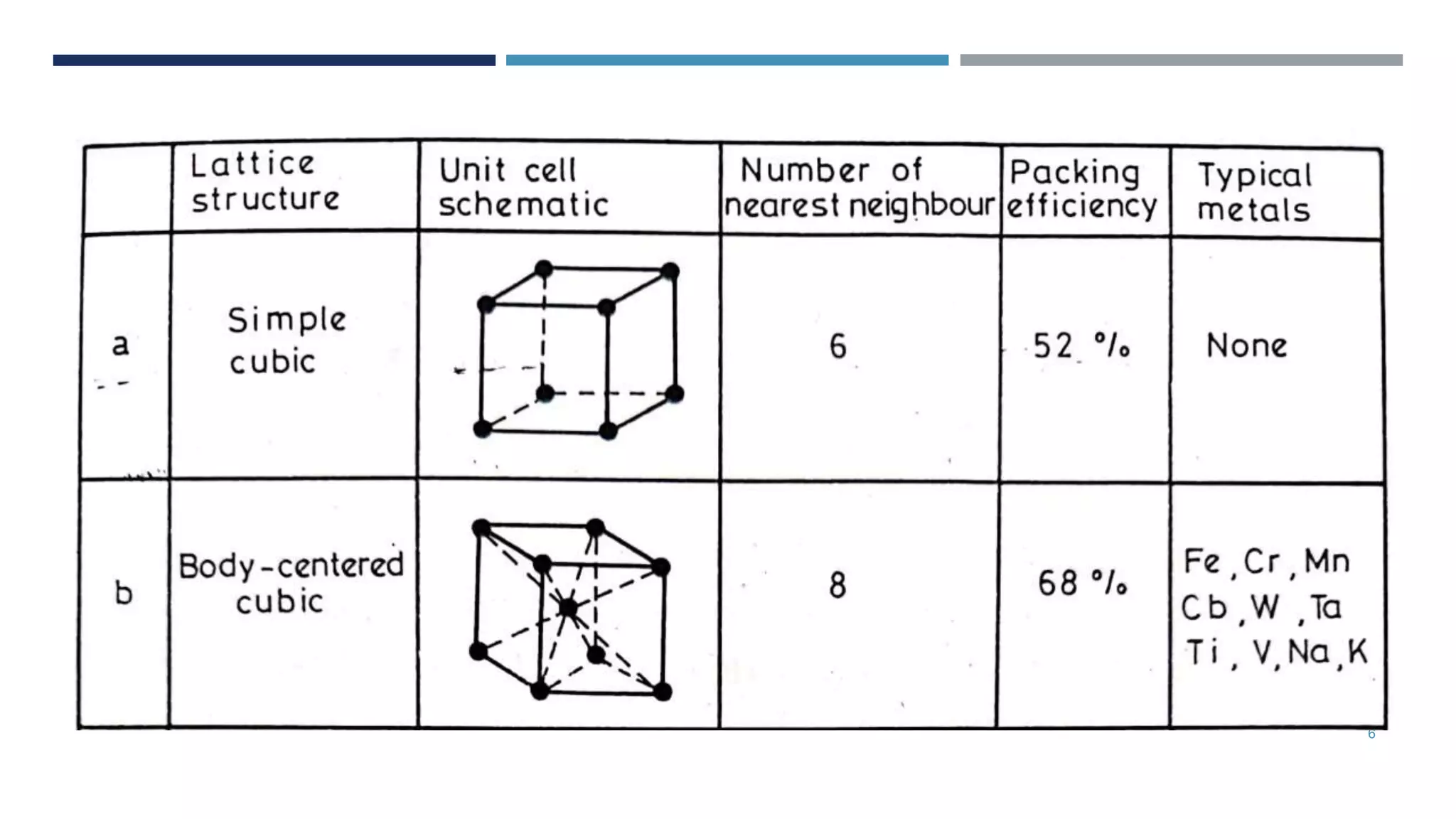
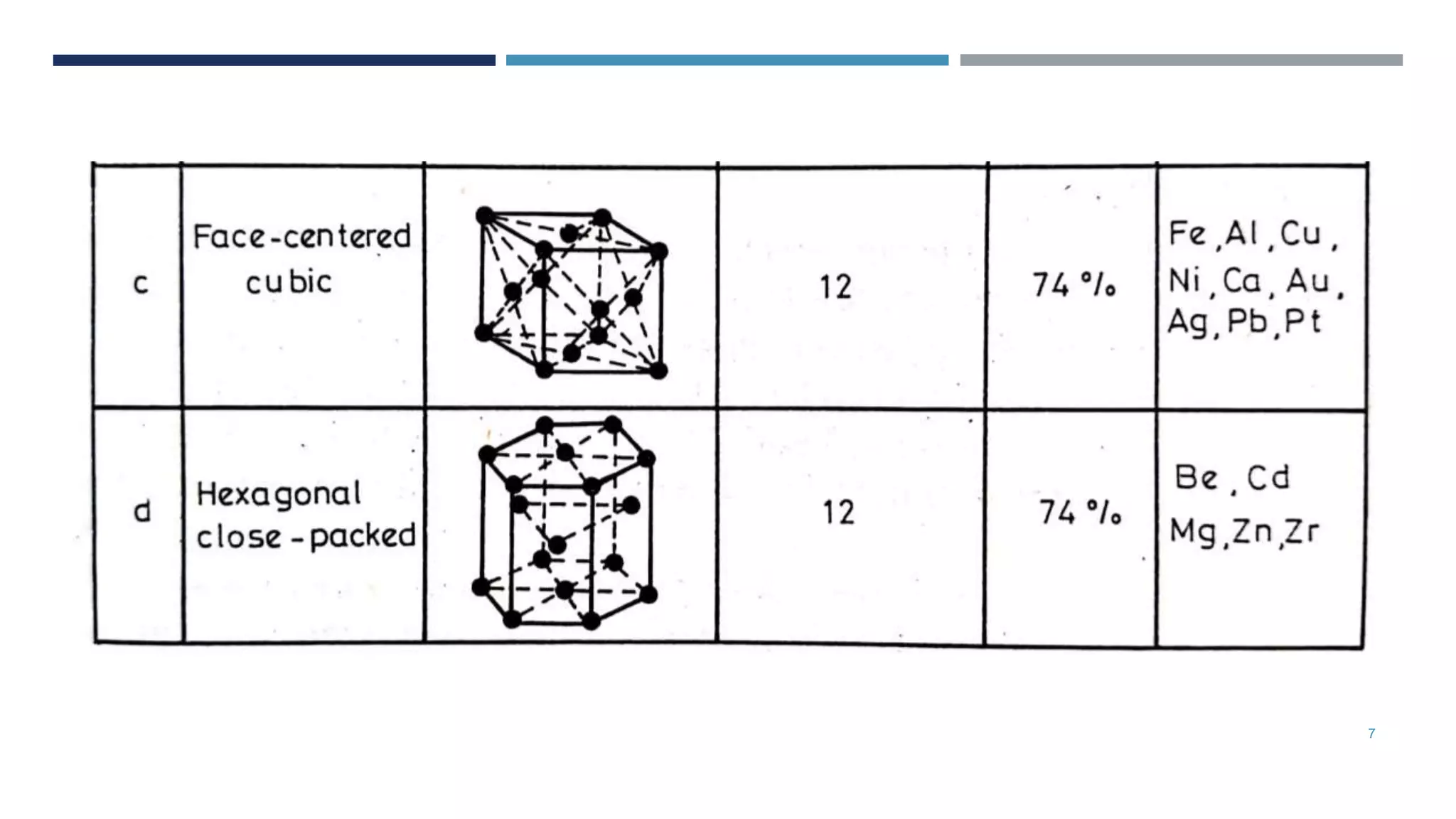
 14 different crystal structures 5
6
7
THANK
YOU
8

Electrical Engineering Material Part-V

  • 1.
  • 2.
    SECONDARY BOND: VANDER WAAL BONDING  Weak or secondary bonds are known as Van der Waals forces.  With secondary bonds, Molecules can be viewed as Electrical Dipoles 2
  • 3.
    3  Momentary polarizationcaused by random movement of electrons  Dispersion effect  Hydrogen Bridge  Such bonds has significant in biology system & engineering.
  • 4.
    ATOM ARRANGEMENT INMATERIALS  Significant effect on its properties  As manner of atomic grouping, the materials are classified as  Molecular structures  Crystal structures  Amorphous structures 4
  • 5.
    CRYSTALLINE STRUCTURE OFMETALS  Metals are most important class of materials used in engineering application  These materials have metallic bond.  When metals solidify by cooling……  Lattice form  Iron is the example of allotropic change  14 different crystal structures 5
  • 6.
  • 7.
  • 8.