LIPIDS
Prepared by : Dr Sapna Smith Lal
Assistant Professor -Biochemistry
Sam Higginbottom University of Agriculture
Technology and Sciences-Prayagraj
LIPIDS
“Lipids are organic
compounds that contain
hydrogen, carbon, and oxygen
atoms, which forms the
framework for the structure
and function of living cells.”
WHAT ARE LIPIDS?
 These organic compounds are nonpolar
molecules, which are soluble only in nonpolar
solvents and insoluble in water because water is
a polar molecule. In the human body, these
molecules can be synthesized in the liver and are
found in oil, butter, whole milk, cheese, fried
foods and also in some red meats.
Properties of Lipids:
 Lipids are a family of organic compounds, composed of fats
and oils. These molecules yield high energy and are
responsible for different functions within the human body.
Listed below are some important characteristics of Lipids.
 Lipids are oily or greasy nonpolar molecules, stored in the
adipose tissue of the body.
 Lipids are a heterogeneous group of compounds, mainly
composed of hydrocarbon chains.
 Lipids are energy-rich organic molecules, which provide
energy for different life processes.
 Lipids are a class of compounds characterised by their
solubility in nonpolar solvents and insolubility in water.
 Lipids are significant in biological systems as they form a
mechanical barrier dividing a cell from the external
environment known as the cell membrane.
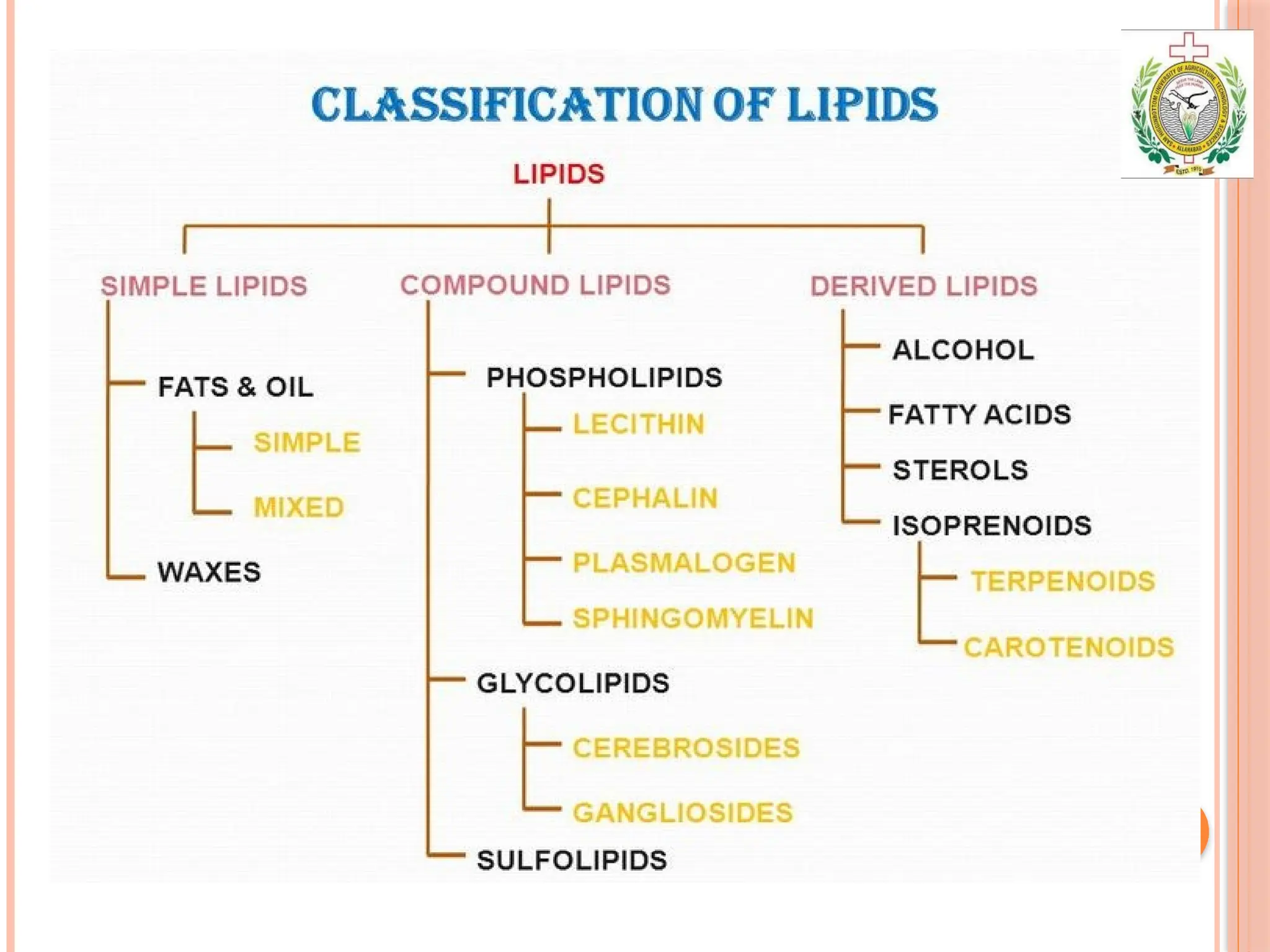
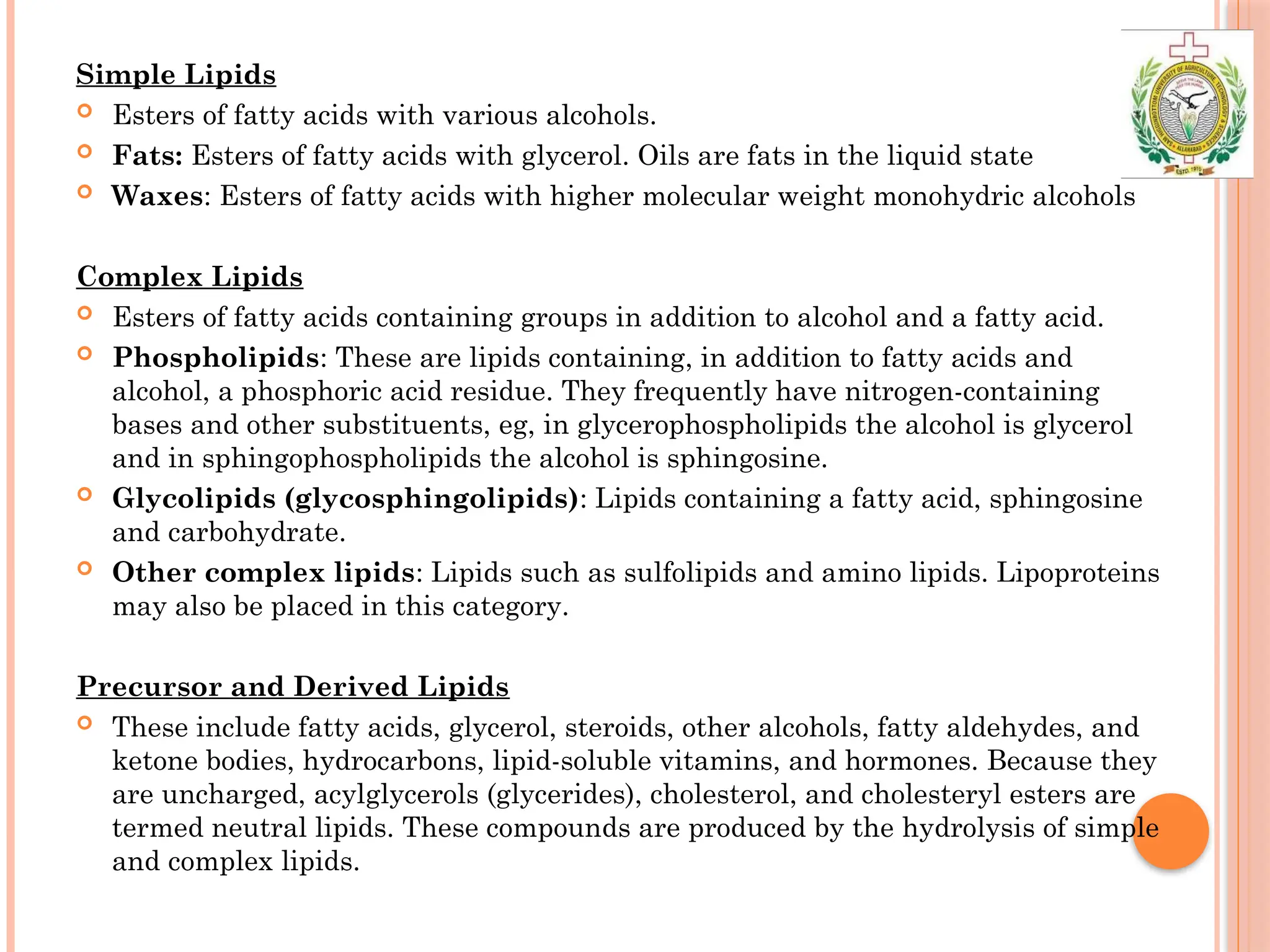
Simple Lipids
 Esters of fatty acids with various alcohols.
 Fats: Esters of fatty acids with glycerol. Oils are fats in the liquid state
 Waxes: Esters of fatty acids with higher molecular weight monohydric alcohols
Complex Lipids
 Esters of fatty acids containing groups in addition to alcohol and a fatty acid.
 Phospholipids: These are lipids containing, in addition to fatty acids and
alcohol, a phosphoric acid residue. They frequently have nitrogen-containing
bases and other substituents, eg, in glycerophospholipids the alcohol is glycerol
and in sphingophospholipids the alcohol is sphingosine.
 Glycolipids (glycosphingolipids): Lipids containing a fatty acid, sphingosine
and carbohydrate.
 Other complex lipids: Lipids such as sulfolipids and amino lipids. Lipoproteins
may also be placed in this category.
Precursor and Derived Lipids
 These include fatty acids, glycerol, steroids, other alcohols, fatty aldehydes, and
ketone bodies, hydrocarbons, lipid-soluble vitamins, and hormones. Because they
are uncharged, acylglycerols (glycerides), cholesterol, and cholesteryl esters are
termed neutral lipids. These compounds are produced by the hydrolysis of simple
and complex lipids.
FATTY ACIDS:
 Fatty acids are the building blocks of the fat in
our bodies and in the food we eat. During
digestion, the body breaks down fats into fatty
acids, which can then be absorbed into the blood.
Fatty acid molecules are usually joined together in
groups of three, forming a molecule called a
triglyceride.
 unction of Fatty Acids. Fatty acids have important
roles in: 1) signal-transduction pathways; 2)
cellular fuel sources; 3) the composition of hormones
and lipids; 4) the modification of proteins; and 5)
energy storage within adipose tissue (specialized fat
cells) in the form of triacylglycerols.
CONT…..
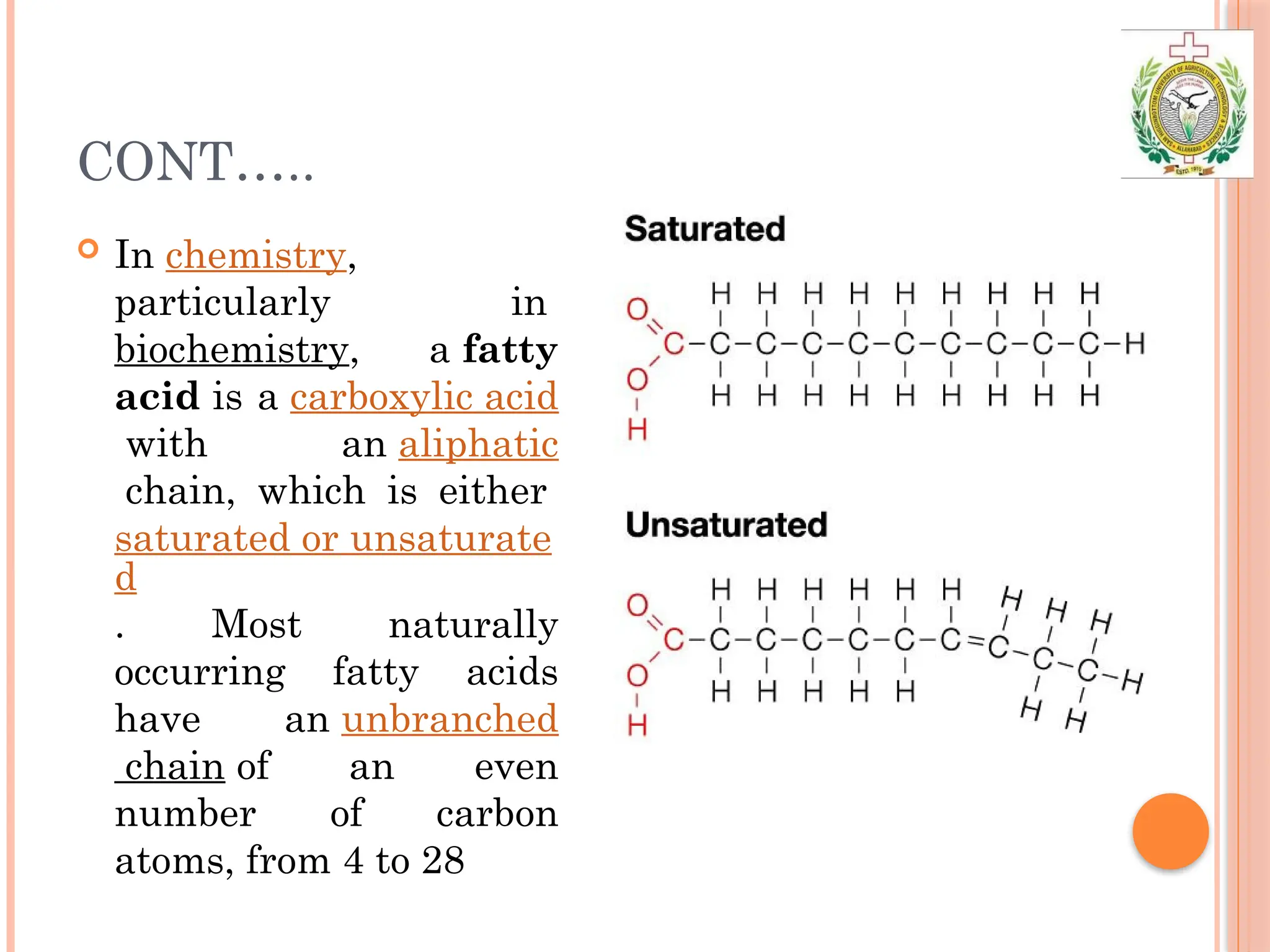
 In chemistry,
particularly in
biochemistry, a fatty
acid is a carboxylic acid
with an aliphatic
chain, which is either
saturated or unsaturate
d
. Most naturally
occurring fatty acids
have an unbranched
chain of an even
number of carbon
atoms, from 4 to 28
CONT…..
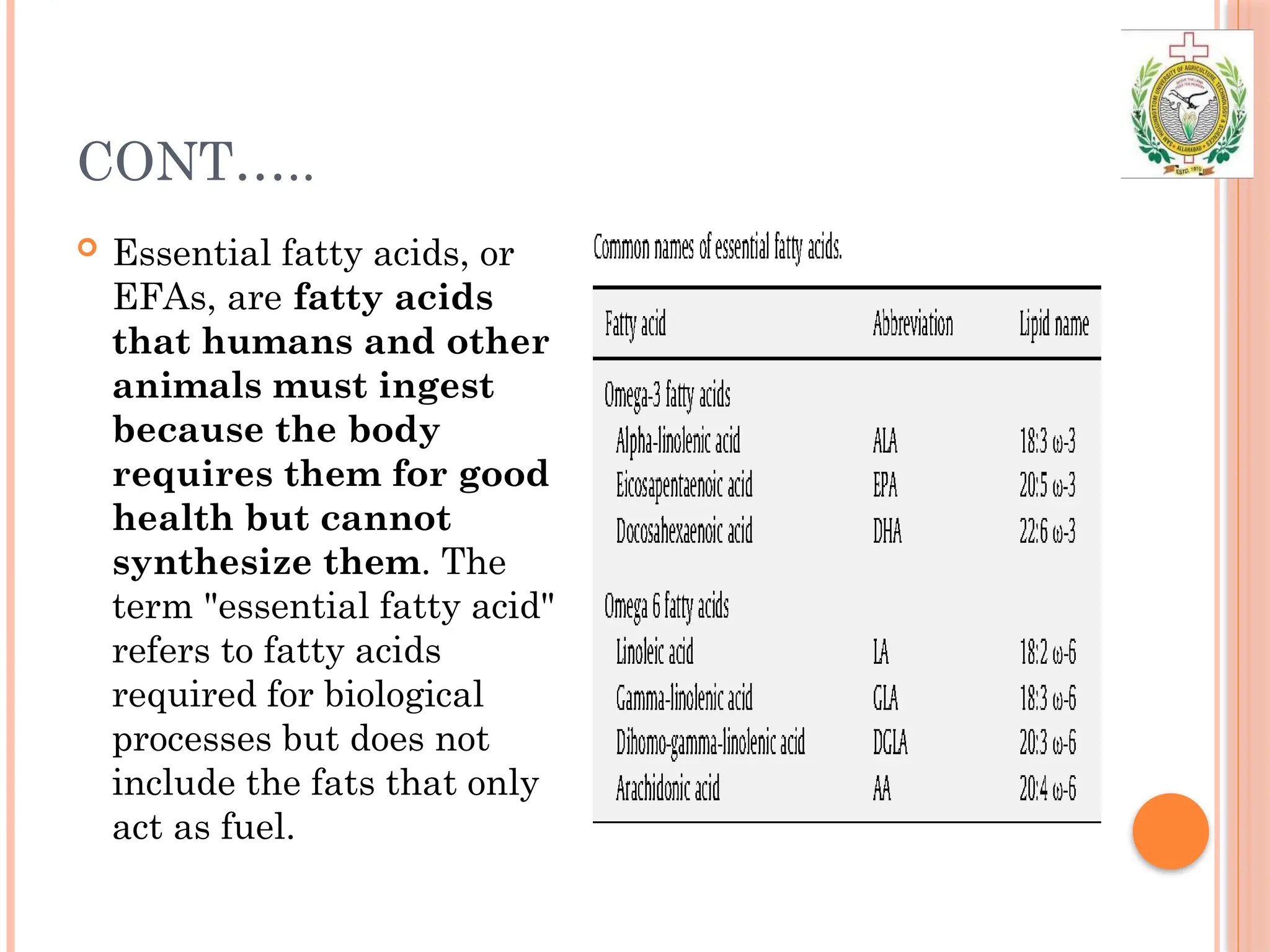
 Essential fatty acids, or
EFAs, are fatty acids
that humans and other
animals must ingest
because the body
requires them for good
health but cannot
synthesize them. The
term "essential fatty acid"
refers to fatty acids
required for biological
processes but does not
include the fats that only
act as fuel.
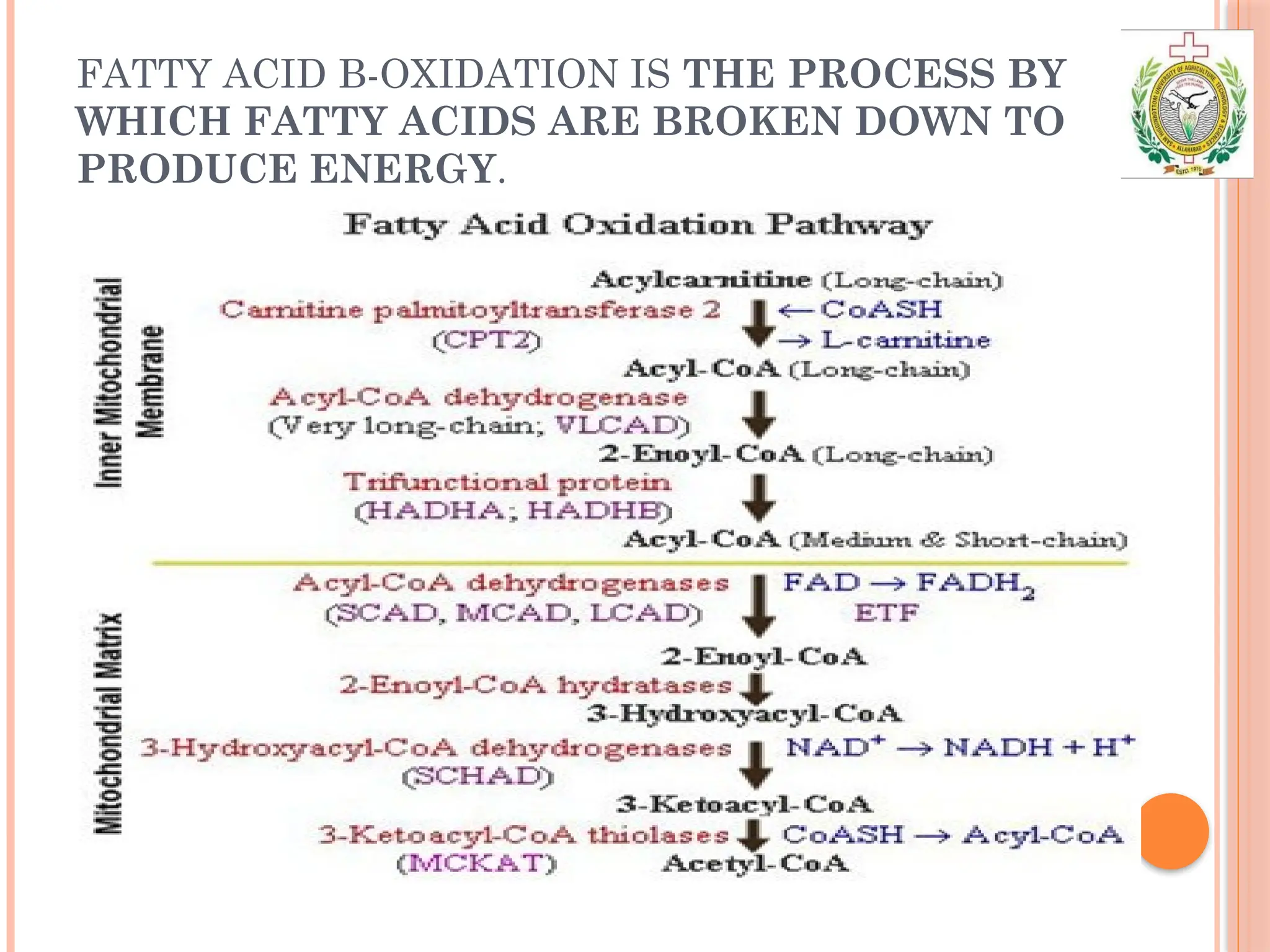
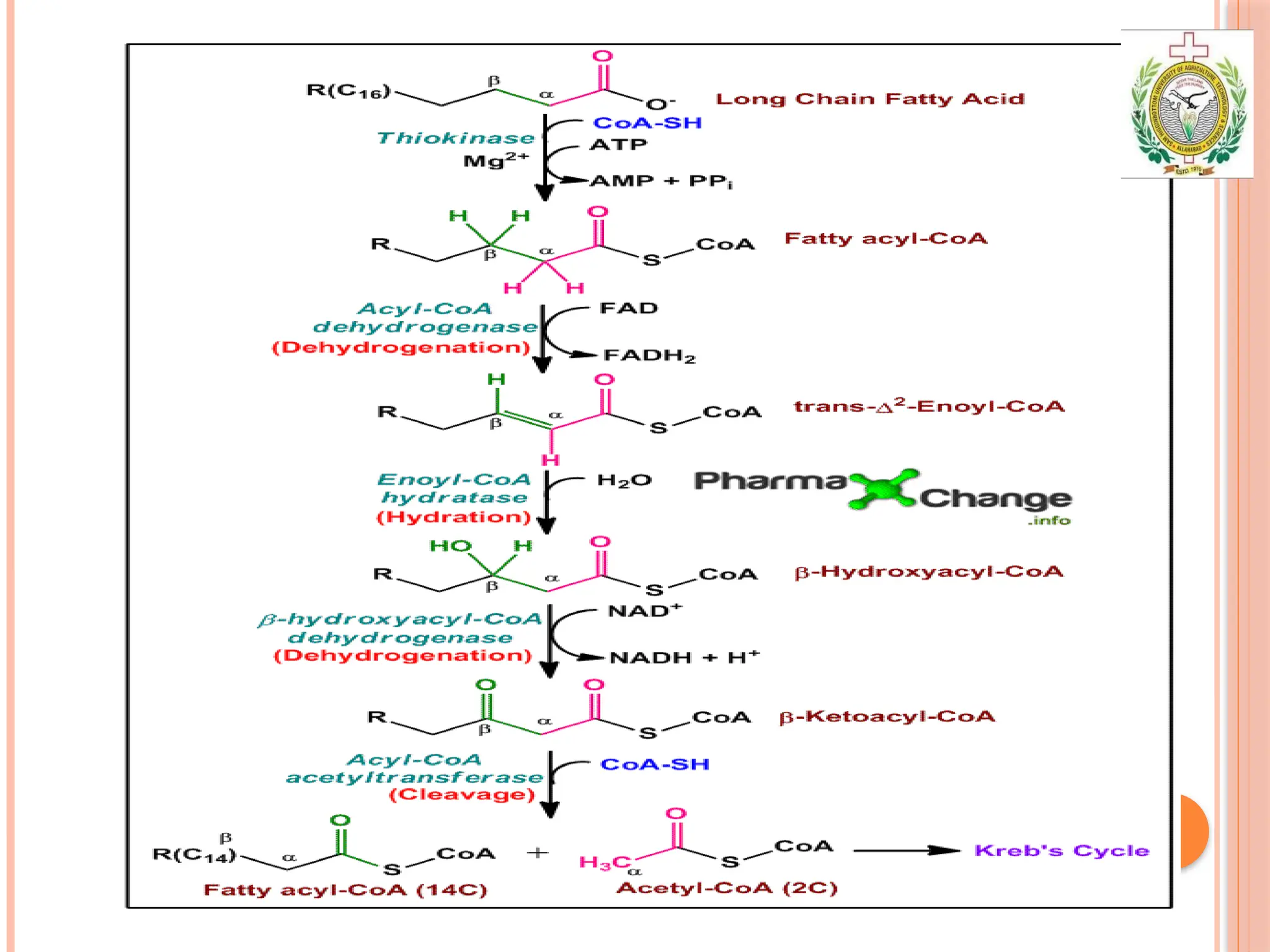
FATTY ACID Β-OXIDATION IS THE PROCESS BY
WHICH FATTY ACIDS ARE BROKEN DOWN TO
PRODUCE ENERGY.
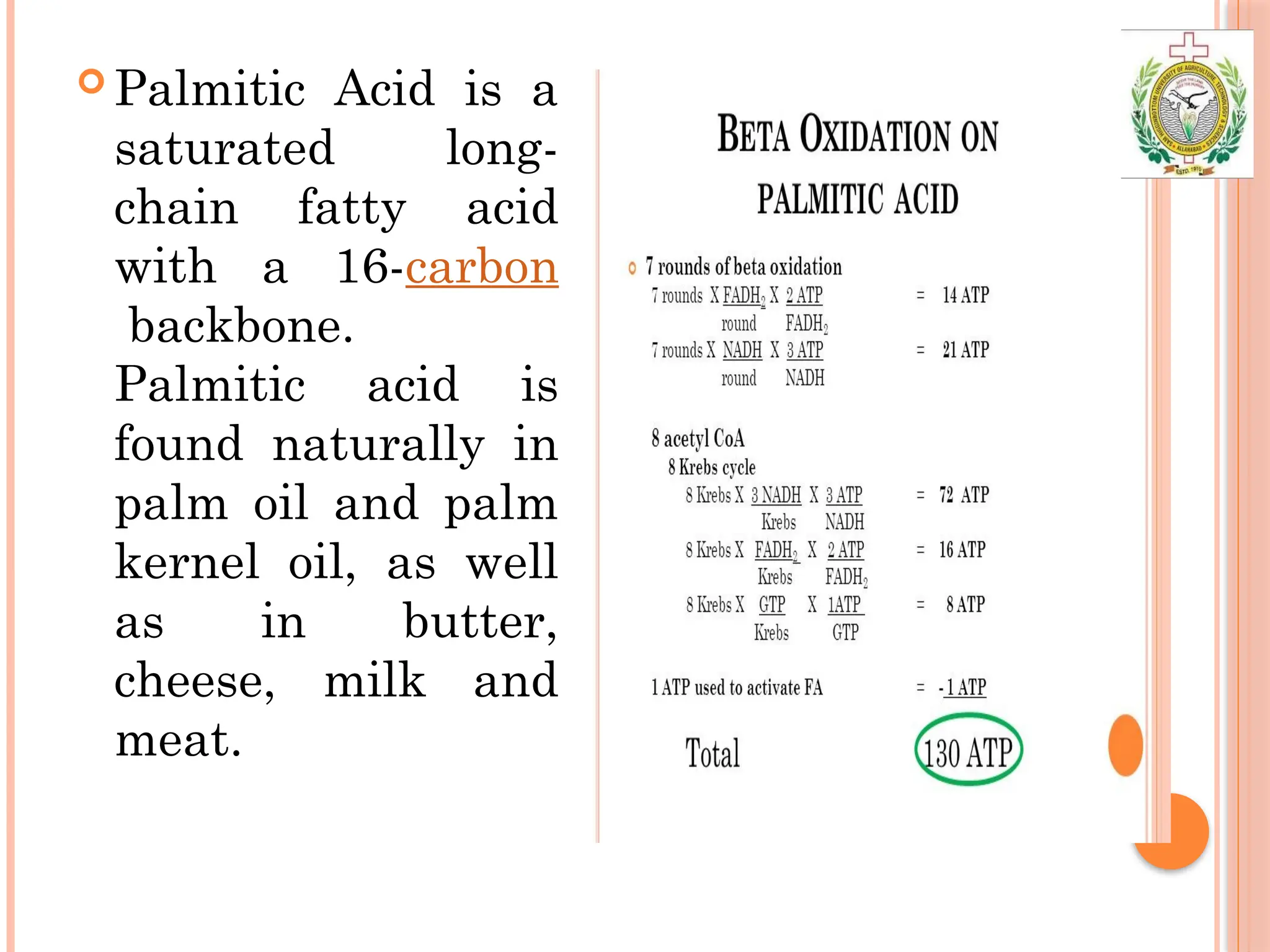
 Palmitic Acid is a
saturated long-
chain fatty acid
with a 16-carbon
backbone.
Palmitic acid is
found naturally in
palm oil and palm
kernel oil, as well
as in butter,
cheese, milk and
meat.
LIPIDS -introduction ,classification and metabolism

LIPIDS -introduction ,classification and metabolism

  • 1.
    LIPIDS Prepared by :Dr Sapna Smith Lal Assistant Professor -Biochemistry Sam Higginbottom University of Agriculture Technology and Sciences-Prayagraj
  • 2.
    LIPIDS “Lipids are organic compoundsthat contain hydrogen, carbon, and oxygen atoms, which forms the framework for the structure and function of living cells.”
  • 3.
    WHAT ARE LIPIDS? These organic compounds are nonpolar molecules, which are soluble only in nonpolar solvents and insoluble in water because water is a polar molecule. In the human body, these molecules can be synthesized in the liver and are found in oil, butter, whole milk, cheese, fried foods and also in some red meats.
  • 4.
    Properties of Lipids: Lipids are a family of organic compounds, composed of fats and oils. These molecules yield high energy and are responsible for different functions within the human body. Listed below are some important characteristics of Lipids.  Lipids are oily or greasy nonpolar molecules, stored in the adipose tissue of the body.  Lipids are a heterogeneous group of compounds, mainly composed of hydrocarbon chains.  Lipids are energy-rich organic molecules, which provide energy for different life processes.  Lipids are a class of compounds characterised by their solubility in nonpolar solvents and insolubility in water.  Lipids are significant in biological systems as they form a mechanical barrier dividing a cell from the external environment known as the cell membrane.
  • 6.
    Simple Lipids  Estersof fatty acids with various alcohols.  Fats: Esters of fatty acids with glycerol. Oils are fats in the liquid state  Waxes: Esters of fatty acids with higher molecular weight monohydric alcohols Complex Lipids  Esters of fatty acids containing groups in addition to alcohol and a fatty acid.  Phospholipids: These are lipids containing, in addition to fatty acids and alcohol, a phosphoric acid residue. They frequently have nitrogen-containing bases and other substituents, eg, in glycerophospholipids the alcohol is glycerol and in sphingophospholipids the alcohol is sphingosine.  Glycolipids (glycosphingolipids): Lipids containing a fatty acid, sphingosine and carbohydrate.  Other complex lipids: Lipids such as sulfolipids and amino lipids. Lipoproteins may also be placed in this category. Precursor and Derived Lipids  These include fatty acids, glycerol, steroids, other alcohols, fatty aldehydes, and ketone bodies, hydrocarbons, lipid-soluble vitamins, and hormones. Because they are uncharged, acylglycerols (glycerides), cholesterol, and cholesteryl esters are termed neutral lipids. These compounds are produced by the hydrolysis of simple and complex lipids.
  • 7.
    FATTY ACIDS:  Fattyacids are the building blocks of the fat in our bodies and in the food we eat. During digestion, the body breaks down fats into fatty acids, which can then be absorbed into the blood. Fatty acid molecules are usually joined together in groups of three, forming a molecule called a triglyceride.  unction of Fatty Acids. Fatty acids have important roles in: 1) signal-transduction pathways; 2) cellular fuel sources; 3) the composition of hormones and lipids; 4) the modification of proteins; and 5) energy storage within adipose tissue (specialized fat cells) in the form of triacylglycerols.
  • 8.
    CONT…..  In chemistry, particularlyin biochemistry, a fatty acid is a carboxylic acid with an aliphatic chain, which is either saturated or unsaturate d . Most naturally occurring fatty acids have an unbranched chain of an even number of carbon atoms, from 4 to 28
  • 9.
    CONT…..  Essential fattyacids, or EFAs, are fatty acids that humans and other animals must ingest because the body requires them for good health but cannot synthesize them. The term "essential fatty acid" refers to fatty acids required for biological processes but does not include the fats that only act as fuel.
  • 10.
    FATTY ACID Β-OXIDATIONIS THE PROCESS BY WHICH FATTY ACIDS ARE BROKEN DOWN TO PRODUCE ENERGY.
  • 11.
     Palmitic Acidis a saturated long- chain fatty acid with a 16-carbon backbone. Palmitic acid is found naturally in palm oil and palm kernel oil, as well as in butter, cheese, milk and meat.