Dr. Ansil P N, PhD
Faculty,
Department of Biochemistry
Al Azhar Medical College
Thodupzha, Idukki,
Kerala, India.
 Digestion - hydrolysis of large and complex organic
molecules of foodstuffs into smaller and preferably water-
soluble molecules which can be easily absorbed by the GIT.
 Digestion of macromolecules also promotes the absorption
of fat soluble vitamins and certain minerals.
 Cooking of the food & mastication improve its digestibility
by enzymes.
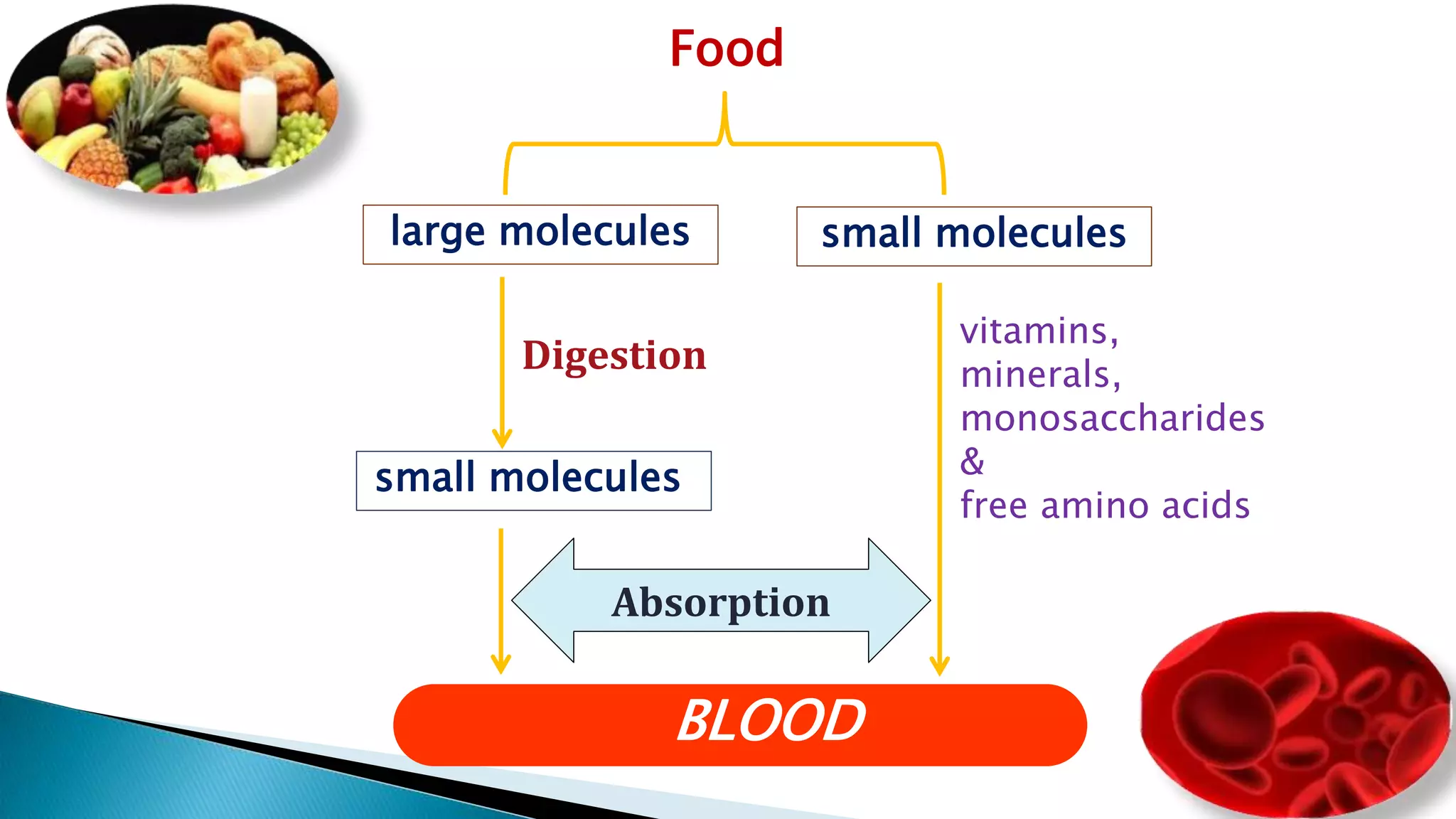
large molecules small molecules
small molecules
Digestion
Absorption
vitamins,
minerals,
monosaccharides
&
free amino acids
BLOOD
Food
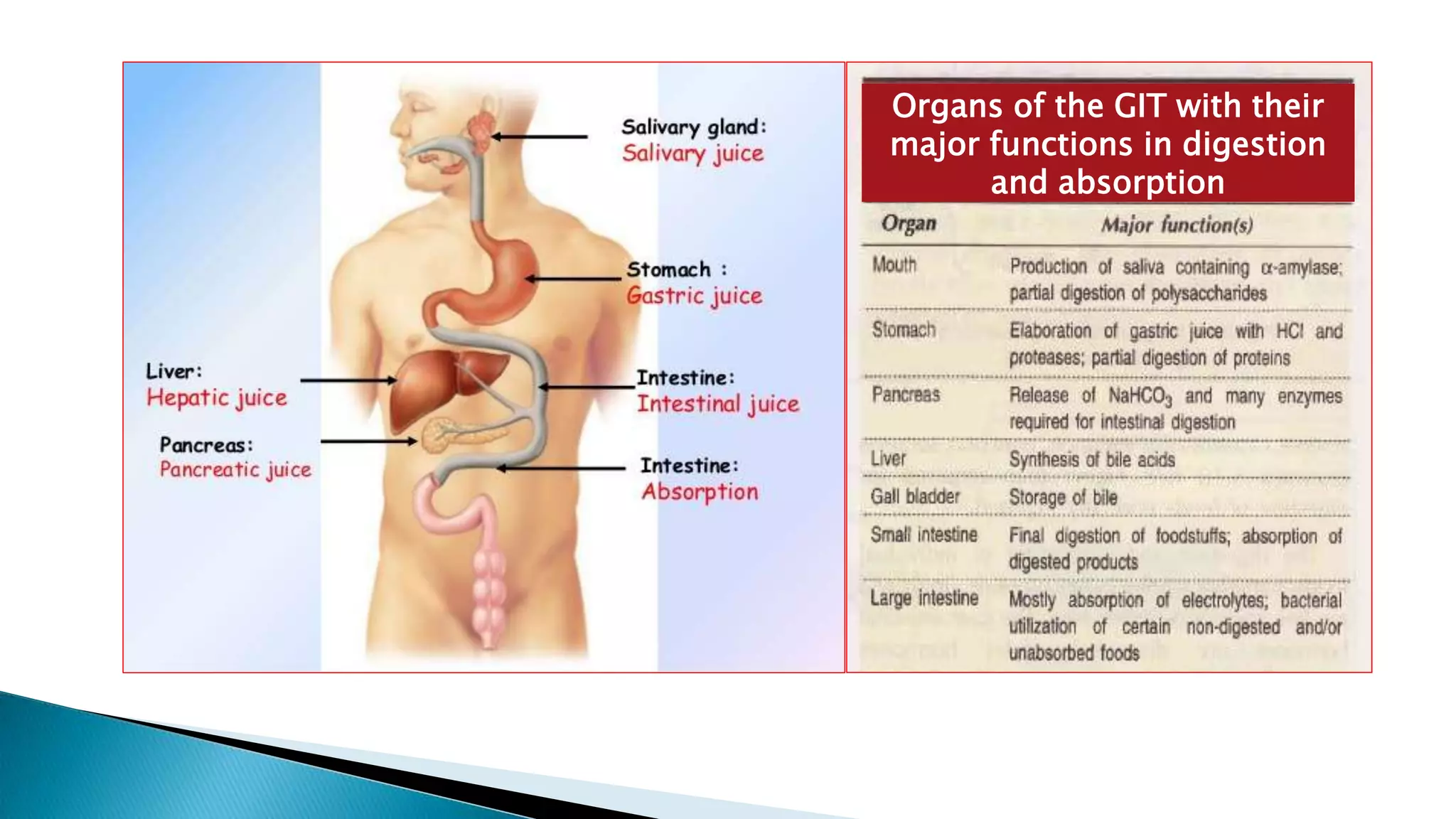
Organs of the GIT with their
major functions in digestion
and absorption
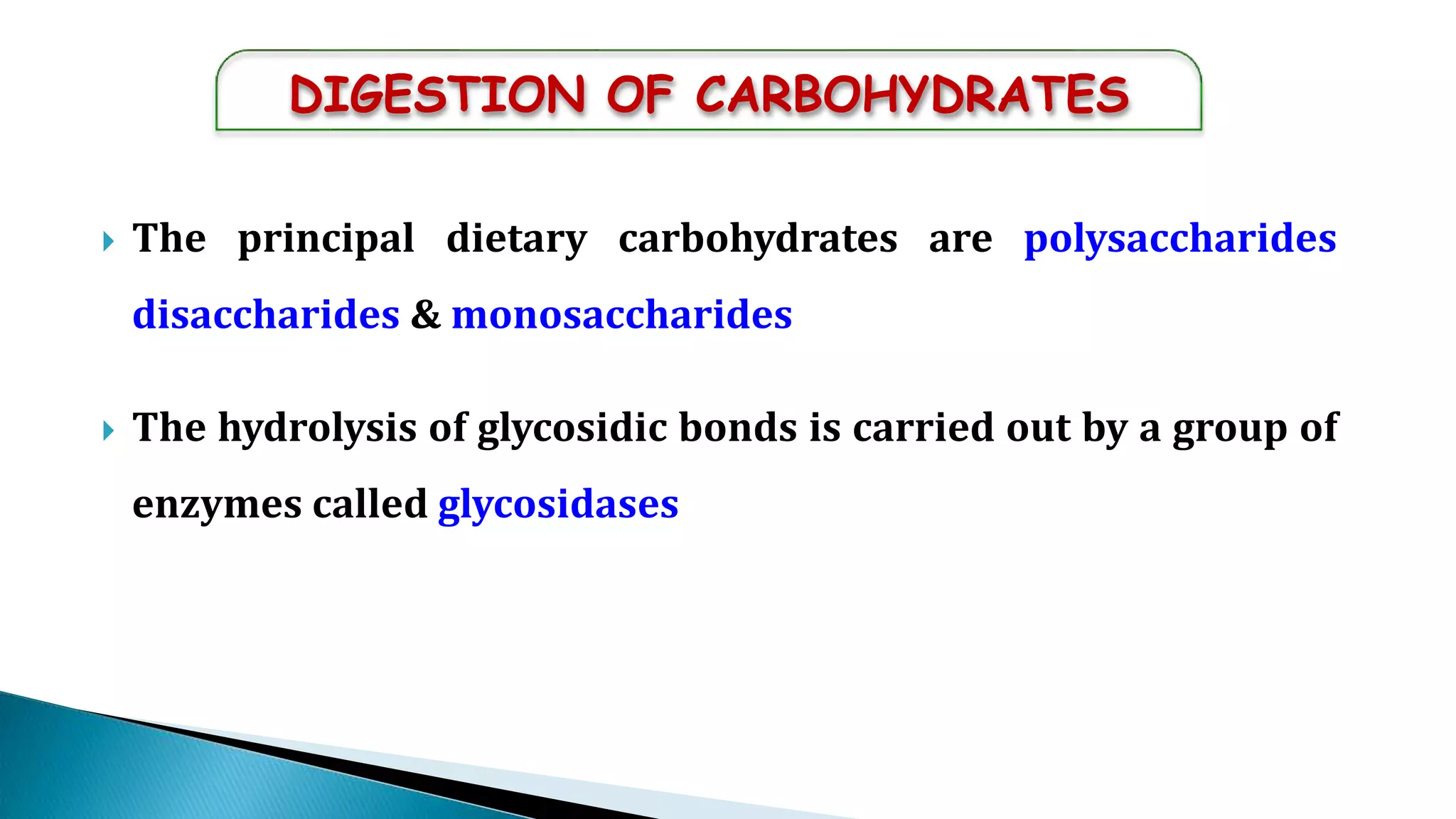
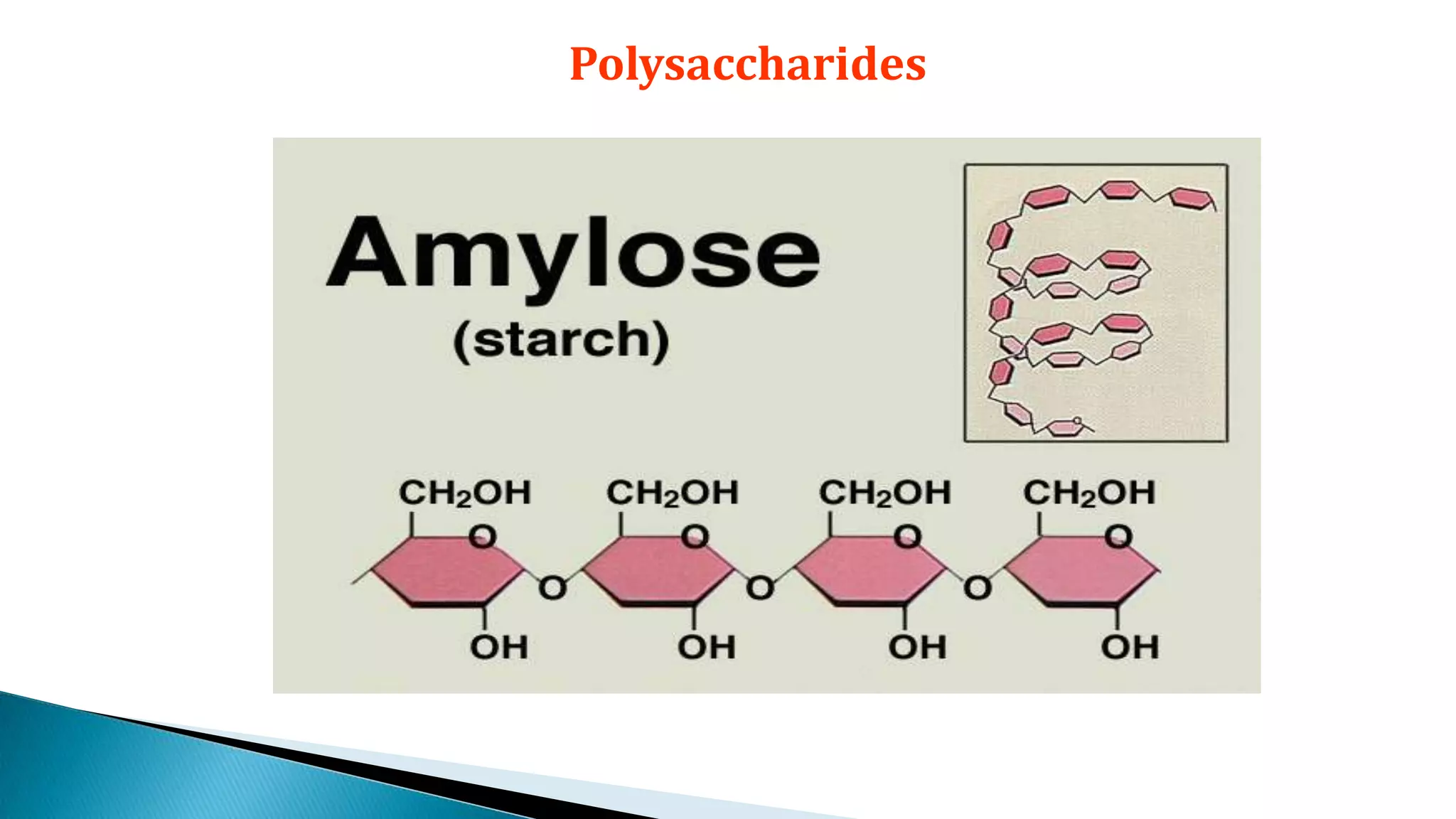
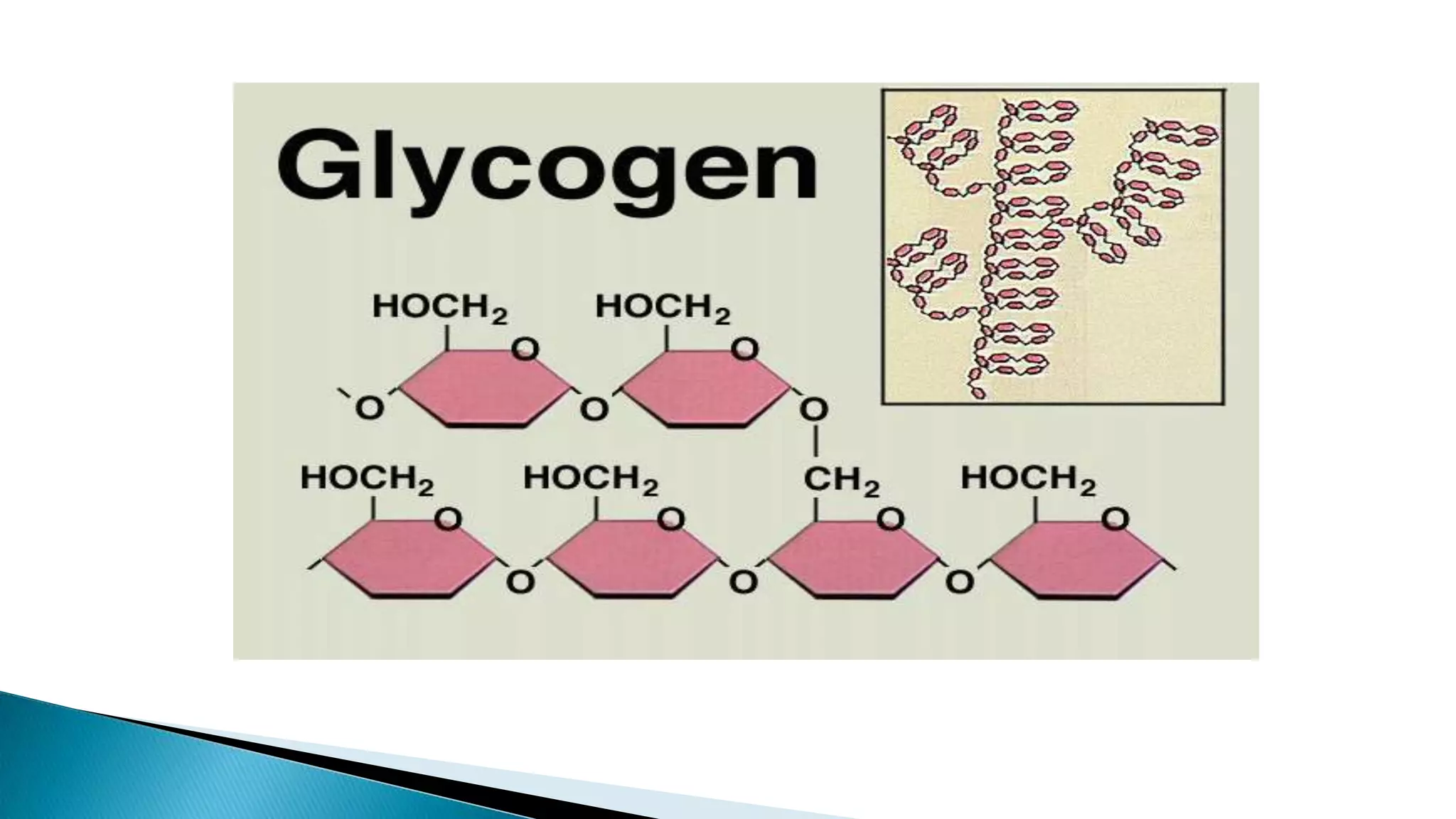
 The principal dietary carbohydrates are polysaccharides
disaccharides & monosaccharides
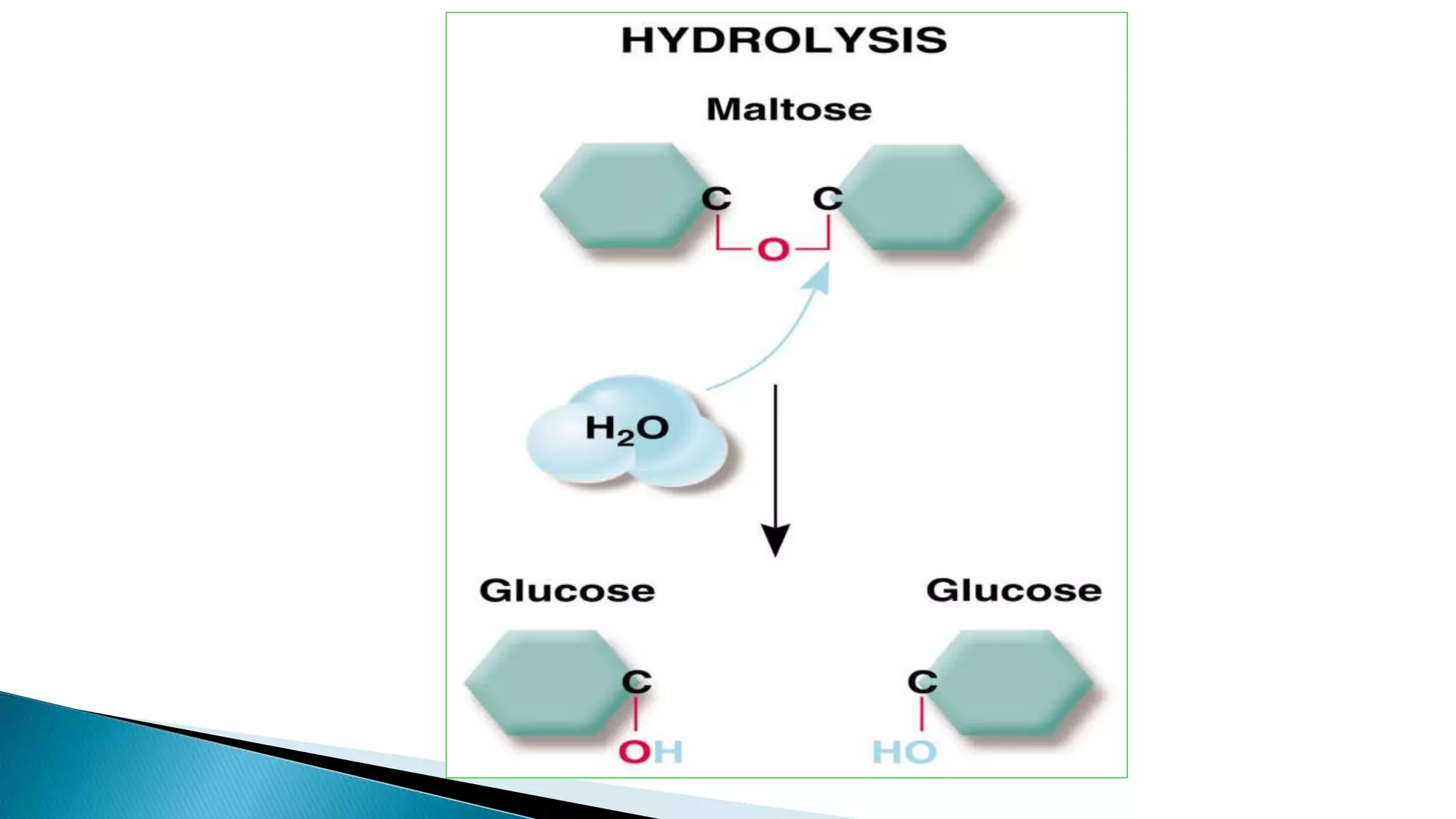
 The hydrolysis of glycosidic bonds is carried out by a group of
enzymes called glycosidases
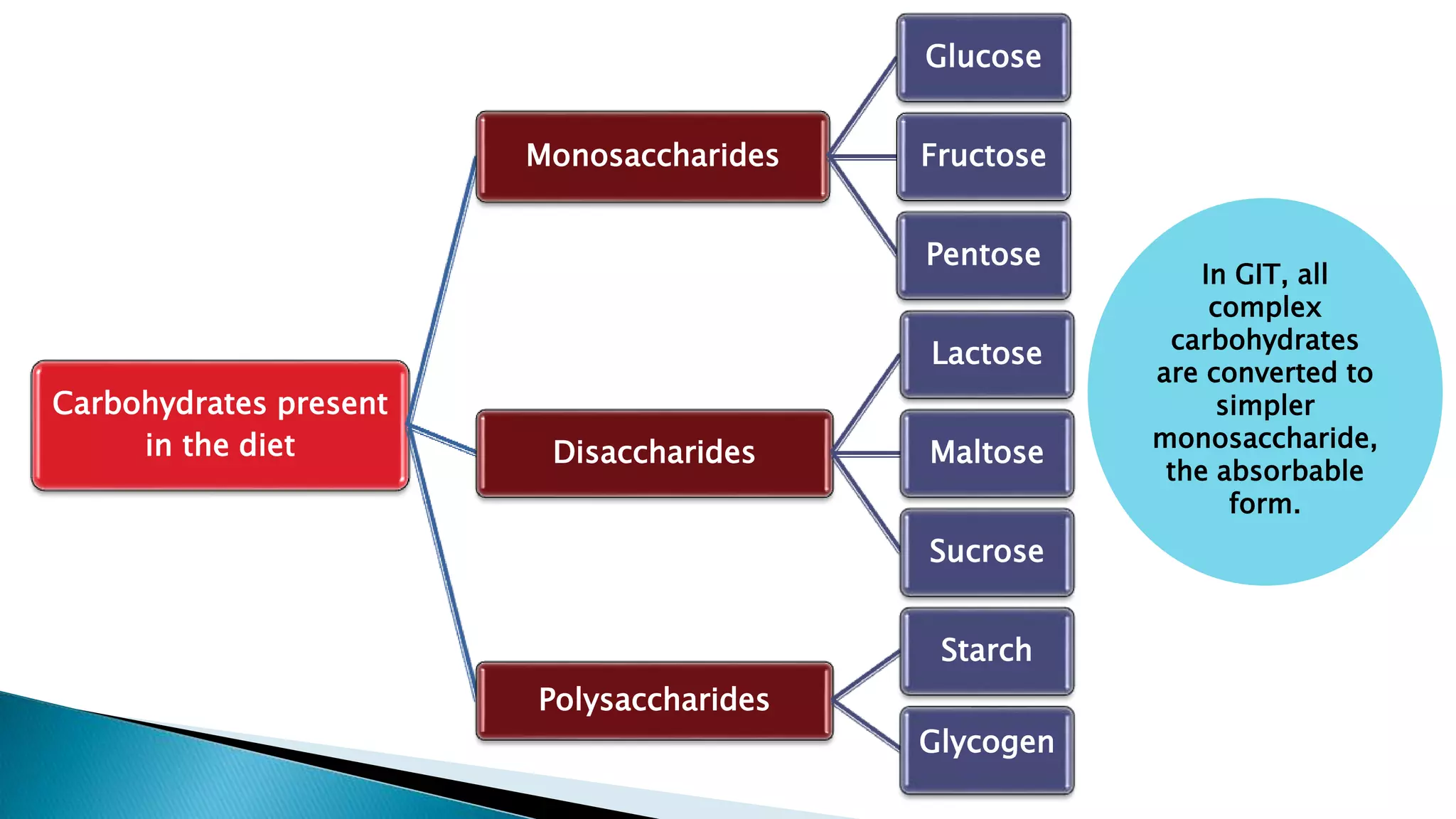
Carbohydrates present
in the diet
Monosaccharides
Glucose
Fructose
Pentose
Disaccharides
Lactose
Maltose
Sucrose
Polysaccharides
Starch
Glycogen
In GIT, all
complex
carbohydrates
are converted to
simpler
monosaccharide,
the absorbable
form.
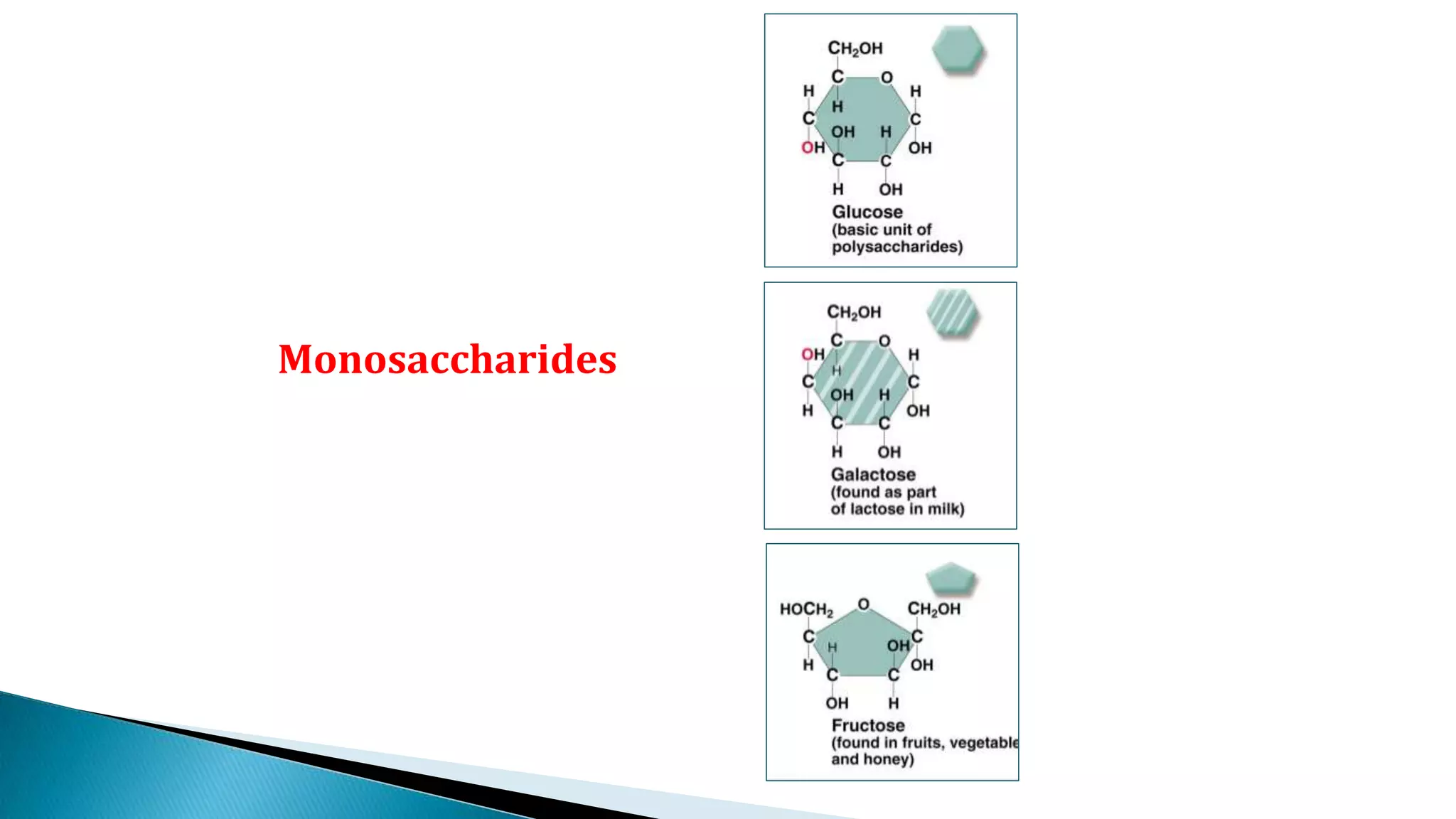
Monosaccharides
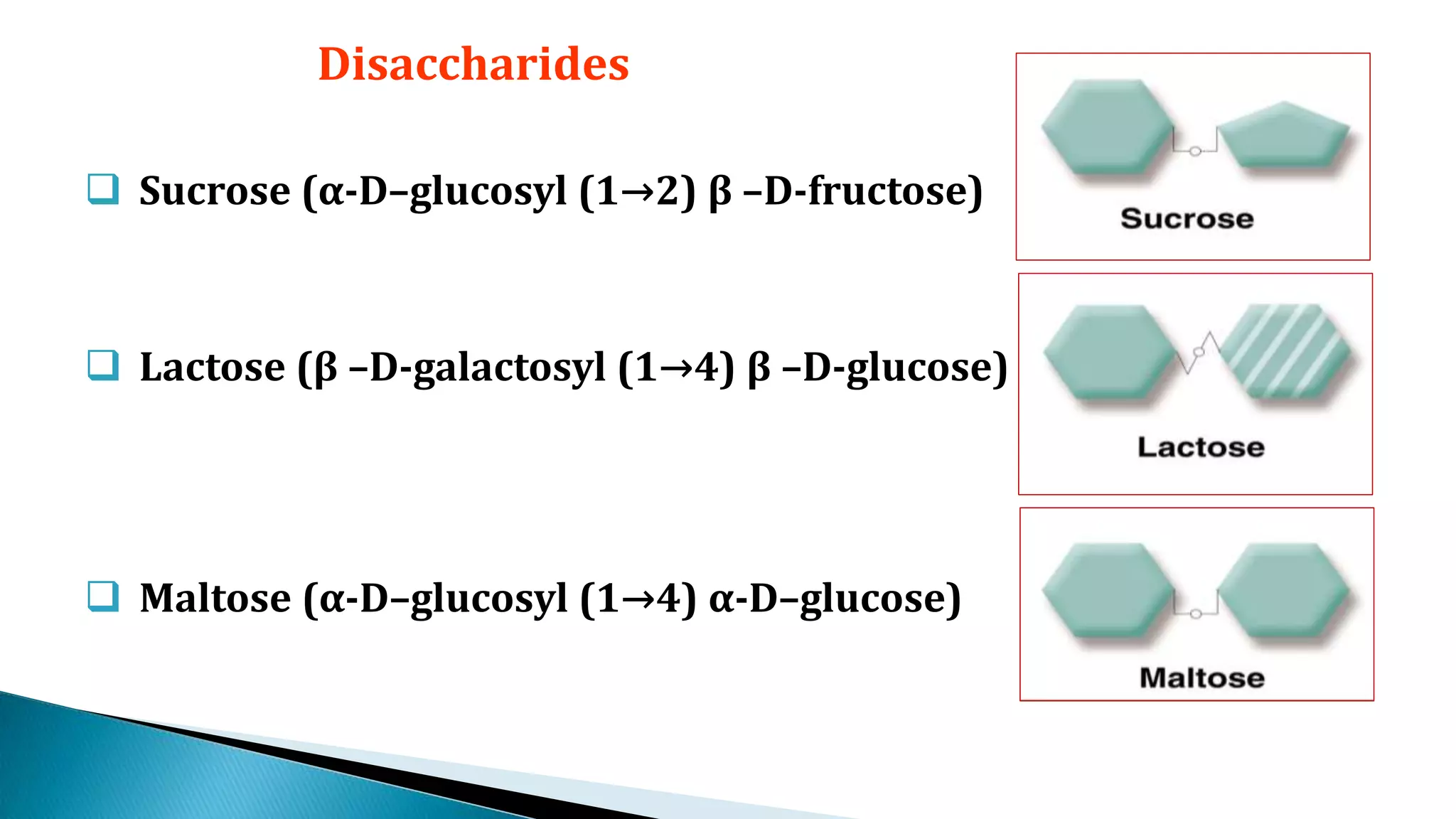
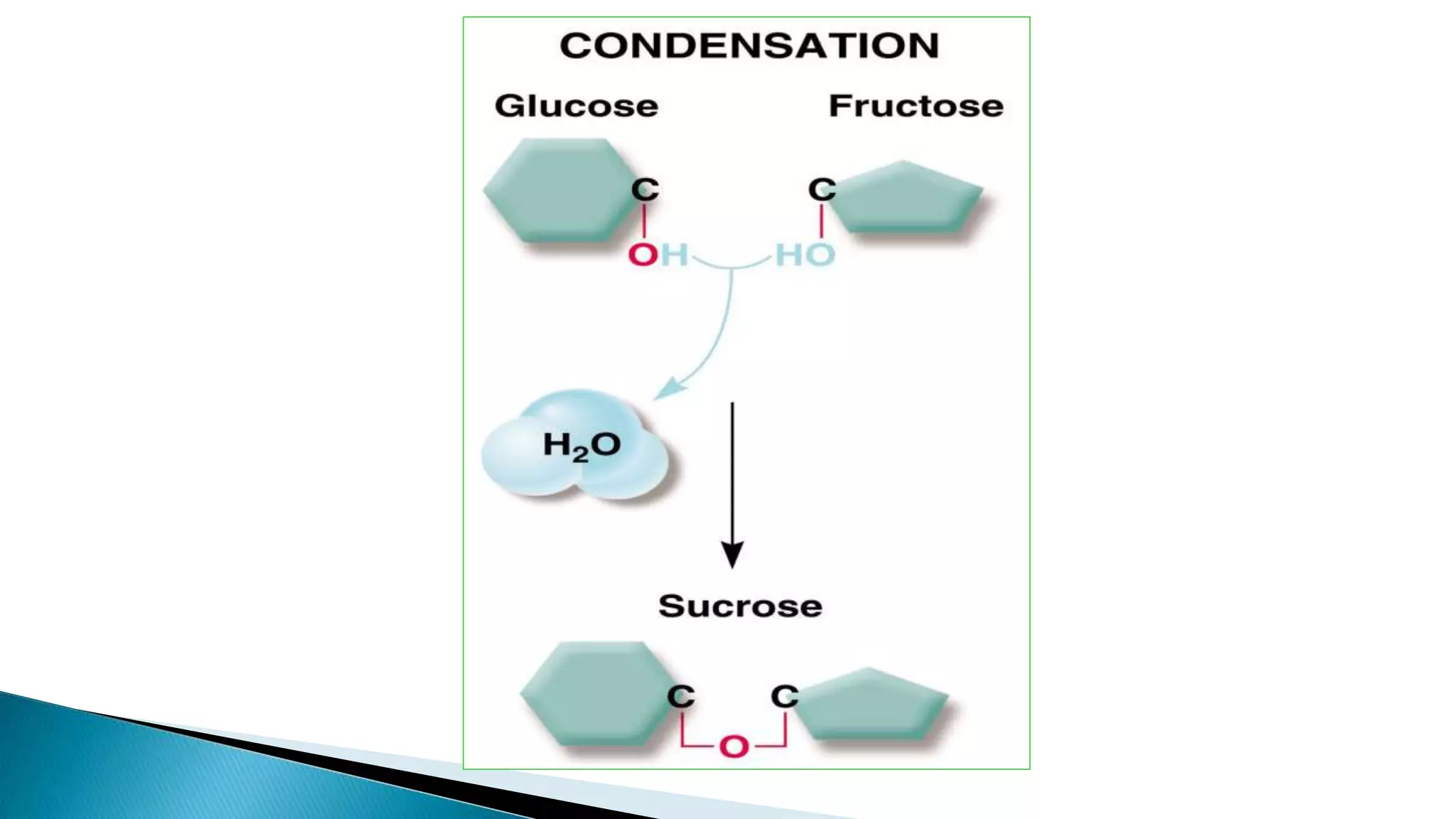
 Sucrose (α-D–glucosyl (1→2) β –D-fructose)
 Lactose (β –D-galactosyl (1→4) β –D-glucose)
 Maltose (α-D–glucosyl (1→4) α-D–glucose)
Disaccharides
Polysaccharides
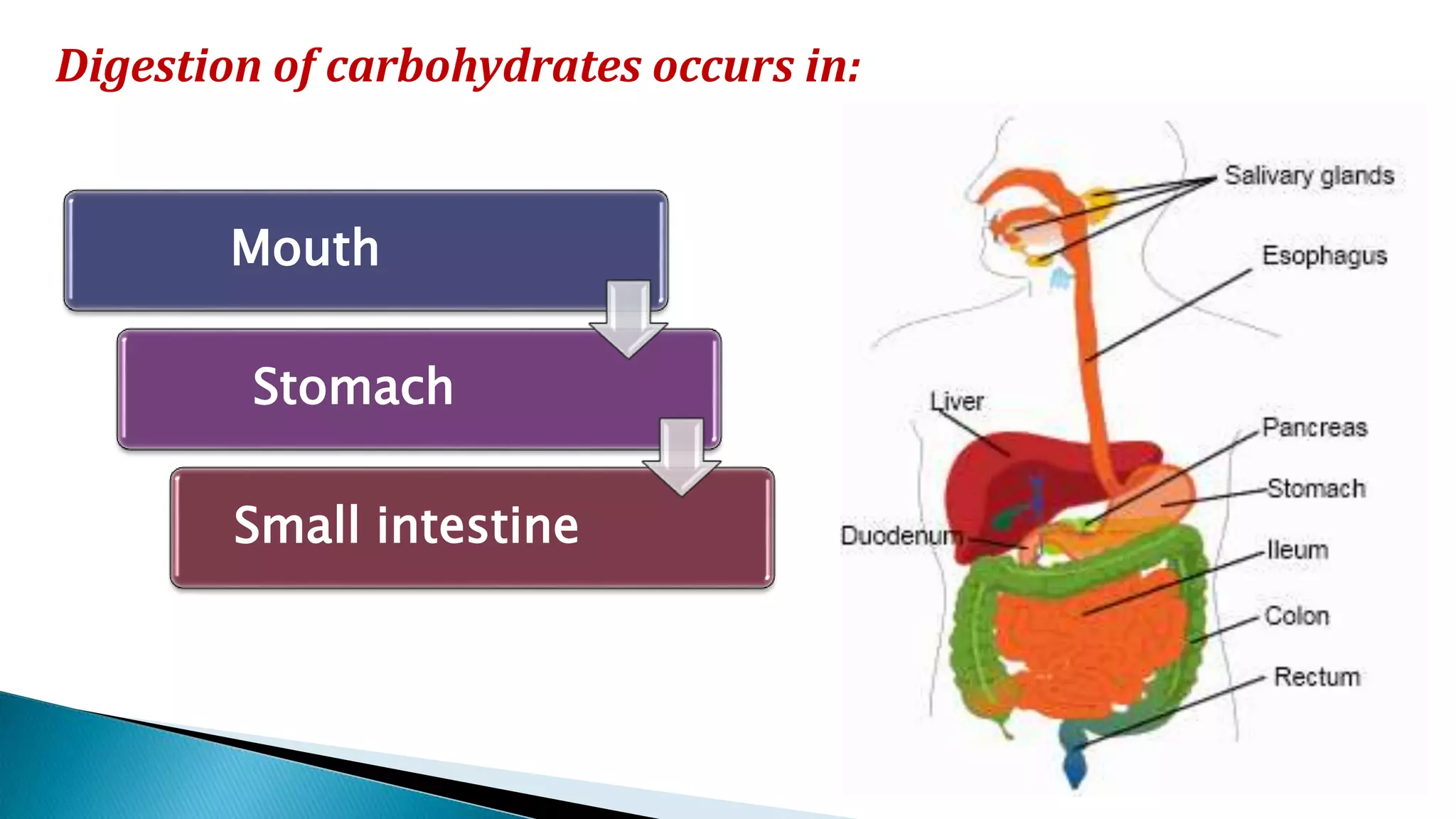
Mouth
Stomach
Small intestine
Digestion of carbohydrates occurs in:
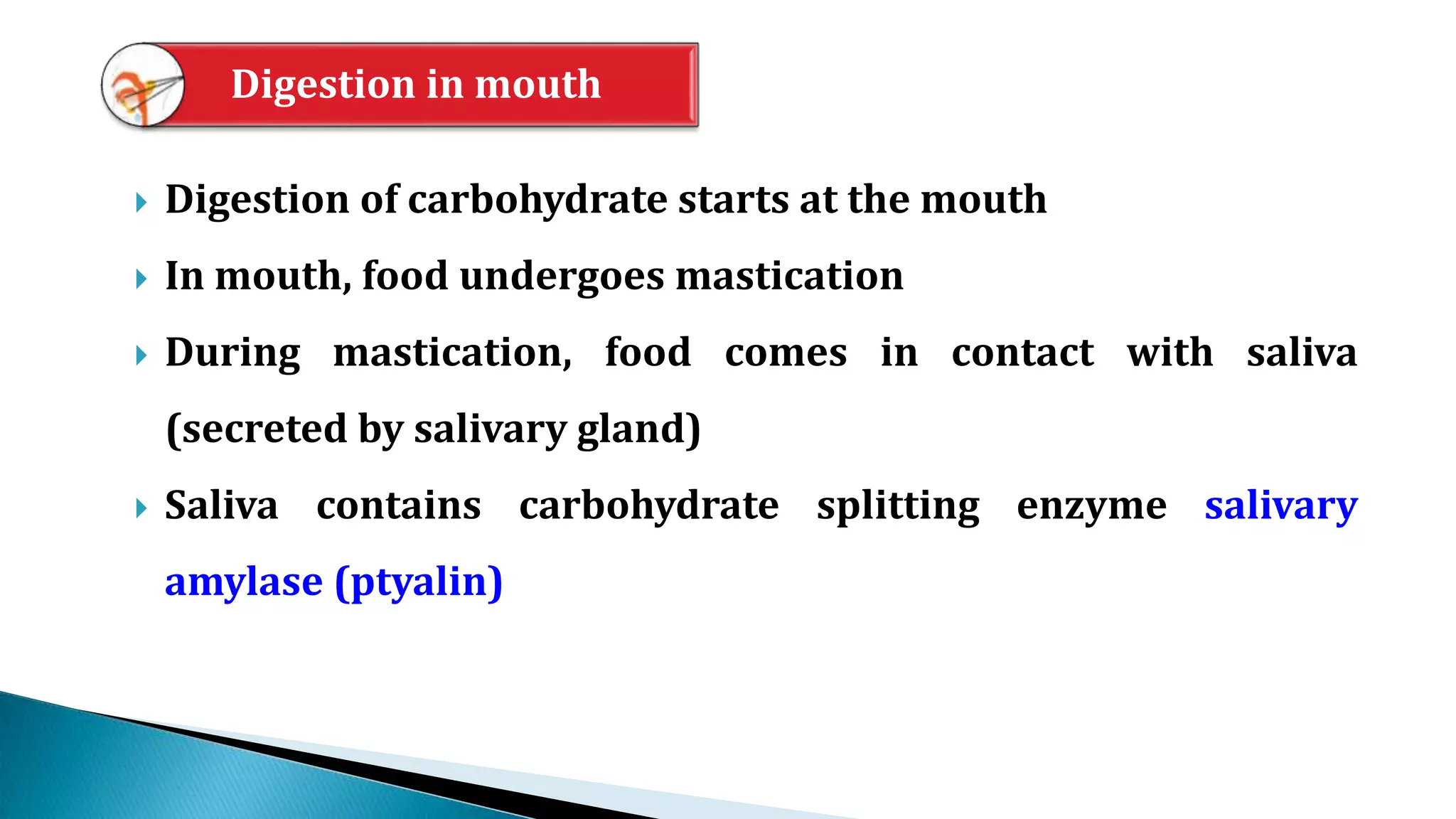
 Digestion of carbohydrate starts at the mouth
 In mouth, food undergoes mastication
 During mastication, food comes in contact with saliva
(secreted by salivary gland)
 Saliva contains carbohydrate splitting enzyme salivary
amylase (ptyalin)
Digestion in mouth
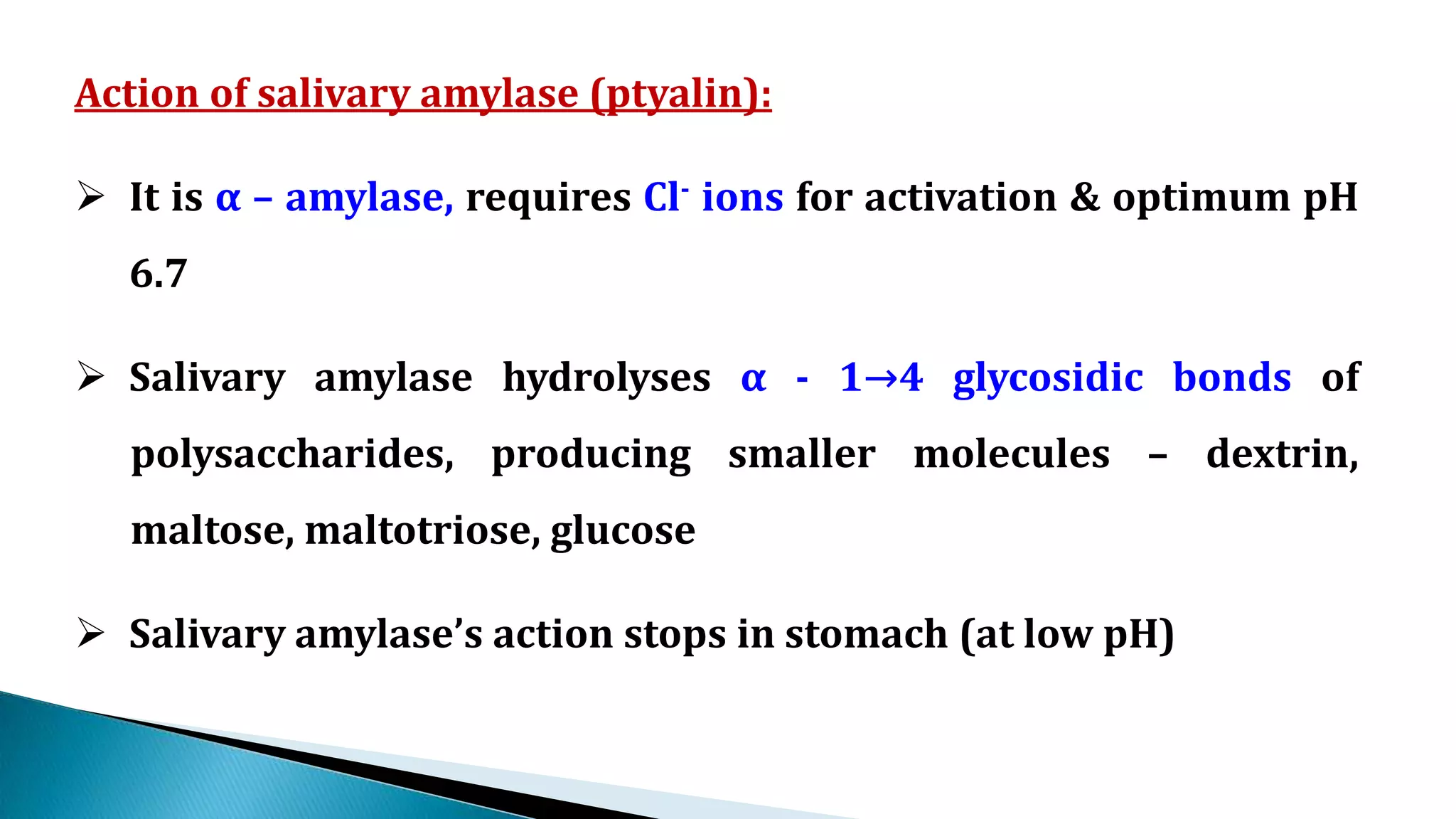
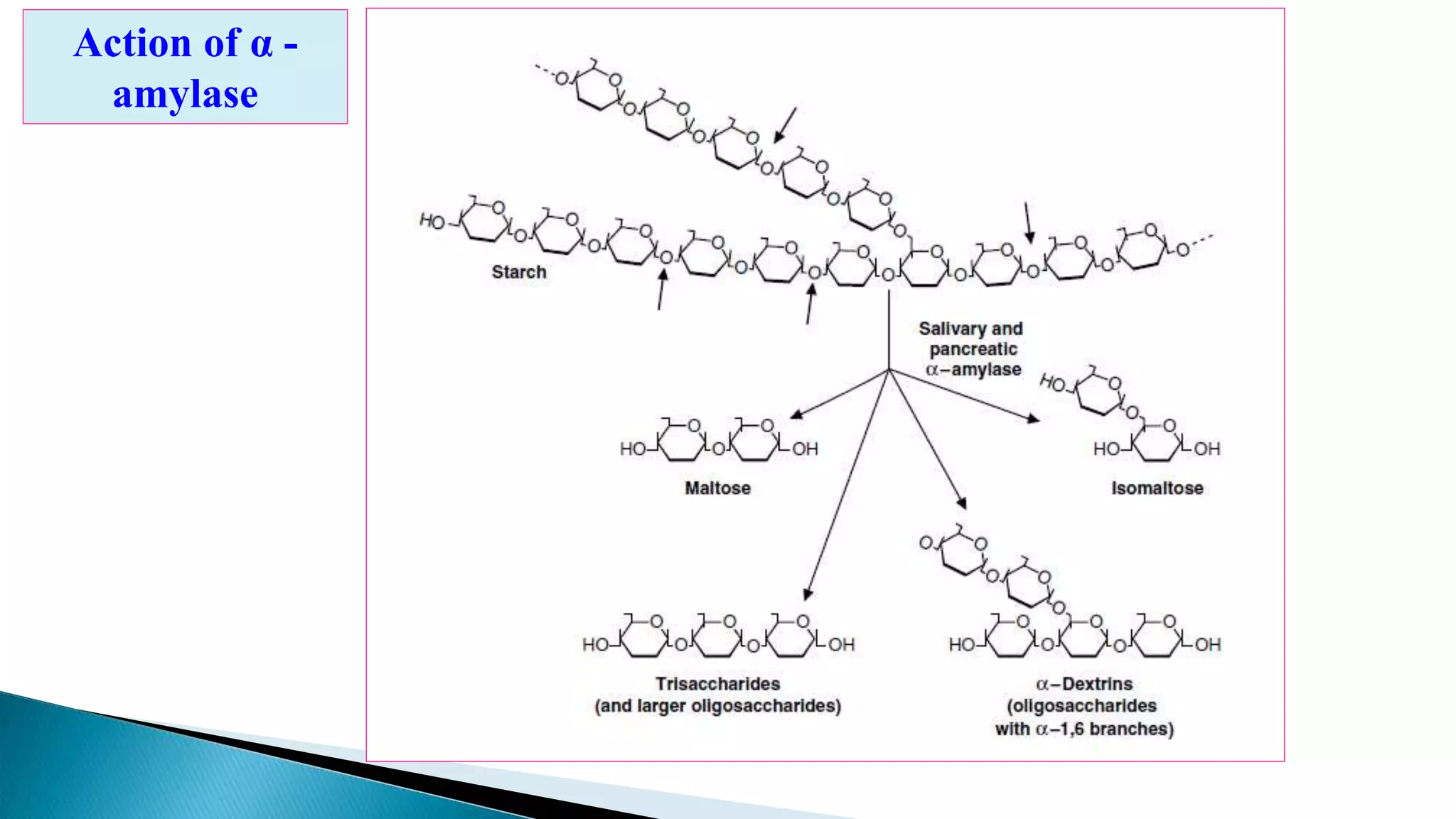
Action of salivary amylase (ptyalin):
 It is α – amylase, requires Cl- ions for activation & optimum pH
6.7
 Salivary amylase hydrolyses α - 1→4 glycosidic bonds of
polysaccharides, producing smaller molecules – dextrin,
maltose, maltotriose, glucose
 Salivary amylase’s action stops in stomach (at low pH)
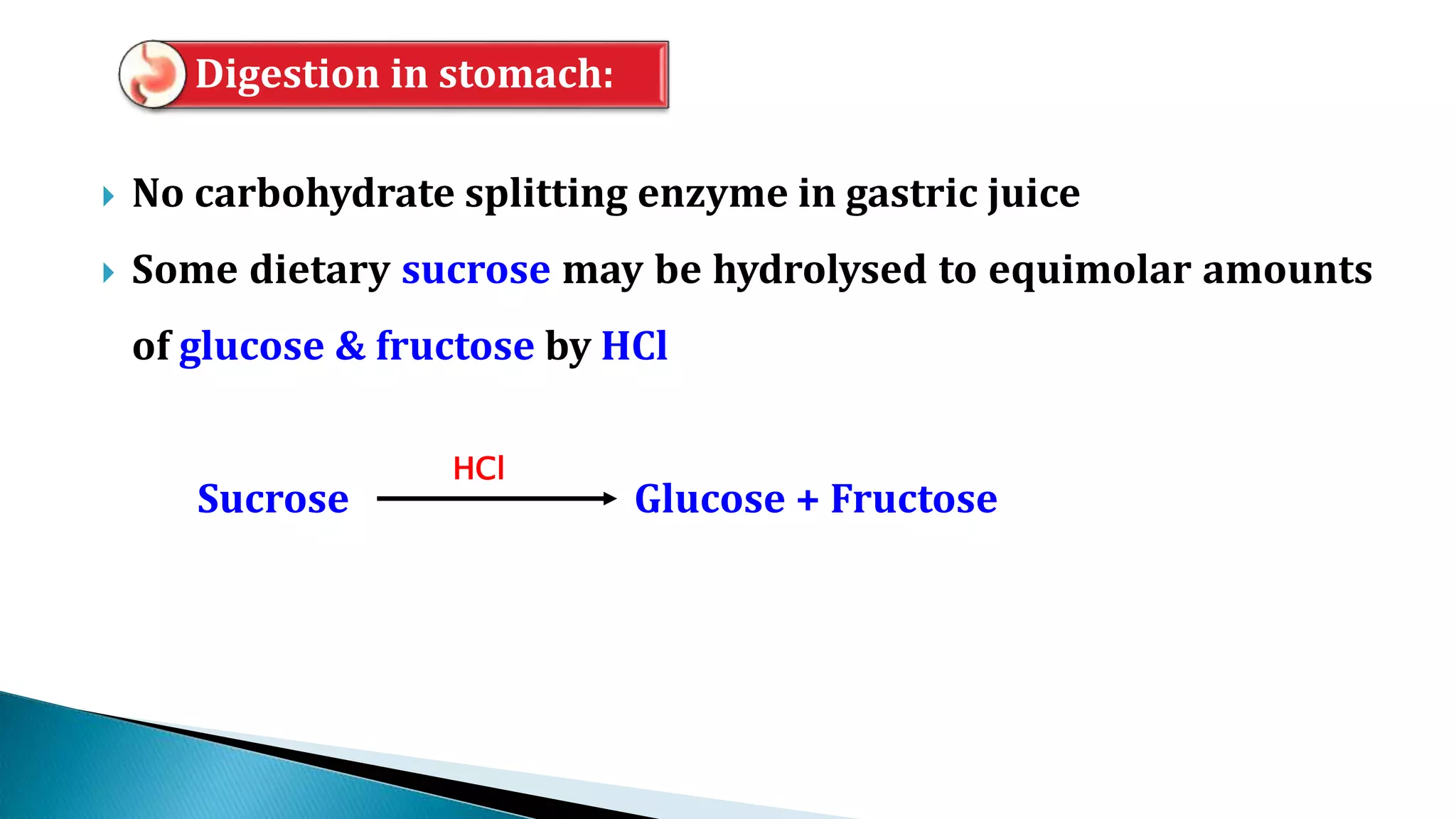
 No carbohydrate splitting enzyme in gastric juice
 Some dietary sucrose may be hydrolysed to equimolar amounts
of glucose & fructose by HCl
Sucrose Glucose + Fructose
Digestion in stomach:
HCl
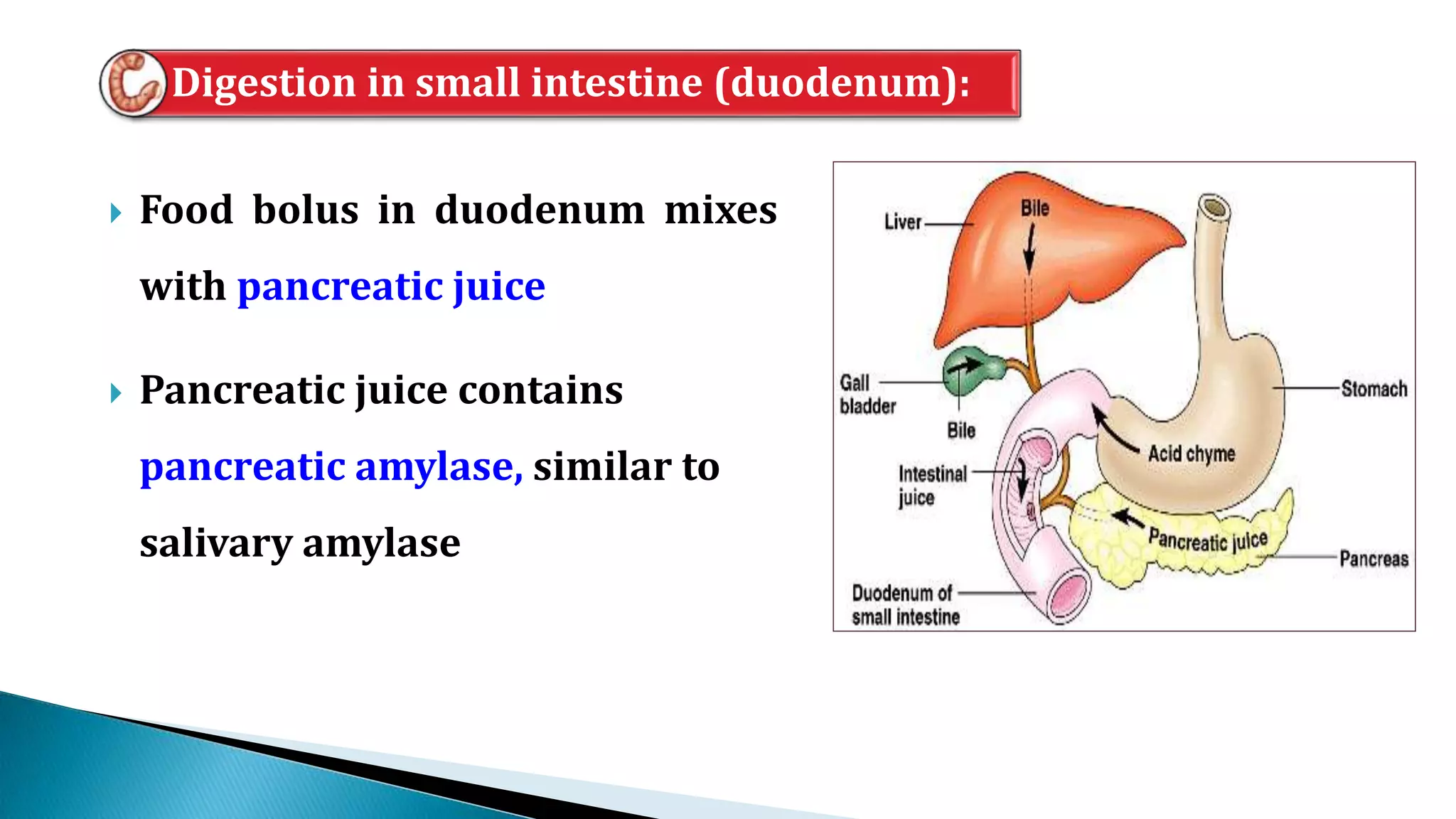
Digestion in small intestine (duodenum):
 Food bolus in duodenum mixes
with pancreatic juice
 Pancreatic juice contains
pancreatic amylase, similar to
salivary amylase
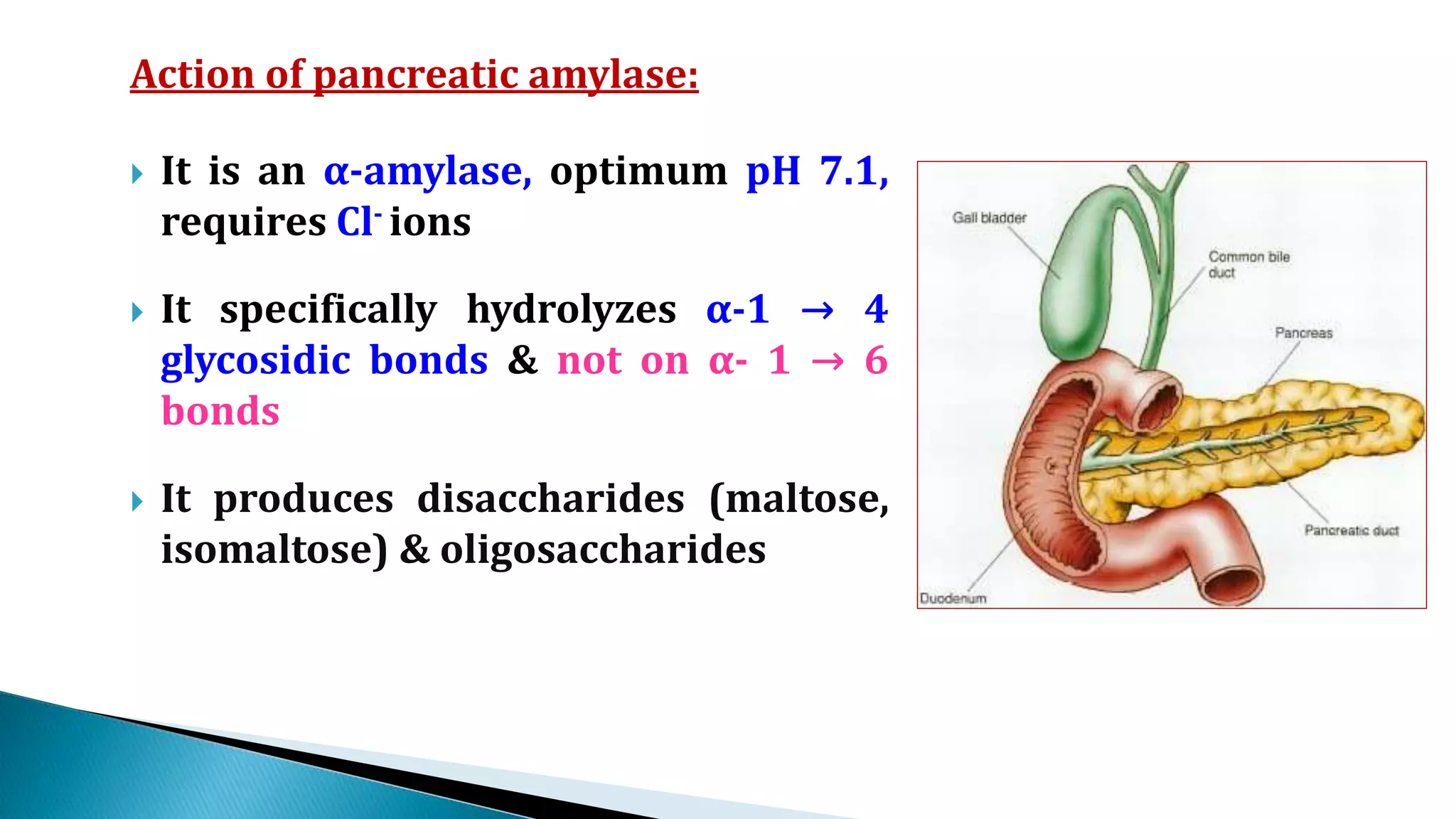
Action of pancreatic amylase:
 It is an α-amylase, optimum pH 7.1,
requires Cl- ions
 It specifically hydrolyzes α-1 → 4
glycosidic bonds & not on α- 1 → 6
bonds
 It produces disaccharides (maltose,
isomaltose) & oligosaccharides
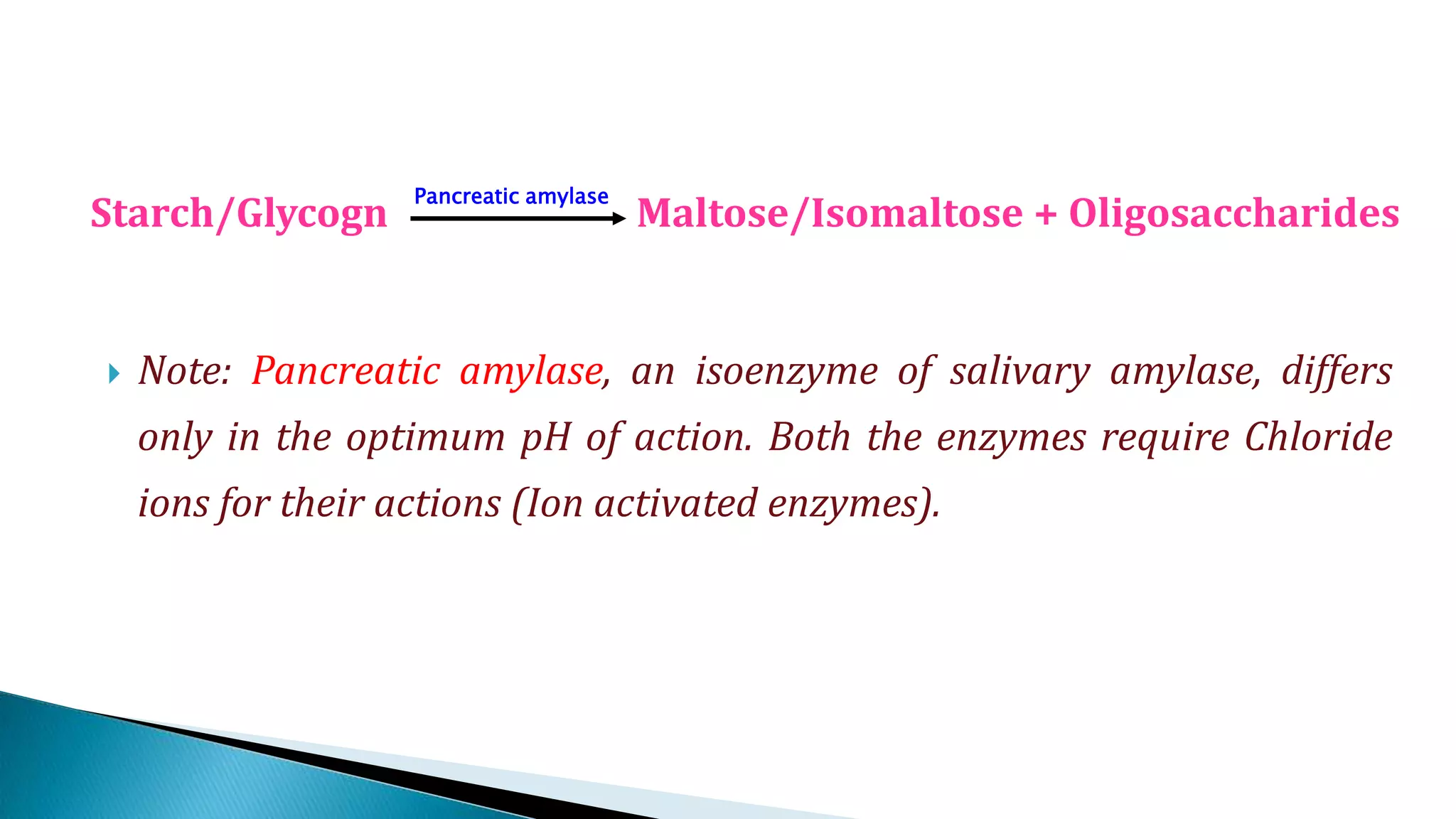
 Note: Pancreatic amylase, an isoenzyme of salivary amylase, differs
only in the optimum pH of action. Both the enzymes require Chloride
ions for their actions (Ion activated enzymes).
Starch/Glycogn Maltose/Isomaltose + Oligosaccharides
Pancreatic amylase
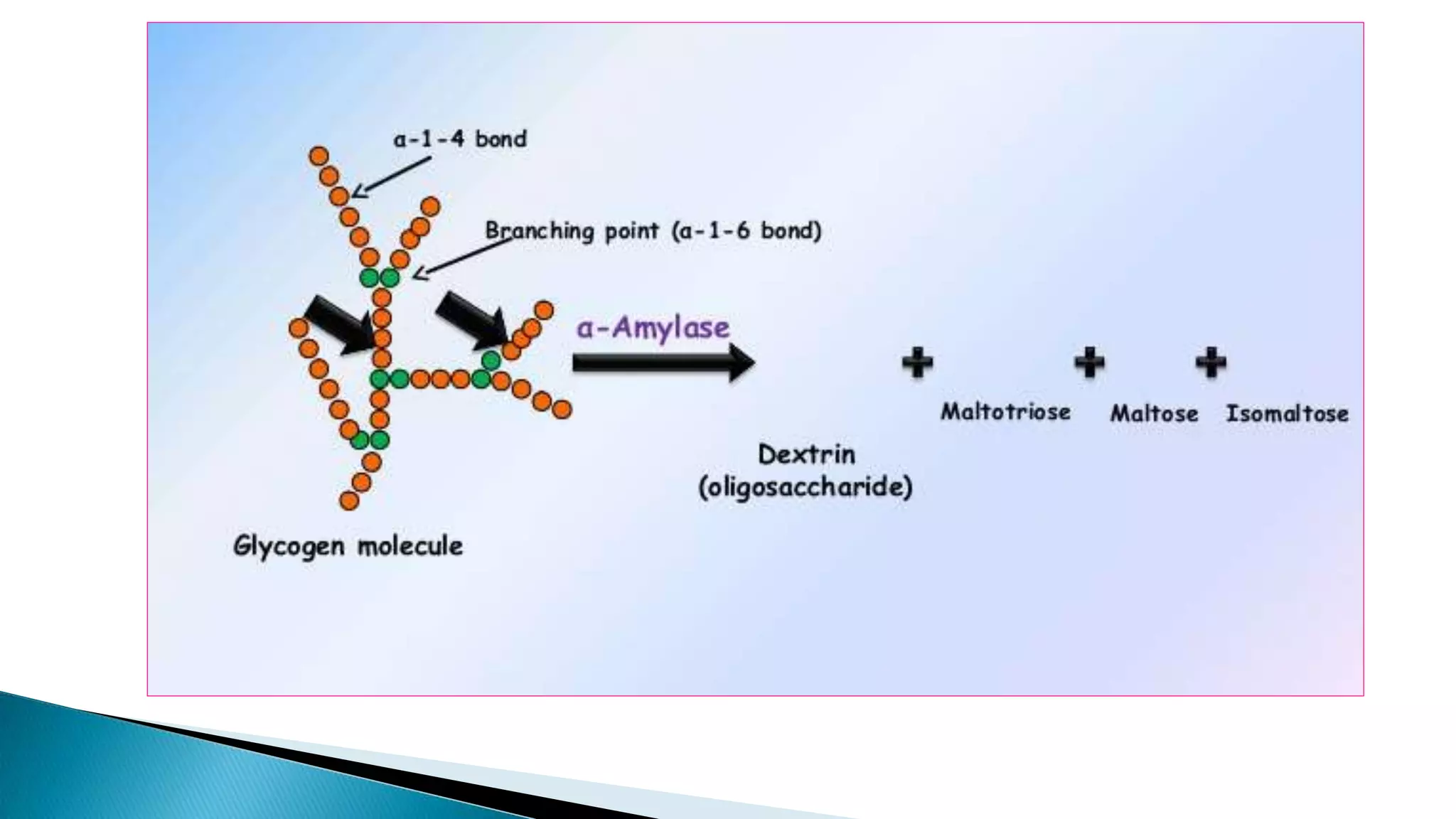
Action of α -
amylase
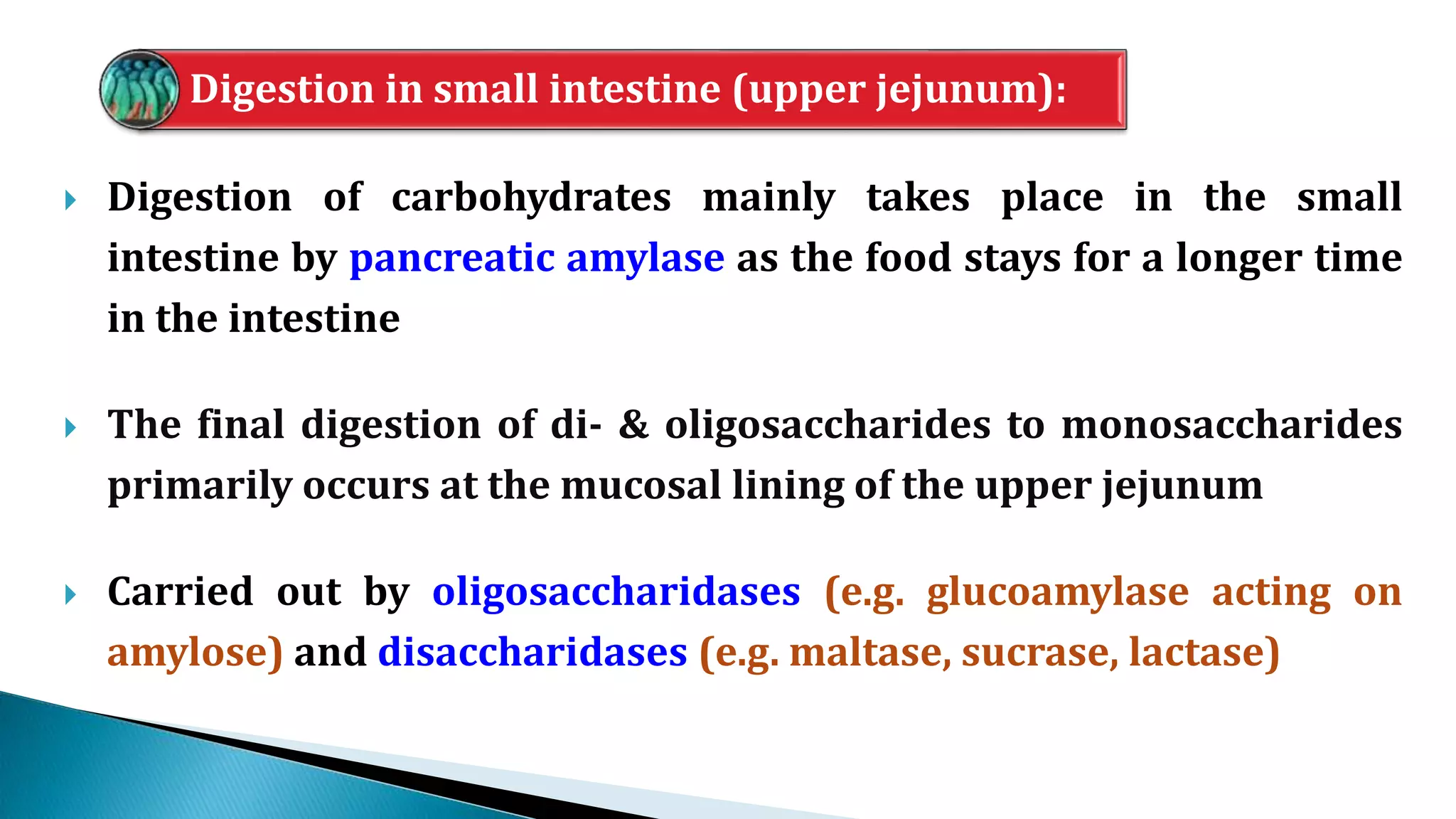
Digestion in small intestine (upper jejunum):
 Digestion of carbohydrates mainly takes place in the small
intestine by pancreatic amylase as the food stays for a longer time
in the intestine
 The final digestion of di- & oligosaccharides to monosaccharides
primarily occurs at the mucosal lining of the upper jejunum
 Carried out by oligosaccharidases (e.g. glucoamylase acting on
amylose) and disaccharidases (e.g. maltase, sucrase, lactase)
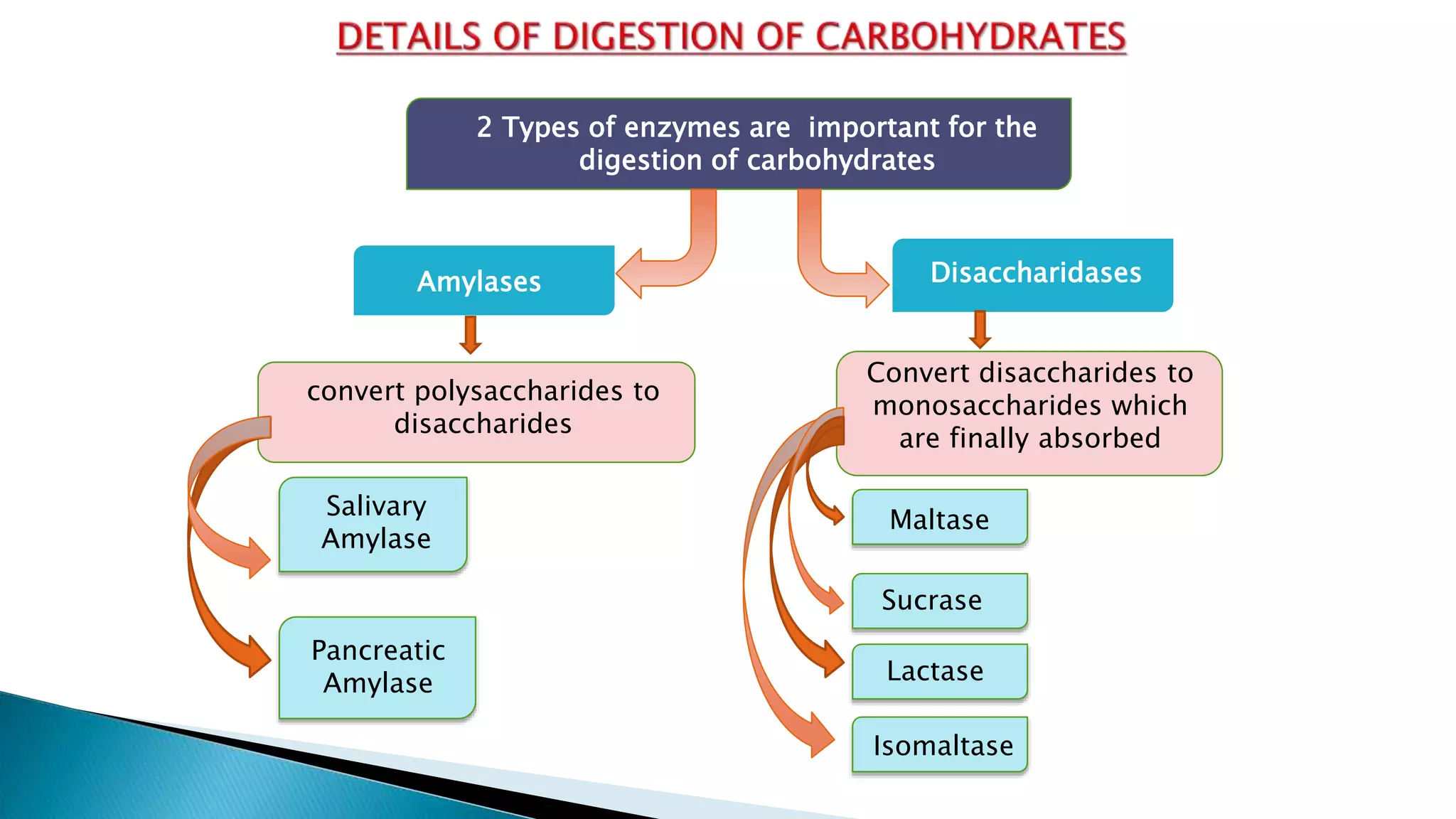
The different disaccharidases are :
 Lactase:
It is β-galactosidase. Lactose is hydrolysed to glucose & galactose
 Isomaltase:
It catalyses a 1 → 6 glycosidic bonds, branching points, producing maltose
& glucose
 Maltase:
It hydrolyses a 1 → 4 glycosidic bonds between glucose units in maltose
 Sucrase:
It hydrolyses sucrose to glucose & fructose.
2 Types of enzymes are important for the
digestion of carbohydrates
Amylases Disaccharidases
Salivary
Amylase
Pancreatic
Amylase
convert polysaccharides to
disaccharides
Convert disaccharides to
monosaccharides which
are finally absorbed
Maltase
Sucrase
Lactase
Isomaltase
Overview of carbohydrate
digestion
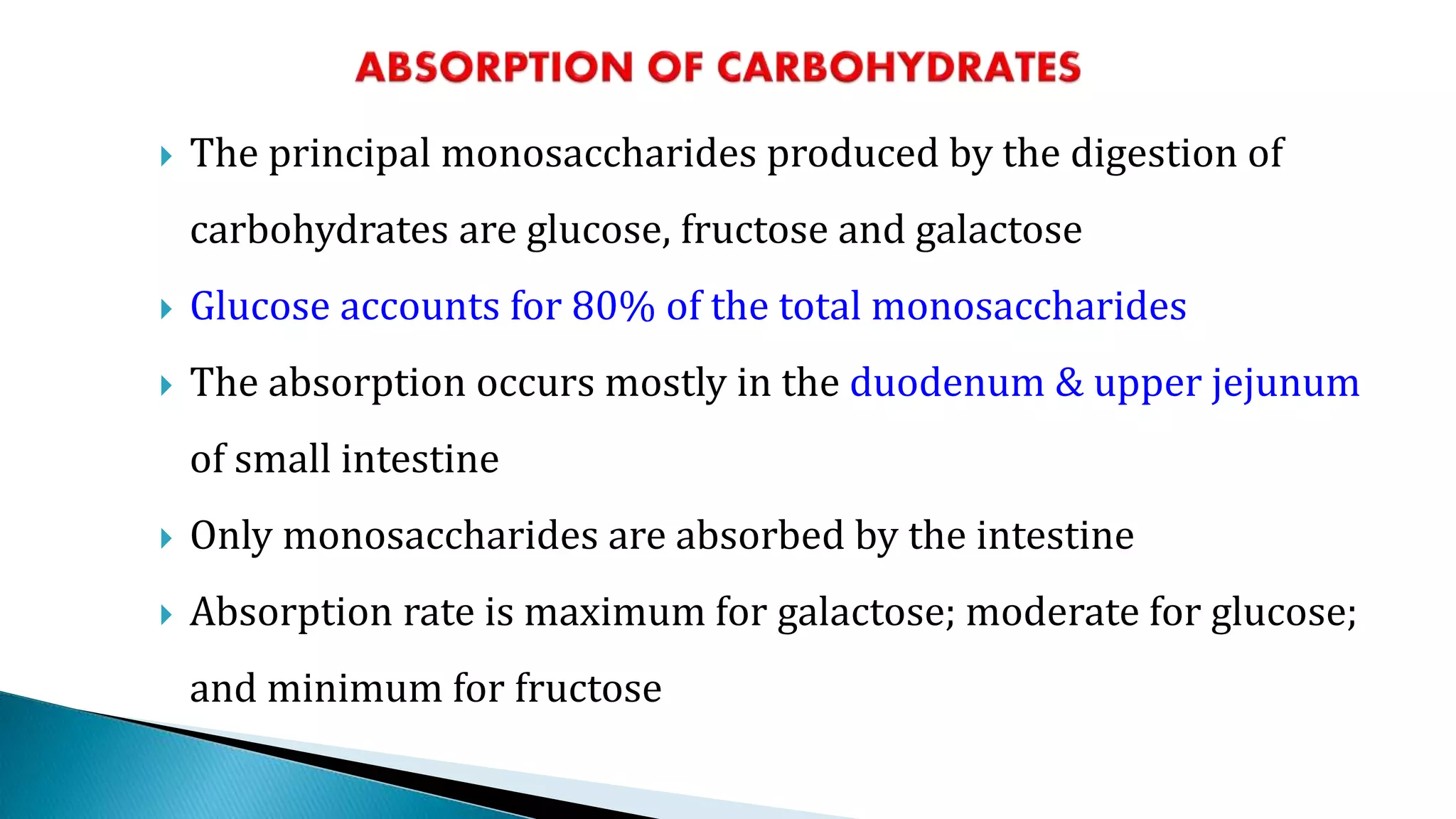
 The principal monosaccharides produced by the digestion of
carbohydrates are glucose, fructose and galactose
 Glucose accounts for 80% of the total monosaccharides
 The absorption occurs mostly in the duodenum & upper jejunum
of small intestine
 Only monosaccharides are absorbed by the intestine
 Absorption rate is maximum for galactose; moderate for glucose;
and minimum for fructose
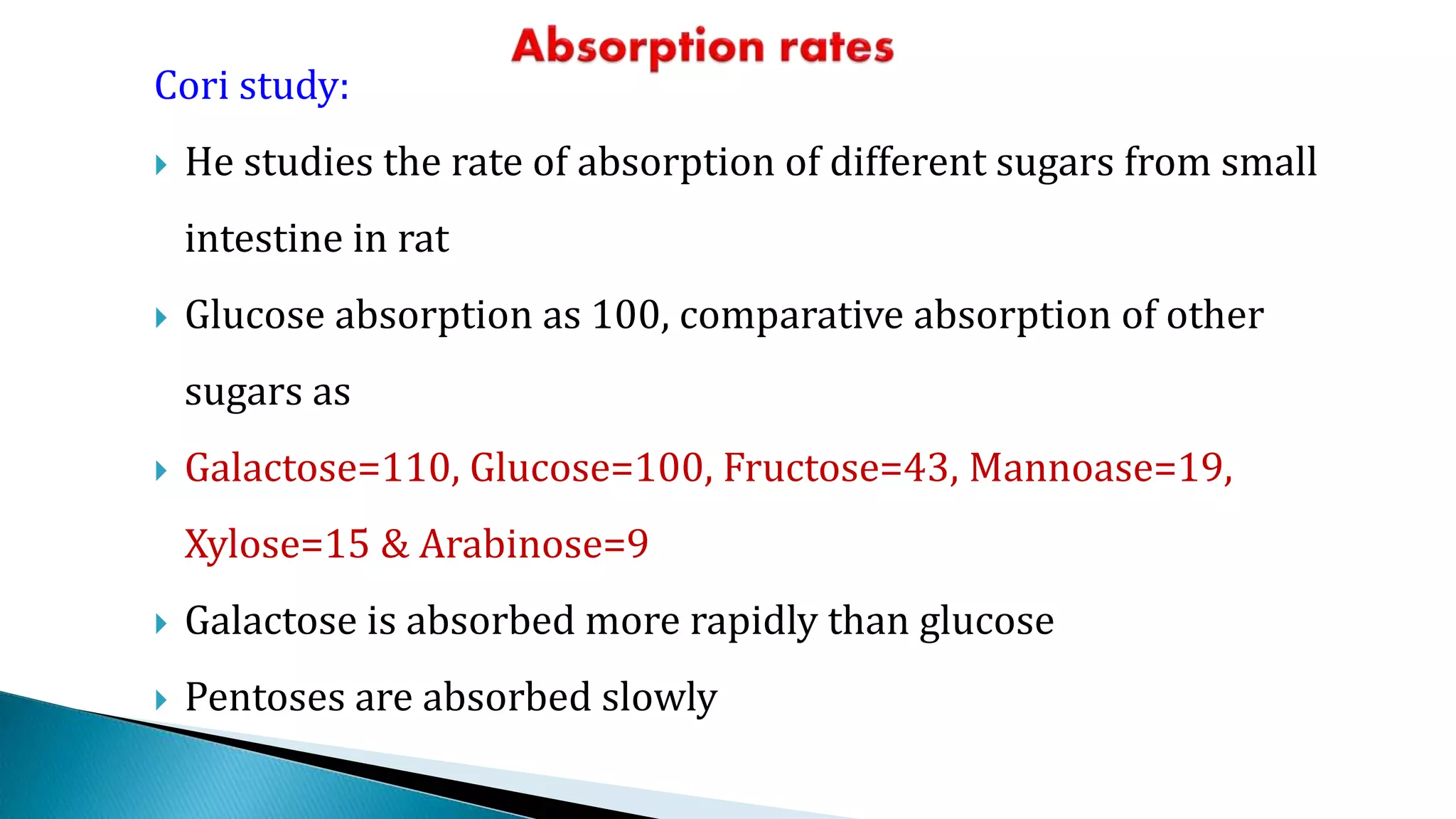
Cori study:
 He studies the rate of absorption of different sugars from small
intestine in rat
 Glucose absorption as 100, comparative absorption of other
sugars as
 Galactose=110, Glucose=100, Fructose=43, Mannoase=19,
Xylose=15 & Arabinose=9
 Galactose is absorbed more rapidly than glucose
 Pentoses are absorbed slowly
 Different sugars possess different mechanisms for their absorption
 Glucose is transported into the intestinal mucosal cells by a carrier
mediated and energy requiring process
Monosaccharides, the end products of carbohydrate
digestion, enter the capillaries of the intestinal villi
In the liver,
galactose &
fructose are
converted to
glucose.
Small intestine
Monosaccharides travel to
the liver via the portal vein.
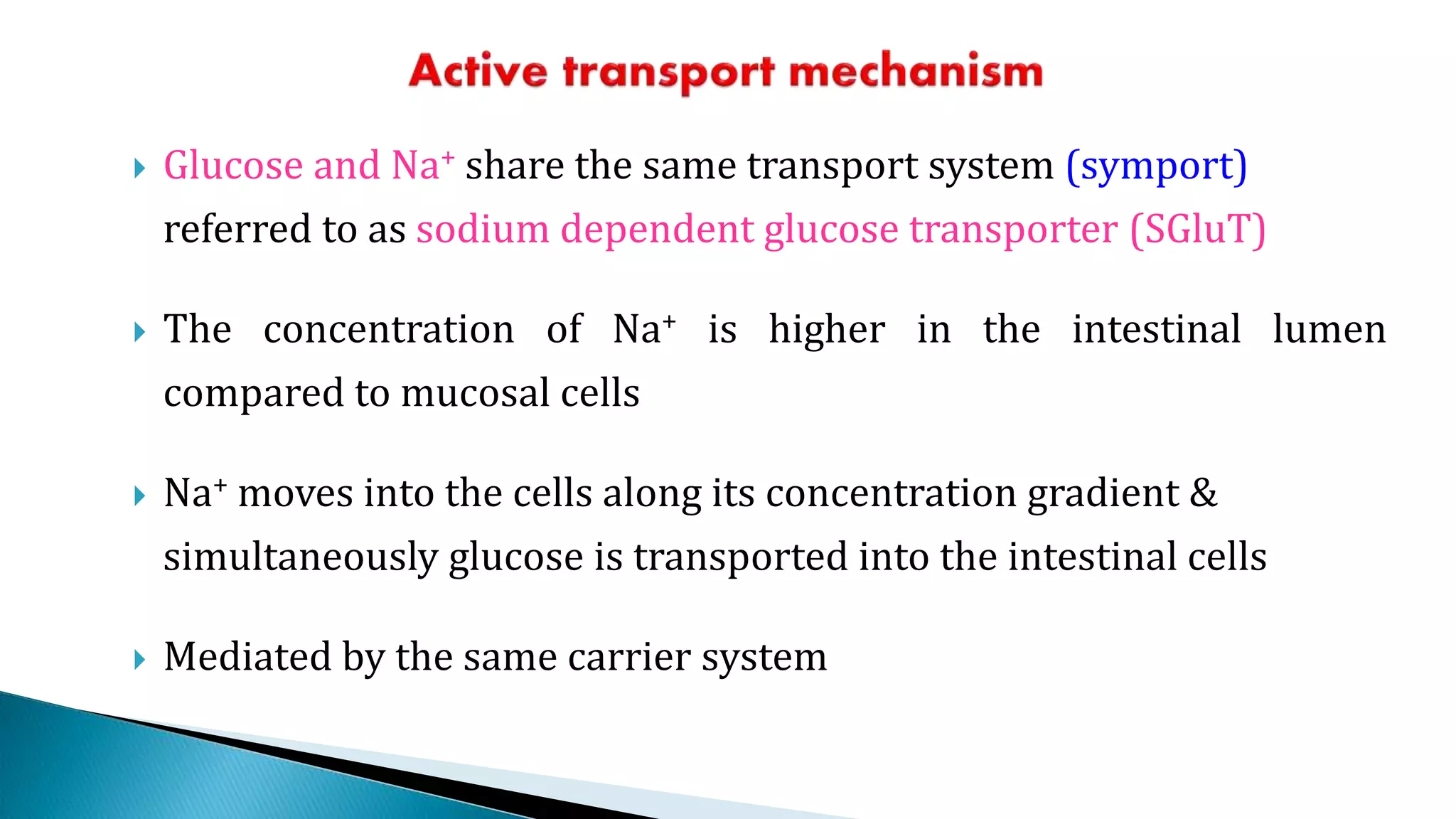
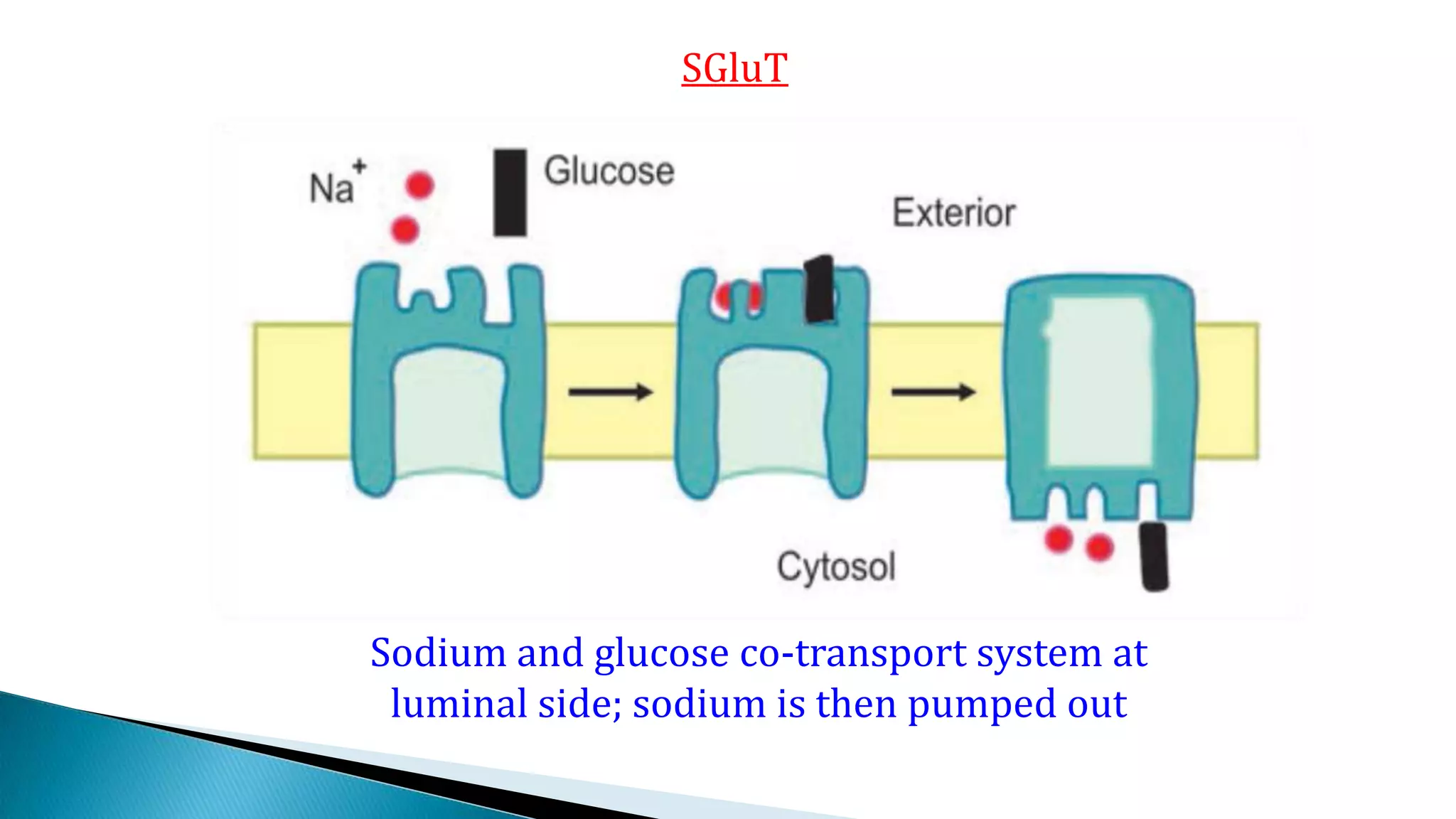
 Glucose and Na+ share the same transport system (symport)
referred to as sodium dependent glucose transporter (SGluT)
 The concentration of Na+ is higher in the intestinal lumen
compared to mucosal cells
 Na+ moves into the cells along its concentration gradient &
simultaneously glucose is transported into the intestinal cells
 Mediated by the same carrier system
SGluT
Sodium and glucose co-transport system at
luminal side; sodium is then pumped out
Active
transport
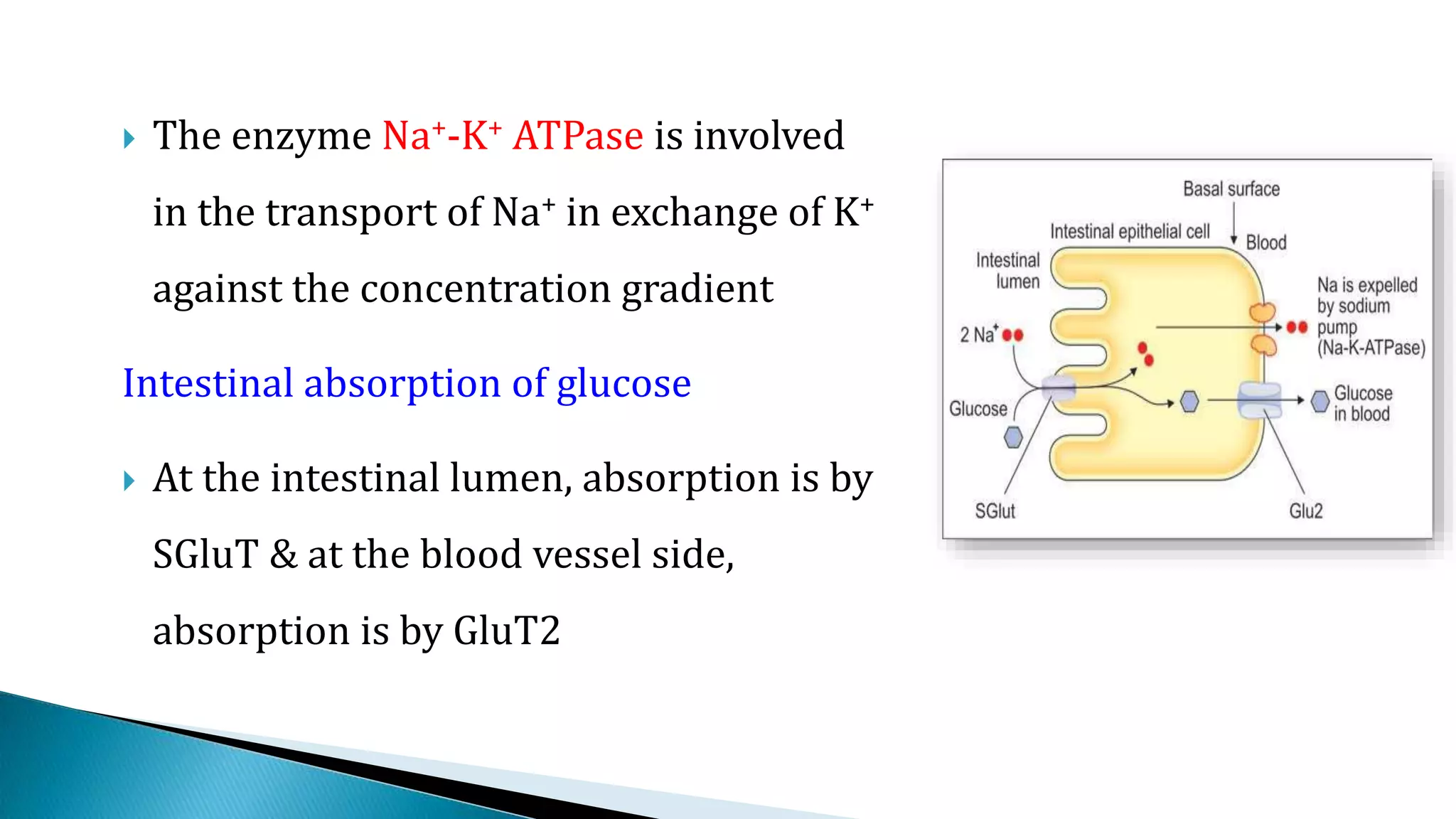
 Na+ diffuses into the cell and it drags
glucose along with it
 The intestinal Na+ gradient is the immediate
energy source for glucose transport
 This energy is indirectly supplied by ATP
since the re-entry of Na+ (against the
concentration gradient) into the intestinal
lumen is an energy requiring active process
(Sodium – Potassium pump)
 The enzyme Na+-K+ ATPase is involved
in the transport of Na+ in exchange of K+
against the concentration gradient
Intestinal absorption of glucose
 At the intestinal lumen, absorption is by
SGluT & at the blood vessel side,
absorption is by GluT2
Oral rehydration therapy (ORT):
 ORT is common treatment of diarrhoea
 Oral rehydration fluid contains glucose & sodium
 Intestinal absorption of sodium is facilitated by the presence of
glucose
 Mechanism of absorption of galactose is similar to that of glucose
 Phlorozin blocks the Na+ dependent transport of glucose &
galactose
 Glucose transporters GluT-1 to 7 have been described in various tissues
 GluT-2 & GluT-4 are very important
GluT-2:
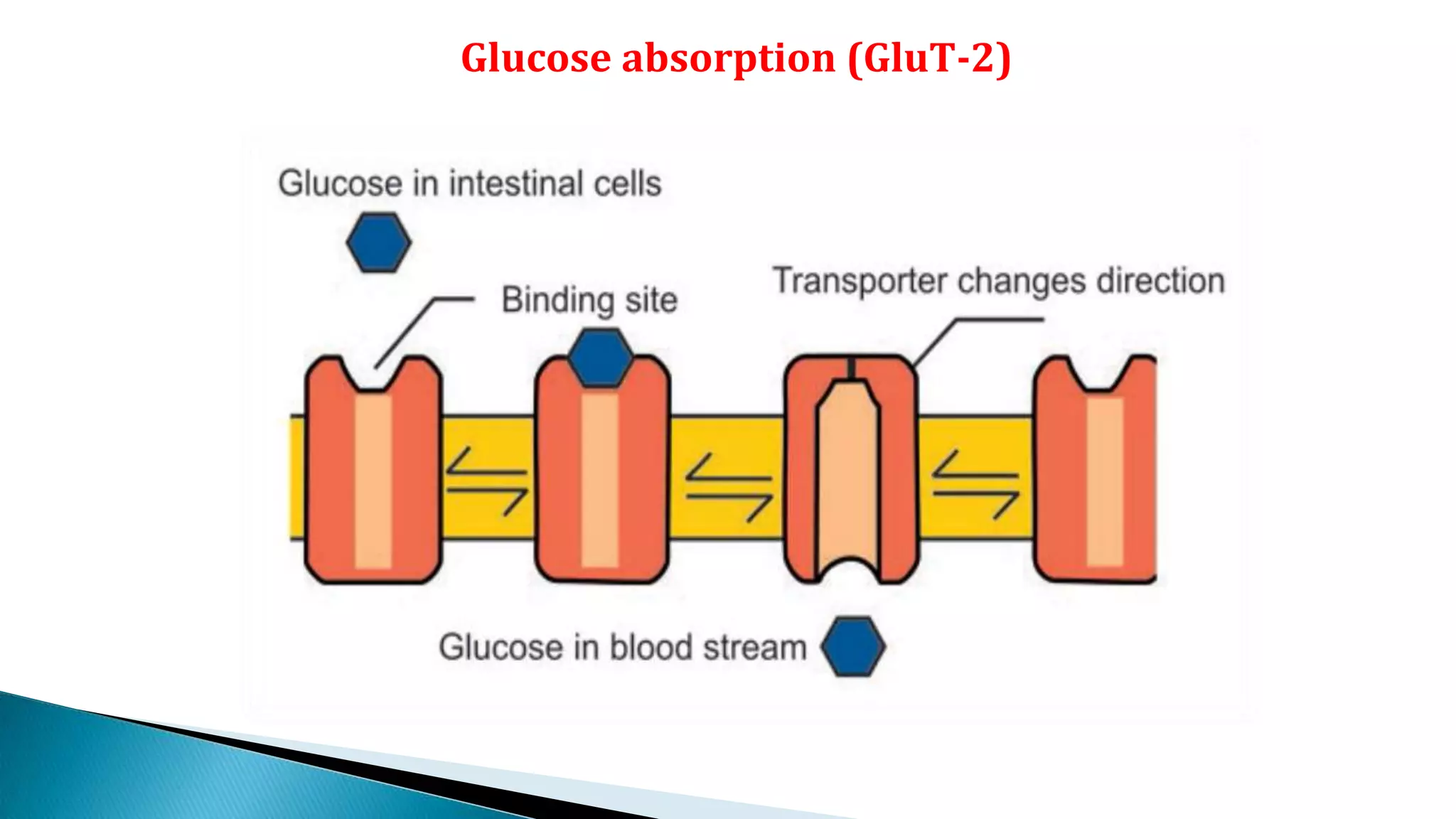
 Operates in intestinal epithelial cells
 It is a uniport, facilitated diffusion system & not dependent on Na+ ions
 Glucose is held on GluT-2, by weak hydrogen bonds
 After fixing glucose, changes configuration & opens inner side releasing
glucose
Glucose absorption (GluT-2)
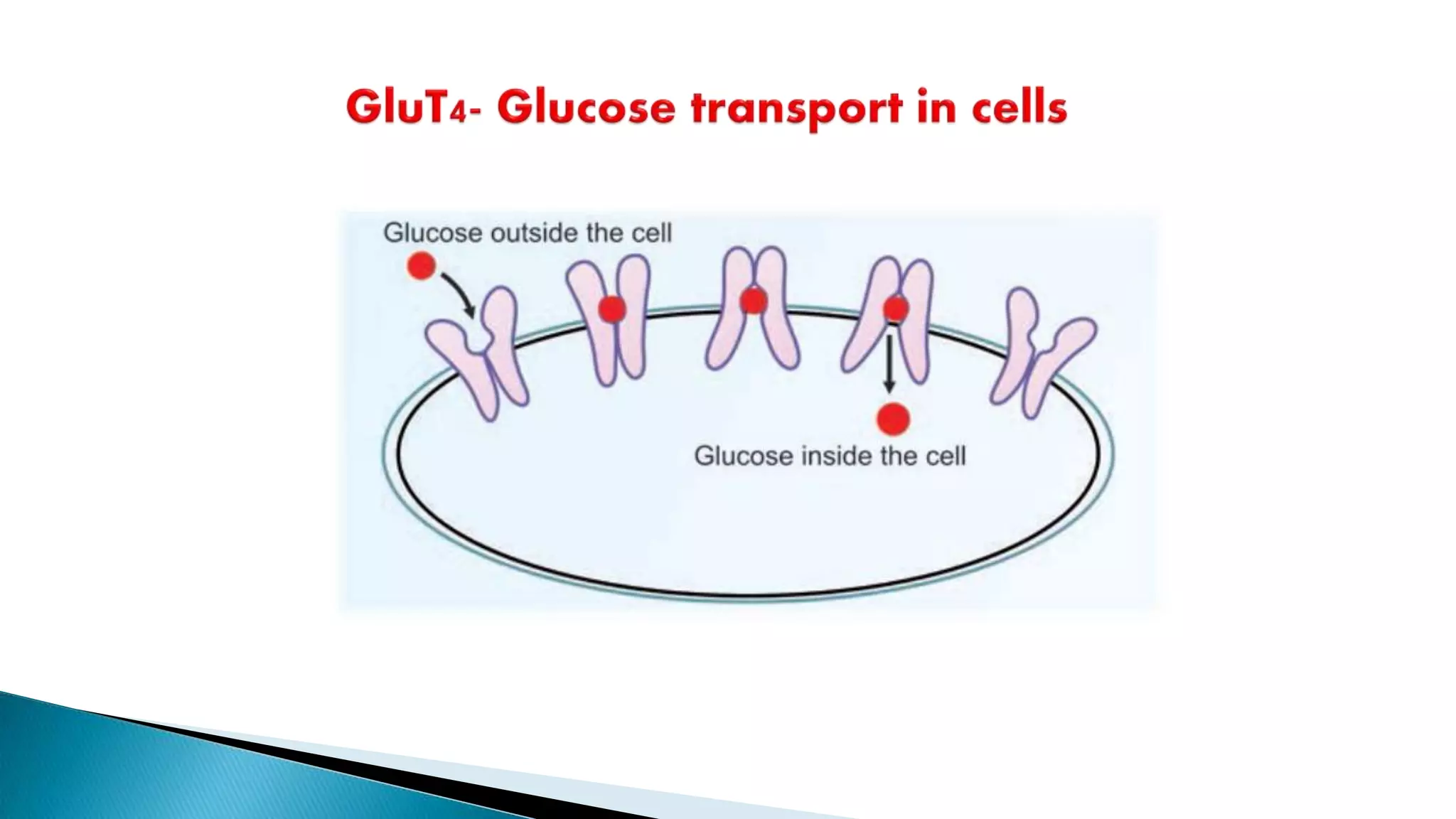
GluT-4:
 Operates in the muscle & adipose tissue
 GluT-4 is under control of insulin
 Insulin induces the intracellular GluT-4 molecules to move to the
cell membrane & increases the glucose uptake
 In type 2 DM, membrane GluT-4 is reduced, leading to insulin
resistance in muscle & fat cells.
 Other “GluT” molecules are not under control of insulin
GluT-1
 It is present in RBCs & brain
 Also present in retina, colon, placenta
 It helps in glucose uptake in most of these tissues which is
independent of insulin
Transporter Present in Properties
GluT1
RBC, brain, kidney, colon,
retina, placenta
Glucose uptake in most of cells
GluT2 Surface of intestinal cells, liver,
β-cells of pancreas
Low affinity; glucose uptake in liver;
glucose sensor in β-cells
GluT3 Neurons, brain High affinity; glucose into brain cells
GluT4 Skeletal, heart muscle,
adipose tissue
Insulin mediated glucose uptake
GluT5
Small intestine, testis,
sperms, kidney
Fructose transporter; poor ability to
transport glucose
GluT7 Liver endoplasmic reticulum Glucose from ER to cytoplasm
SGluT Intestine, kidney Cotransport; from lumen into cell
Absorption of fructose:
 Fructose absorption is simple
 Does not require energy and Na+ ions
 Transported by facilitated diffusion mediated by a carrier
 Inside the epithelial cell, most of the fructose is converted to
glucose
 The latter then enters the circulation
 Pentoses are absorbed by a process of simple diffusion
 Mucus membrane: Mucus membrane is not healthy, absorption will
decrease
 Thyroid hormones: Increases absorption of hexoses & act on
intestinal mucosa
 Adrenal cortex: Absorption decreases in adrenocortical deficiency,
mainly due to decreased concentration of sodium
 Anterior pituitary: It affects mainly through thyroid hormones
 Vitamins: Absorption is decreased in deficiency of B-complex
vitamins - thiamine, pyridoxine, pantothenic acid
 Inherited deficiency of sucrase & lactase enzymes interfere with
corresponding disaccharide absorption
 Defect in disaccharidases results in the passage of undigested
disaccharides into the large intestine
 The disaccharides draw water from the intestinal mucosa by osmosis
and cause osmotic diarrhoea
 Bacterial action of these undigested carbohydrates leads to flatulence
 Flatulence is characterized by increased intestinal motility, cramps
and irritation
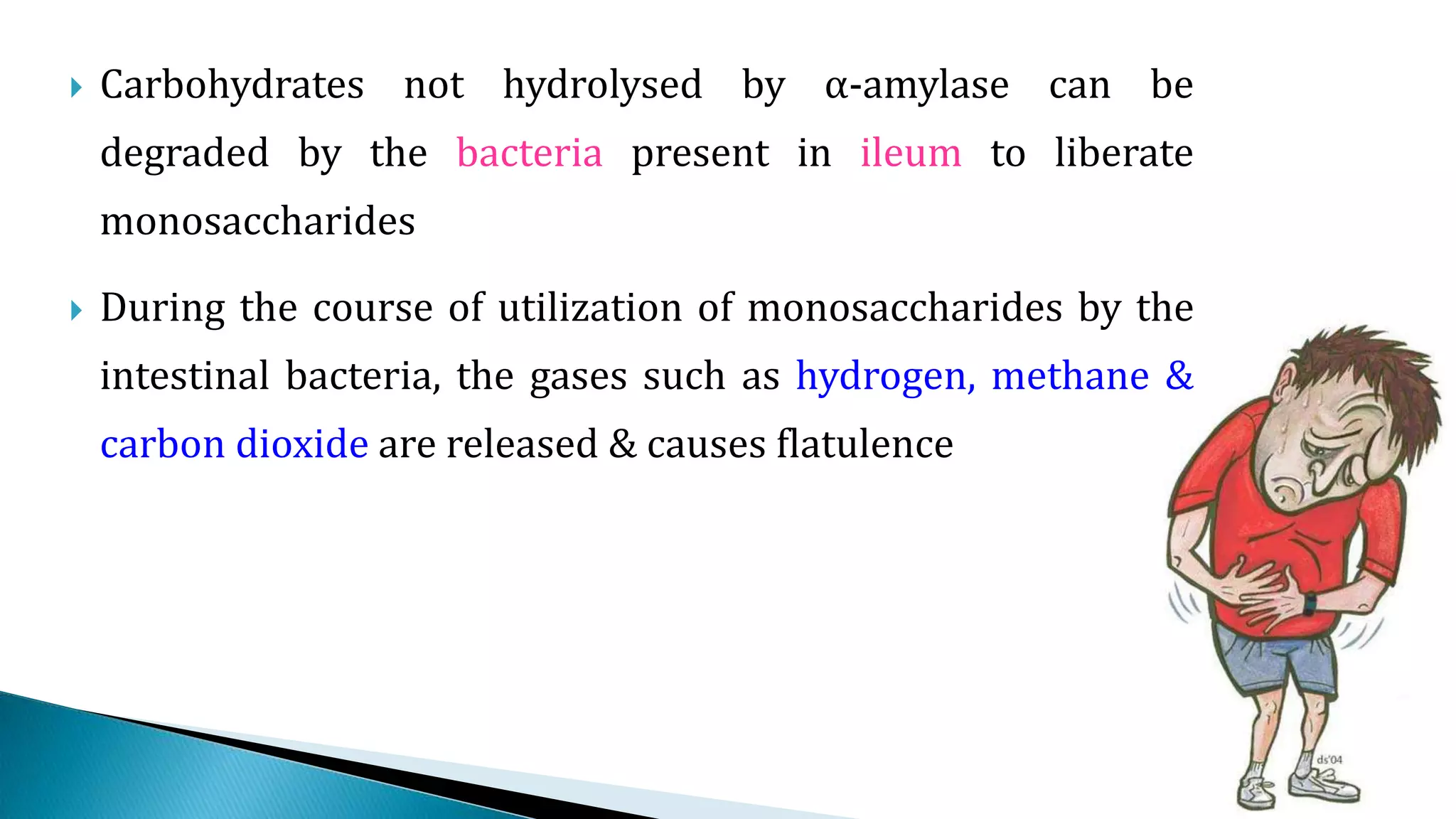
 Carbohydrates not hydrolysed by α-amylase can be
degraded by the bacteria present in ileum to liberate
monosaccharides
 During the course of utilization of monosaccharides by the
intestinal bacteria, the gases such as hydrogen, methane &
carbon dioxide are released & causes flatulence
 The occurrence of flatulence after the ingestion of leguminous seeds
(bengal gram, redgram, beans, peas, soya bean) is very common
 They contain several non-digestible oligonccharides by human
intestinal enzymes
 These compounds are degraded and utilised by intestinal bacteria
causing flatulence
 Raffinose containing galactose, glucose and fructose is a predominant
oligosaccharide found in leguminous seeds
 lactase (β-galactosidase) deficiency is the most common
disaccharidase deficiency in humans
 More than half of the world's adult population is affected by
lactose intolerance
 Some infants may have deficiency of lactase & they show
intolerance to lactose, the milk sugar
Symptoms:
 Diarrhoea, flatulence, abdominal cramps
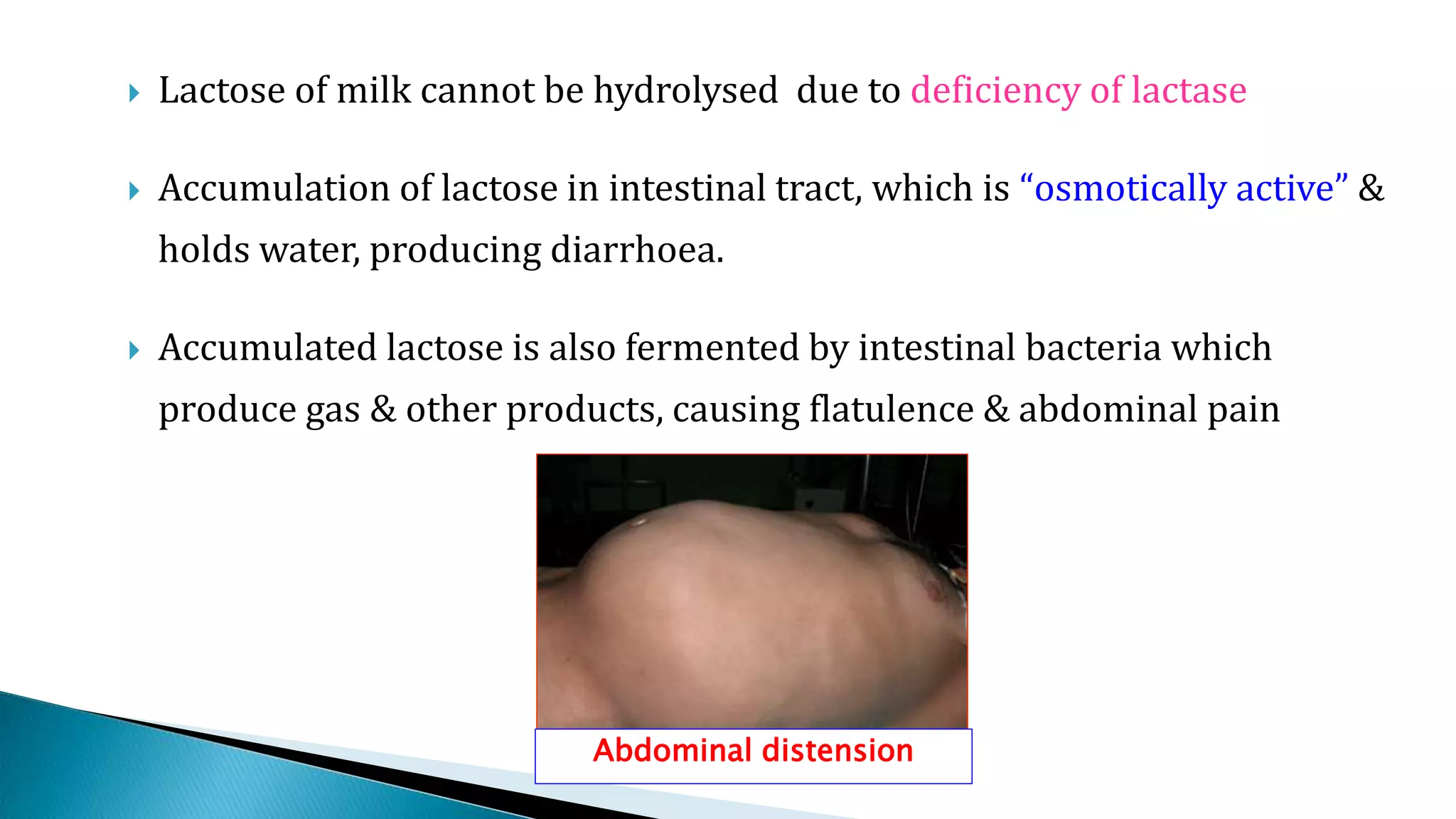
 Lactose of milk cannot be hydrolysed due to deficiency of lactase
 Accumulation of lactose in intestinal tract, which is “osmotically active” &
holds water, producing diarrhoea.
 Accumulated lactose is also fermented by intestinal bacteria which
produce gas & other products, causing flatulence & abdominal pain
Abdominal distension
Sucrase deficiency:
 Inherited disorder of sucrose digestion
 Symptoms occurs in early childhood with ingestion of sugars,
sucrose
 Symptoms: Diarrhoea, flatulence, abdominal cramps
Disacchariduria:
 Increase in the excretion of disaccharides may be observed in
some patients with disaccharidase deficiency
 Observed in intestinal damage, celiac diseases
Digestion & absorption of carbohydrates

Digestion & absorption of carbohydrates

  • 1.
    Dr. Ansil PN, PhD Faculty, Department of Biochemistry Al Azhar Medical College Thodupzha, Idukki, Kerala, India.
  • 2.
     Digestion -hydrolysis of large and complex organic molecules of foodstuffs into smaller and preferably water- soluble molecules which can be easily absorbed by the GIT.  Digestion of macromolecules also promotes the absorption of fat soluble vitamins and certain minerals.  Cooking of the food & mastication improve its digestibility by enzymes.
  • 3.
    large molecules smallmolecules small molecules Digestion Absorption vitamins, minerals, monosaccharides & free amino acids BLOOD Food
  • 4.
    Organs of theGIT with their major functions in digestion and absorption
  • 5.
     The principaldietary carbohydrates are polysaccharides disaccharides & monosaccharides  The hydrolysis of glycosidic bonds is carried out by a group of enzymes called glycosidases
  • 6.
    Carbohydrates present in thediet Monosaccharides Glucose Fructose Pentose Disaccharides Lactose Maltose Sucrose Polysaccharides Starch Glycogen In GIT, all complex carbohydrates are converted to simpler monosaccharide, the absorbable form.
  • 7.
  • 8.
     Sucrose (α-D–glucosyl(1→2) β –D-fructose)  Lactose (β –D-galactosyl (1→4) β –D-glucose)  Maltose (α-D–glucosyl (1→4) α-D–glucose) Disaccharides
  • 11.
  • 13.
  • 14.
     Digestion ofcarbohydrate starts at the mouth  In mouth, food undergoes mastication  During mastication, food comes in contact with saliva (secreted by salivary gland)  Saliva contains carbohydrate splitting enzyme salivary amylase (ptyalin) Digestion in mouth
  • 15.
    Action of salivaryamylase (ptyalin):  It is α – amylase, requires Cl- ions for activation & optimum pH 6.7  Salivary amylase hydrolyses α - 1→4 glycosidic bonds of polysaccharides, producing smaller molecules – dextrin, maltose, maltotriose, glucose  Salivary amylase’s action stops in stomach (at low pH)
  • 17.
     No carbohydratesplitting enzyme in gastric juice  Some dietary sucrose may be hydrolysed to equimolar amounts of glucose & fructose by HCl Sucrose Glucose + Fructose Digestion in stomach: HCl
  • 18.
    Digestion in smallintestine (duodenum):  Food bolus in duodenum mixes with pancreatic juice  Pancreatic juice contains pancreatic amylase, similar to salivary amylase
  • 19.
    Action of pancreaticamylase:  It is an α-amylase, optimum pH 7.1, requires Cl- ions  It specifically hydrolyzes α-1 → 4 glycosidic bonds & not on α- 1 → 6 bonds  It produces disaccharides (maltose, isomaltose) & oligosaccharides
  • 20.
     Note: Pancreaticamylase, an isoenzyme of salivary amylase, differs only in the optimum pH of action. Both the enzymes require Chloride ions for their actions (Ion activated enzymes). Starch/Glycogn Maltose/Isomaltose + Oligosaccharides Pancreatic amylase
  • 21.
    Action of α- amylase
  • 22.
    Digestion in smallintestine (upper jejunum):  Digestion of carbohydrates mainly takes place in the small intestine by pancreatic amylase as the food stays for a longer time in the intestine  The final digestion of di- & oligosaccharides to monosaccharides primarily occurs at the mucosal lining of the upper jejunum  Carried out by oligosaccharidases (e.g. glucoamylase acting on amylose) and disaccharidases (e.g. maltase, sucrase, lactase)
  • 23.
    The different disaccharidasesare :  Lactase: It is β-galactosidase. Lactose is hydrolysed to glucose & galactose  Isomaltase: It catalyses a 1 → 6 glycosidic bonds, branching points, producing maltose & glucose  Maltase: It hydrolyses a 1 → 4 glycosidic bonds between glucose units in maltose  Sucrase: It hydrolyses sucrose to glucose & fructose.
  • 24.
    2 Types ofenzymes are important for the digestion of carbohydrates Amylases Disaccharidases Salivary Amylase Pancreatic Amylase convert polysaccharides to disaccharides Convert disaccharides to monosaccharides which are finally absorbed Maltase Sucrase Lactase Isomaltase
  • 25.
  • 26.
     The principalmonosaccharides produced by the digestion of carbohydrates are glucose, fructose and galactose  Glucose accounts for 80% of the total monosaccharides  The absorption occurs mostly in the duodenum & upper jejunum of small intestine  Only monosaccharides are absorbed by the intestine  Absorption rate is maximum for galactose; moderate for glucose; and minimum for fructose
  • 27.
    Cori study:  Hestudies the rate of absorption of different sugars from small intestine in rat  Glucose absorption as 100, comparative absorption of other sugars as  Galactose=110, Glucose=100, Fructose=43, Mannoase=19, Xylose=15 & Arabinose=9  Galactose is absorbed more rapidly than glucose  Pentoses are absorbed slowly
  • 28.
     Different sugarspossess different mechanisms for their absorption  Glucose is transported into the intestinal mucosal cells by a carrier mediated and energy requiring process
  • 29.
    Monosaccharides, the endproducts of carbohydrate digestion, enter the capillaries of the intestinal villi In the liver, galactose & fructose are converted to glucose. Small intestine Monosaccharides travel to the liver via the portal vein.
  • 32.
     Glucose andNa+ share the same transport system (symport) referred to as sodium dependent glucose transporter (SGluT)  The concentration of Na+ is higher in the intestinal lumen compared to mucosal cells  Na+ moves into the cells along its concentration gradient & simultaneously glucose is transported into the intestinal cells  Mediated by the same carrier system
  • 33.
    SGluT Sodium and glucoseco-transport system at luminal side; sodium is then pumped out
  • 34.
  • 35.
     Na+ diffusesinto the cell and it drags glucose along with it  The intestinal Na+ gradient is the immediate energy source for glucose transport  This energy is indirectly supplied by ATP since the re-entry of Na+ (against the concentration gradient) into the intestinal lumen is an energy requiring active process (Sodium – Potassium pump)
  • 36.
     The enzymeNa+-K+ ATPase is involved in the transport of Na+ in exchange of K+ against the concentration gradient Intestinal absorption of glucose  At the intestinal lumen, absorption is by SGluT & at the blood vessel side, absorption is by GluT2
  • 37.
    Oral rehydration therapy(ORT):  ORT is common treatment of diarrhoea  Oral rehydration fluid contains glucose & sodium  Intestinal absorption of sodium is facilitated by the presence of glucose  Mechanism of absorption of galactose is similar to that of glucose  Phlorozin blocks the Na+ dependent transport of glucose & galactose
  • 38.
     Glucose transportersGluT-1 to 7 have been described in various tissues  GluT-2 & GluT-4 are very important GluT-2:  Operates in intestinal epithelial cells  It is a uniport, facilitated diffusion system & not dependent on Na+ ions  Glucose is held on GluT-2, by weak hydrogen bonds  After fixing glucose, changes configuration & opens inner side releasing glucose
  • 39.
  • 40.
    GluT-4:  Operates inthe muscle & adipose tissue  GluT-4 is under control of insulin  Insulin induces the intracellular GluT-4 molecules to move to the cell membrane & increases the glucose uptake  In type 2 DM, membrane GluT-4 is reduced, leading to insulin resistance in muscle & fat cells.  Other “GluT” molecules are not under control of insulin
  • 42.
    GluT-1  It ispresent in RBCs & brain  Also present in retina, colon, placenta  It helps in glucose uptake in most of these tissues which is independent of insulin
  • 43.
    Transporter Present inProperties GluT1 RBC, brain, kidney, colon, retina, placenta Glucose uptake in most of cells GluT2 Surface of intestinal cells, liver, β-cells of pancreas Low affinity; glucose uptake in liver; glucose sensor in β-cells GluT3 Neurons, brain High affinity; glucose into brain cells GluT4 Skeletal, heart muscle, adipose tissue Insulin mediated glucose uptake GluT5 Small intestine, testis, sperms, kidney Fructose transporter; poor ability to transport glucose GluT7 Liver endoplasmic reticulum Glucose from ER to cytoplasm SGluT Intestine, kidney Cotransport; from lumen into cell
  • 44.
    Absorption of fructose: Fructose absorption is simple  Does not require energy and Na+ ions  Transported by facilitated diffusion mediated by a carrier  Inside the epithelial cell, most of the fructose is converted to glucose  The latter then enters the circulation  Pentoses are absorbed by a process of simple diffusion
  • 45.
     Mucus membrane:Mucus membrane is not healthy, absorption will decrease  Thyroid hormones: Increases absorption of hexoses & act on intestinal mucosa  Adrenal cortex: Absorption decreases in adrenocortical deficiency, mainly due to decreased concentration of sodium
  • 46.
     Anterior pituitary:It affects mainly through thyroid hormones  Vitamins: Absorption is decreased in deficiency of B-complex vitamins - thiamine, pyridoxine, pantothenic acid  Inherited deficiency of sucrase & lactase enzymes interfere with corresponding disaccharide absorption
  • 47.
     Defect indisaccharidases results in the passage of undigested disaccharides into the large intestine  The disaccharides draw water from the intestinal mucosa by osmosis and cause osmotic diarrhoea  Bacterial action of these undigested carbohydrates leads to flatulence  Flatulence is characterized by increased intestinal motility, cramps and irritation
  • 48.
     Carbohydrates nothydrolysed by α-amylase can be degraded by the bacteria present in ileum to liberate monosaccharides  During the course of utilization of monosaccharides by the intestinal bacteria, the gases such as hydrogen, methane & carbon dioxide are released & causes flatulence
  • 49.
     The occurrenceof flatulence after the ingestion of leguminous seeds (bengal gram, redgram, beans, peas, soya bean) is very common  They contain several non-digestible oligonccharides by human intestinal enzymes  These compounds are degraded and utilised by intestinal bacteria causing flatulence  Raffinose containing galactose, glucose and fructose is a predominant oligosaccharide found in leguminous seeds
  • 50.
     lactase (β-galactosidase)deficiency is the most common disaccharidase deficiency in humans  More than half of the world's adult population is affected by lactose intolerance  Some infants may have deficiency of lactase & they show intolerance to lactose, the milk sugar Symptoms:  Diarrhoea, flatulence, abdominal cramps
  • 51.
     Lactose ofmilk cannot be hydrolysed due to deficiency of lactase  Accumulation of lactose in intestinal tract, which is “osmotically active” & holds water, producing diarrhoea.  Accumulated lactose is also fermented by intestinal bacteria which produce gas & other products, causing flatulence & abdominal pain Abdominal distension
  • 52.
    Sucrase deficiency:  Inheriteddisorder of sucrose digestion  Symptoms occurs in early childhood with ingestion of sugars, sucrose  Symptoms: Diarrhoea, flatulence, abdominal cramps Disacchariduria:  Increase in the excretion of disaccharides may be observed in some patients with disaccharidase deficiency  Observed in intestinal damage, celiac diseases