LINEAR MEASUREMENT 
AKHIL KRISHNAN G
LINEAR MEASUREMENT 
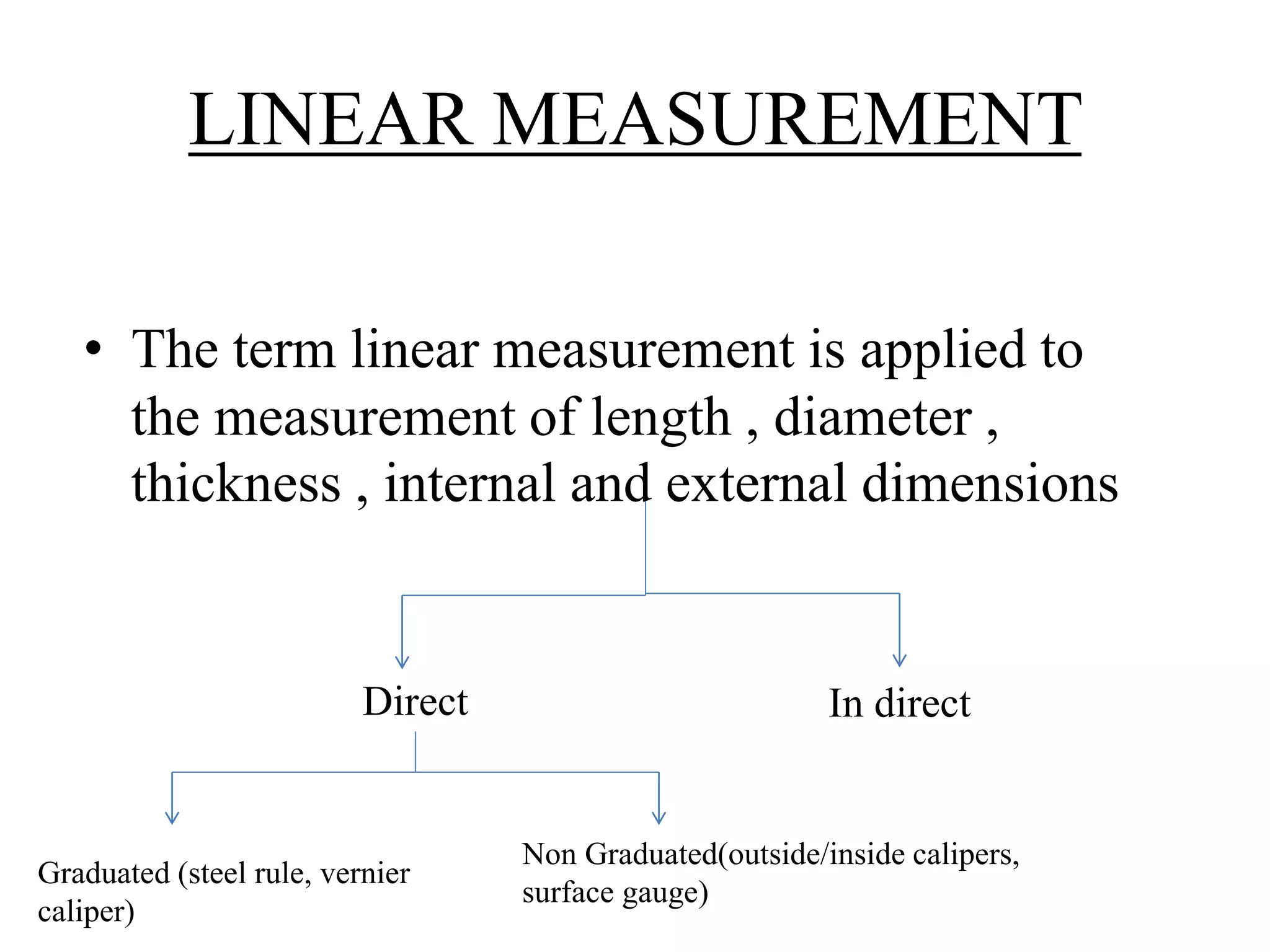
• The term linear measurement is applied to 
the measurement of length , diameter , 
thickness , internal and external dimensions 
Direct In direct 
Non Graduated(outside/inside calipers, 
surface gauge) 
Graduated (steel rule, vernier 
caliper)
STEEL RULE 
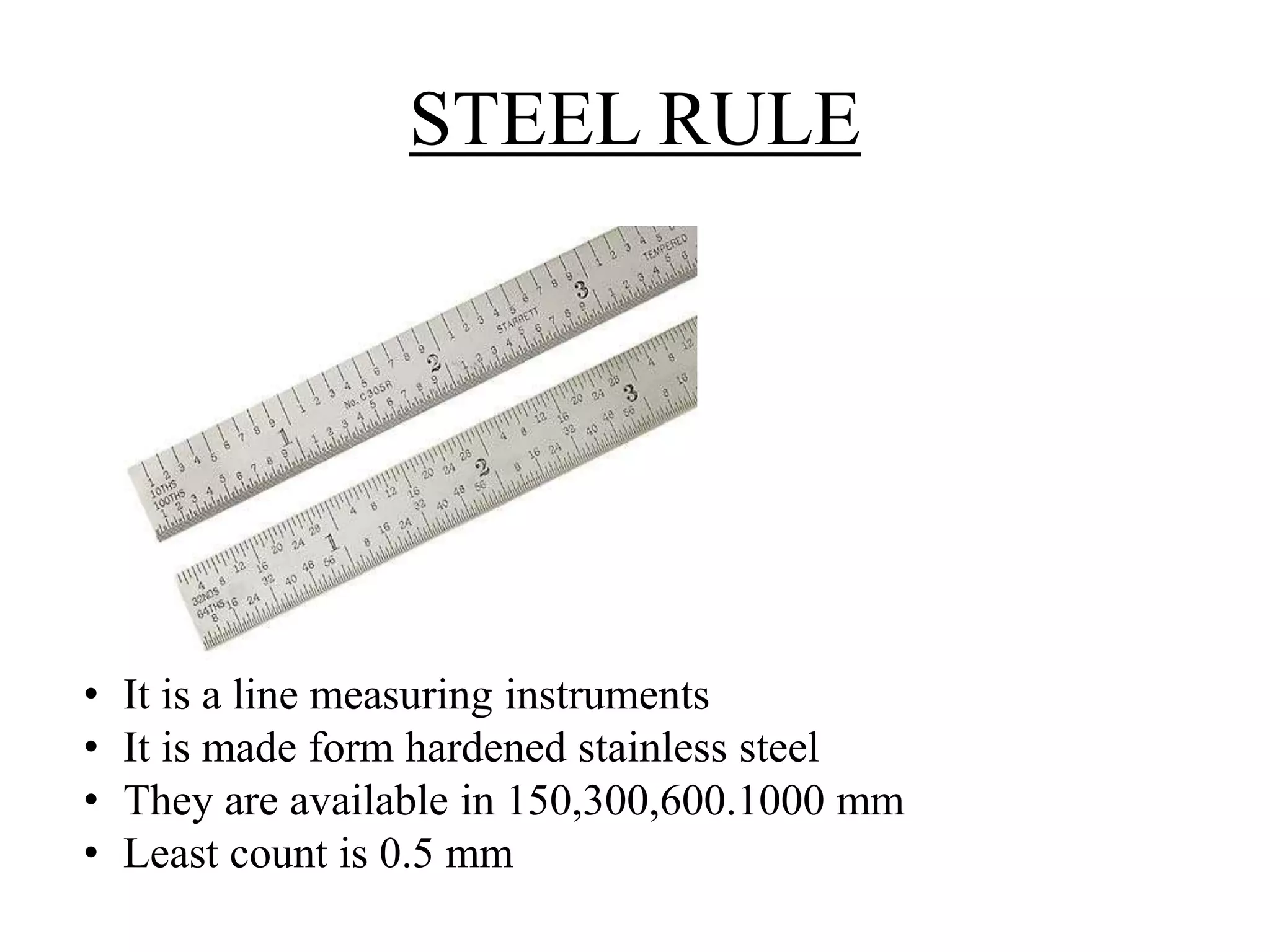
• It is a line measuring instruments 
• It is made form hardened stainless steel 
• They are available in 150,300,600.1000 mm 
• Least count is 0.5 mm
VERNIER CALIPER 
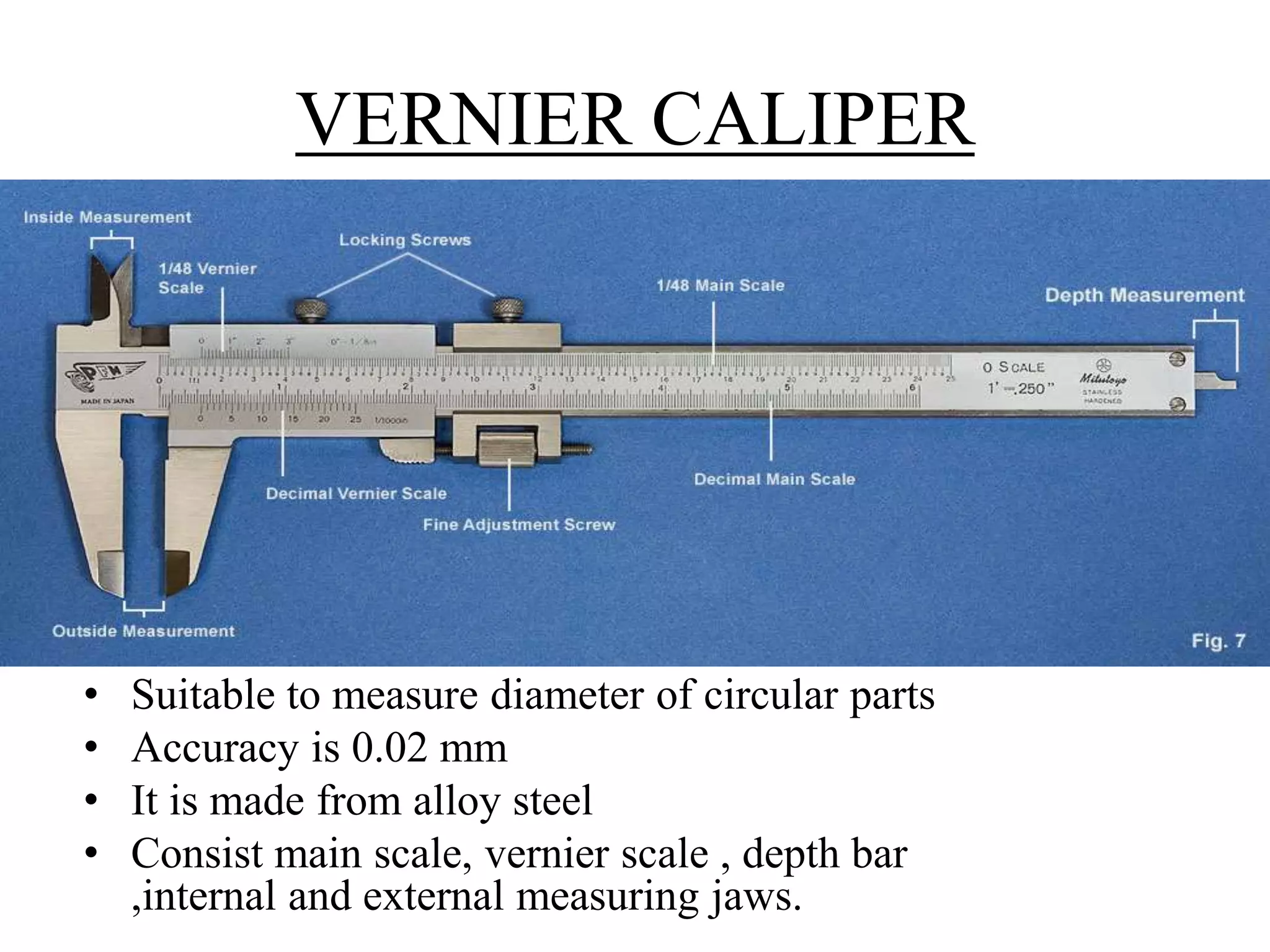
• Suitable to measure diameter of circular parts 
• Accuracy is 0.02 mm 
• It is made from alloy steel 
• Consist main scale, vernier scale , depth bar 
,internal and external measuring jaws.
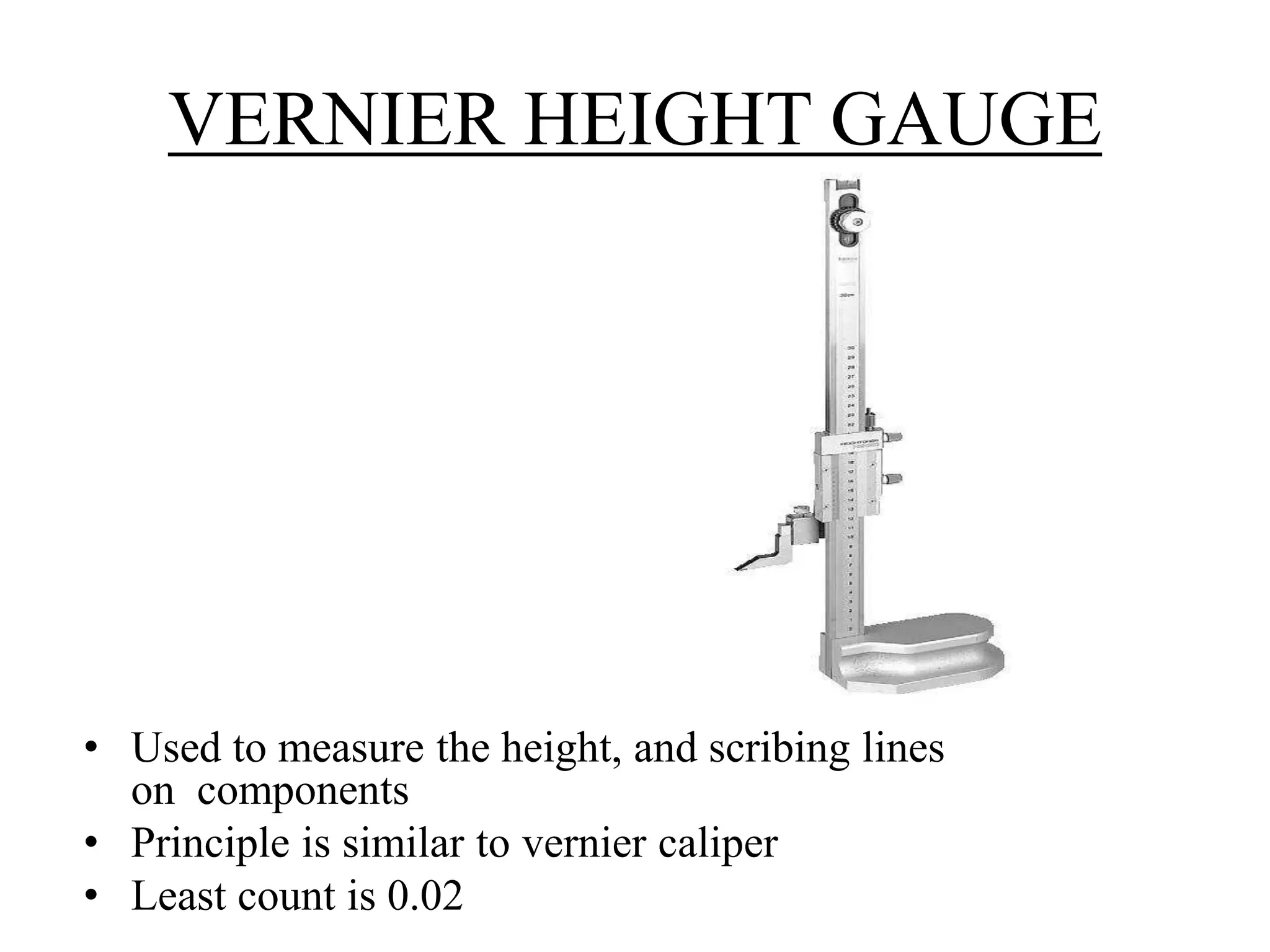
VERNIER HEIGHT GAUGE 
• Used to measure the height, and scribing lines 
on components 
• Principle is similar to vernier caliper 
• Least count is 0.02
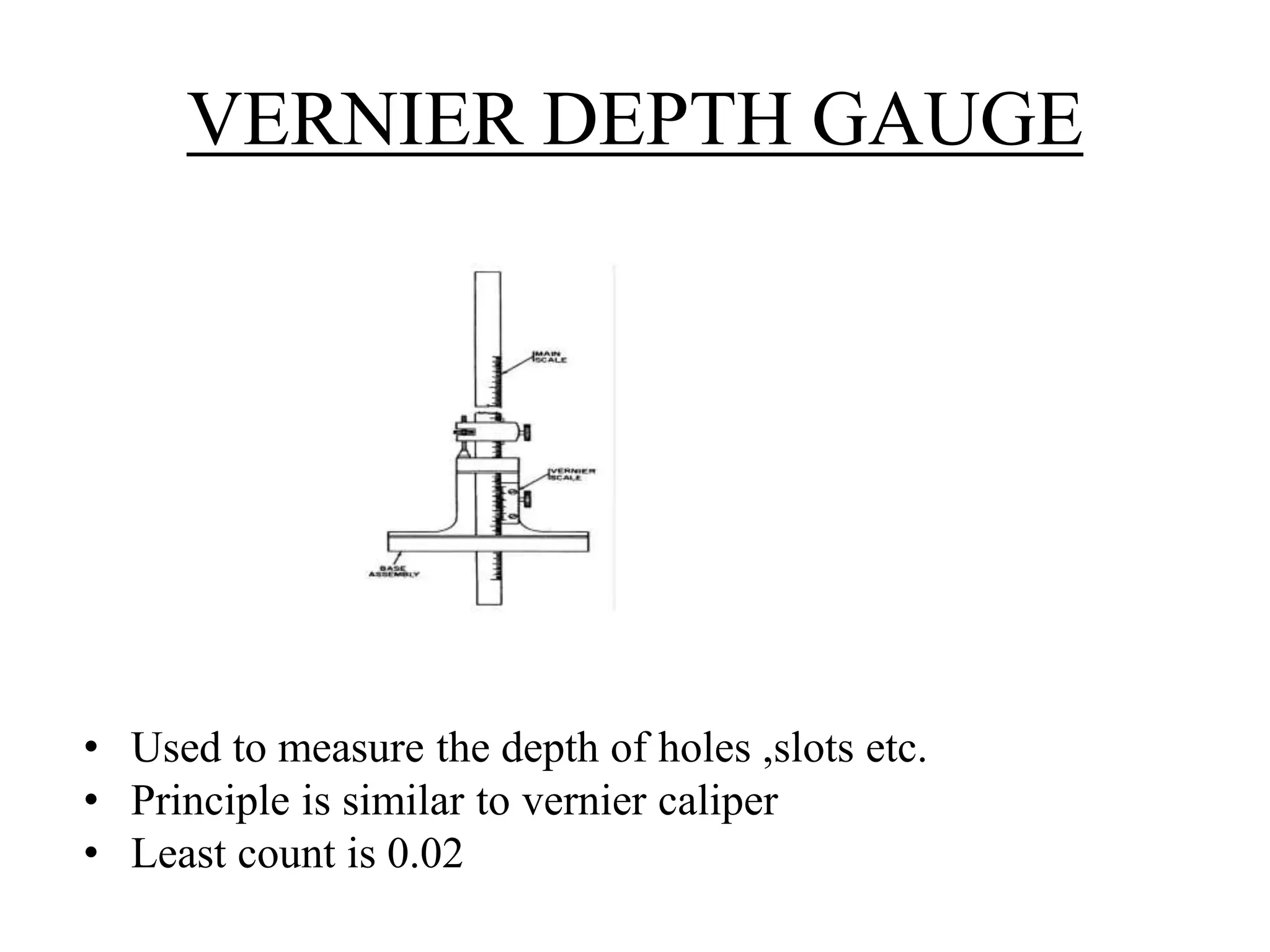
VERNIER DEPTH GAUGE 
• Used to measure the depth of holes ,slots etc. 
• Principle is similar to vernier caliper 
• Least count is 0.02
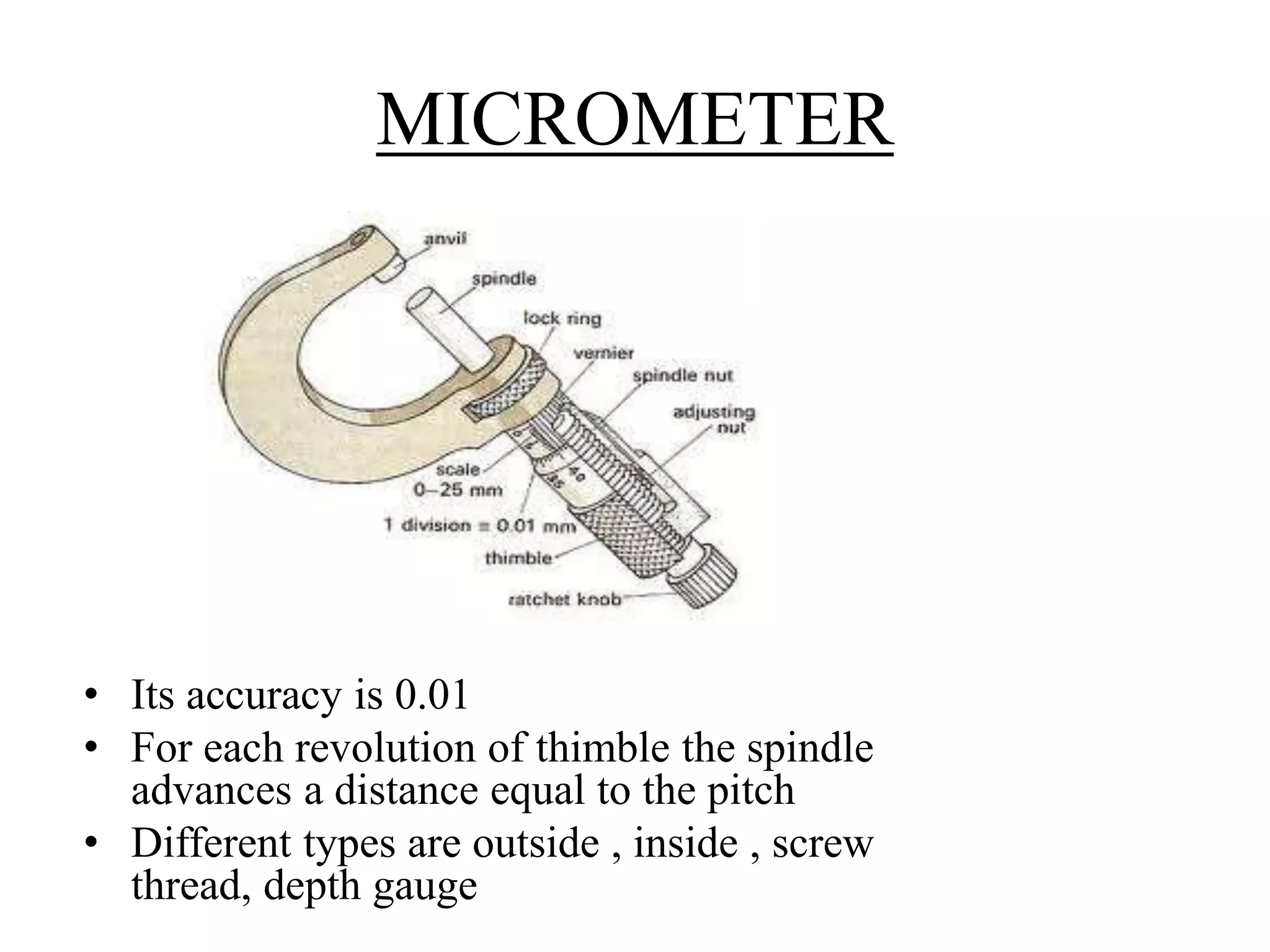
MICROMETER 
• Its accuracy is 0.01 
• For each revolution of thimble the spindle 
advances a distance equal to the pitch 
• Different types are outside , inside , screw 
thread, depth gauge
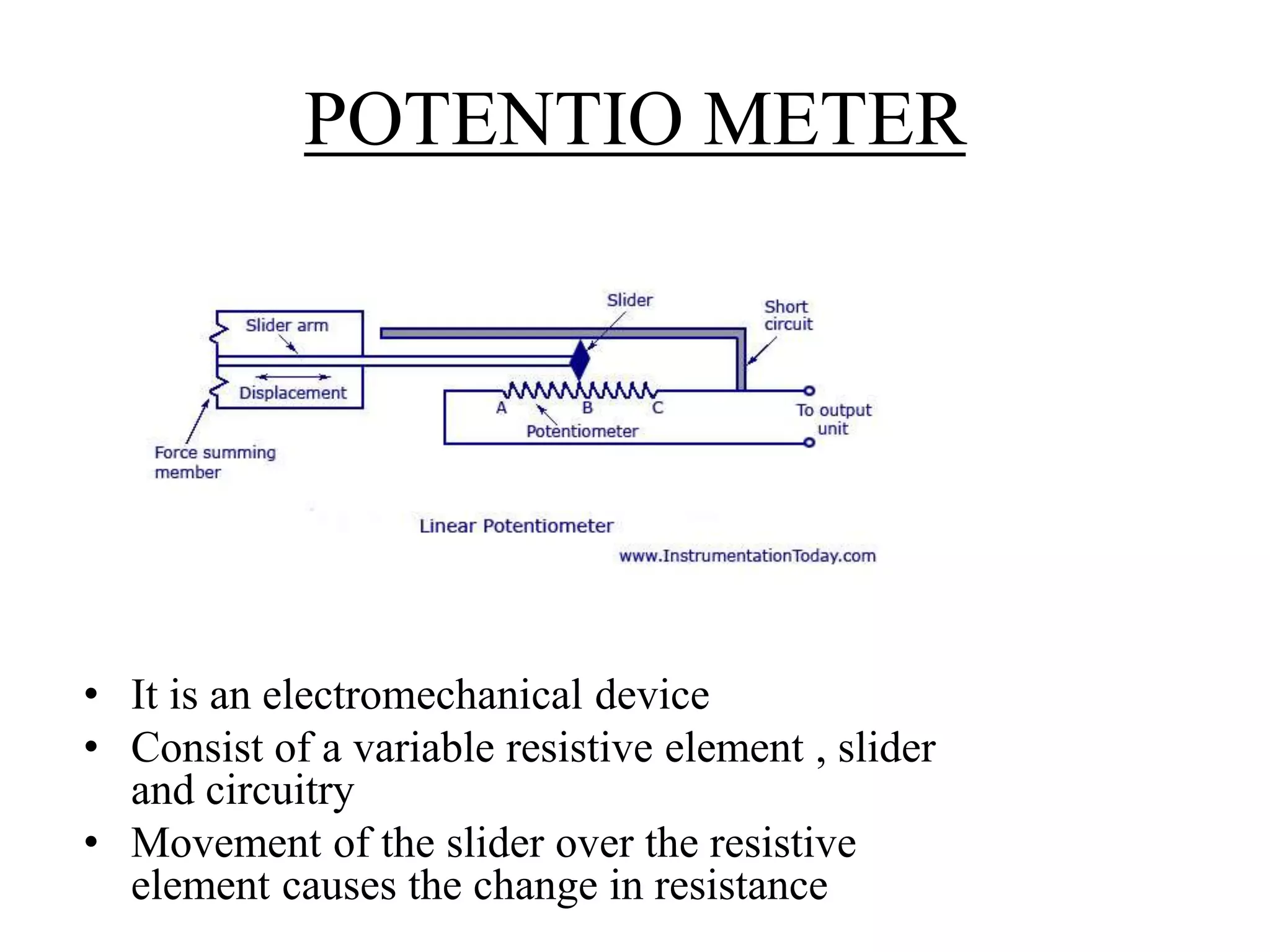
POTENTIO METER 
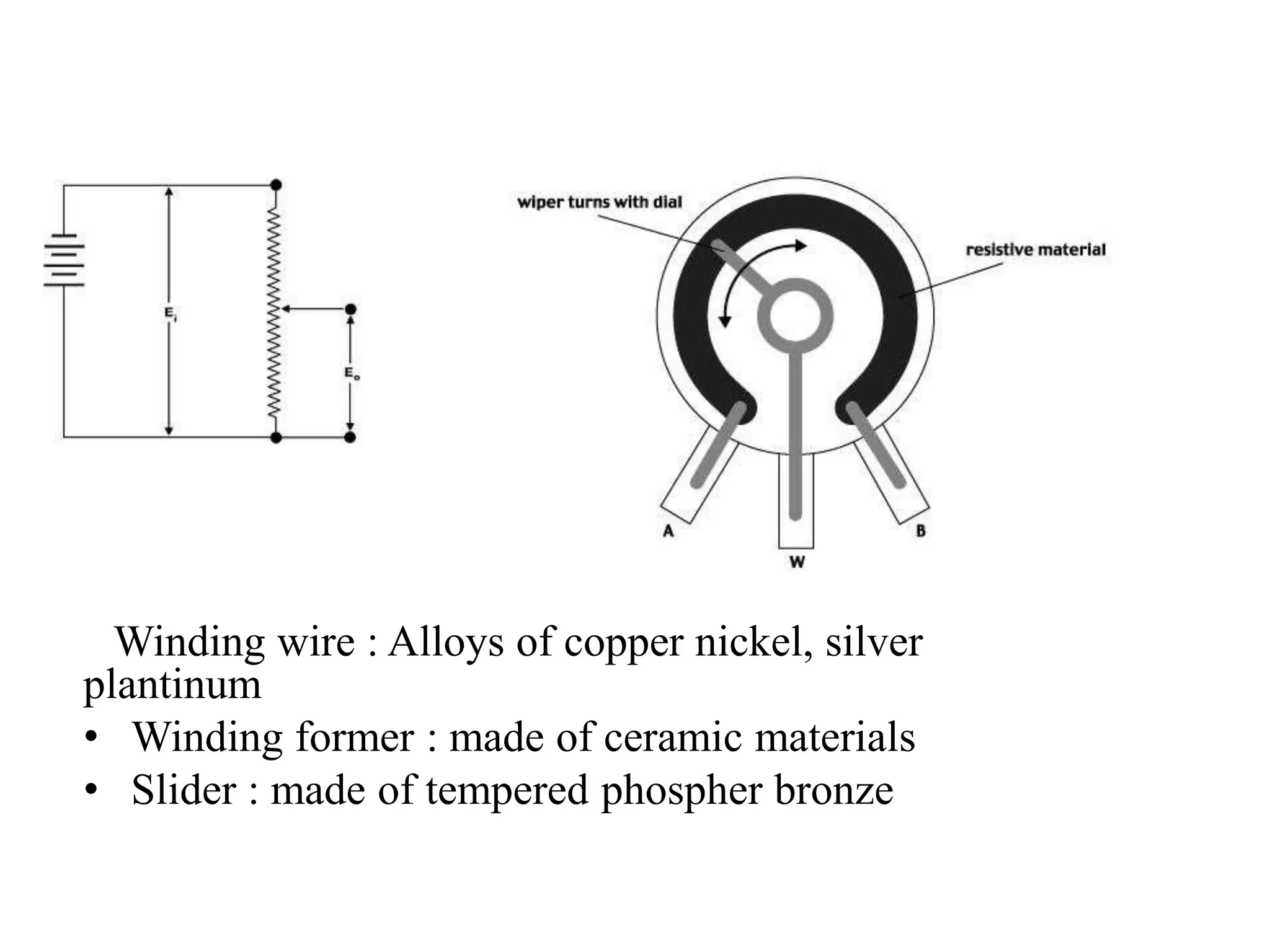
• It is an electromechanical device 
• Consist of a variable resistive element , slider 
and circuitry 
• Movement of the slider over the resistive 
element causes the change in resistance
Winding wire : Alloys of copper nickel, silver 
plantinum 
• Winding former : made of ceramic materials 
• Slider : made of tempered phospher bronze
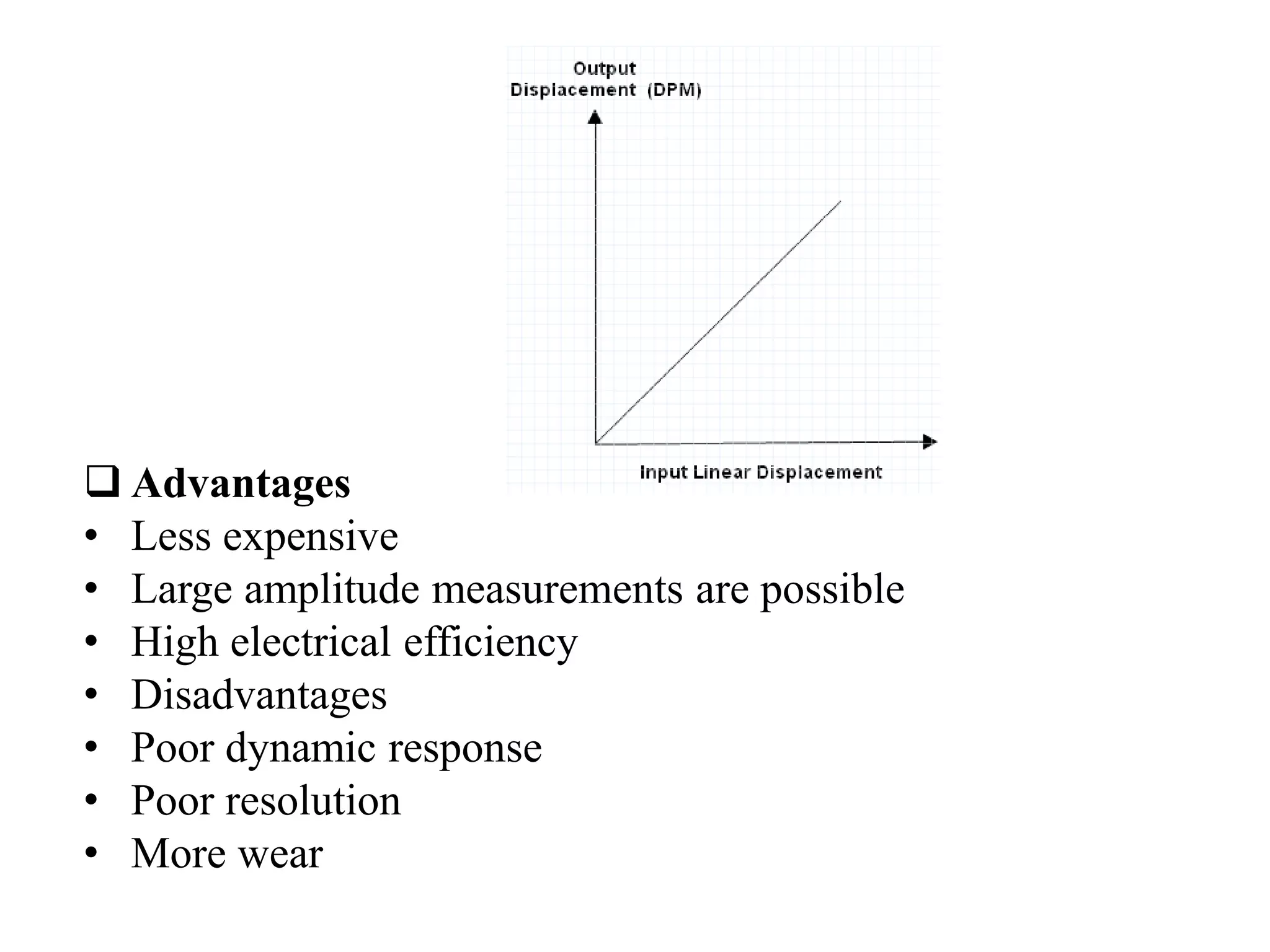
 Advantages 
• Less expensive 
• Large amplitude measurements are possible 
• High electrical efficiency 
• Disadvantages 
• Poor dynamic response 
• Poor resolution 
• More wear
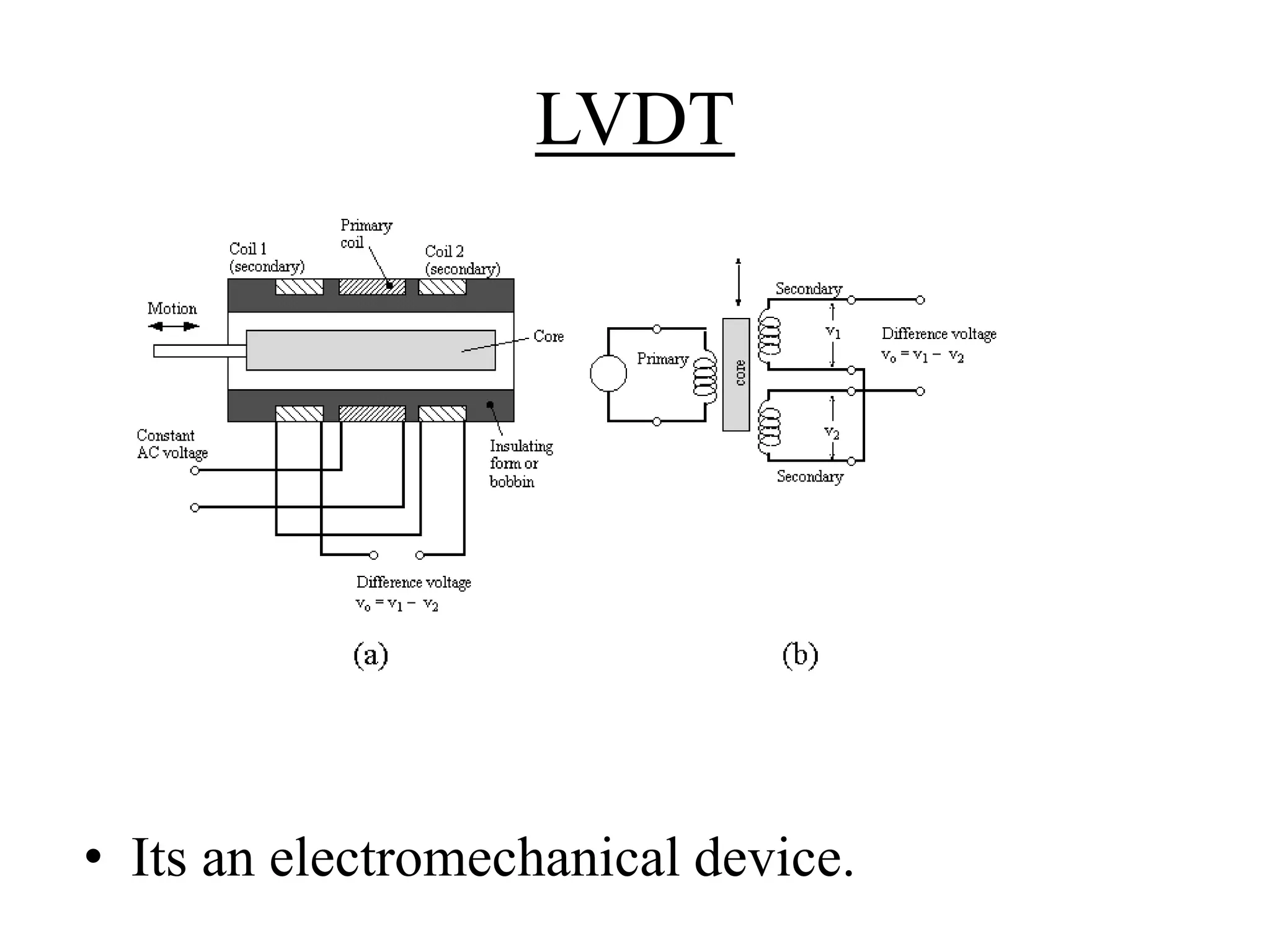
LVDT 
• Its an electromechanical device.
• It consist of one primary and two secondary coils wound 
over a winding former 
• Secondary windings have equal number of turns and they 
in out phase with each other 
• Input supply is given to primary 
• Displacement to be measured is connected with central 
core 
• The amount of voltage change is proportional to the linear 
displacement of core 
• At central position of the core , the net effective voltage is 
0
• Advantages 
• High range 
• Less friction 
• Low hysteresis 
• High sensitivity 
• Less power consumption 
• These transducer tolerates high degree of 
shock and vibrations without any effects 
• Disadvantages 
• Sensitive to external magnetic fields 
• Performance may affected by vibrations 
• Performance may affected by temperature
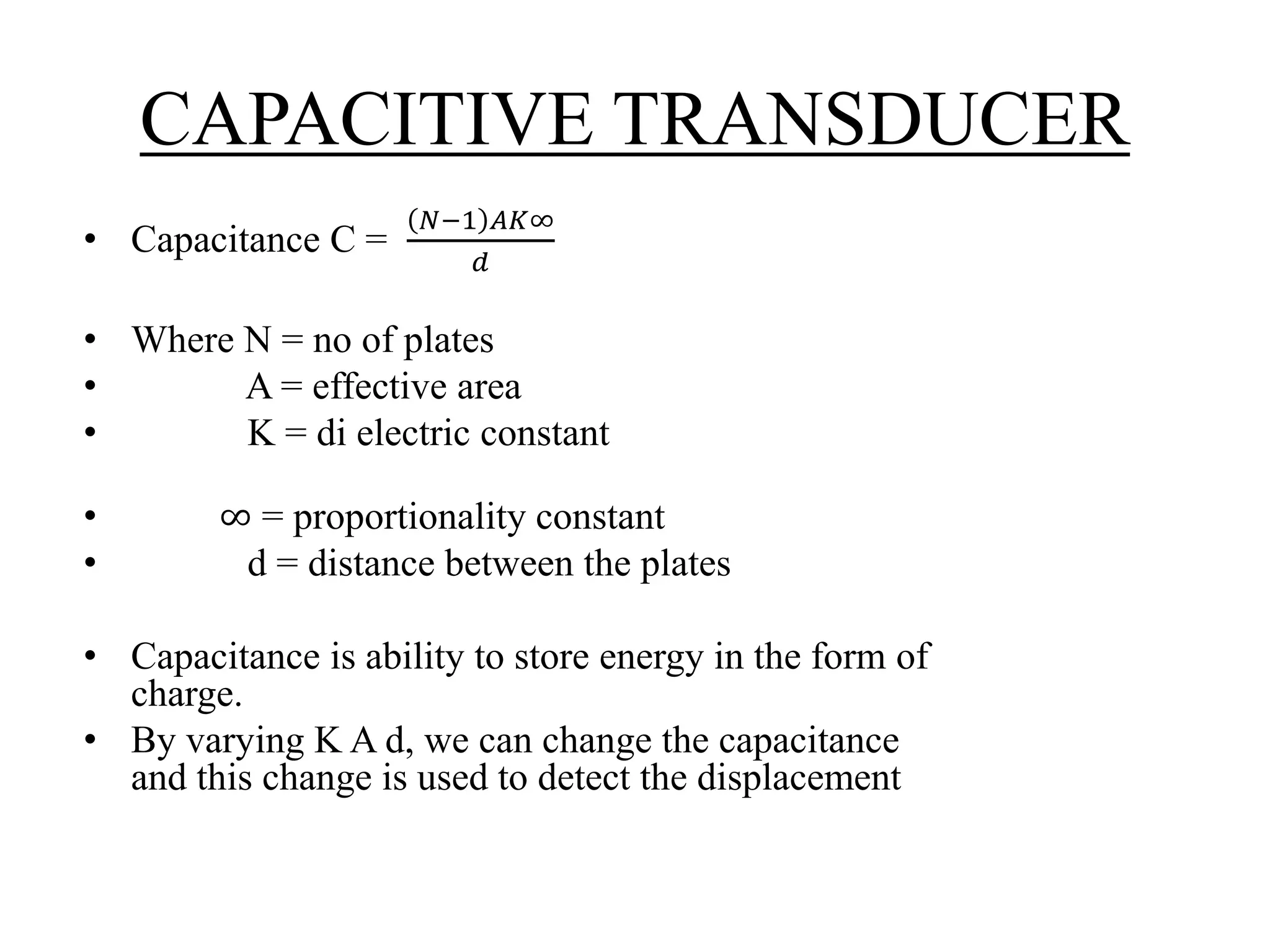
CAPACITIVE TRANSDUCER 
• Capacitance C = 
푁−1 퐴퐾∞ 
푑 
• Where N = no of plates 
• A = effective area 
• K = di electric constant 
• ∞ = proportionality constant 
• d = distance between the plates 
• Capacitance is ability to store energy in the form of 
charge. 
• By varying K A d, we can change the capacitance 
and this change is used to detect the displacement
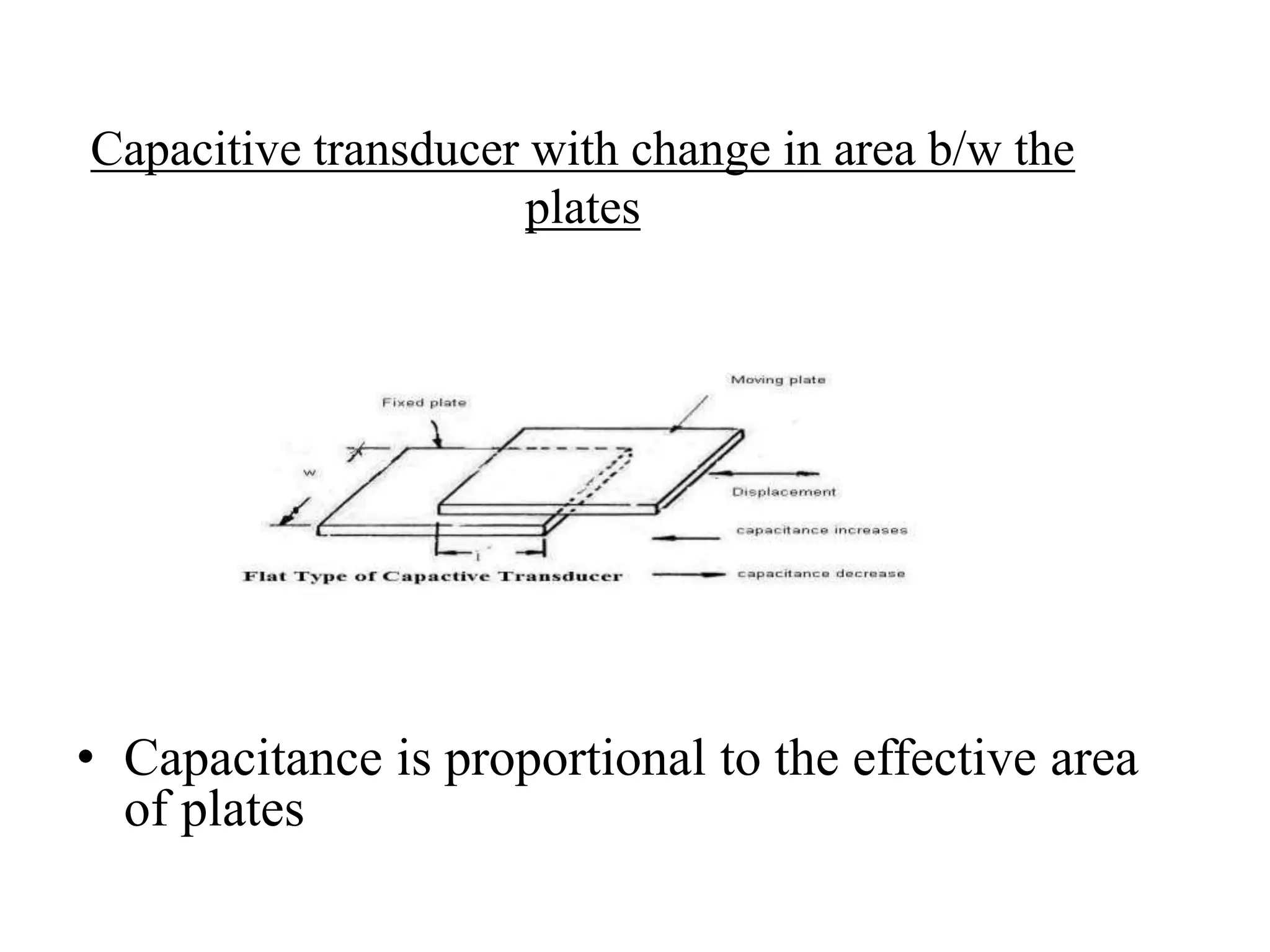
Capacitive transducer with change in area b/w the 
plates 
• Capacitance is proportional to the effective area 
of plates
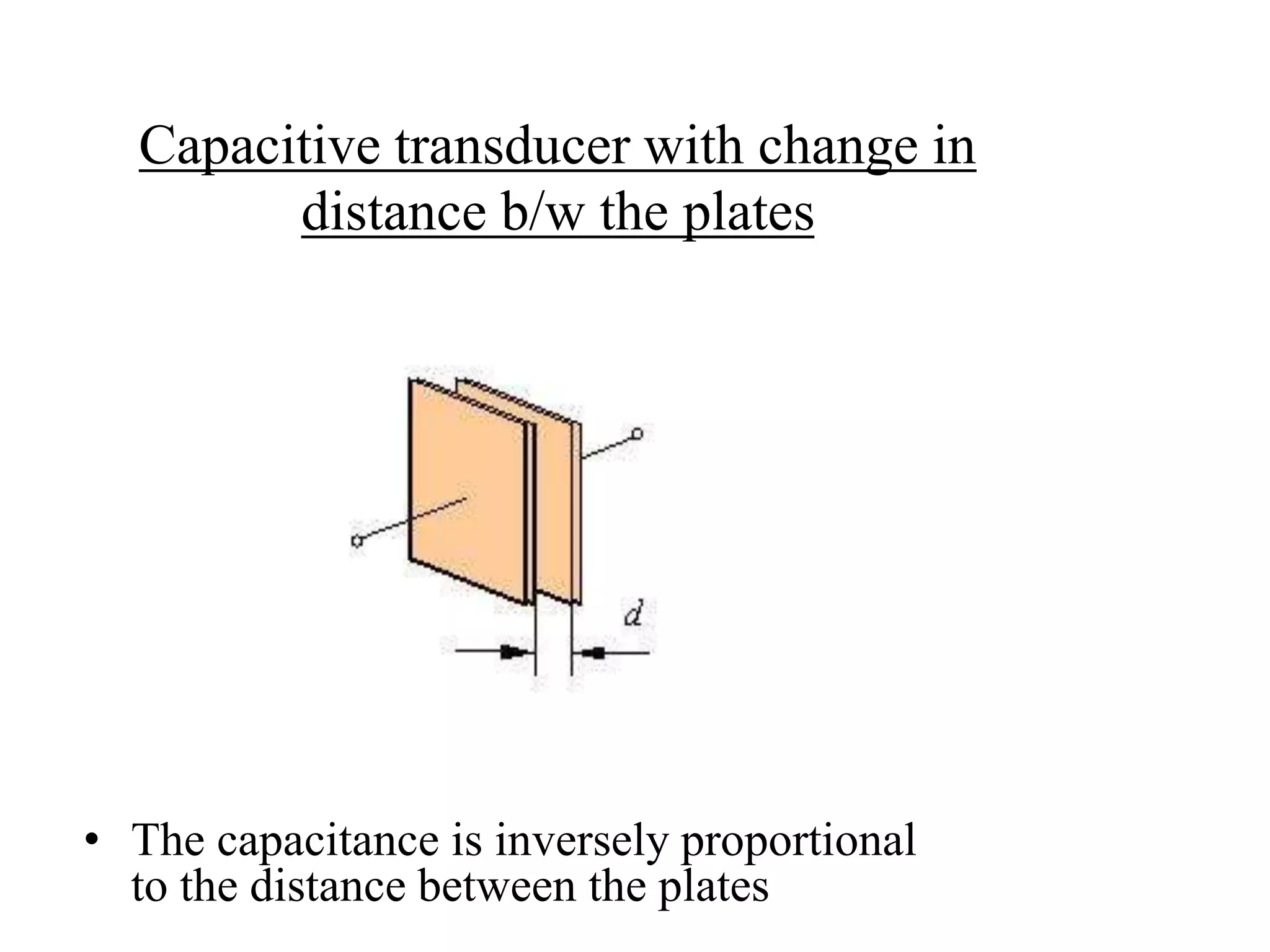
Capacitive transducer with change in 
distance b/w the plates 
• The capacitance is inversely proportional 
to the distance between the plates
• Advantages 
• Require extremely small force 
• Extremely sensitive 
• Good frequency response 
• Resolution is small 
• Require small power for operation 
• Can be used for application where inductive 
transducer fails. 
• Disadvantages 
• Need insulation 
• Non linearity 
• Temperature sensitive
Linear measurement

Linear measurement

  • 1.
  • 2.
    LINEAR MEASUREMENT •The term linear measurement is applied to the measurement of length , diameter , thickness , internal and external dimensions Direct In direct Non Graduated(outside/inside calipers, surface gauge) Graduated (steel rule, vernier caliper)
  • 3.
    STEEL RULE •It is a line measuring instruments • It is made form hardened stainless steel • They are available in 150,300,600.1000 mm • Least count is 0.5 mm
  • 4.
    VERNIER CALIPER •Suitable to measure diameter of circular parts • Accuracy is 0.02 mm • It is made from alloy steel • Consist main scale, vernier scale , depth bar ,internal and external measuring jaws.
  • 5.
    VERNIER HEIGHT GAUGE • Used to measure the height, and scribing lines on components • Principle is similar to vernier caliper • Least count is 0.02
  • 6.
    VERNIER DEPTH GAUGE • Used to measure the depth of holes ,slots etc. • Principle is similar to vernier caliper • Least count is 0.02
  • 7.
    MICROMETER • Itsaccuracy is 0.01 • For each revolution of thimble the spindle advances a distance equal to the pitch • Different types are outside , inside , screw thread, depth gauge
  • 8.
    POTENTIO METER •It is an electromechanical device • Consist of a variable resistive element , slider and circuitry • Movement of the slider over the resistive element causes the change in resistance
  • 9.
    Winding wire :Alloys of copper nickel, silver plantinum • Winding former : made of ceramic materials • Slider : made of tempered phospher bronze
  • 10.
     Advantages •Less expensive • Large amplitude measurements are possible • High electrical efficiency • Disadvantages • Poor dynamic response • Poor resolution • More wear
  • 11.
    LVDT • Itsan electromechanical device.
  • 12.
    • It consistof one primary and two secondary coils wound over a winding former • Secondary windings have equal number of turns and they in out phase with each other • Input supply is given to primary • Displacement to be measured is connected with central core • The amount of voltage change is proportional to the linear displacement of core • At central position of the core , the net effective voltage is 0
  • 13.
    • Advantages •High range • Less friction • Low hysteresis • High sensitivity • Less power consumption • These transducer tolerates high degree of shock and vibrations without any effects • Disadvantages • Sensitive to external magnetic fields • Performance may affected by vibrations • Performance may affected by temperature
  • 14.
    CAPACITIVE TRANSDUCER •Capacitance C = 푁−1 퐴퐾∞ 푑 • Where N = no of plates • A = effective area • K = di electric constant • ∞ = proportionality constant • d = distance between the plates • Capacitance is ability to store energy in the form of charge. • By varying K A d, we can change the capacitance and this change is used to detect the displacement
  • 15.
    Capacitive transducer withchange in area b/w the plates • Capacitance is proportional to the effective area of plates
  • 16.
    Capacitive transducer withchange in distance b/w the plates • The capacitance is inversely proportional to the distance between the plates
  • 17.
    • Advantages •Require extremely small force • Extremely sensitive • Good frequency response • Resolution is small • Require small power for operation • Can be used for application where inductive transducer fails. • Disadvantages • Need insulation • Non linearity • Temperature sensitive