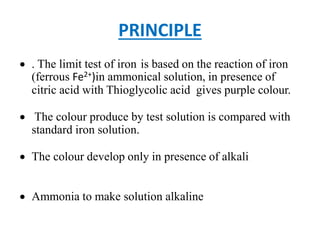
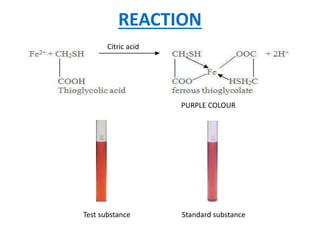
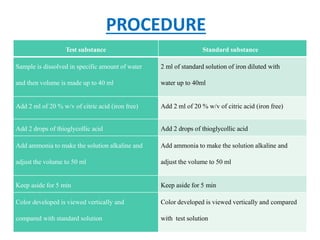
The limit test for iron involves comparing the color produced by reacting a sample containing iron with thioglycollic acid in an alkaline solution to the color produced by a standard iron solution. Citric acid is added to the sample and standard, followed by thioglycollic acid and ammonia. A purple color will develop if iron is present. The intensity of the color in the sample is compared to the standard, and if the sample's color is less than or equal to the standard, it passes the limit test for iron.


