The Rock Cycle
What are Rocks???
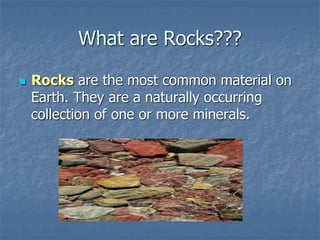
 Rocks are the most common material on
Earth. They are a naturally occurring
collection of one or more minerals.
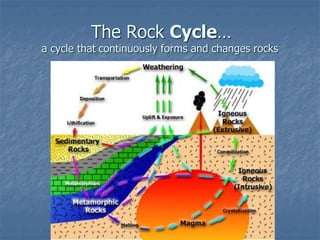
The Rock Cycle…
a cycle that continuously forms and changes rocks
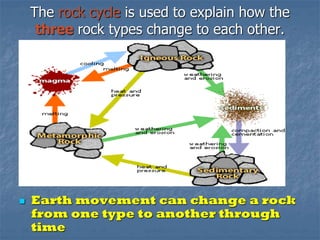
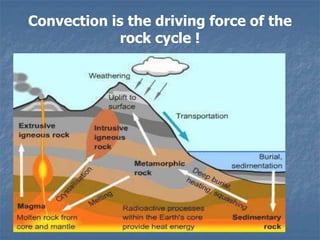
The rock cycle is used to explain how the
three rock types change to each other.
 Earth movement can change a rock
from one type to another through
time
Convection is the driving force of the
rock cycle !
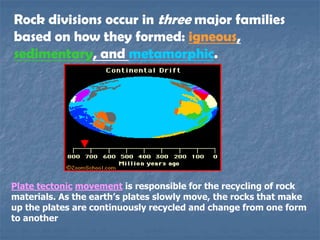
Rock divisions occur in three major families
based on how they formed: igneous,
sedimentary, and metamorphic.
Plate tectonic movement is responsible for the recycling of rock
materials. As the earth’s plates slowly move, the rocks that make
up the plates are continuously recycled and change from one form
to another
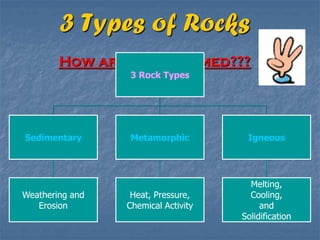
3 Types of Rocks
How are they formed???
3 Rock Types
Sedimentary
Weathering and
Erosion
Metamorphic
Heat, Pressure,
Chemical Activity
Igneous
Melting,
Cooling,
and
Solidification
IGNEOUS ROCKS
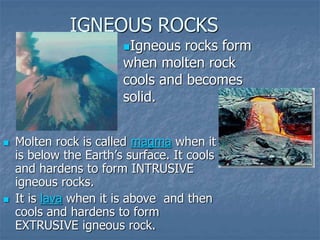
 Molten rock is called magma when it
is below the Earth’s surface. It cools
and hardens to form INTRUSIVE
igneous rocks.
 It is lava when it is above and then
cools and hardens to form
EXTRUSIVE igneous rock.
Igneous rocks form
when molten rock
cools and becomes
solid.
Types of Igneous Rocks
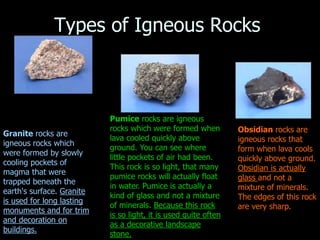
Granite rocks are
igneous rocks which
were formed by slowly
cooling pockets of
magma that were
trapped beneath the
earth's surface. Granite
is used for long lasting
monuments and for trim
and decoration on
buildings.
Pumice rocks are igneous
rocks which were formed when
lava cooled quickly above
ground. You can see where
little pockets of air had been.
This rock is so light, that many
pumice rocks will actually float
in water. Pumice is actually a
kind of glass and not a mixture
of minerals. Because this rock
is so light, it is used quite often
as a decorative landscape
stone.
Obsidian rocks are
igneous rocks that
form when lava cools
quickly above ground.
Obsidian is actually
glass and not a
mixture of minerals.
The edges of this rock
are very sharp.
SEDIMENTARY ROCKS
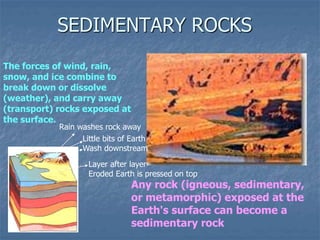
Any rock (igneous, sedimentary,
or metamorphic) exposed at the
Earth's surface can become a
sedimentary rock
The forces of wind, rain,
snow, and ice combine to
break down or dissolve
(weather), and carry away
(transport) rocks exposed at
the surface.
Rain washes rock away
Little bits of Earth
Wash downstream
Layer after layer
Eroded Earth is pressed on top
Types of Sedimentary Rocks
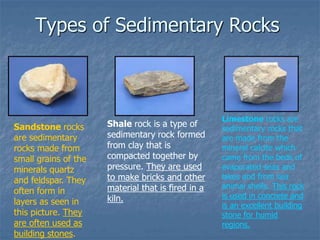
Sandstone rocks
are sedimentary
rocks made from
small grains of the
minerals quartz
and feldspar. They
often form in
layers as seen in
this picture. They
are often used as
building stones.
Limestone rocks are
sedimentary rocks that
are made from the
mineral calcite which
came from the beds of
evaporated seas and
lakes and from sea
animal shells. This rock
is used in concrete and
is an excellent building
stone for humid
regions.
Shale rock is a type of
sedimentary rock formed
from clay that is
compacted together by
pressure. They are used
to make bricks and other
material that is fired in a
kiln.
METAMORPHIC ROCKS
Have you heard
that caterpillars
can
metamorphose
into butterflies?
Well, rocks can
metamorphose
too!
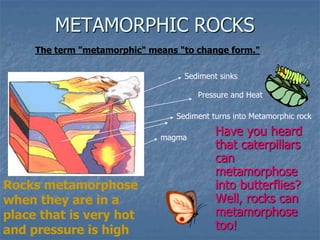
Rocks metamorphose
when they are in a
place that is very hot
and pressure is high
The term "metamorphic" means "to change form."
Sediment turns into Metamorphic rock
magma
Pressure and Heat
Sediment sinks
Types of Metamorphic Rocks
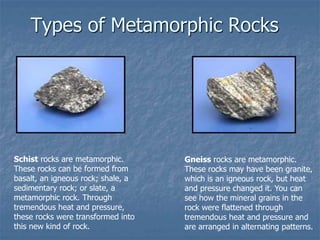
Schist rocks are metamorphic.
These rocks can be formed from
basalt, an igneous rock; shale, a
sedimentary rock; or slate, a
metamorphic rock. Through
tremendous heat and pressure,
these rocks were transformed into
this new kind of rock.
Gneiss rocks are metamorphic.
These rocks may have been granite,
which is an igneous rock, but heat
and pressure changed it. You can
see how the mineral grains in the
rock were flattened through
tremendous heat and pressure and
are arranged in alternating patterns.
All rock (except for
meteorites!) that is on
Earth today is made
of the same stuff as
the rocks that
dinosaurs and other
ancient life forms
walked, crawled or
swam over.
While the
stuff that
rocks are
made
from
stays the
same, the
rocks do
not.
Over millions of years,
rocks are recycled into
other rocks. Moving
tectonic plates help to
destroy and form
many types of rocks.

Rock cycle 3

  • 1.
  • 2.
    What are Rocks??? Rocks are the most common material on Earth. They are a naturally occurring collection of one or more minerals.
  • 3.
    The Rock Cycle… acycle that continuously forms and changes rocks
  • 4.
    The rock cycleis used to explain how the three rock types change to each other.  Earth movement can change a rock from one type to another through time
  • 5.
    Convection is thedriving force of the rock cycle !
  • 6.
    Rock divisions occurin three major families based on how they formed: igneous, sedimentary, and metamorphic. Plate tectonic movement is responsible for the recycling of rock materials. As the earth’s plates slowly move, the rocks that make up the plates are continuously recycled and change from one form to another
  • 7.
    3 Types ofRocks How are they formed??? 3 Rock Types Sedimentary Weathering and Erosion Metamorphic Heat, Pressure, Chemical Activity Igneous Melting, Cooling, and Solidification
  • 8.
    IGNEOUS ROCKS  Moltenrock is called magma when it is below the Earth’s surface. It cools and hardens to form INTRUSIVE igneous rocks.  It is lava when it is above and then cools and hardens to form EXTRUSIVE igneous rock. Igneous rocks form when molten rock cools and becomes solid.
  • 9.
    Types of IgneousRocks Granite rocks are igneous rocks which were formed by slowly cooling pockets of magma that were trapped beneath the earth's surface. Granite is used for long lasting monuments and for trim and decoration on buildings. Pumice rocks are igneous rocks which were formed when lava cooled quickly above ground. You can see where little pockets of air had been. This rock is so light, that many pumice rocks will actually float in water. Pumice is actually a kind of glass and not a mixture of minerals. Because this rock is so light, it is used quite often as a decorative landscape stone. Obsidian rocks are igneous rocks that form when lava cools quickly above ground. Obsidian is actually glass and not a mixture of minerals. The edges of this rock are very sharp.
  • 10.
    SEDIMENTARY ROCKS Any rock(igneous, sedimentary, or metamorphic) exposed at the Earth's surface can become a sedimentary rock The forces of wind, rain, snow, and ice combine to break down or dissolve (weather), and carry away (transport) rocks exposed at the surface. Rain washes rock away Little bits of Earth Wash downstream Layer after layer Eroded Earth is pressed on top
  • 11.
    Types of SedimentaryRocks Sandstone rocks are sedimentary rocks made from small grains of the minerals quartz and feldspar. They often form in layers as seen in this picture. They are often used as building stones. Limestone rocks are sedimentary rocks that are made from the mineral calcite which came from the beds of evaporated seas and lakes and from sea animal shells. This rock is used in concrete and is an excellent building stone for humid regions. Shale rock is a type of sedimentary rock formed from clay that is compacted together by pressure. They are used to make bricks and other material that is fired in a kiln.
  • 12.
    METAMORPHIC ROCKS Have youheard that caterpillars can metamorphose into butterflies? Well, rocks can metamorphose too! Rocks metamorphose when they are in a place that is very hot and pressure is high The term "metamorphic" means "to change form." Sediment turns into Metamorphic rock magma Pressure and Heat Sediment sinks
  • 13.
    Types of MetamorphicRocks Schist rocks are metamorphic. These rocks can be formed from basalt, an igneous rock; shale, a sedimentary rock; or slate, a metamorphic rock. Through tremendous heat and pressure, these rocks were transformed into this new kind of rock. Gneiss rocks are metamorphic. These rocks may have been granite, which is an igneous rock, but heat and pressure changed it. You can see how the mineral grains in the rock were flattened through tremendous heat and pressure and are arranged in alternating patterns.
  • 14.
    All rock (exceptfor meteorites!) that is on Earth today is made of the same stuff as the rocks that dinosaurs and other ancient life forms walked, crawled or swam over. While the stuff that rocks are made from stays the same, the rocks do not. Over millions of years, rocks are recycled into other rocks. Moving tectonic plates help to destroy and form many types of rocks.