Sedimentary Rock
Sedimentary Rock
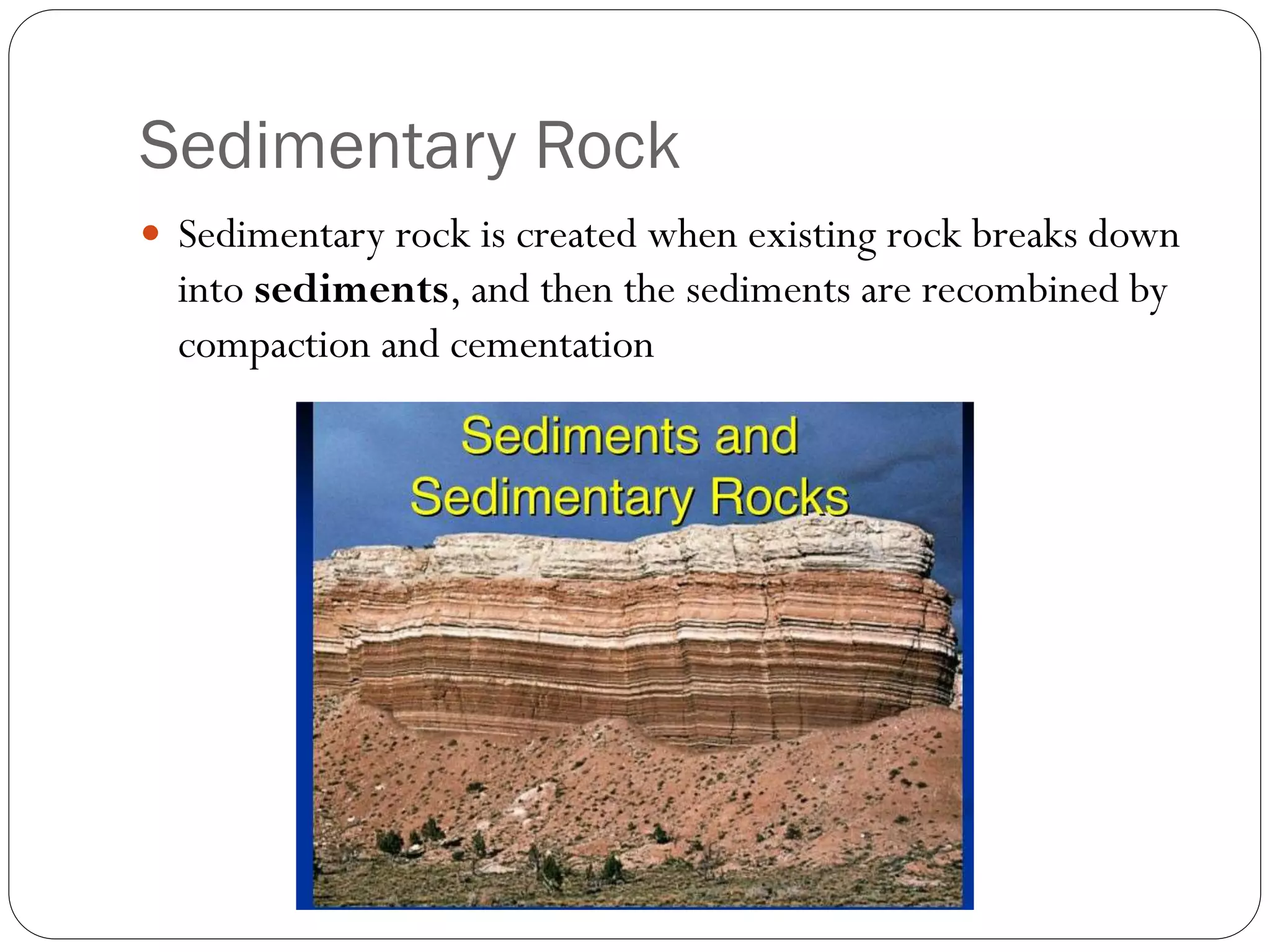
 Sedimentary rock is created when existing rock breaks down

into sediments, and then the sediments are recombined by
compaction and cementation
Sedimentary Rock
 Sediments are created by three forces:
 Weathering
 Erosion
 Deposition
Weathering
 Weathering is any process that breaks down rock.
 There are two types of weathering
 Chemical weathering
 Mechanical weathering
Chemical Weathering
 Chemical Weathering is the transformation of rock into

one or more new compounds

 Water is the most important agent of chemical weathering
Mechanical Weathering
 Mechanical weathering occurs when physical forces break

rock into smaller and smaller pieces without changing its
composition
Mechanical Weathering
 Three forces account for the majority of mechanical

weathering:
 Frost wedging
 Unloading
 Biological Activity
Frost Wedging
 When liquids freeze they expand, causing rock to break

apart.
Unloading
 Unloading occurs when pressure is removed from a rock

body causing it to expand and break
Biological Activity
 The activities of plants and animals can cause rock to

break apart
 For example tree roots can break through rock layers, or

borrowing animals creating holes in rock.
Erosion
 Erosion is the removal of rock and its movement by water,

wind, ice, or gravity.
Deposition
 When water, wind, ice or gravity loses energy the sediments

are released and deposited in a new area.
 Sediments are deposited according to size, with larger

sediments being released first
Sedimentary Rock
 Compaction and cementation are the two processes that

change sediment into sedimentary rock.
Compaction
 Compaction is a process that squeezes, or compacts

sediments
Cementation
 Cementation takes place when dissolved minerals are

deposited in tiny spaces among the sediments.
 These minerals hold the sedimentary rocks together
Classification of Sedimentary Rock
 Sedimentary rocks like igneous rock can be classified into

two groups based on how the form:
 Clastic Sedimentary Rock
 Chemical Sedimentary Rock
Clastic Sedimentary Rock
 Clastic Sedimentary Rocks are created when weathered

bits of rocks or minerals are cemented together
Chemical and Biochemical
Sedimentary Rocks
 Chemical Sedimentary rocks are created when dissolved

minerals precipitate from water solutions
 Biochemical Sedimentary rocks are created when living or

once living materials are cemented together
Features of Sedimentary Rock
 Sedimentary rock can have unique features that can help us

interpret the history of the Earth.
 Some Features include:
 Ripples
 Mud Cracks
 Fossils

Sedimentary rock

  • 1.
  • 2.
    Sedimentary Rock  Sedimentaryrock is created when existing rock breaks down into sediments, and then the sediments are recombined by compaction and cementation
  • 3.
    Sedimentary Rock  Sedimentsare created by three forces:  Weathering  Erosion  Deposition
  • 4.
    Weathering  Weathering isany process that breaks down rock.  There are two types of weathering  Chemical weathering  Mechanical weathering
  • 5.
    Chemical Weathering  ChemicalWeathering is the transformation of rock into one or more new compounds  Water is the most important agent of chemical weathering
  • 6.
    Mechanical Weathering  Mechanicalweathering occurs when physical forces break rock into smaller and smaller pieces without changing its composition
  • 7.
    Mechanical Weathering  Threeforces account for the majority of mechanical weathering:  Frost wedging  Unloading  Biological Activity
  • 8.
    Frost Wedging  Whenliquids freeze they expand, causing rock to break apart.
  • 9.
    Unloading  Unloading occurswhen pressure is removed from a rock body causing it to expand and break
  • 10.
    Biological Activity  Theactivities of plants and animals can cause rock to break apart  For example tree roots can break through rock layers, or borrowing animals creating holes in rock.
  • 12.
    Erosion  Erosion isthe removal of rock and its movement by water, wind, ice, or gravity.
  • 13.
    Deposition  When water,wind, ice or gravity loses energy the sediments are released and deposited in a new area.  Sediments are deposited according to size, with larger sediments being released first
  • 14.
    Sedimentary Rock  Compactionand cementation are the two processes that change sediment into sedimentary rock.
  • 15.
    Compaction  Compaction isa process that squeezes, or compacts sediments
  • 16.
    Cementation  Cementation takesplace when dissolved minerals are deposited in tiny spaces among the sediments.  These minerals hold the sedimentary rocks together
  • 17.
    Classification of SedimentaryRock  Sedimentary rocks like igneous rock can be classified into two groups based on how the form:  Clastic Sedimentary Rock  Chemical Sedimentary Rock
  • 18.
    Clastic Sedimentary Rock Clastic Sedimentary Rocks are created when weathered bits of rocks or minerals are cemented together
  • 19.
    Chemical and Biochemical SedimentaryRocks  Chemical Sedimentary rocks are created when dissolved minerals precipitate from water solutions  Biochemical Sedimentary rocks are created when living or once living materials are cemented together
  • 20.
    Features of SedimentaryRock  Sedimentary rock can have unique features that can help us interpret the history of the Earth.  Some Features include:  Ripples  Mud Cracks  Fossils