Change management for libraries


Patricia Liebetrau
April 2012
University of Botswana
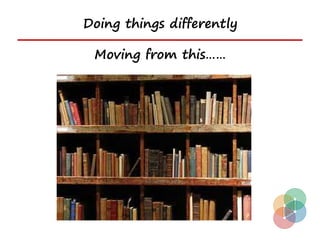
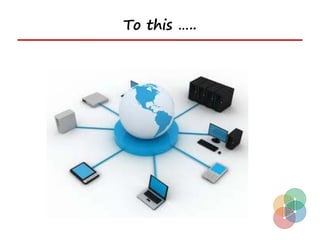
Doing things differently

 Moving from this……
To this …..
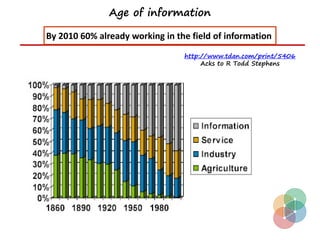
Age of information

By 2010 60% already working in the field of information
                                 http://www.tdan.com/print/5406
                                      Acks to R Todd Stephens
Digitally speaking …


Ability to store increasing amounts of data – storage units
are smaller, storage is cheaper, and more data is able to be
stored
 Millions of web sites (difficult to measure)
 30 million+ document pages communicated each day

So we can store huge amounts of data, we can transmit huge
amounts of data so now we have huge amounts of data

data  managing information  creating knowledge
Traditionally …


Libraries house collections of text based resources
 books, journals, newspapers


Archives have personal and institutional records

Museums have physical artefacts

Art galleries house physical visual resources
 paintings, art works
Digital technology blurring the lines

  types of resources

  types of institutions

  data and datastreams in a digital environment

  content across physical boundaries

     User focus is on finding relevant INFORMATION
             regardless of format or location
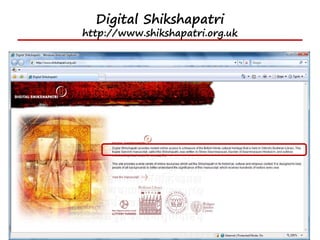
Digital Shikshapatri
http://www.shikshapatri.org.uk
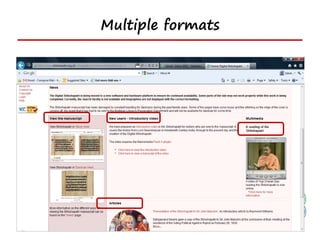
Multiple formats
Changing user expectations


On-line access and searching
Open access
Resource and data access
One-stop searching
Links to related information
Full-text articles
Value added services
Social networking

  Provide USERS with what they need
Integration of physical and digital libraries


     Library ILS systems
     OPAC
     Institutional Repository
     Digital Projects


   ONE STOP SEARCHING
Digital information management requires…


       People

       Technology

       Resources
Human resources

Human resources = most valuable asset

New skills, specialised skills
  New career opportunities


Change management
  Active vs passive role
  Overcome resistance
  Motivation

Leadership development
New roles and functions


   strategic planning
   staff management
   report writing
   project management
   digital rights management
   production management
   metadata production
   proposal writing
Human resource development

Training, training, training

Reskilling

Capacity development

Professional development

Role of library schools
Digital information management requires…


       People

       Technology

       Resources
Technology


Hardware
Software
Data management and curation
Budget – equipment
Tools
Internet connectivity
Technological infrastructure
 IT/user support
Services

Access
 Website
 Networked
 e-Learning environments

Search and discovery services
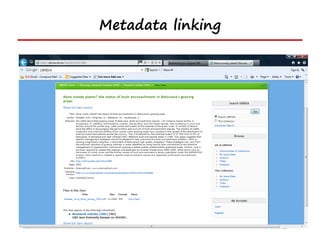
 Metadata linking

Harvesting
Hosting
Archiving
Print-on-demand
Websites and branding


Good design is important
Web usage statistics
Branding and logos
Conditions of use
Contacts
Digital information management requires…


       People

       Technology

       Resources
Financial resources


Budgets
Financial planning
Fund raising
 Funding proposals
Financial management
Revenue generation
 business planning, marketing, sales and other
   outreach activities, advertising
Sound business principles
Research output


       Research output

Resources created in the process

     of academic research
Research output from University staff


    Academic research papers
    Research data sets
    Journal articles
    Conference papers
    Research project reports
    Policy briefs
Research output from University students


       Theses and dissertations
       Research data sets
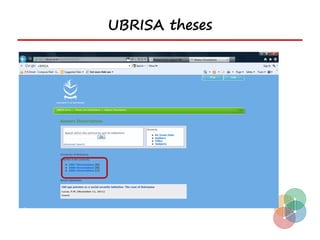
UBRISA theses
Important elements of IRs


Institutionally defined

Scholarly and research purposes

Cumulative and perpetual

Open and interoperable
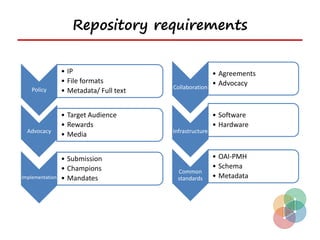
Repository requirements


                 • IP                                  • Agreements
                 • File formats                        • Advocacy
                                         Collaboration
    Policy       • Metadata/ Full text


                 • Target Audience                        • Software
                 • Rewards                                • Hardware
  Advocacy                               Infrastructure
                 • Media


                 • Submission                             • OAI-PMH
                 • Champions                              • Schema
                                           Common
Implementation   • Mandates                standards      • Metadata
Implementation


Develop policies
Metadata
Persistent identifiers (Handles/DOI)
Author permissions and license agreements
Guidelines for deposit and archiving
Marketing concept to depositors
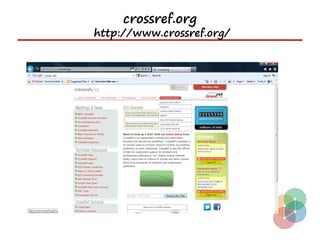
crossref.org
http://www.crossref.org/
Web 2.0 research sharing


Sharing resources
Re-using resources
Social tagging
Collaboration and annotation
Social enrichment (eg Wikipedia)
Blogging
Slideshare/Twitter/YouTube
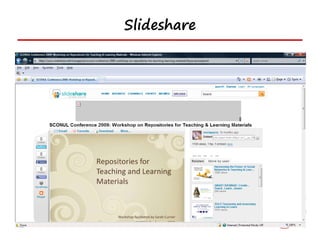
Slideshare
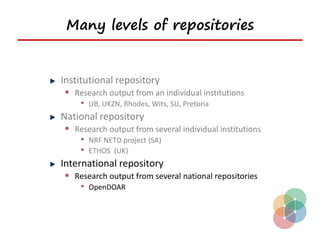
Many levels of repositories


Institutional repository
 Research output from an individual institutions
   • UB, UKZN, Rhodes, Wits, SU, Pretoria
National repository
 Research output from several individual institutions
   • NRF NETD project (SA)
   • ETHOS (UK)
International repository
 Research output from several national repositories
   • OpenDOAR
Many levels of repositories


Institutional repository
 Research output from an individual institutions
   • UB, UKZN, Rhodes, Wits, SU, Pretoria
National repository
 Research output from several individual institutions
   • NRF NETD project (SA)
   • ETHOS (UK)
International repository
 Research output from several national repositories
   • OpenDOAR
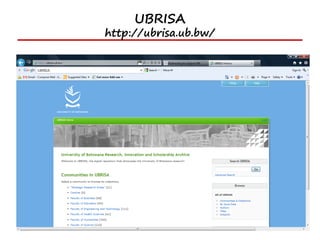
UBRISA
http://ubrisa.ub.bw/
Many levels of repositories


Institutional repository
 Research output from an individual institutions
   • UB, UKZN, Rhodes, Wits, SU, Pretoria
National /regional /consortium repository
 Research output from several individual institutions
   • NRF NETD project (SA)
   • ETHOS (UK)
International repository
 Research output from several national repositories
   • OpenDOAR
Many levels of repositories


Institutional repository
 Research output from an individual institutions
   • UB, UKZN, Rhodes, Wits, SU, Pretoria
National repository
 Research output from several individual institutions
   • NRF NETD project (SA)
   • ETHOS (UK)
International repository
 Research output from several national repositories
   • OpenDOAR
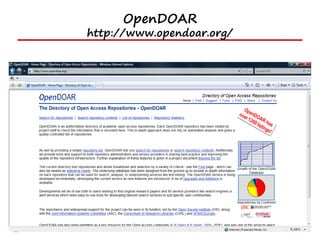
OpenDOAR
http://www.opendoar.org/
Push and pull

Information push
 Dissemination – websites, social media tools
 Aggregation
 Linking


Information pull
 OpenDoar
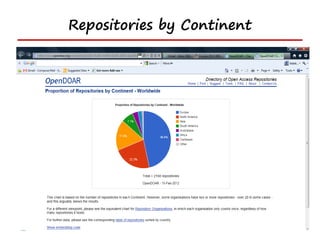
Repositories by Continent
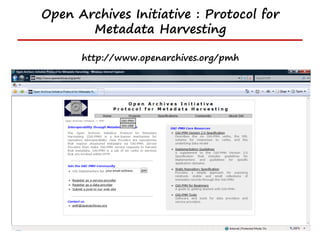
Open Archives Initiative : Protocol for
       Metadata Harvesting

      http://www.openarchives.org/pmh
OAI-PMH – http protocol


• Open Archives Initiative : Protocol for Metadata Harvesting

• Standard for exchange of metadata

• Data providers employ the OAI-PMH to expose structured data,
  metadata, in various forms.

• Service providers use the OAI-PMH to harvest the metadata from data
  providers


              Requires metadata
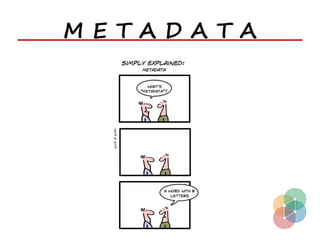
ME T A D A T A
What is Metadata?


Standardised description of a resource that aids in the
discovery, retrieval and preservation of that resource


           ‘Data about data’
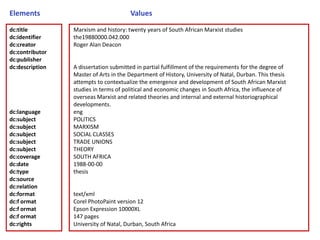
Elements                               Values
dc:title         Marxism and history: twenty years of South African Marxist studies
dc:identifier    the19880000.042.000
dc:creator       Roger Alan Deacon
dc:contributor
dc:publisher
dc:description   A dissertation submitted in partial fulfillment of the requirements for the degree of
                 Master of Arts in the Department of History, University of Natal, Durban. This thesis
                 attempts to contextualize the emergence and development of South African Marxist
                 studies in terms of political and economic changes in South Africa, the influence of
                 overseas Marxist and related theories and internal and external historiographical
                 developments.
dc:language      eng
dc:subject       POLITICS
dc:subject       MARXISM
dc:subject       SOCIAL CLASSES
dc:subject       TRADE UNIONS
dc:subject       THEORY
dc:coverage      SOUTH AFRICA
dc:date          1988-00-00
dc:type          thesis
dc:source
dc:relation
dc:format        text/xml
dc:f ormat       Corel PhotoPaint version 12
dc:f ormat       Epson Expression 10000XL
dc:f ormat       147 pages
dc:rights        University of Natal, Durban, South Africa
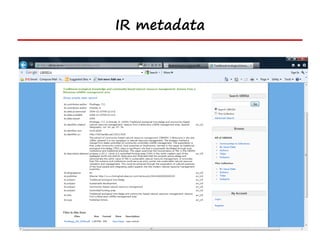
IR metadata
Metadata linking
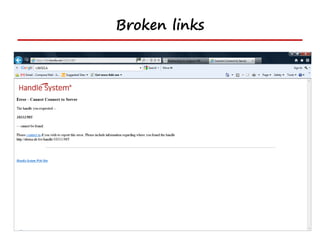
Broken links
Preservation


Preservation requires …

  Institutional commitment
  Integrated IT support
  Metadata
  Schedules for back-ups and archiving
Sustainability

Focus from the outset

Academic self archiving

Advocacy efforts

Sound preservation strategies

Preservation policies

Integrated institutional commitment
Conclusions


New challenges

New skills

New attitudes

New terminologies

New opportunities
References:


Institutional Repositories: Essential Infrastructure for Scholarship in the Digital Age by
    Clifford A. Lynch, Executive Director, Coalition for Networked Information. February
    2003.
    http://dspace.uniroma2.it/dspace/bitstream/2108/261/1/ir.html


   The future of repositories? Patterns for (Cross-)Repository Architectures.
   http://www.dlib.org/dlib/november08/aschenbrenner/11aschenbrenner.html


This work was carried out with the aid of a grant from the International Development
    Research Centre, Ottawa, Canada.
This work was carried out with the aid of a grant from the
International Development Research Centre, Ottawa, Canada

Change Management for Libraries

  • 1.
    Change management forlibraries Patricia Liebetrau April 2012 University of Botswana
  • 2.
    Doing things differently Moving from this……
  • 3.
  • 4.
    Age of information By2010 60% already working in the field of information http://www.tdan.com/print/5406 Acks to R Todd Stephens
  • 5.
    Digitally speaking … Abilityto store increasing amounts of data – storage units are smaller, storage is cheaper, and more data is able to be stored  Millions of web sites (difficult to measure)  30 million+ document pages communicated each day So we can store huge amounts of data, we can transmit huge amounts of data so now we have huge amounts of data data  managing information  creating knowledge
  • 6.
    Traditionally … Libraries housecollections of text based resources  books, journals, newspapers Archives have personal and institutional records Museums have physical artefacts Art galleries house physical visual resources  paintings, art works
  • 7.
    Digital technology blurringthe lines types of resources types of institutions data and datastreams in a digital environment content across physical boundaries User focus is on finding relevant INFORMATION regardless of format or location
  • 8.
  • 9.
  • 10.
    Changing user expectations On-lineaccess and searching Open access Resource and data access One-stop searching Links to related information Full-text articles Value added services Social networking Provide USERS with what they need
  • 11.
    Integration of physicaland digital libraries Library ILS systems OPAC Institutional Repository Digital Projects ONE STOP SEARCHING
  • 12.
    Digital information managementrequires… People Technology Resources
  • 13.
    Human resources Human resources= most valuable asset New skills, specialised skills  New career opportunities Change management  Active vs passive role  Overcome resistance  Motivation Leadership development
  • 14.
    New roles andfunctions  strategic planning  staff management  report writing  project management  digital rights management  production management  metadata production  proposal writing
  • 15.
    Human resource development Training,training, training Reskilling Capacity development Professional development Role of library schools
  • 16.
    Digital information managementrequires… People Technology Resources
  • 17.
    Technology Hardware Software Data management andcuration Budget – equipment Tools Internet connectivity Technological infrastructure  IT/user support
  • 18.
    Services Access  Website  Networked e-Learning environments Search and discovery services  Metadata linking Harvesting Hosting Archiving Print-on-demand
  • 19.
    Websites and branding Gooddesign is important Web usage statistics Branding and logos Conditions of use Contacts
  • 20.
    Digital information managementrequires… People Technology Resources
  • 21.
    Financial resources Budgets Financial planning Fundraising  Funding proposals Financial management Revenue generation  business planning, marketing, sales and other outreach activities, advertising Sound business principles
  • 22.
    Research output Research output Resources created in the process of academic research
  • 23.
    Research output fromUniversity staff Academic research papers Research data sets Journal articles Conference papers Research project reports Policy briefs
  • 24.
    Research output fromUniversity students Theses and dissertations Research data sets
  • 25.
  • 26.
    Important elements ofIRs Institutionally defined Scholarly and research purposes Cumulative and perpetual Open and interoperable
  • 27.
    Repository requirements • IP • Agreements • File formats • Advocacy Collaboration Policy • Metadata/ Full text • Target Audience • Software • Rewards • Hardware Advocacy Infrastructure • Media • Submission • OAI-PMH • Champions • Schema Common Implementation • Mandates standards • Metadata
  • 28.
    Implementation Develop policies Metadata Persistent identifiers(Handles/DOI) Author permissions and license agreements Guidelines for deposit and archiving Marketing concept to depositors
  • 29.
  • 30.
    Web 2.0 researchsharing Sharing resources Re-using resources Social tagging Collaboration and annotation Social enrichment (eg Wikipedia) Blogging Slideshare/Twitter/YouTube
  • 31.
  • 32.
    Many levels ofrepositories Institutional repository  Research output from an individual institutions • UB, UKZN, Rhodes, Wits, SU, Pretoria National repository  Research output from several individual institutions • NRF NETD project (SA) • ETHOS (UK) International repository  Research output from several national repositories • OpenDOAR
  • 33.
    Many levels ofrepositories Institutional repository  Research output from an individual institutions • UB, UKZN, Rhodes, Wits, SU, Pretoria National repository  Research output from several individual institutions • NRF NETD project (SA) • ETHOS (UK) International repository  Research output from several national repositories • OpenDOAR
  • 34.
  • 35.
    Many levels ofrepositories Institutional repository  Research output from an individual institutions • UB, UKZN, Rhodes, Wits, SU, Pretoria National /regional /consortium repository  Research output from several individual institutions • NRF NETD project (SA) • ETHOS (UK) International repository  Research output from several national repositories • OpenDOAR
  • 36.
    Many levels ofrepositories Institutional repository  Research output from an individual institutions • UB, UKZN, Rhodes, Wits, SU, Pretoria National repository  Research output from several individual institutions • NRF NETD project (SA) • ETHOS (UK) International repository  Research output from several national repositories • OpenDOAR
  • 37.
  • 38.
    Push and pull Informationpush  Dissemination – websites, social media tools  Aggregation  Linking Information pull  OpenDoar
  • 39.
  • 40.
    Open Archives Initiative: Protocol for Metadata Harvesting http://www.openarchives.org/pmh
  • 41.
    OAI-PMH – httpprotocol • Open Archives Initiative : Protocol for Metadata Harvesting • Standard for exchange of metadata • Data providers employ the OAI-PMH to expose structured data, metadata, in various forms. • Service providers use the OAI-PMH to harvest the metadata from data providers Requires metadata
  • 42.
    ME T AD A T A
  • 43.
    What is Metadata? Standardiseddescription of a resource that aids in the discovery, retrieval and preservation of that resource ‘Data about data’
  • 44.
    Elements Values dc:title Marxism and history: twenty years of South African Marxist studies dc:identifier the19880000.042.000 dc:creator Roger Alan Deacon dc:contributor dc:publisher dc:description A dissertation submitted in partial fulfillment of the requirements for the degree of Master of Arts in the Department of History, University of Natal, Durban. This thesis attempts to contextualize the emergence and development of South African Marxist studies in terms of political and economic changes in South Africa, the influence of overseas Marxist and related theories and internal and external historiographical developments. dc:language eng dc:subject POLITICS dc:subject MARXISM dc:subject SOCIAL CLASSES dc:subject TRADE UNIONS dc:subject THEORY dc:coverage SOUTH AFRICA dc:date 1988-00-00 dc:type thesis dc:source dc:relation dc:format text/xml dc:f ormat Corel PhotoPaint version 12 dc:f ormat Epson Expression 10000XL dc:f ormat 147 pages dc:rights University of Natal, Durban, South Africa
  • 45.
  • 46.
  • 47.
  • 48.
    Preservation Preservation requires … Institutional commitment Integrated IT support Metadata Schedules for back-ups and archiving
  • 49.
    Sustainability Focus from theoutset Academic self archiving Advocacy efforts Sound preservation strategies Preservation policies Integrated institutional commitment
  • 50.
    Conclusions New challenges New skills Newattitudes New terminologies New opportunities
  • 51.
    References: Institutional Repositories: EssentialInfrastructure for Scholarship in the Digital Age by Clifford A. Lynch, Executive Director, Coalition for Networked Information. February 2003. http://dspace.uniroma2.it/dspace/bitstream/2108/261/1/ir.html The future of repositories? Patterns for (Cross-)Repository Architectures. http://www.dlib.org/dlib/november08/aschenbrenner/11aschenbrenner.html This work was carried out with the aid of a grant from the International Development Research Centre, Ottawa, Canada.
  • 52.
    This work wascarried out with the aid of a grant from the International Development Research Centre, Ottawa, Canada