Introduction to Koha
and why Pakistani libraries should consider it as
     an alternative to proprietary software
Introduction

    Koha is the first open-source Integrated Library System
    (ILS).

    Development started in New Zealand in 1999-2000 by a
    web development company called Katipo for libraries in rural
    areas of New Zealand.

    Katipo worked with Horowhenua Library Trust (HLT) to write
    the first version of Koha, and then released the code under
    the GPL (The GNU General Public License).


Sources:   Wikipedia, koha-community.org, kohacon10.org.nz
Koha can be downloaded from the official site: www.
      koha-community.org

      Koha is not a company - Koha is a world-wide project
      and a product.

      The word Koha is a Maori word meaning gift or donation.

      Koha development is steered by the collaboration of a
      growing community of libraries and a team of volunteers
      from around the globe.

      Koha is developed using technologies like Perl (Practical
      Extraction and Report Language), HTML, CSS,
      Javascript, Apache and MySQL. It runs on Linux.


Sources:   Wikipedia, koha-community.org, kohacon10.org.nz
Features of Koha
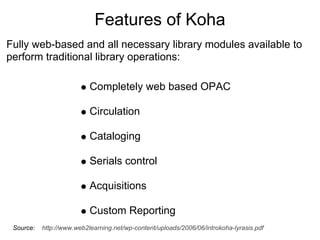
Fully web-based and all necessary library modules available to
perform traditional library operations:

                           Completely web based OPAC

                           Circulation

                           Cataloging

                           Serials control

                           Acquisitions

                           Custom Reporting
 Source:   http://www.web2learning.net/wp-content/uploads/2006/06/introkoha-lyrasis.pdf
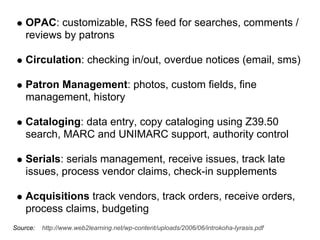
OPAC: customizable, RSS feed for searches, comments /
    reviews by patrons

    Circulation: checking in/out, overdue notices (email, sms)

    Patron Management: photos, custom fields, fine
    management, history

    Cataloging: data entry, copy cataloging using Z39.50
    search, MARC and UNIMARC support, authority control

    Serials: serials management, receive issues, track late
    issues, process vendor claims, check-in supplements

    Acquisitions track vendors, track orders, receive orders,
    process claims, budgeting
Source:   http://www.web2learning.net/wp-content/uploads/2006/06/introkoha-lyrasis.pdf
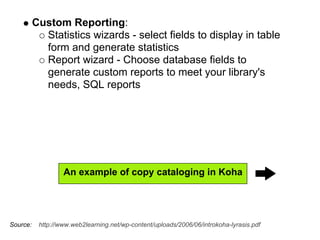
Custom Reporting:
            Statistics wizards - select fields to display in table
            form and generate statistics
            Report wizard - Choose database fields to
            generate custom reports to meet your library's
            needs, SQL reports


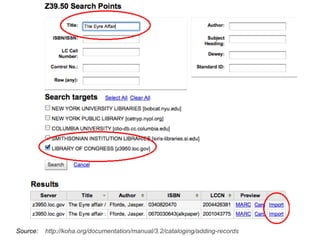
                   An example of copy cataloging in Koha


Source:    http://www.web2learning.net/wp-content/uploads/2006/06/introkoha-lyrasis.pdf
Source:   http://koha.org/documentation/manual/3.2/cataloging/adding-records
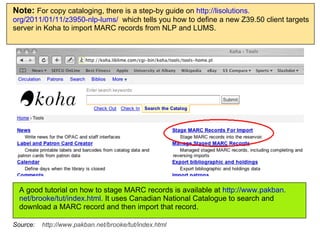
Note: For copy cataloging, there is a step-by guide on http://lisolutions.
org/2011/01/11/z3950-nlp-lums/ which tells you how to define a new Z39.50 client targets
server in Koha to import MARC records from NLP and LUMS.


  A good tutorial on how to stage MARC records is available at http://www.pakban.
  net/brooke/tut/index.html. It uses Canadian National Catalogue to search and
  download a MARC record and then import that record.

Source:   http://www.pakban.net/brooke/tut/index.html
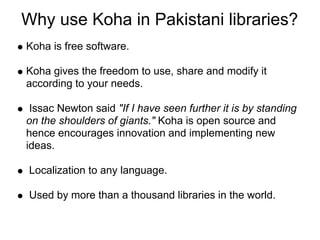
Why use Koha in Pakistani libraries?
Koha is free software.

Koha gives the freedom to use, share and modify it
according to your needs.

 Issac Newton said "If I have seen further it is by standing
on the shoulders of giants." Koha is open source and
hence encourages innovation and implementing new
ideas.

 Localization to any language.

 Used by more than a thousand libraries in the world.
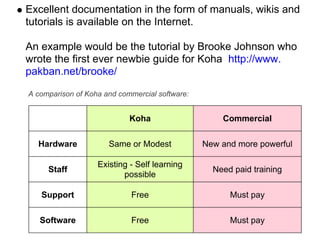
Excellent documentation in the form of manuals, wikis and
tutorials is available on the Internet.

An example would be the tutorial by Brooke Johnson who
wrote the first ever newbie guide for Koha http://www.
pakban.net/brooke/

A comparison of Koha and commercial software:


                            Koha                    Commercial

  Hardware            Same or Modest            New and more powerful

                   Existing - Self learning
     Staff                                        Need paid training
                          possible

   Support                  Free                      Must pay

   Software                 Free                      Must pay
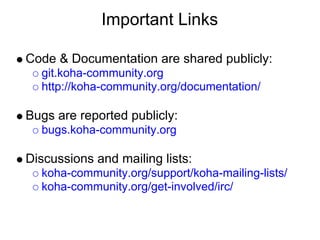
Important Links

Code & Documentation are shared publicly:
  git.koha-community.org
  http://koha-community.org/documentation/

Bugs are reported publicly:
  bugs.koha-community.org

Discussions and mailing lists:
  koha-community.org/support/koha-mailing-lists/
  koha-community.org/get-involved/irc/
Thank You!


                 Arslan Farooq
             arslanone@gmail.com

Introduction to koha

  • 1.
    Introduction to Koha andwhy Pakistani libraries should consider it as an alternative to proprietary software
  • 2.
    Introduction Koha is the first open-source Integrated Library System (ILS). Development started in New Zealand in 1999-2000 by a web development company called Katipo for libraries in rural areas of New Zealand. Katipo worked with Horowhenua Library Trust (HLT) to write the first version of Koha, and then released the code under the GPL (The GNU General Public License). Sources: Wikipedia, koha-community.org, kohacon10.org.nz
  • 3.
    Koha can bedownloaded from the official site: www. koha-community.org Koha is not a company - Koha is a world-wide project and a product. The word Koha is a Maori word meaning gift or donation. Koha development is steered by the collaboration of a growing community of libraries and a team of volunteers from around the globe. Koha is developed using technologies like Perl (Practical Extraction and Report Language), HTML, CSS, Javascript, Apache and MySQL. It runs on Linux. Sources: Wikipedia, koha-community.org, kohacon10.org.nz
  • 4.
    Features of Koha Fullyweb-based and all necessary library modules available to perform traditional library operations: Completely web based OPAC Circulation Cataloging Serials control Acquisitions Custom Reporting Source: http://www.web2learning.net/wp-content/uploads/2006/06/introkoha-lyrasis.pdf
  • 5.
    OPAC: customizable, RSSfeed for searches, comments / reviews by patrons Circulation: checking in/out, overdue notices (email, sms) Patron Management: photos, custom fields, fine management, history Cataloging: data entry, copy cataloging using Z39.50 search, MARC and UNIMARC support, authority control Serials: serials management, receive issues, track late issues, process vendor claims, check-in supplements Acquisitions track vendors, track orders, receive orders, process claims, budgeting Source: http://www.web2learning.net/wp-content/uploads/2006/06/introkoha-lyrasis.pdf
  • 6.
    Custom Reporting: Statistics wizards - select fields to display in table form and generate statistics Report wizard - Choose database fields to generate custom reports to meet your library's needs, SQL reports An example of copy cataloging in Koha Source: http://www.web2learning.net/wp-content/uploads/2006/06/introkoha-lyrasis.pdf
  • 7.
    Source: http://koha.org/documentation/manual/3.2/cataloging/adding-records
  • 8.
    Note: For copycataloging, there is a step-by guide on http://lisolutions. org/2011/01/11/z3950-nlp-lums/ which tells you how to define a new Z39.50 client targets server in Koha to import MARC records from NLP and LUMS. A good tutorial on how to stage MARC records is available at http://www.pakban. net/brooke/tut/index.html. It uses Canadian National Catalogue to search and download a MARC record and then import that record. Source: http://www.pakban.net/brooke/tut/index.html
  • 9.
    Why use Kohain Pakistani libraries? Koha is free software. Koha gives the freedom to use, share and modify it according to your needs. Issac Newton said "If I have seen further it is by standing on the shoulders of giants." Koha is open source and hence encourages innovation and implementing new ideas. Localization to any language. Used by more than a thousand libraries in the world.
  • 10.
    Excellent documentation inthe form of manuals, wikis and tutorials is available on the Internet. An example would be the tutorial by Brooke Johnson who wrote the first ever newbie guide for Koha http://www. pakban.net/brooke/ A comparison of Koha and commercial software: Koha Commercial Hardware Same or Modest New and more powerful Existing - Self learning Staff Need paid training possible Support Free Must pay Software Free Must pay
  • 11.
    Important Links Code &Documentation are shared publicly: git.koha-community.org http://koha-community.org/documentation/ Bugs are reported publicly: bugs.koha-community.org Discussions and mailing lists: koha-community.org/support/koha-mailing-lists/ koha-community.org/get-involved/irc/
  • 12.
    Thank You! Arslan Farooq arslanone@gmail.com