Lecture 4: CARBOHYDRATES:
Sugars, Starches, and Fiber
DR. SHARIFAH WAJIHAH WAFA
sharifahwajihah@unisza.edu.my
Topic learning Outcome
At the end of this lecture, the students should
be able to:-
1. Differentiate simple carbohydrates and
complex carbohydrate
2. Describe the function of carbohydrates in the
body
3. Demonstrate knowledge of health with
carbohydrates
Outline
• What are Carbohydrates?
• Carbohydrate in the Digestive Tract
• Carbohydrates in the Body
• Carbohydrates and Health
• Carbohydrate: One part of the total diet
• Carbohydrates and Food Technology
WHAT ARE CARBOHYDRATES?
I
(CH2O)n or H - C - OH
I
• Carbo-hydrate means carbon and water
(C + H2O).
• For every carbon there is 1 water molecule or
2 hydrogen atoms and 1 oxygen atom.
Where do carbohydrates come from?
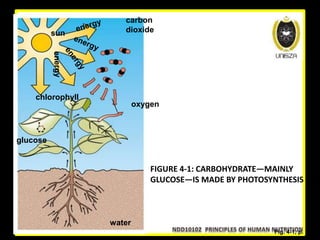
• Plants and photosynthesis
– Chlorophyll captures light energy which is
transformed into chemical energy - ATP
– Chemical energy is used to combine CO2 and H2O
to form glucose. **The by-product is oxygen.
– Extra glucose is stored in plants as starch.
– **Plants are the base of the food chain for all
living things.
Fig. 4-1, p. 100
sun
carbon
dioxide
chlorophyll
glucose
oxygen
water
FIGURE 4-1: CARBOHYDRATE—MAINLY
GLUCOSE—IS MADE BY PHOTOSYNTHESIS
• 2 categories
– Simple CHO
– Complex CHO
• Found grains, breads, legumes, fruits,
vegetables, and milk as well as in
sweeteners
Primary source of ENERGY
used to fuel the body
Simple carbohydrate
Known as sugar (saccharides)
monosaccharides disaccharides
(Single sugars, 6 carbons)
• Glucose
• Fructose
• Galactose
REMEMBER: In the body,
fructose and galactose are
converted to glucose.
(2 sugars joined
together chemically, 12
carbons)
• Maltose
• Sucrose
• Lactose
Complex carbohydrate
oligosaccharides polysaccharides
(containing 3-10 sugar
units)
• raffinose
• stachyose
REMEMBER: In the body, oligo
can not be digested in the
stomach and small intestine
(containing many
sugar units)
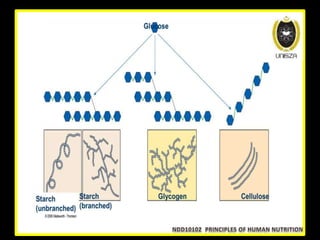
• Glycogen (animals)
• Starch & fiber
(plants)
Glycogen
• Storage form of CHO in animals
• Stored in muscles and liver
• Muscles glycogen: source of energy during
activity
• Liver glycogen: provides glucose to cells
throughout the body via bloodstream
Starches
• Storage form of CHO in
plants
• TWO forms:-
– Amylose: consists of
long straight chain of
glu molecules
– Amylopectin: consists
of branched chains of
glu molecules
Fiber
• Can not be digested by human enzymes
• Can not be absorbed in the body
• Beneficial health effects:
– Lowering blood cholesterol
– Reducing constipation
• Dietary fiber: non-digestible CHO and lignin that are
found intact in plants
• Functional fiber: isolated non-digestible that have
been shown to have beneficial physiological effects in
humans.
• Total fiber= dietary fiber + functional fiber
• Fiber cont’d
– Two types:
• Soluble fiber
– Fiber that dissolves in water or absorbs water and ca be
broken down by the intestinal microflora
– i.e pectins, gums
– Oats, apples, beans and seaweed
• Insoluble fiber
– Fiber that, for the most part, does not dissolve in water and
cannot be broken down by bacteria in the large intestine
– i.e cellulose, hemicelluloses and lignin
– Wheat bran, rye bran, brocolli
ONE WAY FIBER IN FOOD MAY LOWER CHOLESTEROL IN THE BLOOD
• The small intestine can only absorb
monosaccharides.
• Starch digestion begins in the mouth with and
enzyme, amylase, that breaks it down into
disaccharides – continues in storage section of
the stomach.
• Small intestine – amylase from the pancreas
continues starch digestion.
CARBOHYDRATE IN THE
DIGESTIVE TRACT
• Disaccharides – are broken down into
monosaccharides small intestine by enzymes
produced in the walls of the small intestine.
– Sucrase
– Maltase
– Lactase
• Monosaccharides are absorbed in small
intestine and enter the blood stream.
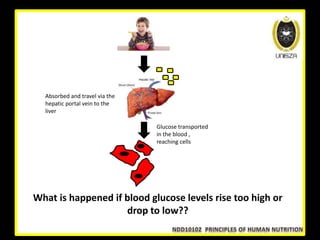
• Blood carries monosaccharides to the liver.
– All are converted to glucose.
– Glucose travels to other cells via the blood.
– Extra glucose is stored as glycogen in the liver and
skeletal muscles.
Carbohydrate
digestion in the GI
tract
• Lactose intolerance – lack of the enzyme
lactase causes inability to digest lactose in
milk products.
– There are few with complete intolerance, most
can ingest small quantities of milk products.
– Some people are really allergic to milk. This
allergy seems to be increasing in infants.
– Big Problem – calcium deficiency!
CARBOHYDRATES IN THE BODY
• Carbohydrate Metabolism
– Body cells receive a constant supply of glucose via
the blood stream
– Supply is regulated by the liver and by hormones
secreted from the pancreas
– Once glucose reaches the cells, it is metabolized
to produce energy
Absorbed and travel via the
hepatic portal vein to the
liver
Glucose transported
in the blood ,
reaching cells
What is happened if blood glucose levels rise too high or
drop to low??
• Glycemic response
– How quickly blood glucose levels rise after a meal
– Affected by composition of the meal
1. Fat and protein consumed high CHO foods: Stomach
to empty more slowly, delay the rates glucose enters
the small intestine
2. Consuming sugar alone: Blood glucose increase
rapidly
INFO: A mixed meal such as chicken,
rice and vege which contains starch,
fat, protein and fiber, will take 30 to 60
min before blood glucose begins to
rise
• Glucose metabolism- 4 interconnected stages
1. Glycolysis
• Takes place in the cytoplasm of the cell
• splits glucose into two 3-carbon pyruvate molecules
• The energy released from 1 molecule of glucose is used to
make 2 ATP
2. Citric Acid Cycle/Kreb Cycle
• Occurs in mitochondria
• 1 carbon is removed from pyruvate , leaving 2 carbons that
form Acetyl-CoA
• Acetyl-CoA is broken down, releasing 2 molecules of Co2
GLYCOLISIS
KREB CYCLE
• Glucose metabolism- cont’d
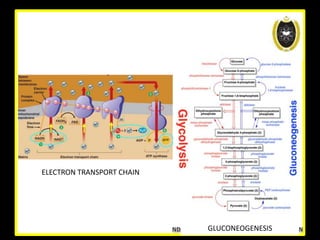
3. Electron transport chain
• Electrons are passed down a chain of molecules to oxygen to
form water
• Energy is released and used to produce ATP
4. Gluconeogenesis
• Synthesis of glucose from simple non-CHO molecules
• Occurs in liver and kidney cells
• Using protein to make glucose
• Amino acids from protein are the primary source of carbon
for glucose synthesis
• Essential for meeting the body’s immediate need for
glucose
GLUCONEOGENESIS
ELECTRON TRANSPORT CHAIN
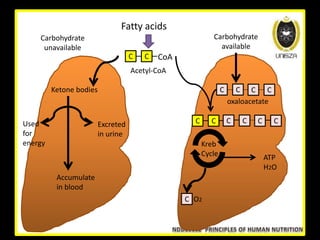
• Fatty acids cannot be used to make glucose.
WHY?
– Reactions that break them down produce 2-carbon
molecules (acetyl-CoA)
• However, CHO is needed to breakdown Fat
– Fatty acids are broken into molecules of Acetyl-CoA
– Acetyl-CoA can be used to produce energy via the
Kreb Cycle ONLY if it can be combine with a 4- carbon
oxaloacetate molecule derived from CHO metabolism
Fatty acids
C C CoA
Acetyl-CoA
Ketone bodies
Used
for
energy
Excreted
in urine
Accumulate
in blood
Carbohydrate
unavailable
Carbohydrate
available
C C C C
oxaloacetate
C C C CC C
Kreb
Cycle
C O2
ATP
H2O
• Ketone bodies:
– Formed in the liver
– Occur when there is not sufficient CHO to completely
metabolize the acetyl-CoA produced from fat breakdown
– Can be used for energy in the heart, muscle and kidney
(brain obtain a portion of its energy)
– Normal response to starvation or a very low CHO diet
– Excess ketones are excreted by the kidney in urine
– Fluid intake too low to produce enough urine to excrete
ketones, can build up in the blood causing ketosis
• Symptom: headache, dry mouth, foul-smelling breath, reduction
in appetite
• Abnormal Glucose Regulation
– Above the normal range= diabetes
– Drop below the normal range= hypoglycemia
1. Diabetes mellitus
– High blood glucose level
• Lack of insulin
• Unresponsiveness of body cells to insulin
– Causes damage to the large blood vessels
• Increased risk of heart disease and stroke
– Changes in small blood vessels nerves
• Leading to kidney failure, blindness, nerve dysfunction and
amputations
Diabetes Mellitus
• Type I diabetes:
– Destruction of the insulin producing cells in the
pancreas (autoimmune disease - genetics, viruses,
and other toxins have been implicated).
– Symptoms: polyuria, glucosuria, polydipsia
– Strikes children and young adults. All are insulin
dependent, i.e. must have insulin injections.
Diabetes Mellitus
• Type 2 diabetes:
– Cells become insulin resistant. Causes: genetic
predisposition, obesity)
– Symptoms – same as for Type I
– Affects older adults, obese children and
adolescents. Often controlled by diet and weight
loss, however many must take insulin stimulating
drugs or insulin injections.
Diabetes Mellitus
• Complications – both Type 1 and Type 2
– Compromised immune system – infections
– Blindness
– Loss of limbs
– Kidney failure
Diabetes Mellitus
• Control
– Limit carbohydrate intake & protein intake. The
exchange system was originally designed for
diabetics.
– Exercise is an important ingredient in the control
of diabetes.
• Gestational Diabetes
• Occurs in women during pregnancy (hormonal
changes)
• Increase the risk of complications for the unborn
child
• Disappears once the pregnancy is complete
Diabetes Mellitus
Hypoglycemia
• Symptoms - dizziness, confusion, weakness,
death
– Fasting hypoglycemia:
– Postprandial hypoglycemia:
– Also occurs with serious diseases.
CARBOHYDRATE AND HEALTH
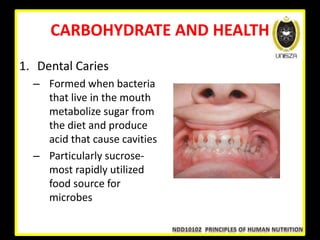
1. Dental Caries
– Formed when bacteria
that live in the mouth
metabolize sugar from
the diet and produce
acid that cause cavities
– Particularly sucrose-
most rapidly utilized
food source for
microbes
2. Heart Disease
– High sugar intake
adversely affect blood
lipid levels--- > increase
the risk of heart disease
– Diets high in whole grains
and fiber reduce the risk
of heart disease,
especially soluble fiber
– Diet high in fiber-rich
foods reduce blood
cholesterol
3. Chronic bowel disorders
– Diet high in fiber can
relive / prevent
• Fiber add bulk and absorb
water, making the feces
larger and softer and
reducing amount of
pressure needed for
defecation
– Helps reduce the
incidence of constipation
and hemorrhoids
(swelling of veins in the
rectal or anal area)
CARBOHYDRATE: ONE PART OF THE
TOTAL DIET
• Recommendations for CHO intake
– RDA: 130g/day (based on the av. min amount of
glucose used by the brain)
– The FAO/WHO (1998) suggested total carbohydrate
intake should be 55-70% of total energy for
prevention of diet-related chronic diseases.
– TSC on Energy and Macronutrients recommend sugar
intake to be no more than 15% of total energy
– For fiber, an AI is set at 38g and 25g per day for young
adult men an women, respectively, based on the
amount of fiber needed to reduce heart disease risk
• Determine your CHO intake
1. Determine
• The total energy (kcal) intake for the day
• The grams of CHO in the day’s diet
2. Calculate Energy from CHO
• CHO provides 4 kcal per g
• Multiply grams of CHO by 4 kcal per g
3. Calculate % energy from CHO
• Divide energy from CHO by total energy and multiply
by 100 to express as a percent
• Example:
– A diet contains 2500 kcal and 350g of CHO
350 g of CHO x 4 kcal/g = 1400 kcal of CHO
1400 kcal of CHO x 100 = 56% of energy (kcal) from CHO
2500 kcal
• CHO exchange list
– Used to give a quick estimate of the total amount
of CHO in a food or diet
– One carbohydrate exchange equals 15 grams of
carbohydrate
– Sample list :
http://dtc.ucsf.edu/pdfs/CarbohydrateExchangeLis
ts.pdf
CARBOHYDRATE AND FOOD
TECHNOLOGY
• Complex CHO as Additives
– Added as thickeners:
• sauces, puddings and gravies
• Soluble fiber pectin- preparation of jams and jellies
– Added as stabilizers
• Simple CHO as Additives
– Added as sweeteners- mostly fructose
• Corn syrup, molasses
– As preservatives
• to prevent the growth of microorganism
– Used to color foods
• Caramelized when heated
• Artificial sweeteners: sugar substitute
– Used to replace energy-containing sweeteners
– Provide little or no energy
– Types of artificial sweeteners
• Saccharin: 200 to 700 times sweeter than sugar
• Aspartame:200 times as sweet as sugar
• Acesulfame K: 200 times as sweet as sugar
• Sucralose: 600 times sweeter than sucrose
• Sugar alcohols: sugar-free products
Summary
1. CHOs are chemical compounds that contain
carbon, hydrogen and oxygen
2. In food they include sugar, starch and fiber
3. Simple CHO include monosaccharides and
disaccharides
4. Complex CHO are oligosaccharides and
polysaccharides (glycogen in animal and starch
and fiber in plants)
5. Fiber cannot be digested by enzymes in the
human stomach and small intestine and
therefore is not absorbed in the body
6. In the body, CHO primarily as glucose, provides source of energy
7. Glucose is metabolized through cellular respiratory involving
glycolysis, which breaks glucose into pyruvate; acetyl-CoA
formation; the Kreb Cycle, which produces CO2 and electrons; and
the electron transport chain which produces water and ATP
8. Blood glucose levels are maintained by the hormones insulin and
glucagon. When blood glucose rises, insulin released, when blood
glucose falls, glucagon is released
9. Diabetes is an abnormality in blood sugar regulation that occurs
either because insufficient insulin is produced or because there is
decrease in the sensitivity of body cells to insulin.
10. Hypoglycemia is a condition in which blood glucose falls to
abnormally low levels, causing symptoms such as sweating,
headaches and rapid heart beat.
11. Diet high in added sugar are low in nutrient density
and increase the risk of dental caries
12. Guidelines for healthy diets recommend 55% to 75 of
energy from CHO.
13. CHO are added to foods in processing as preservatives
and to provide flavor, texture and color.
14. Complex CHO are added as thickeners and stabilizers
while simple CHO are most frequently added as
sweeteners
15. Artificial sweeteners or sugar substitutes are used to
replace energy-containing sweeteners
Thank you for listening…

Lecture 4 carbohydrate

  • 1.
    Lecture 4: CARBOHYDRATES: Sugars,Starches, and Fiber DR. SHARIFAH WAJIHAH WAFA sharifahwajihah@unisza.edu.my
  • 2.
    Topic learning Outcome Atthe end of this lecture, the students should be able to:- 1. Differentiate simple carbohydrates and complex carbohydrate 2. Describe the function of carbohydrates in the body 3. Demonstrate knowledge of health with carbohydrates
  • 3.
    Outline • What areCarbohydrates? • Carbohydrate in the Digestive Tract • Carbohydrates in the Body • Carbohydrates and Health • Carbohydrate: One part of the total diet • Carbohydrates and Food Technology
  • 4.
  • 5.
    I (CH2O)n or H- C - OH I • Carbo-hydrate means carbon and water (C + H2O). • For every carbon there is 1 water molecule or 2 hydrogen atoms and 1 oxygen atom.
  • 6.
    Where do carbohydratescome from? • Plants and photosynthesis – Chlorophyll captures light energy which is transformed into chemical energy - ATP – Chemical energy is used to combine CO2 and H2O to form glucose. **The by-product is oxygen. – Extra glucose is stored in plants as starch. – **Plants are the base of the food chain for all living things.
  • 7.
    Fig. 4-1, p.100 sun carbon dioxide chlorophyll glucose oxygen water FIGURE 4-1: CARBOHYDRATE—MAINLY GLUCOSE—IS MADE BY PHOTOSYNTHESIS
  • 8.
    • 2 categories –Simple CHO – Complex CHO • Found grains, breads, legumes, fruits, vegetables, and milk as well as in sweeteners Primary source of ENERGY used to fuel the body
  • 9.
    Simple carbohydrate Known assugar (saccharides) monosaccharides disaccharides (Single sugars, 6 carbons) • Glucose • Fructose • Galactose REMEMBER: In the body, fructose and galactose are converted to glucose. (2 sugars joined together chemically, 12 carbons) • Maltose • Sucrose • Lactose
  • 11.
    Complex carbohydrate oligosaccharides polysaccharides (containing3-10 sugar units) • raffinose • stachyose REMEMBER: In the body, oligo can not be digested in the stomach and small intestine (containing many sugar units) • Glycogen (animals) • Starch & fiber (plants)
  • 13.
    Glycogen • Storage formof CHO in animals • Stored in muscles and liver • Muscles glycogen: source of energy during activity • Liver glycogen: provides glucose to cells throughout the body via bloodstream
  • 14.
    Starches • Storage formof CHO in plants • TWO forms:- – Amylose: consists of long straight chain of glu molecules – Amylopectin: consists of branched chains of glu molecules
  • 15.
    Fiber • Can notbe digested by human enzymes • Can not be absorbed in the body • Beneficial health effects: – Lowering blood cholesterol – Reducing constipation • Dietary fiber: non-digestible CHO and lignin that are found intact in plants • Functional fiber: isolated non-digestible that have been shown to have beneficial physiological effects in humans. • Total fiber= dietary fiber + functional fiber
  • 16.
    • Fiber cont’d –Two types: • Soluble fiber – Fiber that dissolves in water or absorbs water and ca be broken down by the intestinal microflora – i.e pectins, gums – Oats, apples, beans and seaweed • Insoluble fiber – Fiber that, for the most part, does not dissolve in water and cannot be broken down by bacteria in the large intestine – i.e cellulose, hemicelluloses and lignin – Wheat bran, rye bran, brocolli
  • 17.
    ONE WAY FIBERIN FOOD MAY LOWER CHOLESTEROL IN THE BLOOD
  • 18.
    • The smallintestine can only absorb monosaccharides. • Starch digestion begins in the mouth with and enzyme, amylase, that breaks it down into disaccharides – continues in storage section of the stomach. • Small intestine – amylase from the pancreas continues starch digestion. CARBOHYDRATE IN THE DIGESTIVE TRACT
  • 19.
    • Disaccharides –are broken down into monosaccharides small intestine by enzymes produced in the walls of the small intestine. – Sucrase – Maltase – Lactase • Monosaccharides are absorbed in small intestine and enter the blood stream.
  • 20.
    • Blood carriesmonosaccharides to the liver. – All are converted to glucose. – Glucose travels to other cells via the blood. – Extra glucose is stored as glycogen in the liver and skeletal muscles.
  • 21.
  • 22.
    • Lactose intolerance– lack of the enzyme lactase causes inability to digest lactose in milk products. – There are few with complete intolerance, most can ingest small quantities of milk products. – Some people are really allergic to milk. This allergy seems to be increasing in infants. – Big Problem – calcium deficiency!
  • 23.
    CARBOHYDRATES IN THEBODY • Carbohydrate Metabolism – Body cells receive a constant supply of glucose via the blood stream – Supply is regulated by the liver and by hormones secreted from the pancreas – Once glucose reaches the cells, it is metabolized to produce energy
  • 24.
    Absorbed and travelvia the hepatic portal vein to the liver Glucose transported in the blood , reaching cells What is happened if blood glucose levels rise too high or drop to low??
  • 26.
    • Glycemic response –How quickly blood glucose levels rise after a meal – Affected by composition of the meal 1. Fat and protein consumed high CHO foods: Stomach to empty more slowly, delay the rates glucose enters the small intestine 2. Consuming sugar alone: Blood glucose increase rapidly INFO: A mixed meal such as chicken, rice and vege which contains starch, fat, protein and fiber, will take 30 to 60 min before blood glucose begins to rise
  • 27.
    • Glucose metabolism-4 interconnected stages 1. Glycolysis • Takes place in the cytoplasm of the cell • splits glucose into two 3-carbon pyruvate molecules • The energy released from 1 molecule of glucose is used to make 2 ATP 2. Citric Acid Cycle/Kreb Cycle • Occurs in mitochondria • 1 carbon is removed from pyruvate , leaving 2 carbons that form Acetyl-CoA • Acetyl-CoA is broken down, releasing 2 molecules of Co2
  • 28.
  • 29.
    • Glucose metabolism-cont’d 3. Electron transport chain • Electrons are passed down a chain of molecules to oxygen to form water • Energy is released and used to produce ATP 4. Gluconeogenesis • Synthesis of glucose from simple non-CHO molecules • Occurs in liver and kidney cells • Using protein to make glucose • Amino acids from protein are the primary source of carbon for glucose synthesis • Essential for meeting the body’s immediate need for glucose
  • 30.
  • 31.
    • Fatty acidscannot be used to make glucose. WHY? – Reactions that break them down produce 2-carbon molecules (acetyl-CoA) • However, CHO is needed to breakdown Fat – Fatty acids are broken into molecules of Acetyl-CoA – Acetyl-CoA can be used to produce energy via the Kreb Cycle ONLY if it can be combine with a 4- carbon oxaloacetate molecule derived from CHO metabolism
  • 32.
    Fatty acids C CCoA Acetyl-CoA Ketone bodies Used for energy Excreted in urine Accumulate in blood Carbohydrate unavailable Carbohydrate available C C C C oxaloacetate C C C CC C Kreb Cycle C O2 ATP H2O
  • 33.
    • Ketone bodies: –Formed in the liver – Occur when there is not sufficient CHO to completely metabolize the acetyl-CoA produced from fat breakdown – Can be used for energy in the heart, muscle and kidney (brain obtain a portion of its energy) – Normal response to starvation or a very low CHO diet – Excess ketones are excreted by the kidney in urine – Fluid intake too low to produce enough urine to excrete ketones, can build up in the blood causing ketosis • Symptom: headache, dry mouth, foul-smelling breath, reduction in appetite
  • 34.
    • Abnormal GlucoseRegulation – Above the normal range= diabetes – Drop below the normal range= hypoglycemia 1. Diabetes mellitus – High blood glucose level • Lack of insulin • Unresponsiveness of body cells to insulin – Causes damage to the large blood vessels • Increased risk of heart disease and stroke – Changes in small blood vessels nerves • Leading to kidney failure, blindness, nerve dysfunction and amputations
  • 35.
    Diabetes Mellitus • TypeI diabetes: – Destruction of the insulin producing cells in the pancreas (autoimmune disease - genetics, viruses, and other toxins have been implicated). – Symptoms: polyuria, glucosuria, polydipsia – Strikes children and young adults. All are insulin dependent, i.e. must have insulin injections.
  • 36.
    Diabetes Mellitus • Type2 diabetes: – Cells become insulin resistant. Causes: genetic predisposition, obesity) – Symptoms – same as for Type I – Affects older adults, obese children and adolescents. Often controlled by diet and weight loss, however many must take insulin stimulating drugs or insulin injections.
  • 37.
    Diabetes Mellitus • Complications– both Type 1 and Type 2 – Compromised immune system – infections – Blindness – Loss of limbs – Kidney failure
  • 38.
    Diabetes Mellitus • Control –Limit carbohydrate intake & protein intake. The exchange system was originally designed for diabetics. – Exercise is an important ingredient in the control of diabetes.
  • 39.
    • Gestational Diabetes •Occurs in women during pregnancy (hormonal changes) • Increase the risk of complications for the unborn child • Disappears once the pregnancy is complete Diabetes Mellitus
  • 40.
    Hypoglycemia • Symptoms -dizziness, confusion, weakness, death – Fasting hypoglycemia: – Postprandial hypoglycemia: – Also occurs with serious diseases.
  • 41.
    CARBOHYDRATE AND HEALTH 1.Dental Caries – Formed when bacteria that live in the mouth metabolize sugar from the diet and produce acid that cause cavities – Particularly sucrose- most rapidly utilized food source for microbes
  • 42.
    2. Heart Disease –High sugar intake adversely affect blood lipid levels--- > increase the risk of heart disease – Diets high in whole grains and fiber reduce the risk of heart disease, especially soluble fiber – Diet high in fiber-rich foods reduce blood cholesterol
  • 43.
    3. Chronic boweldisorders – Diet high in fiber can relive / prevent • Fiber add bulk and absorb water, making the feces larger and softer and reducing amount of pressure needed for defecation – Helps reduce the incidence of constipation and hemorrhoids (swelling of veins in the rectal or anal area)
  • 44.
    CARBOHYDRATE: ONE PARTOF THE TOTAL DIET • Recommendations for CHO intake – RDA: 130g/day (based on the av. min amount of glucose used by the brain) – The FAO/WHO (1998) suggested total carbohydrate intake should be 55-70% of total energy for prevention of diet-related chronic diseases. – TSC on Energy and Macronutrients recommend sugar intake to be no more than 15% of total energy – For fiber, an AI is set at 38g and 25g per day for young adult men an women, respectively, based on the amount of fiber needed to reduce heart disease risk
  • 45.
    • Determine yourCHO intake 1. Determine • The total energy (kcal) intake for the day • The grams of CHO in the day’s diet 2. Calculate Energy from CHO • CHO provides 4 kcal per g • Multiply grams of CHO by 4 kcal per g 3. Calculate % energy from CHO • Divide energy from CHO by total energy and multiply by 100 to express as a percent
  • 46.
    • Example: – Adiet contains 2500 kcal and 350g of CHO 350 g of CHO x 4 kcal/g = 1400 kcal of CHO 1400 kcal of CHO x 100 = 56% of energy (kcal) from CHO 2500 kcal
  • 47.
    • CHO exchangelist – Used to give a quick estimate of the total amount of CHO in a food or diet – One carbohydrate exchange equals 15 grams of carbohydrate – Sample list : http://dtc.ucsf.edu/pdfs/CarbohydrateExchangeLis ts.pdf
  • 48.
    CARBOHYDRATE AND FOOD TECHNOLOGY •Complex CHO as Additives – Added as thickeners: • sauces, puddings and gravies • Soluble fiber pectin- preparation of jams and jellies – Added as stabilizers • Simple CHO as Additives – Added as sweeteners- mostly fructose • Corn syrup, molasses – As preservatives • to prevent the growth of microorganism – Used to color foods • Caramelized when heated
  • 49.
    • Artificial sweeteners:sugar substitute – Used to replace energy-containing sweeteners – Provide little or no energy – Types of artificial sweeteners • Saccharin: 200 to 700 times sweeter than sugar • Aspartame:200 times as sweet as sugar • Acesulfame K: 200 times as sweet as sugar • Sucralose: 600 times sweeter than sucrose • Sugar alcohols: sugar-free products
  • 50.
    Summary 1. CHOs arechemical compounds that contain carbon, hydrogen and oxygen 2. In food they include sugar, starch and fiber 3. Simple CHO include monosaccharides and disaccharides 4. Complex CHO are oligosaccharides and polysaccharides (glycogen in animal and starch and fiber in plants) 5. Fiber cannot be digested by enzymes in the human stomach and small intestine and therefore is not absorbed in the body
  • 51.
    6. In thebody, CHO primarily as glucose, provides source of energy 7. Glucose is metabolized through cellular respiratory involving glycolysis, which breaks glucose into pyruvate; acetyl-CoA formation; the Kreb Cycle, which produces CO2 and electrons; and the electron transport chain which produces water and ATP 8. Blood glucose levels are maintained by the hormones insulin and glucagon. When blood glucose rises, insulin released, when blood glucose falls, glucagon is released 9. Diabetes is an abnormality in blood sugar regulation that occurs either because insufficient insulin is produced or because there is decrease in the sensitivity of body cells to insulin. 10. Hypoglycemia is a condition in which blood glucose falls to abnormally low levels, causing symptoms such as sweating, headaches and rapid heart beat.
  • 52.
    11. Diet highin added sugar are low in nutrient density and increase the risk of dental caries 12. Guidelines for healthy diets recommend 55% to 75 of energy from CHO. 13. CHO are added to foods in processing as preservatives and to provide flavor, texture and color. 14. Complex CHO are added as thickeners and stabilizers while simple CHO are most frequently added as sweeteners 15. Artificial sweeteners or sugar substitutes are used to replace energy-containing sweeteners
  • 53.
    Thank you forlistening…