1
Carbohydrates
2
Overview
Carbohydrates
• Sources of Carbohydrates
– Simple Sugars
– Complex Carbohydrates
– Dietary Fiber
• Digestion and Absorption
• Functions
• Blood glucose regulation
• Dietary sweeteners
• Dietary Recommendations
3
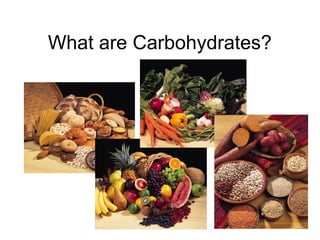
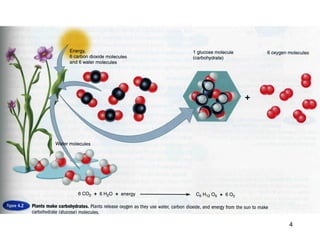
What are Carbohydrates?
4
5
Types of Carbohydrates
Simple Carbohydrates
– monosaccharides
– disaccharides
Complex Carbohydrates
– oligosaccharides
– polysaccharides
• glycogen
• starches
• fibers
6
Monosaccharides: Single
Sugars
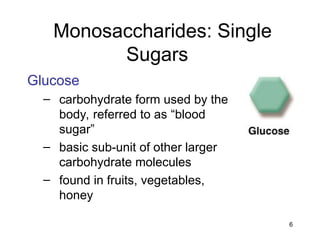
Glucose
– carbohydrate form used by the
body, referred to as “blood
sugar”
– basic sub-unit of other larger
carbohydrate molecules
– found in fruits, vegetables,
honey
7
Monosaccharides: Single
Sugars
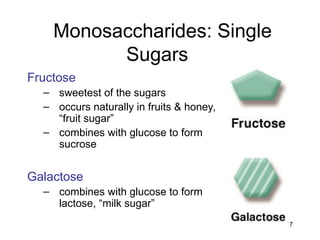
Fructose
– sweetest of the sugars
– occurs naturally in fruits & honey,
“fruit sugar”
– combines with glucose to form
sucrose
Galactose
– combines with glucose to form
lactose, “milk sugar”
8
Disaccharides
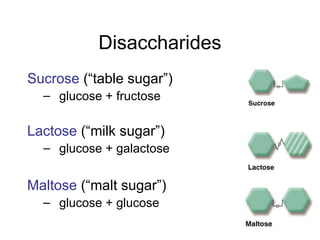
Sucrose (“table sugar”)
– glucose + fructose
Lactose (“milk sugar”)
– glucose + galactose
Maltose (“malt sugar”)
– glucose + glucose
9
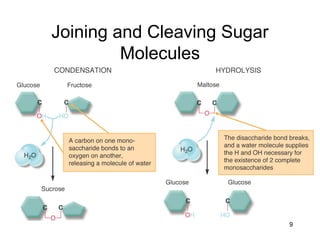
Joining and Cleaving Sugar
Molecules
10
Complex Carbohydrates
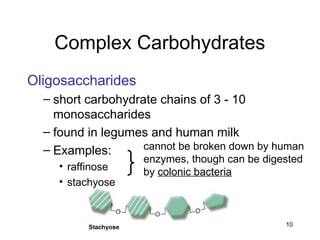
Oligosaccharides
– short carbohydrate chains of 3 - 10
monosaccharides
– found in legumes and human milk
– Examples:
• raffinose
• stachyose
cannot be broken down by human
enzymes, though can be digested
by colonic bacteria
11
Complex Carbohydrates
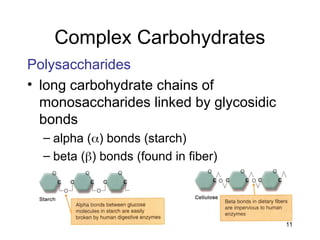
Polysaccharides
• long carbohydrate chains of
monosaccharides linked by glycosidic
bonds
– alpha () bonds (starch)
– beta () bonds (found in fiber)
12
Complex Carbohydrates
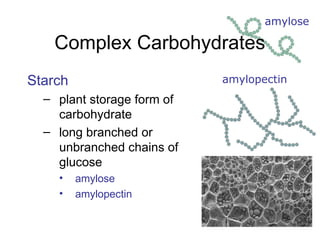
Starch
– plant storage form of
carbohydrate
– long branched or
unbranched chains of
glucose
• amylose
• amylopectin
amylose
amylopectin
13
Complex Carbohydrates
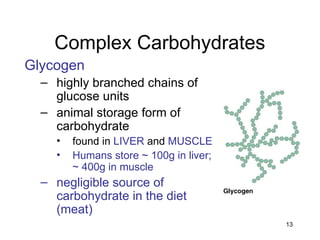
Glycogen
– highly branched chains of
glucose units
– animal storage form of
carbohydrate
• found in LIVER and MUSCLE
• Humans store ~ 100g in liver;
~ 400g in muscle
– negligible source of
carbohydrate in the diet
(meat)
14
Complex Carbohydrates
Fiber
Dietary Fiber
– non-digestible carbohydrates (chains of
monosaccharides) and lignin that are intact and
intrinsic in plants (includes oligosaccharides)
Functional Fiber
– isolated, non-digestible carbohydrates that have
beneficial physiological effects in humans
15
Complex Carbohydrates
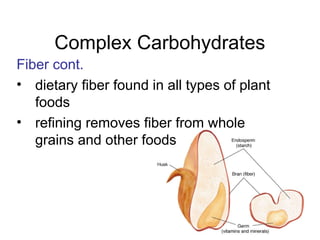
Fiber cont.
• dietary fiber found in all types of plant
foods
• refining removes fiber from whole
grains and other foods
16
Complex Carbohydrates
Fiber cont.
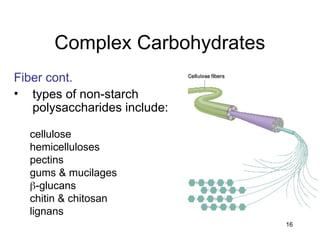
• types of non-starch
polysaccharides include:
cellulose
hemicelluloses
pectins
gums & mucilages
-glucans
chitin & chitosan
lignans
17
Digestion & Absorption
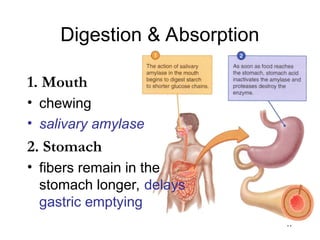
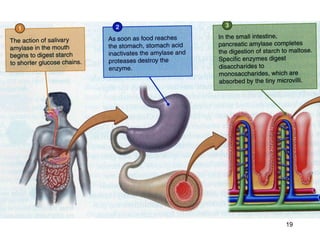
1. Mouth
• chewing
• salivary amylase
2. Stomach
• fibers remain in the
stomach longer, delays
gastric emptying
18
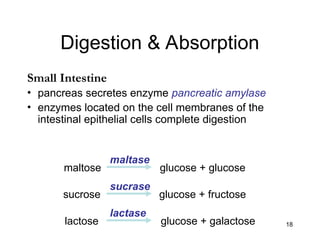
maltase
lactase
sucrase
Digestion & Absorption
Small Intestine
• pancreas secretes enzyme pancreatic amylase
• enzymes located on the cell membranes of the
intestinal epithelial cells complete digestion
maltose glucose + glucose
sucrose glucose + fructose
lactose glucose + galactose
19
20
Digestion & Absorption
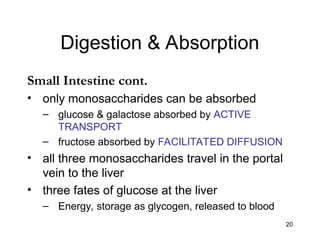
Small Intestine cont.
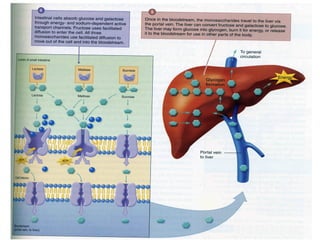
• only monosaccharides can be absorbed
– glucose & galactose absorbed by ACTIVE
TRANSPORT
– fructose absorbed by FACILITATED DIFFUSION
• all three monosaccharides travel in the portal
vein to the liver
• three fates of glucose at the liver
– Energy, storage as glycogen, released to blood
21
22
Digestion & Absorption
Large Intestine
• resistant starches and fibers may be
digested by bacteria
– produces short chain fatty acids
• absorbed by the intestine and used for energy
(dietary fiber yields about 2 kcal/g)
• other health benefits (more later in semester)
23
Lactose Intolerance
• occurs as a result of insufficient lactase & low
lactase activity
• lactose molecules from milk remain in the
intestine undigested
• lactose intolerance  milk allergy
• undigested lactose digested by bacteria
producing irritating acid and gas
– symptoms include bloating, abdominal discomfort,
diarrhea
24
Lactose Intolerance
• individuals who consume little or no milk
products may be at risk of developing nutrient
deficiencies
• dairy options: yogurt, aged cheddar, small
quantities of milk (~ ½ cup), acidophilus milk,
cottage cheese
• best to consume with other foods and spread
intake throughout day
• gradual increases in milk intake may cause
intestinal bacteria to adapt
25
Alternatives to Milk
1. Calcium
• canned fish with bones, bone soup stock, broccoli,
cauliflower, bok choy, calcium fortified beverages,
blackstrap molasses
2. Vitamin D
• 15 minutes exposure to SUNLIGHT several times per week
• fortified margarine, fortified cereals, fatty fish (herring, tuna,
salmon, sardines), fortified soy or rice milk
3. Riboflavin
• beef, chicken, liver, clams, mushrooms, broccoli, breads,
fortified cereals
26
Functions of Carbohydrates
1) Energy
• glucose fuels the work of most of the body’s
cells
– preferred fuel of NERVOUS TISSUE (the brain,
nerves) and RED BLOOD CELLS (RBC)
• excess glucose is stored as GLYCOGEN in
liver and muscle tissue
27
Functions of Carbohydrates
2) Sparing Body Protein
• if diet does not provide enough glucose, then
other sources of glucose must be found
• if carbohydrate intake < 50 - 100 g, body
protein will be used to make glucose
• an adequate supply of carbohydrate spares
body proteins from being broken down to
synthesize glucose
28
Functions of Carbohydrates
3) Preventing Ketosis (Anti-ketogenic)
• carbohydrates required for the complete
metabolism of fat
• incomplete fat metabolism produces
KETONES
• an adequate supply of carbohydrate (>
50 – 100 g per day) prevents KETOSIS
29
Fiber
• beneficial for weight control by contributing to
satiety & delay gastric emptying
• soluble fibers lower blood cholesterol to help
reduce risk of cardiovascular disease
• minimizes risk of and helps control Type II
Diabetes
• insoluble fibers help promote intestinal health
by enlarging stool size and easing passage of
stool
30
Soluble Fiber
• examples include gums, pectins,
mucilages, some hemicelluloses
• functions:
– delay gastric emptying
– slow transit through the digestive system
– delay glucose absorption
– bind to bile, help decrease cholesterol
• food sources: fruits
31
Insoluble Fiber
• examples include cellulose, hemicellulose
• functions:
– speed transit through the digestive tract
– delay glucose absorption
– increase fecal weight and soften stool to ease
passage
– reduces risk of hemorrhoids, diverticulitis and
appendicitis
• food sources: cereal grains, legumes,
vegetables, nuts
32
Fiber: Too much of a good
thing?
Excessive amounts of fiber may lead to:
– displacement of other foods in the diet
– intestinal discomfort
– interference with the absorption of other
nutrients
33
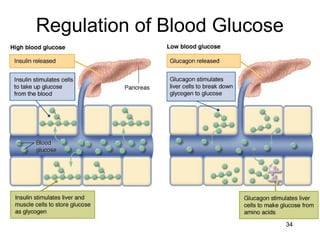
Regulation of Blood Glucose
Optimal functioning of the body is dependant on
keeping levels of glucose within certain
parameters.
Elevated blood glucose = Hyperglycemia
Low blood glucose = Hypoglycemia
The ENDOCRINE SYSTEM is primarily
responsible for regulating blood glucose. The two
main hormones are INSULIN and GLUCAGON.
34
Regulation of Blood Glucose
35
Diabetes Mellitus
• a disorder of energy metabolism due to
failure of insulin to regulate blood glucose
• results in hyperglycemia
• acute symptoms include thirst, increased
urine production, hunger
• long term consequences include increased
risk of heart disease, kidney disease,
blindness, neural damage
• two forms: Type I and Type II
36
Diabetes Mellitus
Type I
• accounts for about 10% of cases
• occurs when  cells of the pancreas are
destroyed
– insulin cannot be synthesized
• without insulin, blood glucose levels rise
because the tissues are unable to access the
glucose
• death occurs shortly after onset unless given
injections of insulin
37
Diabetes Mellitus
Type II
• occurs when cells of body are unable to
respond to insulin
• called “insulin insensitivity” or “insulin
resistance”
• blood glucose levels rise
• insulin secretion increases in an attempt to
compensate
– leads to hyperinsulinemia
38
Hypoglycemia
• dramatic drop in blood glucose
• symptoms similar to an anxiety attack: rapid
weak heart beat, sweating, anxiety, hunger,
trembling, weakness
• RARE in healthy people
• may occur as a result of poorly managed
Diabetes or other causes:
– reactive hypoglycemia
– fasting hypoglycemia
39
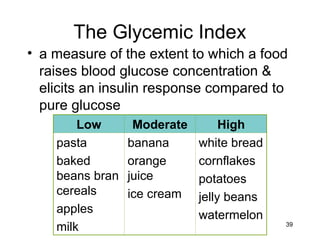
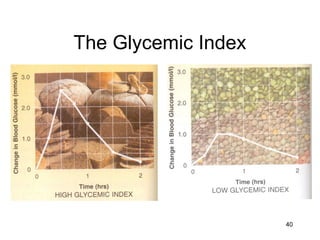
The Glycemic Index
• a measure of the extent to which a food
raises blood glucose concentration &
elicits an insulin response compared to
pure glucose
Low Moderate High
pasta
baked
beans bran
cereals
apples
milk
banana
orange
juice
ice cream
white bread
cornflakes
potatoes
jelly beans
watermelon
40
The Glycemic Index
41
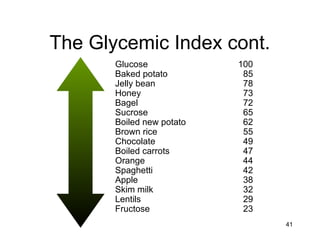
The Glycemic Index cont.
Glucose 100
Baked potato 85
Jelly bean 78
Honey 73
Bagel 72
Sucrose 65
Boiled new potato 62
Brown rice 55
Chocolate 49
Boiled carrots 47
Orange 44
Spaghetti 42
Apple 38
Skim milk 32
Lentils 29
Fructose 23
42
The Glycemic Index cont.
The Theory…
• consuming foods with a low glycemic
index will minimize dramatic fluctuations
in blood glucose
• this reduces the need for insulin
secretion and may help manage Type II
Diabetes
Evidence?
43
The Glycemic Index cont.
In Practice...
• the glycemic effect of a food may vary if consumed with
other foods
• few foods have had their glycemic index determined
• the factors that contribute to a food’s glycemic index are
not fully understood and estimating the glycemic index is
not intuitive
• eating several small meals frequently has similar
metabolic effects on blood glucose as does consuming
low glycemic index foods
• evidence of benefits is based on epidemiological studies
44
Sugar
Intrinsic sugars
– from intact fruits & vegetables
Added sugars
– saccharides added to foods & beverages by
manufacturer, cook, or consumer
Free sugars
– added sugars + concentrated sugars (i.e. from
honey, syrups, and juices)
45
Sugar
Why is sugar added to foods?
– flavour enhancement
– provide texture and colour
– permits fermentation
– adds bulk
– acts as a preservative
– balance acidity
46
Risks of Excess
Consumption?
Which of the following are risks of excess
sugar consumption?
– nutrient deficiencies?
– development of dental caries?
– development of Type II Diabetes? Obesity?
– hyperactivity in children?
47
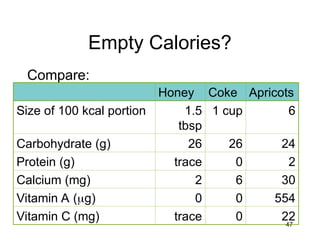
Empty Calories?
Compare:
Honey Coke Apricots
Size of 100 kcal portion 1.5
tbsp
1 cup 6
Carbohydrate (g) 26 26 24
Protein (g) trace 0 2
Calcium (mg) 2 6 30
Vitamin A (g) 0 0 554
Vitamin C (mg) trace 0 22
48
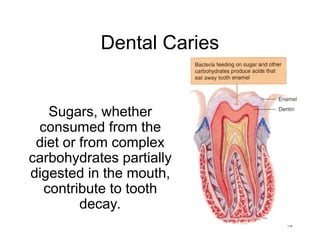
Dental Caries
Sugars, whether
consumed from the
diet or from complex
carbohydrates partially
digested in the mouth,
contribute to tooth
decay.
49
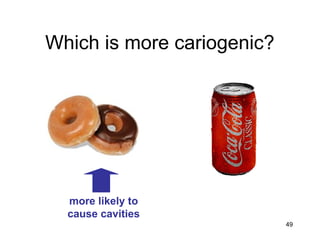
Which is more cariogenic?
more likely to
cause cavities
50
Reducing risk of caries
formation
• eat sugary foods with meals
• limit between meal snacks containing
sugars and starches
• brush and floss teeth regularly
• if brush and flossing not possible, rinse
teeth with water or chew sugar-free
gum
51
Nutritive & Artificial
Sweeteners
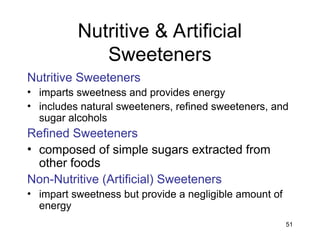
Nutritive Sweeteners
• imparts sweetness and provides energy
• includes natural sweeteners, refined sweeteners, and
sugar alcohols
Refined Sweeteners
• composed of simple sugars extracted from
other foods
Non-Nutritive (Artificial) Sweeteners
• impart sweetness but provide a negligible amount of
energy
52
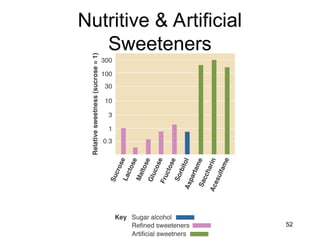
Nutritive & Artificial
Sweeteners
53
Sugar Alcohols
• examples: sorbitol, mannitol, xylitol
• considered sugar replacers: use similar
amount as sugar and provide about 2 kcal
per gram
• only found in commercial foods (common in
chewing gum)
• bacteria that produce cavity causing acid
don’t metabolize sugar alcohols
54
Artificial Sweeteners
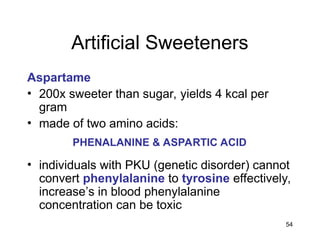
Aspartame
• 200x sweeter than sugar, yields 4 kcal per
gram
• made of two amino acids:
• individuals with PKU (genetic disorder) cannot
convert phenylalanine to tyrosine effectively,
increase’s in blood phenylalanine
concentration can be toxic
PHENALANINE & ASPARTIC ACID
55
Artificial Sweeteners
Saccharin
• one study found that excess may cause bladder
cancer in rats, but longitudinal human studies
show no support for saccharin causing bladder
cancer
Acesulfame K
• cannot be digested by the body thus provides no
energy
• not affected by heat so can be used in cooking
• 200x sweeter than table sugar
56
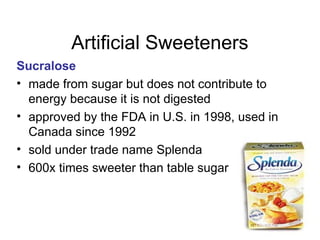
Artificial Sweeteners
Sucralose
• made from sugar but does not contribute to
energy because it is not digested
• approved by the FDA in U.S. in 1998, used in
Canada since 1992
• sold under trade name Splenda
• 600x times sweeter than table sugar
57
How much carbohydrate do I
need?
AMDR (Adults)
– 45 - 65% of total average energy intake
RDA for Carbohydrates (Adults) = 130 g per day
Daily Value (2000 kcal diet) = 300 g per day
AI for Fiber (Adults)*
– Men: 38 g per day
– Women: 25 g per day
Sugar = max 10% of energy intake
*Note: after age 50, recommendations decrease to 30 and 21 g per
day for men and women respectively.
58
Sources of Carbohydrates
59
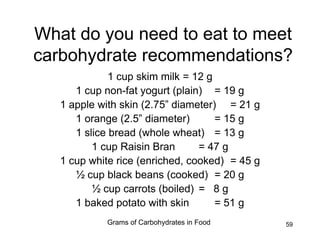
What do you need to eat to meet
carbohydrate recommendations?
1 cup skim milk = 12 g
1 cup non-fat yogurt (plain) = 19 g
1 apple with skin (2.75” diameter) = 21 g
1 orange (2.5” diameter) = 15 g
1 slice bread (whole wheat) = 13 g
1 cup Raisin Bran = 47 g
1 cup white rice (enriched, cooked) = 45 g
½ cup black beans (cooked) = 20 g
½ cup carrots (boiled) = 8 g
1 baked potato with skin = 51 g
Grams of Carbohydrates in Food
60
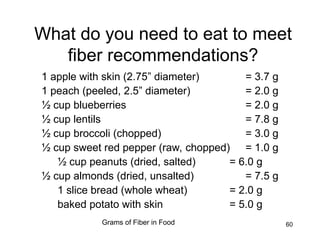
What do you need to eat to meet
fiber recommendations?
1 apple with skin (2.75” diameter) = 3.7 g
1 peach (peeled, 2.5” diameter) = 2.0 g
½ cup blueberries = 2.0 g
½ cup lentils = 7.8 g
½ cup broccoli (chopped) = 3.0 g
½ cup sweet red pepper (raw, chopped) = 1.0 g
½ cup peanuts (dried, salted) = 6.0 g
½ cup almonds (dried, unsalted) = 7.5 g
1 slice bread (whole wheat) = 2.0 g
baked potato with skin = 5.0 g
Grams of Fiber in Food
61
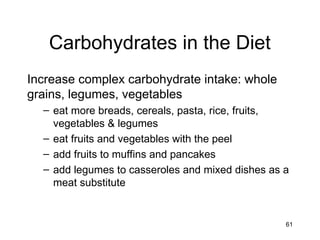
Carbohydrates in the Diet
Increase complex carbohydrate intake: whole
grains, legumes, vegetables
– eat more breads, cereals, pasta, rice, fruits,
vegetables & legumes
– eat fruits and vegetables with the peel
– add fruits to muffins and pancakes
– add legumes to casseroles and mixed dishes as a
meat substitute
62
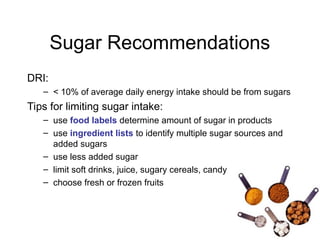
Sugar Recommendations
DRI:
– < 10% of average daily energy intake should be from sugars
Tips for limiting sugar intake:
– use food labels determine amount of sugar in products
– use ingredient lists to identify multiple sugar sources and
added sugars
– use less added sugar
– limit soft drinks, juice, sugary cereals, candy
– choose fresh or frozen fruits

carbohydrates First year BPharm students ppt

  • 1.
  • 2.
    2 Overview Carbohydrates • Sources ofCarbohydrates – Simple Sugars – Complex Carbohydrates – Dietary Fiber • Digestion and Absorption • Functions • Blood glucose regulation • Dietary sweeteners • Dietary Recommendations
  • 3.
  • 4.
  • 5.
    5 Types of Carbohydrates SimpleCarbohydrates – monosaccharides – disaccharides Complex Carbohydrates – oligosaccharides – polysaccharides • glycogen • starches • fibers
  • 6.
    6 Monosaccharides: Single Sugars Glucose – carbohydrateform used by the body, referred to as “blood sugar” – basic sub-unit of other larger carbohydrate molecules – found in fruits, vegetables, honey
  • 7.
    7 Monosaccharides: Single Sugars Fructose – sweetestof the sugars – occurs naturally in fruits & honey, “fruit sugar” – combines with glucose to form sucrose Galactose – combines with glucose to form lactose, “milk sugar”
  • 8.
    8 Disaccharides Sucrose (“table sugar”) –glucose + fructose Lactose (“milk sugar”) – glucose + galactose Maltose (“malt sugar”) – glucose + glucose
  • 9.
    9 Joining and CleavingSugar Molecules
  • 10.
    10 Complex Carbohydrates Oligosaccharides – shortcarbohydrate chains of 3 - 10 monosaccharides – found in legumes and human milk – Examples: • raffinose • stachyose cannot be broken down by human enzymes, though can be digested by colonic bacteria
  • 11.
    11 Complex Carbohydrates Polysaccharides • longcarbohydrate chains of monosaccharides linked by glycosidic bonds – alpha () bonds (starch) – beta () bonds (found in fiber)
  • 12.
    12 Complex Carbohydrates Starch – plantstorage form of carbohydrate – long branched or unbranched chains of glucose • amylose • amylopectin amylose amylopectin
  • 13.
    13 Complex Carbohydrates Glycogen – highlybranched chains of glucose units – animal storage form of carbohydrate • found in LIVER and MUSCLE • Humans store ~ 100g in liver; ~ 400g in muscle – negligible source of carbohydrate in the diet (meat)
  • 14.
    14 Complex Carbohydrates Fiber Dietary Fiber –non-digestible carbohydrates (chains of monosaccharides) and lignin that are intact and intrinsic in plants (includes oligosaccharides) Functional Fiber – isolated, non-digestible carbohydrates that have beneficial physiological effects in humans
  • 15.
    15 Complex Carbohydrates Fiber cont. •dietary fiber found in all types of plant foods • refining removes fiber from whole grains and other foods
  • 16.
    16 Complex Carbohydrates Fiber cont. •types of non-starch polysaccharides include: cellulose hemicelluloses pectins gums & mucilages -glucans chitin & chitosan lignans
  • 17.
    17 Digestion & Absorption 1.Mouth • chewing • salivary amylase 2. Stomach • fibers remain in the stomach longer, delays gastric emptying
  • 18.
    18 maltase lactase sucrase Digestion & Absorption SmallIntestine • pancreas secretes enzyme pancreatic amylase • enzymes located on the cell membranes of the intestinal epithelial cells complete digestion maltose glucose + glucose sucrose glucose + fructose lactose glucose + galactose
  • 19.
  • 20.
    20 Digestion & Absorption SmallIntestine cont. • only monosaccharides can be absorbed – glucose & galactose absorbed by ACTIVE TRANSPORT – fructose absorbed by FACILITATED DIFFUSION • all three monosaccharides travel in the portal vein to the liver • three fates of glucose at the liver – Energy, storage as glycogen, released to blood
  • 21.
  • 22.
    22 Digestion & Absorption LargeIntestine • resistant starches and fibers may be digested by bacteria – produces short chain fatty acids • absorbed by the intestine and used for energy (dietary fiber yields about 2 kcal/g) • other health benefits (more later in semester)
  • 23.
    23 Lactose Intolerance • occursas a result of insufficient lactase & low lactase activity • lactose molecules from milk remain in the intestine undigested • lactose intolerance  milk allergy • undigested lactose digested by bacteria producing irritating acid and gas – symptoms include bloating, abdominal discomfort, diarrhea
  • 24.
    24 Lactose Intolerance • individualswho consume little or no milk products may be at risk of developing nutrient deficiencies • dairy options: yogurt, aged cheddar, small quantities of milk (~ ½ cup), acidophilus milk, cottage cheese • best to consume with other foods and spread intake throughout day • gradual increases in milk intake may cause intestinal bacteria to adapt
  • 25.
    25 Alternatives to Milk 1.Calcium • canned fish with bones, bone soup stock, broccoli, cauliflower, bok choy, calcium fortified beverages, blackstrap molasses 2. Vitamin D • 15 minutes exposure to SUNLIGHT several times per week • fortified margarine, fortified cereals, fatty fish (herring, tuna, salmon, sardines), fortified soy or rice milk 3. Riboflavin • beef, chicken, liver, clams, mushrooms, broccoli, breads, fortified cereals
  • 26.
    26 Functions of Carbohydrates 1)Energy • glucose fuels the work of most of the body’s cells – preferred fuel of NERVOUS TISSUE (the brain, nerves) and RED BLOOD CELLS (RBC) • excess glucose is stored as GLYCOGEN in liver and muscle tissue
  • 27.
    27 Functions of Carbohydrates 2)Sparing Body Protein • if diet does not provide enough glucose, then other sources of glucose must be found • if carbohydrate intake < 50 - 100 g, body protein will be used to make glucose • an adequate supply of carbohydrate spares body proteins from being broken down to synthesize glucose
  • 28.
    28 Functions of Carbohydrates 3)Preventing Ketosis (Anti-ketogenic) • carbohydrates required for the complete metabolism of fat • incomplete fat metabolism produces KETONES • an adequate supply of carbohydrate (> 50 – 100 g per day) prevents KETOSIS
  • 29.
    29 Fiber • beneficial forweight control by contributing to satiety & delay gastric emptying • soluble fibers lower blood cholesterol to help reduce risk of cardiovascular disease • minimizes risk of and helps control Type II Diabetes • insoluble fibers help promote intestinal health by enlarging stool size and easing passage of stool
  • 30.
    30 Soluble Fiber • examplesinclude gums, pectins, mucilages, some hemicelluloses • functions: – delay gastric emptying – slow transit through the digestive system – delay glucose absorption – bind to bile, help decrease cholesterol • food sources: fruits
  • 31.
    31 Insoluble Fiber • examplesinclude cellulose, hemicellulose • functions: – speed transit through the digestive tract – delay glucose absorption – increase fecal weight and soften stool to ease passage – reduces risk of hemorrhoids, diverticulitis and appendicitis • food sources: cereal grains, legumes, vegetables, nuts
  • 32.
    32 Fiber: Too muchof a good thing? Excessive amounts of fiber may lead to: – displacement of other foods in the diet – intestinal discomfort – interference with the absorption of other nutrients
  • 33.
    33 Regulation of BloodGlucose Optimal functioning of the body is dependant on keeping levels of glucose within certain parameters. Elevated blood glucose = Hyperglycemia Low blood glucose = Hypoglycemia The ENDOCRINE SYSTEM is primarily responsible for regulating blood glucose. The two main hormones are INSULIN and GLUCAGON.
  • 34.
  • 35.
    35 Diabetes Mellitus • adisorder of energy metabolism due to failure of insulin to regulate blood glucose • results in hyperglycemia • acute symptoms include thirst, increased urine production, hunger • long term consequences include increased risk of heart disease, kidney disease, blindness, neural damage • two forms: Type I and Type II
  • 36.
    36 Diabetes Mellitus Type I •accounts for about 10% of cases • occurs when  cells of the pancreas are destroyed – insulin cannot be synthesized • without insulin, blood glucose levels rise because the tissues are unable to access the glucose • death occurs shortly after onset unless given injections of insulin
  • 37.
    37 Diabetes Mellitus Type II •occurs when cells of body are unable to respond to insulin • called “insulin insensitivity” or “insulin resistance” • blood glucose levels rise • insulin secretion increases in an attempt to compensate – leads to hyperinsulinemia
  • 38.
    38 Hypoglycemia • dramatic dropin blood glucose • symptoms similar to an anxiety attack: rapid weak heart beat, sweating, anxiety, hunger, trembling, weakness • RARE in healthy people • may occur as a result of poorly managed Diabetes or other causes: – reactive hypoglycemia – fasting hypoglycemia
  • 39.
    39 The Glycemic Index •a measure of the extent to which a food raises blood glucose concentration & elicits an insulin response compared to pure glucose Low Moderate High pasta baked beans bran cereals apples milk banana orange juice ice cream white bread cornflakes potatoes jelly beans watermelon
  • 40.
  • 41.
    41 The Glycemic Indexcont. Glucose 100 Baked potato 85 Jelly bean 78 Honey 73 Bagel 72 Sucrose 65 Boiled new potato 62 Brown rice 55 Chocolate 49 Boiled carrots 47 Orange 44 Spaghetti 42 Apple 38 Skim milk 32 Lentils 29 Fructose 23
  • 42.
    42 The Glycemic Indexcont. The Theory… • consuming foods with a low glycemic index will minimize dramatic fluctuations in blood glucose • this reduces the need for insulin secretion and may help manage Type II Diabetes Evidence?
  • 43.
    43 The Glycemic Indexcont. In Practice... • the glycemic effect of a food may vary if consumed with other foods • few foods have had their glycemic index determined • the factors that contribute to a food’s glycemic index are not fully understood and estimating the glycemic index is not intuitive • eating several small meals frequently has similar metabolic effects on blood glucose as does consuming low glycemic index foods • evidence of benefits is based on epidemiological studies
  • 44.
    44 Sugar Intrinsic sugars – fromintact fruits & vegetables Added sugars – saccharides added to foods & beverages by manufacturer, cook, or consumer Free sugars – added sugars + concentrated sugars (i.e. from honey, syrups, and juices)
  • 45.
    45 Sugar Why is sugaradded to foods? – flavour enhancement – provide texture and colour – permits fermentation – adds bulk – acts as a preservative – balance acidity
  • 46.
    46 Risks of Excess Consumption? Whichof the following are risks of excess sugar consumption? – nutrient deficiencies? – development of dental caries? – development of Type II Diabetes? Obesity? – hyperactivity in children?
  • 47.
    47 Empty Calories? Compare: Honey CokeApricots Size of 100 kcal portion 1.5 tbsp 1 cup 6 Carbohydrate (g) 26 26 24 Protein (g) trace 0 2 Calcium (mg) 2 6 30 Vitamin A (g) 0 0 554 Vitamin C (mg) trace 0 22
  • 48.
    48 Dental Caries Sugars, whether consumedfrom the diet or from complex carbohydrates partially digested in the mouth, contribute to tooth decay.
  • 49.
    49 Which is morecariogenic? more likely to cause cavities
  • 50.
    50 Reducing risk ofcaries formation • eat sugary foods with meals • limit between meal snacks containing sugars and starches • brush and floss teeth regularly • if brush and flossing not possible, rinse teeth with water or chew sugar-free gum
  • 51.
    51 Nutritive & Artificial Sweeteners NutritiveSweeteners • imparts sweetness and provides energy • includes natural sweeteners, refined sweeteners, and sugar alcohols Refined Sweeteners • composed of simple sugars extracted from other foods Non-Nutritive (Artificial) Sweeteners • impart sweetness but provide a negligible amount of energy
  • 52.
  • 53.
    53 Sugar Alcohols • examples:sorbitol, mannitol, xylitol • considered sugar replacers: use similar amount as sugar and provide about 2 kcal per gram • only found in commercial foods (common in chewing gum) • bacteria that produce cavity causing acid don’t metabolize sugar alcohols
  • 54.
    54 Artificial Sweeteners Aspartame • 200xsweeter than sugar, yields 4 kcal per gram • made of two amino acids: • individuals with PKU (genetic disorder) cannot convert phenylalanine to tyrosine effectively, increase’s in blood phenylalanine concentration can be toxic PHENALANINE & ASPARTIC ACID
  • 55.
    55 Artificial Sweeteners Saccharin • onestudy found that excess may cause bladder cancer in rats, but longitudinal human studies show no support for saccharin causing bladder cancer Acesulfame K • cannot be digested by the body thus provides no energy • not affected by heat so can be used in cooking • 200x sweeter than table sugar
  • 56.
    56 Artificial Sweeteners Sucralose • madefrom sugar but does not contribute to energy because it is not digested • approved by the FDA in U.S. in 1998, used in Canada since 1992 • sold under trade name Splenda • 600x times sweeter than table sugar
  • 57.
    57 How much carbohydratedo I need? AMDR (Adults) – 45 - 65% of total average energy intake RDA for Carbohydrates (Adults) = 130 g per day Daily Value (2000 kcal diet) = 300 g per day AI for Fiber (Adults)* – Men: 38 g per day – Women: 25 g per day Sugar = max 10% of energy intake *Note: after age 50, recommendations decrease to 30 and 21 g per day for men and women respectively.
  • 58.
  • 59.
    59 What do youneed to eat to meet carbohydrate recommendations? 1 cup skim milk = 12 g 1 cup non-fat yogurt (plain) = 19 g 1 apple with skin (2.75” diameter) = 21 g 1 orange (2.5” diameter) = 15 g 1 slice bread (whole wheat) = 13 g 1 cup Raisin Bran = 47 g 1 cup white rice (enriched, cooked) = 45 g ½ cup black beans (cooked) = 20 g ½ cup carrots (boiled) = 8 g 1 baked potato with skin = 51 g Grams of Carbohydrates in Food
  • 60.
    60 What do youneed to eat to meet fiber recommendations? 1 apple with skin (2.75” diameter) = 3.7 g 1 peach (peeled, 2.5” diameter) = 2.0 g ½ cup blueberries = 2.0 g ½ cup lentils = 7.8 g ½ cup broccoli (chopped) = 3.0 g ½ cup sweet red pepper (raw, chopped) = 1.0 g ½ cup peanuts (dried, salted) = 6.0 g ½ cup almonds (dried, unsalted) = 7.5 g 1 slice bread (whole wheat) = 2.0 g baked potato with skin = 5.0 g Grams of Fiber in Food
  • 61.
    61 Carbohydrates in theDiet Increase complex carbohydrate intake: whole grains, legumes, vegetables – eat more breads, cereals, pasta, rice, fruits, vegetables & legumes – eat fruits and vegetables with the peel – add fruits to muffins and pancakes – add legumes to casseroles and mixed dishes as a meat substitute
  • 62.
    62 Sugar Recommendations DRI: – <10% of average daily energy intake should be from sugars Tips for limiting sugar intake: – use food labels determine amount of sugar in products – use ingredient lists to identify multiple sugar sources and added sugars – use less added sugar – limit soft drinks, juice, sugary cereals, candy – choose fresh or frozen fruits