The Science of Nutrition
Fifth Edition
Chapter 4
Carbohydrates: Plant-
Derived Energy Nutrients
Copyright © 2020 Pearson Education, Inc. All Rights Reserved
Slides in this presentation contain
hyperlinks. JAWS users should be
able to get a list of links by using
INSERT+F7
Copyright © 2020 Pearson Education, Inc. All Rights Reserved
What Are Carbohydrates? (1 of 4)
• One of the three macronutrients
• Important source of energy for all cells
• Preferred energy source for nerve cells
• Composed of carbon, hydrogen, and oxygen
• Good sources: fruits, vegetables, and grains
Copyright © 2020 Pearson Education, Inc. All Rights Reserved
What Are Carbohydrates? (2 of 4)
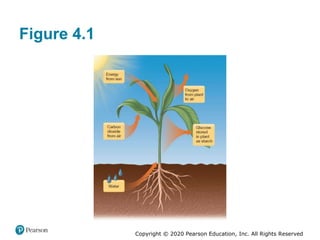
• Glucose
– The most abundant carbohydrate
– Produced by plants through photosynthesis
Copyright © 2020 Pearson Education, Inc. All Rights Reserved
Figure 4.1
Copyright © 2020 Pearson Education, Inc. All Rights Reserved
What Are Carbohydrates? (3 of 4)
• Simple carbohydrates
– Referred to as sugars
– Contain one or two molecules
– Commonly referred to as sugars
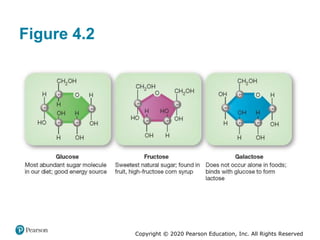
• Monosaccharides contain one molecule
– Glucose, fructose, galactose, and ribose
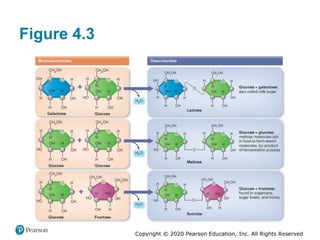
• Disaccharides contain two molecules
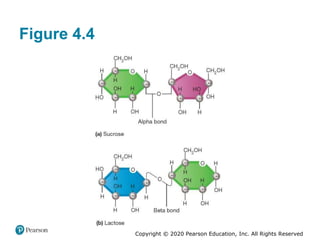
– Lactose, maltose, and sucrose
Copyright © 2020 Pearson Education, Inc. All Rights Reserved
Figure 4.2
Copyright © 2020 Pearson Education, Inc. All Rights Reserved
Figure 4.3
Copyright © 2020 Pearson Education, Inc. All Rights Reserved
What Are Carbohydrates? (4 of 4)
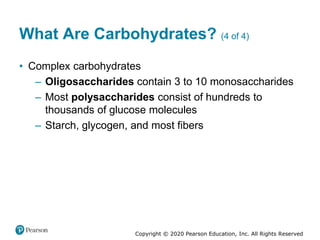
• Complex carbohydrates
– Oligosaccharides contain 3 to 10 monosaccharides
– Most polysaccharides consist of hundreds to
thousands of glucose molecules
– Starch, glycogen, and most fibers
Copyright © 2020 Pearson Education, Inc. All Rights Reserved
Figure 4.4
Copyright © 2020 Pearson Education, Inc. All Rights Reserved
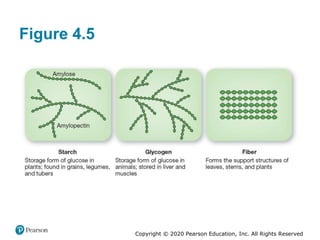
Figure 4.5
Copyright © 2020 Pearson Education, Inc. All Rights Reserved
Complex Carbohydrates (1 of 6)
• Starch
– Plants store carbohydrates as starch
– Amylose—straight chain of glucose
– Amylopectin—branched chain of glucose
– Resistant starch (fiber)—glucose molecules linked
by beta bonds are largely indigestible
– Sources: grains, legumes, fruits, and vegetables
Copyright © 2020 Pearson Education, Inc. All Rights Reserved
Complex Carbohydrates (2 of 6)
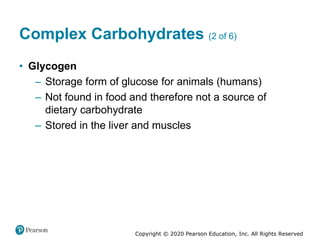
• Glycogen
– Storage form of glucose for animals (humans)
– Not found in food and therefore not a source of
dietary carbohydrate
– Stored in the liver and muscles
Copyright © 2020 Pearson Education, Inc. All Rights Reserved
Complex Carbohydrates (3 of 6)
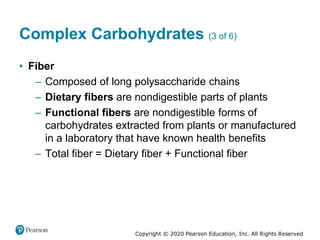
• Fiber
– Composed of long polysaccharide chains
– Dietary fibers are nondigestible parts of plants
– Functional fibers are nondigestible forms of
carbohydrates extracted from plants or manufactured
in a laboratory that have known health benefits
– Total fiber = Dietary fiber + Functional fiber
Copyright © 2020 Pearson Education, Inc. All Rights Reserved
Complex Carbohydrates (4 of 6)
• Soluble fibers
– Dissolve in water; viscous and gel-forming
– Fermentable, digested by intestinal bacteria
– Regular consumption can reduce risk for
cardiovascular disease and type 2 diabetes
– Examples: pectin, gum, and mucilage
– Found in citrus fruits, berries, oats, and beans
Copyright © 2020 Pearson Education, Inc. All Rights Reserved
Complex Carbohydrates (5 of 6)
• Insoluble fibers
– Do not dissolve in water, nonviscous
– Cannot be fermented by bacteria in the colon
– Promote regular bowel movements, alleviate
constipation, and reduce diverticulosis
– Examples: lignins, cellulose, and hemicelluloses
– Good sources: whole grains, seeds, legumes, fruits,
and vegetables
Copyright © 2020 Pearson Education, Inc. All Rights Reserved
Carbohydrate Digestion (1 of 6)
• Digestion breaks down most carbohydrates into
monosaccharides
• Salivary amylase (amyl- starch, -ase an enzyme)
– Enzyme that begins starch digestion in the mouth
– Breaks starches down to maltose
• Carbohydrate digestion does not occur in the stomach
– Stomach acids inactivate salivary amylase
Copyright © 2020 Pearson Education, Inc. All Rights Reserved
Carbohydrate Digestion (2 of 6)
• Majority of carbohydrate digestion occurs in the small
intestine
• Pancreatic amylase
– Enzyme produced in the pancreas and secreted into
the small intestine
– Digests remaining starch to maltose
Copyright © 2020 Pearson Education, Inc. All Rights Reserved
Carbohydrate Digestion (3 of 6)
• Additional enzymes in the microvilli digest disaccharides
to monosaccharides
– Maltase
– Sucrase
– Lactase
• Monosaccharides are absorbed into the mucosal cells
lining the small intestine and then enter the bloodstream
Copyright © 2020 Pearson Education, Inc. All Rights Reserved
Carbohydrate Digestion (4 of 6)
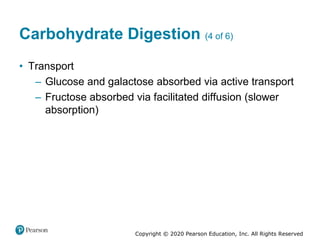
• Transport
– Glucose and galactose absorbed via active transport
– Fructose absorbed via facilitated diffusion (slower
absorption)
Copyright © 2020 Pearson Education, Inc. All Rights Reserved
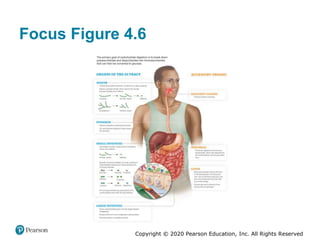
Focus Figure 4.6
Copyright © 2020 Pearson Education, Inc. All Rights Reserved
Carbohydrate Digestion (5 of 6)
• Fructose and galactose are converted to glucose in the
liver
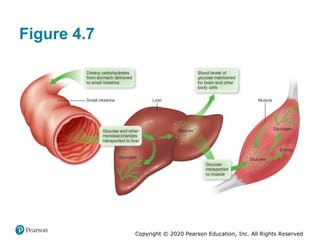
• Glucose in the bloodstream can provide immediate
energy
• Excess glucose is stored as glycogen in the liver and
muscles
– Liver glycogen used to maintain blood glucose and
support brain, spinal cord, and red blood cells
– Muscle glycogen provides energy to muscles during
exercise
Copyright © 2020 Pearson Education, Inc. All Rights Reserved
Figure 4.7
Copyright © 2020 Pearson Education, Inc. All Rights Reserved
Carbohydrate Digestion (6 of 6)
• We do not have the enzymes necessary to digest fiber
• Bacteria in the large intestine can ferment some
undigested carbohydrates
• Fermentation produces gases and short-chain fatty acids
• Fiber remaining in the colon adds bulk to stool and is
excreted in feces
Copyright © 2020 Pearson Education, Inc. All Rights Reserved
Blood Glucose Regulation
• Blood glucose regulated within a narrow range
• Hormones assist to maintain blood glucose levels:
– Insulin
– Glucagon
– Epinephrine
– Norepinephrine
– Cortisol
– Growth hormone
Copyright © 2020 Pearson Education, Inc. All Rights Reserved
Blood Glucose Regulation: Insulin
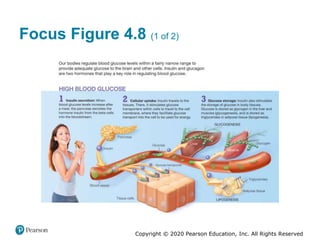
• Secreted by beta cells of the pancreas
• Stimulates glucose transporters (carrier proteins) to help
move glucose from the blood across the cell membrane
• Stimulates the liver and muscle cells to take up glucose
and store it as glycogen
• Fructose does not stimulate insulin release
– Unlike glucose, fructose doesn’t stimulate satiety
signals
– Links with fructose added sugars and obesity
Copyright © 2020 Pearson Education, Inc. All Rights Reserved
Focus Figure 4.8 (1 of 2)
Copyright © 2020 Pearson Education, Inc. All Rights Reserved
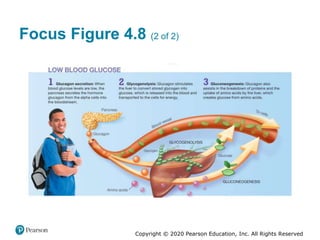
Focus Figure 4.8 (2 of 2)
Copyright © 2020 Pearson Education, Inc. All Rights Reserved
Blood Glucose Regulation: Glucagon
• Secreted by alpha cells of the pancreas
• Stimulates the liver to convert glycogen to glucose
• Assists in the breakdown of body proteins for
gluconeogenesis, the production of glucose from amino
acids
Copyright © 2020 Pearson Education, Inc. All Rights Reserved
Blood Glucose Regulation: Epinephrine
and Norepinephrine
• Secreted by the adrenal glands and nerve endings when
blood glucose is low
• Increase glycogen breakdown in the liver, releasing
glucose into the blood
• Increase gluconeogenesis
• Responsible for our “fight-or-flight” reactions to danger
Copyright © 2020 Pearson Education, Inc. All Rights Reserved
Blood Glucose Regulation: Cortisol and
Growth Hormone
• Secreted by the adrenal glands to act on the liver,
muscle, and adipose tissue
• Cortisol increases gluconeogenesis and decreases
glucose use by muscles and organs
• Cortisol implicated in increased risk for weight gain, CVD,
and diabetes
• Growth hormone decreases muscle glucose uptake,
increases fatty acid mobilization and use, and increases
liver glucose output
Copyright © 2020 Pearson Education, Inc. All Rights Reserved
Blood Glucose Regulation: Glycemic
Index (1 of 2)
• A food’s potential to raise blood glucose
• Foods with a high glycemic index cause a sudden
surge in blood glucose, triggering a large increase in
insulin, which may be followed by a dramatic fall in blood
glucose
• Foods with a low glycemic index cause low to moderate
fluctuations in blood glucose
• Foods are assigned a glycemic index value when
compared to glycemic effect of pure glucose
Copyright © 2020 Pearson Education, Inc. All Rights Reserved
Blood Glucose Regulation: Glycemic
Index (2 of 2)
• Not always easy to predict
• Food’s absorption rate varies with type of carbohydrate,
preparation methods, and its fat and fiber content
• Most foods are eaten in combination in a meal; glycemic
index of total meal becomes more important than the
ranking of each food
Copyright © 2020 Pearson Education, Inc. All Rights Reserved
Blood Glucose Regulation: Glycemic
Load
• May be more useful than Glycemic Index
• Used to determine the effect of a food on a person’s
glucose response
• Grams of carbohydrates in a food are multiplied by the
glycemic index
• Glycemic index and glycemic load remain controversial
Copyright © 2020 Pearson Education, Inc. All Rights Reserved
Blood Glucose Regulation: Value of
Lower Glycemic Load
• Higher fiber foods help to regulate blood glucose
• Risk reduction for heart disease and colon cancer
– Fiber helps to decrease fat levels in the blood (total
blood cholesterol and LDL)
• Foods with lower glycemic index/load:
– Legumes, fresh vegetables, and whole wheat
Copyright © 2020 Pearson Education, Inc. All Rights Reserved
The Role of Carbohydrates (1 of 2)
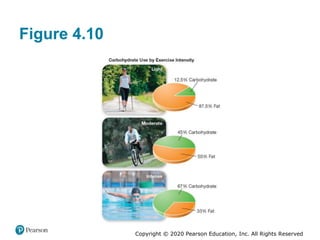
• Energy
– Each gram of carbohydrate: 4 kilocalorie
– Red blood cells use only glucose for energy
– Brain and nervous tissue rely primarily on glucose
– Both carbohydrates and fats supply energy for daily
activities
– Glucose is especially important for energy during
exercise
Copyright © 2020 Pearson Education, Inc. All Rights Reserved
Figure 4.10
Copyright © 2020 Pearson Education, Inc. All Rights Reserved
The Role of Carbohydrates (2 of 2)
• Ketosis
– Occurs when carbohydrate intake is too low to supply
glucose to the brain
– Breakdown of stored fat during fasting, low
carbohydrate intake, or vigorous exercise forms
ketones
– Excess ketones increase blood acidity and cause
ketoacidosis
– Sufficient energy from carbohydrates prevents ketone
production
Copyright © 2020 Pearson Education, Inc. All Rights Reserved
Carbohydrates Spare Protein
• Gluconeogenesis occurs when the diet doesn’t provide
enough carbohydrates
• The body will make its own glucose from the breakdown
of body proteins
• Amino acids from these proteins cannot be used to make
new cells, repair tissue damage, support the immune
system, or perform any other function
• Using amino acids in this way can cause serious damage
to organs (heart, liver, and kidneys)
Copyright © 2020 Pearson Education, Inc. All Rights Reserved
Complex Carbohydrates Have Health
Benefits
• Fiber
– May prevent chronic and digestive diseases
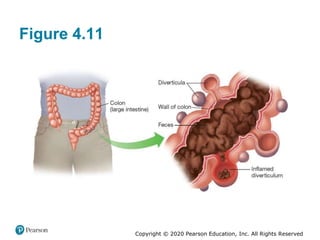
– Promotes bowel health and reduces the risk of
diverticulosis and intestinal problems
– May reduce the risk of colon cancer
– May reduce the risk of heart disease
– May lower the risk of type 2 diabetes
– May enhance weight loss
Copyright © 2020 Pearson Education, Inc. All Rights Reserved
Figure 4.11
Copyright © 2020 Pearson Education, Inc. All Rights Reserved
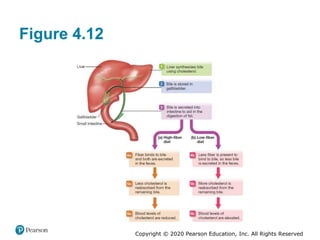
Figure 4.12
Copyright © 2020 Pearson Education, Inc. All Rights Reserved
How Much Carbohydrate?
• Recommended Dietary Allowance (RDA) is
130 grams/day
– Based on the amount of glucose the brain uses
– Not enough to support daily activities
• Acceptable Macronutrient Distribution Range (AMDR) is
45% to 65% of daily calories
• Focus on fiber-rich carbohydrate foods
Copyright © 2020 Pearson Education, Inc. All Rights Reserved
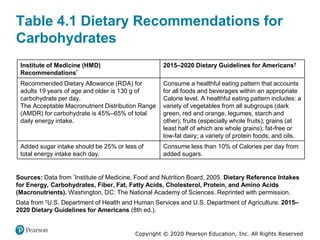
Table 4.1 Dietary Recommendations for
Carbohydrates
Institute of Medicine (HMD)
Recommendations*
2015–2020 Dietary Guidelines for Americans†
Recommended Dietary Allowance (RDA) for
adults 19 years of age and older is 130 g of
carbohydrate per day.
The Acceptable Macronutrient Distribution Range
(AMDR) for carbohydrate is 45%–65% of total
daily energy intake.
Consume a healthful eating pattern that accounts
for all foods and beverages within an appropriate
Calorie level. A healthful eating pattern includes: a
variety of vegetables from all subgroups (dark
green, red and orange, legumes, starch and
other); fruits (especially whole fruits); grains (at
least half of which are whole grains); fat-free or
low-fat dairy; a variety of protein foods; and oils.
Added sugar intake should be 25% or less of
total energy intake each day.
Consume less than 10% of Calories per day from
added sugars.
Sources: Data from *Institute of Medicine, Food and Nutrition Board, 2005. Dietary Reference Intakes
for Energy, Carbohydrates, Fiber, Fat, Fatty Acids, Cholesterol, Protein, and Amino Acids
(Macronutrients). Washington, DC: The National Academy of Sciences. Reprinted with permission.
Data from †U.S. Department of Health and Human Services and U.S. Department of Agriculture. 2015–
2020 Dietary Guidelines for Americans (8th ed.).
Copyright © 2020 Pearson Education, Inc. All Rights Reserved
Simple Carbohydrates
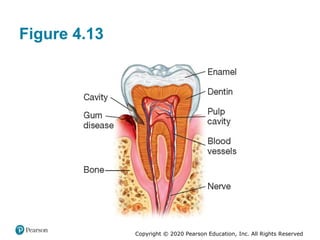
• Diets high in simple sugars:
– Most Americans eat too much added sugar
– Contribute to tooth decay
– Increase risk factors for CVD
– Associated with diabetes and obesity
Copyright © 2020 Pearson Education, Inc. All Rights Reserved
Figure 4.13
Copyright © 2020 Pearson Education, Inc. All Rights Reserved
ABC News Video: Ditching Sugar
Copyright © 2020 Pearson Education, Inc. All Rights Reserved
Complex Carbohydrates (6 of 6)
• Most Americans don’t meet the Adequate Intake (AI) for
fiber:
– 25 gram per day for women
– 38 gram per day for men, or
– 14 gram fiber per 1,000 kilocalorie consumed per day
• Whole grain foods are high in fiber, micronutrients, and
phytochemicals
• Whole grains have a lower glycemic index
Copyright © 2020 Pearson Education, Inc. All Rights Reserved
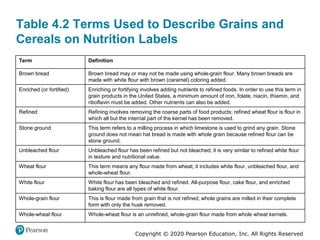
Table 4.2 Terms Used to Describe Grains and
Cereals on Nutrition Labels
Term Definition
Brown bread Brown bread may or may not be made using whole-grain flour. Many brown breads are
made with white flour with brown (caramel) coloring added.
Enriched (or fortified) Enriching or fortifying involves adding nutrients to refined foods. In order to use this term in
grain products in the United States, a minimum amount of iron, folate, niacin, thiamin, and
riboflavin must be added. Other nutrients can also be added.
Refined Refining involves removing the coarse parts of food products; refined wheat flour is flour in
which all but the internal part of the kernel has been removed.
Stone ground This term refers to a milling process in which limestone is used to grind any grain. Stone
ground does not mean hat bread is made with whole grain because refined flour can be
stone ground.
Unbleached flour Unbleached flour has been refined but not bleached; it is very similar to refined white flour
in texture and nutritional value.
Wheat flour This term means any flour made from wheat; it includes white flour, unbleached flour, and
whole-wheat flour.
White flour White flour has been bleached and refined. All-purpose flour, cake flour, and enriched
baking flour are all types of white flour.
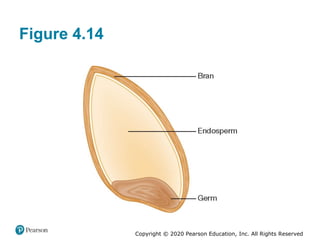
Whole-grain flour This is flour made from grain that is not refined; whole grains are milled in their complete
form with only the husk removed.
Whole-wheat flour Whole-wheat flour is an unrefined, whole-grain flour made from whole wheat kernels.
Copyright © 2020 Pearson Education, Inc. All Rights Reserved
Figure 4.14
Copyright © 2020 Pearson Education, Inc. All Rights Reserved
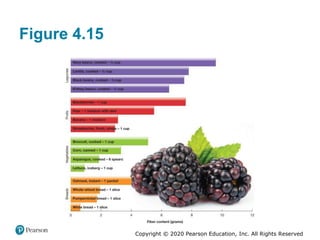
Figure 4.15
Copyright © 2020 Pearson Education, Inc. All Rights Reserved
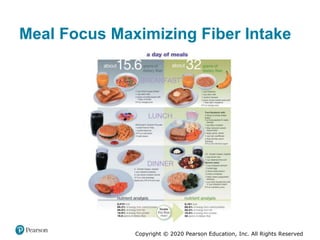
Meal Focus Maximizing Fiber Intake
Copyright © 2020 Pearson Education, Inc. All Rights Reserved
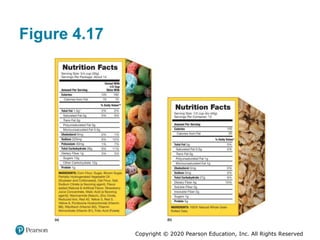
Figure 4.17
Copyright © 2020 Pearson Education, Inc. All Rights Reserved
Nonnutritive Sweeteners
• Limited use is not harmful within Acceptable Daily
Intake (ADI)
– Saccharin
– Acesulfame-K
– Aspartame
– Sucralose
– Neotame, Stevia, Advantame, and Monk Fruit
Copyright © 2020 Pearson Education, Inc. All Rights Reserved
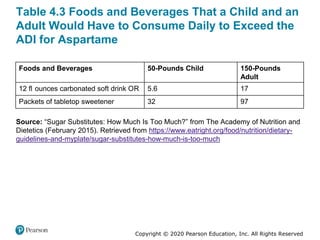
Table 4.3 Foods and Beverages That a Child and an
Adult Would Have to Consume Daily to Exceed the
ADI for Aspartame
Foods and Beverages 50-Pounds Child 150-Pounds
Adult
12 fluid ounces carbonated soft drink OR 5.6 17
Packets of tabletop sweetener 32 97
Source: “Sugar Substitutes: How Much Is Too Much?” from The Academy of Nutrition and
Dietetics (February 2015). Retrieved from https://www.eatright.org/food/nutrition/dietary-
guidelines-and-myplate/sugar-substitutes-how-much-is-too-much
Copyright © 2020 Pearson Education, Inc. All Rights Reserved
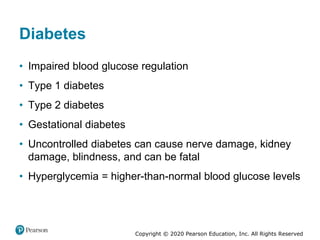
Diabetes
• Impaired blood glucose regulation
• Type 1 diabetes
• Type 2 diabetes
• Gestational diabetes
• Uncontrolled diabetes can cause nerve damage, kidney
damage, blindness, and can be fatal
• Hyperglycemia = higher-than-normal blood glucose levels
Copyright © 2020 Pearson Education, Inc. All Rights Reserved
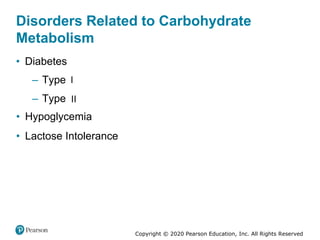
Disorders Related to Carbohydrate
Metabolism
• Diabetes
– Type I
– Type II
• Hypoglycemia
• Lactose Intolerance
Copyright © 2020 Pearson Education, Inc. All Rights Reserved
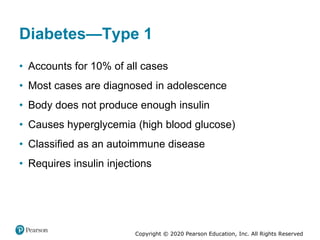
Diabetes—Type 1
• Accounts for 10% of all cases
• Most cases are diagnosed in adolescence
• Body does not produce enough insulin
• Causes hyperglycemia (high blood glucose)
• Classified as an autoimmune disease
• Requires insulin injections
Copyright © 2020 Pearson Education, Inc. All Rights Reserved
Diabetes—Type 2 (1 of 5)
• Obesity can trigger cascade of changes resulting in
diabetes
• Insulin insensitivity (insulin resistance): cells become
less responsive to insulin
• Impaired fasting glucose: higher than normal blood
glucose, also called prediabetes
• Metabolic syndrome: a cluster of risk factors that
increase the risk for type 2 diabetes
Copyright © 2020 Pearson Education, Inc. All Rights Reserved
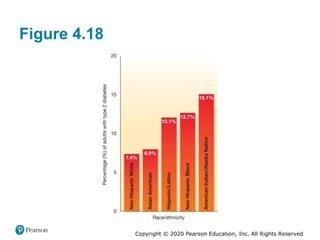
Figure 4.18
Copyright © 2020 Pearson Education, Inc. All Rights Reserved
Diabetes—Type 2 (2 of 5)
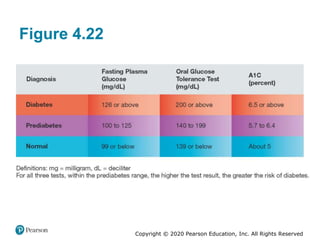
• Blood tests for diabetes diagnosis
– Fasting plasma glucose (FPG)
– Oral glucose tolerance test (OGT)
– Glycosylated hemoglobin test (HbA1c, or A1c)
Copyright © 2020 Pearson Education, Inc. All Rights Reserved
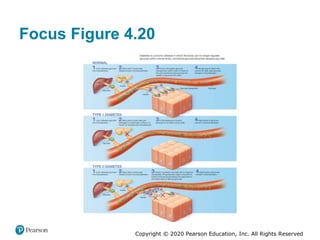
Focus Figure 4.20
Copyright © 2020 Pearson Education, Inc. All Rights Reserved
Figure 4.22
Copyright © 2020 Pearson Education, Inc. All Rights Reserved
Diabetes—Type 2 (3 of 5)
• Nonmodifiable risk factors include age and family history
of type 2 diabetes
• Metabolic syndrome modifiable risk factors
– Abdominal obesity
– Elevated blood pressure
– Elevated blood glucose
– Unhealthy blood lipid levels
Copyright © 2020 Pearson Education, Inc. All Rights Reserved
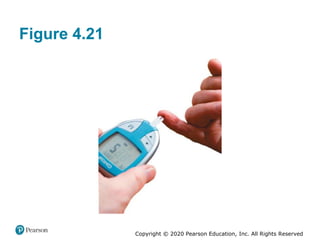
Figure 4.21
Copyright © 2020 Pearson Education, Inc. All Rights Reserved
Diabetes—Type 2 (4 of 5)
• Lifestyle choices can help prevent or control diabetes,
healthy diet and exercise lowers risk
• Dietary strategies reduce risk:
– Limit intake of added sugars
– Choose fiber-rich whole grains
– Limit consumption of red meats and processed meats
• Moderate daily exercise may be more effective than diet
alone
Copyright © 2020 Pearson Education, Inc. All Rights Reserved
Diabetes—Type 2 (5 of 5)
• Academy of Nutrition and Dietetics strategies:
– Eat meals and snacks at regular and planned times
– Eat about the same amount and types of food
– Follow Dietary Guidelines for Americans or USDA
Food Patterns
– Seek advice of a registered dietitian/nutritionist
Copyright © 2020 Pearson Education, Inc. All Rights Reserved
Hypoglycemia
• Low blood glucose may cause shakiness, sweating,
anxiety, and weakness
• Reactive hypoglycemia: pancreas secretes too much
insulin after a high-carbohydrate meal
• Fasting hypoglycemia: pancreas produces too much
insulin, even when someone has not eaten
Copyright © 2020 Pearson Education, Inc. All Rights Reserved
Lactose Intolerance
• Insufficient production of lactase to digest lactose-
containing foods
• Not to be confused with milk allergy
• GI symptoms: gas, cramping, and diarrhea
• Variations in extent of intolerance
• Need alternate sources of calcium
Copyright © 2020 Pearson Education, Inc. All Rights Reserved
Build A Sandwich
PLAY Build A Sandwich
Copyright © 2020 Pearson Education, Inc. All Rights Reserved
Copyright
This work is protected by United States copyright laws and is
provided solely for the use of instructors in teaching their
courses and assessing student learning. Dissemination or sale of
any part of this work (including on the World Wide Web) will
destroy the integrity of the work and is not permitted. The work
and materials from it should never be made available to students
except by instructors using the accompanying text in their
classes. All recipients of this work are expected to abide by these
restrictions and to honor the intended pedagogical purposes and
the needs of other instructors who rely on these materials.

SUPPLEMENTAL CARBOHYDRATES POWERPOINT

  • 1.
    The Science ofNutrition Fifth Edition Chapter 4 Carbohydrates: Plant- Derived Energy Nutrients Copyright © 2020 Pearson Education, Inc. All Rights Reserved Slides in this presentation contain hyperlinks. JAWS users should be able to get a list of links by using INSERT+F7
  • 2.
    Copyright © 2020Pearson Education, Inc. All Rights Reserved What Are Carbohydrates? (1 of 4) • One of the three macronutrients • Important source of energy for all cells • Preferred energy source for nerve cells • Composed of carbon, hydrogen, and oxygen • Good sources: fruits, vegetables, and grains
  • 3.
    Copyright © 2020Pearson Education, Inc. All Rights Reserved What Are Carbohydrates? (2 of 4) • Glucose – The most abundant carbohydrate – Produced by plants through photosynthesis
  • 4.
    Copyright © 2020Pearson Education, Inc. All Rights Reserved Figure 4.1
  • 5.
    Copyright © 2020Pearson Education, Inc. All Rights Reserved What Are Carbohydrates? (3 of 4) • Simple carbohydrates – Referred to as sugars – Contain one or two molecules – Commonly referred to as sugars • Monosaccharides contain one molecule – Glucose, fructose, galactose, and ribose • Disaccharides contain two molecules – Lactose, maltose, and sucrose
  • 6.
    Copyright © 2020Pearson Education, Inc. All Rights Reserved Figure 4.2
  • 7.
    Copyright © 2020Pearson Education, Inc. All Rights Reserved Figure 4.3
  • 8.
    Copyright © 2020Pearson Education, Inc. All Rights Reserved What Are Carbohydrates? (4 of 4) • Complex carbohydrates – Oligosaccharides contain 3 to 10 monosaccharides – Most polysaccharides consist of hundreds to thousands of glucose molecules – Starch, glycogen, and most fibers
  • 9.
    Copyright © 2020Pearson Education, Inc. All Rights Reserved Figure 4.4
  • 10.
    Copyright © 2020Pearson Education, Inc. All Rights Reserved Figure 4.5
  • 11.
    Copyright © 2020Pearson Education, Inc. All Rights Reserved Complex Carbohydrates (1 of 6) • Starch – Plants store carbohydrates as starch – Amylose—straight chain of glucose – Amylopectin—branched chain of glucose – Resistant starch (fiber)—glucose molecules linked by beta bonds are largely indigestible – Sources: grains, legumes, fruits, and vegetables
  • 12.
    Copyright © 2020Pearson Education, Inc. All Rights Reserved Complex Carbohydrates (2 of 6) • Glycogen – Storage form of glucose for animals (humans) – Not found in food and therefore not a source of dietary carbohydrate – Stored in the liver and muscles
  • 13.
    Copyright © 2020Pearson Education, Inc. All Rights Reserved Complex Carbohydrates (3 of 6) • Fiber – Composed of long polysaccharide chains – Dietary fibers are nondigestible parts of plants – Functional fibers are nondigestible forms of carbohydrates extracted from plants or manufactured in a laboratory that have known health benefits – Total fiber = Dietary fiber + Functional fiber
  • 14.
    Copyright © 2020Pearson Education, Inc. All Rights Reserved Complex Carbohydrates (4 of 6) • Soluble fibers – Dissolve in water; viscous and gel-forming – Fermentable, digested by intestinal bacteria – Regular consumption can reduce risk for cardiovascular disease and type 2 diabetes – Examples: pectin, gum, and mucilage – Found in citrus fruits, berries, oats, and beans
  • 15.
    Copyright © 2020Pearson Education, Inc. All Rights Reserved Complex Carbohydrates (5 of 6) • Insoluble fibers – Do not dissolve in water, nonviscous – Cannot be fermented by bacteria in the colon – Promote regular bowel movements, alleviate constipation, and reduce diverticulosis – Examples: lignins, cellulose, and hemicelluloses – Good sources: whole grains, seeds, legumes, fruits, and vegetables
  • 16.
    Copyright © 2020Pearson Education, Inc. All Rights Reserved Carbohydrate Digestion (1 of 6) • Digestion breaks down most carbohydrates into monosaccharides • Salivary amylase (amyl- starch, -ase an enzyme) – Enzyme that begins starch digestion in the mouth – Breaks starches down to maltose • Carbohydrate digestion does not occur in the stomach – Stomach acids inactivate salivary amylase
  • 17.
    Copyright © 2020Pearson Education, Inc. All Rights Reserved Carbohydrate Digestion (2 of 6) • Majority of carbohydrate digestion occurs in the small intestine • Pancreatic amylase – Enzyme produced in the pancreas and secreted into the small intestine – Digests remaining starch to maltose
  • 18.
    Copyright © 2020Pearson Education, Inc. All Rights Reserved Carbohydrate Digestion (3 of 6) • Additional enzymes in the microvilli digest disaccharides to monosaccharides – Maltase – Sucrase – Lactase • Monosaccharides are absorbed into the mucosal cells lining the small intestine and then enter the bloodstream
  • 19.
    Copyright © 2020Pearson Education, Inc. All Rights Reserved Carbohydrate Digestion (4 of 6) • Transport – Glucose and galactose absorbed via active transport – Fructose absorbed via facilitated diffusion (slower absorption)
  • 20.
    Copyright © 2020Pearson Education, Inc. All Rights Reserved Focus Figure 4.6
  • 21.
    Copyright © 2020Pearson Education, Inc. All Rights Reserved Carbohydrate Digestion (5 of 6) • Fructose and galactose are converted to glucose in the liver • Glucose in the bloodstream can provide immediate energy • Excess glucose is stored as glycogen in the liver and muscles – Liver glycogen used to maintain blood glucose and support brain, spinal cord, and red blood cells – Muscle glycogen provides energy to muscles during exercise
  • 22.
    Copyright © 2020Pearson Education, Inc. All Rights Reserved Figure 4.7
  • 23.
    Copyright © 2020Pearson Education, Inc. All Rights Reserved Carbohydrate Digestion (6 of 6) • We do not have the enzymes necessary to digest fiber • Bacteria in the large intestine can ferment some undigested carbohydrates • Fermentation produces gases and short-chain fatty acids • Fiber remaining in the colon adds bulk to stool and is excreted in feces
  • 24.
    Copyright © 2020Pearson Education, Inc. All Rights Reserved Blood Glucose Regulation • Blood glucose regulated within a narrow range • Hormones assist to maintain blood glucose levels: – Insulin – Glucagon – Epinephrine – Norepinephrine – Cortisol – Growth hormone
  • 25.
    Copyright © 2020Pearson Education, Inc. All Rights Reserved Blood Glucose Regulation: Insulin • Secreted by beta cells of the pancreas • Stimulates glucose transporters (carrier proteins) to help move glucose from the blood across the cell membrane • Stimulates the liver and muscle cells to take up glucose and store it as glycogen • Fructose does not stimulate insulin release – Unlike glucose, fructose doesn’t stimulate satiety signals – Links with fructose added sugars and obesity
  • 26.
    Copyright © 2020Pearson Education, Inc. All Rights Reserved Focus Figure 4.8 (1 of 2)
  • 27.
    Copyright © 2020Pearson Education, Inc. All Rights Reserved Focus Figure 4.8 (2 of 2)
  • 28.
    Copyright © 2020Pearson Education, Inc. All Rights Reserved Blood Glucose Regulation: Glucagon • Secreted by alpha cells of the pancreas • Stimulates the liver to convert glycogen to glucose • Assists in the breakdown of body proteins for gluconeogenesis, the production of glucose from amino acids
  • 29.
    Copyright © 2020Pearson Education, Inc. All Rights Reserved Blood Glucose Regulation: Epinephrine and Norepinephrine • Secreted by the adrenal glands and nerve endings when blood glucose is low • Increase glycogen breakdown in the liver, releasing glucose into the blood • Increase gluconeogenesis • Responsible for our “fight-or-flight” reactions to danger
  • 30.
    Copyright © 2020Pearson Education, Inc. All Rights Reserved Blood Glucose Regulation: Cortisol and Growth Hormone • Secreted by the adrenal glands to act on the liver, muscle, and adipose tissue • Cortisol increases gluconeogenesis and decreases glucose use by muscles and organs • Cortisol implicated in increased risk for weight gain, CVD, and diabetes • Growth hormone decreases muscle glucose uptake, increases fatty acid mobilization and use, and increases liver glucose output
  • 31.
    Copyright © 2020Pearson Education, Inc. All Rights Reserved Blood Glucose Regulation: Glycemic Index (1 of 2) • A food’s potential to raise blood glucose • Foods with a high glycemic index cause a sudden surge in blood glucose, triggering a large increase in insulin, which may be followed by a dramatic fall in blood glucose • Foods with a low glycemic index cause low to moderate fluctuations in blood glucose • Foods are assigned a glycemic index value when compared to glycemic effect of pure glucose
  • 32.
    Copyright © 2020Pearson Education, Inc. All Rights Reserved Blood Glucose Regulation: Glycemic Index (2 of 2) • Not always easy to predict • Food’s absorption rate varies with type of carbohydrate, preparation methods, and its fat and fiber content • Most foods are eaten in combination in a meal; glycemic index of total meal becomes more important than the ranking of each food
  • 33.
    Copyright © 2020Pearson Education, Inc. All Rights Reserved Blood Glucose Regulation: Glycemic Load • May be more useful than Glycemic Index • Used to determine the effect of a food on a person’s glucose response • Grams of carbohydrates in a food are multiplied by the glycemic index • Glycemic index and glycemic load remain controversial
  • 34.
    Copyright © 2020Pearson Education, Inc. All Rights Reserved Blood Glucose Regulation: Value of Lower Glycemic Load • Higher fiber foods help to regulate blood glucose • Risk reduction for heart disease and colon cancer – Fiber helps to decrease fat levels in the blood (total blood cholesterol and LDL) • Foods with lower glycemic index/load: – Legumes, fresh vegetables, and whole wheat
  • 35.
    Copyright © 2020Pearson Education, Inc. All Rights Reserved The Role of Carbohydrates (1 of 2) • Energy – Each gram of carbohydrate: 4 kilocalorie – Red blood cells use only glucose for energy – Brain and nervous tissue rely primarily on glucose – Both carbohydrates and fats supply energy for daily activities – Glucose is especially important for energy during exercise
  • 36.
    Copyright © 2020Pearson Education, Inc. All Rights Reserved Figure 4.10
  • 37.
    Copyright © 2020Pearson Education, Inc. All Rights Reserved The Role of Carbohydrates (2 of 2) • Ketosis – Occurs when carbohydrate intake is too low to supply glucose to the brain – Breakdown of stored fat during fasting, low carbohydrate intake, or vigorous exercise forms ketones – Excess ketones increase blood acidity and cause ketoacidosis – Sufficient energy from carbohydrates prevents ketone production
  • 38.
    Copyright © 2020Pearson Education, Inc. All Rights Reserved Carbohydrates Spare Protein • Gluconeogenesis occurs when the diet doesn’t provide enough carbohydrates • The body will make its own glucose from the breakdown of body proteins • Amino acids from these proteins cannot be used to make new cells, repair tissue damage, support the immune system, or perform any other function • Using amino acids in this way can cause serious damage to organs (heart, liver, and kidneys)
  • 39.
    Copyright © 2020Pearson Education, Inc. All Rights Reserved Complex Carbohydrates Have Health Benefits • Fiber – May prevent chronic and digestive diseases – Promotes bowel health and reduces the risk of diverticulosis and intestinal problems – May reduce the risk of colon cancer – May reduce the risk of heart disease – May lower the risk of type 2 diabetes – May enhance weight loss
  • 40.
    Copyright © 2020Pearson Education, Inc. All Rights Reserved Figure 4.11
  • 41.
    Copyright © 2020Pearson Education, Inc. All Rights Reserved Figure 4.12
  • 42.
    Copyright © 2020Pearson Education, Inc. All Rights Reserved How Much Carbohydrate? • Recommended Dietary Allowance (RDA) is 130 grams/day – Based on the amount of glucose the brain uses – Not enough to support daily activities • Acceptable Macronutrient Distribution Range (AMDR) is 45% to 65% of daily calories • Focus on fiber-rich carbohydrate foods
  • 43.
    Copyright © 2020Pearson Education, Inc. All Rights Reserved Table 4.1 Dietary Recommendations for Carbohydrates Institute of Medicine (HMD) Recommendations* 2015–2020 Dietary Guidelines for Americans† Recommended Dietary Allowance (RDA) for adults 19 years of age and older is 130 g of carbohydrate per day. The Acceptable Macronutrient Distribution Range (AMDR) for carbohydrate is 45%–65% of total daily energy intake. Consume a healthful eating pattern that accounts for all foods and beverages within an appropriate Calorie level. A healthful eating pattern includes: a variety of vegetables from all subgroups (dark green, red and orange, legumes, starch and other); fruits (especially whole fruits); grains (at least half of which are whole grains); fat-free or low-fat dairy; a variety of protein foods; and oils. Added sugar intake should be 25% or less of total energy intake each day. Consume less than 10% of Calories per day from added sugars. Sources: Data from *Institute of Medicine, Food and Nutrition Board, 2005. Dietary Reference Intakes for Energy, Carbohydrates, Fiber, Fat, Fatty Acids, Cholesterol, Protein, and Amino Acids (Macronutrients). Washington, DC: The National Academy of Sciences. Reprinted with permission. Data from †U.S. Department of Health and Human Services and U.S. Department of Agriculture. 2015– 2020 Dietary Guidelines for Americans (8th ed.).
  • 44.
    Copyright © 2020Pearson Education, Inc. All Rights Reserved Simple Carbohydrates • Diets high in simple sugars: – Most Americans eat too much added sugar – Contribute to tooth decay – Increase risk factors for CVD – Associated with diabetes and obesity
  • 45.
    Copyright © 2020Pearson Education, Inc. All Rights Reserved Figure 4.13
  • 46.
    Copyright © 2020Pearson Education, Inc. All Rights Reserved ABC News Video: Ditching Sugar
  • 47.
    Copyright © 2020Pearson Education, Inc. All Rights Reserved Complex Carbohydrates (6 of 6) • Most Americans don’t meet the Adequate Intake (AI) for fiber: – 25 gram per day for women – 38 gram per day for men, or – 14 gram fiber per 1,000 kilocalorie consumed per day • Whole grain foods are high in fiber, micronutrients, and phytochemicals • Whole grains have a lower glycemic index
  • 48.
    Copyright © 2020Pearson Education, Inc. All Rights Reserved Table 4.2 Terms Used to Describe Grains and Cereals on Nutrition Labels Term Definition Brown bread Brown bread may or may not be made using whole-grain flour. Many brown breads are made with white flour with brown (caramel) coloring added. Enriched (or fortified) Enriching or fortifying involves adding nutrients to refined foods. In order to use this term in grain products in the United States, a minimum amount of iron, folate, niacin, thiamin, and riboflavin must be added. Other nutrients can also be added. Refined Refining involves removing the coarse parts of food products; refined wheat flour is flour in which all but the internal part of the kernel has been removed. Stone ground This term refers to a milling process in which limestone is used to grind any grain. Stone ground does not mean hat bread is made with whole grain because refined flour can be stone ground. Unbleached flour Unbleached flour has been refined but not bleached; it is very similar to refined white flour in texture and nutritional value. Wheat flour This term means any flour made from wheat; it includes white flour, unbleached flour, and whole-wheat flour. White flour White flour has been bleached and refined. All-purpose flour, cake flour, and enriched baking flour are all types of white flour. Whole-grain flour This is flour made from grain that is not refined; whole grains are milled in their complete form with only the husk removed. Whole-wheat flour Whole-wheat flour is an unrefined, whole-grain flour made from whole wheat kernels.
  • 49.
    Copyright © 2020Pearson Education, Inc. All Rights Reserved Figure 4.14
  • 50.
    Copyright © 2020Pearson Education, Inc. All Rights Reserved Figure 4.15
  • 51.
    Copyright © 2020Pearson Education, Inc. All Rights Reserved Meal Focus Maximizing Fiber Intake
  • 52.
    Copyright © 2020Pearson Education, Inc. All Rights Reserved Figure 4.17
  • 53.
    Copyright © 2020Pearson Education, Inc. All Rights Reserved Nonnutritive Sweeteners • Limited use is not harmful within Acceptable Daily Intake (ADI) – Saccharin – Acesulfame-K – Aspartame – Sucralose – Neotame, Stevia, Advantame, and Monk Fruit
  • 54.
    Copyright © 2020Pearson Education, Inc. All Rights Reserved Table 4.3 Foods and Beverages That a Child and an Adult Would Have to Consume Daily to Exceed the ADI for Aspartame Foods and Beverages 50-Pounds Child 150-Pounds Adult 12 fluid ounces carbonated soft drink OR 5.6 17 Packets of tabletop sweetener 32 97 Source: “Sugar Substitutes: How Much Is Too Much?” from The Academy of Nutrition and Dietetics (February 2015). Retrieved from https://www.eatright.org/food/nutrition/dietary- guidelines-and-myplate/sugar-substitutes-how-much-is-too-much
  • 55.
    Copyright © 2020Pearson Education, Inc. All Rights Reserved Diabetes • Impaired blood glucose regulation • Type 1 diabetes • Type 2 diabetes • Gestational diabetes • Uncontrolled diabetes can cause nerve damage, kidney damage, blindness, and can be fatal • Hyperglycemia = higher-than-normal blood glucose levels
  • 56.
    Copyright © 2020Pearson Education, Inc. All Rights Reserved Disorders Related to Carbohydrate Metabolism • Diabetes – Type I – Type II • Hypoglycemia • Lactose Intolerance
  • 57.
    Copyright © 2020Pearson Education, Inc. All Rights Reserved Diabetes—Type 1 • Accounts for 10% of all cases • Most cases are diagnosed in adolescence • Body does not produce enough insulin • Causes hyperglycemia (high blood glucose) • Classified as an autoimmune disease • Requires insulin injections
  • 58.
    Copyright © 2020Pearson Education, Inc. All Rights Reserved Diabetes—Type 2 (1 of 5) • Obesity can trigger cascade of changes resulting in diabetes • Insulin insensitivity (insulin resistance): cells become less responsive to insulin • Impaired fasting glucose: higher than normal blood glucose, also called prediabetes • Metabolic syndrome: a cluster of risk factors that increase the risk for type 2 diabetes
  • 59.
    Copyright © 2020Pearson Education, Inc. All Rights Reserved Figure 4.18
  • 60.
    Copyright © 2020Pearson Education, Inc. All Rights Reserved Diabetes—Type 2 (2 of 5) • Blood tests for diabetes diagnosis – Fasting plasma glucose (FPG) – Oral glucose tolerance test (OGT) – Glycosylated hemoglobin test (HbA1c, or A1c)
  • 61.
    Copyright © 2020Pearson Education, Inc. All Rights Reserved Focus Figure 4.20
  • 62.
    Copyright © 2020Pearson Education, Inc. All Rights Reserved Figure 4.22
  • 63.
    Copyright © 2020Pearson Education, Inc. All Rights Reserved Diabetes—Type 2 (3 of 5) • Nonmodifiable risk factors include age and family history of type 2 diabetes • Metabolic syndrome modifiable risk factors – Abdominal obesity – Elevated blood pressure – Elevated blood glucose – Unhealthy blood lipid levels
  • 64.
    Copyright © 2020Pearson Education, Inc. All Rights Reserved Figure 4.21
  • 65.
    Copyright © 2020Pearson Education, Inc. All Rights Reserved Diabetes—Type 2 (4 of 5) • Lifestyle choices can help prevent or control diabetes, healthy diet and exercise lowers risk • Dietary strategies reduce risk: – Limit intake of added sugars – Choose fiber-rich whole grains – Limit consumption of red meats and processed meats • Moderate daily exercise may be more effective than diet alone
  • 66.
    Copyright © 2020Pearson Education, Inc. All Rights Reserved Diabetes—Type 2 (5 of 5) • Academy of Nutrition and Dietetics strategies: – Eat meals and snacks at regular and planned times – Eat about the same amount and types of food – Follow Dietary Guidelines for Americans or USDA Food Patterns – Seek advice of a registered dietitian/nutritionist
  • 67.
    Copyright © 2020Pearson Education, Inc. All Rights Reserved Hypoglycemia • Low blood glucose may cause shakiness, sweating, anxiety, and weakness • Reactive hypoglycemia: pancreas secretes too much insulin after a high-carbohydrate meal • Fasting hypoglycemia: pancreas produces too much insulin, even when someone has not eaten
  • 68.
    Copyright © 2020Pearson Education, Inc. All Rights Reserved Lactose Intolerance • Insufficient production of lactase to digest lactose- containing foods • Not to be confused with milk allergy • GI symptoms: gas, cramping, and diarrhea • Variations in extent of intolerance • Need alternate sources of calcium
  • 69.
    Copyright © 2020Pearson Education, Inc. All Rights Reserved Build A Sandwich PLAY Build A Sandwich
  • 70.
    Copyright © 2020Pearson Education, Inc. All Rights Reserved Copyright This work is protected by United States copyright laws and is provided solely for the use of instructors in teaching their courses and assessing student learning. Dissemination or sale of any part of this work (including on the World Wide Web) will destroy the integrity of the work and is not permitted. The work and materials from it should never be made available to students except by instructors using the accompanying text in their classes. All recipients of this work are expected to abide by these restrictions and to honor the intended pedagogical purposes and the needs of other instructors who rely on these materials.

Editor's Notes

  • #2 If this PowerPoint presentation contains mathematical equations, you may need to check that your computer has the following installed: 1) MathType Plugin 2) Math Player (free versions available) 3) NVDA Reader (free versions available)