Bacteria kingdom Characteristics
1. Simplest organisms: Very small size.

2. Lack membrane-bound organelles inside the cell

3. have few internal structures that are distinguishable under a
   microscope.

4. genetic information is in a circular loop called a plasmid
   (instead of having chromosomal DNA)

5. Strong cell walls: resistant to environmental changes
• Transformation
  – bacteria incorporate genes from dead bacteria

• Transduction
  – viruses insert new genes into bacterial cells.
  – This method is used in biotechnology to create
    bacteria that produce valuable products such as
    insulin
Movement

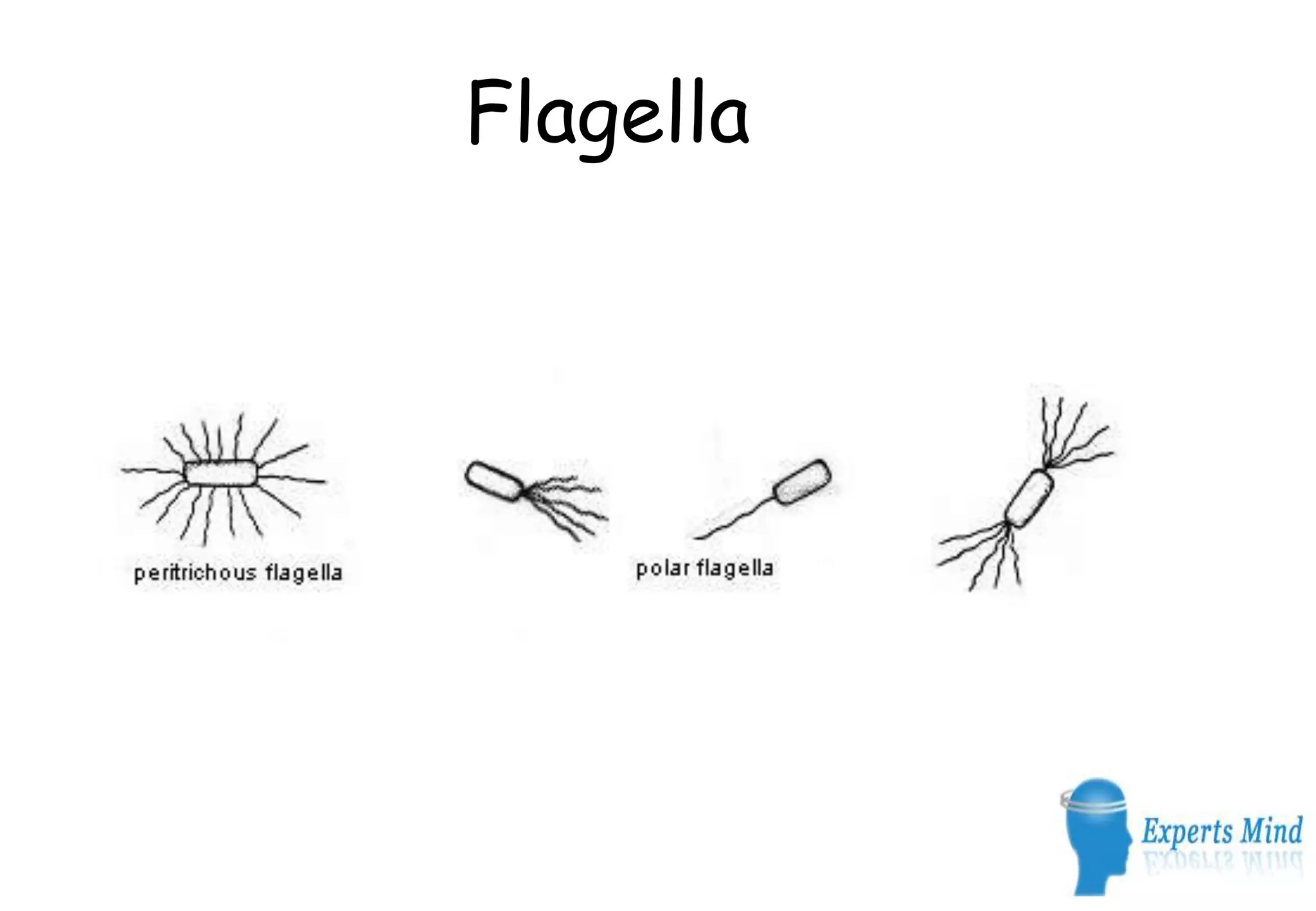
• Flagella ~ Tail like structure the whips
  around to propel the bacterium
• Cillia ~ Miniature flagella surround the cell
  that help to “swim”
• Non motile ~ Sticky cillia like structures
  that keep the bacterium from moving
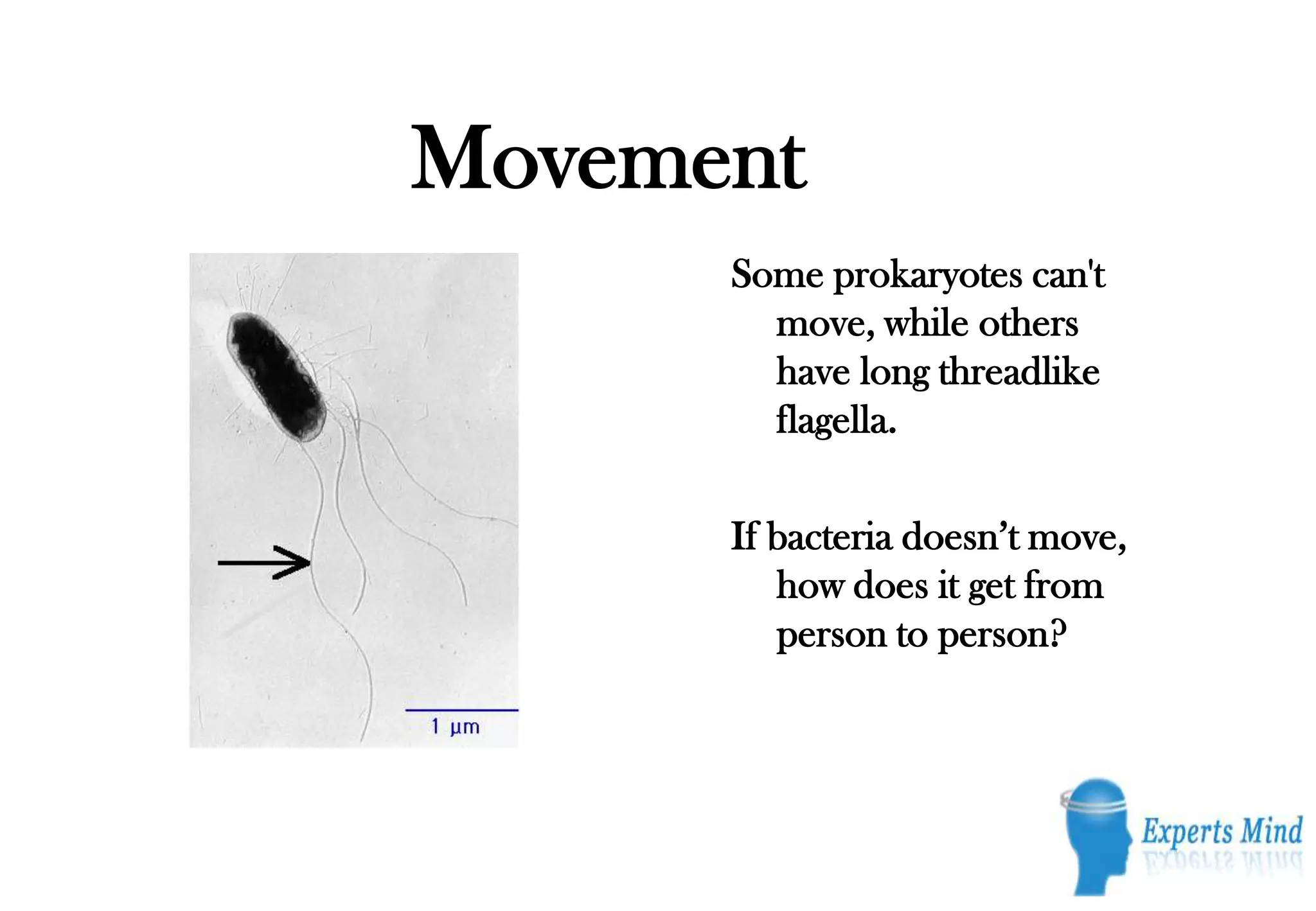
Movement
      Some prokaryotes can't
        move, while others
        have long threadlike
        flagella.

      If bacteria doesn’t move,
         how does it get from
         person to person?
Flagella
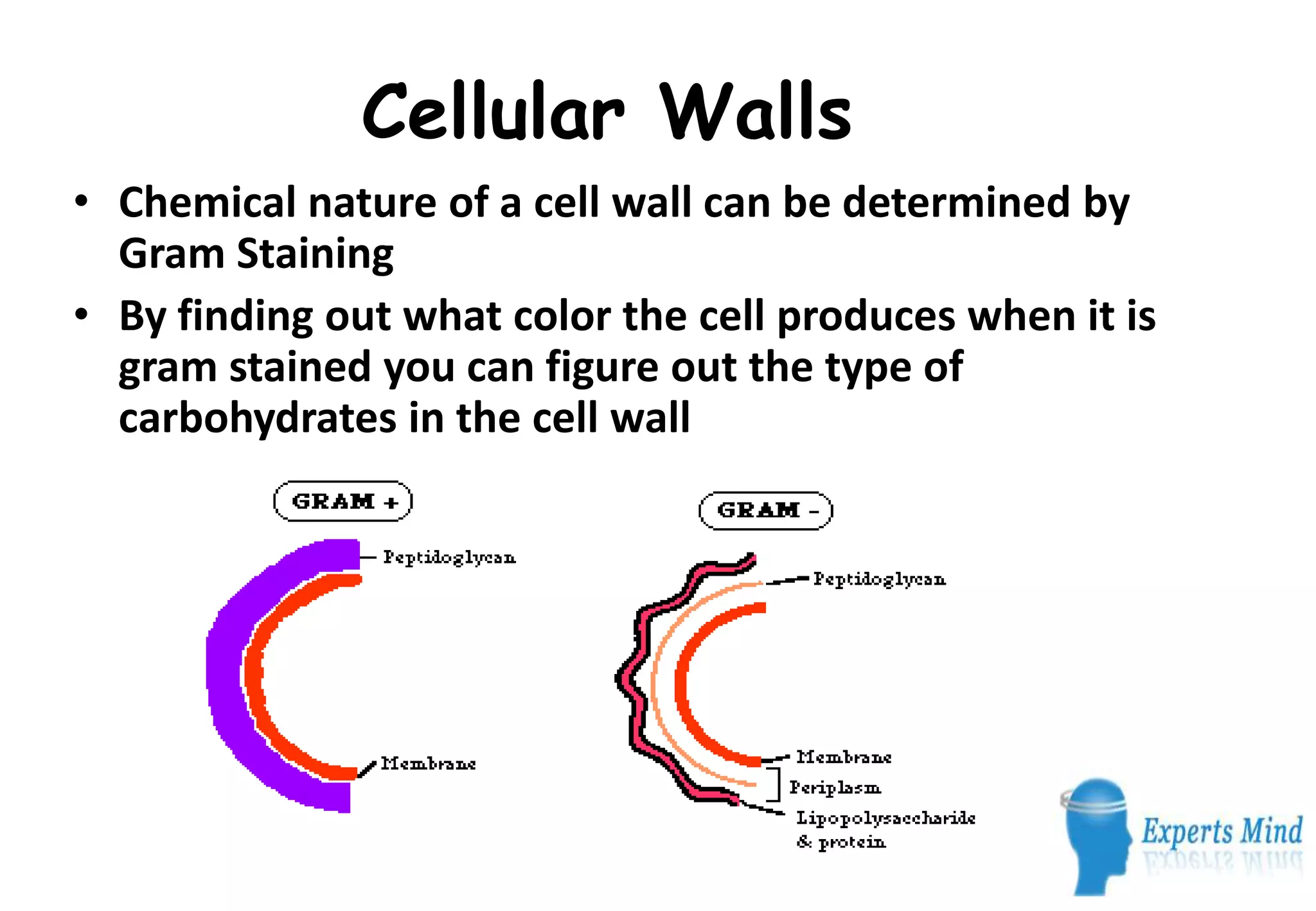
Cellular Walls
• Chemical nature of a cell wall can be determined by
  Gram Staining
• By finding out what color the cell produces when it is
  gram stained you can figure out the type of
  carbohydrates in the cell wall
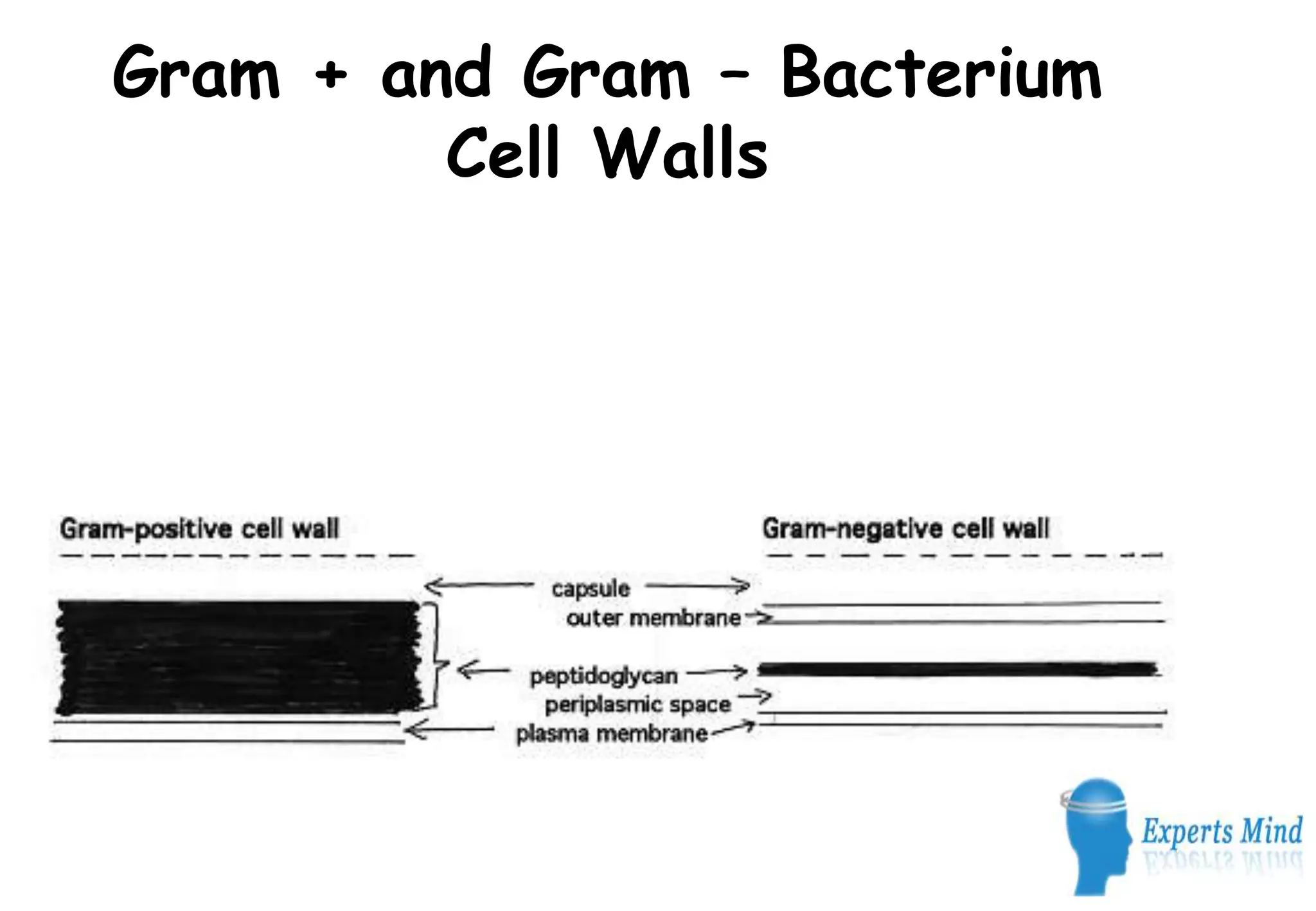
Gram + and Gram – Bacterium
         Cell Walls
Gram-Positive Bacteria
 • The cell wall has a thick layer of peptidoglycan 20 to 80
       um thick 60-90% of the cell wall is peptidoglycan
 • Except for the strptococci most gram positive bacterial
       cell walls contain very little protein

            Gram-negative Bacteria
• The wall of a Gram-negative bacterium is thinner but
      more complex than a Gram-positive bacterium
• Only10 to 20 % of the cell wall is peptidoglycan- the
      remainder consists of various polysaccharides,
      protein, lipids The cell wall contains an outer
membrane- the LPS

Bacteria kingdom characteristics

  • 1.
    Bacteria kingdom Characteristics 1.Simplest organisms: Very small size. 2. Lack membrane-bound organelles inside the cell 3. have few internal structures that are distinguishable under a microscope. 4. genetic information is in a circular loop called a plasmid (instead of having chromosomal DNA) 5. Strong cell walls: resistant to environmental changes
  • 2.
    • Transformation – bacteria incorporate genes from dead bacteria • Transduction – viruses insert new genes into bacterial cells. – This method is used in biotechnology to create bacteria that produce valuable products such as insulin
  • 3.
    Movement • Flagella ~Tail like structure the whips around to propel the bacterium • Cillia ~ Miniature flagella surround the cell that help to “swim” • Non motile ~ Sticky cillia like structures that keep the bacterium from moving
  • 4.
    Movement Some prokaryotes can't move, while others have long threadlike flagella. If bacteria doesn’t move, how does it get from person to person?
  • 5.
  • 6.
    Cellular Walls • Chemicalnature of a cell wall can be determined by Gram Staining • By finding out what color the cell produces when it is gram stained you can figure out the type of carbohydrates in the cell wall
  • 7.
    Gram + andGram – Bacterium Cell Walls
  • 8.
    Gram-Positive Bacteria •The cell wall has a thick layer of peptidoglycan 20 to 80 um thick 60-90% of the cell wall is peptidoglycan • Except for the strptococci most gram positive bacterial cell walls contain very little protein Gram-negative Bacteria • The wall of a Gram-negative bacterium is thinner but more complex than a Gram-positive bacterium • Only10 to 20 % of the cell wall is peptidoglycan- the remainder consists of various polysaccharides, protein, lipids The cell wall contains an outer membrane- the LPS