2. Knowledge
             Management
              for Individuals, Communities and
                        Organizations


Knowledge Management Introduction      Stefan Urbanek
  2008 Lecture Slides                    stefan.urbanek@gmail.com
                                                   http://stiivi.com
                                                               Stiivi
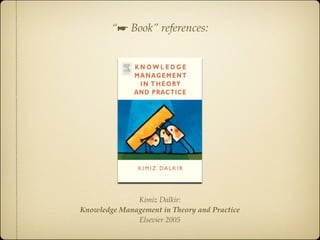
“☛ Book” references:


              Kimiz Dalkir:
Knowledge Management in Theory and Practice
              Elsevier 2005
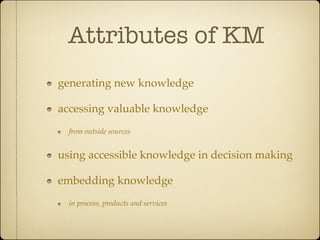
Attributes of KM
generating new knowledge

accessing valuable knowledge
  from outside sources


using accessible knowledge in decision making

embedding knowledge
  in process, products and services
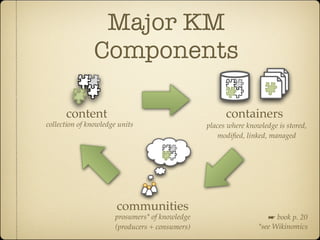
Major KM
               Components

      content                                         containers
collection of knowledge units                   places where knowledge is stored,
                                                    modified, linked, managed


                       communities
                      prosumers* of knowledge                       ☛ book p. 20
                      (producers + consumers)                    *see Wikinomics
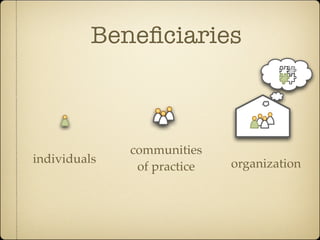
Beneficiaries


              communities
individuals                  organization
               of practice
For Individuals
For Individual
helps people do their jobs
  and save time through better decision making and problem solving


builds a sense of community bonds
  within the organization


helps people to keep up to date

provides challenges to contribute
Time Saving                     (simplified)


meeting, analysis       knowledge sharing                    knowledge application


       1+1=?        2
                           1+1=?            2               2!


No KM
                                                                             time
With KM


        No KM

        With KM                                 free time
For Individual
facilitating knowledge growth
  through culture and incentives


transferring existing knowledge
                                         ☛ see “one example”
  into other parts of the organization


measuring the value of knowledge assets
  impact of knowledge management
One Example
 of Knowledge Transfer
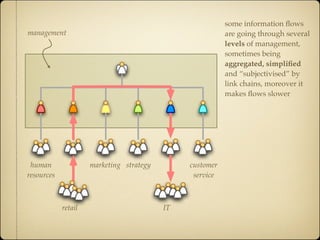
some information flows
management                                                are going through several
                                                          levels of management,
                                                          sometimes being
                                                          aggregated, simplified
                                                          and “subjectivised” by
                                                          link chains, moreover it
                                                          makes flows slower


 human               marketing strategy        customer
resources                                       service


            retail                        IT
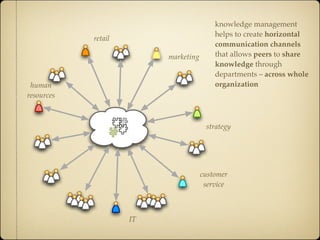
knowledge management
                                          helps to create horizontal
            retail
                                          communication channels
                          marketing       that allows peers to share
                                          knowledge through
                                          departments – across whole
 human                                    organization
resources


                                       strategy


                                      customer
                                       service


                     IT
For Community
  of Practice
For Community

develops professional skills

promotes peer-to-peer mentoring                          ☛ see “one example”


  colleagues can teach each other more effectively
  “teaching material” is reusable in time and in space


facilitates more effective networking and
collaboration ☛ see “one example”
For Community


develops a professional code of ethics that
members can follow

develops a common language
Common Language

company wide Glossary might emerge

common language does not mean single
organization-wide definitions

common language means, that each member of
the organization is aware of all known and
used definitions
For Organization
For Organization

helps drive strategy

solves problems quickly
  solutions might be recorded and reused
  each organization member can be potential solver
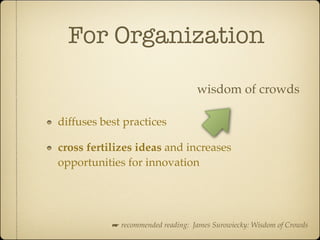
For Organization

                                   wisdom of crowds

diffuses best practices

cross fertilizes ideas and increases
opportunities for innovation


           ☛ recommended reading: James Surowiecky: Wisdom of Crowds
For Organization

improves embedded knowledge
  in products and services
  special properties or design reasons


builds organizational memory
  knowledge is preserved in time
with knowledge management, organization
   becomes knowledgeable and learning


        learning organization
organizational knowledge is not intended to
    replace individual knowledge but to
 complement it by making it stronger, more
   coherent and more broadly applicative

Knowledge Management Lecture 2: Individuals, communities and organizations

  • 1.
    2. Knowledge Management for Individuals, Communities and Organizations Knowledge Management Introduction Stefan Urbanek 2008 Lecture Slides stefan.urbanek@gmail.com http://stiivi.com Stiivi
  • 2.
    “☛ Book” references: Kimiz Dalkir: Knowledge Management in Theory and Practice Elsevier 2005
  • 3.
    Attributes of KM generatingnew knowledge accessing valuable knowledge from outside sources using accessible knowledge in decision making embedding knowledge in process, products and services
  • 4.
    Major KM Components content containers collection of knowledge units places where knowledge is stored, modified, linked, managed communities prosumers* of knowledge ☛ book p. 20 (producers + consumers) *see Wikinomics
  • 5.
    Beneficiaries communities individuals organization of practice
  • 6.
  • 7.
    For Individual helps peopledo their jobs and save time through better decision making and problem solving builds a sense of community bonds within the organization helps people to keep up to date provides challenges to contribute
  • 8.
    Time Saving (simplified) meeting, analysis knowledge sharing knowledge application 1+1=? 2 1+1=? 2 2! No KM time With KM No KM With KM free time
  • 9.
    For Individual facilitating knowledgegrowth through culture and incentives transferring existing knowledge ☛ see “one example” into other parts of the organization measuring the value of knowledge assets impact of knowledge management
  • 10.
    One Example ofKnowledge Transfer
  • 11.
    some information flows management are going through several levels of management, sometimes being aggregated, simplified and “subjectivised” by link chains, moreover it makes flows slower human marketing strategy customer resources service retail IT
  • 12.
    knowledge management helps to create horizontal retail communication channels marketing that allows peers to share knowledge through departments – across whole human organization resources strategy customer service IT
  • 13.
    For Community of Practice
  • 14.
    For Community develops professionalskills promotes peer-to-peer mentoring ☛ see “one example” colleagues can teach each other more effectively “teaching material” is reusable in time and in space facilitates more effective networking and collaboration ☛ see “one example”
  • 15.
    For Community develops aprofessional code of ethics that members can follow develops a common language
  • 16.
    Common Language company wideGlossary might emerge common language does not mean single organization-wide definitions common language means, that each member of the organization is aware of all known and used definitions
  • 17.
  • 18.
    For Organization helps drivestrategy solves problems quickly solutions might be recorded and reused each organization member can be potential solver
  • 19.
    For Organization wisdom of crowds diffuses best practices cross fertilizes ideas and increases opportunities for innovation ☛ recommended reading: James Surowiecky: Wisdom of Crowds
  • 20.
    For Organization improves embeddedknowledge in products and services special properties or design reasons builds organizational memory knowledge is preserved in time
  • 21.
    with knowledge management,organization becomes knowledgeable and learning learning organization
  • 22.
    organizational knowledge isnot intended to replace individual knowledge but to complement it by making it stronger, more coherent and more broadly applicative