









Digital, NetworkedTechChanges the Game:Capstone Requirements for Synthesizer GraduatesCable GreeneLearning Director
http://www.slideshare.net/cgreen
Let’s talk about the big trends & how to prepare for inevitable change&what RTC can do now to help your graduates prepare for a digital, networked world…
Hold On!
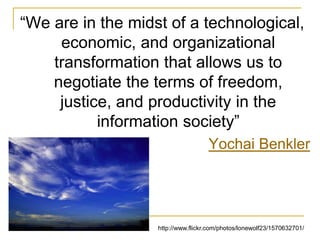
“We are in the midst of a technological, economic, and organizational transformation that allows us to negotiate the terms of freedom, justice, and productivity in the information society”Yochai Benklerhttp://www.flickr.com/photos/lonewolf23/1570632701/
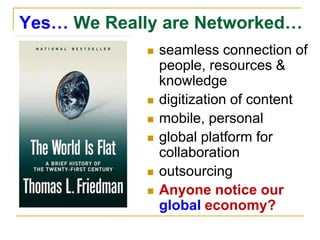
Yes… We Really are Networked…seamless connection of people, resources & knowledgedigitization of contentmobile, personalglobal platform for collaborationoutsourcingAnyone notice our global economy?
"According to an IBM study, by 2010, the amount of digital information in the world will double every 11 hours."
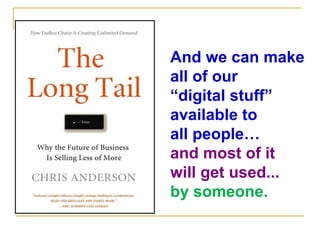
And we can makeall of our “digital stuff”available toall people…and most of itwill get used...by someone.
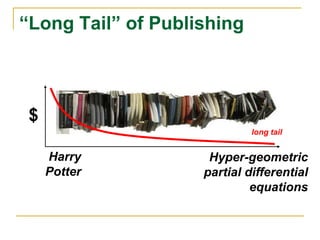
“Long Tail” of Publishing$long tailHarryPotterHyper-geometricpartial differentialequations
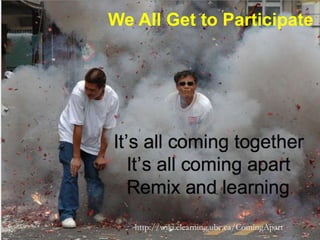
We All Get to Participatehttp://wiki.elearning.ubc.ca/ComingApart
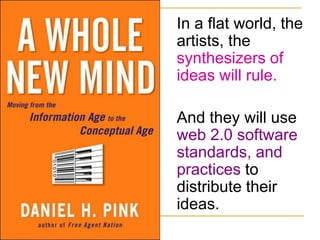
In a flat world, the artists, the synthesizers of ideas will rule. And they will use web 2.0 software standards, and practices to distribute their ideas.
And they are not afraid to:
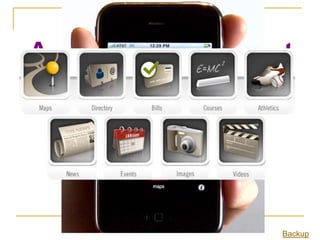
And they want serviceslike this:Backup
So, what might be in capstone graduation requirements to:prepare students forjobs that don’t yet exist, usingtechnologies that haven’t beeninvented, to solve problems wedon’t even know are problems yet?http://www.youtube.com/watch?v=xHWTLA8WecI
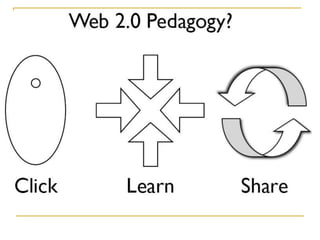
(1) Engage Participatory / “Web 2.0+”Tools & Practices
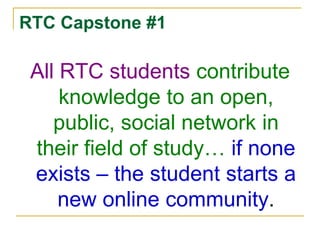
RTC Capstone #1All RTC students contribute knowledge to an open, public, social network in their field of study… if none exists – the student starts a new online community.
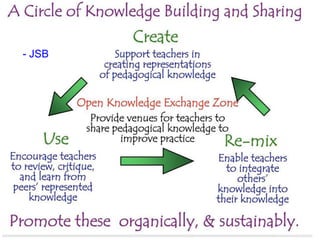
- JSB
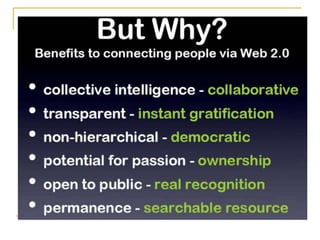
“Welcome back to humanity. Some technologies take us away from ourselves and others bring us back. Web 2.0 is helping us rediscover our naturally cooperative, creative, and gregarious nature.Don't think, therefore, of  Web 2.0 as something foreign or hyped-up or all about geeks; Web 2.0 is the rebirth of teaching and learning that fits what we are as a species.”Why is Web 2.0 Important to Higher Education?
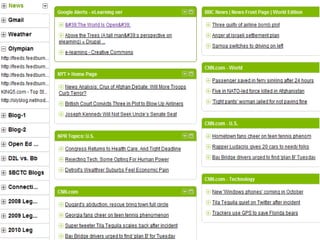
RSS
Social Networking
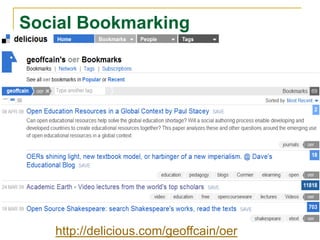
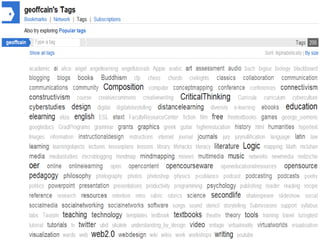
Social Bookmarkinghttp://delicious.com/geoffcain/oer
Share Photoshttp://www.flickr.com
Wikihttp://pbwiki.com
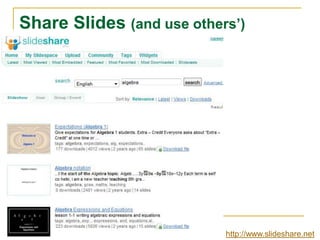
Share Slides (and use others’)http://www.slideshare.net
Share Video
Online Meetings, Conferences…Elluminate 1,500+ faculty & staff accounts
 11,300+ rooms created
 2,250+ meetings have taken place
 unlimited license, hosting, training
 24/7 help desk
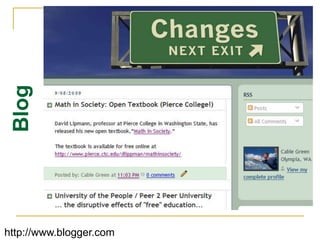
 unlimited license, hosting, trainingBloghttp://www.blogger.com
Tweethttp://twitter.com
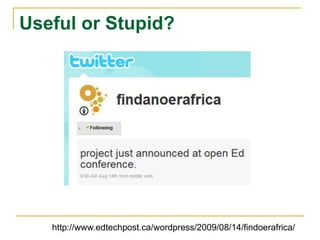
Useful or Stupid?http://www.edtechpost.ca/wordpress/2009/08/14/findoerafrica/
http://www.flickr.com/photos/doctabu/3657942692/in/set-72157620497679512/
(2) eLearningWhy call it “eLearning?”
RTC Capstone #2All RTC students take at least one online or hybrid coursebefore graduating.
“Distance” is about geographic separation.“eLearning” is about leveraging the unique affordances of digital, networked technologies to support new ways of learning in new spaces.Online, Hybrid, Enhanced“eLearning”
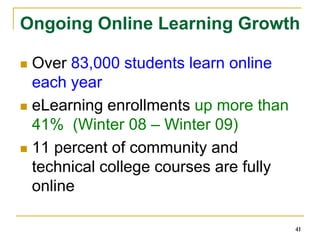
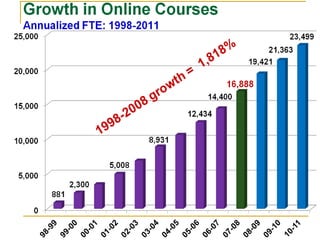
Ongoing Online Learning GrowthOver 83,000 students learn online each yeareLearning enrollments up more than 41%  (Winter 08 – Winter 09)11 percent of community and technical college courses are fully online41
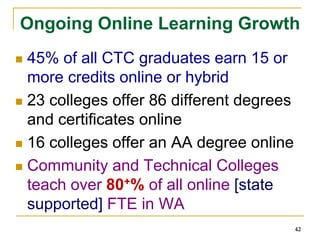
Ongoing Online Learning Growth 45% of all CTC graduates earn 15 or more credits online or hybrid23 colleges offer 86 different degrees and certificates online16 colleges offer an AA degree onlineCommunity and Technical Colleges teach over 80+% of all online [state supported] FTE in WA42
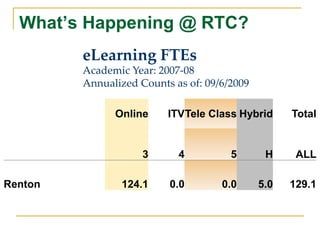
What’s Happening @ RTC?
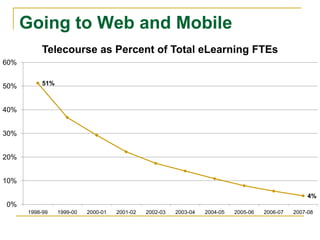
Going to Web and Mobile
Why does this growth matter?
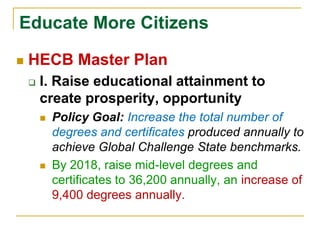
Educate More CitizensHECB Master Plan
I. Raise educational attainment to create prosperity, opportunity
Policy Goal: Increase the total number of degrees and certificates produced annually to achieve Global Challenge State benchmarks.
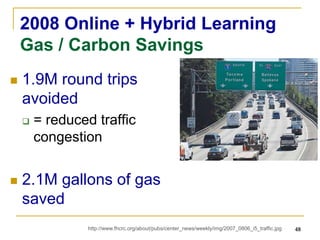
By 2018, raise mid-level degrees and certificates to 36,200 annually, an increase of 9,400 degrees annually.2008 Online + Hybrid LearningGas / Carbon Savings1.9M round trips avoided= reduced traffic congestion2.1M gallons of gas saved48http://www.fhcrc.org/about/pubs/center_news/weekly/img/2007_0806_i5_traffic.jpg
(3) Open Educational Resources
RTC Capstone #3All RTC students actively contribute to, redesign, and/or evaluate open educational resources, as a faculty guided assignment, in at least one RTC course.
Because when we cooperate and share, we all win – exponentially.Reedʼs Law: Networks grow [in value] exponentially by the number of nodes.It’s a social justice issue: everyone has the right to access global knowledge.Why is “Open” Important?Institute for the Future whitepaper: Technologies of Cooperation
Definition of OERDigitized materials, offered freely and openly for educators, students, to use and re-use for teaching, learning and research.
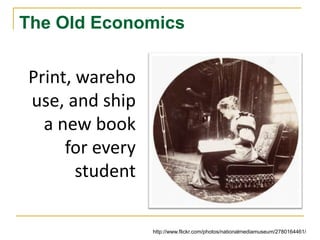
The Old EconomicsPrint, warehouse, and ship a new book for every studenthttp://www.flickr.com/photos/nationalmediamuseum/2780164461/
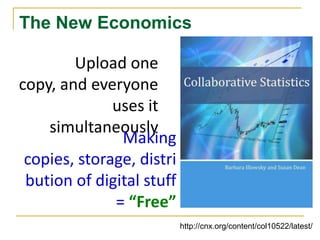
The New EconomicsUpload one copy, and everyone uses it simultaneouslyMaking copies, storage, distribution of digital stuff = “Free”http://cnx.org/content/col10522/latest/
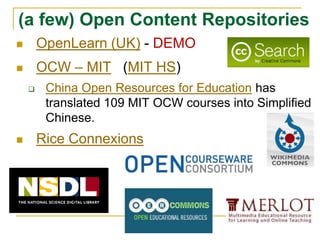
(a few) Open Content RepositoriesOpenLearn (UK) - DEMOOCW – MIT   (MIT HS)China Open Resources for Education has translated 109 MIT OCW courses into Simplified Chinese.Rice Connexions
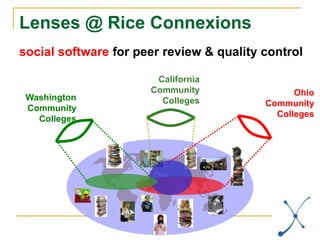
Lenses @ Rice Connexionssocial software for peer review & quality controlCaliforniaCommunityCollegesOhioCommunityCollegesWashingtonCommunityColleges
and there is this smallcollection of articles:
Why do we Need Open Textbooks?2005 GAO report: College textbook prices have risen at twice the rate of annual inflation over the last two decadeshttp://www.gao.gov/new.items/d05806.pdf
Why do we Need Open Textbooks?The College Board reported that for the 2007 through 2008 academic years each student spent an estimated $805 to $1,229 on college books and supplies…http://www.collegeboard.com/prod_downloads/about/news_info/trends/trends_pricing_07.pdf
Why so urgent?Consider One High Enrollment Course:English Composition I37,226 enrollments / yearX $100 textbook= $3.7 Million + (cost to students)What if we looked at 100, 200, 300 high enrollment courses?http://rtnl.files.wordpress.com/2007/01/thinker21.jpg
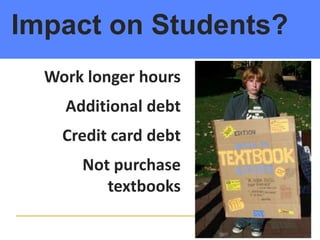
Impact on Students?Work longer hoursAdditional debtCredit card debtNot purchase textbooks
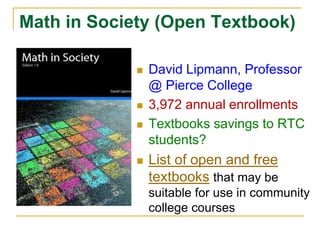
Math in Society (Open Textbook)David Lipmann, Professor @ Pierce College 3,972 annual enrollmentsTextbooks savings to RTC students?List of open and free textbooksthat may be suitable for use in community college courses
Redesigning 81 System CoursesHigh enrollment, gatekeeper and pre-college coursesNot mandated curriculum (choice)Faculty centered – faculty will redesign coursesLow cost instructional materialsImprove course completion ratesDigital (remix, take chunks, online)Lower textbook, time, and travel costs for studentsuse open educational resources, library resources and other high quality, low cost instruction materials that will reduce textbook costs for students.Open CC Licenses (culture of sharing)
Hey Higher Ed!We must get rid of our “not invented here” attitude regarding others’ contentmove to: "proudly borrowed from there"Content is not a strategic advantageNor can we (or our students) afford it
“As uncomfortable a proposition as this new openness may be for some, I believe it is the future of higher education.”In web 2.0, everything is public & higher education needs to get used to it.Future of Openness in EducationDavid Wiley 2006. Open source, openness, and higher education.
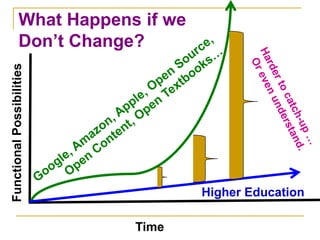
What Happens if weDon’t Change?Harder to catch-up …Or even understand.Google, Amazon, Apple, Open Source,Open Content, Open Textbooks…Functional PossibilitiesHigher EducationTime
68How is the fiscal healthof your local newspaper?
http://techplan.sbctc.edu69
System Strategic Technology Plan Access for all students and all collegesSingle, centrally funded solutions for common systemsRule of 1:  do it once Rule of 0:  don’t do itDon’t build software, don’t host serversRetain local branding and admin controlAll instructional technologies are architected to make it easy to share content.70

Keynote RTC (9-15-09)

  • 2.
    Digital, NetworkedTechChanges theGame:Capstone Requirements for Synthesizer GraduatesCable GreeneLearning Director
  • 3.
  • 4.
    Let’s talk aboutthe big trends & how to prepare for inevitable change&what RTC can do now to help your graduates prepare for a digital, networked world…
  • 5.
  • 6.
    “We are inthe midst of a technological, economic, and organizational transformation that allows us to negotiate the terms of freedom, justice, and productivity in the information society”Yochai Benklerhttp://www.flickr.com/photos/lonewolf23/1570632701/
  • 7.
    Yes… We Reallyare Networked…seamless connection of people, resources & knowledgedigitization of contentmobile, personalglobal platform for collaborationoutsourcingAnyone notice our global economy?
  • 9.
    "According to anIBM study, by 2010, the amount of digital information in the world will double every 11 hours."
  • 10.
    And we canmakeall of our “digital stuff”available toall people…and most of itwill get used...by someone.
  • 11.
    “Long Tail” ofPublishing$long tailHarryPotterHyper-geometricpartial differentialequations
  • 12.
    We All Getto Participatehttp://wiki.elearning.ubc.ca/ComingApart
  • 14.
    In a flatworld, the artists, the synthesizers of ideas will rule. And they will use web 2.0 software standards, and practices to distribute their ideas.
  • 15.
    And they arenot afraid to:
  • 16.
    And they wantserviceslike this:Backup
  • 17.
    So, what mightbe in capstone graduation requirements to:prepare students forjobs that don’t yet exist, usingtechnologies that haven’t beeninvented, to solve problems wedon’t even know are problems yet?http://www.youtube.com/watch?v=xHWTLA8WecI
  • 18.
    (1) Engage Participatory/ “Web 2.0+”Tools & Practices
  • 19.
    RTC Capstone #1AllRTC students contribute knowledge to an open, public, social network in their field of study… if none exists – the student starts a new online community.
  • 21.
  • 23.
    “Welcome back tohumanity. Some technologies take us away from ourselves and others bring us back. Web 2.0 is helping us rediscover our naturally cooperative, creative, and gregarious nature.Don't think, therefore, of  Web 2.0 as something foreign or hyped-up or all about geeks; Web 2.0 is the rebirth of teaching and learning that fits what we are as a species.”Why is Web 2.0 Important to Higher Education?
  • 24.
  • 26.
  • 27.
  • 29.
  • 30.
  • 31.
    Share Slides (anduse others’)http://www.slideshare.net
  • 32.
  • 33.
    Online Meetings, Conferences…Elluminate1,500+ faculty & staff accounts
  • 34.
  • 35.
  • 36.
    unlimited license,hosting, training
  • 37.
  • 38.
    unlimited license,hosting, trainingBloghttp://www.blogger.com
  • 39.
  • 40.
  • 41.
  • 42.
    (2) eLearningWhy callit “eLearning?”
  • 43.
    RTC Capstone #2AllRTC students take at least one online or hybrid coursebefore graduating.
  • 44.
    “Distance” is aboutgeographic separation.“eLearning” is about leveraging the unique affordances of digital, networked technologies to support new ways of learning in new spaces.Online, Hybrid, Enhanced“eLearning”
  • 45.
    Ongoing Online LearningGrowthOver 83,000 students learn online each yeareLearning enrollments up more than 41% (Winter 08 – Winter 09)11 percent of community and technical college courses are fully online41
  • 46.
    Ongoing Online LearningGrowth 45% of all CTC graduates earn 15 or more credits online or hybrid23 colleges offer 86 different degrees and certificates online16 colleges offer an AA degree onlineCommunity and Technical Colleges teach over 80+% of all online [state supported] FTE in WA42
  • 47.
  • 48.
    Going to Weband Mobile
  • 50.
    Why does thisgrowth matter?
  • 51.
  • 52.
    I. Raise educationalattainment to create prosperity, opportunity
  • 53.
    Policy Goal: Increasethe total number of degrees and certificates produced annually to achieve Global Challenge State benchmarks.
  • 54.
    By 2018, raisemid-level degrees and certificates to 36,200 annually, an increase of 9,400 degrees annually.2008 Online + Hybrid LearningGas / Carbon Savings1.9M round trips avoided= reduced traffic congestion2.1M gallons of gas saved48http://www.fhcrc.org/about/pubs/center_news/weekly/img/2007_0806_i5_traffic.jpg
  • 55.
  • 56.
    RTC Capstone #3AllRTC students actively contribute to, redesign, and/or evaluate open educational resources, as a faculty guided assignment, in at least one RTC course.
  • 57.
    Because when wecooperate and share, we all win – exponentially.Reedʼs Law: Networks grow [in value] exponentially by the number of nodes.It’s a social justice issue: everyone has the right to access global knowledge.Why is “Open” Important?Institute for the Future whitepaper: Technologies of Cooperation
  • 58.
    Definition of OERDigitizedmaterials, offered freely and openly for educators, students, to use and re-use for teaching, learning and research.
  • 59.
    The Old EconomicsPrint,warehouse, and ship a new book for every studenthttp://www.flickr.com/photos/nationalmediamuseum/2780164461/
  • 60.
    The New EconomicsUploadone copy, and everyone uses it simultaneouslyMaking copies, storage, distribution of digital stuff = “Free”http://cnx.org/content/col10522/latest/
  • 61.
    (a few) OpenContent RepositoriesOpenLearn (UK) - DEMOOCW – MIT (MIT HS)China Open Resources for Education has translated 109 MIT OCW courses into Simplified Chinese.Rice Connexions
  • 62.
    Lenses @ RiceConnexionssocial software for peer review & quality controlCaliforniaCommunityCollegesOhioCommunityCollegesWashingtonCommunityColleges
  • 63.
    and there isthis smallcollection of articles:
  • 65.
    Why do weNeed Open Textbooks?2005 GAO report: College textbook prices have risen at twice the rate of annual inflation over the last two decadeshttp://www.gao.gov/new.items/d05806.pdf
  • 66.
    Why do weNeed Open Textbooks?The College Board reported that for the 2007 through 2008 academic years each student spent an estimated $805 to $1,229 on college books and supplies…http://www.collegeboard.com/prod_downloads/about/news_info/trends/trends_pricing_07.pdf
  • 67.
    Why so urgent?ConsiderOne High Enrollment Course:English Composition I37,226 enrollments / yearX $100 textbook= $3.7 Million + (cost to students)What if we looked at 100, 200, 300 high enrollment courses?http://rtnl.files.wordpress.com/2007/01/thinker21.jpg
  • 68.
    Impact on Students?Worklonger hoursAdditional debtCredit card debtNot purchase textbooks
  • 69.
    Math in Society(Open Textbook)David Lipmann, Professor @ Pierce College 3,972 annual enrollmentsTextbooks savings to RTC students?List of open and free textbooksthat may be suitable for use in community college courses
  • 70.
    Redesigning 81 SystemCoursesHigh enrollment, gatekeeper and pre-college coursesNot mandated curriculum (choice)Faculty centered – faculty will redesign coursesLow cost instructional materialsImprove course completion ratesDigital (remix, take chunks, online)Lower textbook, time, and travel costs for studentsuse open educational resources, library resources and other high quality, low cost instruction materials that will reduce textbook costs for students.Open CC Licenses (culture of sharing)
  • 71.
    Hey Higher Ed!Wemust get rid of our “not invented here” attitude regarding others’ contentmove to: "proudly borrowed from there"Content is not a strategic advantageNor can we (or our students) afford it
  • 72.
    “As uncomfortable aproposition as this new openness may be for some, I believe it is the future of higher education.”In web 2.0, everything is public & higher education needs to get used to it.Future of Openness in EducationDavid Wiley 2006. Open source, openness, and higher education.
  • 73.
    What Happens ifweDon’t Change?Harder to catch-up …Or even understand.Google, Amazon, Apple, Open Source,Open Content, Open Textbooks…Functional PossibilitiesHigher EducationTime
  • 74.
    68How is thefiscal healthof your local newspaper?
  • 75.
  • 76.
    System Strategic TechnologyPlan Access for all students and all collegesSingle, centrally funded solutions for common systemsRule of 1: do it once Rule of 0: don’t do itDon’t build software, don’t host serversRetain local branding and admin controlAll instructional technologies are architected to make it easy to share content.70
  • 77.
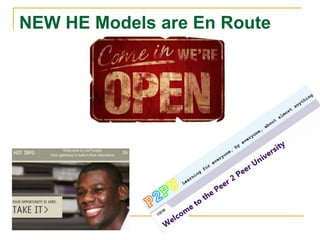
    NEW HE Modelsare En Route
  • 78.
    Choices:(1) Open upandleverage global inputOR (2) close up shop
  • 79.
    Think Big CrazyIdeas….We could share all of our instructional digital resources including: courses, textbooks and library resources with the world… and, more important, use global digital materials.We could use common teaching & learning, student services, and administrative technologies and support services.We could design courses that enable and encourage students to contribute, change, remix course content.
  • 80.
    Parting Thought…Is thenetwork to the point where we can challenge traditional models of pedagogy, publishing, student services, and our existing administrative business processes?If so, what would you change in your department? How would you use digital technologies to help students learn and accomplish their dreams?
  • 81.
    Want to talkmore aboutthis stuff and/orOpen Educational Resources?…come join us@ 8:30am in H-105!
  • 82.
    Blogs: http://blog.oer.sbctc.edu http://blog.elearning.sbctc.edu Twitter: cgreenSlides @ http://www.slideshare.net/cgreen Dr. Cable GreeneLearning Directorcgreen@sbctc.edu (360) 704-4334