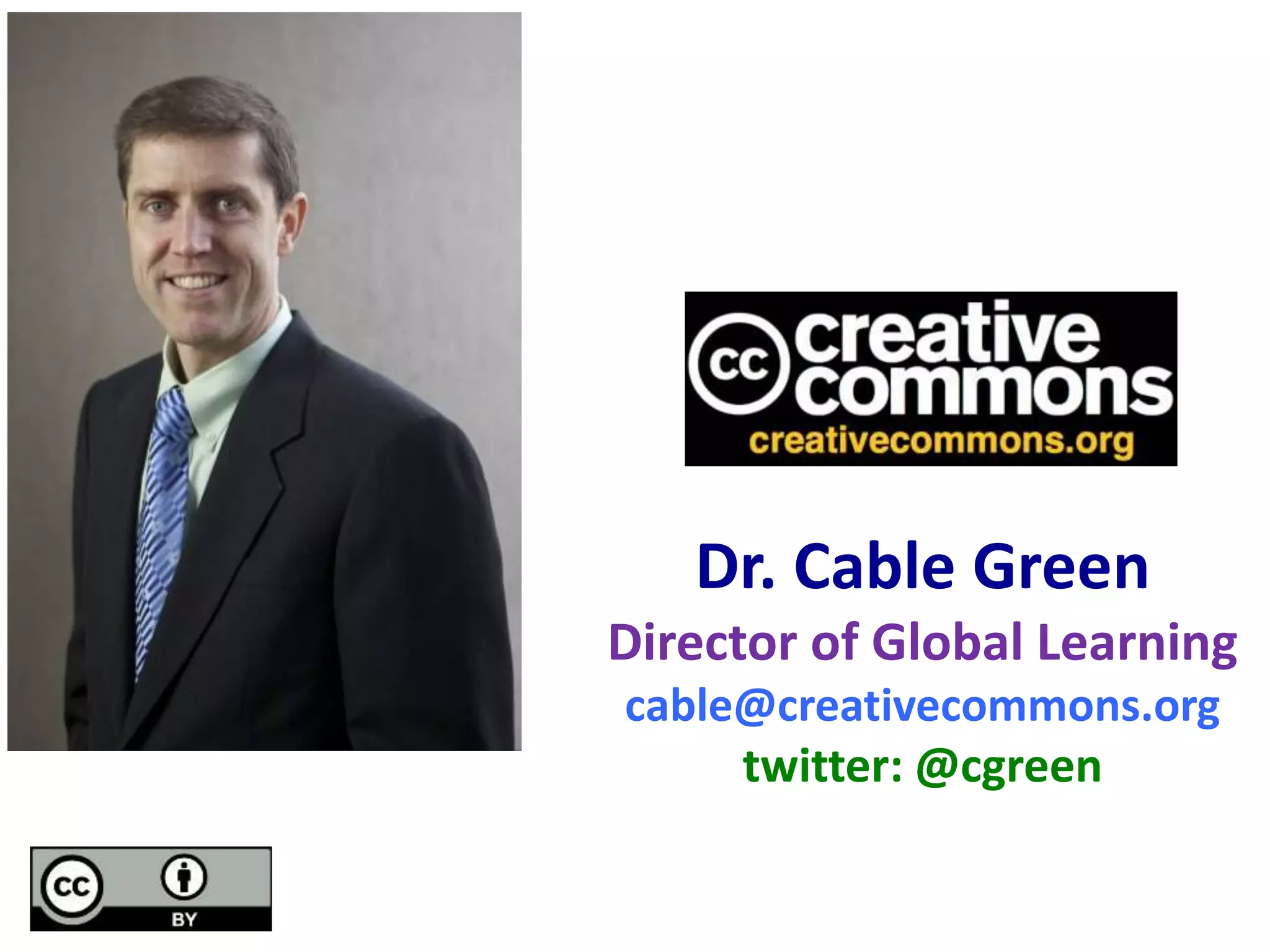
Dr. Cable Green
Director of Global Learning
cable@creativecommons.org
twitter: @cgreen
Except where otherwise noted, this work is licensed under:
http://creativecommons.org/licenses/by/4.0
• NGLC Wave 1: CC BY requirement
• What is CC BY?
• What is Creative Commons? What does it
do? How does it work?
• What are Open Educational Resources
(OER)?
• How can CC support you as you comply with
this grant requirement?
What is the CC BY requirement in
the NGLC Wave 1 grant?
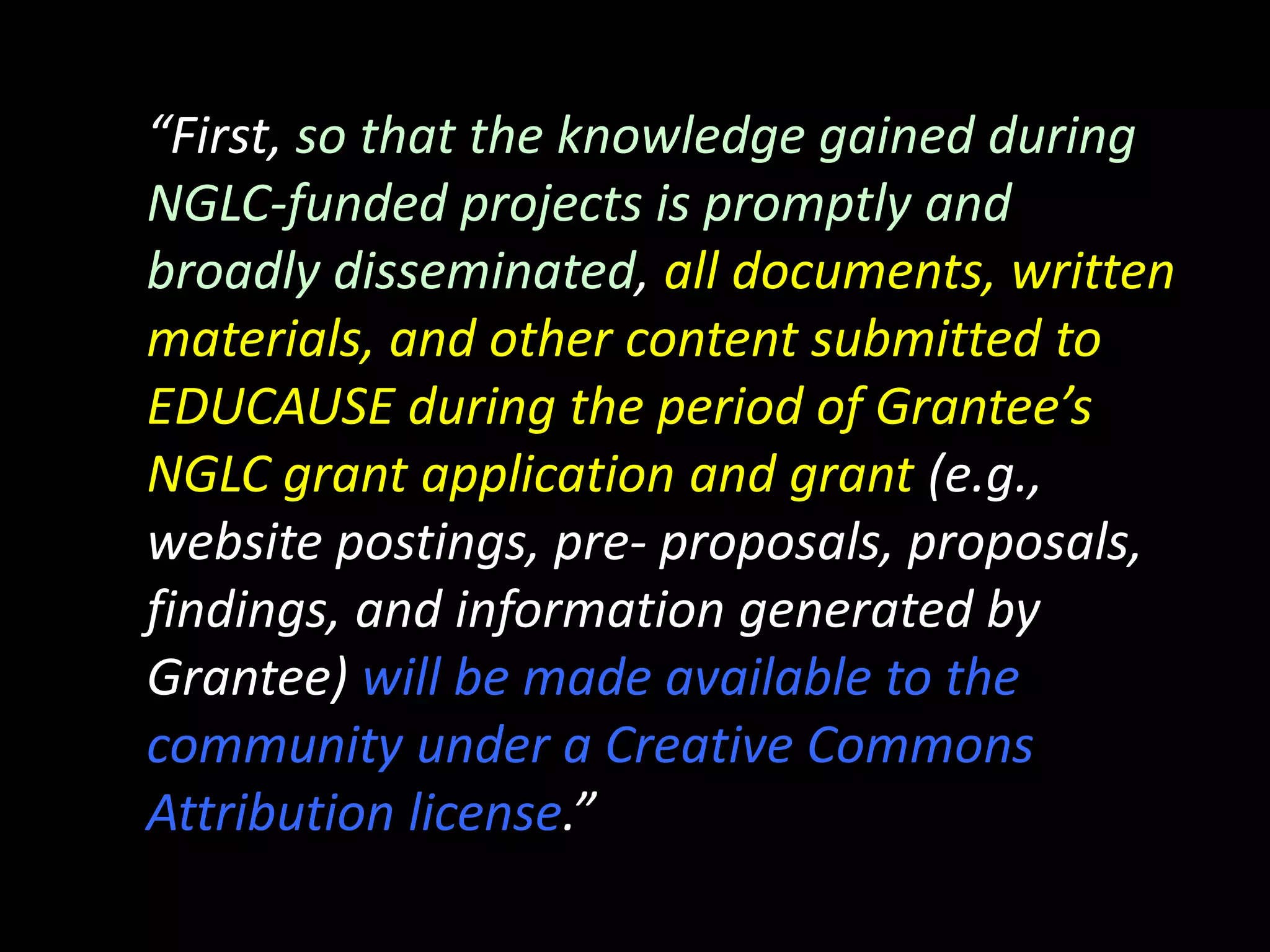
“First, so that the knowledge gained during
NGLC‐funded projects is promptly and
broadly disseminated, all documents, written
materials, and other content submitted to
EDUCAUSE during the period of Grantee’s
NGLC grant application and grant (e.g.,
website postings, pre‐ proposals, proposals,
findings, and information generated by
Grantee) will be made available to the
community under a Creative Commons
Attribution license.”
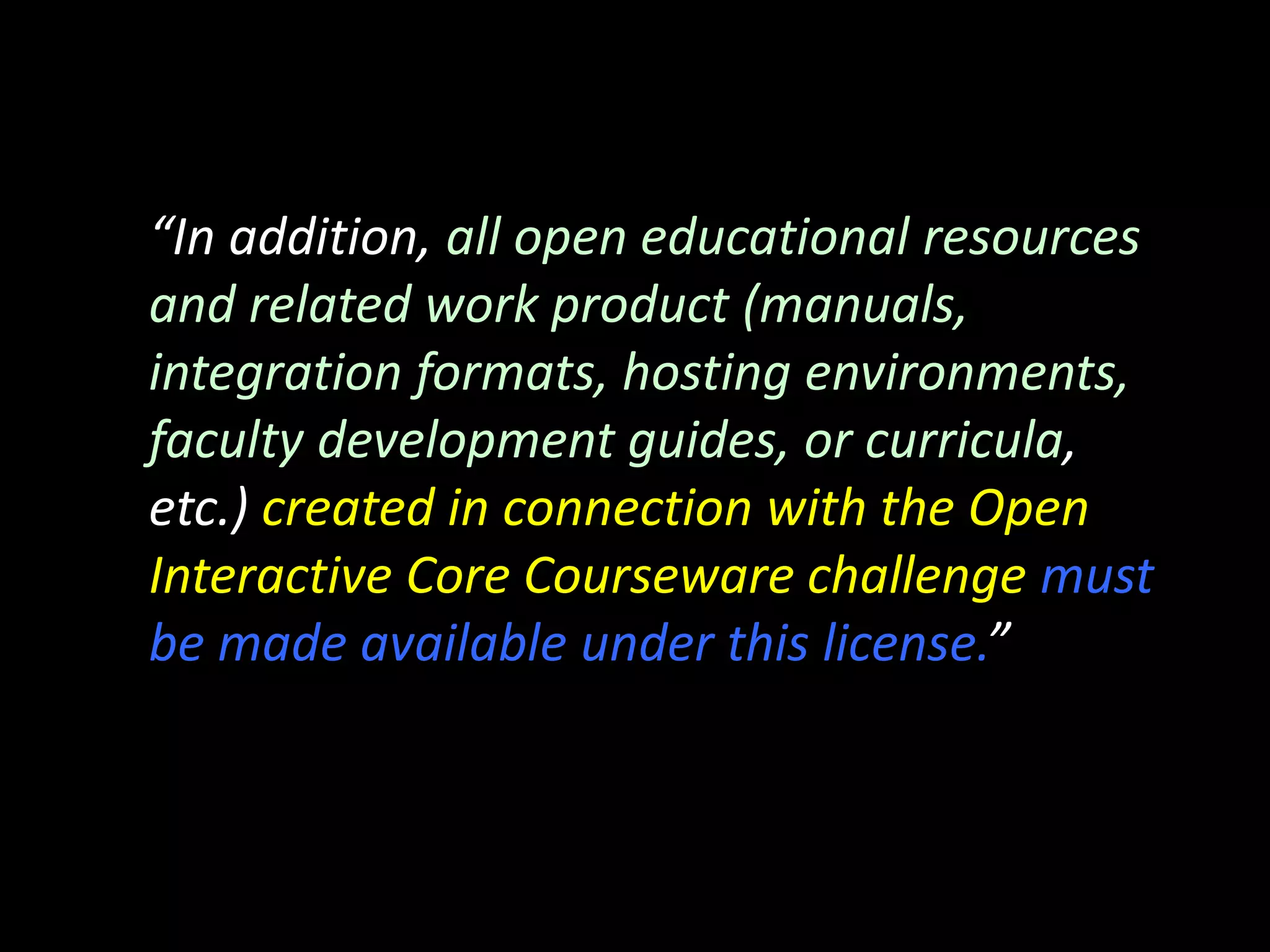
“In addition, all open educational resources
and related work product (manuals,
integration formats, hosting environments,
faculty development guides, or curricula,
etc.) created in connection with the Open
Interactive Core Courseware challenge must
be made available under this license.”
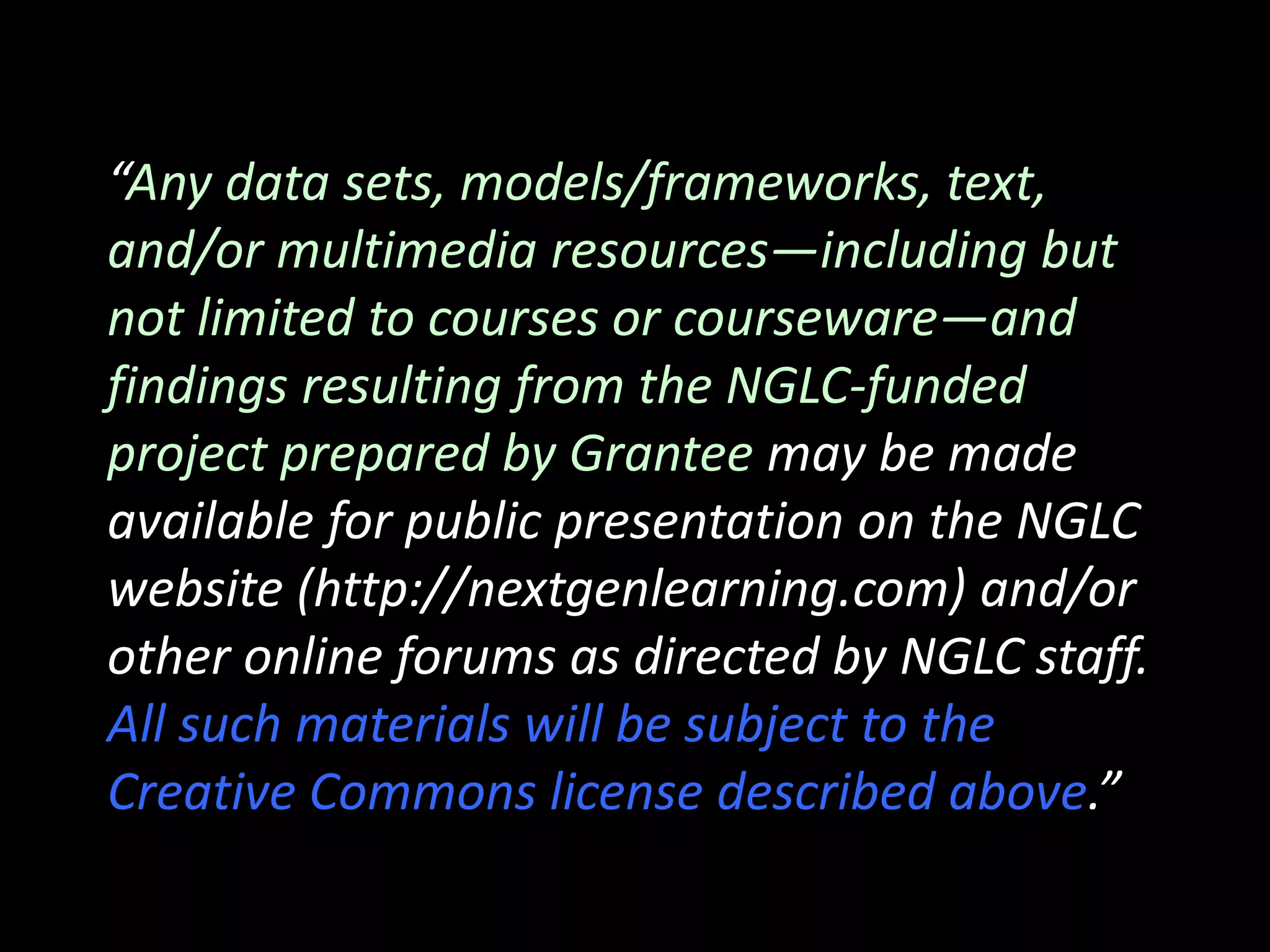
“Any data sets, models/frameworks, text,
and/or multimedia resources―including but
not limited to courses or courseware—and
findings resulting from the NGLC‐funded
project prepared by Grantee may be made
available for public presentation on the NGLC
website (http://nextgenlearning.com) and/or
other online forums as directed by NGLC staff.
All such materials will be subject to the
Creative Commons license described above.”
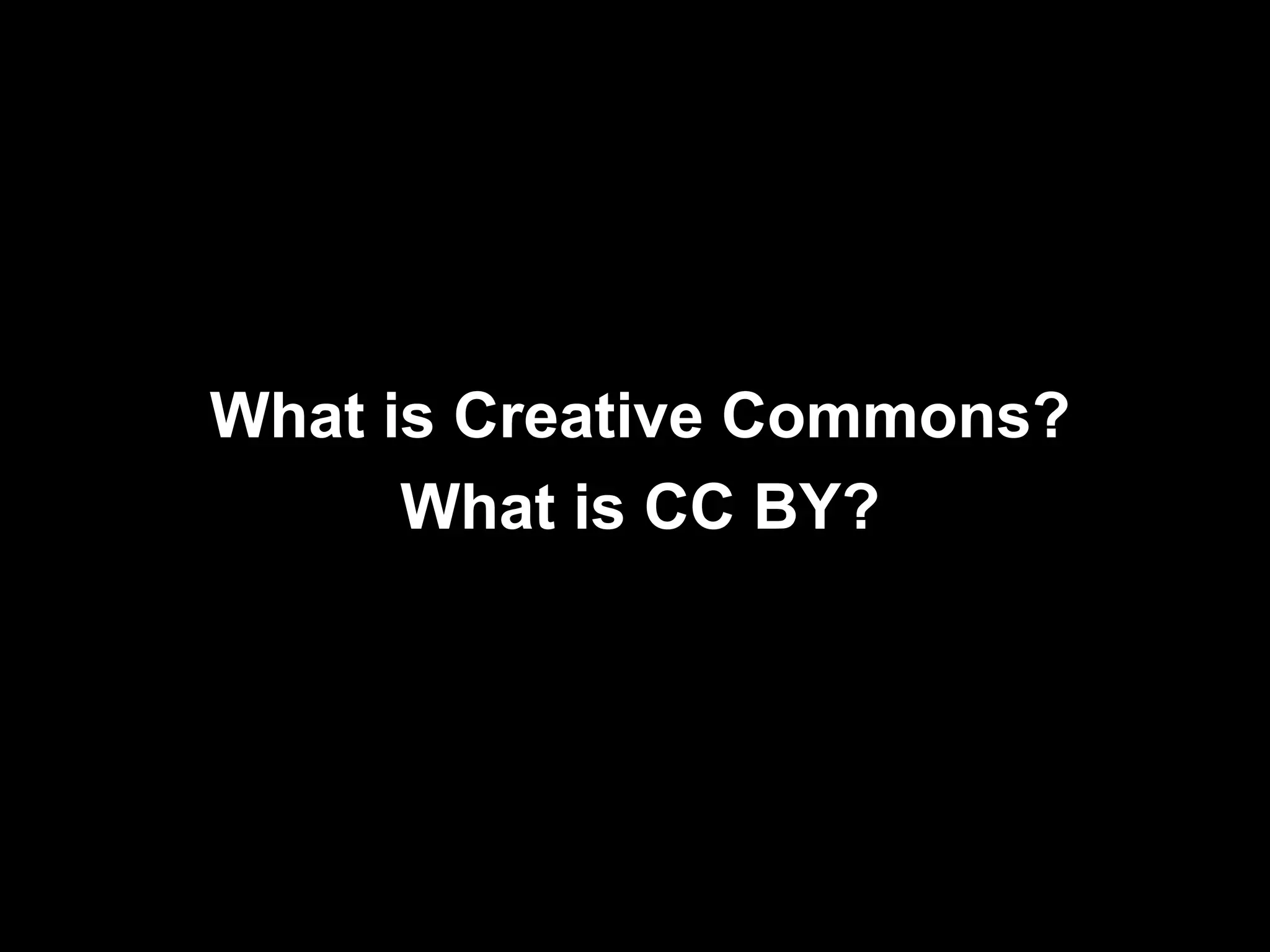
What is Creative Commons?
What is CC BY?
Nonprofit organization
Free copyright licenses
Founded in 2001
Operates worldwide
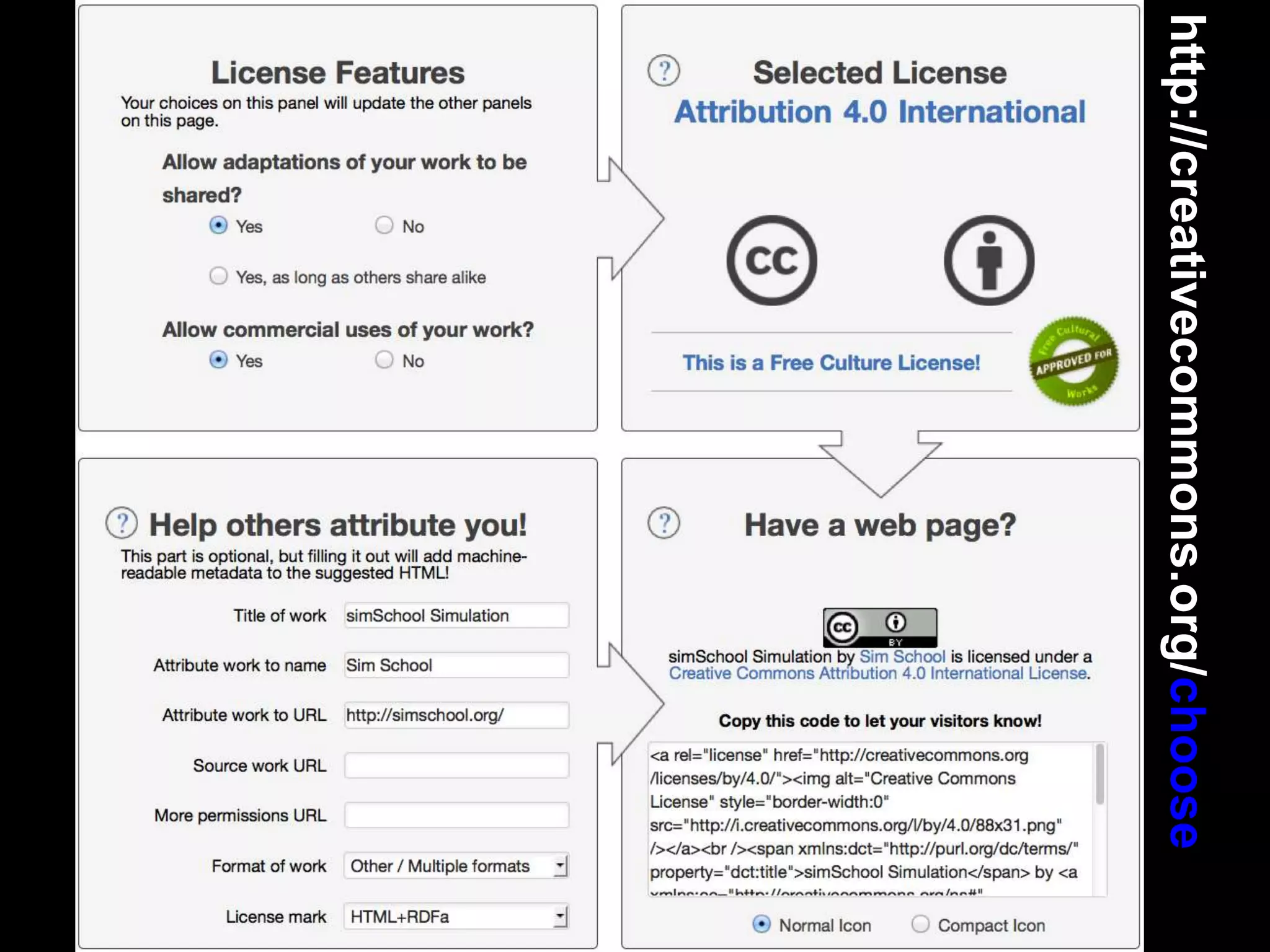
http://creativecommons.org/choose
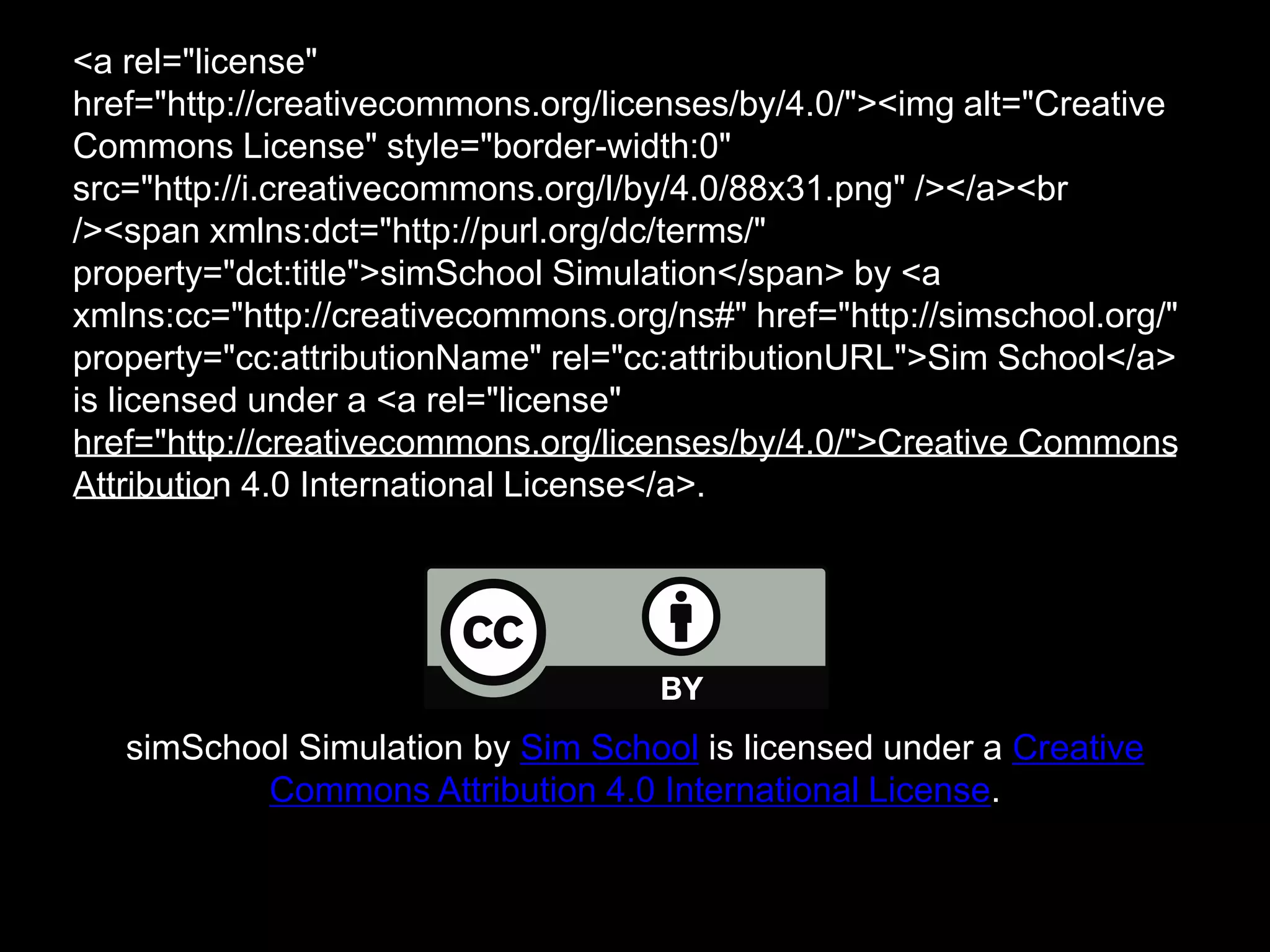
<a rel="license"
href="http://creativecommons.org/licenses/by/4.0/"><img alt="Creative
Commons License" style="border-width:0"
src="http://i.creativecommons.org/l/by/4.0/88x31.png" /></a><br
/><span xmlns:dct="http://purl.org/dc/terms/"
property="dct:title">simSchool Simulation</span> by <a
xmlns:cc="http://creativecommons.org/ns#" href="http://simschool.org/"
property="cc:attributionName" rel="cc:attributionURL">Sim School</a>
is licensed under a <a rel="license"
href="http://creativecommons.org/licenses/by/4.0/">Creative Commons
Attribution 4.0 International License</a>.
simSchool Simulation by Sim School is licensed under a Creative
Commons Attribution 4.0 International License.
________________________________________________________
_______
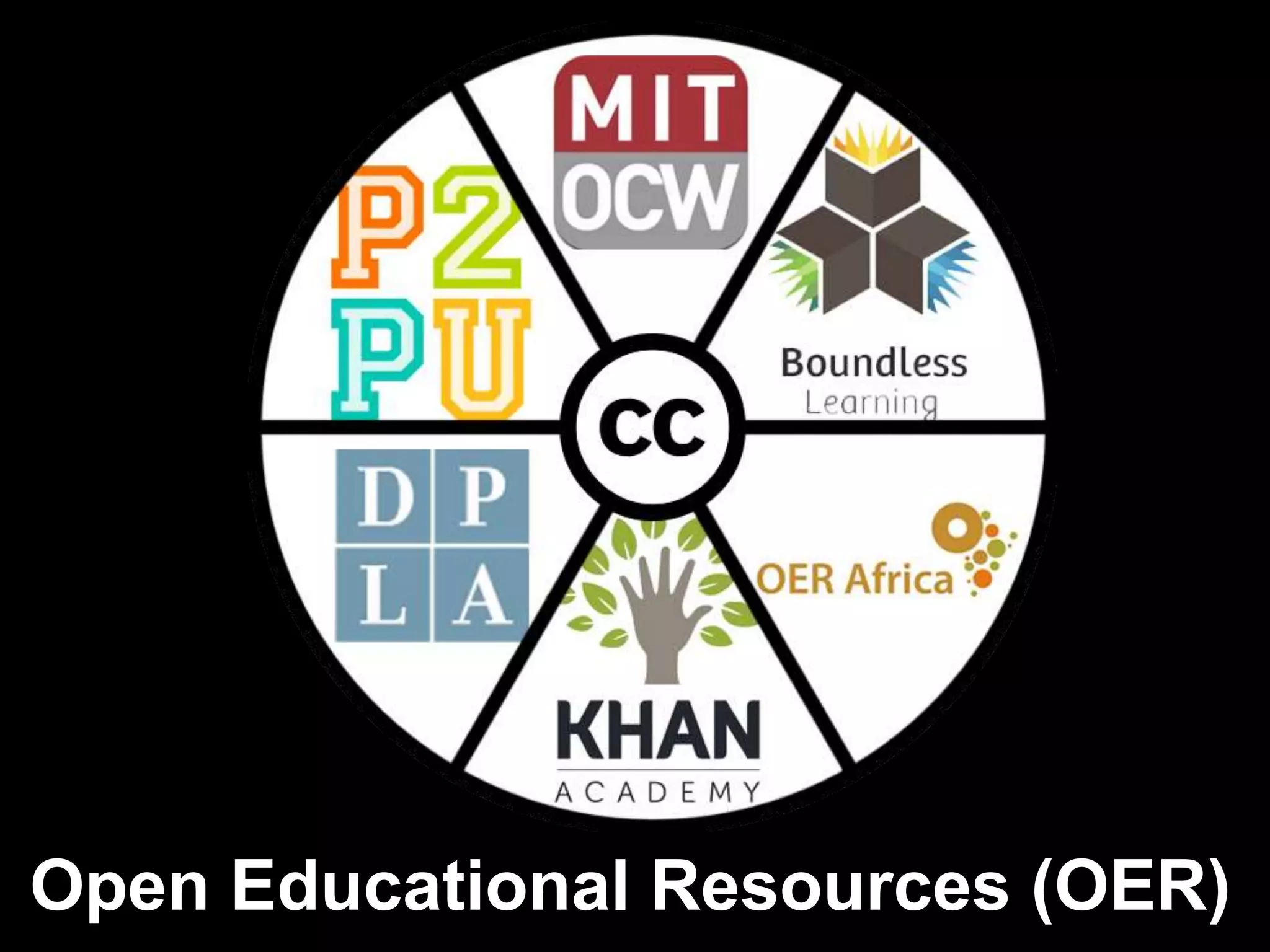
Open Educational Resources (OER)
OER are teaching, learning, and
research materials in any medium
that reside in the public domain
or have been released under an
open license that permits their
free use and re-purposing by
others.
FREE
+
LEGAL RIGHTS:
REUSE
REVISE
REMIX
REDISTRIBUTE
RETAIN
✓ Customization
✓ Accessible versions
✓ Translations
✓ Evolution of resource over time
✓ Affordable versions
✓ Innovation
✓ Discoverability
Why CC BY?
✓ Easy, legal, scalable
✓ Maximize impact of foundation
funded materials
✓ Make reuse and innovation
possible
Questions?
Need help applying the CC license?
Visit http://creativecommons.org
Or just ask Jane at
janepark@creativecommons.org

NGLC CC BY Requirement: Wave 1

  • 1.
    Dr. Cable Green Directorof Global Learning cable@creativecommons.org twitter: @cgreen
  • 2.
    Except where otherwisenoted, this work is licensed under: http://creativecommons.org/licenses/by/4.0
  • 3.
    • NGLC Wave1: CC BY requirement • What is CC BY? • What is Creative Commons? What does it do? How does it work? • What are Open Educational Resources (OER)? • How can CC support you as you comply with this grant requirement?
  • 4.
    What is theCC BY requirement in the NGLC Wave 1 grant?
  • 5.
    “First, so thatthe knowledge gained during NGLC‐funded projects is promptly and broadly disseminated, all documents, written materials, and other content submitted to EDUCAUSE during the period of Grantee’s NGLC grant application and grant (e.g., website postings, pre‐ proposals, proposals, findings, and information generated by Grantee) will be made available to the community under a Creative Commons Attribution license.”
  • 6.
    “In addition, allopen educational resources and related work product (manuals, integration formats, hosting environments, faculty development guides, or curricula, etc.) created in connection with the Open Interactive Core Courseware challenge must be made available under this license.”
  • 7.
    “Any data sets,models/frameworks, text, and/or multimedia resources―including but not limited to courses or courseware—and findings resulting from the NGLC‐funded project prepared by Grantee may be made available for public presentation on the NGLC website (http://nextgenlearning.com) and/or other online forums as directed by NGLC staff. All such materials will be subject to the Creative Commons license described above.”
  • 8.
    What is CreativeCommons? What is CC BY?
  • 10.
    Nonprofit organization Free copyrightlicenses Founded in 2001 Operates worldwide
  • 13.
  • 14.
    <a rel="license" href="http://creativecommons.org/licenses/by/4.0/"><img alt="Creative CommonsLicense" style="border-width:0" src="http://i.creativecommons.org/l/by/4.0/88x31.png" /></a><br /><span xmlns:dct="http://purl.org/dc/terms/" property="dct:title">simSchool Simulation</span> by <a xmlns:cc="http://creativecommons.org/ns#" href="http://simschool.org/" property="cc:attributionName" rel="cc:attributionURL">Sim School</a> is licensed under a <a rel="license" href="http://creativecommons.org/licenses/by/4.0/">Creative Commons Attribution 4.0 International License</a>. simSchool Simulation by Sim School is licensed under a Creative Commons Attribution 4.0 International License. ________________________________________________________ _______
  • 15.
  • 16.
    OER are teaching,learning, and research materials in any medium that reside in the public domain or have been released under an open license that permits their free use and re-purposing by others.
  • 17.
  • 18.
    ✓ Customization ✓ Accessibleversions ✓ Translations ✓ Evolution of resource over time ✓ Affordable versions ✓ Innovation ✓ Discoverability
  • 19.
    Why CC BY? ✓Easy, legal, scalable ✓ Maximize impact of foundation funded materials ✓ Make reuse and innovation possible
  • 21.
    Questions? Need help applyingthe CC license? Visit http://creativecommons.org Or just ask Jane at janepark@creativecommons.org

Editor's Notes

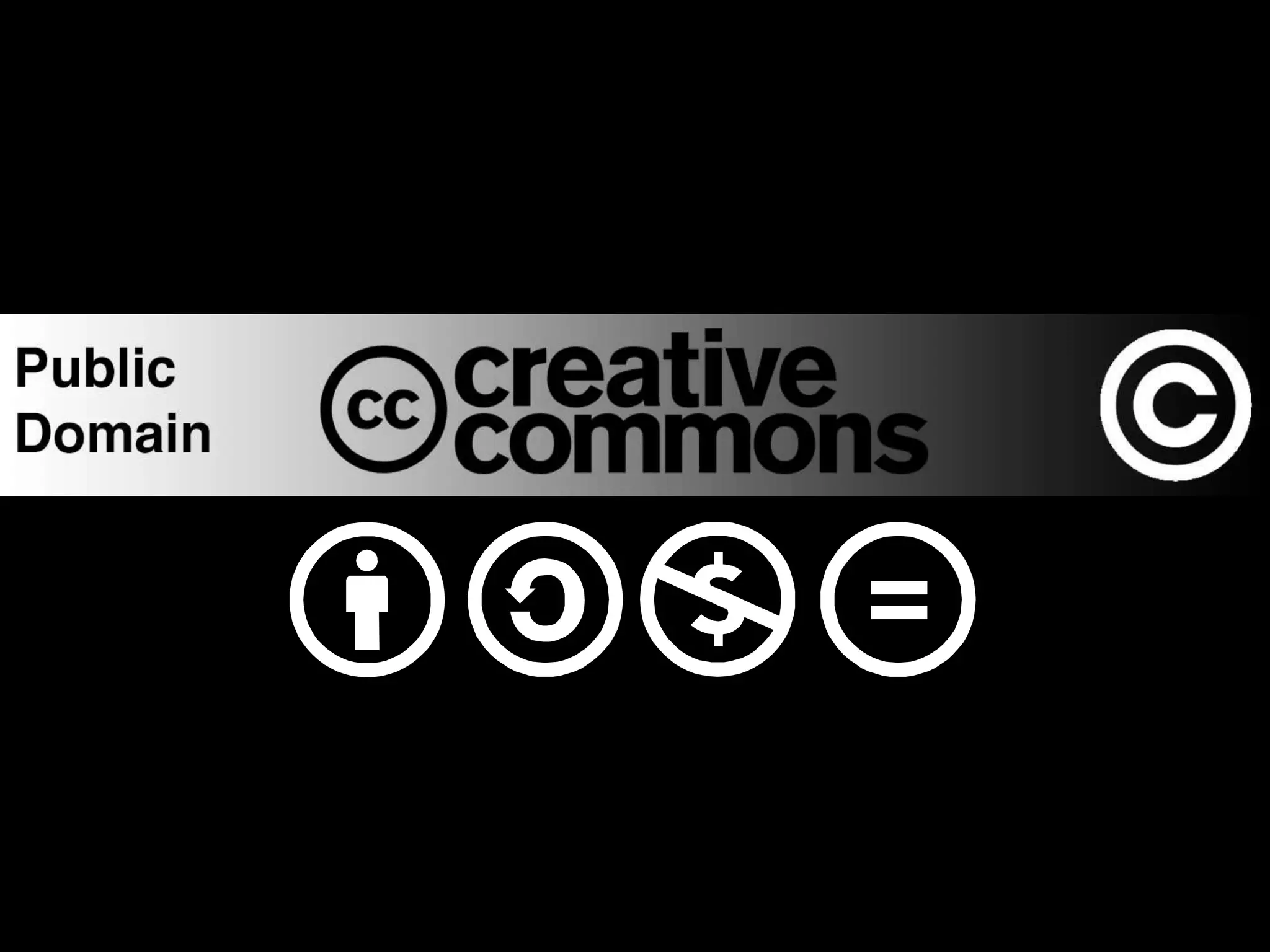
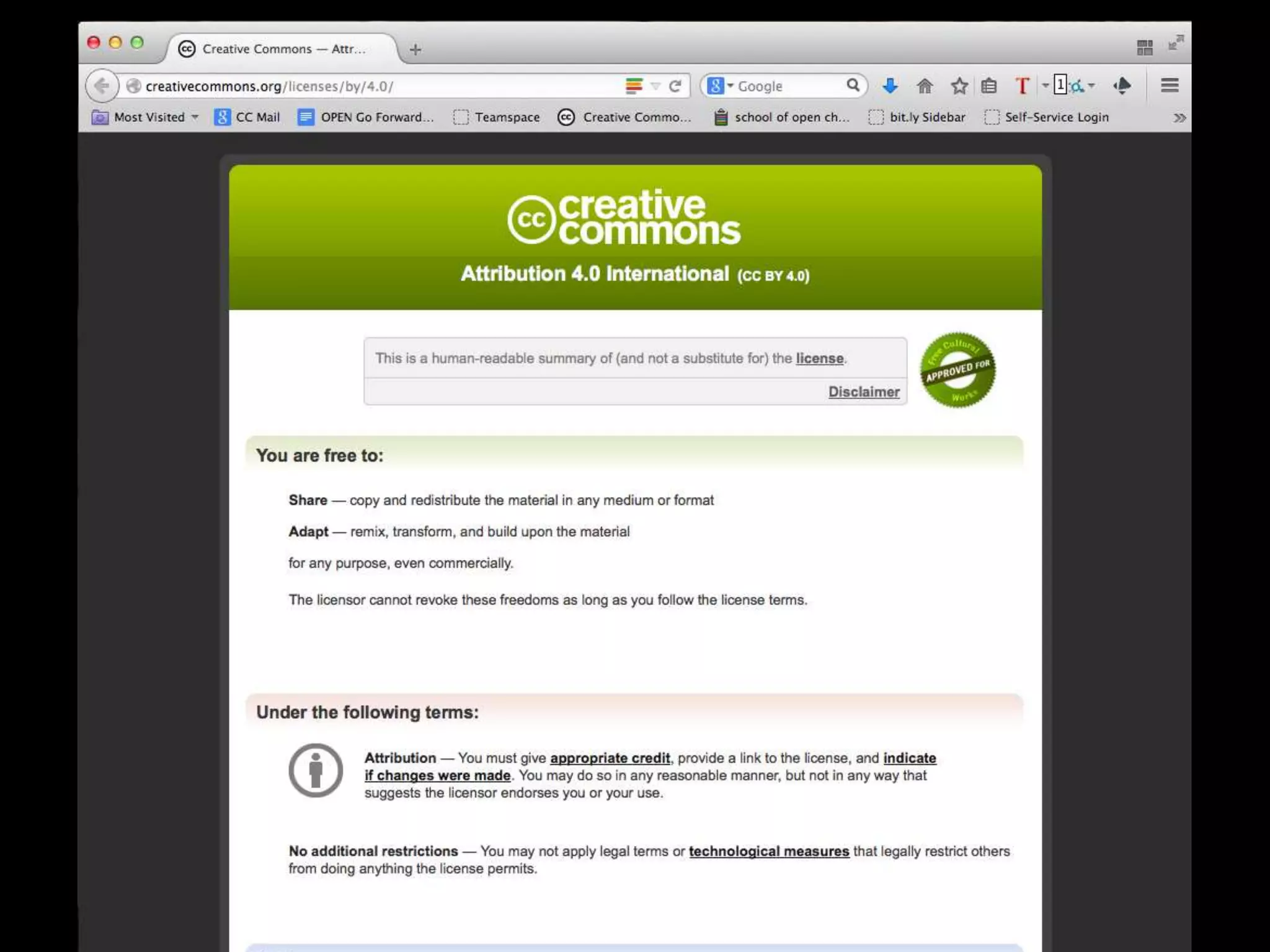
  • #13 The CC BY license says: Anyone may share the work, which means that they can copy, distribute and transmit the work And that they can also remix the work, which means they can customize it, translate, tweak it And they can also make a commercial use of the work But with the condition that anyone who uses your work must give you credit, or attribution. CC BY is one of a set of licenses CC offers that creators can choose to attach to their works. CC licenses are simple to understand and are the standard licenses used in the U.S. and around the world to grant copyright permissions to your work.
  • #14 Here is what our license chooser tool looks like. It is located at creativecommons dot org slash choose.
  • #15 When you copy and paste the resulting html code into a web page, you get this icon and text. It’s that easy for anyone to add the CC license to their website.
  • #16 CC licenses are the backbone of the Open Educational Resources (OER) movement. The OER movement is a movement of organizations and individuals that offer free educational resources under CC licenses to anyone in the world. The licenses are the legal framework that allows people and institutions to share and use educational resources across institutional and jurisdictional boundaries without having to renegotiate rights info each and every time, saving on resources and time for all parties involved.
  • #19 The OER movement prides itself on enabling these things when it comes to educational resources. And all of this is possible because of the CC licenses, especially the CC BY license which enables more permissions than our other licenses. So if a resource is an open educational resource, you should be able to .. Update that resource over time Make affordable hard copy versions of the resource since the digital version is almost $0 Build interesting business models around it, such as charging for services since the resource itself is free And of course be able to find that resource easily on the web All of these things are enabled by the CC licenses.
  • #20 So in short, here is why we recommend CC BY: Creative Commons is the global standard for copyright licensing, vetted by lawyers around the world and aligned to international copyright laws. It is scalable for use between institutions and outside of the U.S. CC is really easy to use! You just add a license notice to your work. CC even has a tool you can use to add it to your website at http://creativecommons.org/choose/ and a guide for marking other types of materials at http://wiki.creativecommons.org/Marking_your_work_with_a_CC_license. With CC BY you are maximizing your and the foundation’s impact by sharing work product with your fellow grantees and the public for future access and reuse. This means the foundation doesn’t have to waste resources to clear rights to the materials again in the future. Instead, these monies can be spent towards improving the resource, building services around it, and thereby making innovation possible. Innovation is possible because CC BY licensed materials are available for reuse and value-add not only by other grantees, but by educators, schools, entrepreneurs, and start-ups – nationwide and globally! NGLC isn’t the only grant program recommending Creative Commons. The $2 billion U.S. Department of Labor’s TAACCCT grant program requires CC BY on all grant funded work products. This grant program along with NGLC’s requirement in Waves 1 and 2 (recommendations in Waves 3 and 4) is a giant leap forward in how grant funds are managed. It’s a really exciting space you are entering into. For more info on benefits, see http://wiki.creativecommons.org/Why_CC_BY_for_the_TAACCCT_Federal_Grant_Program.