K.KARTHIK,
5070,
VBM.
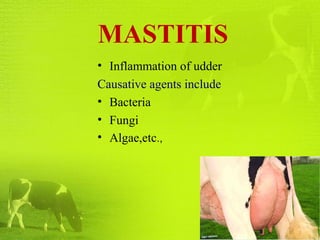
MASTITIS
• Inflammation of udder
Causative agents include
• Bacteria
• Fungi
• Algae,etc.,
INTRODUCTION
• Associated with over 26 species
• Candida spp., Aspergillus spp., Trichosporon
spp., Cryptococcus spp., Saccharomyces spp.,
Penicillium spp., etc. (CARTER, 1995).
• Fungi as the cause of mastitis -Rolle (1934),
isolated yeasts from five cows being fed on
brewery by-products.
• Candida is the most common species isolated
(Radostitis, 1995).
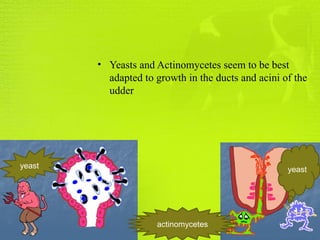
• Yeasts and Actinomycetes seem to be best
adapted to growth in the ducts and acini of the
udder
yeast yeast
actinomycetes
SYMPTOMS
• Gradual development of swelling (Pounden et
al .,1952)
• Loss of appetite and a rise in temperature but
absence of toxaemia (Simon et al.,1953)
• Swelling in all four quarters within 12 hours
(Galli ,1954)
MILK
• Greyish or yellowish floccules have been
reported – yeasts (Andersen & Jorgensen,
1949)
• A mucilaginous secretion - cryptococcal
infection
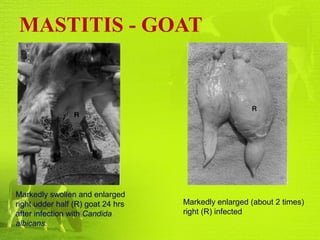
MASTITIS - GOAT
Markedly enlarged (about 2 times)
right (R) infected
Markedly swollen and enlarged
right udder half (R) goat 24 hrs
after infection with Candida
albicans.
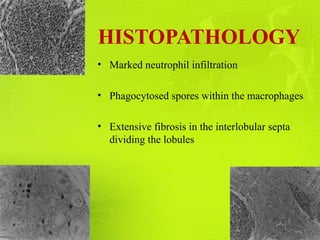
HISTOPATHOLOGY
• Marked neutrophil infiltration
• Phagocytosed spores within the macrophages
• Extensive fibrosis in the interlobular septa
dividing the lobules
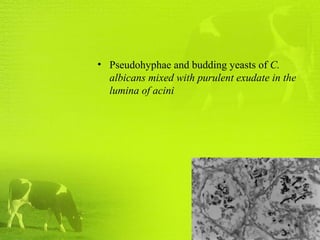
• Pseudohyphae and budding yeasts of C.
albicans mixed with purulent exudate in the
lumina of acini
Geotrichum candidum
• Keratinophilic yeast
• Extremely rare (mishra and panda, 1986;seddek, 1997;
krzyzanowski and sielicka, 1996).
• Any injury to teat sphinctures, or unhygienic milking,
can lead to its entry.
• Milk-watery with thick flakes, and slightly blood
tinged
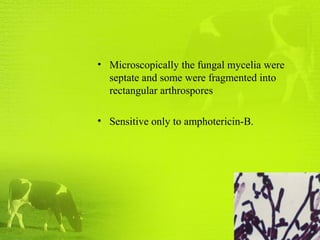
• Microscopically the fungal mycelia were
septate and some were fragmented into
rectangular arthrospores
• Sensitive only to amphotericin-B.
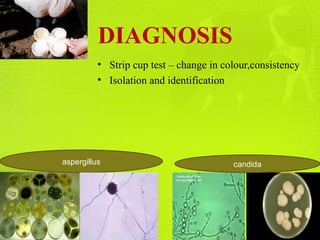
DIAGNOSIS
• Strip cup test – change in colour,consistency
• Isolation and identification
aspergillus candida
cont
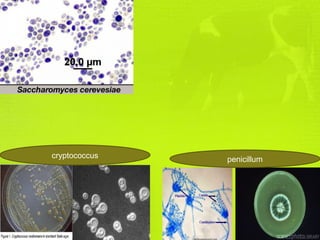
cryptococcus penicillum
CLINICAL IMPORTANCE
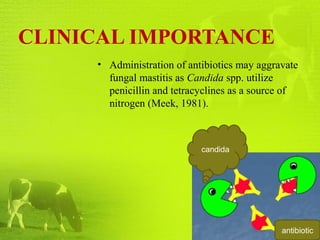
• Administration of antibiotics may aggravate
fungal mastitis as Candida spp. utilize
penicillin and tetracyclines as a source of
nitrogen (Meek, 1981).
candida
antibiotic
TREATMENT
Antifungal drugs like:-
• Nystatin , natamycin – for yeast mastitis
• Amphotericin B – geotrichum
Mycotic mastitis

Mycotic mastitis

  • 1.
  • 2.
    MASTITIS • Inflammation ofudder Causative agents include • Bacteria • Fungi • Algae,etc.,
  • 3.
    INTRODUCTION • Associated withover 26 species • Candida spp., Aspergillus spp., Trichosporon spp., Cryptococcus spp., Saccharomyces spp., Penicillium spp., etc. (CARTER, 1995). • Fungi as the cause of mastitis -Rolle (1934), isolated yeasts from five cows being fed on brewery by-products. • Candida is the most common species isolated (Radostitis, 1995).
  • 4.
    • Yeasts andActinomycetes seem to be best adapted to growth in the ducts and acini of the udder yeast yeast actinomycetes
  • 5.
    SYMPTOMS • Gradual developmentof swelling (Pounden et al .,1952) • Loss of appetite and a rise in temperature but absence of toxaemia (Simon et al.,1953) • Swelling in all four quarters within 12 hours (Galli ,1954)
  • 6.
    MILK • Greyish oryellowish floccules have been reported – yeasts (Andersen & Jorgensen, 1949) • A mucilaginous secretion - cryptococcal infection
  • 7.
    MASTITIS - GOAT Markedlyenlarged (about 2 times) right (R) infected Markedly swollen and enlarged right udder half (R) goat 24 hrs after infection with Candida albicans.
  • 8.
    HISTOPATHOLOGY • Marked neutrophilinfiltration • Phagocytosed spores within the macrophages • Extensive fibrosis in the interlobular septa dividing the lobules
  • 9.
    • Pseudohyphae andbudding yeasts of C. albicans mixed with purulent exudate in the lumina of acini
  • 10.
    Geotrichum candidum • Keratinophilicyeast • Extremely rare (mishra and panda, 1986;seddek, 1997; krzyzanowski and sielicka, 1996). • Any injury to teat sphinctures, or unhygienic milking, can lead to its entry. • Milk-watery with thick flakes, and slightly blood tinged
  • 11.
    • Microscopically thefungal mycelia were septate and some were fragmented into rectangular arthrospores • Sensitive only to amphotericin-B.
  • 12.
    DIAGNOSIS • Strip cuptest – change in colour,consistency • Isolation and identification aspergillus candida
  • 13.
  • 14.
    CLINICAL IMPORTANCE • Administrationof antibiotics may aggravate fungal mastitis as Candida spp. utilize penicillin and tetracyclines as a source of nitrogen (Meek, 1981). candida antibiotic
  • 15.
    TREATMENT Antifungal drugs like:- •Nystatin , natamycin – for yeast mastitis • Amphotericin B – geotrichum