Dr. Pavulraj.S
5246
M.V.Sc., Scholar
Division of Pathology
Indian Veterinary Research
Institute, Izatnagar, India
Introduction
• Horse – a symbol of bravery and power
• Total population of equids in India is 1.18 million(2007)
– Horses – 52%
– Donkey – 37%
– Mule – 11%
• In India, diseases like glanders and equine influenza re-emerged
among equines in 2006-09
• There are many bacterial and viral diseases are endemic in India
• Many new emerging diseases threatening our equine health
List of diseases
Viral diseases
• Hendra
• Equine influenza
• Equine herpes virus
• Equine infectious
anemia
• African horse
sickness
• Equine viral arteritis
• West Nile fever
• Equine encephalitis
• Rabies
Bacterial diseases
Glanders
Strangles
Tetanus
Rhodococcus equi
Leptospirosis
Botryomycosis
Hendra
• Acute febrile respiratory infection of horses
• Characterized by increased respiratory rate, profuse nasal
discharge, jaundice and neurological signs with fatal outcome
• Paramyxoviridae – genus Henipavirus (equine morbilivirus), don’t
agglutinate RBC
• Horses – only species naturally infected
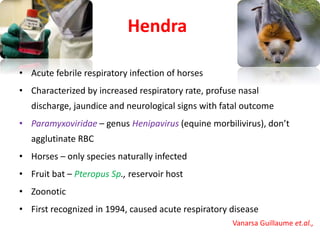
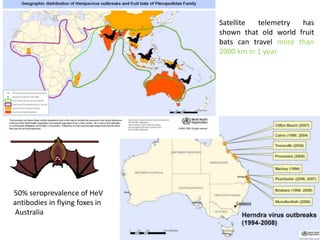
• Fruit bat – Pteropus Sp., reservoir host
• Zoonotic
• First recognized in 1994, caused acute respiratory disease
Vanarsa Guillaume et.al.,
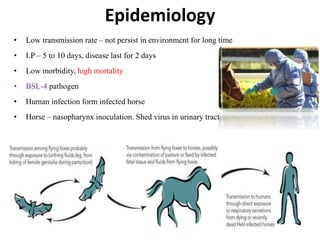
50% seroprevalence of HeV
antibodies in flying foxes in
Australia
Satellite telemetry has
shown that old world fruit
bats can travel more than
2000 km in 1 year
Epidemiology
• Low transmission rate – not persist in environment for long time
• I.P – 5 to 10 days, disease last for 2 days
• Low morbidity, high mortality
• BSL-4 pathogen
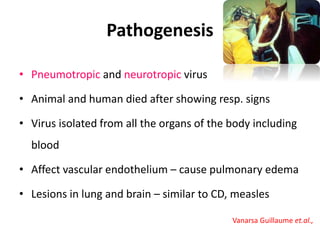
• Human infection form infected horse
• Horse – nasopharynx inoculation. Shed virus in urinary tract
Pathogenesis
• Pneumotropic and neurotropic virus
• Animal and human died after showing resp. signs
• Virus isolated from all the organs of the body including
blood
• Affect vascular endothelium – cause pulmonary edema
• Lesions in lung and brain – similar to CD, measles
Vanarsa Guillaume et.al.,
Clinical signs
• Pyrexia, dyspnea, frothy/haemorrhagic nasal discharge, neurological signs,
ataxia, muscle trembling
Lesions
• Diffuse pulmonary edema and congestion
• Hydrothorax and hydropericardium
• Congestion of LN, S/C hemorrhages
Mic
• Interstitial pneumonia, alveolar edema, necrosis of alveolar walls and
thrombosis of blood vessels, Non suppurative encephalomyelitis
• Vascular lesions in visceral organs
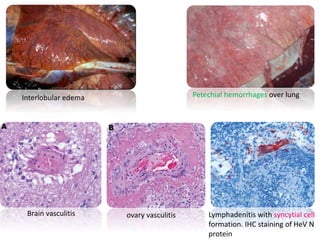
• Syncytial cells in blood vessels – unique feature
Vanarsa Guillaume et.al.,
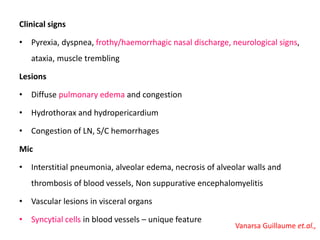
Interlobular edema Petechial hemorrhages over lung
Brain vasculitis ovary vasculitis Lymphadenitis with syncytial cell
formation. IHC staining of HeV N
protein
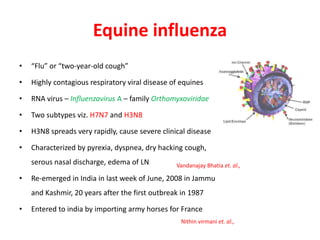
Equine influenza
• “Flu” or “two-year-old cough”
• Highly contagious respiratory viral disease of equines
• RNA virus – Influenzavirus A – family Orthomyxoviridae
• Two subtypes viz. H7N7 and H3N8
• H3N8 spreads very rapidly, cause severe clinical disease
• Characterized by pyrexia, dyspnea, dry hacking cough,
serous nasal discharge, edema of LN
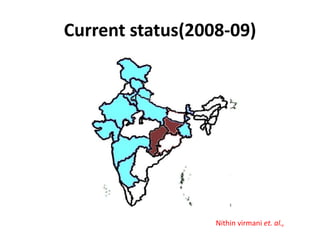
• Re-emerged in India in last week of June, 2008 in Jammu
and Kashmir, 20 years after the first outbreak in 1987
• Entered to india by importing army horses for France
Vandanajay Bhatia et. al.,
Nithin virmani et. al.,
Current status(2008-09)
Nithin virmani et. al.,
Transmission
• Short I.P - <48hrs
• Morbidity – 60-90%
• Mortality - <1%
• Outbreak – close contact
• Direct contact – nasal secretion - Droplet
infection
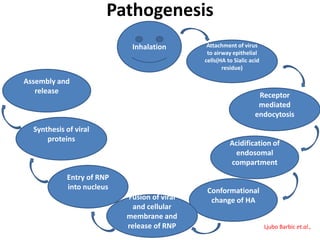
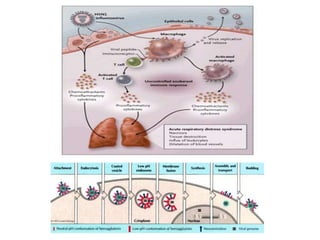
Pathogenesis
Attachment of virus
to airway epithelial
cells(HA to Sialic acid
residue)
Receptor
mediated
endocytosis
Acidification of
endosomal
compartment
Conformational
change of HAFusion of viral
and cellular
membrane and
release of RNP
Entry of RNP
into nucleus
Synthesis of viral
proteins
Assembly and
release
Inhalation
Ljubo Barbic et.al.,
Pathogenesis
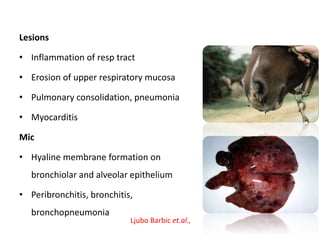
Lesions
• Inflammation of resp tract
• Erosion of upper respiratory mucosa
• Pulmonary consolidation, pneumonia
• Myocarditis
Mic
• Hyaline membrane formation on
bronchiolar and alveolar epithelium
• Peribronchitis, bronchitis,
bronchopneumonia
Ljubo Barbic et.al.,
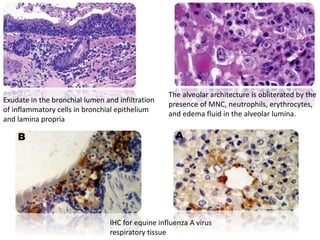
Exudate in the bronchial lumen and infiltration
of inflammatory cells in bronchial epithelium
and lamina propria
The alveolar architecture is obliterated by the
presence of MNC, neutrophils, erythrocytes,
and edema fluid in the alveolar lumina.
IHC for equine influenza A virus
respiratory tissue
EI in India
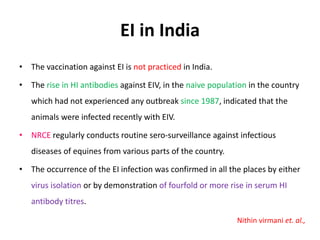
• The vaccination against EI is not practiced in India.
• The rise in HI antibodies against EIV, in the naive population in the country
which had not experienced any outbreak since 1987, indicated that the
animals were infected recently with EIV.
• NRCE regularly conducts routine sero-surveillance against infectious
diseases of equines from various parts of the country.
• The occurrence of the EI infection was confirmed in all the places by either
virus isolation or by demonstration of fourfold or more rise in serum HI
antibody titres.
Nithin virmani et. al.,
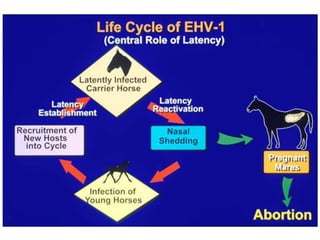
Equine herpes virus
• Important cause of abortion, neonatal death, respiratory disease and
neurological diseases
• Caused by Equine herpesvirus (EHV1 &EHV4)
• Narrow host range – single target species
• Infect multiple types of cells
• Lytic and latent cycle
• Latency – trigeminal ganglia and CD8+ cells
• EHV-1 - major cause of neonatal foal mortality in a number of breeding
studs located in the Haryana, Punjab and Uttar Pradesh States of India.
Tiwari S.C, et al.,
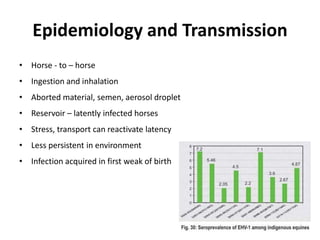
Epidemiology and Transmission
• Horse - to – horse
• Ingestion and inhalation
• Aborted material, semen, aerosol droplet
• Reservoir – latently infected horses
• Stress, transport can reactivate latency
• Less persistent in environment
• Infection acquired in first weak of birth
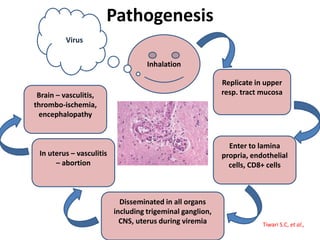
Pathogenesis
Inhalation
Replicate in upper
resp. tract mucosa
In uterus – vasculitis
– abortion
Disseminated in all organs
including trigeminal ganglion,
CNS, uterus during viremia
Enter to lamina
propria, endothelial
cells, CD8+ cells
Brain – vasculitis,
thrombo-ischemia,
encephalopathy
Virus
Tiwari S.C, et al.,
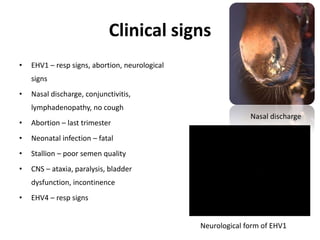
Clinical signs
• EHV1 – resp signs, abortion, neurological
signs
• Nasal discharge, conjunctivitis,
lymphadenopathy, no cough
• Abortion – last trimester
• Neonatal infection – fatal
• Stallion – poor semen quality
• CNS – ataxia, paralysis, bladder
dysfunction, incontinence
• EHV4 – resp signs
Neurological form of EHV1
Nasal discharge
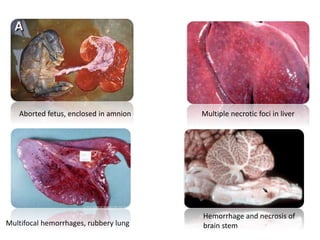
Multifocal hemorrhages, rubbery lung
Multiple necrotic foci in liver
Hemorrhage and necrosis of
brain stem
Aborted fetus, enclosed in amnion
Lesions
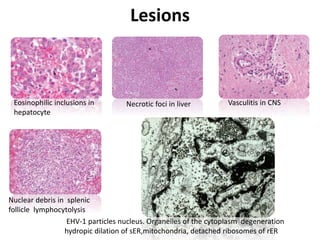
Necrotic foci in liverEosinophilic inclusions in
hepatocyte
Vasculitis in CNS
Nuclear debris in splenic
follicle lymphocytolysis
EHV-1 particles nucleus. Organelles of the cytoplasm degeneration
hydropic dilation of sER,mitochondria, detached ribosomes of rER
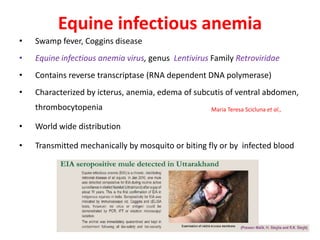
Equine infectious anemia
• Swamp fever, Coggins disease
• Equine infectious anemia virus, genus Lentivirus Family Retroviridae
• Contains reverse transcriptase (RNA dependent DNA polymerase)
• Characterized by icterus, anemia, edema of subcutis of ventral abdomen,
thrombocytopenia
• World wide distribution
• Transmitted mechanically by mosquito or biting fly or by infected blood
Maria Teresa Scicluna et al.,
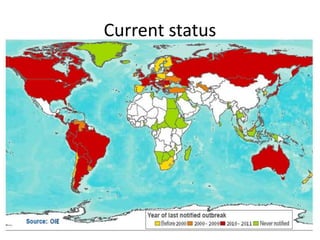
Current status
Transmission
• Blood from infected animal – source of infection
• Mechanical transmission by Tabanus and Stomoxys
calcitrans (with in short time <4hrs, in short distance)
• Vertical transmission – in utero/colustrum feeding
• Venereal transmission – semen
• Iatrogenic – blood contaminated products
Maria Teresa Scicluna et al.,
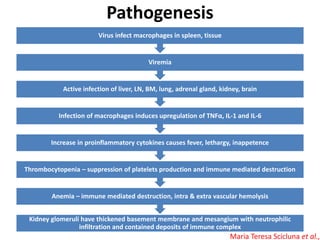
Pathogenesis
Kidney glomeruli have thickened basement membrane and mesangium with neutrophilic
infiltration and contained deposits of immune complex
Anemia – immune mediated destruction, intra & extra vascular hemolysis
Thrombocytopenia – suppression of platelets production and immune mediated destruction
Increase in proinflammatory cytokines causes fever, lethargy, inappetence
Infection of macrophages induces upregulation of TNFα, IL-1 and IL-6
Active infection of liver, LN, BM, lung, adrenal gland, kidney, brain
Viremia
Virus infect macrophages in spleen, tissue
Maria Teresa Scicluna et al.,
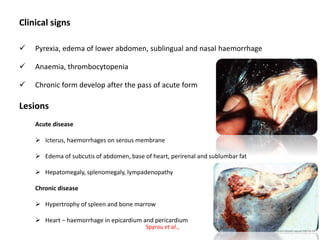
Clinical signs
 Pyrexia, edema of lower abdomen, sublingual and nasal haemorrhage
 Anaemia, thrombocytopenia
 Chronic form develop after the pass of acute form
Lesions
Acute disease
 Icterus, haemorrhages on serous membrane
 Edema of subcutis of abdomen, base of heart, perirenal and sublumbar fat
 Hepatomegaly, splenomegaly, lympadenopathy
Chronic disease
 Hypertrophy of spleen and bone marrow
 Heart – haemorrhage in epicardium and pericardium
Spyrou et al.,
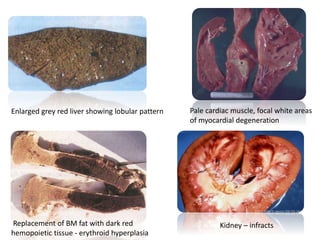
Enlarged grey red liver showing lobular pattern
Replacement of BM fat with dark red
hemopoietic tissue - erythroid hyperplasia
Pale cardiac muscle, focal white areas
of myocardial degeneration
Kidney – infracts
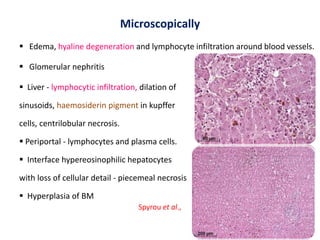
Microscopically
 Edema, hyaline degeneration and lymphocyte infiltration around blood vessels.
 Glomerular nephritis
 Liver - lymphocytic infiltration, dilation of
sinusoids, haemosiderin pigment in kupffer
cells, centrilobular necrosis.
 Periportal - lymphocytes and plasma cells.
 Interface hypereosinophilic hepatocytes
with loss of cellular detail - piecemeal necrosis
 Hyperplasia of BM
Spyrou et al.,
African horse sickness
• Non contagious, infectious, insect borne disease of equine
• Caused by African horse sickness virus, belong to genus – Orbivirus,
family – Reoviridae, Nonenveloped
• Transmitted by Culicoides spp.
• 9 antigenic serotypes
• Characterized by pyrexia, edema of lungs, pleura, S/C tissue and
hemorrhage of serosa of internal organs
• In 2006 - WOAH declared India free of African horse sickness
Kazeem.M.M et al.,
Epidemiology
• Mortality rate - 70-95%
Transmission
• Not contagious
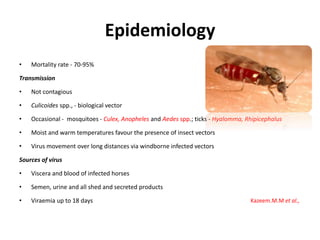
• Culicoides spp., - biological vector
• Occasional - mosquitoes - Culex, Anopheles and Aedes spp.; ticks - Hyalomma, Rhipicephalus
• Moist and warm temperatures favour the presence of insect vectors
• Virus movement over long distances via windborne infected vectors
Sources of virus
• Viscera and blood of infected horses
• Semen, urine and all shed and secreted products
• Viraemia up to 18 days Kazeem.M.M et al.,
Pathogenesis
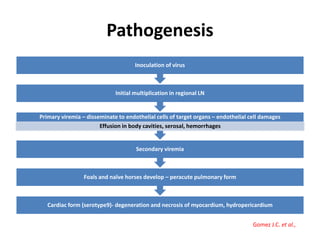
Cardiac form (serotype9)- degeneration and necrosis of myocardium, hydropericardium
Foals and naïve horses develop – peracute pulmonary form
Secondary viremia
Primary viremia – disseminate to endothelial cells of target organs – endothelial cell damages
Effusion in body cavities, serosal, hemorrhages
Initial multiplication in regional LN
Inoculation of virus
Gomez J.C. et al.,
Pulmonary & cardiac form
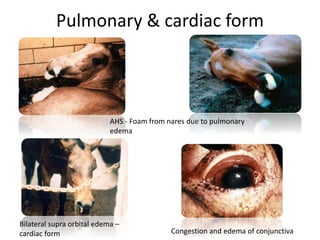
AHS - Foam from nares due to pulmonary
edema
Bilateral supra orbital edema –
cardiac form Congestion and edema of conjunctiva
Lesions
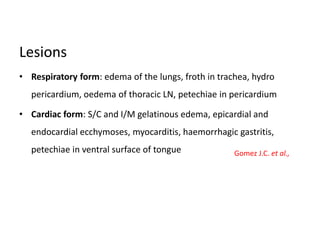
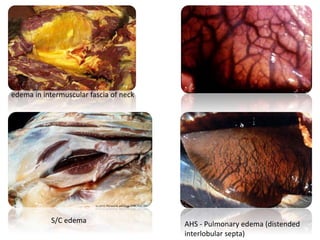
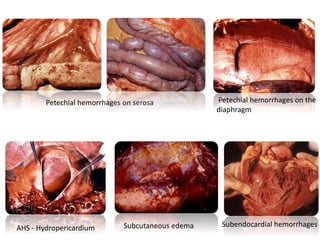
• Respiratory form: edema of the lungs, froth in trachea, hydro
pericardium, oedema of thoracic LN, petechiae in pericardium
• Cardiac form: S/C and I/M gelatinous edema, epicardial and
endocardial ecchymoses, myocarditis, haemorrhagic gastritis,
petechiae in ventral surface of tongue Gomez J.C. et al.,
AHS - Pulmonary edema (distended
interlobular septa)
edema in intermuscular fascia of neck
S/C edema
Petechial hemorrhages on serosa Petechial hemorrhages on the
diaphragm
AHS - Hydropericardium Subendocardial hemorrhagesSubcutaneous edema
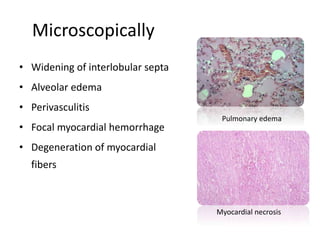
Microscopically
• Widening of interlobular septa
• Alveolar edema
• Perivasculitis
• Focal myocardial hemorrhage
• Degeneration of myocardial
fibers
Pulmonary edema
Myocardial necrosis
Equine viral arteritis
• Infectious disease
• Caused by Equine arteritis virus belong to genus Arterivirus, family Togaviridae
• Characterized by depression, edema of limbs, intense pink or red conjunctiva, palpebral edema,
enteritis, pneumonic complications and abortions
• Principal lesions is degenerative and inflammatory changes in the endothelium and tunica media
of small arteries
• Serological survey indicate wide spread infection but clinical disease is not that common
• About 80% abortion during clinical disease
• The virus which causes EVA was first isolated from horses in Ohio in 1953
• India – one case in 1989
Holyoak G.R., et al.,
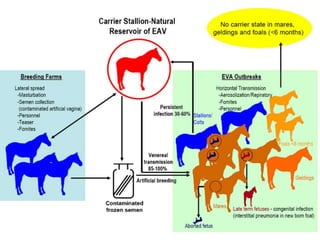
Transmission
• Via respiratory route or by ingestion
• Venereal transmission by stallions
• Tissues and fluids of aborted fetus contained large mass of virus
• Virus shed in the urine Holyoak G.R., et al.,
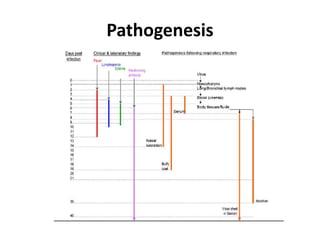
Pathogenesis
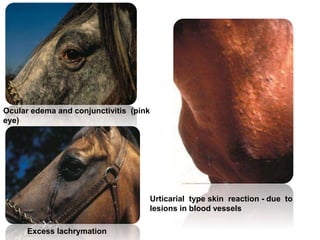
Ocular edema and conjunctivitis (pink
eye)
Excess lachrymation
Urticarial type skin reaction - due to
lesions in blood vessels
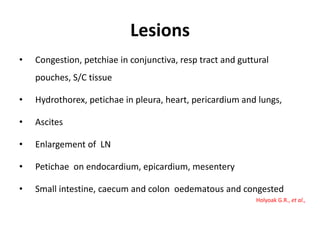
Lesions
• Congestion, petchiae in conjunctiva, resp tract and guttural
pouches, S/C tissue
• Hydrothorex, petichae in pleura, heart, pericardium and lungs,
• Ascites
• Enlargement of LN
• Petichae on endocardium, epicardium, mesentery
• Small intestine, caecum and colon oedematous and congested
Holyoak G.R., et al.,
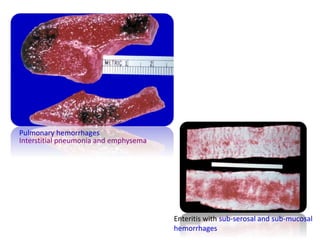
Pulmonary hemorrhages
Interstitial pneumonia and emphysema
Enteritis with sub-serosal and sub-mucosal
hemorrhages
Microscopically
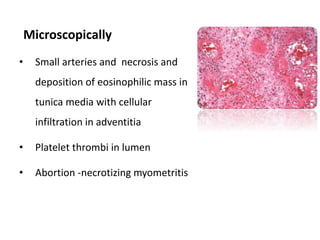
• Small arteries and necrosis and
deposition of eosinophilic mass in
tunica media with cellular
infiltration in adventitia
• Platelet thrombi in lumen
• Abortion -necrotizing myometritis
West Nile virus: the Indian scenario
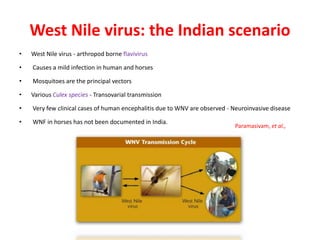
• West Nile virus - arthropod borne flavivirus
• Causes a mild infection in human and horses
• Mosquitoes are the principal vectors
• Various Culex species - Transovarial transmission
• Very few clinical cases of human encephalitis due to WNV are observed - Neuroinvasive disease
• WNF in horses has not been documented in India.
Paramasivam, et al.,
Glanders
• Fatal, contagious and zoonotic disease
• Caused by Burkholderia mallei , Gram -Ve, non-motile, non-
sporulating obligate aerobic
• Acute or chronic form
• Characterized by nodular lesions in the lungs and nodular or
ulcerative lesions in the respiratory tract mucosa and skin
• Occupational disease of veterinarians, farriers and animal
workers
• Last report on glanders outbreak in India - June, 1985,
recently from july, 2006
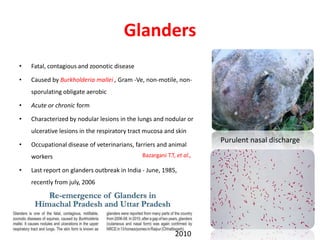
Purulent nasal discharge
2010
Bazargani T.T, et al.,
Transmission
• Excretions and discharges of affected animals skin and nasal mucosa
• Oral - chronic respiratory disease
• Intranasal - acute disease
• Virulence and immuno-evading factors
– Intracellular status
– Capsule and capsular LPS
– High level of genomic alterations in the host – such rapid genomic variation upregulate
virulence gene expression in B. mallei
– Genomic instability has had impact on vaccine development
• Pathogenesis not fully understood Bazargani T.T, et al.,
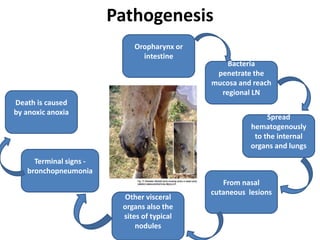
Pathogenesis
Oropharynx or
intestine
Bacteria
penetrate the
mucosa and reach
regional LN
Spread
hematogenously
to the internal
organs and lungs
From nasal
cutaneous lesions
Other visceral
organs also the
sites of typical
nodules
Terminal signs -
bronchopneumonia
Death is caused
by anoxic anoxia
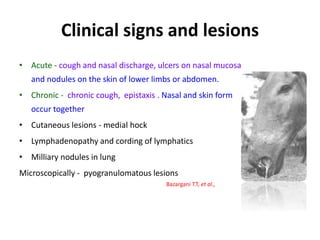
Clinical signs and lesions
• Acute - cough and nasal discharge, ulcers on nasal mucosa
and nodules on the skin of lower limbs or abdomen.
• Chronic - chronic cough, epistaxis . Nasal and skin form
occur together
• Cutaneous lesions - medial hock
• Lymphadenopathy and cording of lymphatics
• Milliary nodules in lung
Microscopically - pyogranulomatous lesions
Bazargani T.T, et al.,
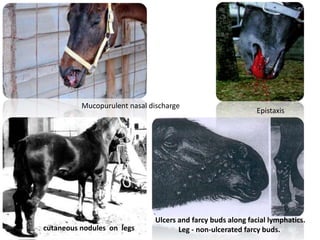
Mucopurulent nasal discharge
cutaneous nodules on legs
Ulcers and farcy buds along facial lymphatics.
Leg - non-ulcerated farcy buds.
Epistaxis
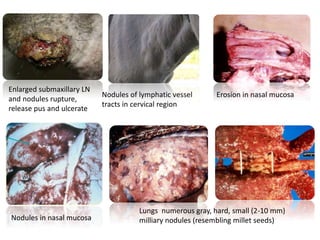
Enlarged submaxillary LN
and nodules rupture,
release pus and ulcerate
Nodules of lymphatic vessel
tracts in cervical region
Nodules in nasal mucosa
Lungs numerous gray, hard, small (2-10 mm)
milliary nodules (resembling millet seeds)
Erosion in nasal mucosa
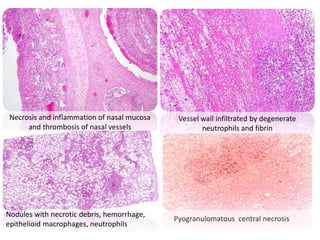
Necrosis and inflammation of nasal mucosa
and thrombosis of nasal vessels
Vessel wall infiltrated by degenerate
neutrophils and fibrin
Nodules with necrotic debris, hemorrhage,
epithelioid macrophages, neutrophils
Pyogranulomatous central necrosis
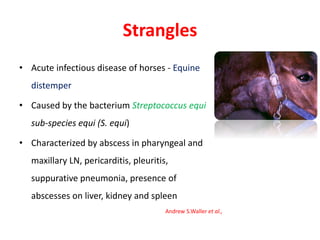
Strangles
• Acute infectious disease of horses - Equine
distemper
• Caused by the bacterium Streptococcus equi
sub-species equi (S. equi)
• Characterized by abscess in pharyngeal and
maxillary LN, pericarditis, pleuritis,
suppurative pneumonia, presence of
abscesses on liver, kidney and spleen
Andrew S.Waller et al.,
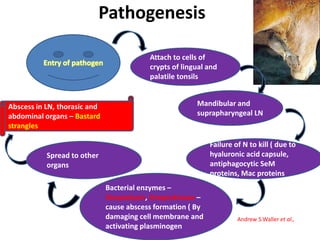
Pathogenesis
Attach to cells of
crypts of lingual and
palatile tonsils
Mandibular and
suprapharyngeal LN
Failure of N to kill ( due to
hyaluronic acid capsule,
antiphagocytic SeM
proteins, Mac proteins
Bacterial enzymes –
Streptolysin, Streptokinase –
cause abscess formation ( By
damaging cell membrane and
activating plasminogen
Spread to other
organs
Abscess in LN, thorasic and
abdominal organs – Bastard
strangles
Andrew S.Waller et al.,
Guttural pouch empyema
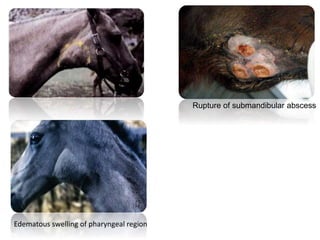
• LN swell, abscess and rupture either externally through the horse’s skin
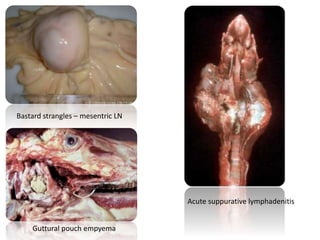
• In retropharyngeal LN, usually internally into the guttural pouch.
• This air-filled sack is an enlargement of the eustachian tube that drains
into the nasal cavity.
• Drainage of abscess material into the nasal cavity from the guttural pouch
contributes to the mucopurulent nasal discharges commonly observed
during strangles.
• Residual pus becomes inspissated to form chondroids
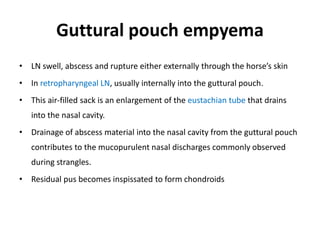
Edematous swelling of pharyngeal region
Rupture of submandibular abscess
Guttural pouch empyema
Acute suppurative lymphadenitis
Bastard strangles – mesentric LN
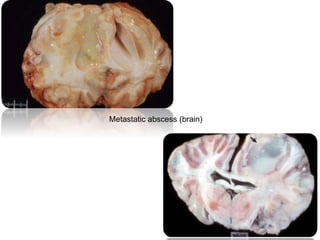
Metastatic abscess (brain)
Tetanus
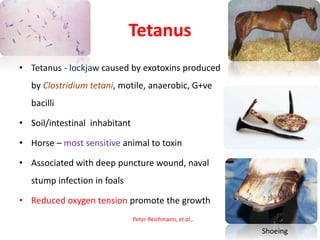
• Tetanus - lockjaw caused by exotoxins produced
by Clostridium tetani, motile, anaerobic, G+ve
bacilli
• Soil/intestinal inhabitant
• Horse – most sensitive animal to toxin
• Associated with deep puncture wound, naval
stump infection in foals
• Reduced oxygen tension promote the growth
Shoeing
Peter Reichmann, et al.,
Pathogenesis
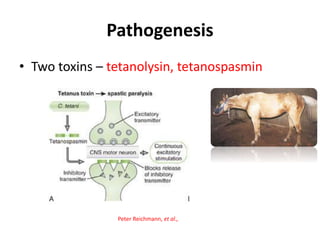
• Two toxins – tetanolysin, tetanospasmin
Peter Reichmann, et al.,
Clinical signs
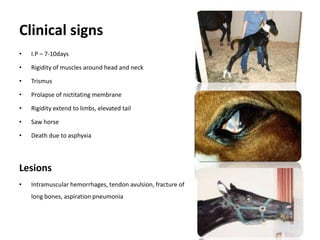
• I.P – 7-10days
• Rigidity of muscles around head and neck
• Trismus
• Prolapse of nictitating membrane
• Rigidity extend to limbs, elevated tail
• Saw horse
• Death due to asphyxia
Lesions
• Intramuscular hemorrhages, tendon avulsion, fracture of
long bones, aspiration pneumonia
Rhodococcus equi
• Causes disease in young foals
• Pyogranulomatous pneumonia
• Pleomorphic, aerobic, non-motile, G+ve,
intracellular pathogen
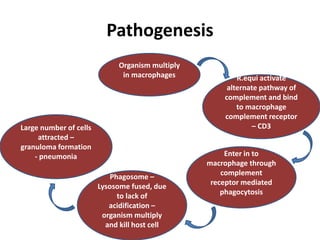
Pathogenesis
Organism multiply
in macrophages R.equi activate
alternate pathway of
complement and bind
to macrophage
complement receptor
– CD3Large number of cells
attracted –
granuloma formation
- pneumonia Enter in to
macrophage through
complement
receptor mediated
phagocytosis
Phagosome –
Lysosome fused, due
to lack of
acidification –
organism multiply
and kill host cell
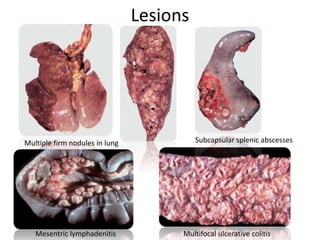
Lesions
Mesentric lymphadenitis Multifocal ulcerative colitis
Subcapsular splenic abscessesMultiple firm nodules in lung
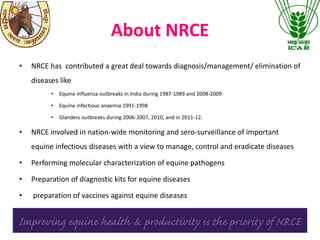
About NRCE
• NRCE has contributed a great deal towards diagnosis/management/ elimination of
diseases like
• Equine influenza outbreaks in India during 1987-1989 and 2008-2009
• Equine infectious anaemia 1991-1998
• Glanders outbreaks during 2006-2007, 2010, and in 2011-12.
• NRCE involved in nation-wide monitoring and sero-surveillance of important
equine infectious diseases with a view to manage, control and eradicate diseases
• Performing molecular characterization of equine pathogens
• Preparation of diagnostic kits for equine diseases
• preparation of vaccines against equine diseases
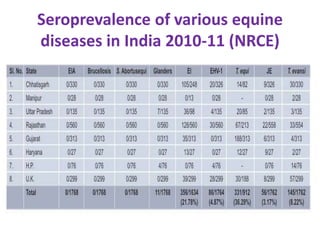
Seroprevalence of various equine
diseases in India 2010-11 (NRCE)
Conclusion
• Many diseases are emerging and re-emerging in these days
• Understanding the pathogenesis, molecular characterization of the organism and
epidemiology of these diseases are very important for the implementation of
preventive and control measure.
• Spreading of diseases in the farm can be effectively prevented by good biosecurity
measures.
• Surveillance and monitoring of important equine diseases including emerging and
existing diseases is needed to avoid production losses
• Development of effective, affordable diagnostics and immunoprophylactics against
important diseases threatening equines in India
Equine diseases

Equine diseases

  • 1.
    Dr. Pavulraj.S 5246 M.V.Sc., Scholar Divisionof Pathology Indian Veterinary Research Institute, Izatnagar, India
  • 2.
    Introduction • Horse –a symbol of bravery and power • Total population of equids in India is 1.18 million(2007) – Horses – 52% – Donkey – 37% – Mule – 11% • In India, diseases like glanders and equine influenza re-emerged among equines in 2006-09 • There are many bacterial and viral diseases are endemic in India • Many new emerging diseases threatening our equine health
  • 3.
    List of diseases Viraldiseases • Hendra • Equine influenza • Equine herpes virus • Equine infectious anemia • African horse sickness • Equine viral arteritis • West Nile fever • Equine encephalitis • Rabies Bacterial diseases Glanders Strangles Tetanus Rhodococcus equi Leptospirosis Botryomycosis
  • 4.
    Hendra • Acute febrilerespiratory infection of horses • Characterized by increased respiratory rate, profuse nasal discharge, jaundice and neurological signs with fatal outcome • Paramyxoviridae – genus Henipavirus (equine morbilivirus), don’t agglutinate RBC • Horses – only species naturally infected • Fruit bat – Pteropus Sp., reservoir host • Zoonotic • First recognized in 1994, caused acute respiratory disease Vanarsa Guillaume et.al.,
  • 5.
    50% seroprevalence ofHeV antibodies in flying foxes in Australia Satellite telemetry has shown that old world fruit bats can travel more than 2000 km in 1 year
  • 6.
    Epidemiology • Low transmissionrate – not persist in environment for long time • I.P – 5 to 10 days, disease last for 2 days • Low morbidity, high mortality • BSL-4 pathogen • Human infection form infected horse • Horse – nasopharynx inoculation. Shed virus in urinary tract
  • 7.
    Pathogenesis • Pneumotropic andneurotropic virus • Animal and human died after showing resp. signs • Virus isolated from all the organs of the body including blood • Affect vascular endothelium – cause pulmonary edema • Lesions in lung and brain – similar to CD, measles Vanarsa Guillaume et.al.,
  • 8.
    Clinical signs • Pyrexia,dyspnea, frothy/haemorrhagic nasal discharge, neurological signs, ataxia, muscle trembling Lesions • Diffuse pulmonary edema and congestion • Hydrothorax and hydropericardium • Congestion of LN, S/C hemorrhages Mic • Interstitial pneumonia, alveolar edema, necrosis of alveolar walls and thrombosis of blood vessels, Non suppurative encephalomyelitis • Vascular lesions in visceral organs • Syncytial cells in blood vessels – unique feature Vanarsa Guillaume et.al.,
  • 9.
    Interlobular edema Petechialhemorrhages over lung Brain vasculitis ovary vasculitis Lymphadenitis with syncytial cell formation. IHC staining of HeV N protein
  • 10.
    Equine influenza • “Flu”or “two-year-old cough” • Highly contagious respiratory viral disease of equines • RNA virus – Influenzavirus A – family Orthomyxoviridae • Two subtypes viz. H7N7 and H3N8 • H3N8 spreads very rapidly, cause severe clinical disease • Characterized by pyrexia, dyspnea, dry hacking cough, serous nasal discharge, edema of LN • Re-emerged in India in last week of June, 2008 in Jammu and Kashmir, 20 years after the first outbreak in 1987 • Entered to india by importing army horses for France Vandanajay Bhatia et. al., Nithin virmani et. al.,
  • 11.
  • 12.
    Transmission • Short I.P- <48hrs • Morbidity – 60-90% • Mortality - <1% • Outbreak – close contact • Direct contact – nasal secretion - Droplet infection
  • 13.
    Pathogenesis Attachment of virus toairway epithelial cells(HA to Sialic acid residue) Receptor mediated endocytosis Acidification of endosomal compartment Conformational change of HAFusion of viral and cellular membrane and release of RNP Entry of RNP into nucleus Synthesis of viral proteins Assembly and release Inhalation Ljubo Barbic et.al.,
  • 14.
  • 15.
    Lesions • Inflammation ofresp tract • Erosion of upper respiratory mucosa • Pulmonary consolidation, pneumonia • Myocarditis Mic • Hyaline membrane formation on bronchiolar and alveolar epithelium • Peribronchitis, bronchitis, bronchopneumonia Ljubo Barbic et.al.,
  • 16.
    Exudate in thebronchial lumen and infiltration of inflammatory cells in bronchial epithelium and lamina propria The alveolar architecture is obliterated by the presence of MNC, neutrophils, erythrocytes, and edema fluid in the alveolar lumina. IHC for equine influenza A virus respiratory tissue
  • 17.
    EI in India •The vaccination against EI is not practiced in India. • The rise in HI antibodies against EIV, in the naive population in the country which had not experienced any outbreak since 1987, indicated that the animals were infected recently with EIV. • NRCE regularly conducts routine sero-surveillance against infectious diseases of equines from various parts of the country. • The occurrence of the EI infection was confirmed in all the places by either virus isolation or by demonstration of fourfold or more rise in serum HI antibody titres. Nithin virmani et. al.,
  • 18.
    Equine herpes virus •Important cause of abortion, neonatal death, respiratory disease and neurological diseases • Caused by Equine herpesvirus (EHV1 &EHV4) • Narrow host range – single target species • Infect multiple types of cells • Lytic and latent cycle • Latency – trigeminal ganglia and CD8+ cells • EHV-1 - major cause of neonatal foal mortality in a number of breeding studs located in the Haryana, Punjab and Uttar Pradesh States of India. Tiwari S.C, et al.,
  • 19.
    Epidemiology and Transmission •Horse - to – horse • Ingestion and inhalation • Aborted material, semen, aerosol droplet • Reservoir – latently infected horses • Stress, transport can reactivate latency • Less persistent in environment • Infection acquired in first weak of birth
  • 21.
    Pathogenesis Inhalation Replicate in upper resp.tract mucosa In uterus – vasculitis – abortion Disseminated in all organs including trigeminal ganglion, CNS, uterus during viremia Enter to lamina propria, endothelial cells, CD8+ cells Brain – vasculitis, thrombo-ischemia, encephalopathy Virus Tiwari S.C, et al.,
  • 22.
    Clinical signs • EHV1– resp signs, abortion, neurological signs • Nasal discharge, conjunctivitis, lymphadenopathy, no cough • Abortion – last trimester • Neonatal infection – fatal • Stallion – poor semen quality • CNS – ataxia, paralysis, bladder dysfunction, incontinence • EHV4 – resp signs Neurological form of EHV1 Nasal discharge
  • 23.
    Multifocal hemorrhages, rubberylung Multiple necrotic foci in liver Hemorrhage and necrosis of brain stem Aborted fetus, enclosed in amnion
  • 24.
    Lesions Necrotic foci inliverEosinophilic inclusions in hepatocyte Vasculitis in CNS Nuclear debris in splenic follicle lymphocytolysis EHV-1 particles nucleus. Organelles of the cytoplasm degeneration hydropic dilation of sER,mitochondria, detached ribosomes of rER
  • 25.
    Equine infectious anemia •Swamp fever, Coggins disease • Equine infectious anemia virus, genus Lentivirus Family Retroviridae • Contains reverse transcriptase (RNA dependent DNA polymerase) • Characterized by icterus, anemia, edema of subcutis of ventral abdomen, thrombocytopenia • World wide distribution • Transmitted mechanically by mosquito or biting fly or by infected blood Maria Teresa Scicluna et al.,
  • 26.
  • 27.
    Transmission • Blood frominfected animal – source of infection • Mechanical transmission by Tabanus and Stomoxys calcitrans (with in short time <4hrs, in short distance) • Vertical transmission – in utero/colustrum feeding • Venereal transmission – semen • Iatrogenic – blood contaminated products Maria Teresa Scicluna et al.,
  • 28.
    Pathogenesis Kidney glomeruli havethickened basement membrane and mesangium with neutrophilic infiltration and contained deposits of immune complex Anemia – immune mediated destruction, intra & extra vascular hemolysis Thrombocytopenia – suppression of platelets production and immune mediated destruction Increase in proinflammatory cytokines causes fever, lethargy, inappetence Infection of macrophages induces upregulation of TNFα, IL-1 and IL-6 Active infection of liver, LN, BM, lung, adrenal gland, kidney, brain Viremia Virus infect macrophages in spleen, tissue Maria Teresa Scicluna et al.,
  • 29.
    Clinical signs  Pyrexia,edema of lower abdomen, sublingual and nasal haemorrhage  Anaemia, thrombocytopenia  Chronic form develop after the pass of acute form Lesions Acute disease  Icterus, haemorrhages on serous membrane  Edema of subcutis of abdomen, base of heart, perirenal and sublumbar fat  Hepatomegaly, splenomegaly, lympadenopathy Chronic disease  Hypertrophy of spleen and bone marrow  Heart – haemorrhage in epicardium and pericardium Spyrou et al.,
  • 30.
    Enlarged grey redliver showing lobular pattern Replacement of BM fat with dark red hemopoietic tissue - erythroid hyperplasia Pale cardiac muscle, focal white areas of myocardial degeneration Kidney – infracts
  • 31.
    Microscopically  Edema, hyalinedegeneration and lymphocyte infiltration around blood vessels.  Glomerular nephritis  Liver - lymphocytic infiltration, dilation of sinusoids, haemosiderin pigment in kupffer cells, centrilobular necrosis.  Periportal - lymphocytes and plasma cells.  Interface hypereosinophilic hepatocytes with loss of cellular detail - piecemeal necrosis  Hyperplasia of BM Spyrou et al.,
  • 32.
    African horse sickness •Non contagious, infectious, insect borne disease of equine • Caused by African horse sickness virus, belong to genus – Orbivirus, family – Reoviridae, Nonenveloped • Transmitted by Culicoides spp. • 9 antigenic serotypes • Characterized by pyrexia, edema of lungs, pleura, S/C tissue and hemorrhage of serosa of internal organs • In 2006 - WOAH declared India free of African horse sickness Kazeem.M.M et al.,
  • 33.
    Epidemiology • Mortality rate- 70-95% Transmission • Not contagious • Culicoides spp., - biological vector • Occasional - mosquitoes - Culex, Anopheles and Aedes spp.; ticks - Hyalomma, Rhipicephalus • Moist and warm temperatures favour the presence of insect vectors • Virus movement over long distances via windborne infected vectors Sources of virus • Viscera and blood of infected horses • Semen, urine and all shed and secreted products • Viraemia up to 18 days Kazeem.M.M et al.,
  • 34.
    Pathogenesis Cardiac form (serotype9)-degeneration and necrosis of myocardium, hydropericardium Foals and naïve horses develop – peracute pulmonary form Secondary viremia Primary viremia – disseminate to endothelial cells of target organs – endothelial cell damages Effusion in body cavities, serosal, hemorrhages Initial multiplication in regional LN Inoculation of virus Gomez J.C. et al.,
  • 35.
    Pulmonary & cardiacform AHS - Foam from nares due to pulmonary edema Bilateral supra orbital edema – cardiac form Congestion and edema of conjunctiva
  • 36.
    Lesions • Respiratory form:edema of the lungs, froth in trachea, hydro pericardium, oedema of thoracic LN, petechiae in pericardium • Cardiac form: S/C and I/M gelatinous edema, epicardial and endocardial ecchymoses, myocarditis, haemorrhagic gastritis, petechiae in ventral surface of tongue Gomez J.C. et al.,
  • 37.
    AHS - Pulmonaryedema (distended interlobular septa) edema in intermuscular fascia of neck S/C edema
  • 38.
    Petechial hemorrhages onserosa Petechial hemorrhages on the diaphragm AHS - Hydropericardium Subendocardial hemorrhagesSubcutaneous edema
  • 39.
    Microscopically • Widening ofinterlobular septa • Alveolar edema • Perivasculitis • Focal myocardial hemorrhage • Degeneration of myocardial fibers Pulmonary edema Myocardial necrosis
  • 40.
    Equine viral arteritis •Infectious disease • Caused by Equine arteritis virus belong to genus Arterivirus, family Togaviridae • Characterized by depression, edema of limbs, intense pink or red conjunctiva, palpebral edema, enteritis, pneumonic complications and abortions • Principal lesions is degenerative and inflammatory changes in the endothelium and tunica media of small arteries • Serological survey indicate wide spread infection but clinical disease is not that common • About 80% abortion during clinical disease • The virus which causes EVA was first isolated from horses in Ohio in 1953 • India – one case in 1989 Holyoak G.R., et al.,
  • 41.
    Transmission • Via respiratoryroute or by ingestion • Venereal transmission by stallions • Tissues and fluids of aborted fetus contained large mass of virus • Virus shed in the urine Holyoak G.R., et al.,
  • 43.
  • 44.
    Ocular edema andconjunctivitis (pink eye) Excess lachrymation Urticarial type skin reaction - due to lesions in blood vessels
  • 45.
    Lesions • Congestion, petchiaein conjunctiva, resp tract and guttural pouches, S/C tissue • Hydrothorex, petichae in pleura, heart, pericardium and lungs, • Ascites • Enlargement of LN • Petichae on endocardium, epicardium, mesentery • Small intestine, caecum and colon oedematous and congested Holyoak G.R., et al.,
  • 46.
    Pulmonary hemorrhages Interstitial pneumoniaand emphysema Enteritis with sub-serosal and sub-mucosal hemorrhages
  • 47.
    Microscopically • Small arteriesand necrosis and deposition of eosinophilic mass in tunica media with cellular infiltration in adventitia • Platelet thrombi in lumen • Abortion -necrotizing myometritis
  • 48.
    West Nile virus:the Indian scenario • West Nile virus - arthropod borne flavivirus • Causes a mild infection in human and horses • Mosquitoes are the principal vectors • Various Culex species - Transovarial transmission • Very few clinical cases of human encephalitis due to WNV are observed - Neuroinvasive disease • WNF in horses has not been documented in India. Paramasivam, et al.,
  • 50.
    Glanders • Fatal, contagiousand zoonotic disease • Caused by Burkholderia mallei , Gram -Ve, non-motile, non- sporulating obligate aerobic • Acute or chronic form • Characterized by nodular lesions in the lungs and nodular or ulcerative lesions in the respiratory tract mucosa and skin • Occupational disease of veterinarians, farriers and animal workers • Last report on glanders outbreak in India - June, 1985, recently from july, 2006 Purulent nasal discharge 2010 Bazargani T.T, et al.,
  • 51.
    Transmission • Excretions anddischarges of affected animals skin and nasal mucosa • Oral - chronic respiratory disease • Intranasal - acute disease • Virulence and immuno-evading factors – Intracellular status – Capsule and capsular LPS – High level of genomic alterations in the host – such rapid genomic variation upregulate virulence gene expression in B. mallei – Genomic instability has had impact on vaccine development • Pathogenesis not fully understood Bazargani T.T, et al.,
  • 52.
    Pathogenesis Oropharynx or intestine Bacteria penetrate the mucosaand reach regional LN Spread hematogenously to the internal organs and lungs From nasal cutaneous lesions Other visceral organs also the sites of typical nodules Terminal signs - bronchopneumonia Death is caused by anoxic anoxia
  • 53.
    Clinical signs andlesions • Acute - cough and nasal discharge, ulcers on nasal mucosa and nodules on the skin of lower limbs or abdomen. • Chronic - chronic cough, epistaxis . Nasal and skin form occur together • Cutaneous lesions - medial hock • Lymphadenopathy and cording of lymphatics • Milliary nodules in lung Microscopically - pyogranulomatous lesions Bazargani T.T, et al.,
  • 54.
    Mucopurulent nasal discharge cutaneousnodules on legs Ulcers and farcy buds along facial lymphatics. Leg - non-ulcerated farcy buds. Epistaxis
  • 55.
    Enlarged submaxillary LN andnodules rupture, release pus and ulcerate Nodules of lymphatic vessel tracts in cervical region Nodules in nasal mucosa Lungs numerous gray, hard, small (2-10 mm) milliary nodules (resembling millet seeds) Erosion in nasal mucosa
  • 56.
    Necrosis and inflammationof nasal mucosa and thrombosis of nasal vessels Vessel wall infiltrated by degenerate neutrophils and fibrin Nodules with necrotic debris, hemorrhage, epithelioid macrophages, neutrophils Pyogranulomatous central necrosis
  • 57.
    Strangles • Acute infectiousdisease of horses - Equine distemper • Caused by the bacterium Streptococcus equi sub-species equi (S. equi) • Characterized by abscess in pharyngeal and maxillary LN, pericarditis, pleuritis, suppurative pneumonia, presence of abscesses on liver, kidney and spleen Andrew S.Waller et al.,
  • 58.
    Pathogenesis Attach to cellsof crypts of lingual and palatile tonsils Mandibular and suprapharyngeal LN Failure of N to kill ( due to hyaluronic acid capsule, antiphagocytic SeM proteins, Mac proteins Bacterial enzymes – Streptolysin, Streptokinase – cause abscess formation ( By damaging cell membrane and activating plasminogen Spread to other organs Abscess in LN, thorasic and abdominal organs – Bastard strangles Andrew S.Waller et al.,
  • 59.
    Guttural pouch empyema •LN swell, abscess and rupture either externally through the horse’s skin • In retropharyngeal LN, usually internally into the guttural pouch. • This air-filled sack is an enlargement of the eustachian tube that drains into the nasal cavity. • Drainage of abscess material into the nasal cavity from the guttural pouch contributes to the mucopurulent nasal discharges commonly observed during strangles. • Residual pus becomes inspissated to form chondroids
  • 60.
    Edematous swelling ofpharyngeal region Rupture of submandibular abscess
  • 61.
    Guttural pouch empyema Acutesuppurative lymphadenitis Bastard strangles – mesentric LN
  • 62.
  • 63.
    Tetanus • Tetanus -lockjaw caused by exotoxins produced by Clostridium tetani, motile, anaerobic, G+ve bacilli • Soil/intestinal inhabitant • Horse – most sensitive animal to toxin • Associated with deep puncture wound, naval stump infection in foals • Reduced oxygen tension promote the growth Shoeing Peter Reichmann, et al.,
  • 64.
    Pathogenesis • Two toxins– tetanolysin, tetanospasmin Peter Reichmann, et al.,
  • 65.
    Clinical signs • I.P– 7-10days • Rigidity of muscles around head and neck • Trismus • Prolapse of nictitating membrane • Rigidity extend to limbs, elevated tail • Saw horse • Death due to asphyxia Lesions • Intramuscular hemorrhages, tendon avulsion, fracture of long bones, aspiration pneumonia
  • 66.
    Rhodococcus equi • Causesdisease in young foals • Pyogranulomatous pneumonia • Pleomorphic, aerobic, non-motile, G+ve, intracellular pathogen
  • 67.
    Pathogenesis Organism multiply in macrophagesR.equi activate alternate pathway of complement and bind to macrophage complement receptor – CD3Large number of cells attracted – granuloma formation - pneumonia Enter in to macrophage through complement receptor mediated phagocytosis Phagosome – Lysosome fused, due to lack of acidification – organism multiply and kill host cell
  • 68.
    Lesions Mesentric lymphadenitis Multifocalulcerative colitis Subcapsular splenic abscessesMultiple firm nodules in lung
  • 69.
    About NRCE • NRCEhas contributed a great deal towards diagnosis/management/ elimination of diseases like • Equine influenza outbreaks in India during 1987-1989 and 2008-2009 • Equine infectious anaemia 1991-1998 • Glanders outbreaks during 2006-2007, 2010, and in 2011-12. • NRCE involved in nation-wide monitoring and sero-surveillance of important equine infectious diseases with a view to manage, control and eradicate diseases • Performing molecular characterization of equine pathogens • Preparation of diagnostic kits for equine diseases • preparation of vaccines against equine diseases
  • 70.
    Seroprevalence of variousequine diseases in India 2010-11 (NRCE)
  • 71.
    Conclusion • Many diseasesare emerging and re-emerging in these days • Understanding the pathogenesis, molecular characterization of the organism and epidemiology of these diseases are very important for the implementation of preventive and control measure. • Spreading of diseases in the farm can be effectively prevented by good biosecurity measures. • Surveillance and monitoring of important equine diseases including emerging and existing diseases is needed to avoid production losses • Development of effective, affordable diagnostics and immunoprophylactics against important diseases threatening equines in India

Editor's Notes

  • #3 98% horses – by poor man
  • #5 Nipahvirus is in this group, caused death of 2 persons out of 4 infected Order – monanegavirales, enveloped 47% bats seropositive
  • #7 Camping under trees, housing in places where this bats are there cause transmission. In index case, one is pregnant, so pregnancy may be risk factor.
  • #9 Swelling of face, lips, neck, supraorbital fossa Disease contained in all outbreak after death or euthanesia – no vaccine prepared Early diagnosis and euthanesia is key preventive measures Persistence of infection in environment, carries state, potential sources of infection – need future research No excresion of virus from recoverd animal Don’t treat, oncediagnosed, do euthanesia Clinical signs, postmortem – pulmonary edema Tissue culture – Vero and RK-13. Syncytial CPE in 3 days FAT Electron microscopy Virus neutralization Indirect ELISA IHC, PCR
  • #11 Mucopurulent due to secondary bacterial infections H7N7 are limited as the isolation of the virus has not been reported for more than two decades. H3N8 subtype has diverged into two lineages viz. American and Eurasian (Daly et al., 1996). Both the lineages have been found to be circulating together without any propensity for the geographical locations. The American lineage has been further classified into Florida, Kentucky and South American sublineages (Lai et al., 2001). Analysis of the isolates of the H3N8 EI (Webster, 1993) and only serological evidence has been found (Madic et al., 1996).
  • #12 Map of India showing states affected by EI (blue) during 2008–09. Serum samples received from Jharkhand (13) and Chattisgarh (8) (brown) were negative for EIV antibodies. There were no reports of EI from other states (no colour). (For interpretation of the references to color in this figure caption, the reader is referred to the web version of the article Newzealand, australia, iceland – no outbreak
  • #13 No carrier state, as like hendra
  • #14 RNP – ribo nucleoprotein Virus spread quickly throughout respiratory tract, damaging epithelium of trachea and bronchi – virus replication induce cell death – apoptosis, desquamation. Vacuolation and swelling of columnar epi., loss of cilia, lead to secondary bacterial infection Only resp tract- becoz acidification of cell by organs specific trypsin like protease need for conformational change in HA, so localized infection produced. HA cleavabality is important
  • #15 . The influenza life cycle. Influenza virions are surrounded by a lipid bilayer, which they acquire as they bud from an infected cell. The predominant influenza membrane surface protein is hemagglutinin (red). Virus particles bind to cell surface glycoproteins or glycolipids via the sialic acid binding sites on hemagglutinin, and are internalized by receptor-mediated endocytosis. The mild acidity of the endosome triggers a conformational change in hemagglutinin, which renders it fusogenic. Fusion between viral and endosomal membranes releases the viral nucleocapsid into the cell, where production of new viral particles commences.
  • #17 Immunohistochemical staining for equine influenza A virus (brown stain) in sections of respiratory tissue from English foxhounds involved in 2002 respiratory disease outbreak, United Kingdom. A) Case 1, showing focal staining of an apparently necrotic bronchiole in an area of pneumonia; magnification x100. B) Case 2, showing a large amount of staining throughout the epithelium and inflammatory cells present in the brush border;
  • #25 Diagnosis of latent infection PCR – for latency associated transcripts Co-cultivation – in vitro reactivation – gold standard
  • #26 The genome consist of two single stranded positive sense RNA molecules
  • #28 Animal remain persistently infected despite the immune response Infection may be subclinical, or may be acute with febrile manifestations and fatal outcome Recovered horses may suddenly exhibit severe symptoms and die Circulating virus antibody complexes are demonstrated which lead to immune complex disease Disease occurred in three forms-Acute, Sub acute and chronic
  • #29 Acute disease is characterised by rapid onset, high fever (108) after 1-3 weeks incubation Extreme weakness, thirst, inappetence, depression, oedema of lower abdomen, occasional nasal haemorrhage and death in a month Survived cases developed the subacute or chronic from of disease. Gradual development of anemia, RBC count drops to about 4 million In subacute form fever is relapsed, recurrence of other symptoms similar to acute form but of less severity Gradual weight loss, debility, oedema of dependent parts, pallor m m In chronic form, animal appears normal expect transient fever at intervals of a month or two, occasional oedema, weakness or incoordination RBC count drops down to 2 to 3 million
  • #30 Gradual weight loss, debility,
  • #31 http://www.fao.org/docrep/003/t0756e/T0756E07.htm
  • #32 Glomerular nephritis – thick basment membrane, infiltration of cells
  • #34 Hosts Reservoir host still unknown Usual hosts: horses, mules, donkeys, zebra Occasional hosts: elephants, onager, camels, and dogs (after eating infected blood or horsemeat)
  • #35 Gomez J.C. et al.,
  • #37 (cardiac and pulmonary - common)
  • #41 Holyoak G.R., et al.,
  • #44 Clinical and laboratory findings and sequential pathogenesis of EVA following respiratory infection. Vertical bars correspond to the chronological occurrence of the respective clinical or laboratory findings and the distribution of virus in body tissues and secretions
  • #51 Several laboratory animals are susceptible to infection including, hamsters, mice and guinea pigs. The susceptibility of the latter species formed the basis of the Strauss reaction in the diagnosis of the disease horses(chronic), mules and donkeys(acute)
  • #52 Infected animals, or the carriers which have made an apparent recovery from the disease, are the important sources of infections.
  • #54 Nasal lesions start as nodules - ulcerate and heal with star-shaped scars. Initially serous discharge, later purulent and greenish-yellow. Enlargement of submaxillary lymph node is common. In Skin, subcutaneous nodules - ulcerate and discharge pus. - Liquefied or caseo-necrotic centre surrounded by epithelioid cells, giant cells and lymphocytes which blend with an outer layer of fibrous tissue
  • #56 In Humans - four forms of clinical disease, i.e., septicemia, pulmonary infection, acute localized infection or chronic infection. Combinations of syndromes can occur Cutaneous lesions of glanders (Equine farcy) occur as a result of severe suppurative lymphangitis characterized by cord-like thickening of the subcutaneous lymphatics referred to as ‘farcy pipes’ and enlarged lymph nodes in the region of legs, ventral abdomen, face and neck.
  • #57 Microscopically, each nodule consists of a focus of intense cellular infiltration with an inner core of neutrophils and periphery of macrophages. The nodule may be isolated or semi confluent with suppurative cores separated by granulation tissue. Sloughed necrotic tissue from individual nodule leaves a crateriform ulcer which has a sharp margin and smooth base.
  • #64 Shoeing. Tetanus, or lockjaw, is caused by a bacterial toxin. The bacteria is normally found in the soil and in the feces and intestinal tracts of horses. However, these bacteria can enter the horse’s tissues through a wound or the naval stump of a newborn foal. Reduced oxygen in these areas may allow the bacteria to multiply and produce toxins that result in tetanus. While tetanus is normally associated with deep puncture wounds, any wound that has healed over may produce conditions that cause tetanus. Usually, the first symptom of tetanus is the third eyelid protruding upward from the inner corner of each eye so that it covers one-third to one-half of the eye. The horse’s head and neck may also appear stiff. As the disease progresses, the horse develops stiffness all over its body, and it has difficulty moving and turning. The horse usually stands in a “sawhorse” position with its legs extended, and it may seem nervous and excitable. Noises may cause general muscular spasms. 2 Alabama Cooperative Extension System Most cases of tetanus in horses are fatal, but the disease can easily be prevented by a yearly vaccination with tetanus toxoid. Horses that have not been immunized can be protected temporarily by a tetanus antitoxin injection. However, the antitoxin is not a substitute for routine vaccinations. Horses may get many small, unnoticed wounds that can allow tetanus to develop.
  • #67 3wks to 6 months
  • #68 complement receptor mediated phagocytosis – not associated with high level of production of reactive O2 species.
  • #69 Multiple firm nodules in lung Nodules noticed in intestine, mesentric LN, other visceral organs including liver, kidney, spleen Causes septic arthritis, vertebral osteomyelitis, ulcerative lymphangitis Microscopically – pyogranuloma