Gráinne Conole,  The Open University [email_address] JISC Curriculum Design, Cluster meeting  Strathclyde University 21/4/09
Focus Series of reflections on potential curriculum design representations Ideas for collaboration across the three JISC Curriculum Design projects (the Open University, Strathclyde University, Ulster University) Suggestions for next steps
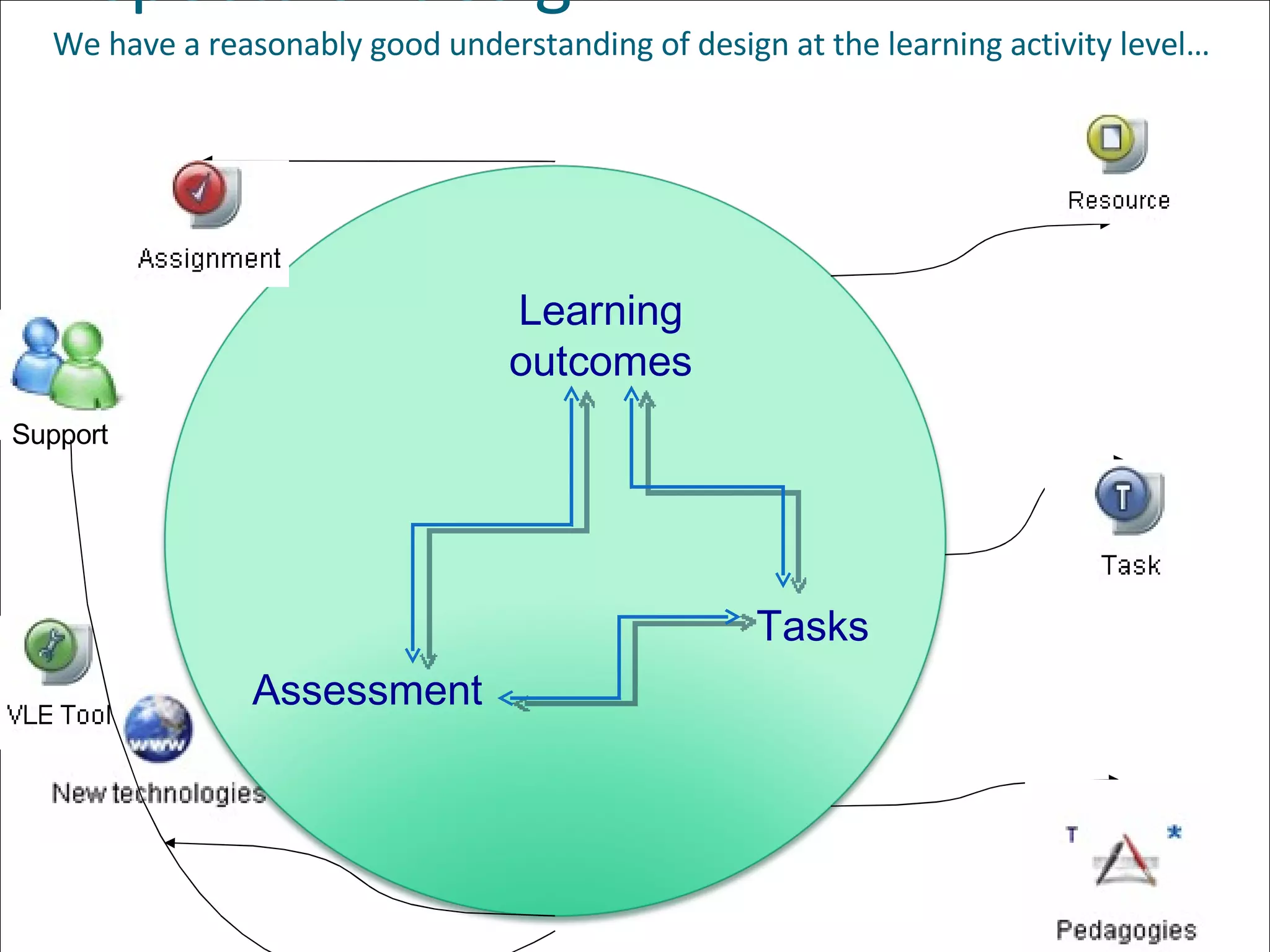
Aspects of design  We have a reasonably good understanding of design at the learning activity level… Assessment Learning outcomes Tasks Support
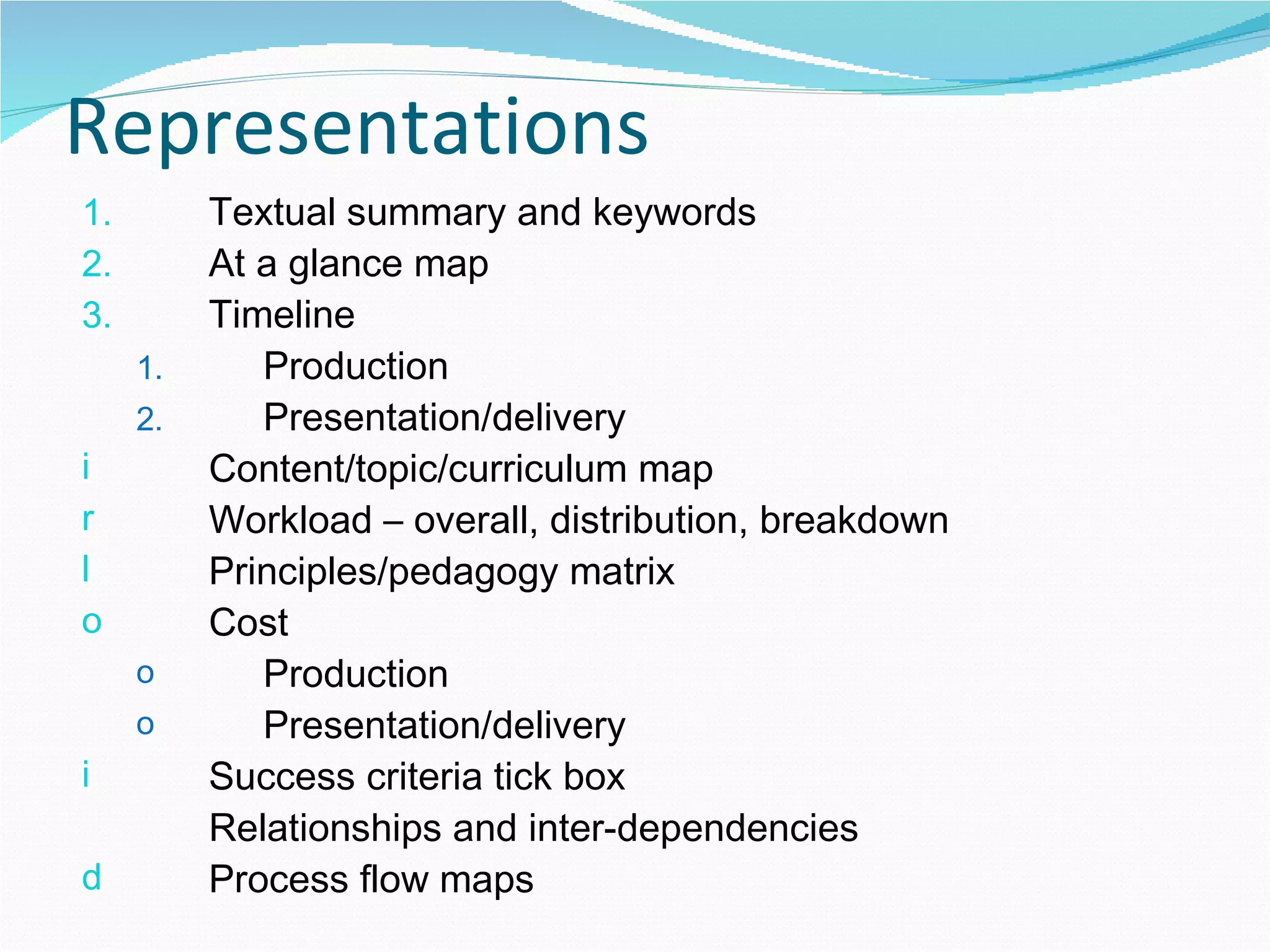
Representations Textual summary and keywords  At a glance map Timeline Production Presentation/delivery Content/topic/curriculum map Workload – overall, distribution, breakdown Principles/pedagogy matrix Cost  Production Presentation/delivery Success criteria tick box Relationships and inter-dependencies Process flow maps
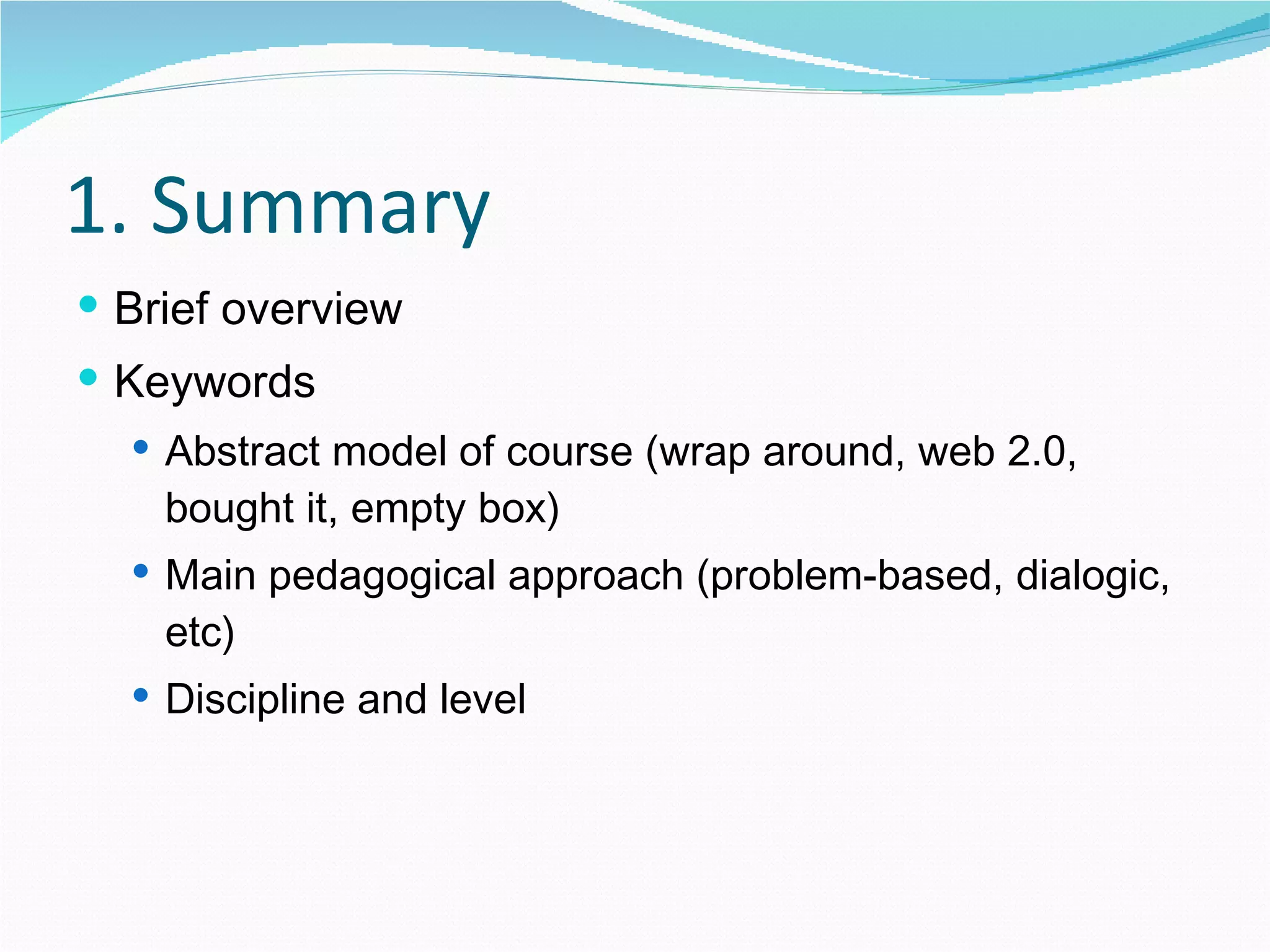
1. Summary Brief overview Keywords Abstract model of course (wrap around, web 2.0, bought it, empty box) Main pedagogical approach (problem-based, dialogic, etc) Discipline and level
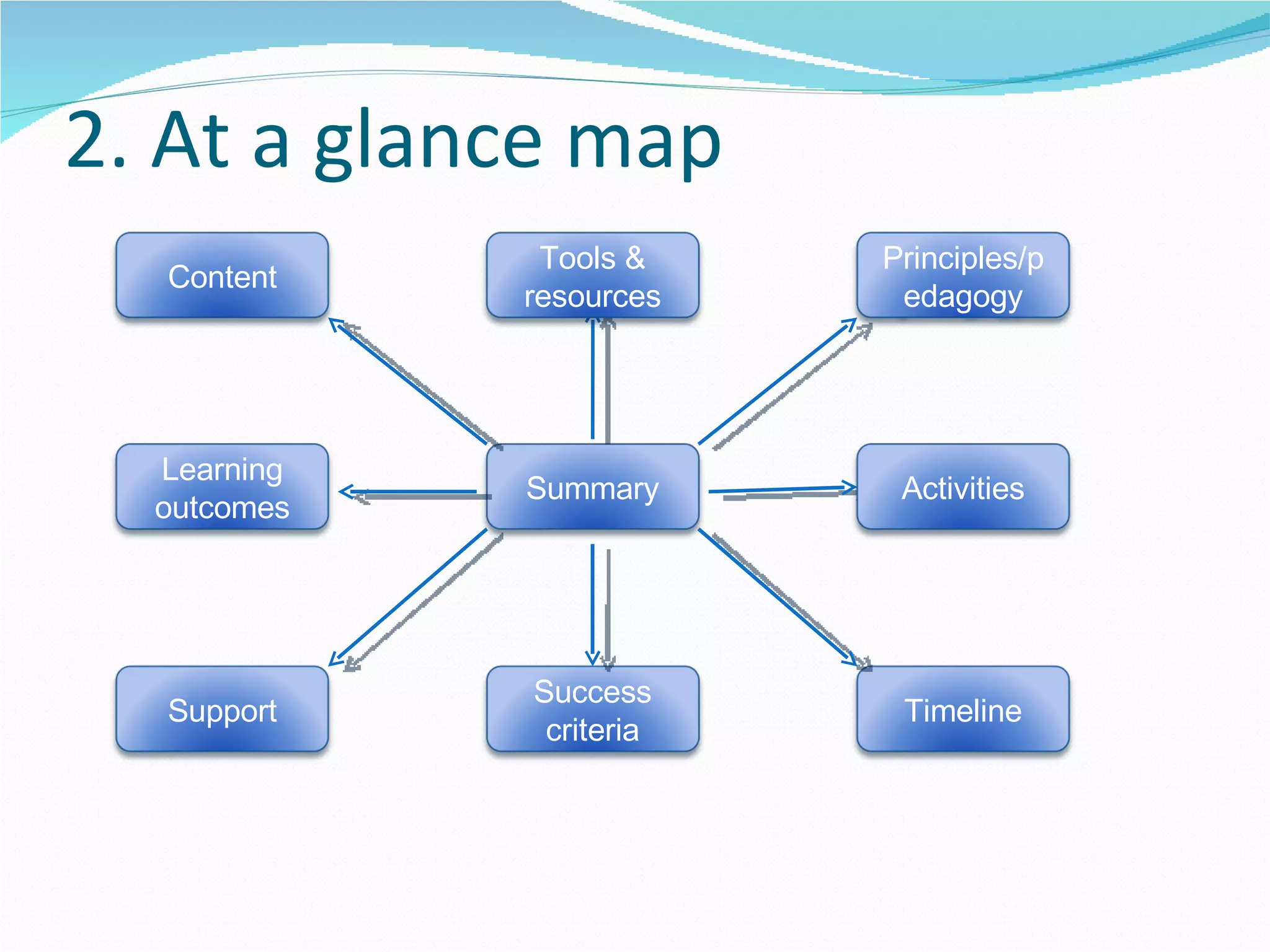
2. At a glance map Summary Tools & resources Activities Learning outcomes Success criteria Support Timeline Principles/pedagogy Content
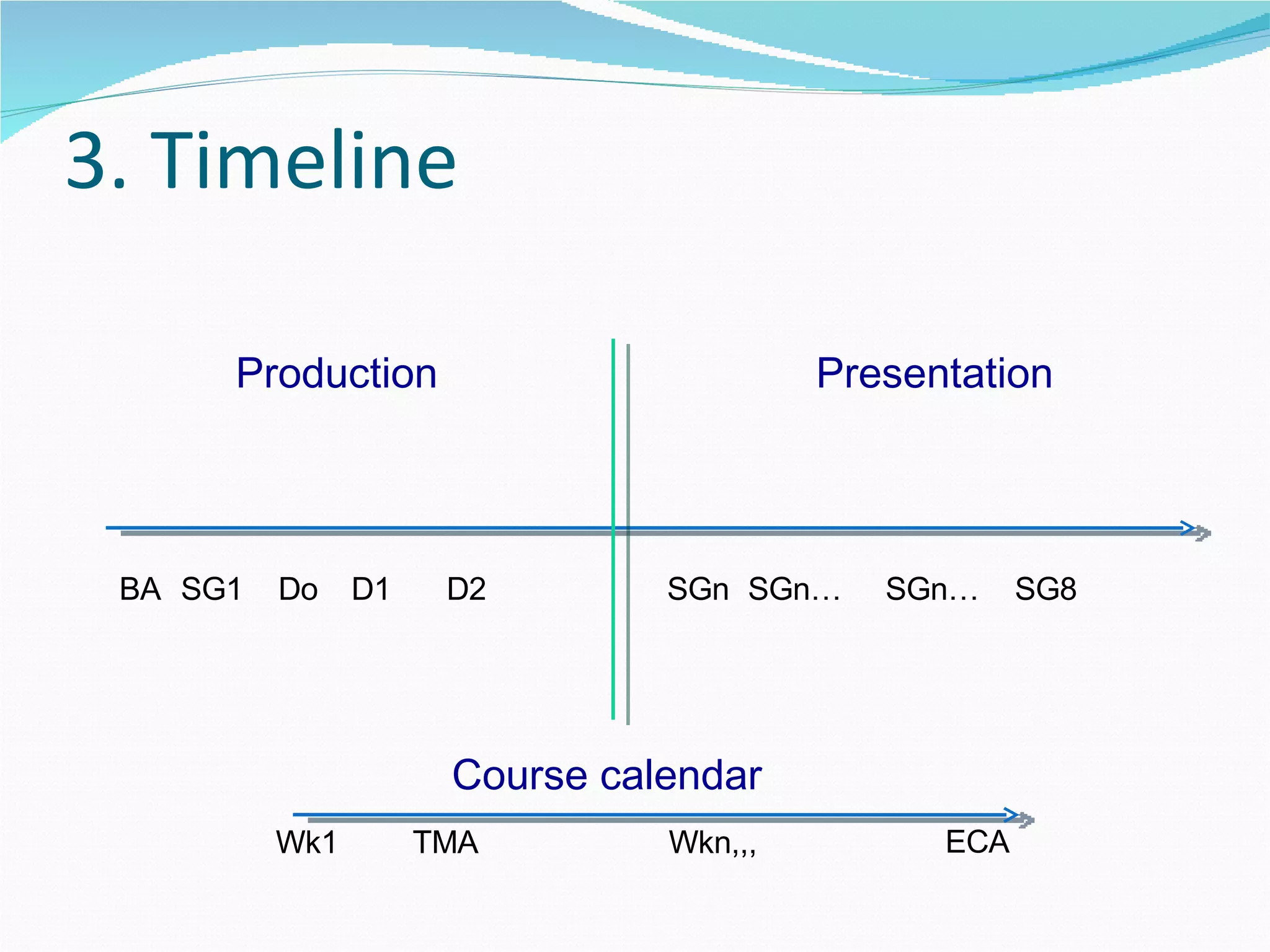
3. Timeline BA Do D1 D2 SG1 SGn SG8 Production Presentation SGn… SGn… Course calendar Wk1 Wkn,,, TMA ECA
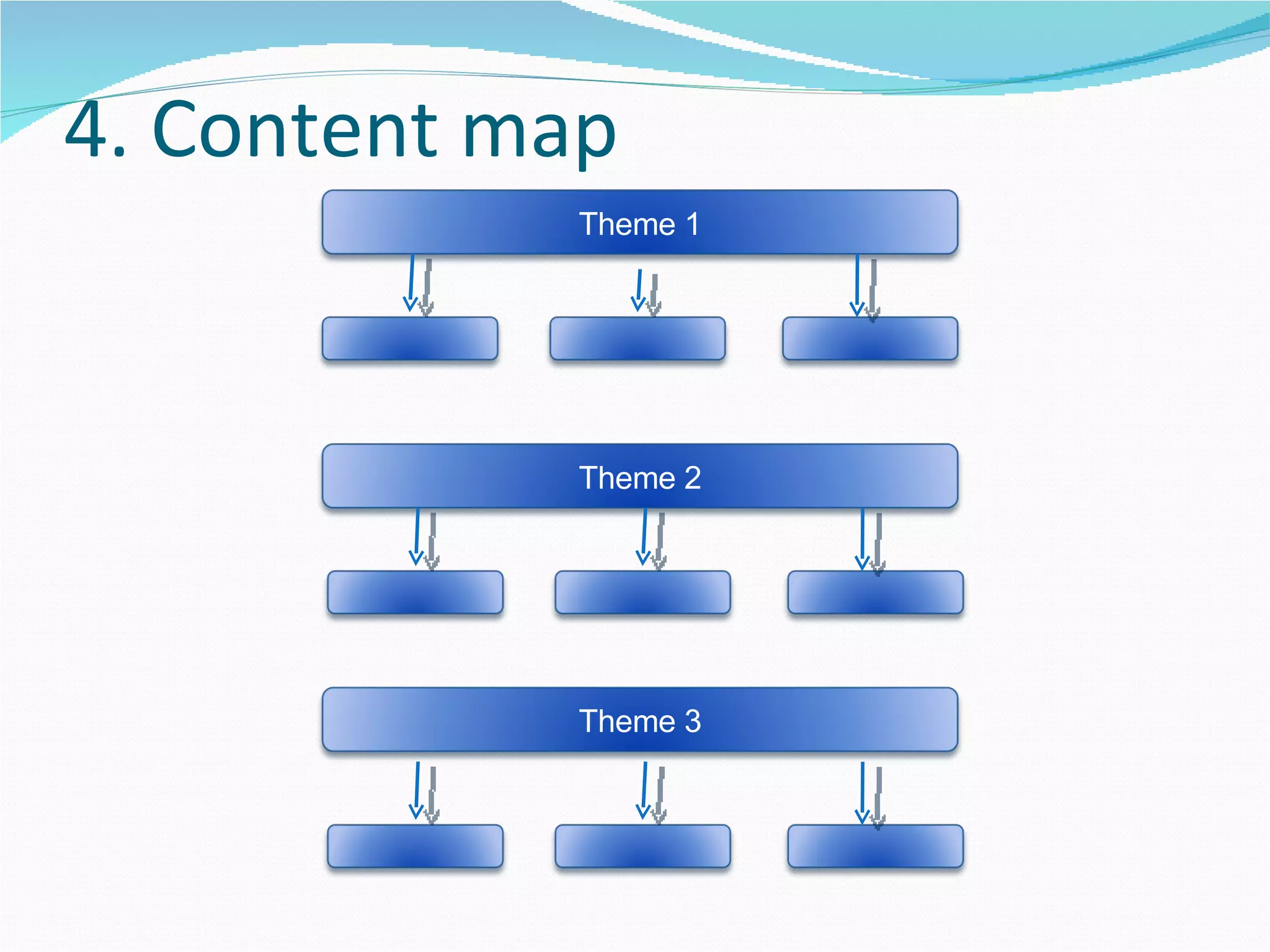
4. Content map Theme 1 Theme 2 Theme 3
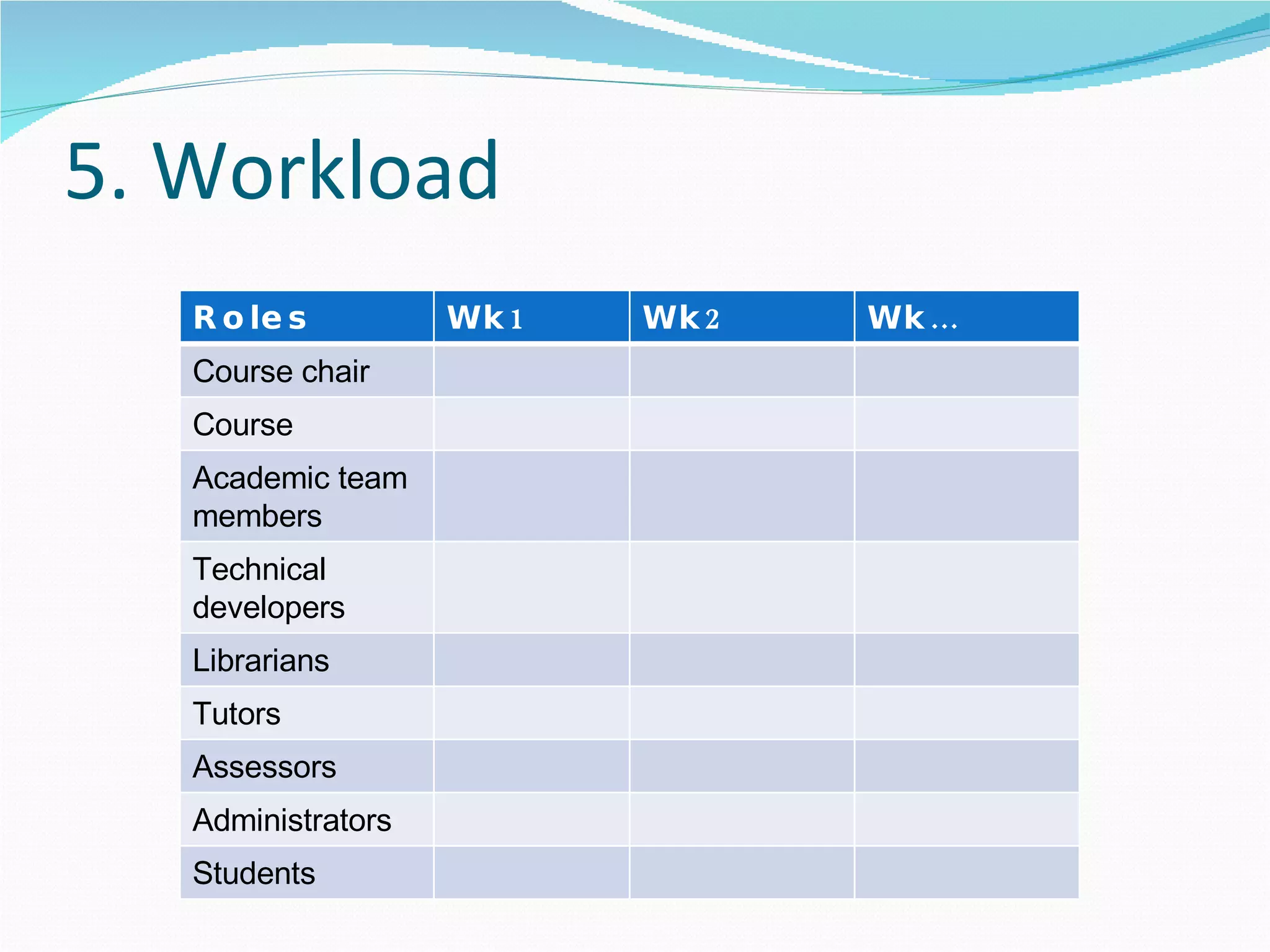
5. Workload Roles Wk1 Wk2 Wk… Course chair Course manager Academic team members Technical developers Librarians Tutors Assessors Administrators Students
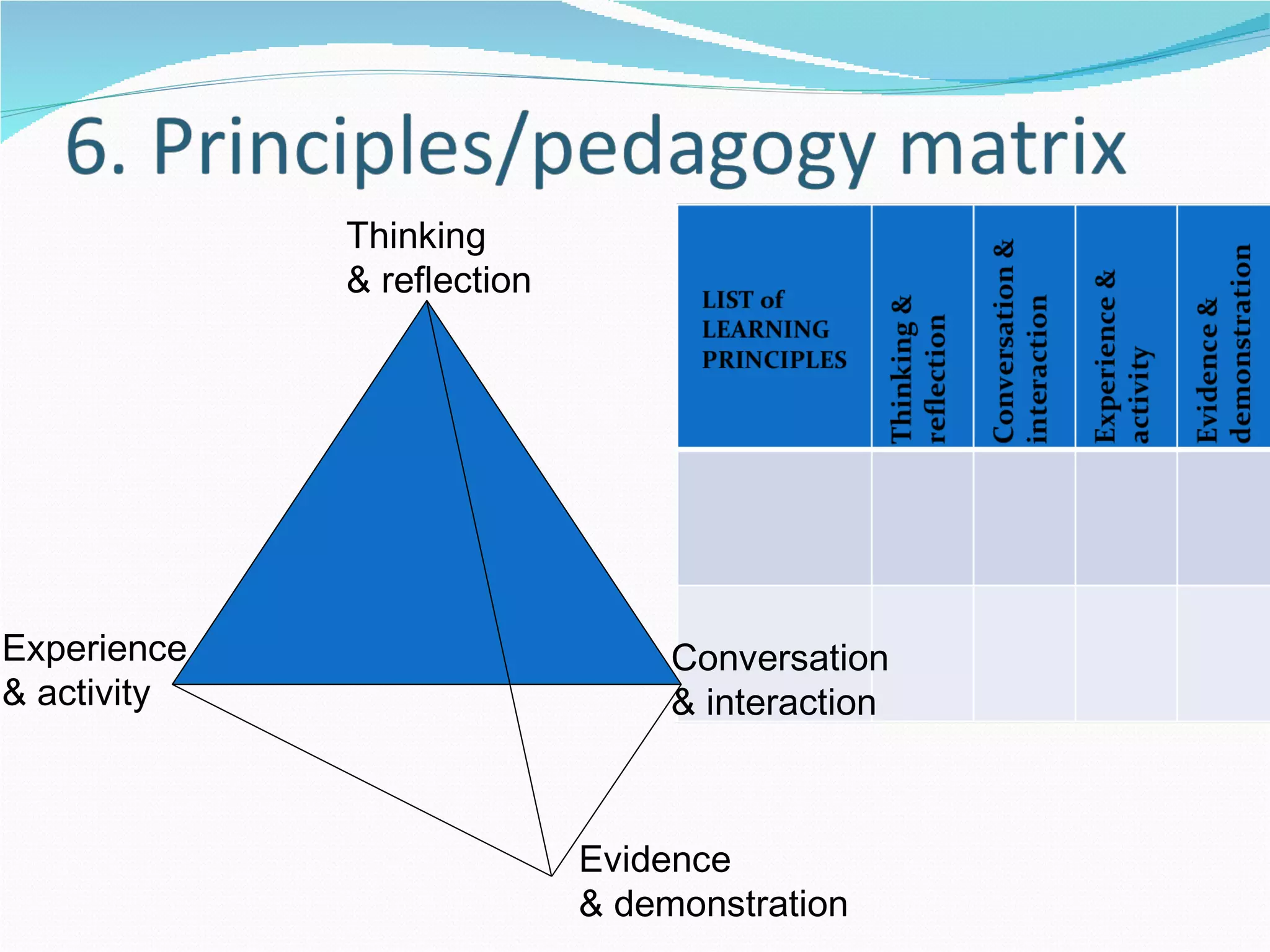
Thinking  & reflection Conversation  & interaction  Experience  & activity Evidence & demonstration
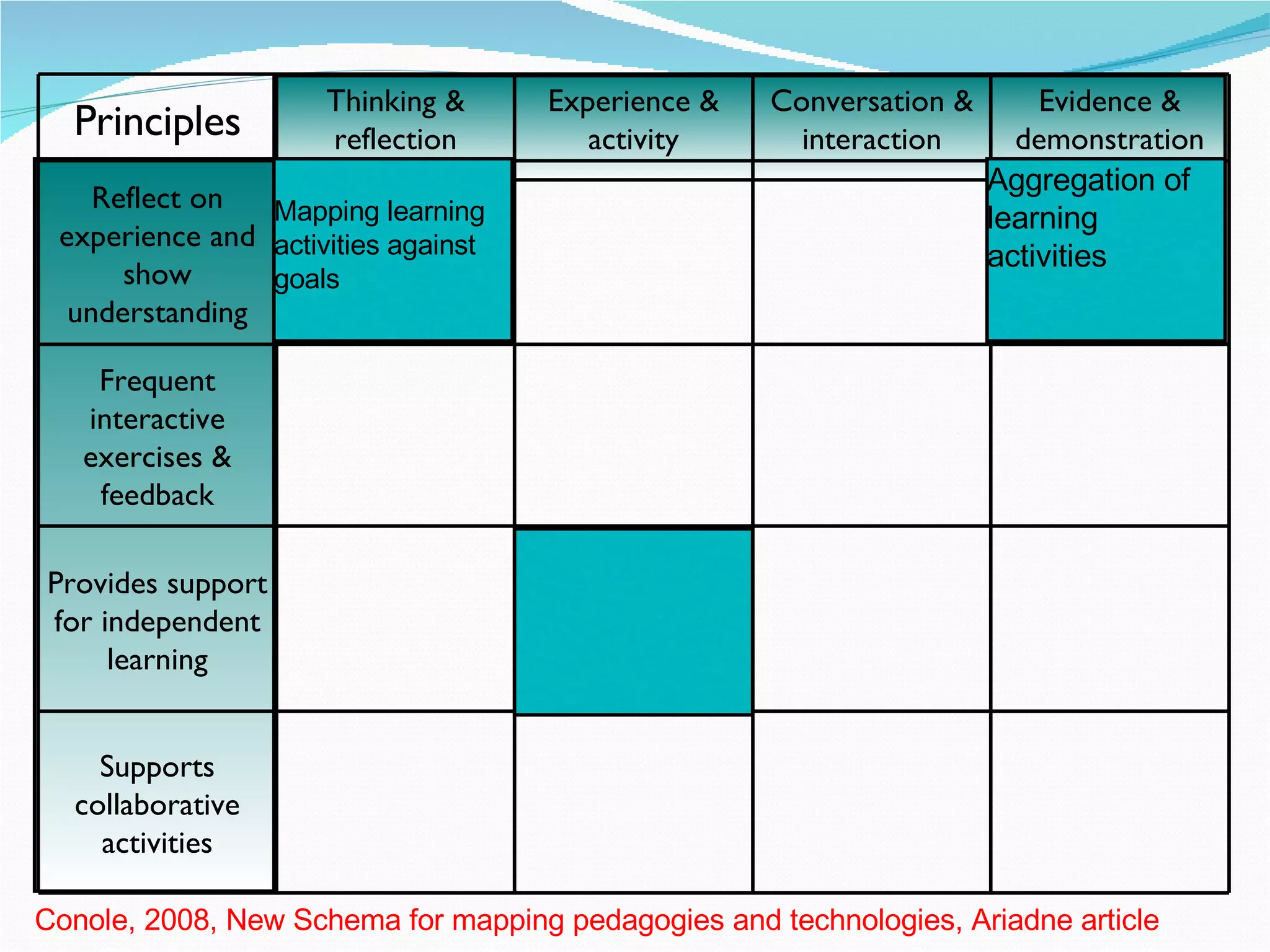
Mapping learning  activities against goals Aggregation of learning activities Conole, 2008, New Schema for mapping pedagogies and technologies, Ariadne article Principles Thinking & reflection Experience & activity Conversation & interaction Evidence & demonstration Reflect on experience and show understanding Frequent interactive exercises & feedback Provides support for independent learning Supports collaborative activities
 
 
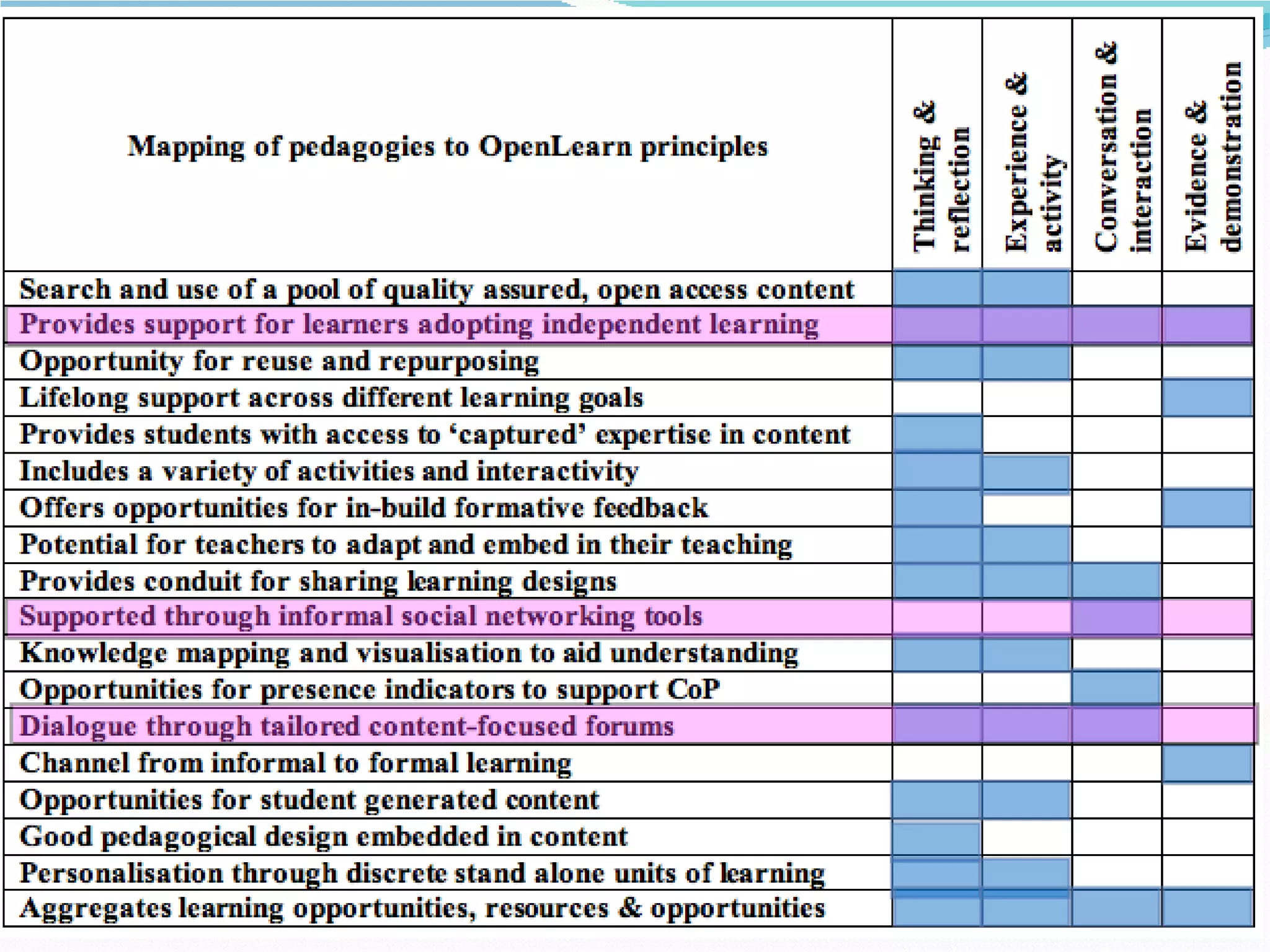
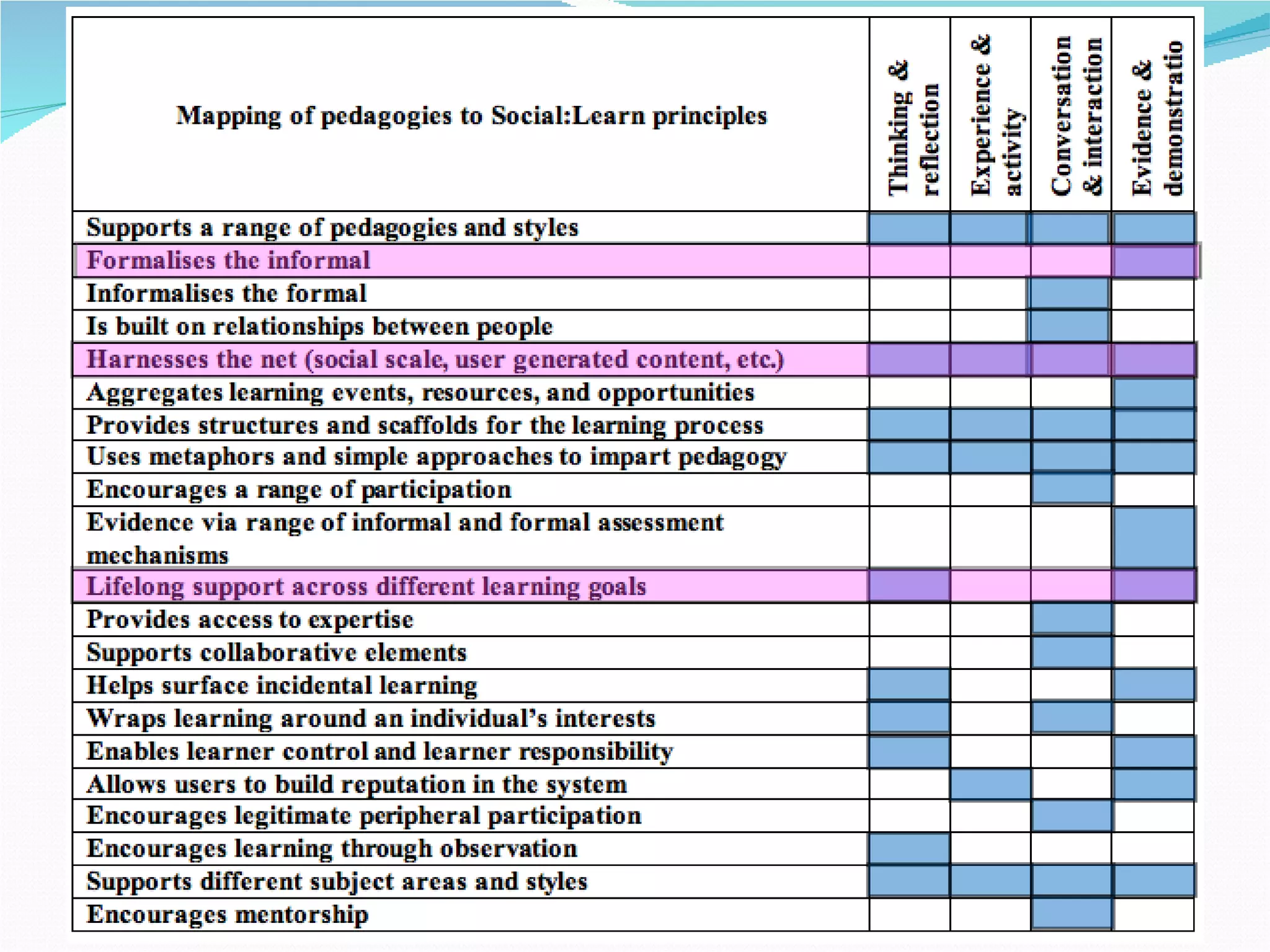
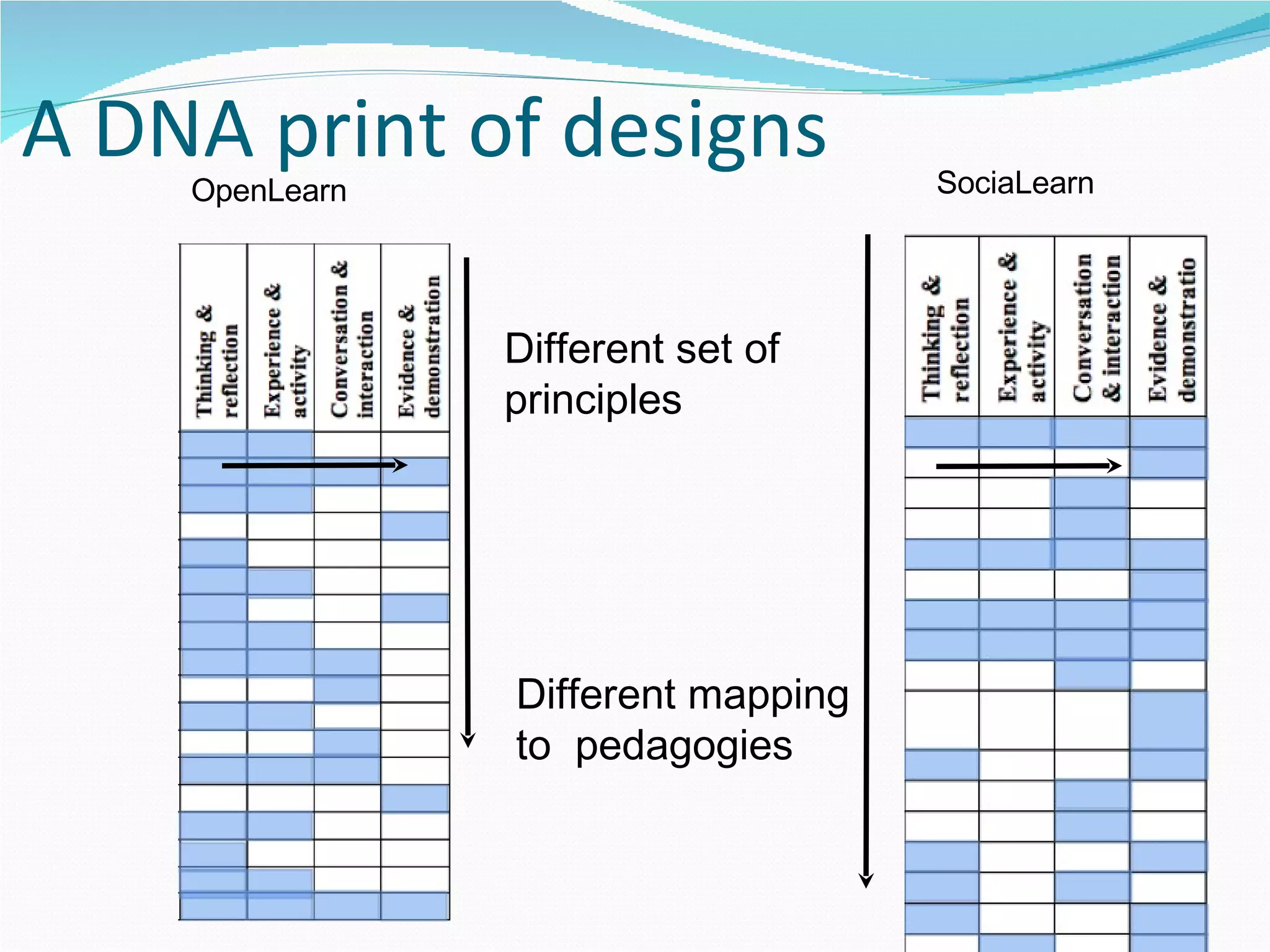
A DNA print of designs OpenLearn SociaLearn Different set of principles Different mapping to  pedagogies
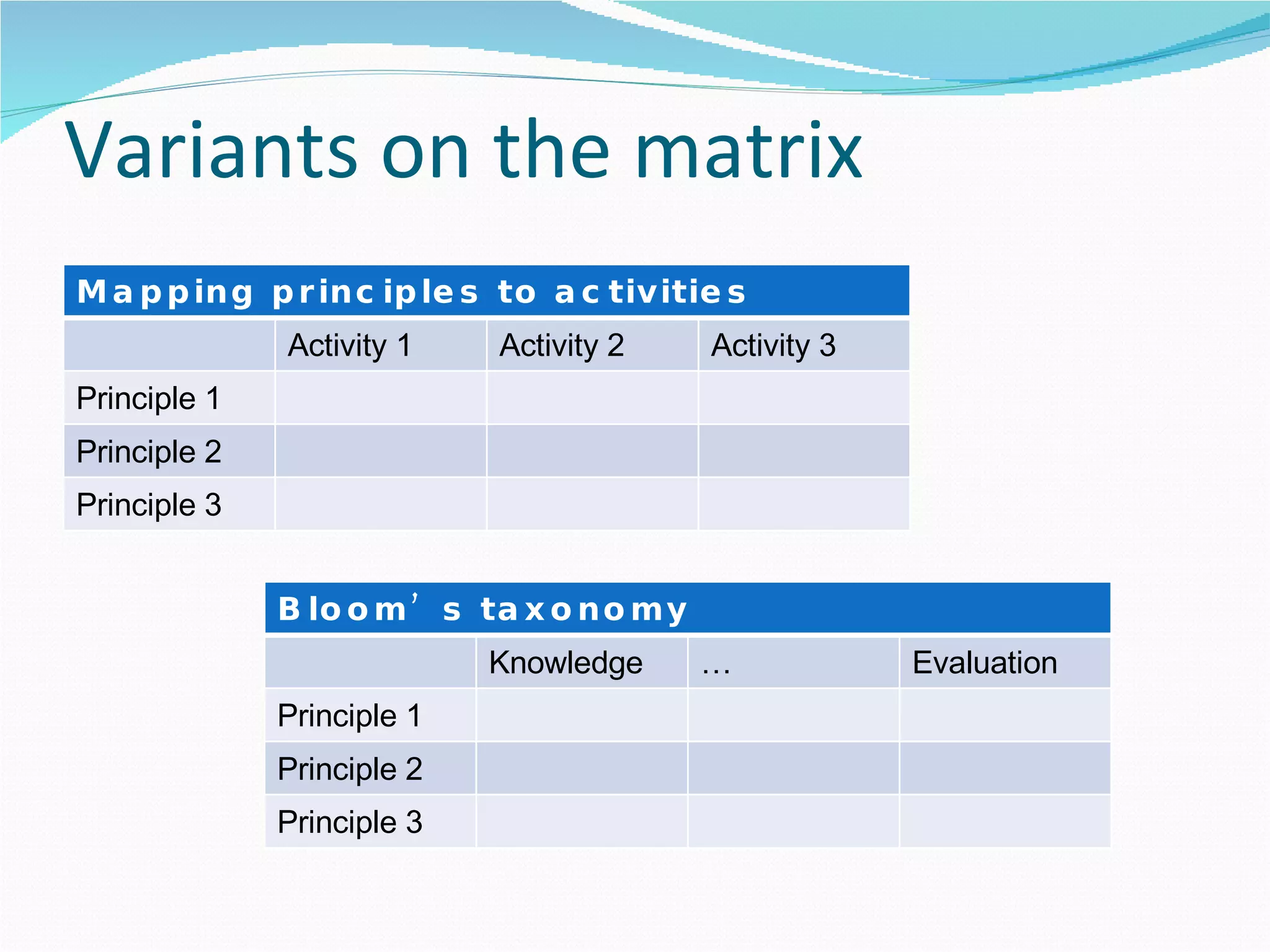
Variants on the matrix Mapping principles to activities Activity 1 Activity 2 Activity 3 Principle 1 Principle 2 Principle 3 Bloom’s taxonomy Knowledge … Evaluation Principle 1 Principle 2 Principle 3
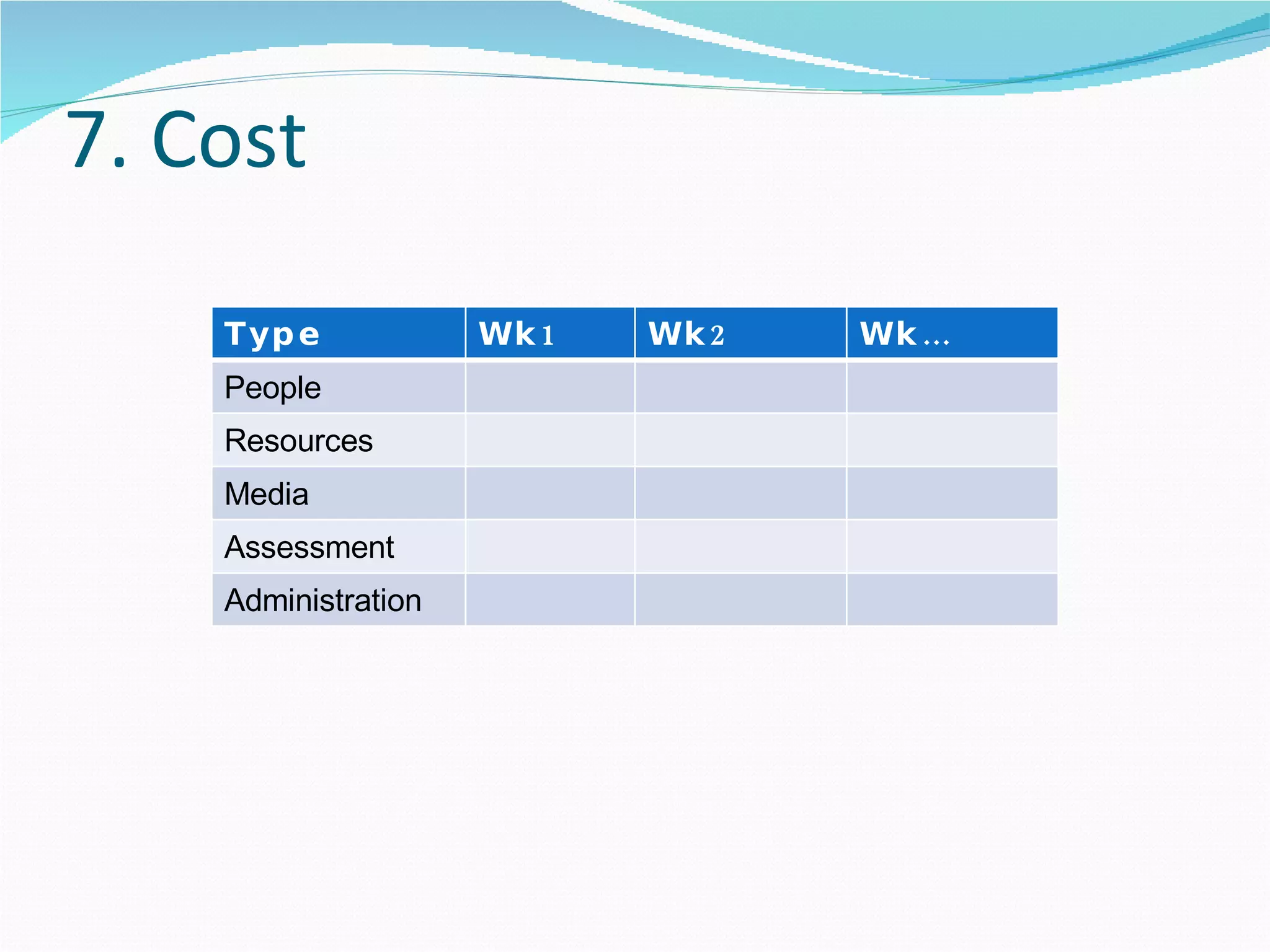
7. Cost Type Wk1 Wk2 Wk… People Resources Media Assessment Administration
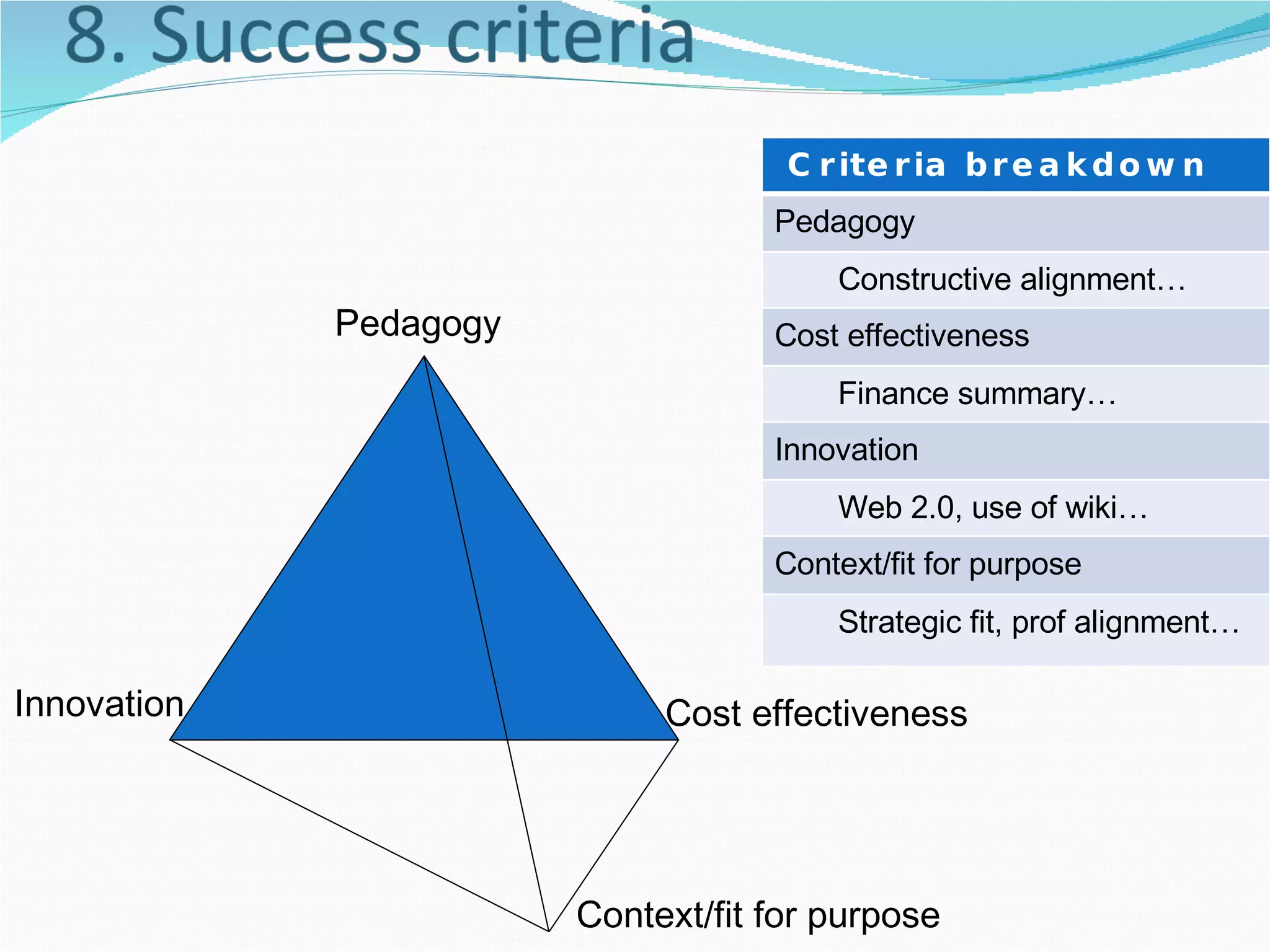
Pedagogy Cost effectiveness Innovation Context/fit for purpose Criteria breakdown Pedagogy Constructive alignment… Cost effectiveness Finance summary… Innovation Web 2.0, use of wiki… Context/fit for purpose Strategic fit, prof alignment…
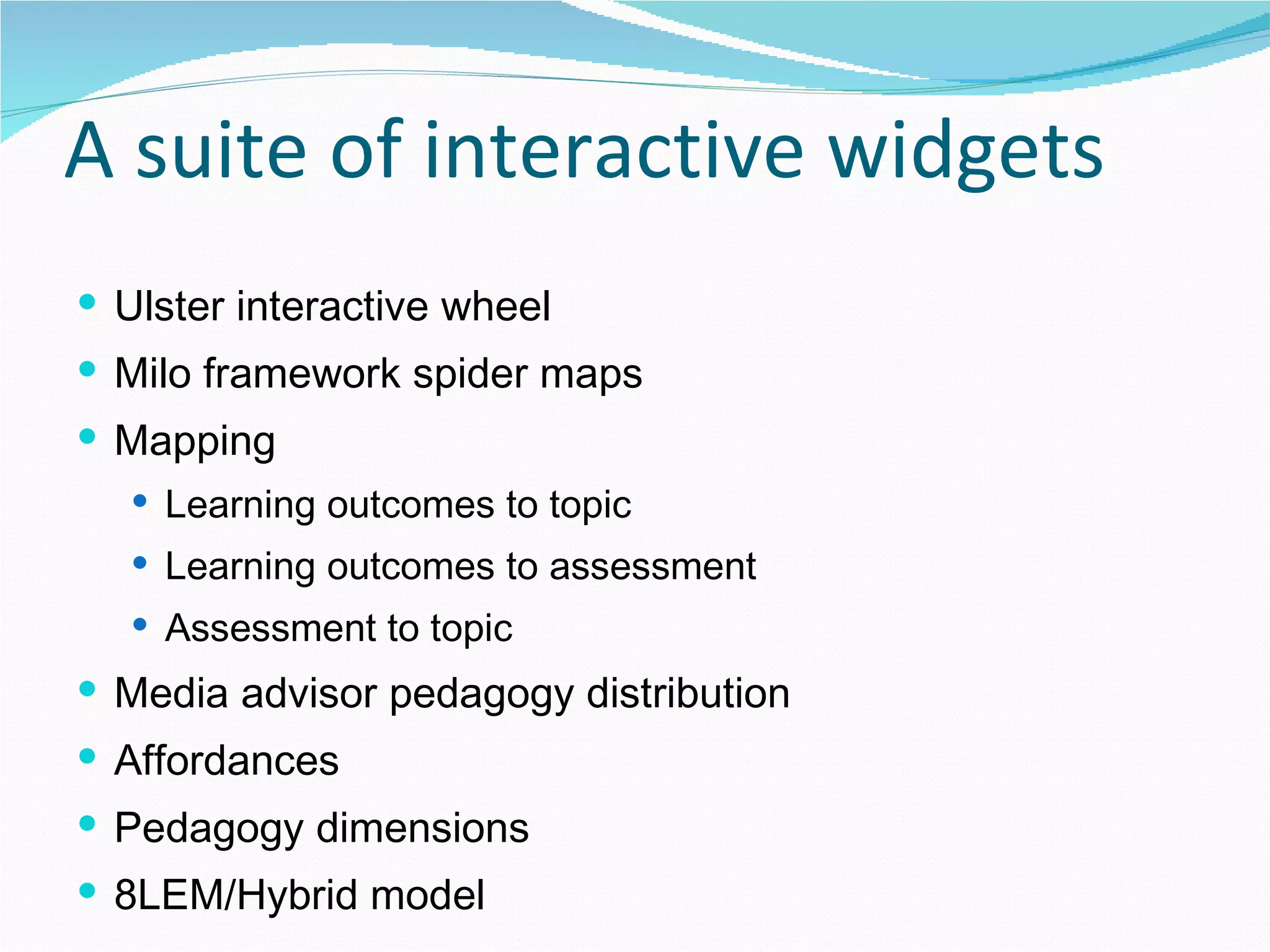
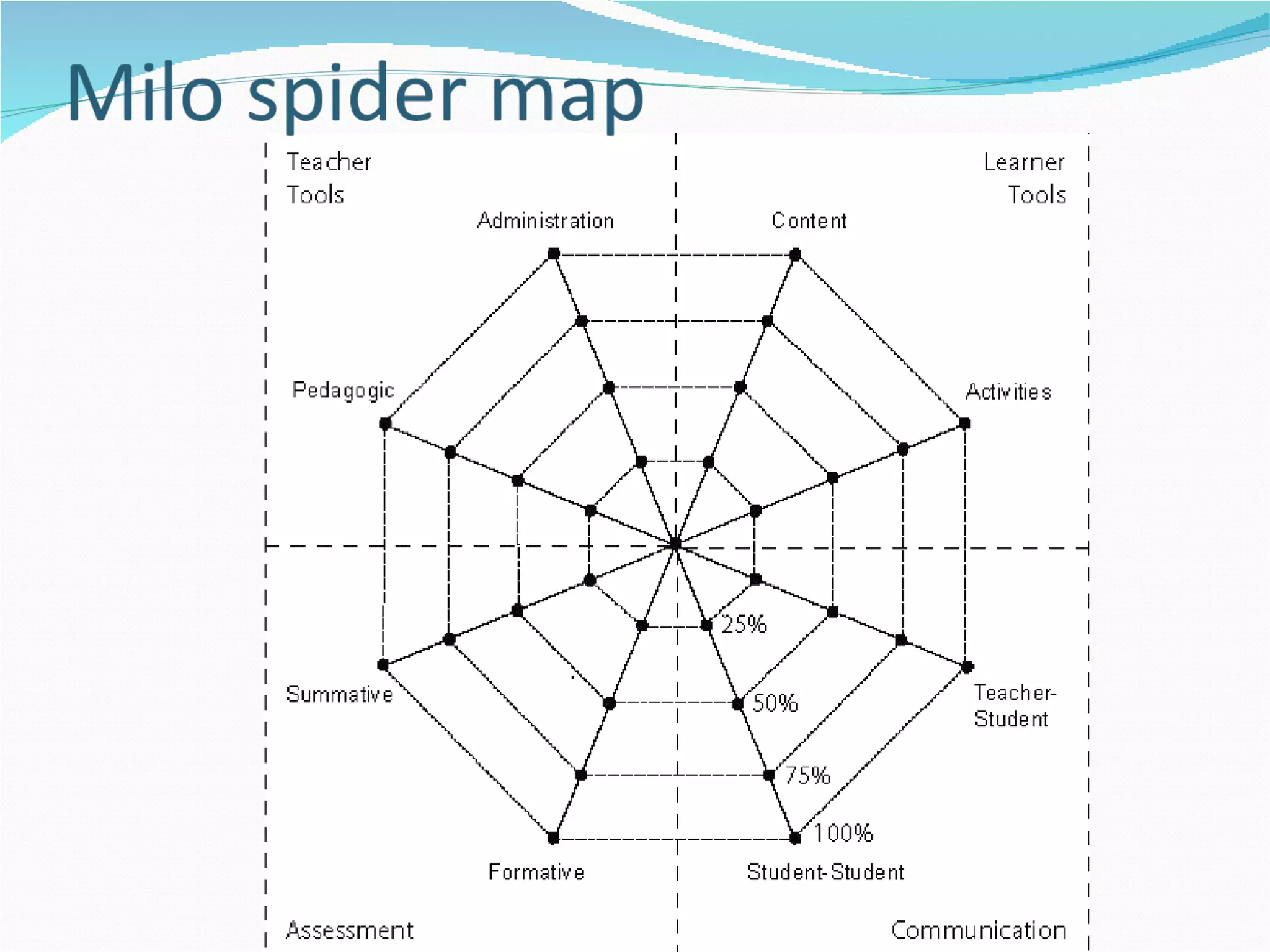
A suite of interactive widgets Ulster interactive wheel Milo framework spider maps Mapping  Learning outcomes to topic Learning outcomes to assessment Assessment to topic Media advisor pedagogy distribution Affordances Pedagogy dimensions 8LEM/Hybrid model
 
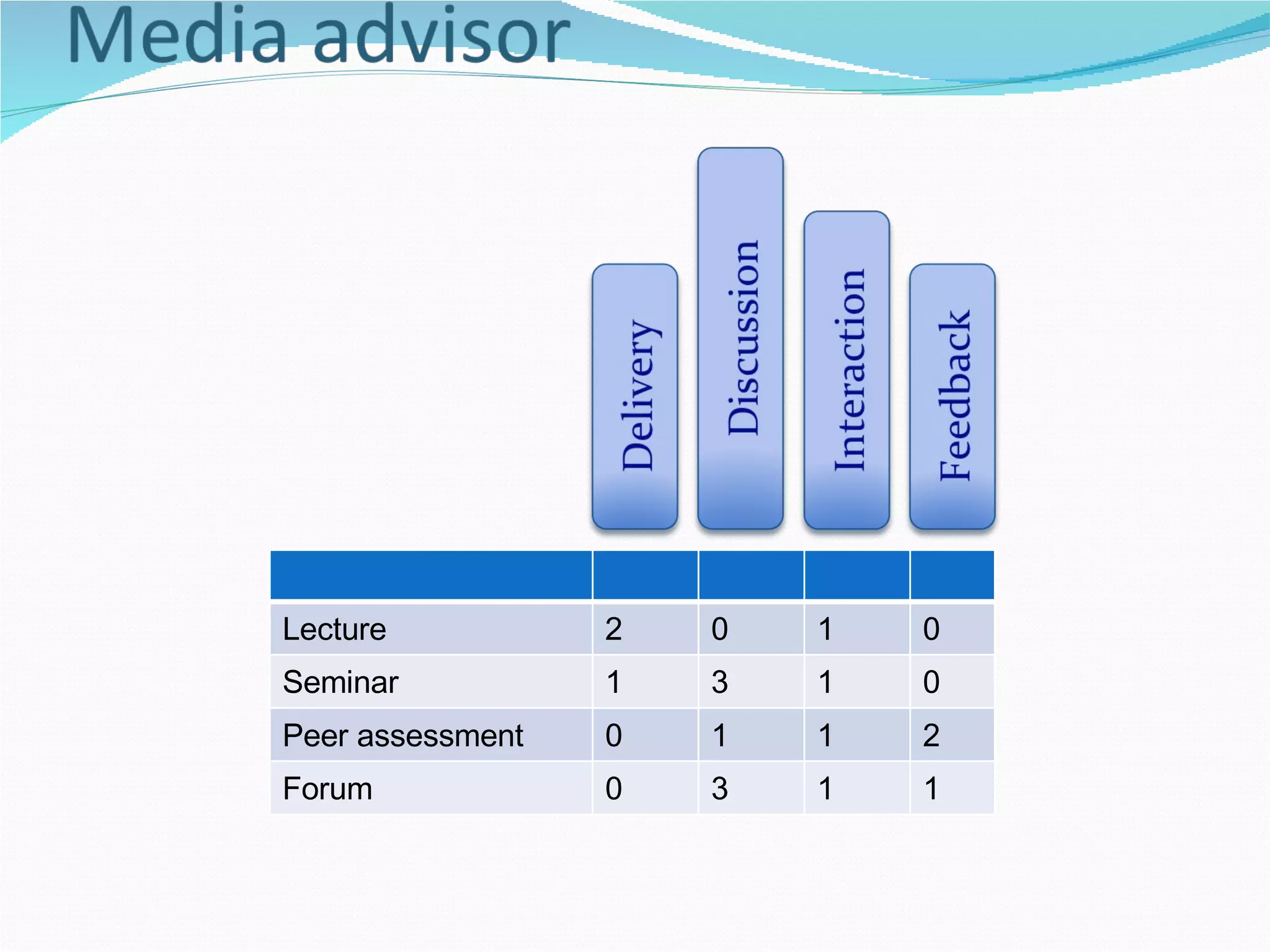
Lecture 2 0 1 0 Seminar 1 3 1 0 Peer assessment 0 1 1 2 Forum 0 3 1 1
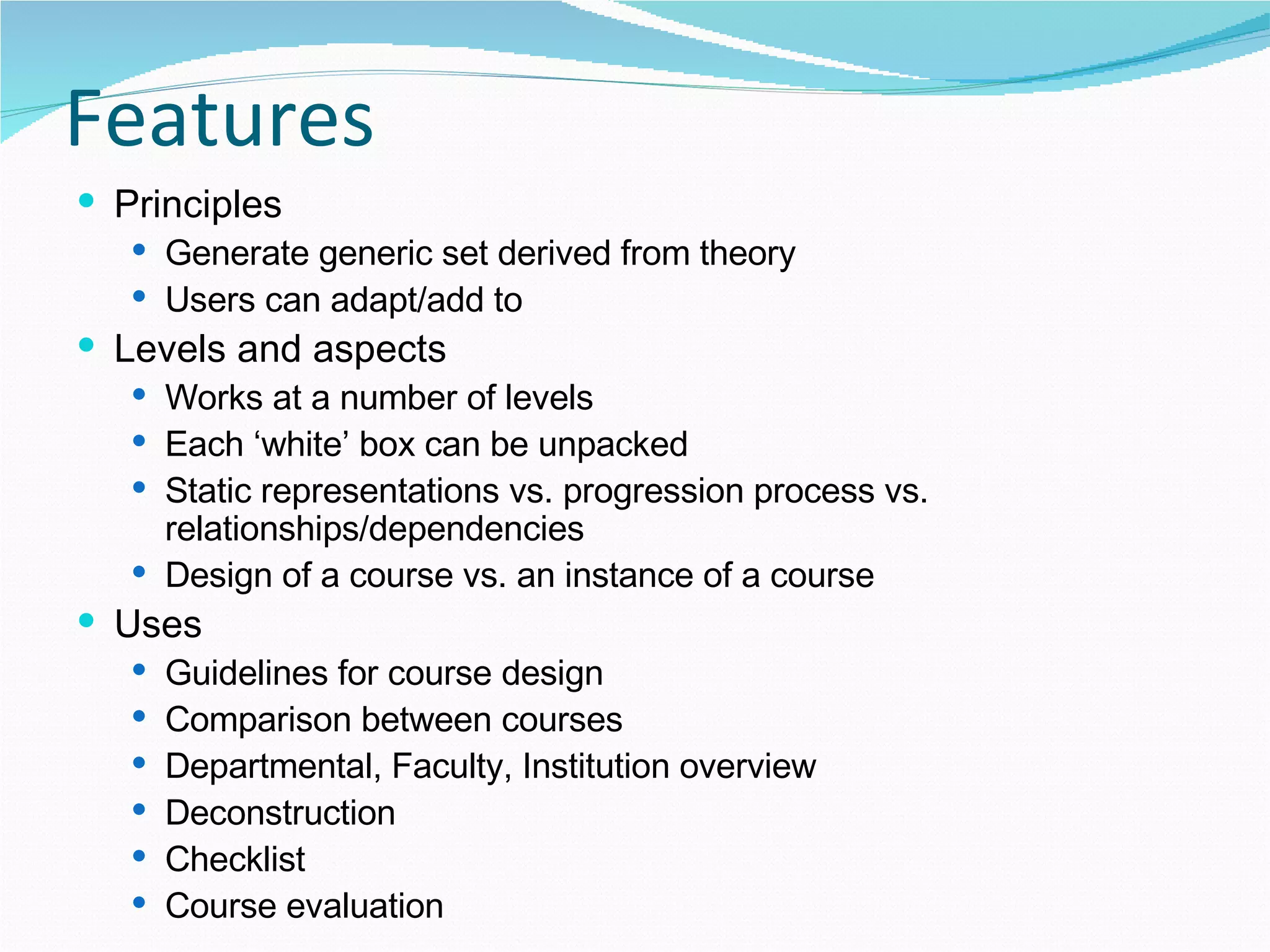
Features Principles Generate generic set derived from theory Users can adapt/add to Levels and aspects  Works at a number of levels Each ‘white’ box can be unpacked Static representations vs. progression process vs. relationships/dependencies Design of a course vs. an instance of a course  Uses Guidelines for course design Comparison between courses Departmental, Faculty, Institution overview Deconstruction Checklist Course evaluation
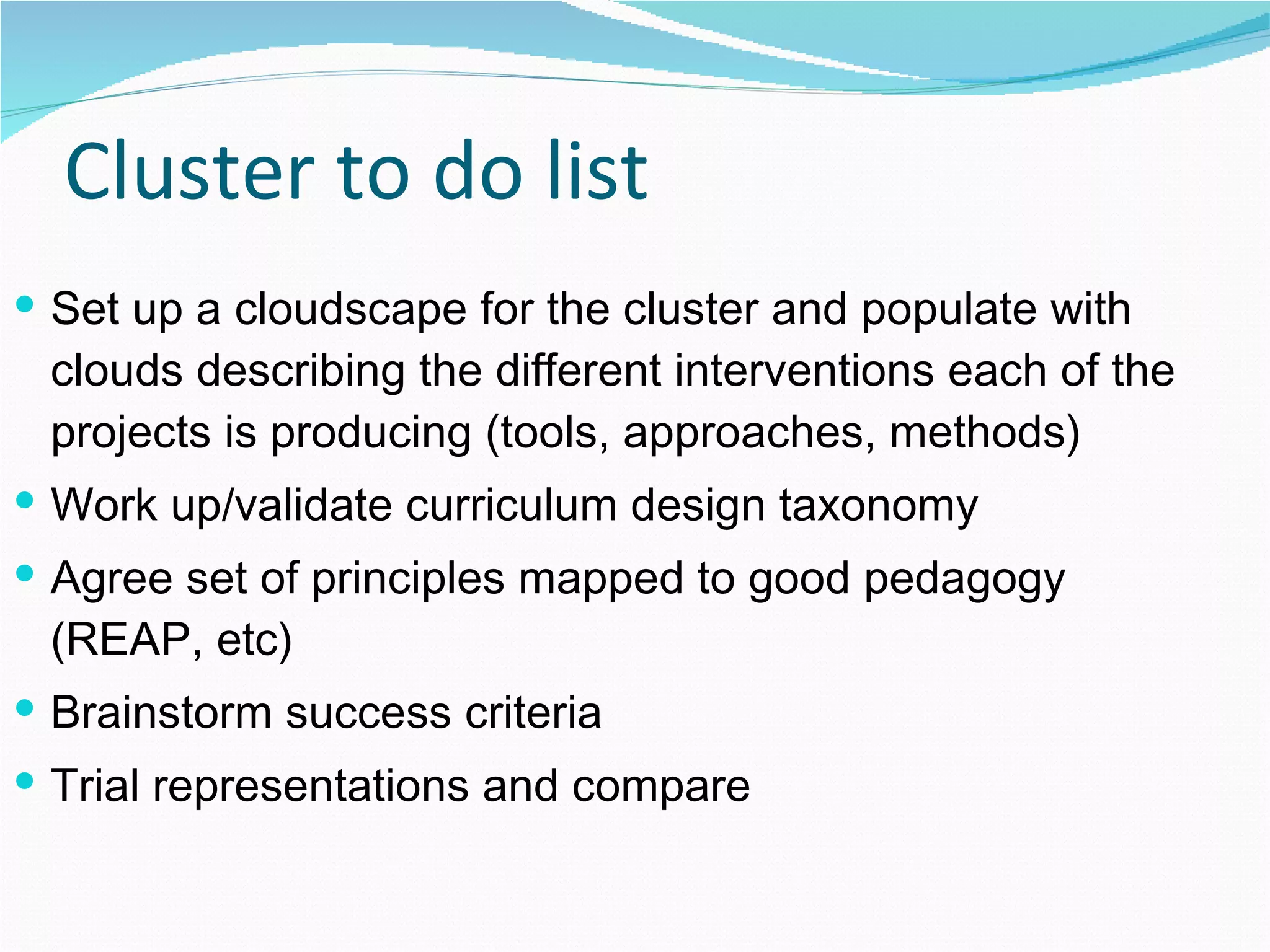
Cluster to do list Set up a cloudscape for the cluster and populate with clouds describing the different interventions each of the projects is producing (tools, approaches, methods) Work up/validate curriculum design taxonomy Agree set of principles mapped to good pedagogy (REAP, etc) Brainstorm success criteria Trial representations and compare
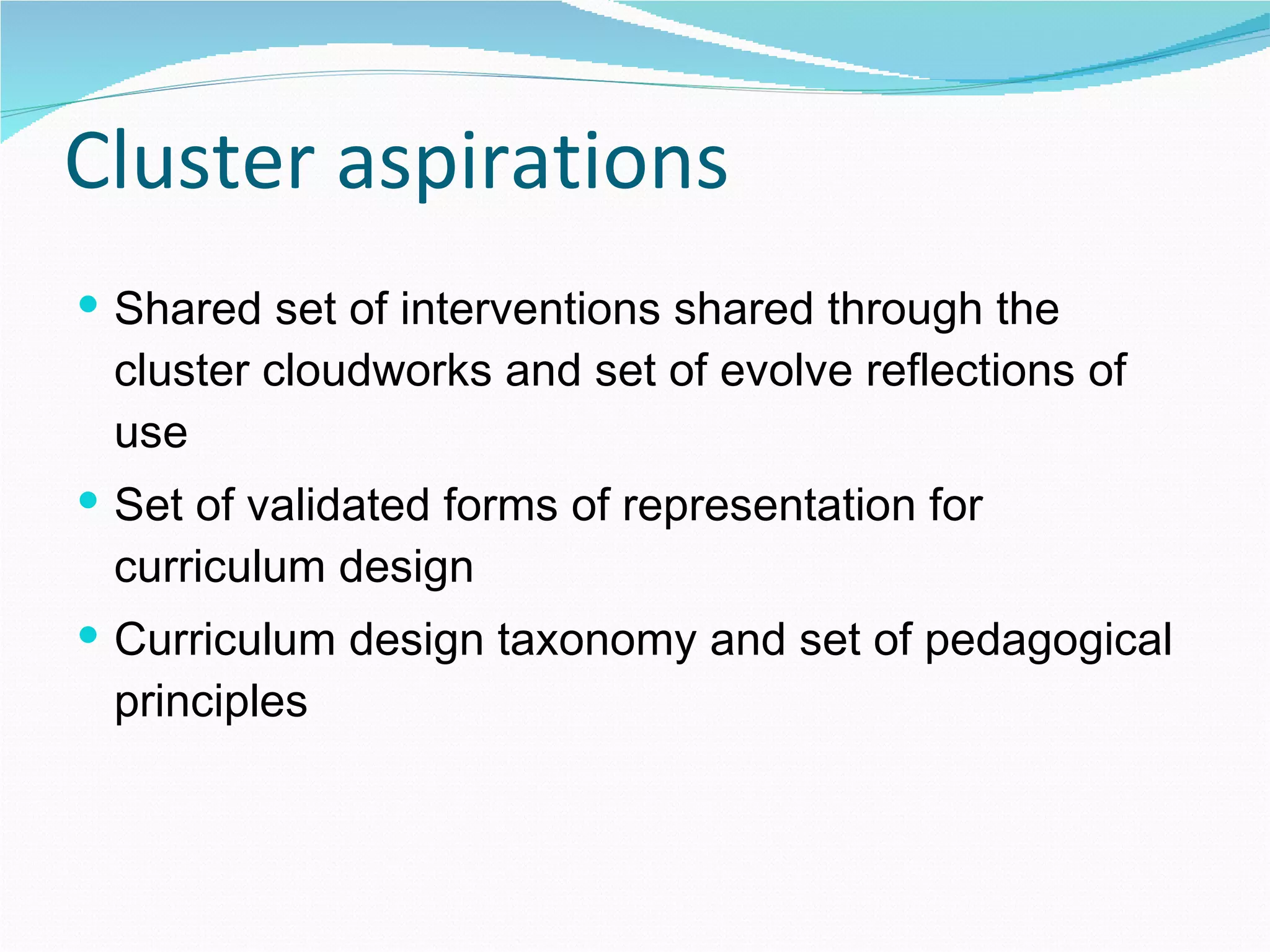
Cluster aspirations Shared set of interventions shared through the cluster cloudworks and set of evolve reflections of use Set of validated forms of representation for curriculum design  Curriculum design taxonomy and set of pedagogical principles

JISC Curriculum Design Cluster C meeting

  • 1.
    Gráinne Conole, The Open University [email_address] JISC Curriculum Design, Cluster meeting Strathclyde University 21/4/09
  • 2.
    Focus Series ofreflections on potential curriculum design representations Ideas for collaboration across the three JISC Curriculum Design projects (the Open University, Strathclyde University, Ulster University) Suggestions for next steps
  • 3.
    Aspects of design We have a reasonably good understanding of design at the learning activity level… Assessment Learning outcomes Tasks Support
  • 4.
    Representations Textual summaryand keywords At a glance map Timeline Production Presentation/delivery Content/topic/curriculum map Workload – overall, distribution, breakdown Principles/pedagogy matrix Cost Production Presentation/delivery Success criteria tick box Relationships and inter-dependencies Process flow maps
  • 5.
    1. Summary Briefoverview Keywords Abstract model of course (wrap around, web 2.0, bought it, empty box) Main pedagogical approach (problem-based, dialogic, etc) Discipline and level
  • 6.
    2. At aglance map Summary Tools & resources Activities Learning outcomes Success criteria Support Timeline Principles/pedagogy Content
  • 7.
    3. Timeline BADo D1 D2 SG1 SGn SG8 Production Presentation SGn… SGn… Course calendar Wk1 Wkn,,, TMA ECA
  • 8.
    4. Content mapTheme 1 Theme 2 Theme 3
  • 9.
    5. Workload RolesWk1 Wk2 Wk… Course chair Course manager Academic team members Technical developers Librarians Tutors Assessors Administrators Students
  • 10.
    Thinking &reflection Conversation & interaction Experience & activity Evidence & demonstration
  • 11.
    Mapping learning activities against goals Aggregation of learning activities Conole, 2008, New Schema for mapping pedagogies and technologies, Ariadne article Principles Thinking & reflection Experience & activity Conversation & interaction Evidence & demonstration Reflect on experience and show understanding Frequent interactive exercises & feedback Provides support for independent learning Supports collaborative activities
  • 12.
  • 13.
  • 14.
    A DNA printof designs OpenLearn SociaLearn Different set of principles Different mapping to pedagogies
  • 15.
    Variants on thematrix Mapping principles to activities Activity 1 Activity 2 Activity 3 Principle 1 Principle 2 Principle 3 Bloom’s taxonomy Knowledge … Evaluation Principle 1 Principle 2 Principle 3
  • 16.
    7. Cost TypeWk1 Wk2 Wk… People Resources Media Assessment Administration
  • 17.
    Pedagogy Cost effectivenessInnovation Context/fit for purpose Criteria breakdown Pedagogy Constructive alignment… Cost effectiveness Finance summary… Innovation Web 2.0, use of wiki… Context/fit for purpose Strategic fit, prof alignment…
  • 18.
    A suite ofinteractive widgets Ulster interactive wheel Milo framework spider maps Mapping Learning outcomes to topic Learning outcomes to assessment Assessment to topic Media advisor pedagogy distribution Affordances Pedagogy dimensions 8LEM/Hybrid model
  • 19.
  • 20.
    Lecture 2 01 0 Seminar 1 3 1 0 Peer assessment 0 1 1 2 Forum 0 3 1 1
  • 21.
    Features Principles Generategeneric set derived from theory Users can adapt/add to Levels and aspects Works at a number of levels Each ‘white’ box can be unpacked Static representations vs. progression process vs. relationships/dependencies Design of a course vs. an instance of a course Uses Guidelines for course design Comparison between courses Departmental, Faculty, Institution overview Deconstruction Checklist Course evaluation
  • 22.
    Cluster to dolist Set up a cloudscape for the cluster and populate with clouds describing the different interventions each of the projects is producing (tools, approaches, methods) Work up/validate curriculum design taxonomy Agree set of principles mapped to good pedagogy (REAP, etc) Brainstorm success criteria Trial representations and compare
  • 23.
    Cluster aspirations Sharedset of interventions shared through the cluster cloudworks and set of evolve reflections of use Set of validated forms of representation for curriculum design Curriculum design taxonomy and set of pedagogical principles