21ST MAY 2015
INTRODUCTION TO ENGINEERING
DRAWING
G R O U P M E M B E R S :
1 . M D . R O K I B U L H A Q U E ( 2 0 1 4 3 3 4 0 6 2 )
2 . S H A R I F M U K T A D I R H O S S A I N C H O W D H U R Y ( 2 0 1 4 3 3 4 0 6 1 )
3 . S A T Y E N M A Z U M D E R ( 2 0 1 4 3 3 4 0 6 3 )
Welcome
to
Presentation of Group “P”
Objectives
 To get primary concepts of Engineering Drawing.
 To know the necessity of Engineering Drawing.
 To know about the equipments used in Engineering Drawing.
 To know various signs, lines and dimensions.
 To know about Orthogonal view.
 To know about Sectional view.
 To know about Auxiliary view.
Introductions:
Drawing is the basic from of communication in technology and Industry. It expresses
ideas and conveys specific information by means on geometric shapes lines and
dimensions. It is a universal language that improves communications and eliminates
costly errors of interpretation with drawing conventions. Engineering drawing is the main
method of communication between all parsons concerned with the design and
manufacturing of components.
What is Engineering Drawing??
A graphical language to convey graphically the ideas and
information necessary for the construction or analysis of
machines, structures, or systems by geometric shapes
lines and dimensions.
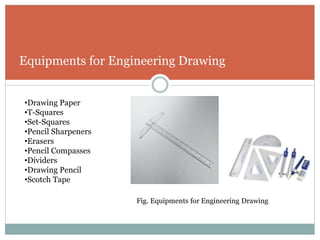
Equipments for Engineering Drawing
•Drawing Paper
•T-Squares
•Set-Squares
•Pencil Sharpeners
•Erasers
•Pencil Compasses
•Dividers
•Drawing Pencil
•Scotch Tape
Fig. Equipments for Engineering Drawing
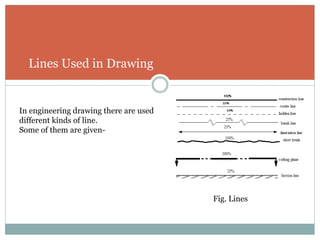
Lines Used in Drawing
In engineering drawing there are used
different kinds of line.
Some of them are given-
Fig. Lines
Type of Graphical Projection
Today We are describing three types of projection
1. Orthographic View.
2. Sectional View.
3. Auxiliary View
Orthographic View
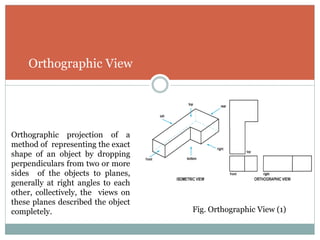
Orthographic projection of a
method of representing the exact
shape of an object by dropping
perpendiculars from two or more
sides of the objects to planes,
generally at right angles to each
other, collectively, the views on
these planes described the object
completely. Fig. Orthographic View (1)
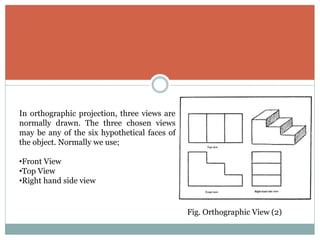
In orthographic projection, three views are
normally drawn. The three chosen views
may be any of the six hypothetical faces of
the object. Normally we use;
•Front View
•Top View
•Right hand side view
Fig. Orthographic View (2)
Sectional View
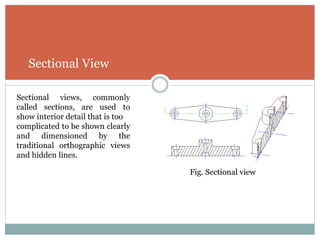
Sectional views, commonly
called sections, are used to
show interior detail that is too
complicated to be shown clearly
and dimensioned by the
traditional orthographic views
and hidden lines.
Fig. Sectional view
Overview of Sectional Projection
• Sections are used to show interior details clearly.
• A cutting-plane line shows where object was cut to obtain the section view.
• Cross hatching in the section view shows the solid surface of the object which
were cut through to produce the section.
• Section views may replace standard views.
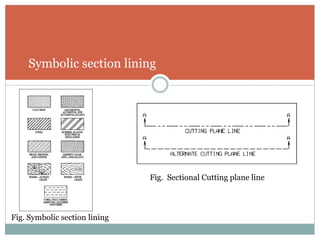
Fig. Symbolic section lining
Fig. Sectional Cutting plane line
Symbolic section lining
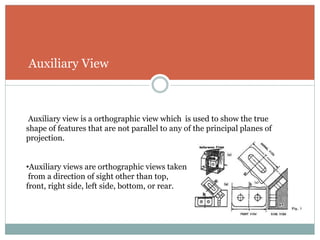
Auxiliary View
Auxiliary view is a orthographic view which is used to show the true
shape of features that are not parallel to any of the principal planes of
projection.
•Auxiliary views are orthographic views taken
from a direction of sight other than top,
front, right side, left side, bottom, or rear.
Purpose of Auxiliary View
Purposes of Auxiliary Views
•Show the true size and shape of a surface.
•Show the true angle between two surface.
•To give clear view of that plane which is not parallel the common planes.
Thank you
That brings us to the end
of our presentation,
Thank you for your time.

Introduction to engineering drawing

  • 1.
    21ST MAY 2015 INTRODUCTIONTO ENGINEERING DRAWING
  • 2.
    G R OU P M E M B E R S : 1 . M D . R O K I B U L H A Q U E ( 2 0 1 4 3 3 4 0 6 2 ) 2 . S H A R I F M U K T A D I R H O S S A I N C H O W D H U R Y ( 2 0 1 4 3 3 4 0 6 1 ) 3 . S A T Y E N M A Z U M D E R ( 2 0 1 4 3 3 4 0 6 3 ) Welcome to Presentation of Group “P”
  • 3.
    Objectives  To getprimary concepts of Engineering Drawing.  To know the necessity of Engineering Drawing.  To know about the equipments used in Engineering Drawing.  To know various signs, lines and dimensions.  To know about Orthogonal view.  To know about Sectional view.  To know about Auxiliary view.
  • 4.
    Introductions: Drawing is thebasic from of communication in technology and Industry. It expresses ideas and conveys specific information by means on geometric shapes lines and dimensions. It is a universal language that improves communications and eliminates costly errors of interpretation with drawing conventions. Engineering drawing is the main method of communication between all parsons concerned with the design and manufacturing of components.
  • 5.
    What is EngineeringDrawing?? A graphical language to convey graphically the ideas and information necessary for the construction or analysis of machines, structures, or systems by geometric shapes lines and dimensions.
  • 6.
    Equipments for EngineeringDrawing •Drawing Paper •T-Squares •Set-Squares •Pencil Sharpeners •Erasers •Pencil Compasses •Dividers •Drawing Pencil •Scotch Tape Fig. Equipments for Engineering Drawing
  • 7.
    Lines Used inDrawing In engineering drawing there are used different kinds of line. Some of them are given- Fig. Lines
  • 8.
    Type of GraphicalProjection Today We are describing three types of projection 1. Orthographic View. 2. Sectional View. 3. Auxiliary View
  • 9.
    Orthographic View Orthographic projectionof a method of representing the exact shape of an object by dropping perpendiculars from two or more sides of the objects to planes, generally at right angles to each other, collectively, the views on these planes described the object completely. Fig. Orthographic View (1)
  • 10.
    In orthographic projection,three views are normally drawn. The three chosen views may be any of the six hypothetical faces of the object. Normally we use; •Front View •Top View •Right hand side view Fig. Orthographic View (2)
  • 11.
    Sectional View Sectional views,commonly called sections, are used to show interior detail that is too complicated to be shown clearly and dimensioned by the traditional orthographic views and hidden lines. Fig. Sectional view
  • 12.
    Overview of SectionalProjection • Sections are used to show interior details clearly. • A cutting-plane line shows where object was cut to obtain the section view. • Cross hatching in the section view shows the solid surface of the object which were cut through to produce the section. • Section views may replace standard views.
  • 13.
    Fig. Symbolic sectionlining Fig. Sectional Cutting plane line Symbolic section lining
  • 14.
    Auxiliary View Auxiliary viewis a orthographic view which is used to show the true shape of features that are not parallel to any of the principal planes of projection. •Auxiliary views are orthographic views taken from a direction of sight other than top, front, right side, left side, bottom, or rear.
  • 15.
    Purpose of AuxiliaryView Purposes of Auxiliary Views •Show the true size and shape of a surface. •Show the true angle between two surface. •To give clear view of that plane which is not parallel the common planes.
  • 16.
    Thank you That bringsus to the end of our presentation, Thank you for your time.