Introduction to Drawing;
Interior Architecture Drawing
Interior architecture drawings as a tool for
communication / drawing process
Stuff
• Process from design intent to finally built are as follows;
• Preparing the conceptual drawings
• Preparing general arrangement drawings to confirm layout of things
in a room
• Preparing detail drawings for the purpose of establishing scope of
works / costing
• Preparing detail drawings for the purpose of construction.
• Moving on to people who use the drawings;
#1, Design intent! / Conceptual drawings!
• Conceptual drawings are inclusive of drawings such as perspective
drawings and plans
• Are intended to communicate the general design intention and
concept of the space to be created
• Usually to be shown to the client to give a general feel of how the
space would look / feel like
#2, General arrangement drawings!
• General arrangement drawings are intended to communicate how the
space is going to be arranged
• To give an idea of how the room is supposed to be
• Placement of furniture and fitting of the space
• Basically, a layout.
• Seen by contractors to communicate the idea.
General arrangement drawings
Reference Plan
Pictures of general arr.
#3, Detail drawings!
• Detail drawings are suited the following purposes;
a. Design,
b. Tender
c. Construction
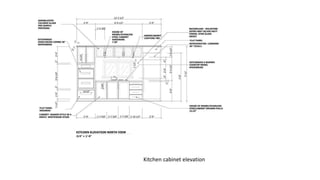
• Detail drawings consist of plans, sections and elevations detailed with
aspects such as;
1. The material used
2. The dimensions / measurements of the space / structure.
*Tender drawings; Drawings that are used for estimating/pricing the cost of
the building to be constructed.
Kitchen cabinet elevation
In “tender” purposes…
• The quantity surveyor will establish the cost of the project for the
client.
• The detail drawings are handed over to the contractors for pricing
• The price / costing of the construction is discussed and the contractor
is selected to carry out the construction of the drawings.
In construction purposes,
• The detail drawings are used to construct the interior architectural
works
• Drawings become a map and reference in all matters of construction
Who uses these drawings?
• Consultants;
• Electrical engineers --------All works relating to electricity power supply and usage will be handled
by this engineer.
(Example; lights, power sockets, fans, fridge.)
• Mechanical engineers -----Mechanical engineers will handle all works relating to mechanical parts,
such as lifts (elevators), sanitary and plumbing, air-conditioning.
• Quantity surveyors----------Will establish cost of works that need to be done based on the
architectural interior drawings. A quantity surveyor will calculate the areas, elements and items
that need to be built and establish the estimated construction cost.
• Builders; Contractors / Main builders
Sub – contractors- plumbing, timberwork, electrical, brickwork, landscape
Specialist contractors
Types of drawings involved
• Perspectives / 3-dimensional drawings
• Plans
• Elevations
• Sections
• Detailed
Perspective drawings
• An approximate representation, on a flat surface (such as paper), of
an image as it is seen by the eye. The two most characteristic features
of perspective are that objects are drawn:
• Smaller as their distance from the observer increases
• Foreshortened: the size of an object's dimensions along the line of
sight are relatively shorter than dimensions across the line of sight
Why perspective drawings?
• To better communicate the idea and feel of a space to the client so as
to give them understanding of the concept
• Gives the client a vision of how the space would actually look like
from a certain point of view
• Images with depth and perspective make us feel more a part of it
than flatter images. They capture how we see the world.
Plans, sections and elevation drawings
• 2-dimensional drawings intended as technical instructions for
construction
• To give detail on how the drawings are to be constructed
• To show details of the drawings from different angles
Interior elevation
Interior elevation
Plan
Interior elevations

Introduction to drawing

  • 1.
  • 2.
    Interior architecture drawingsas a tool for communication / drawing process
  • 3.
    Stuff • Process fromdesign intent to finally built are as follows; • Preparing the conceptual drawings • Preparing general arrangement drawings to confirm layout of things in a room • Preparing detail drawings for the purpose of establishing scope of works / costing • Preparing detail drawings for the purpose of construction. • Moving on to people who use the drawings;
  • 4.
    #1, Design intent!/ Conceptual drawings! • Conceptual drawings are inclusive of drawings such as perspective drawings and plans • Are intended to communicate the general design intention and concept of the space to be created • Usually to be shown to the client to give a general feel of how the space would look / feel like
  • 6.
    #2, General arrangementdrawings! • General arrangement drawings are intended to communicate how the space is going to be arranged • To give an idea of how the room is supposed to be • Placement of furniture and fitting of the space • Basically, a layout. • Seen by contractors to communicate the idea.
  • 7.
  • 8.
  • 9.
  • 10.
    #3, Detail drawings! •Detail drawings are suited the following purposes; a. Design, b. Tender c. Construction • Detail drawings consist of plans, sections and elevations detailed with aspects such as; 1. The material used 2. The dimensions / measurements of the space / structure. *Tender drawings; Drawings that are used for estimating/pricing the cost of the building to be constructed.
  • 12.
  • 13.
    In “tender” purposes… •The quantity surveyor will establish the cost of the project for the client. • The detail drawings are handed over to the contractors for pricing • The price / costing of the construction is discussed and the contractor is selected to carry out the construction of the drawings.
  • 14.
    In construction purposes, •The detail drawings are used to construct the interior architectural works • Drawings become a map and reference in all matters of construction
  • 15.
    Who uses thesedrawings? • Consultants; • Electrical engineers --------All works relating to electricity power supply and usage will be handled by this engineer. (Example; lights, power sockets, fans, fridge.) • Mechanical engineers -----Mechanical engineers will handle all works relating to mechanical parts, such as lifts (elevators), sanitary and plumbing, air-conditioning. • Quantity surveyors----------Will establish cost of works that need to be done based on the architectural interior drawings. A quantity surveyor will calculate the areas, elements and items that need to be built and establish the estimated construction cost. • Builders; Contractors / Main builders Sub – contractors- plumbing, timberwork, electrical, brickwork, landscape Specialist contractors
  • 16.
    Types of drawingsinvolved • Perspectives / 3-dimensional drawings • Plans • Elevations • Sections • Detailed
  • 17.
    Perspective drawings • Anapproximate representation, on a flat surface (such as paper), of an image as it is seen by the eye. The two most characteristic features of perspective are that objects are drawn: • Smaller as their distance from the observer increases • Foreshortened: the size of an object's dimensions along the line of sight are relatively shorter than dimensions across the line of sight
  • 18.
    Why perspective drawings? •To better communicate the idea and feel of a space to the client so as to give them understanding of the concept • Gives the client a vision of how the space would actually look like from a certain point of view • Images with depth and perspective make us feel more a part of it than flatter images. They capture how we see the world.
  • 21.
    Plans, sections andelevation drawings • 2-dimensional drawings intended as technical instructions for construction • To give detail on how the drawings are to be constructed • To show details of the drawings from different angles
  • 22.
  • 23.
  • 24.
  • 25.