Part #2
Drawing For Interior Design

By.
 Melissa Betancourt & Rosario Robledo
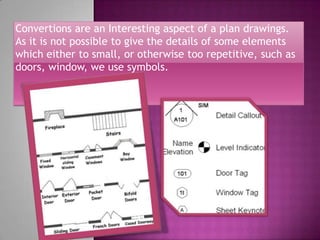
Convertions are an Interesting aspect of a plan drawings.
As it is not possible to give the details of some elements
which either to small, or otherwise too repetitive, such as
doors, window, we use symbols.
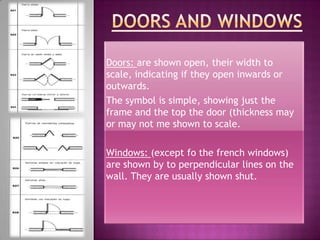
Doors: are shown open, their width to
scale, indicating if they open inwards or
outwards.
The symbol is simple, showing just the
frame and the top the door (thickness may
or may not me shown to scale.

Windows: (except fo the french windows)
are shown by to perpendicular lines on the
wall. They are usually shown shut.
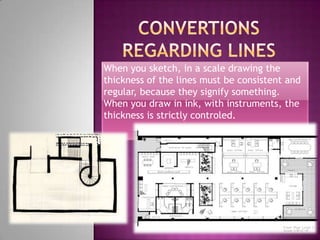
When you sketch, in a scale drawing the
thickness of the lines must be consistent and
regular, because they signify something.
When you draw in ink, with instruments, the
thickness is strictly controled.
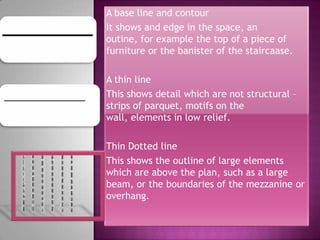
A base line and contour
It shows and edge in the space, an
outine, for example the top of a piece of
furniture or the banister of the staircaase.

A thin line
This shows detail which are not structural –
strips of parquet, motifs on the
wall, elements in low relief.

Thin Dotted line
This shows the outline of large elements
which are above the plan, such as a large
beam, or the boundaries of the mezzanine or
overhang.
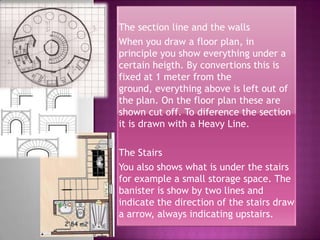
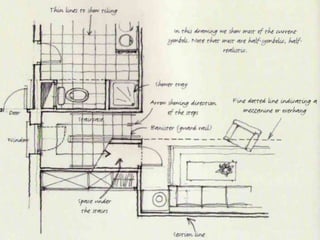
The section line and the walls
When you draw a floor plan, in
principle you show everything under a
certain heigth. By convertions this is
fixed at 1 meter from the
ground, everything above is left out of
the plan. On the floor plan these are
shown cut off. To diference the section
it is drawn with a Heavy Line.

The Stairs
You also shows what is under the stairs
for example a small storage space. The
banister is show by two lines and
indicate the direction of the stairs draw
a arrow, always indicating upstairs.
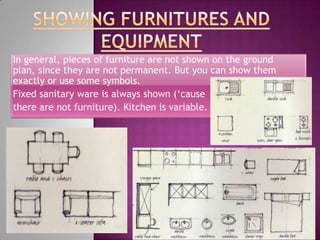
In general, pieces of furniture are not shown on the ground
plan, since they are not permanent. But you can show them
exactly or use some symbols.
Fixed sanitary ware is always shown (‘cause
there are not furniture). Kitchen is variable.
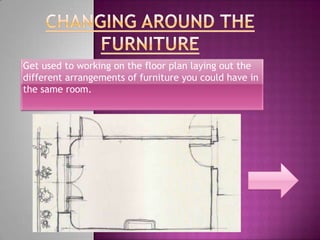
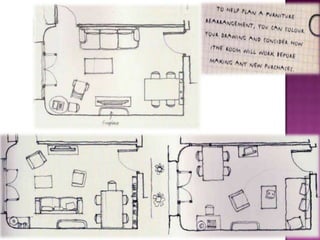
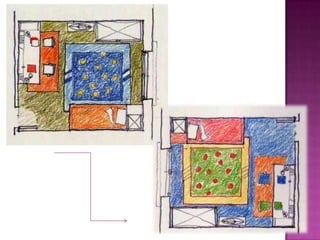
Get used to working on the floor plan laying out the
different arrangements of furniture you could have in
the same room.
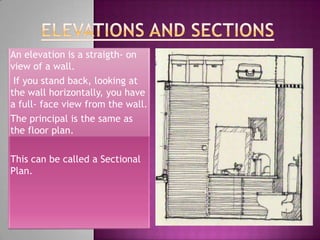
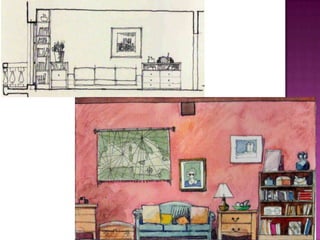
An elevation is a straigth- on
view of a wall.
 If you stand back, looking at
the wall horizontally, you have
a full- face view from the wall.
The principal is the same as
the floor plan.

This can be called a Sectional
Plan.
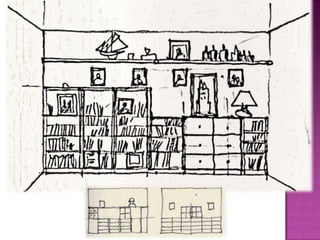
Rethinking the layout of the flat doesn’t always mean
moving interior walls. Rearrangings a wall panel, changing
the decorations and objects displayed is itself an important
modifications.


Design in modules
Take a measurement of the various elements to be
included, and imagine the various different ways they could
be put together.
The layout consist of producing a ground plan and elevations of
a building, or one of its parts, after taking measurements on the
spot.
There are thus two phases: Taking Measurements and Copying
them on the documents.

Organisations of the layouts
We start with premilinary drawings on which we mark the
measuments taken. Is the Stage between the sketch and the
ground plan.
You can use some help, One to draw and take notes, and two
to hold the tape when large areas are involved.

Sketch of the ground plan
Start by drawing a freehand plan and leave spaces around for
for the measurements and notes.

The dimensions
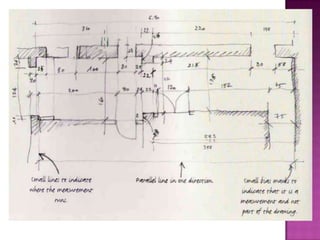
They are indicated on a parallel line in the same
direction, with small lines to indicate where the measuremnt
runs and little bias to indicate that the measurement is not
part of the drawing.

The amount of details required depends on your final
intention.
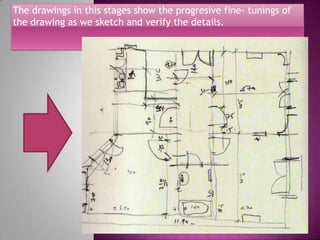
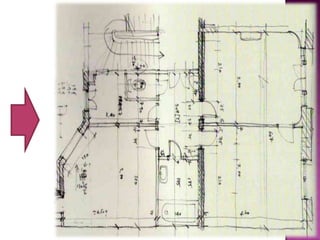
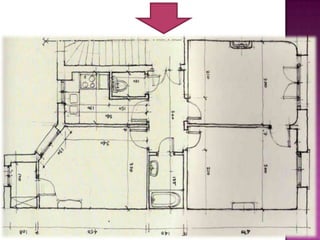
The drawings in this stages show the progresive fine- tunings of
the drawing as we sketch and verify the details.
Drawing for Interior Design   Part 2

Drawing for Interior Design Part 2

  • 1.
    Part #2 Drawing ForInterior Design By. Melissa Betancourt & Rosario Robledo
  • 2.
    Convertions are anInteresting aspect of a plan drawings. As it is not possible to give the details of some elements which either to small, or otherwise too repetitive, such as doors, window, we use symbols.
  • 3.
    Doors: are shownopen, their width to scale, indicating if they open inwards or outwards. The symbol is simple, showing just the frame and the top the door (thickness may or may not me shown to scale. Windows: (except fo the french windows) are shown by to perpendicular lines on the wall. They are usually shown shut.
  • 4.
    When you sketch,in a scale drawing the thickness of the lines must be consistent and regular, because they signify something. When you draw in ink, with instruments, the thickness is strictly controled.
  • 5.
    A base lineand contour It shows and edge in the space, an outine, for example the top of a piece of furniture or the banister of the staircaase. A thin line This shows detail which are not structural – strips of parquet, motifs on the wall, elements in low relief. Thin Dotted line This shows the outline of large elements which are above the plan, such as a large beam, or the boundaries of the mezzanine or overhang.
  • 6.
    The section lineand the walls When you draw a floor plan, in principle you show everything under a certain heigth. By convertions this is fixed at 1 meter from the ground, everything above is left out of the plan. On the floor plan these are shown cut off. To diference the section it is drawn with a Heavy Line. The Stairs You also shows what is under the stairs for example a small storage space. The banister is show by two lines and indicate the direction of the stairs draw a arrow, always indicating upstairs.
  • 8.
    In general, piecesof furniture are not shown on the ground plan, since they are not permanent. But you can show them exactly or use some symbols. Fixed sanitary ware is always shown (‘cause there are not furniture). Kitchen is variable.
  • 9.
    Get used toworking on the floor plan laying out the different arrangements of furniture you could have in the same room.
  • 12.
    An elevation isa straigth- on view of a wall. If you stand back, looking at the wall horizontally, you have a full- face view from the wall. The principal is the same as the floor plan. This can be called a Sectional Plan.
  • 14.
    Rethinking the layoutof the flat doesn’t always mean moving interior walls. Rearrangings a wall panel, changing the decorations and objects displayed is itself an important modifications. Design in modules Take a measurement of the various elements to be included, and imagine the various different ways they could be put together.
  • 16.
    The layout consistof producing a ground plan and elevations of a building, or one of its parts, after taking measurements on the spot. There are thus two phases: Taking Measurements and Copying them on the documents. Organisations of the layouts We start with premilinary drawings on which we mark the measuments taken. Is the Stage between the sketch and the ground plan.
  • 17.
    You can usesome help, One to draw and take notes, and two to hold the tape when large areas are involved. Sketch of the ground plan Start by drawing a freehand plan and leave spaces around for for the measurements and notes. The dimensions They are indicated on a parallel line in the same direction, with small lines to indicate where the measuremnt runs and little bias to indicate that the measurement is not part of the drawing. The amount of details required depends on your final intention.
  • 19.
    The drawings inthis stages show the progresive fine- tunings of the drawing as we sketch and verify the details.