DESIGN
PROCESS
Taking you through the exploration on process of
designing a STRUCTURE…
DESIGN
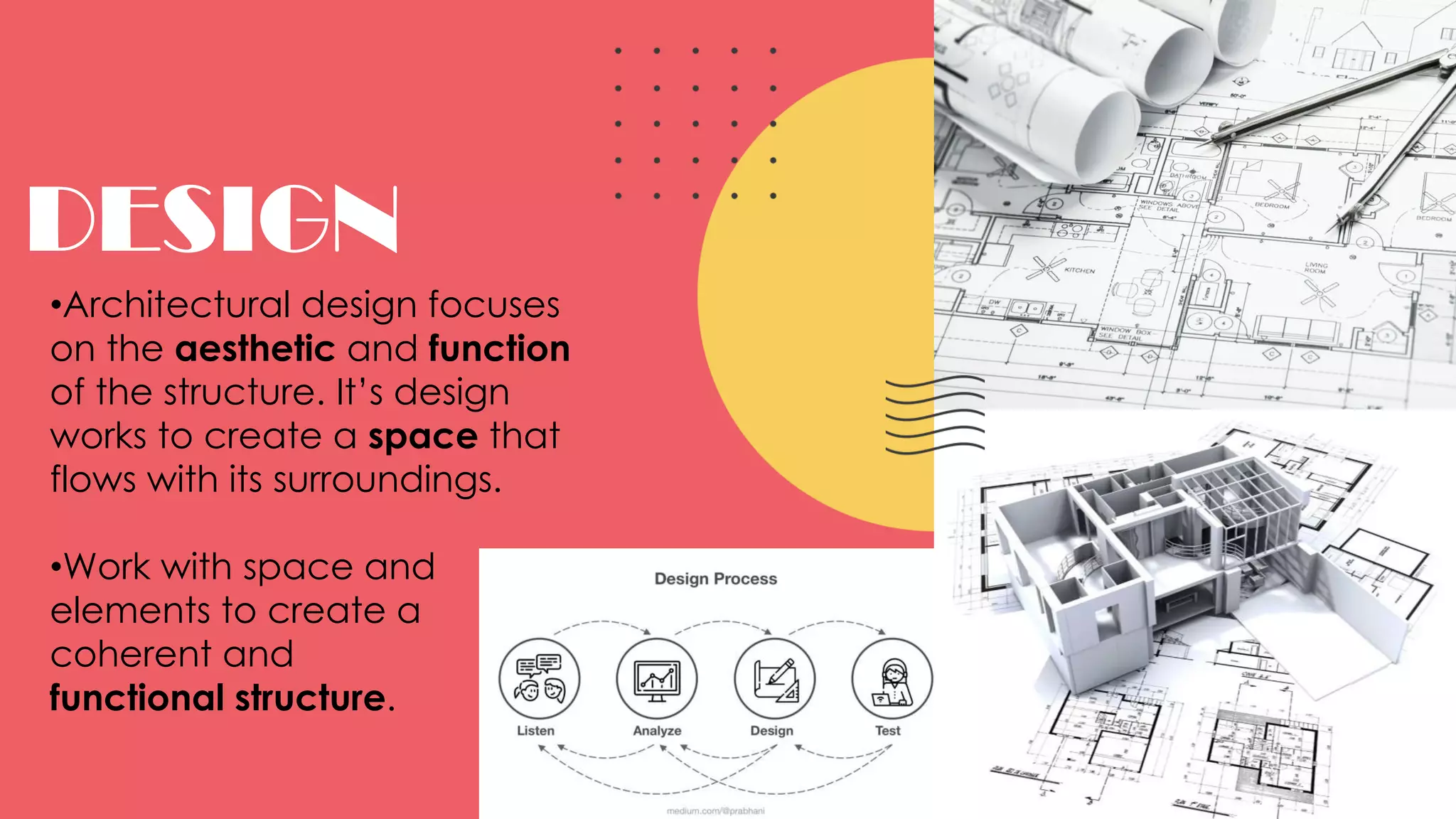
•Architectural design focuses
on the aesthetic and function
of the structure. It’s design
works to create a space that
flows with its surroundings.
•Work with space and
elements to create a
coherent and
functional structure.
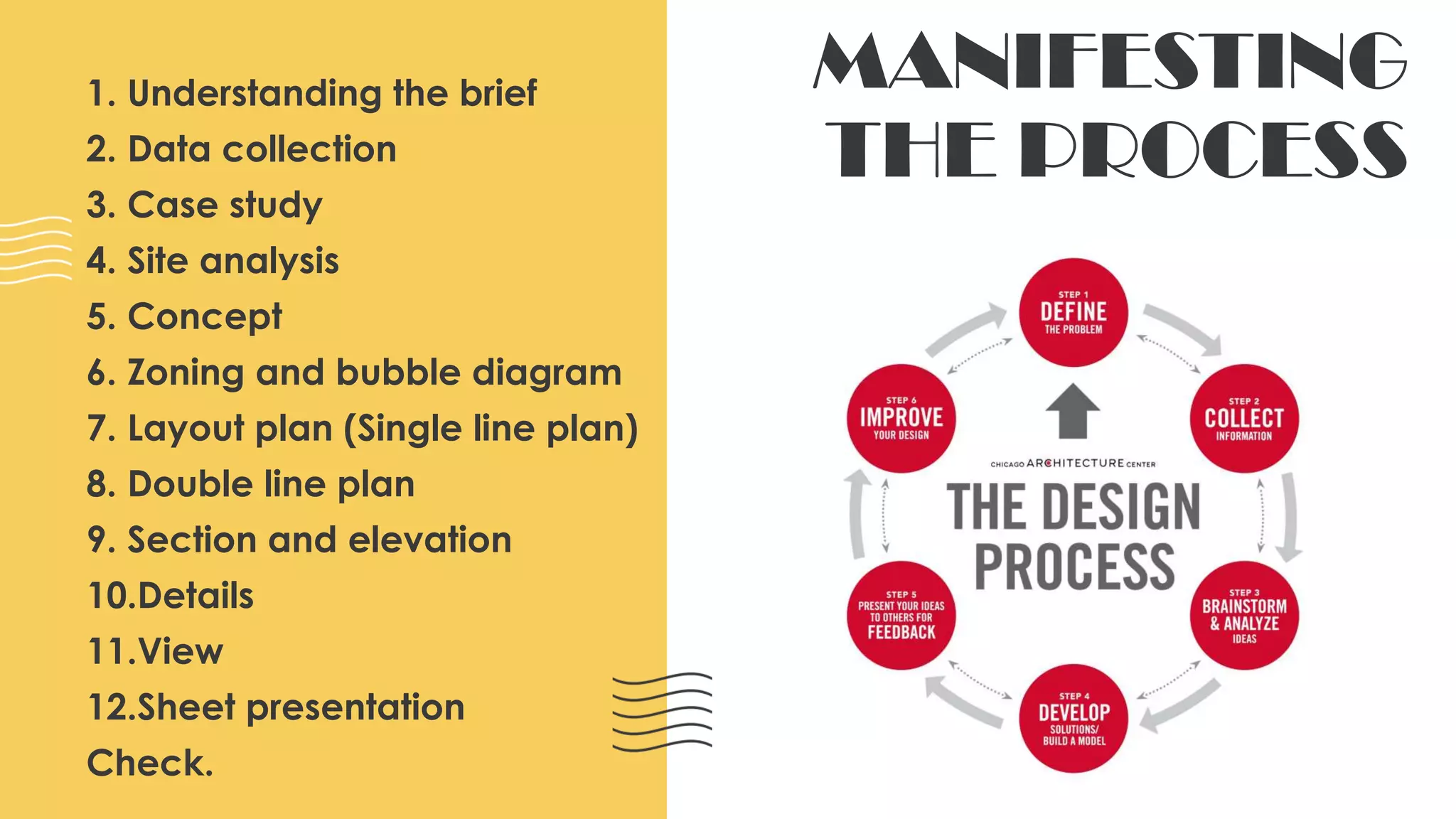
MANIFESTING
THE PROCESS
1. Understanding the brief
2. Data collection
3. Case study
4. Site analysis
5. Concept
6. Zoning and bubble diagram
7. Layout plan (Single line plan)
8. Double line plan
9. Section and elevation
10.Details
11.View
12.Sheet presentation
Check.
Presentations are communication tools
that can be used as demonstrations,
lectures, speeches, reports, and more.
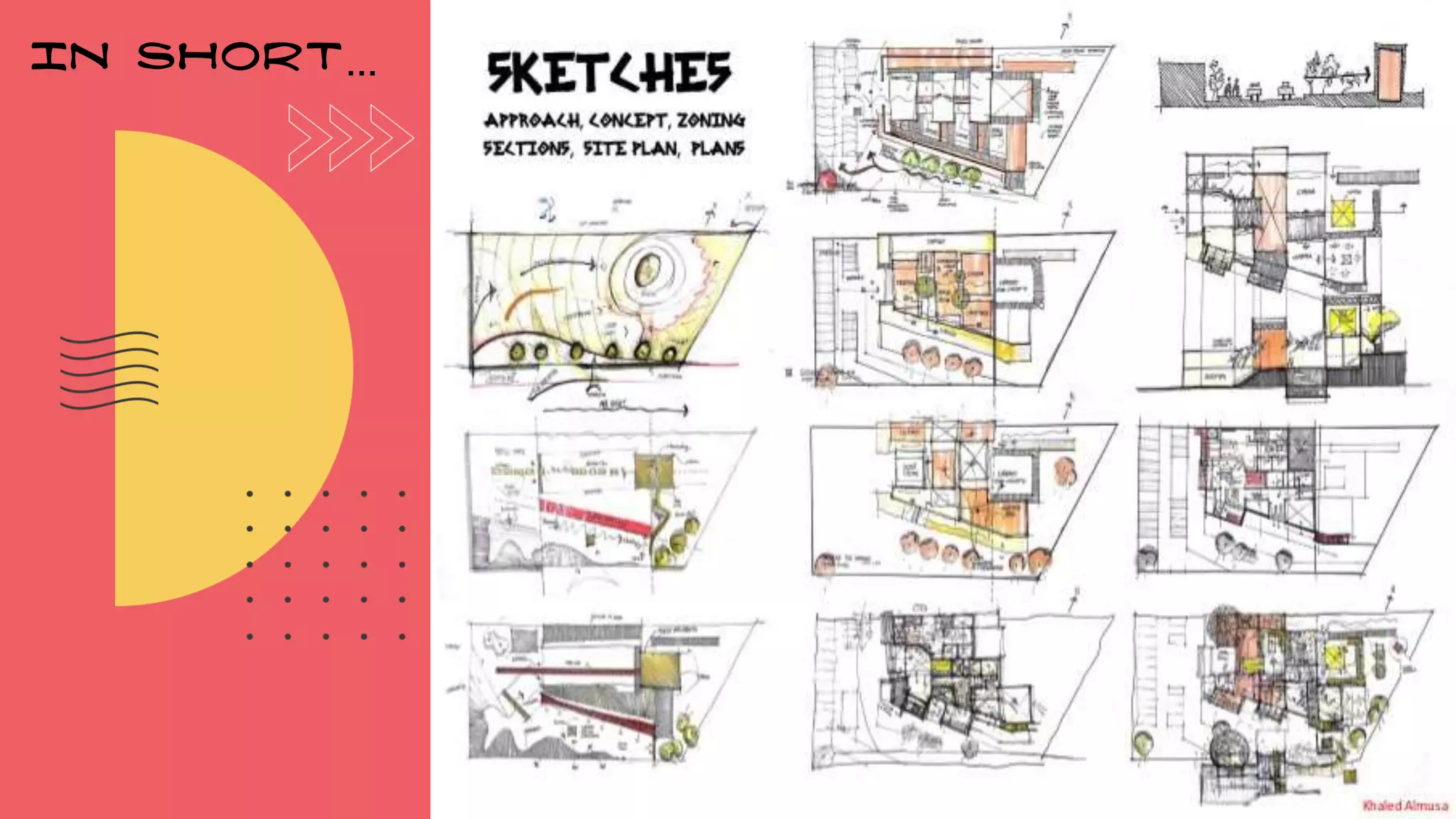
IN SHORT…
Understanding
the brief
01
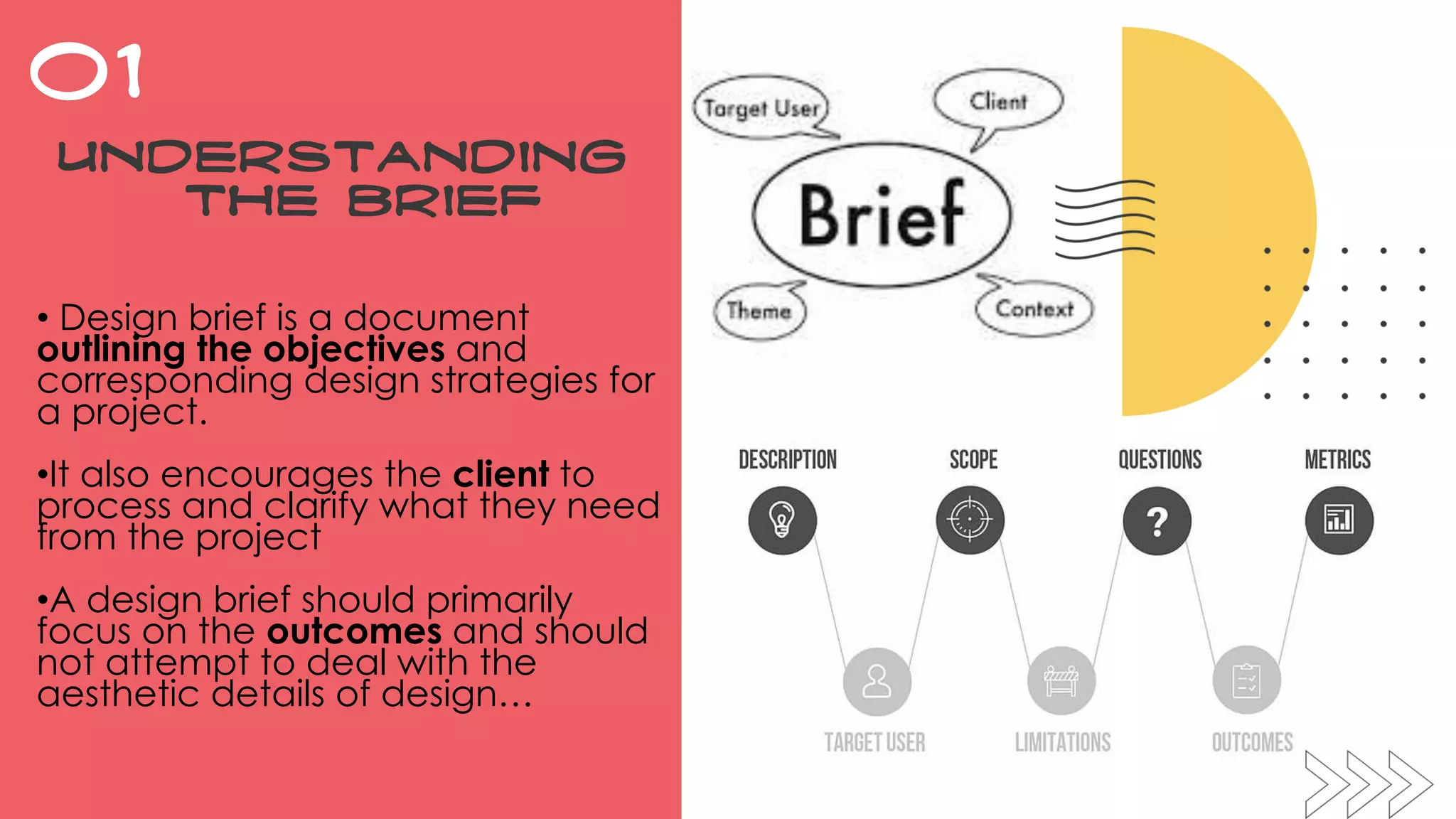
• Design brief is a document
outlining the objectives and
corresponding design strategies for
a project.
•It also encourages the client to
process and clarify what they need
from the project
•A design brief should primarily
focus on the outcomes and should
not attempt to deal with the
aesthetic details of design…
02
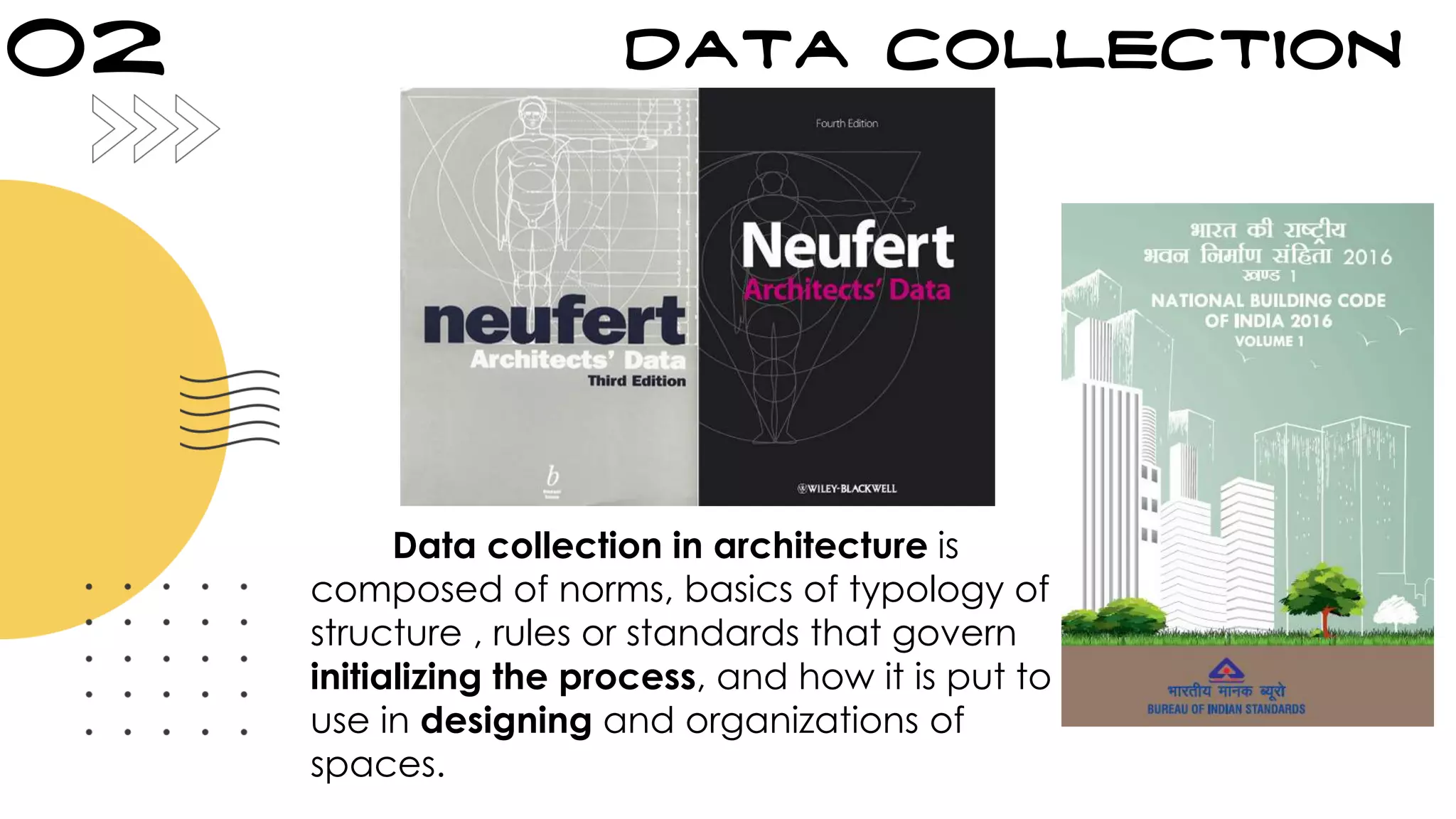
Data collection in architecture is
composed of norms, basics of typology of
structure , rules or standards that govern
initializing the process, and how it is put to
use in designing and organizations of
spaces.
Data collection
Case
study
03
It is the study of a
particular case that is
similar to your topic
of design project.
Doing a case
study will help you
understand the
various aspects that
you have to consider
while designing.
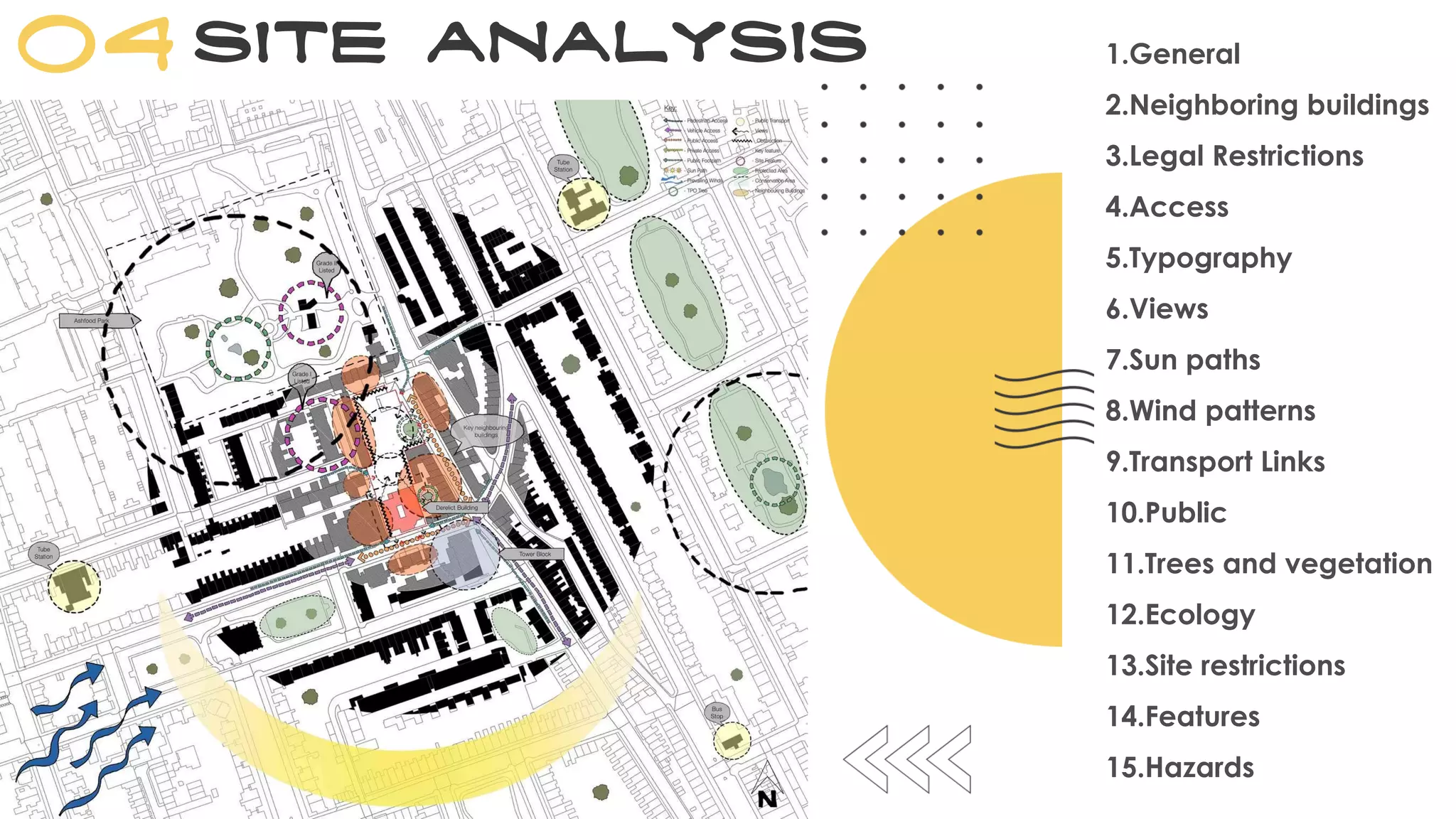
Site analysis04 1.General
2.Neighboring buildings
3.Legal Restrictions
4.Access
5.Typography
6.Views
7.Sun paths
8.Wind patterns
9.Transport Links
10.Public
11.Trees and vegetation
12.Ecology
13.Site restrictions
14.Features
15.Hazards
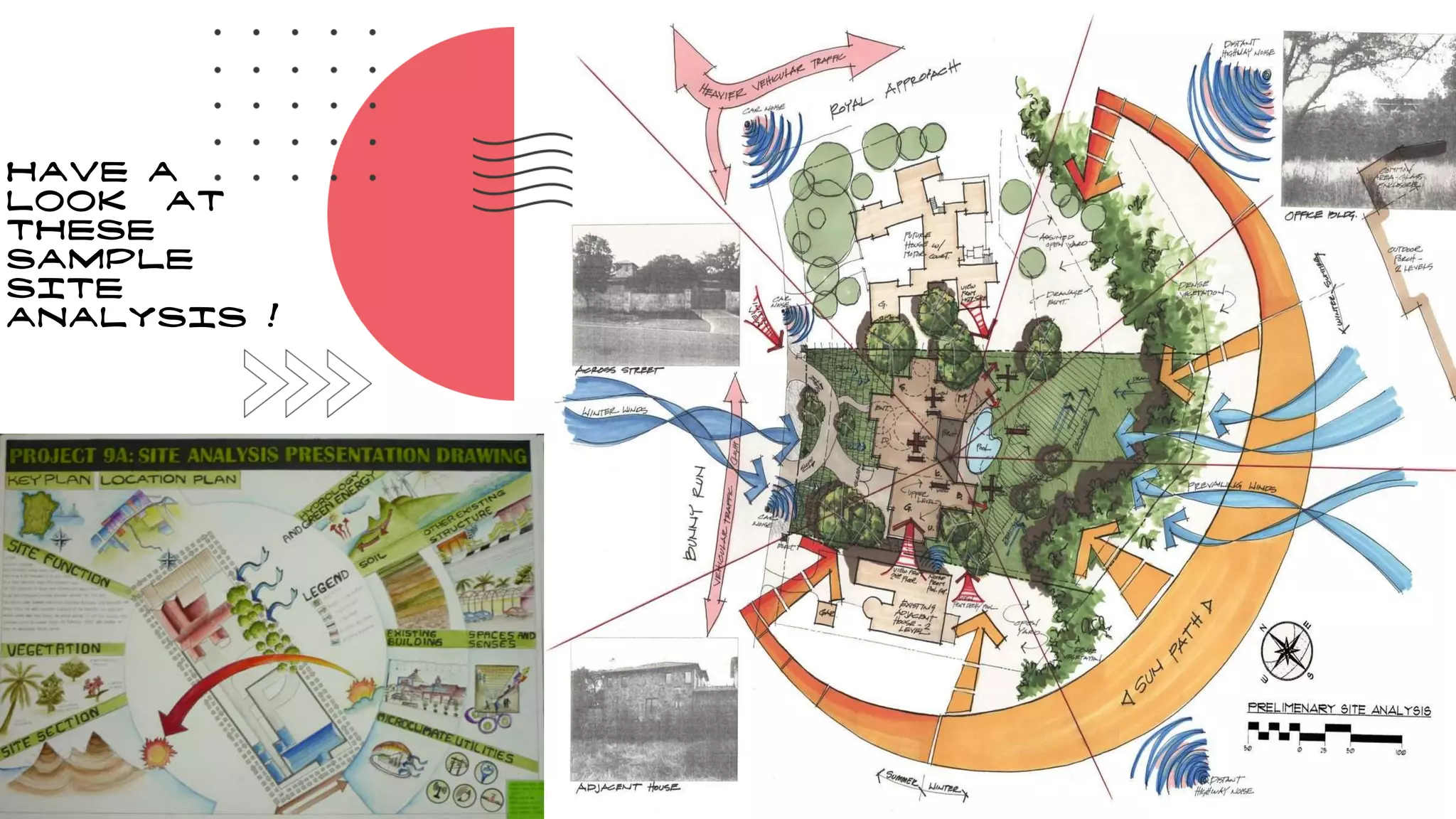
HAVE A
LOOK AT
THESE
SAMPLE
SITE
ANALYSIS !
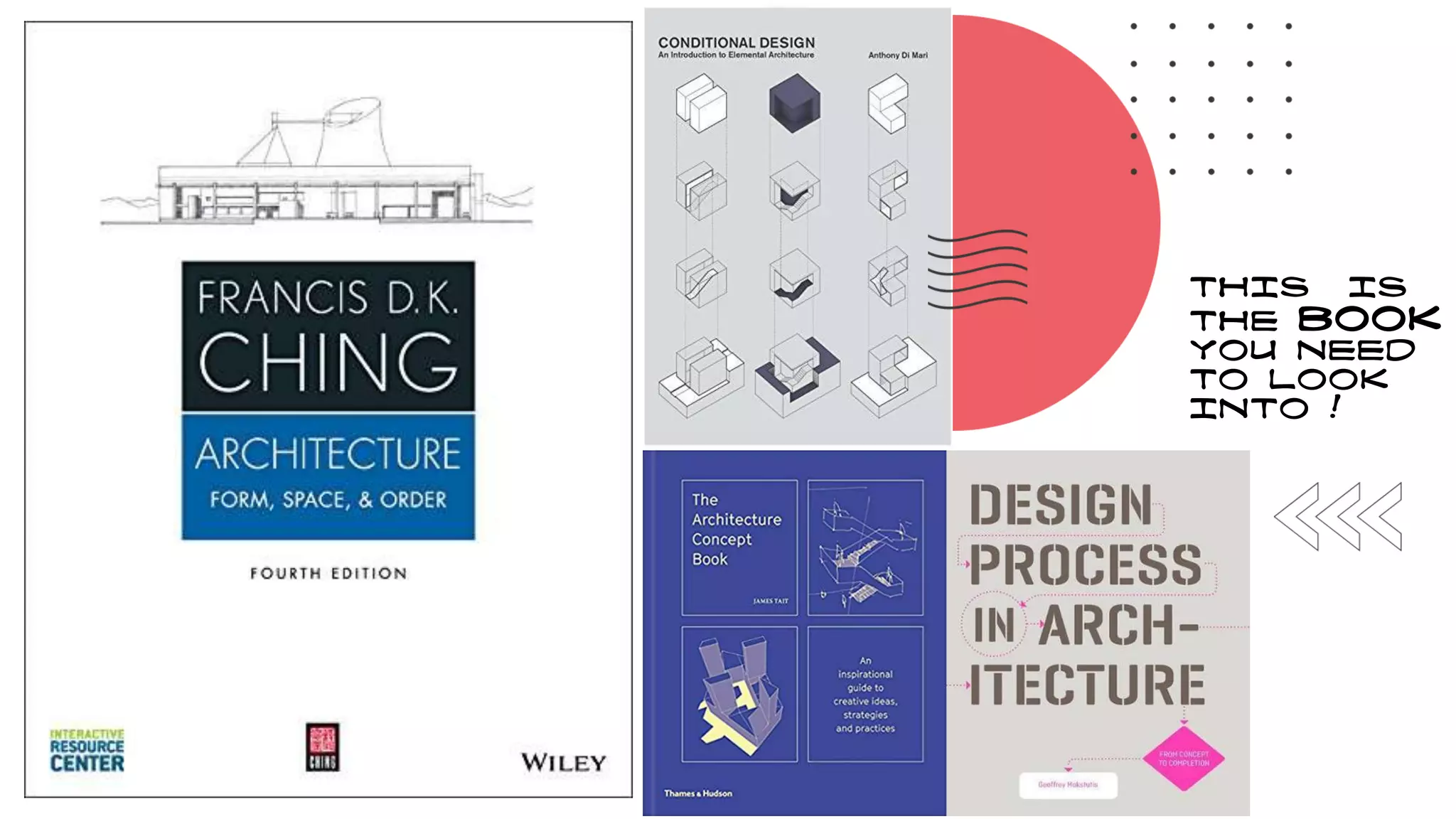
THIS IS
THE BOOK
YOU NEED
TO LOOK
INTO !
Concept 05
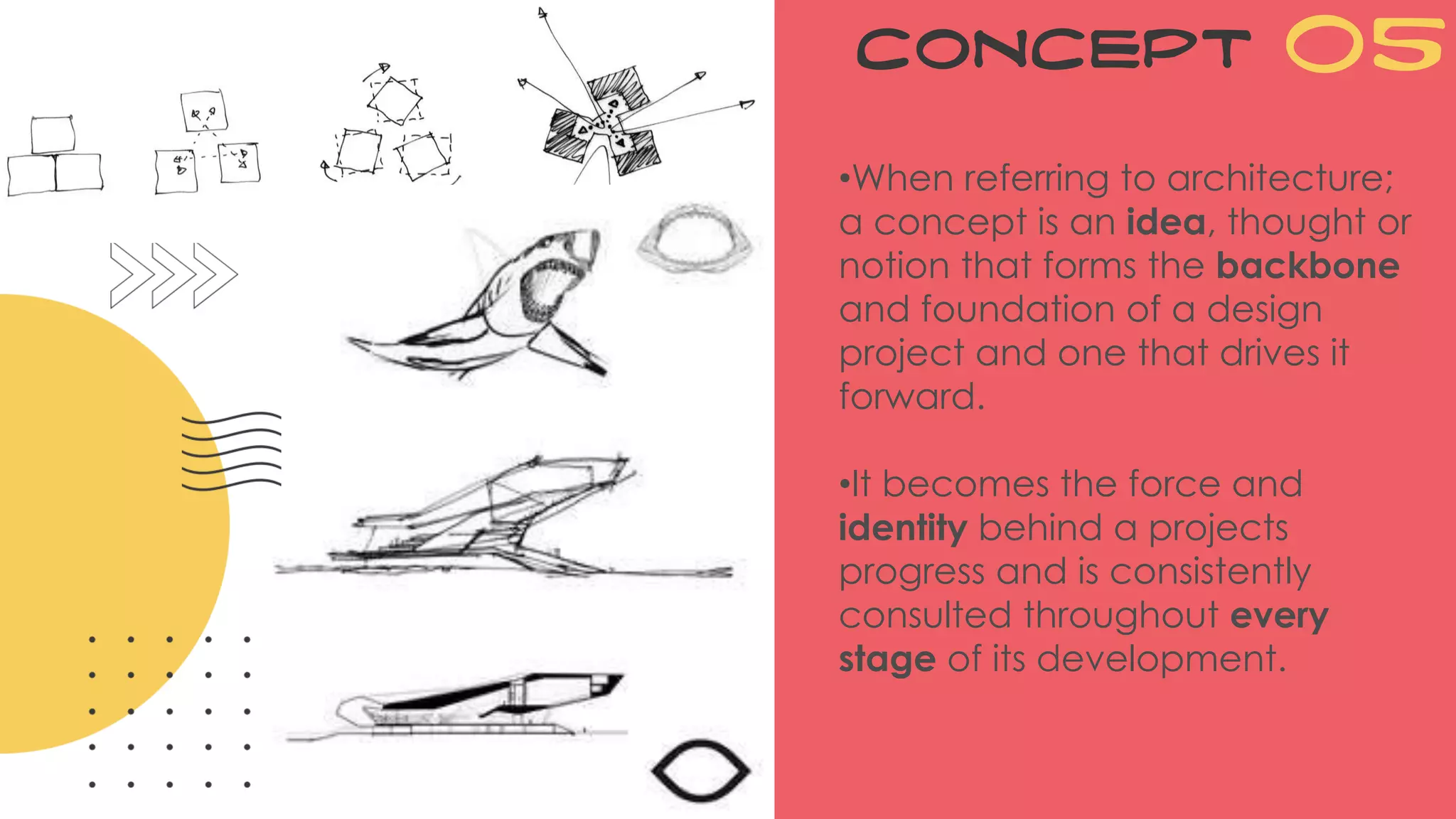
•When referring to architecture;
a concept is an idea, thought or
notion that forms the backbone
and foundation of a design
project and one that drives it
forward.
•It becomes the force and
identity behind a projects
progress and is consistently
consulted throughout every
stage of its development.
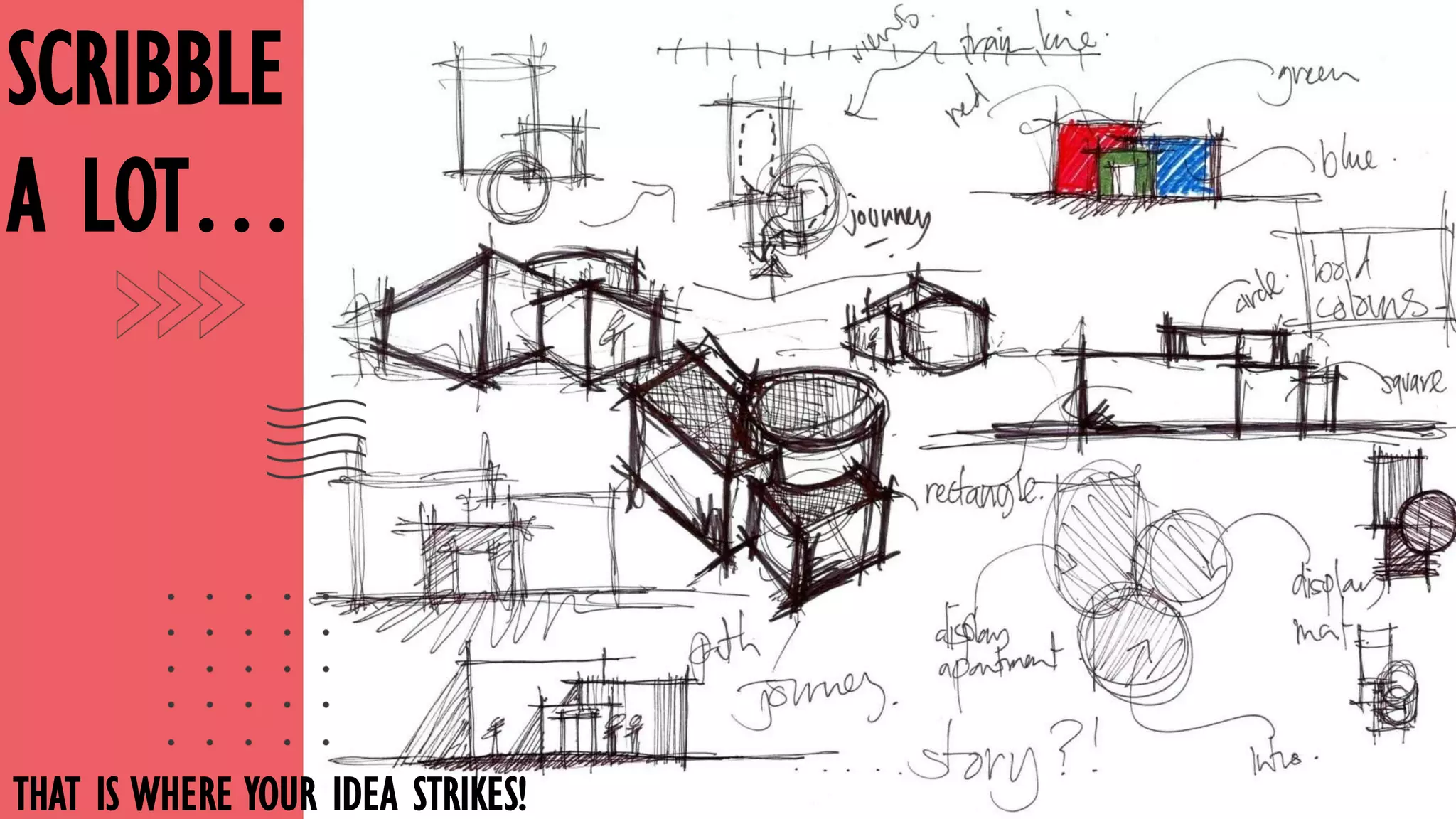
SCRIBBLE
A LOT…
THAT IS WHERE YOUR IDEA STRIKES!
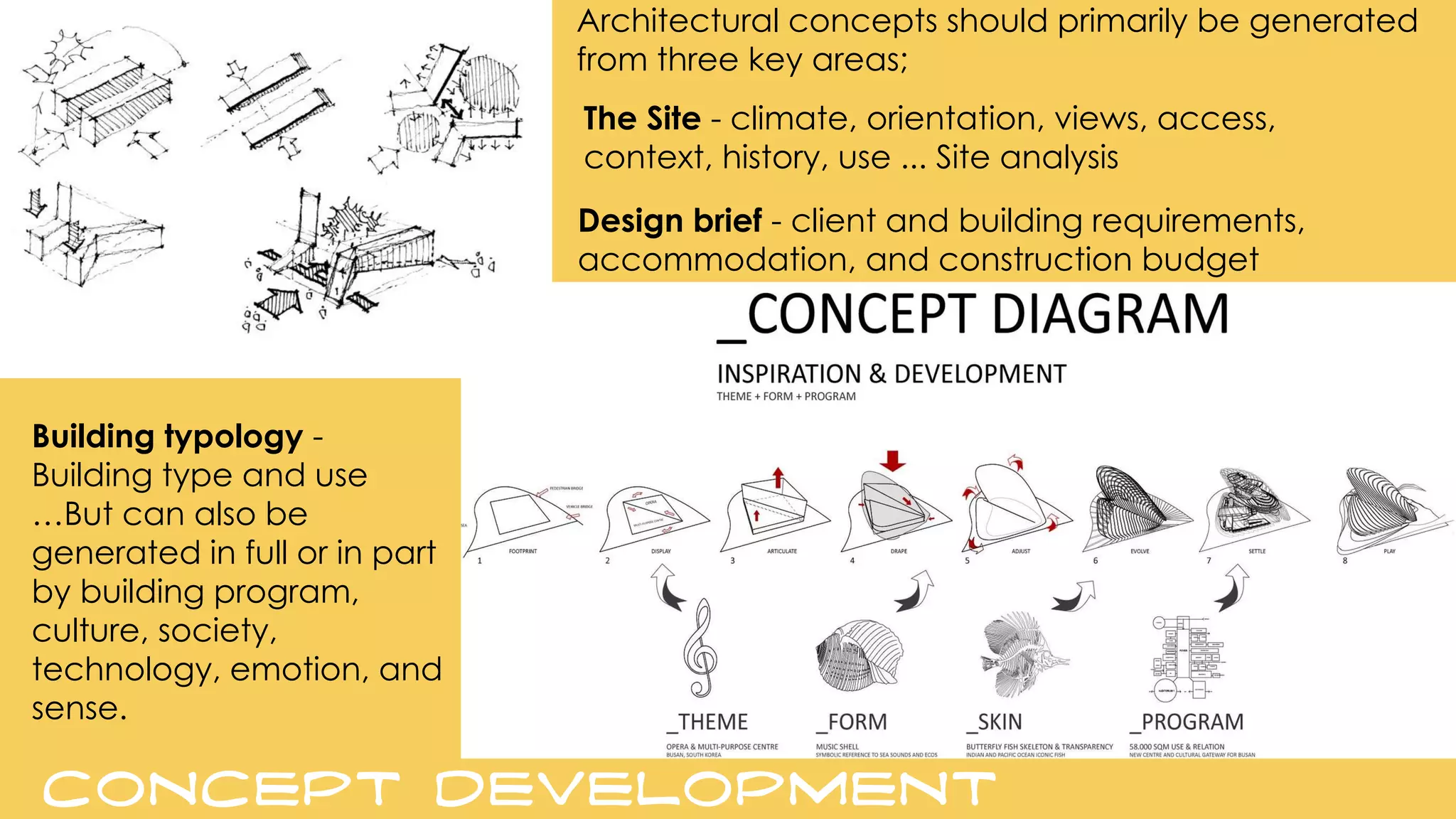
Architectural concepts should primarily be generated
from three key areas;
Building typology -
Building type and use
…But can also be
generated in full or in part
by building program,
culture, society,
technology, emotion, and
sense.
Concept development
Design brief - client and building requirements,
accommodation, and construction budget
The Site - climate, orientation, views, access,
context, history, use ... Site analysis
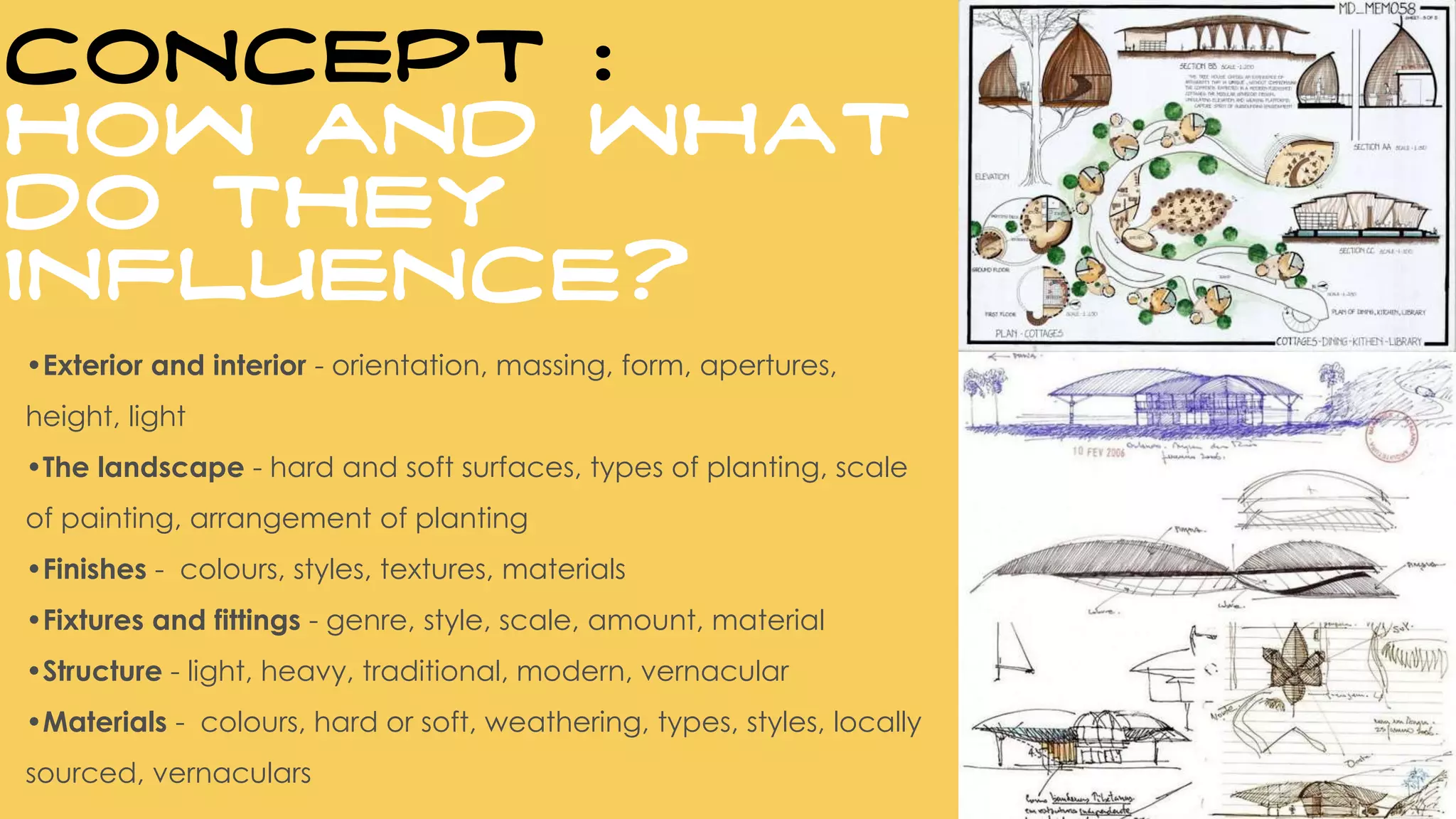
•Exterior and interior - orientation, massing, form, apertures,
height, light
•The landscape - hard and soft surfaces, types of planting, scale
of painting, arrangement of planting
•Finishes - colours, styles, textures, materials
•Fixtures and fittings - genre, style, scale, amount, material
•Structure - light, heavy, traditional, modern, vernacular
•Materials - colours, hard or soft, weathering, types, styles, locally
sourced, vernaculars
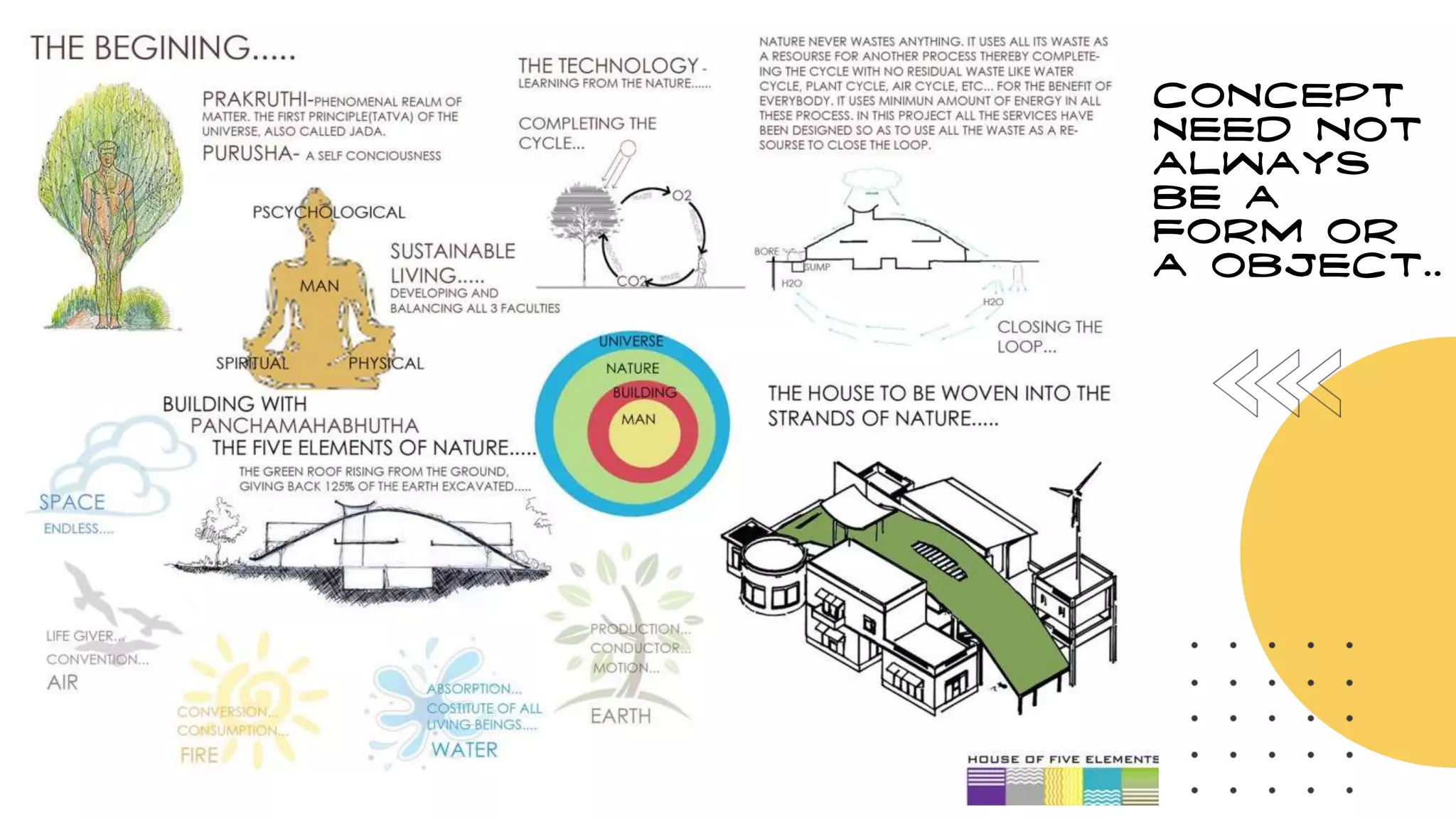
CONCEPT :
How and what
do they
influence?
CONCEPT
NEED NOT
ALWAYS
BE A
FORM OR
A OBJECT..
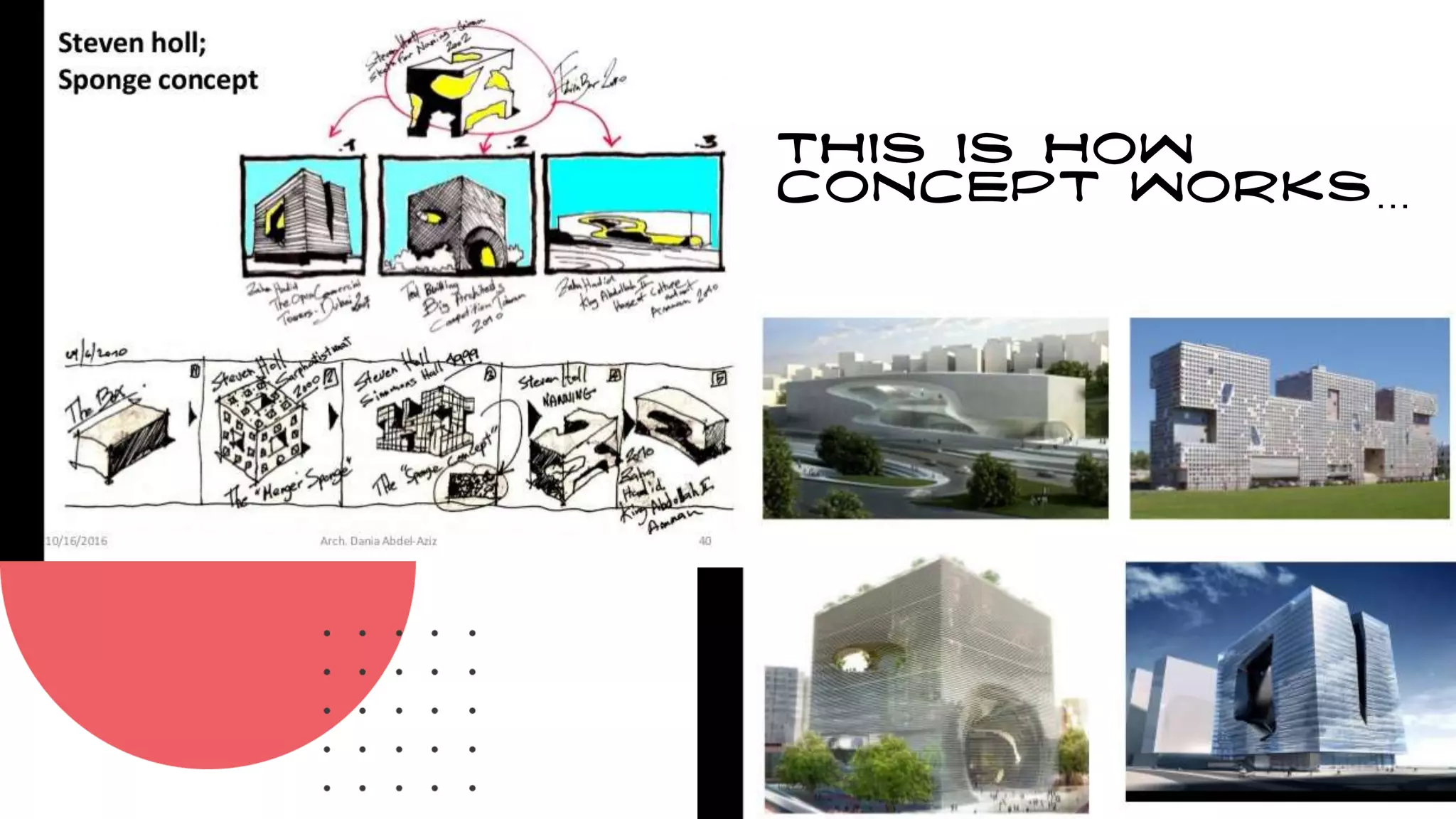
This is how
concept works…
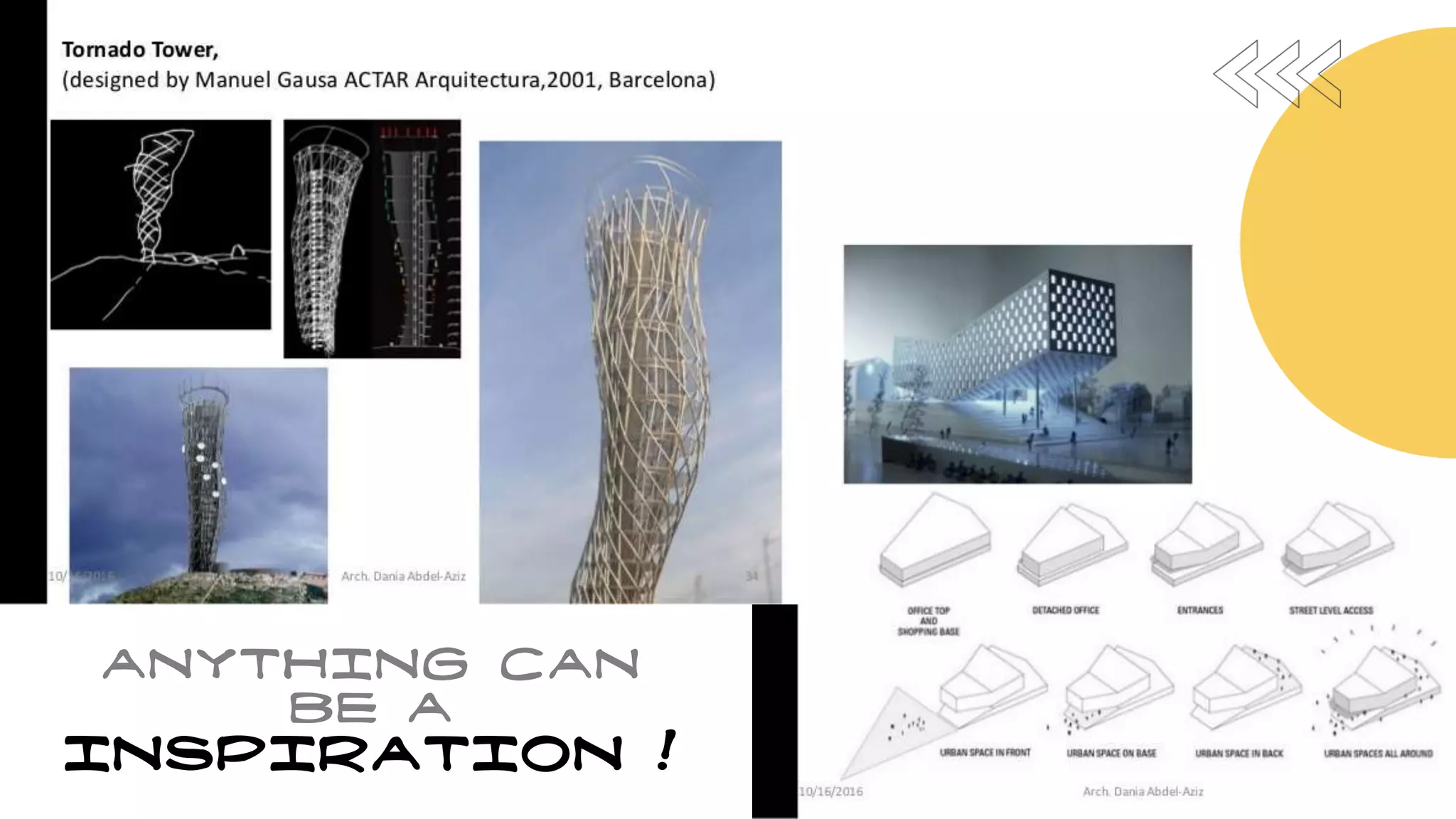
ANYTHING CAN
BE A
INSPIRATION !
THIS IS
THE BOOK
YOU NEED
TO LOOK
INTO !
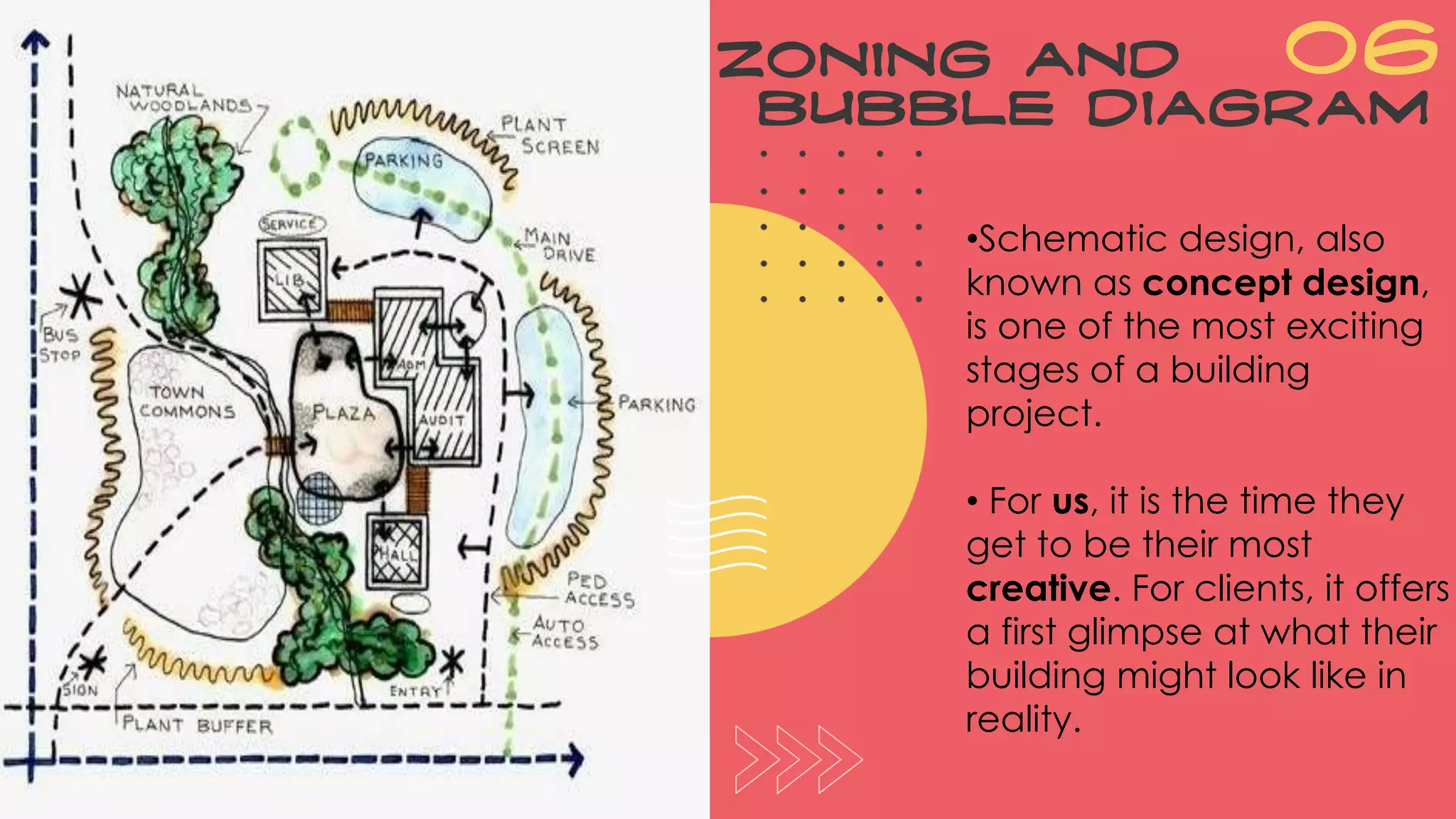
Zoning and
bubble diagram
06
•Schematic design, also
known as concept design,
is one of the most exciting
stages of a building
project.
• For us, it is the time they
get to be their most
creative. For clients, it offers
a first glimpse at what their
building might look like in
reality.
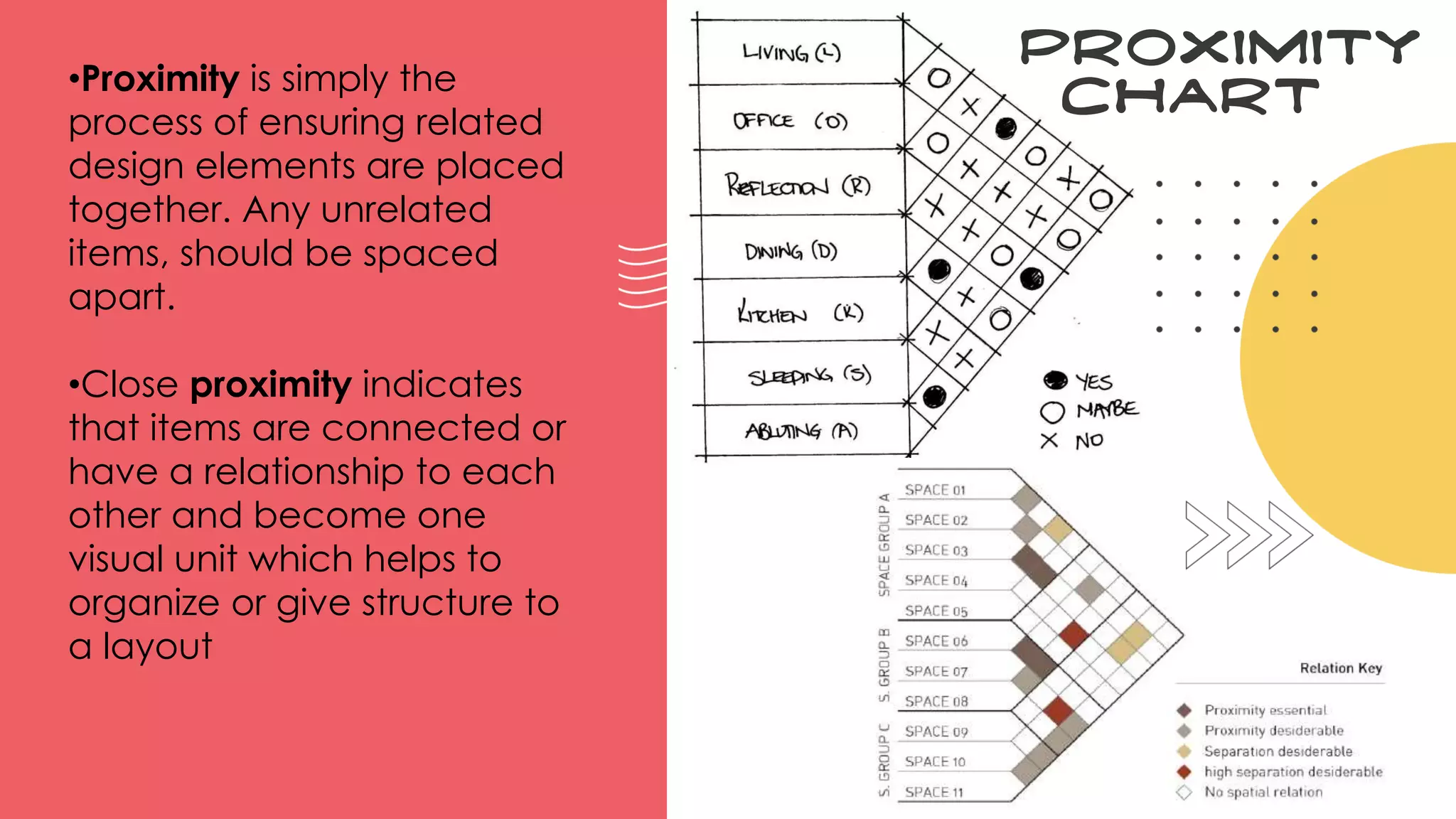
Proximity
chart
•Proximity is simply the
process of ensuring related
design elements are placed
together. Any unrelated
items, should be spaced
apart.
•Close proximity indicates
that items are connected or
have a relationship to each
other and become one
visual unit which helps to
organize or give structure to
a layout
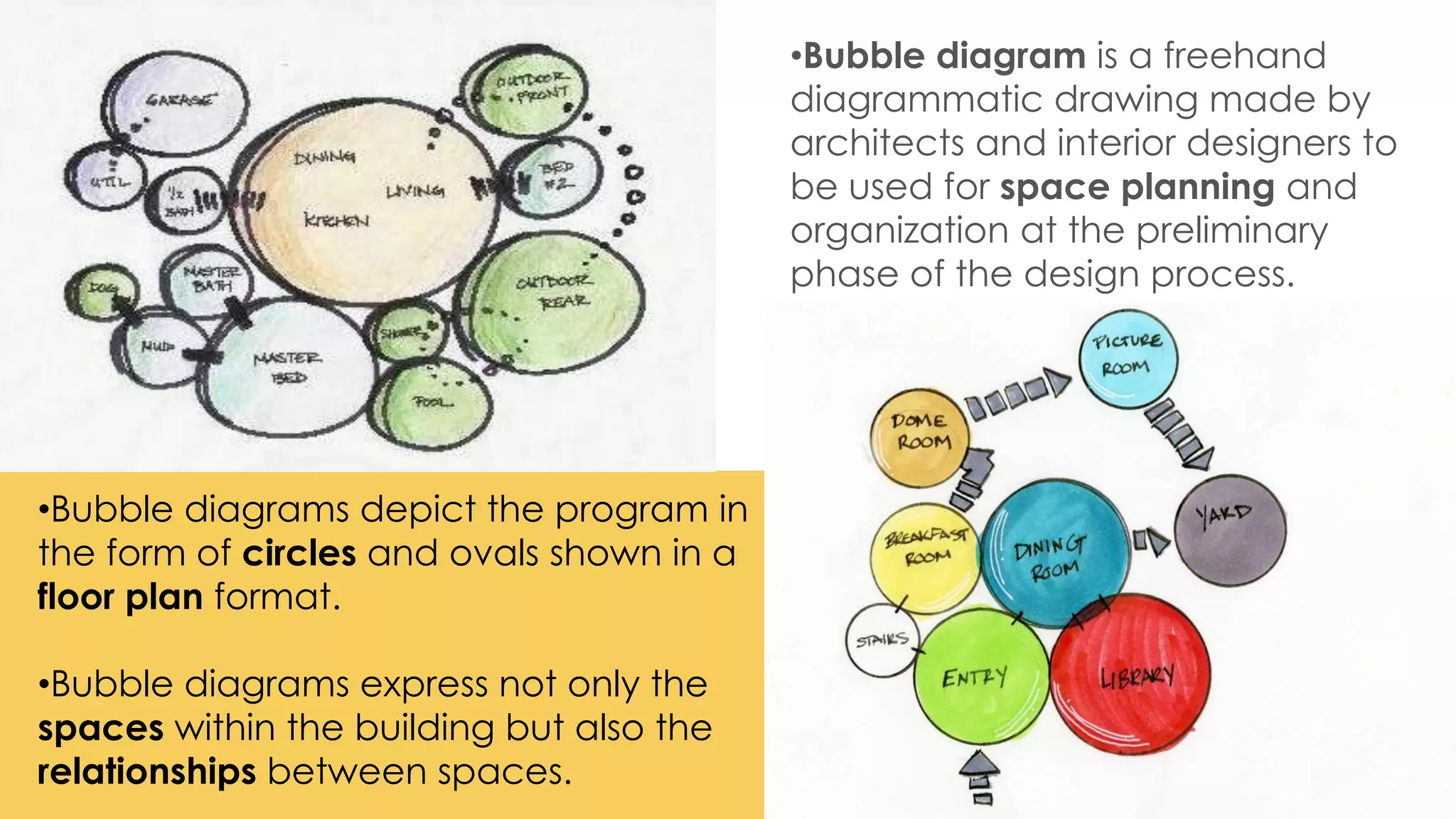
•Bubble diagram is a freehand
diagrammatic drawing made by
architects and interior designers to
be used for space planning and
organization at the preliminary
phase of the design process.
•Bubble diagrams depict the program in
the form of circles and ovals shown in a
floor plan format.
•Bubble diagrams express not only the
spaces within the building but also the
relationships between spaces.
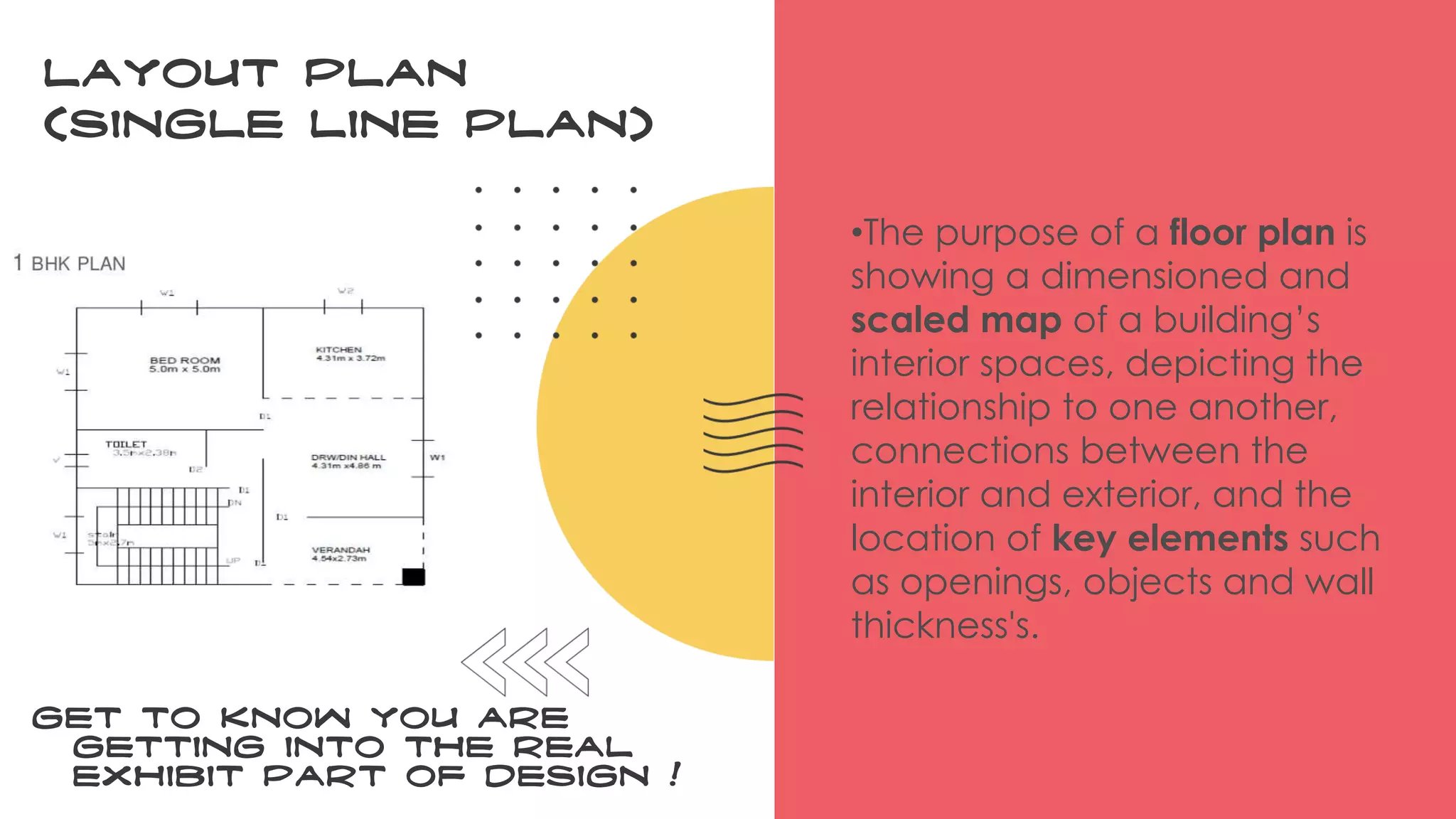
Layout plan
(Single line plan)
•The purpose of a floor plan is
showing a dimensioned and
scaled map of a building’s
interior spaces, depicting the
relationship to one another,
connections between the
interior and exterior, and the
location of key elements such
as openings, objects and wall
thickness's.
Get to know you are
getting into the real
exhibit part of design !
08
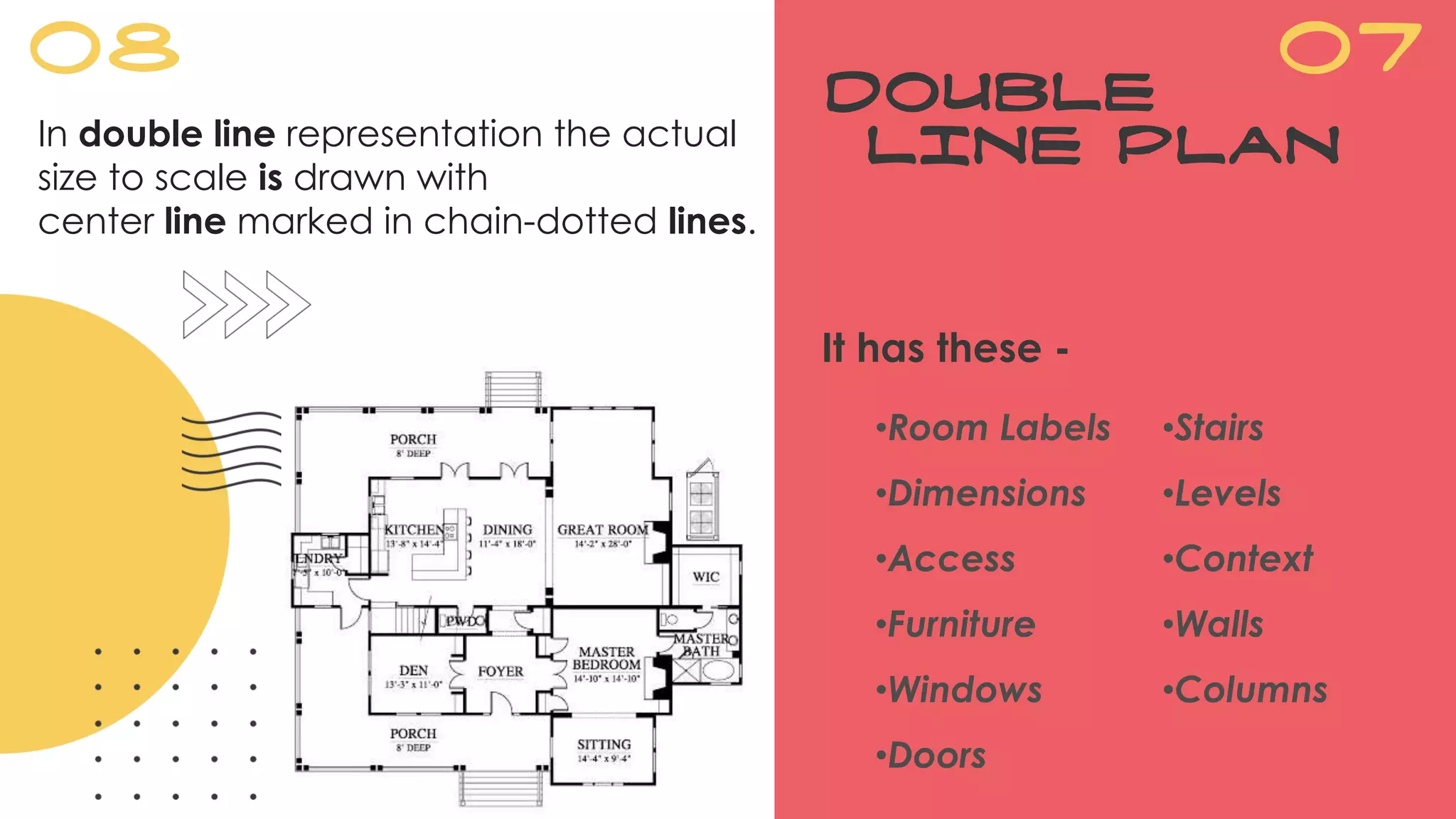
DOUBLE
LINE PLAN
In double line representation the actual
size to scale is drawn with
center line marked in chain-dotted lines.
•Room Labels
•Dimensions
•Access
•Furniture
•Windows
•Doors
•Stairs
•Levels
•Context
•Walls
•Columns
It has these -
07
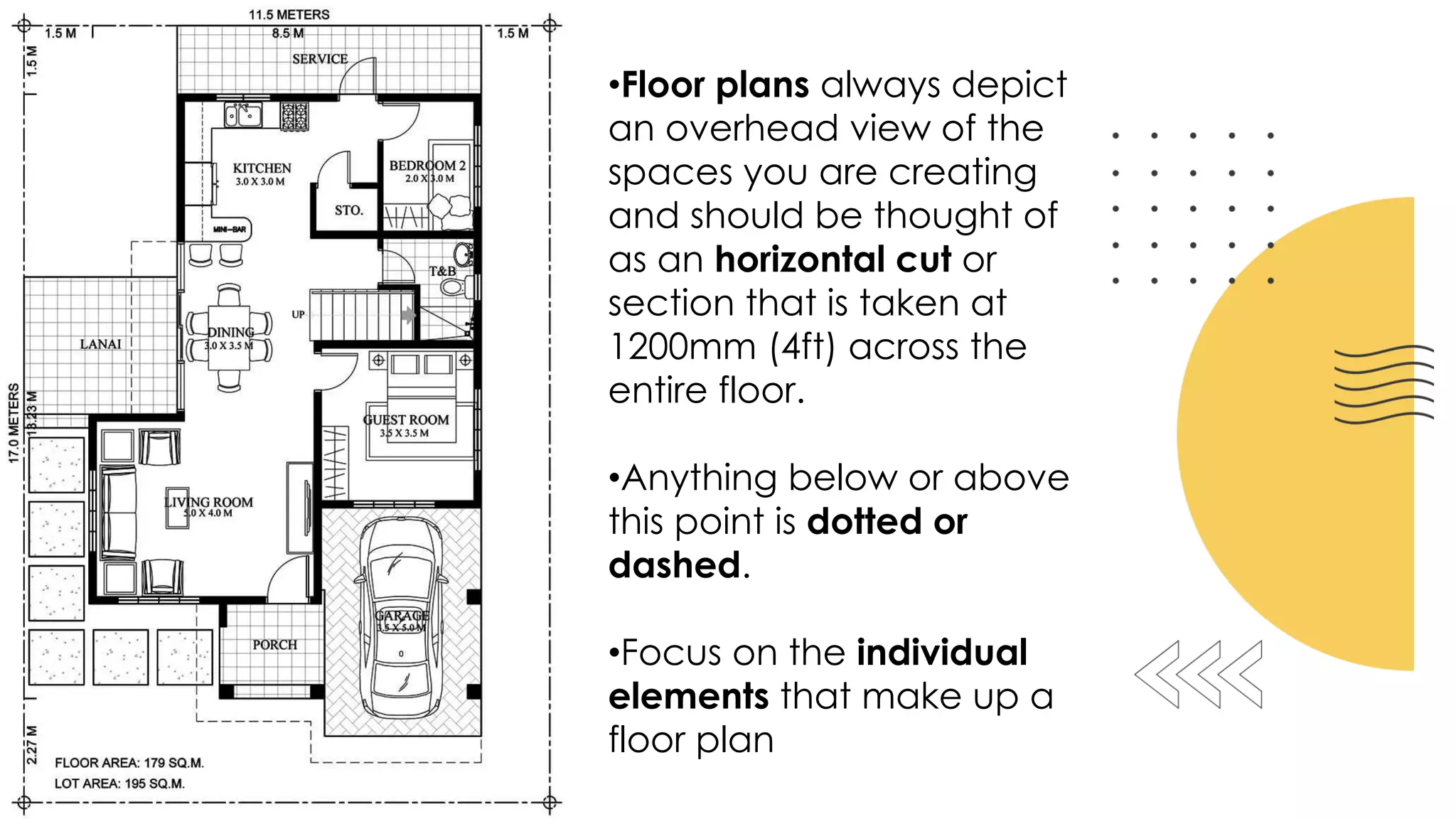
•Floor plans always depict
an overhead view of the
spaces you are creating
and should be thought of
as an horizontal cut or
section that is taken at
1200mm (4ft) across the
entire floor.
•Anything below or above
this point is dotted or
dashed.
•Focus on the individual
elements that make up a
floor plan
Section and elevation
09
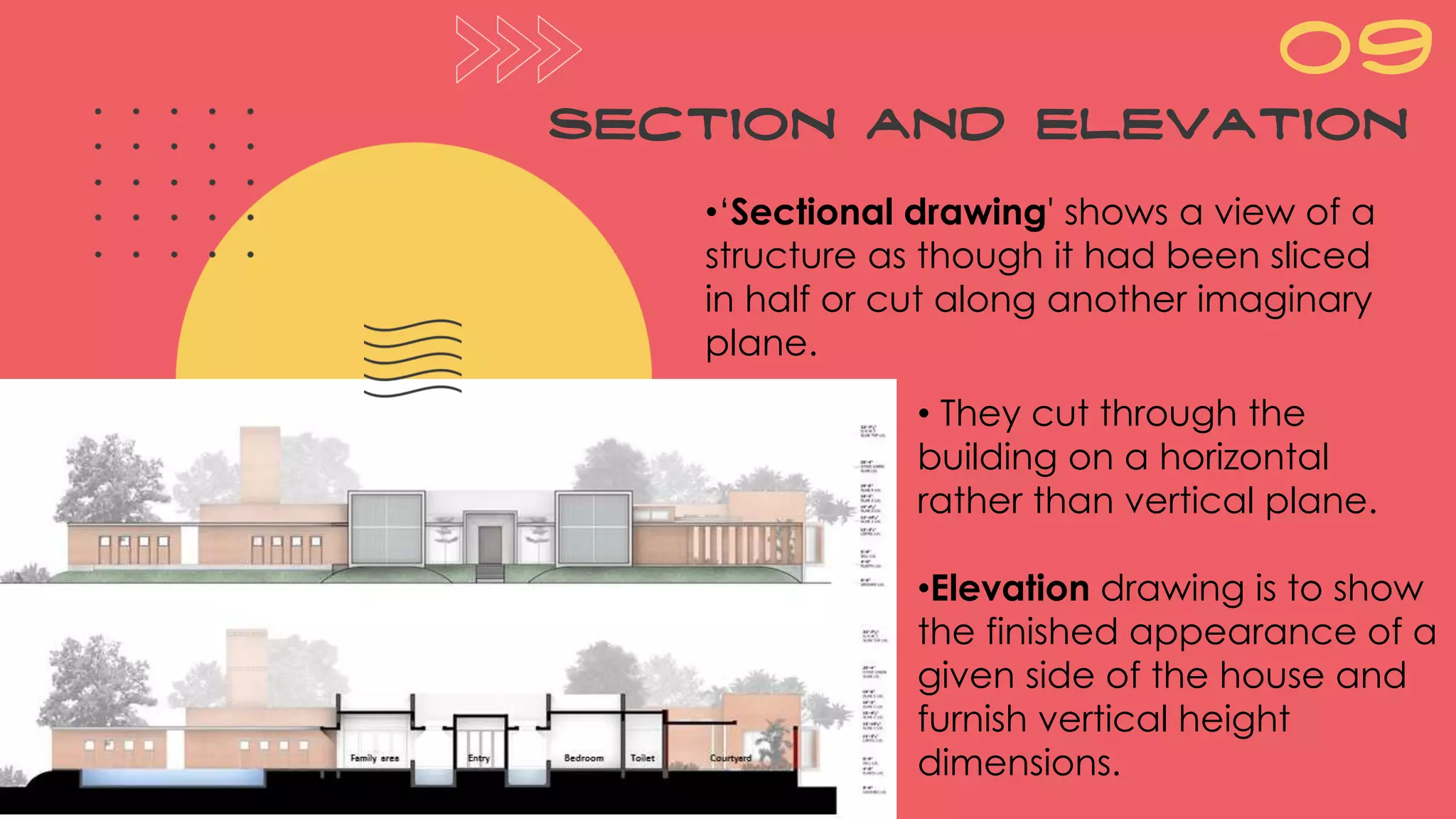
•‘Sectional drawing' shows a view of a
structure as though it had been sliced
in half or cut along another imaginary
plane.
•Elevation drawing is to show
the finished appearance of a
given side of the house and
furnish vertical height
dimensions.
• They cut through the
building on a horizontal
rather than vertical plane.
DETAILS10
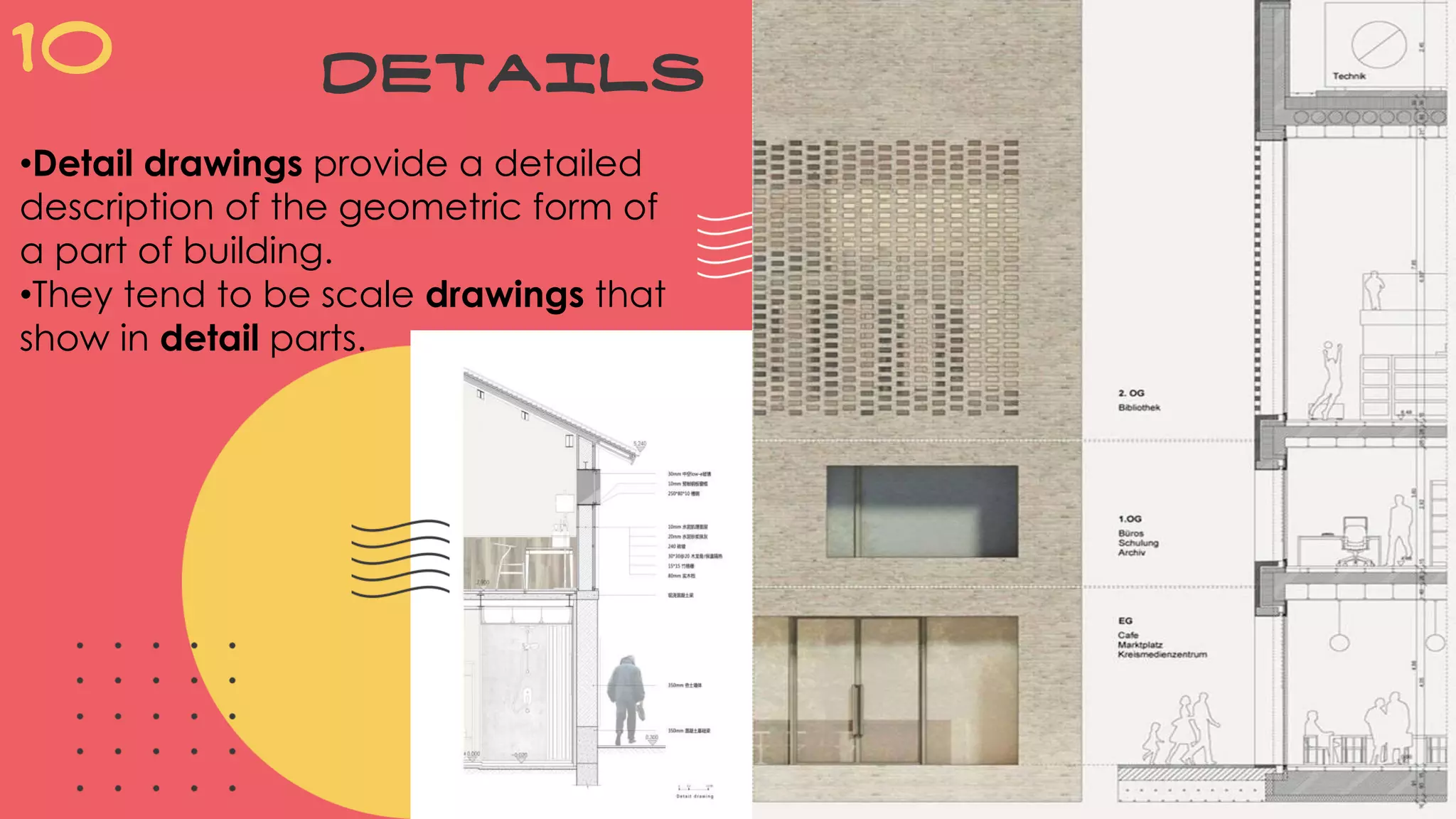
•Detail drawings provide a detailed
description of the geometric form of
a part of building.
•They tend to be scale drawings that
show in detail parts.
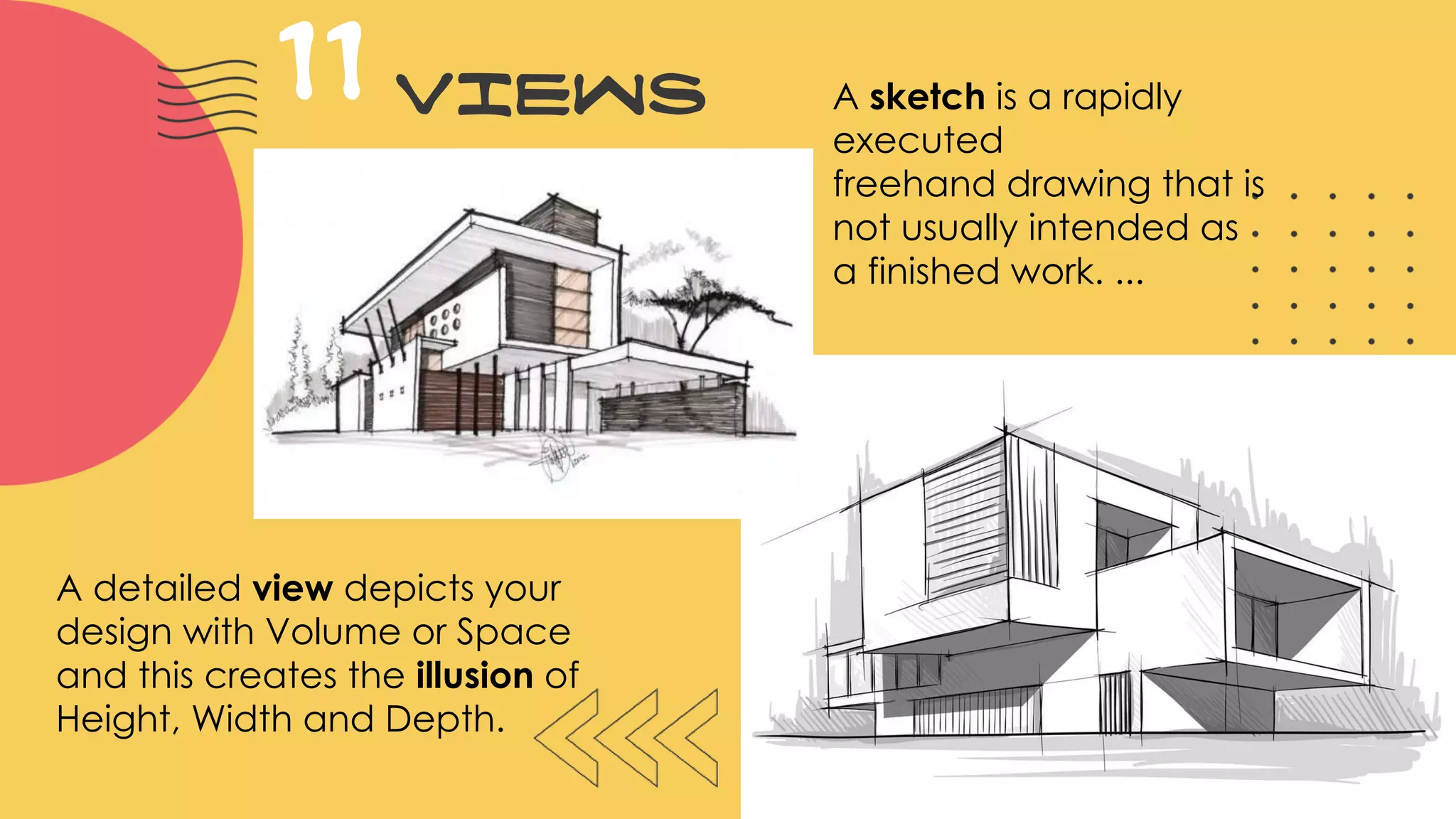
VIEWS11 A sketch is a rapidly
executed
freehand drawing that is
not usually intended as
a finished work. ...
A detailed view depicts your
design with Volume or Space
and this creates the illusion of
Height, Width and Depth.
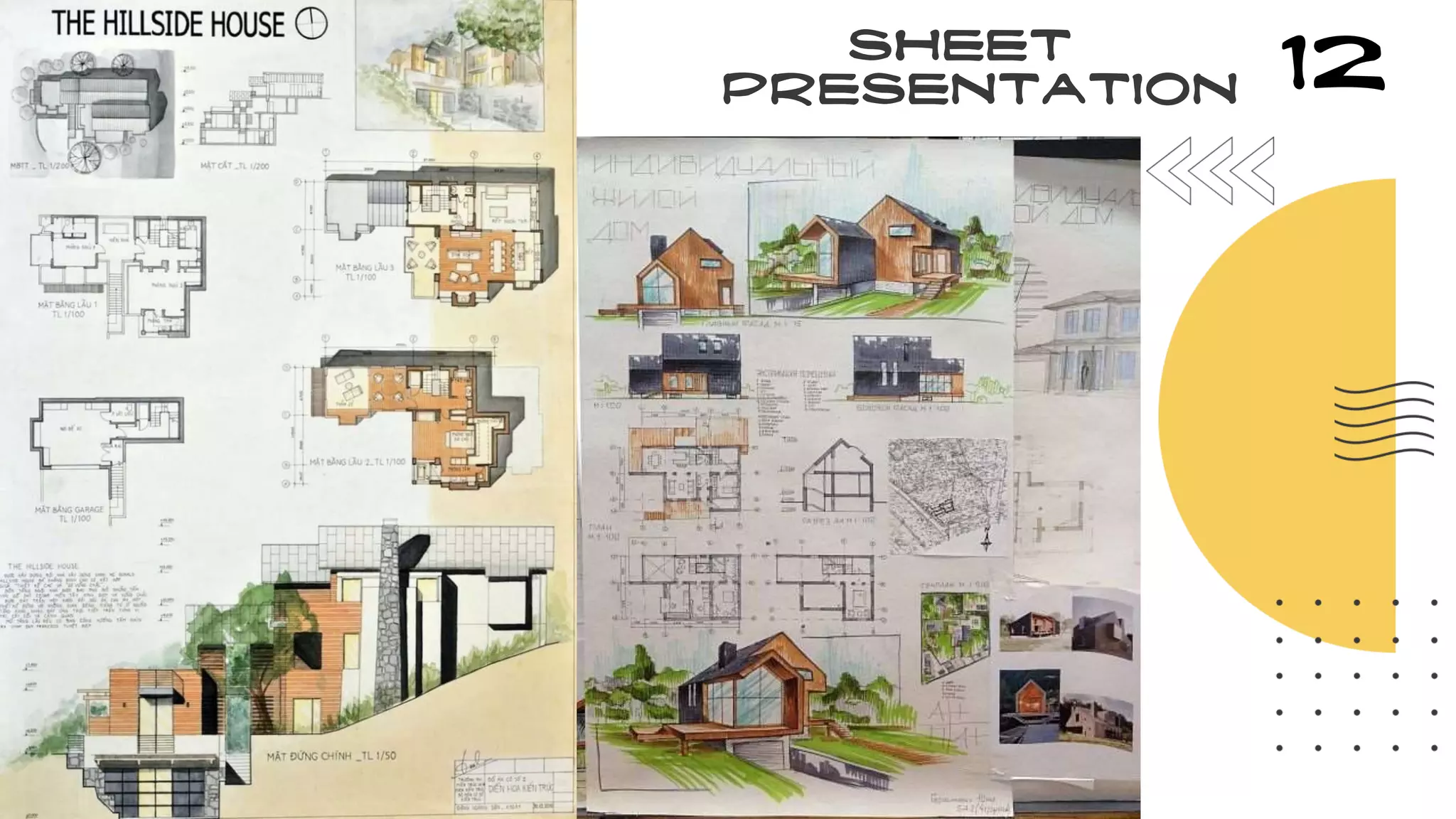
Sheet
presentation 12
Check...
AND RE-Check...
Contact me !
sharani_somasundaram
sharani.uma3@gmail.com
END OF OUR
SLEEPING DOSE
FOR TODAY !
ANY QUESTIONS?
THANK YOU FOR YOUR PATIENCE…
open_vault_diary

Architectural Design Process - In brief

  • 1.
    DESIGN PROCESS Taking you throughthe exploration on process of designing a STRUCTURE…
  • 2.
    DESIGN •Architectural design focuses onthe aesthetic and function of the structure. It’s design works to create a space that flows with its surroundings. •Work with space and elements to create a coherent and functional structure.
  • 3.
    MANIFESTING THE PROCESS 1. Understandingthe brief 2. Data collection 3. Case study 4. Site analysis 5. Concept 6. Zoning and bubble diagram 7. Layout plan (Single line plan) 8. Double line plan 9. Section and elevation 10.Details 11.View 12.Sheet presentation Check. Presentations are communication tools that can be used as demonstrations, lectures, speeches, reports, and more.
  • 4.
  • 5.
    Understanding the brief 01 • Designbrief is a document outlining the objectives and corresponding design strategies for a project. •It also encourages the client to process and clarify what they need from the project •A design brief should primarily focus on the outcomes and should not attempt to deal with the aesthetic details of design…
  • 6.
    02 Data collection inarchitecture is composed of norms, basics of typology of structure , rules or standards that govern initializing the process, and how it is put to use in designing and organizations of spaces. Data collection
  • 7.
    Case study 03 It is thestudy of a particular case that is similar to your topic of design project. Doing a case study will help you understand the various aspects that you have to consider while designing.
  • 8.
    Site analysis04 1.General 2.Neighboringbuildings 3.Legal Restrictions 4.Access 5.Typography 6.Views 7.Sun paths 8.Wind patterns 9.Transport Links 10.Public 11.Trees and vegetation 12.Ecology 13.Site restrictions 14.Features 15.Hazards
  • 9.
  • 10.
    THIS IS THE BOOK YOUNEED TO LOOK INTO !
  • 11.
    Concept 05 •When referringto architecture; a concept is an idea, thought or notion that forms the backbone and foundation of a design project and one that drives it forward. •It becomes the force and identity behind a projects progress and is consistently consulted throughout every stage of its development.
  • 12.
    SCRIBBLE A LOT… THAT ISWHERE YOUR IDEA STRIKES!
  • 13.
    Architectural concepts shouldprimarily be generated from three key areas; Building typology - Building type and use …But can also be generated in full or in part by building program, culture, society, technology, emotion, and sense. Concept development Design brief - client and building requirements, accommodation, and construction budget The Site - climate, orientation, views, access, context, history, use ... Site analysis
  • 14.
    •Exterior and interior- orientation, massing, form, apertures, height, light •The landscape - hard and soft surfaces, types of planting, scale of painting, arrangement of planting •Finishes - colours, styles, textures, materials •Fixtures and fittings - genre, style, scale, amount, material •Structure - light, heavy, traditional, modern, vernacular •Materials - colours, hard or soft, weathering, types, styles, locally sourced, vernaculars CONCEPT : How and what do they influence?
  • 15.
  • 16.
  • 17.
  • 18.
    THIS IS THE BOOK YOUNEED TO LOOK INTO !
  • 19.
    Zoning and bubble diagram 06 •Schematicdesign, also known as concept design, is one of the most exciting stages of a building project. • For us, it is the time they get to be their most creative. For clients, it offers a first glimpse at what their building might look like in reality.
  • 20.
    Proximity chart •Proximity is simplythe process of ensuring related design elements are placed together. Any unrelated items, should be spaced apart. •Close proximity indicates that items are connected or have a relationship to each other and become one visual unit which helps to organize or give structure to a layout
  • 21.
    •Bubble diagram isa freehand diagrammatic drawing made by architects and interior designers to be used for space planning and organization at the preliminary phase of the design process. •Bubble diagrams depict the program in the form of circles and ovals shown in a floor plan format. •Bubble diagrams express not only the spaces within the building but also the relationships between spaces.
  • 22.
    Layout plan (Single lineplan) •The purpose of a floor plan is showing a dimensioned and scaled map of a building’s interior spaces, depicting the relationship to one another, connections between the interior and exterior, and the location of key elements such as openings, objects and wall thickness's. Get to know you are getting into the real exhibit part of design !
  • 23.
    08 DOUBLE LINE PLAN In doubleline representation the actual size to scale is drawn with center line marked in chain-dotted lines. •Room Labels •Dimensions •Access •Furniture •Windows •Doors •Stairs •Levels •Context •Walls •Columns It has these - 07
  • 24.
    •Floor plans alwaysdepict an overhead view of the spaces you are creating and should be thought of as an horizontal cut or section that is taken at 1200mm (4ft) across the entire floor. •Anything below or above this point is dotted or dashed. •Focus on the individual elements that make up a floor plan
  • 25.
    Section and elevation 09 •‘Sectionaldrawing' shows a view of a structure as though it had been sliced in half or cut along another imaginary plane. •Elevation drawing is to show the finished appearance of a given side of the house and furnish vertical height dimensions. • They cut through the building on a horizontal rather than vertical plane.
  • 26.
    DETAILS10 •Detail drawings providea detailed description of the geometric form of a part of building. •They tend to be scale drawings that show in detail parts.
  • 27.
    VIEWS11 A sketchis a rapidly executed freehand drawing that is not usually intended as a finished work. ... A detailed view depicts your design with Volume or Space and this creates the illusion of Height, Width and Depth.
  • 28.
  • 29.
  • 30.
    Contact me ! sharani_somasundaram sharani.uma3@gmail.com ENDOF OUR SLEEPING DOSE FOR TODAY ! ANY QUESTIONS? THANK YOU FOR YOUR PATIENCE… open_vault_diary

Editor's Notes