INTERPERSONAL SKILLS
VOITH TURBO S.A
CHARLES COTTER
28 JUNE 2016
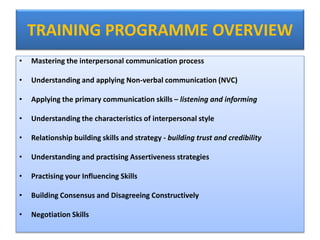
TRAINING PROGRAMME OVERVIEW
• Mastering the interpersonal communication process
• Understanding and applying Non-verbal communication (NVC)
• Applying the primary communication skills – listening and informing
• Understanding the characteristics of interpersonal style
• Relationship building skills and strategy - building trust and credibility
• Understanding and practising Assertiveness strategies
• Practising your Influencing Skills
• Building Consensus and Disagreeing Constructively
• Negotiation Skills
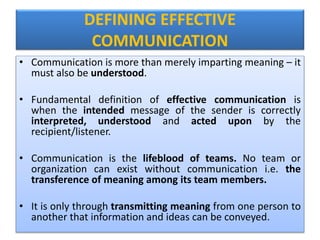
DEFINING EFFECTIVE
COMMUNICATION
• Communication is more than merely imparting meaning – it
must also be understood.
• Fundamental definition of effective communication is
when the intended message of the sender is correctly
interpreted, understood and acted upon by the
recipient/listener.
• Communication is the lifeblood of teams. No team or
organization can exist without communication i.e. the
transference of meaning among its team members.
• It is only through transmitting meaning from one person to
another that information and ideas can be conveyed.
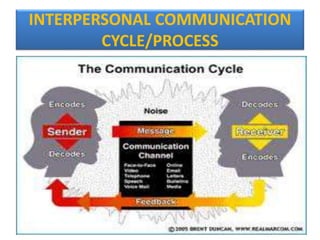
INTERPERSONAL COMMUNICATION
CYCLE/PROCESS
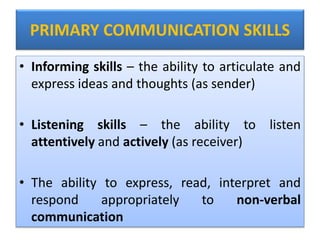
PRIMARY COMMUNICATION SKILLS
• Informing skills – the ability to articulate and
express ideas and thoughts (as sender)
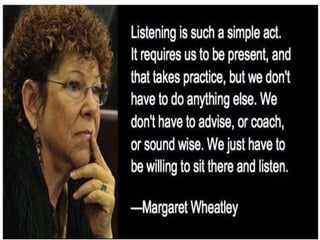
• Listening skills – the ability to listen
attentively and actively (as receiver)
• The ability to express, read, interpret and
respond appropriately to non-verbal
communication
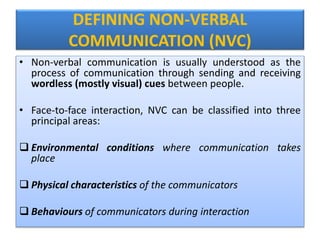
DEFINING NON-VERBAL
COMMUNICATION (NVC)
• Non-verbal communication is usually understood as the
process of communication through sending and receiving
wordless (mostly visual) cues between people.
• Face-to-face interaction, NVC can be classified into three
principal areas:
 Environmental conditions where communication takes
place
 Physical characteristics of the communicators
 Behaviours of communicators during interaction
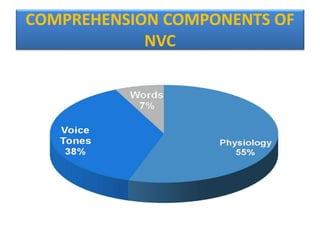
COMPREHENSION COMPONENTS OF
NVC
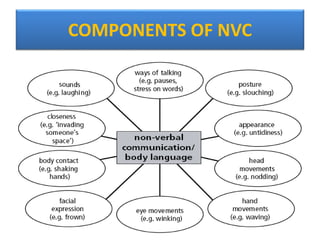
COMPONENTS OF NVC
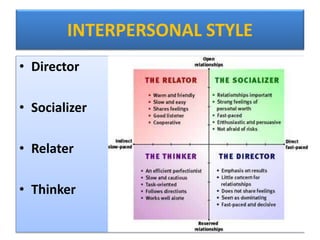
INTERPERSONAL STYLE
• Director
• Socializer
• Relater
• Thinker
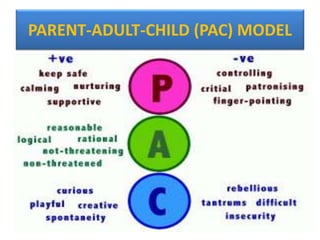
PARENT-ADULT-CHILD (PAC) MODEL
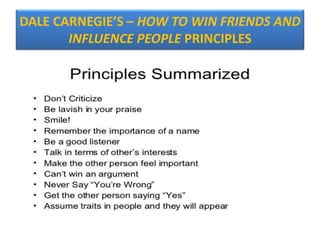
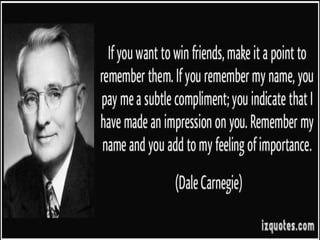
DALE CARNEGIE’S – HOW TO WIN FRIENDS AND
INFLUENCE PEOPLE PRINCIPLES
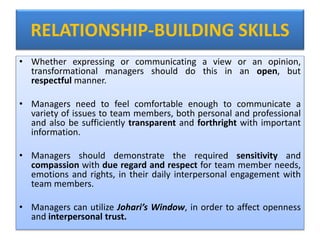
RELATIONSHIP-BUILDING SKILLS
• Whether expressing or communicating a view or an opinion,
transformational managers should do this in an open, but
respectful manner.
• Managers need to feel comfortable enough to communicate a
variety of issues to team members, both personal and professional
and also be sufficiently transparent and forthright with important
information.
• Managers should demonstrate the required sensitivity and
compassion with due regard and respect for team member needs,
emotions and rights, in their daily interpersonal engagement with
team members.
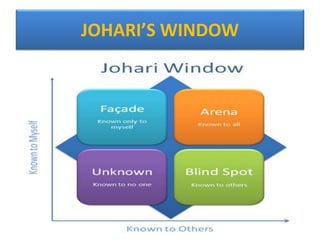
• Managers can utilize Johari’s Window, in order to affect openness
and interpersonal trust.
JOHARI’S WINDOW
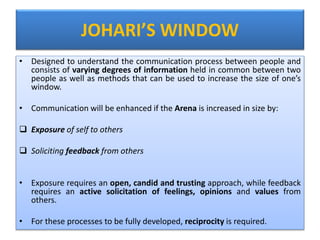
JOHARI’S WINDOW
• Designed to understand the communication process between people and
consists of varying degrees of information held in common between two
people as well as methods that can be used to increase the size of one’s
window.
• Communication will be enhanced if the Arena is increased in size by:
 Exposure of self to others
 Soliciting feedback from others
• Exposure requires an open, candid and trusting approach, while feedback
requires an active solicitation of feelings, opinions and values from
others.
• For these processes to be fully developed, reciprocity is required.
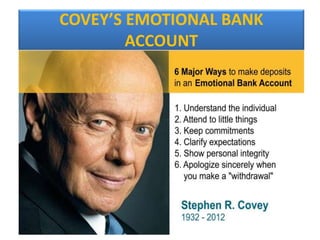
COVEY’S EMOTIONAL BANK
ACCOUNT
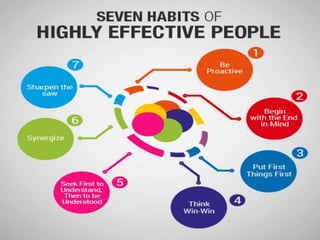
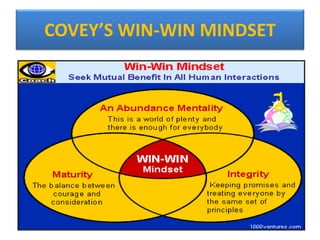
COVEY’S WIN-WIN MINDSET
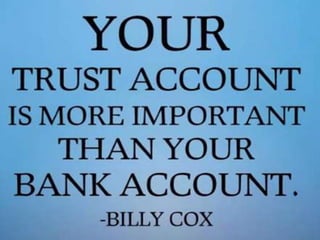
TRUST ENHANCING STRATEGIES
• Open and transparent communication
• Mutual respect and tolerance for individual
differences
• Demonstrated care and sincere interest
• Recognition for the value of each individual
team member
• Co-operation and shared commitment
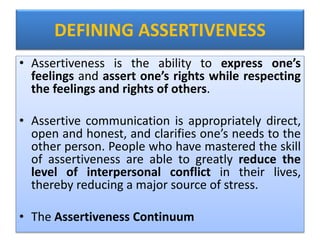
DEFINING ASSERTIVENESS
• Assertiveness is the ability to express one’s
feelings and assert one’s rights while respecting
the feelings and rights of others.
• Assertive communication is appropriately direct,
open and honest, and clarifies one’s needs to the
other person. People who have mastered the skill
of assertiveness are able to greatly reduce the
level of interpersonal conflict in their lives,
thereby reducing a major source of stress.
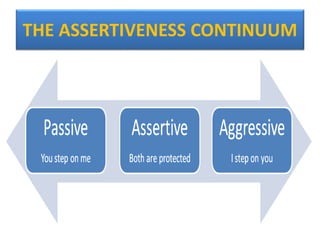
• The Assertiveness Continuum
THE ASSERTIVENESS CONTINUUM
MEASURING YOUR ASSERTIVENESS
• Do you have difficulty accepting constructive criticism?
• Do you find yourself saying ‘yes’ to requests that you
should really say ‘no’ to, just to avoid disappointing people?
• Do you have trouble voicing a difference of opinion with
others?
• Do people tend to feel alienated by your communication
style when you do disagree with them?
• Do you feel attacked when someone has an opinion
different from your own?
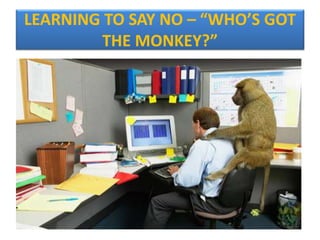
LEARNING TO SAY NO – “WHO’S GOT
THE MONKEY?”
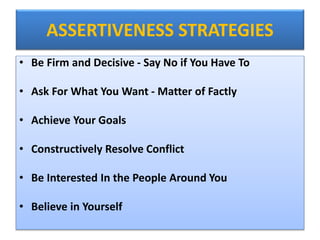
ASSERTIVENESS STRATEGIES
• Be Firm and Decisive - Say No if You Have To
• Ask For What You Want - Matter of Factly
• Achieve Your Goals
• Constructively Resolve Conflict
• Be Interested In the People Around You
• Believe in Yourself
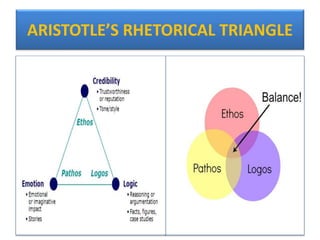
ARISTOTLE’S RHETORICAL TRIANGLE
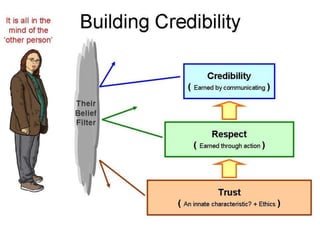
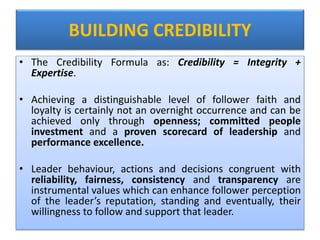
BUILDING CREDIBILITY
• The Credibility Formula as: Credibility = Integrity +
Expertise.
• Achieving a distinguishable level of follower faith and
loyalty is certainly not an overnight occurrence and can be
achieved only through openness; committed people
investment and a proven scorecard of leadership and
performance excellence.
• Leader behaviour, actions and decisions congruent with
reliability, fairness, consistency and transparency are
instrumental values which can enhance follower perception
of the leader’s reputation, standing and eventually, their
willingness to follow and support that leader.
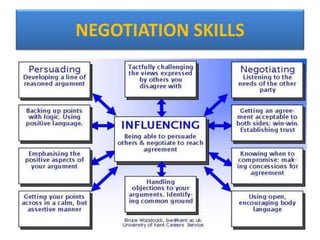
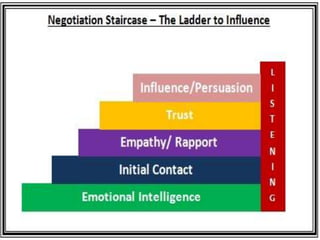
NEGOTIATION SKILLS
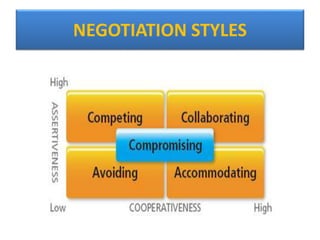
NEGOTIATION STYLES
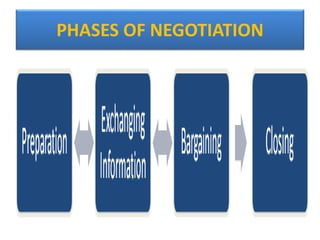
PHASES OF NEGOTIATION
CONCLUSION
• Key points
• Summary
• Questions
CONTACT DETAILS
• Charles Cotter
• (+27) 84 562 9446
• charlescot@polka.co.za
• LinkedIn
• Twitter: Charles_Cotter
• http://www.slideshare.net/CharlesCotter

Interpersonal skills

  • 1.
    INTERPERSONAL SKILLS VOITH TURBOS.A CHARLES COTTER 28 JUNE 2016
  • 2.
    TRAINING PROGRAMME OVERVIEW •Mastering the interpersonal communication process • Understanding and applying Non-verbal communication (NVC) • Applying the primary communication skills – listening and informing • Understanding the characteristics of interpersonal style • Relationship building skills and strategy - building trust and credibility • Understanding and practising Assertiveness strategies • Practising your Influencing Skills • Building Consensus and Disagreeing Constructively • Negotiation Skills
  • 4.
    DEFINING EFFECTIVE COMMUNICATION • Communicationis more than merely imparting meaning – it must also be understood. • Fundamental definition of effective communication is when the intended message of the sender is correctly interpreted, understood and acted upon by the recipient/listener. • Communication is the lifeblood of teams. No team or organization can exist without communication i.e. the transference of meaning among its team members. • It is only through transmitting meaning from one person to another that information and ideas can be conveyed.
  • 5.
  • 6.
  • 7.
    PRIMARY COMMUNICATION SKILLS •Informing skills – the ability to articulate and express ideas and thoughts (as sender) • Listening skills – the ability to listen attentively and actively (as receiver) • The ability to express, read, interpret and respond appropriately to non-verbal communication
  • 9.
    DEFINING NON-VERBAL COMMUNICATION (NVC) •Non-verbal communication is usually understood as the process of communication through sending and receiving wordless (mostly visual) cues between people. • Face-to-face interaction, NVC can be classified into three principal areas:  Environmental conditions where communication takes place  Physical characteristics of the communicators  Behaviours of communicators during interaction
  • 10.
  • 11.
  • 14.
    INTERPERSONAL STYLE • Director •Socializer • Relater • Thinker
  • 15.
  • 16.
    DALE CARNEGIE’S –HOW TO WIN FRIENDS AND INFLUENCE PEOPLE PRINCIPLES
  • 19.
    RELATIONSHIP-BUILDING SKILLS • Whetherexpressing or communicating a view or an opinion, transformational managers should do this in an open, but respectful manner. • Managers need to feel comfortable enough to communicate a variety of issues to team members, both personal and professional and also be sufficiently transparent and forthright with important information. • Managers should demonstrate the required sensitivity and compassion with due regard and respect for team member needs, emotions and rights, in their daily interpersonal engagement with team members. • Managers can utilize Johari’s Window, in order to affect openness and interpersonal trust.
  • 20.
  • 21.
    JOHARI’S WINDOW • Designedto understand the communication process between people and consists of varying degrees of information held in common between two people as well as methods that can be used to increase the size of one’s window. • Communication will be enhanced if the Arena is increased in size by:  Exposure of self to others  Soliciting feedback from others • Exposure requires an open, candid and trusting approach, while feedback requires an active solicitation of feelings, opinions and values from others. • For these processes to be fully developed, reciprocity is required.
  • 23.
  • 25.
  • 26.
    TRUST ENHANCING STRATEGIES •Open and transparent communication • Mutual respect and tolerance for individual differences • Demonstrated care and sincere interest • Recognition for the value of each individual team member • Co-operation and shared commitment
  • 28.
    DEFINING ASSERTIVENESS • Assertivenessis the ability to express one’s feelings and assert one’s rights while respecting the feelings and rights of others. • Assertive communication is appropriately direct, open and honest, and clarifies one’s needs to the other person. People who have mastered the skill of assertiveness are able to greatly reduce the level of interpersonal conflict in their lives, thereby reducing a major source of stress. • The Assertiveness Continuum
  • 29.
  • 30.
    MEASURING YOUR ASSERTIVENESS •Do you have difficulty accepting constructive criticism? • Do you find yourself saying ‘yes’ to requests that you should really say ‘no’ to, just to avoid disappointing people? • Do you have trouble voicing a difference of opinion with others? • Do people tend to feel alienated by your communication style when you do disagree with them? • Do you feel attacked when someone has an opinion different from your own?
  • 31.
    LEARNING TO SAYNO – “WHO’S GOT THE MONKEY?”
  • 32.
    ASSERTIVENESS STRATEGIES • BeFirm and Decisive - Say No if You Have To • Ask For What You Want - Matter of Factly • Achieve Your Goals • Constructively Resolve Conflict • Be Interested In the People Around You • Believe in Yourself
  • 33.
  • 35.
    BUILDING CREDIBILITY • TheCredibility Formula as: Credibility = Integrity + Expertise. • Achieving a distinguishable level of follower faith and loyalty is certainly not an overnight occurrence and can be achieved only through openness; committed people investment and a proven scorecard of leadership and performance excellence. • Leader behaviour, actions and decisions congruent with reliability, fairness, consistency and transparency are instrumental values which can enhance follower perception of the leader’s reputation, standing and eventually, their willingness to follow and support that leader.
  • 37.
  • 39.
  • 40.
  • 42.
    CONCLUSION • Key points •Summary • Questions
  • 43.
    CONTACT DETAILS • CharlesCotter • (+27) 84 562 9446 • charlescot@polka.co.za • LinkedIn • Twitter: Charles_Cotter • http://www.slideshare.net/CharlesCotter