1
BUILDING TRUST-
BASED
RELATIONSHIPS
NATASHA BONNEVALLE
RAJIV BALL
2
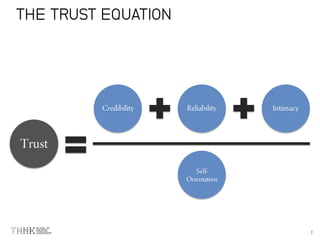
THE TRUST EQUATION
Trust
Credibility Reliability Intimacy
Self-
Orientation
3
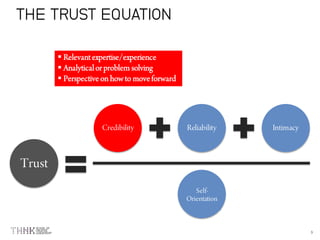
THE TRUST EQUATION
§ Relevantexpertise/experience
§ Analyticalor problem solving
§ Perspective on how to move forward
Trust
Credibility Reliability Intimacy
Self-
Orientation
4
THE TRUST EQUATION
Trust
Credibility Reliability Intimacy
Self-
Orientation
§ Congruency
§ Consistent & dependable behavior
§ Repeatedlinking of promise to delivery
5
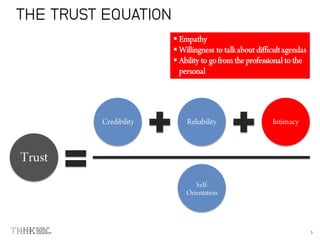
THE TRUST EQUATION
Trust
Credibility Reliability Intimacy
Self-
Orientation
§ Empathy
§ Willingness to talkabout difficultagendas
§ Ability to gofrom the professional to the
personal
6
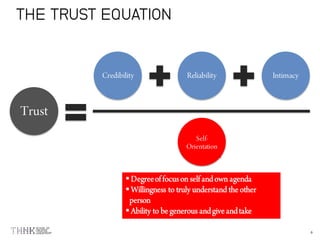
THE TRUST EQUATION
Trust
Credibility Reliability Intimacy
Self-
Orientation
§Degreeof focuson self andown agenda
§Willingness to truly understand the other
person
§Ability to be generous andgive andtake
7
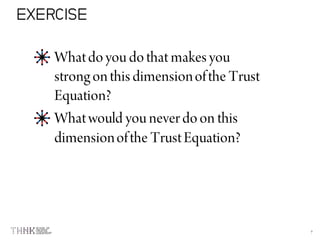
Whatdoyou dothat makes you
strong onthis dimensionofthe Trust
Equation?
Whatwould you neverdoon this
dimensionofthe TrustEquation?
EXERCISE
8
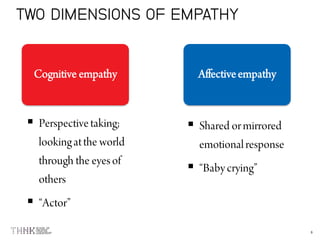
TWO DIMENSIONS OF EMPATHY
Cognitive empathy Affectiveempathy
§ Perspective taking;
lookingatthe world
through the eyesof
others
§ “Actor”
§ Shared ormirrored
emotionalresponse
§ “Babycrying”
9
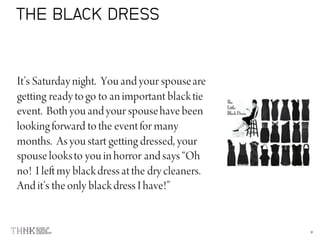
THE BLACK DRESS
It’s Saturdaynight. You andyour spouseare
getting readytogo to animportant blacktie
event. Bothyou andyour spousehavebeen
lookingforward tothe eventfor many
months. Asyou start getting dressed, your
spouselooksto you inhorror andsays“Oh
no! I leftmy blackdressatthe drycleaners.
Andit’s theonly blackdressIhave!”
10
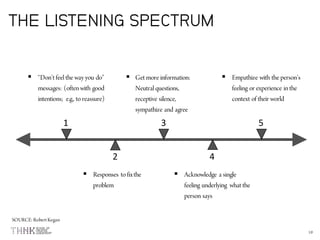
THE LISTENING SPECTRUM
§ “Don’t feel the way you do”
messages: (often with good
intentions; e.g., to reassure)
§ Get more information:
Neutral questions,
receptive silence,
sympathize and agree
§ Empathize with the person’s
feeling or experience in the
context of their world
§ Acknowledge a single
feeling underlying what the
person says
§ Responses to fixthe
problem
2
3
4
51
SOURCE: Robert Kegan

Trust

  • 1.
  • 2.
    2 THE TRUST EQUATION Trust CredibilityReliability Intimacy Self- Orientation
  • 3.
    3 THE TRUST EQUATION §Relevantexpertise/experience § Analyticalor problem solving § Perspective on how to move forward Trust Credibility Reliability Intimacy Self- Orientation
  • 4.
    4 THE TRUST EQUATION Trust CredibilityReliability Intimacy Self- Orientation § Congruency § Consistent & dependable behavior § Repeatedlinking of promise to delivery
  • 5.
    5 THE TRUST EQUATION Trust CredibilityReliability Intimacy Self- Orientation § Empathy § Willingness to talkabout difficultagendas § Ability to gofrom the professional to the personal
  • 6.
    6 THE TRUST EQUATION Trust CredibilityReliability Intimacy Self- Orientation §Degreeof focuson self andown agenda §Willingness to truly understand the other person §Ability to be generous andgive andtake
  • 7.
    7 Whatdoyou dothat makesyou strong onthis dimensionofthe Trust Equation? Whatwould you neverdoon this dimensionofthe TrustEquation? EXERCISE
  • 8.
    8 TWO DIMENSIONS OFEMPATHY Cognitive empathy Affectiveempathy § Perspective taking; lookingatthe world through the eyesof others § “Actor” § Shared ormirrored emotionalresponse § “Babycrying”
  • 9.
    9 THE BLACK DRESS It’sSaturdaynight. You andyour spouseare getting readytogo to animportant blacktie event. Bothyou andyour spousehavebeen lookingforward tothe eventfor many months. Asyou start getting dressed, your spouselooksto you inhorror andsays“Oh no! I leftmy blackdressatthe drycleaners. Andit’s theonly blackdressIhave!”
  • 10.
    10 THE LISTENING SPECTRUM §“Don’t feel the way you do” messages: (often with good intentions; e.g., to reassure) § Get more information: Neutral questions, receptive silence, sympathize and agree § Empathize with the person’s feeling or experience in the context of their world § Acknowledge a single feeling underlying what the person says § Responses to fixthe problem 2 3 4 51 SOURCE: Robert Kegan