‘ LINKING’ Communication skills and techniques Have the tools to express yourself and get it done
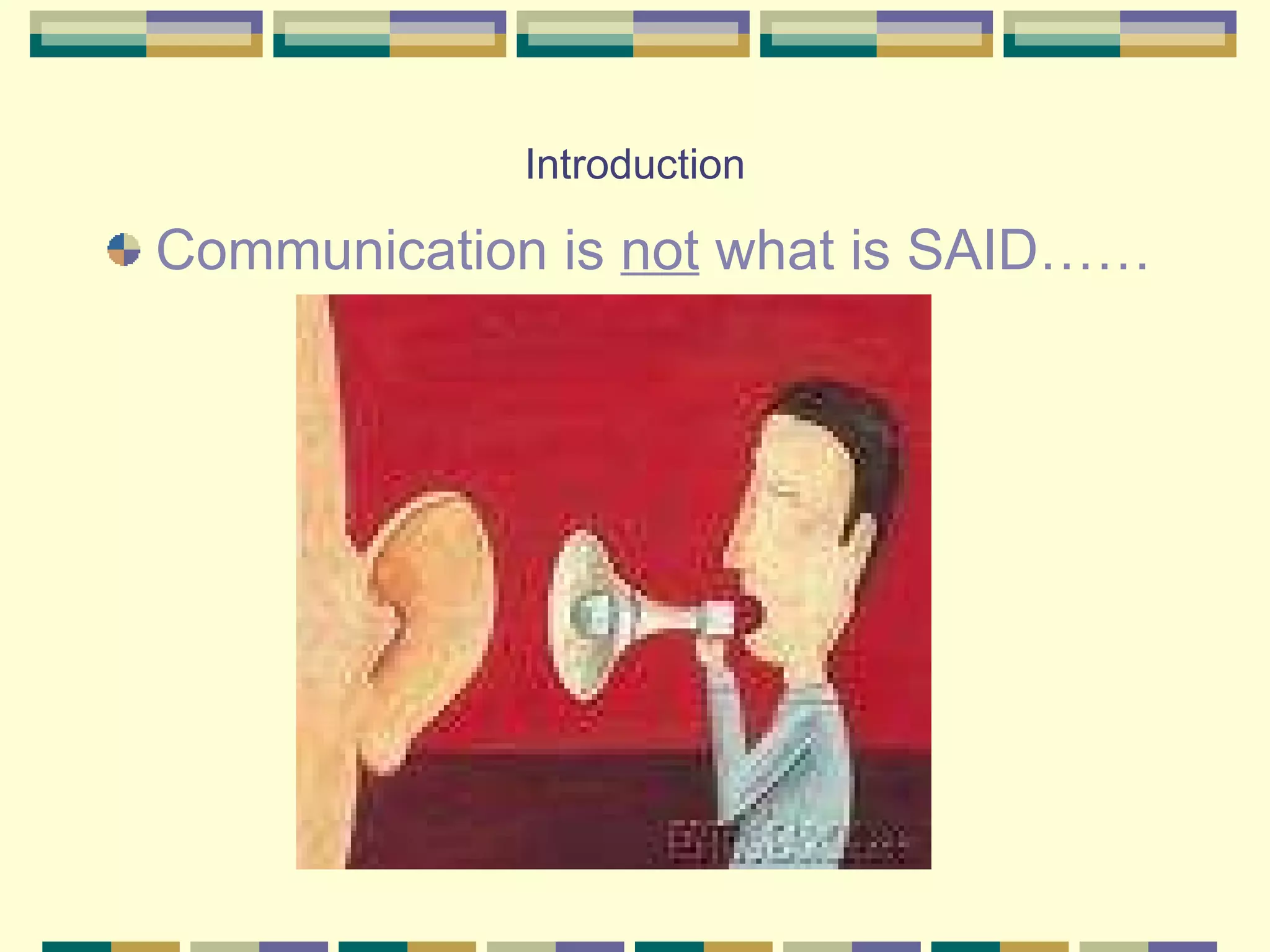
Introduction Communication is  not  what is SAID……
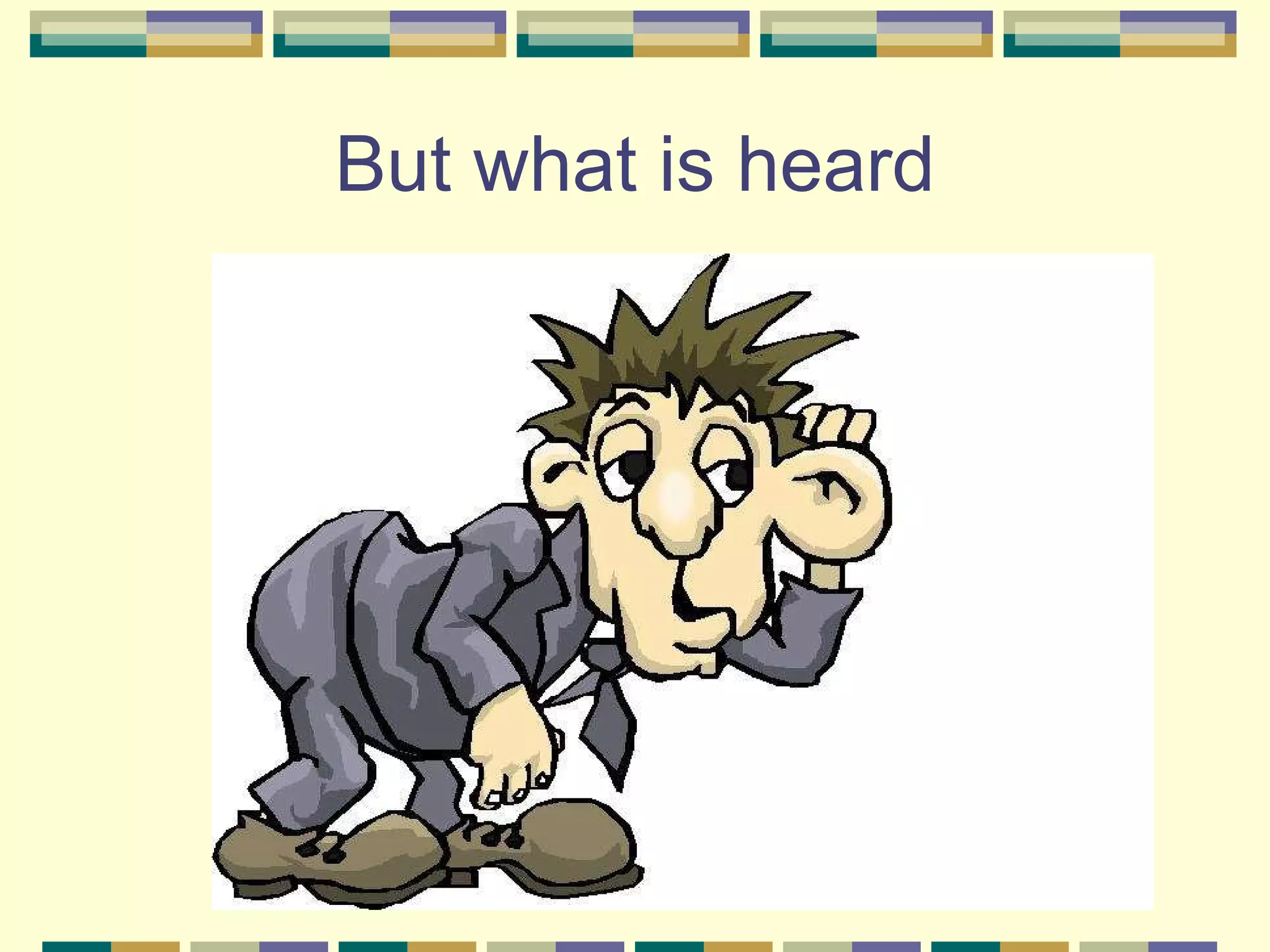
But what is heard
This is where “Communication” comes in To work on LINKING the synapse between what is said and what is heard
Agenda Who I am and my Philosophy Techniques Example of theme classes
Who I am Karen Kotler Darmon [email_address] http://kdarmon.free.fr
Communication is not what you say, but, what is heard:  What does this mean? To be heard I have to communicate in a way that the other person can understand, using their references This means that I need to use language that is tailored to them To their way of seeing things; their culture and style
Interpretation is in the receiver They scream, they sing, they fall down, they take their clothes off, they cross-dress, they vomit." -  KONSTANTINOS  LAGOUDAKIS, mayor of Malia on Crete, about young British tourists.
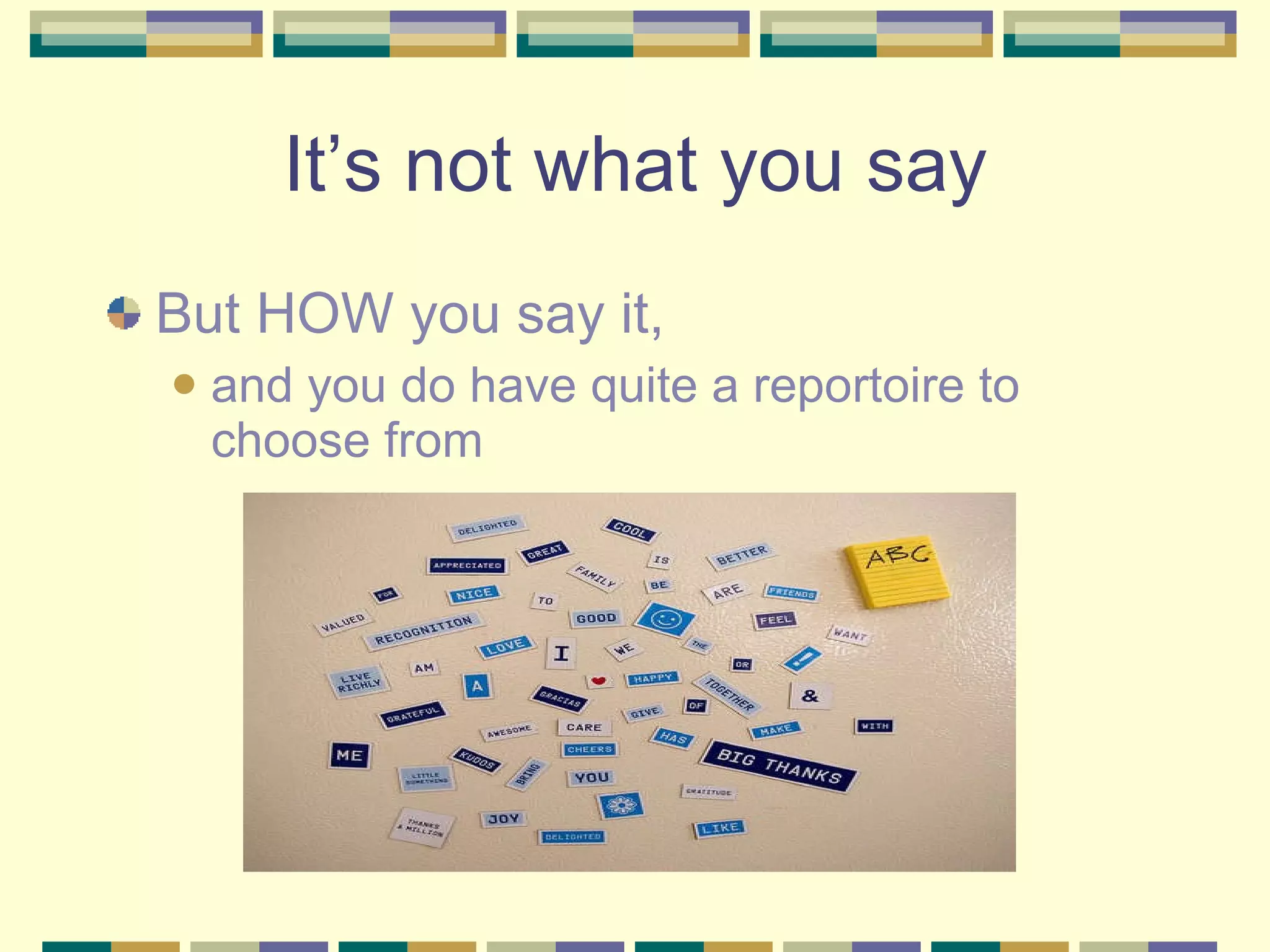
It’s not what you say But HOW you say it,  and you do have quite a reportoire to choose from
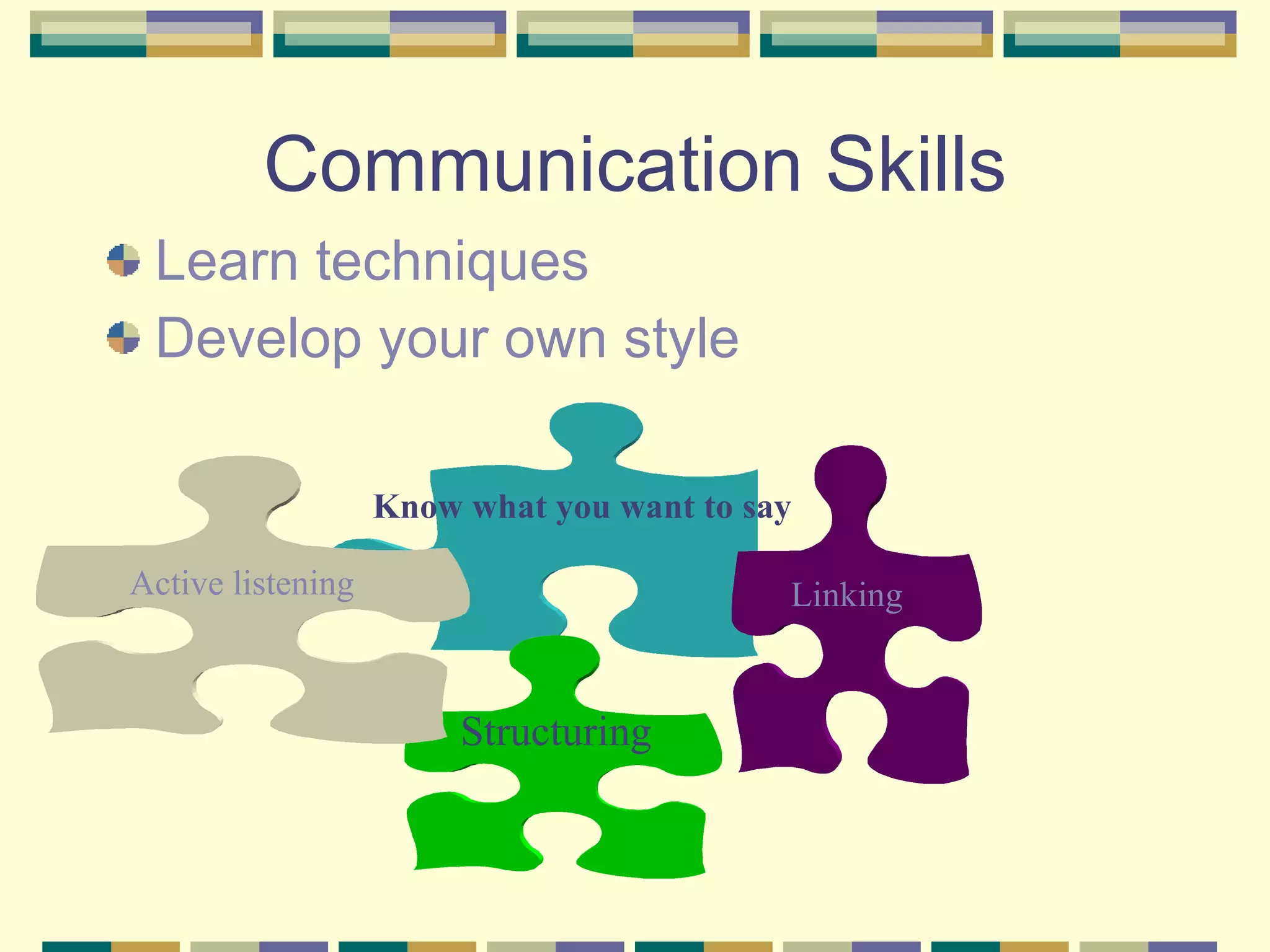
Communication Skills Learn techniques Develop your own style Structuring Linking  Active list e ning Know what you want to say
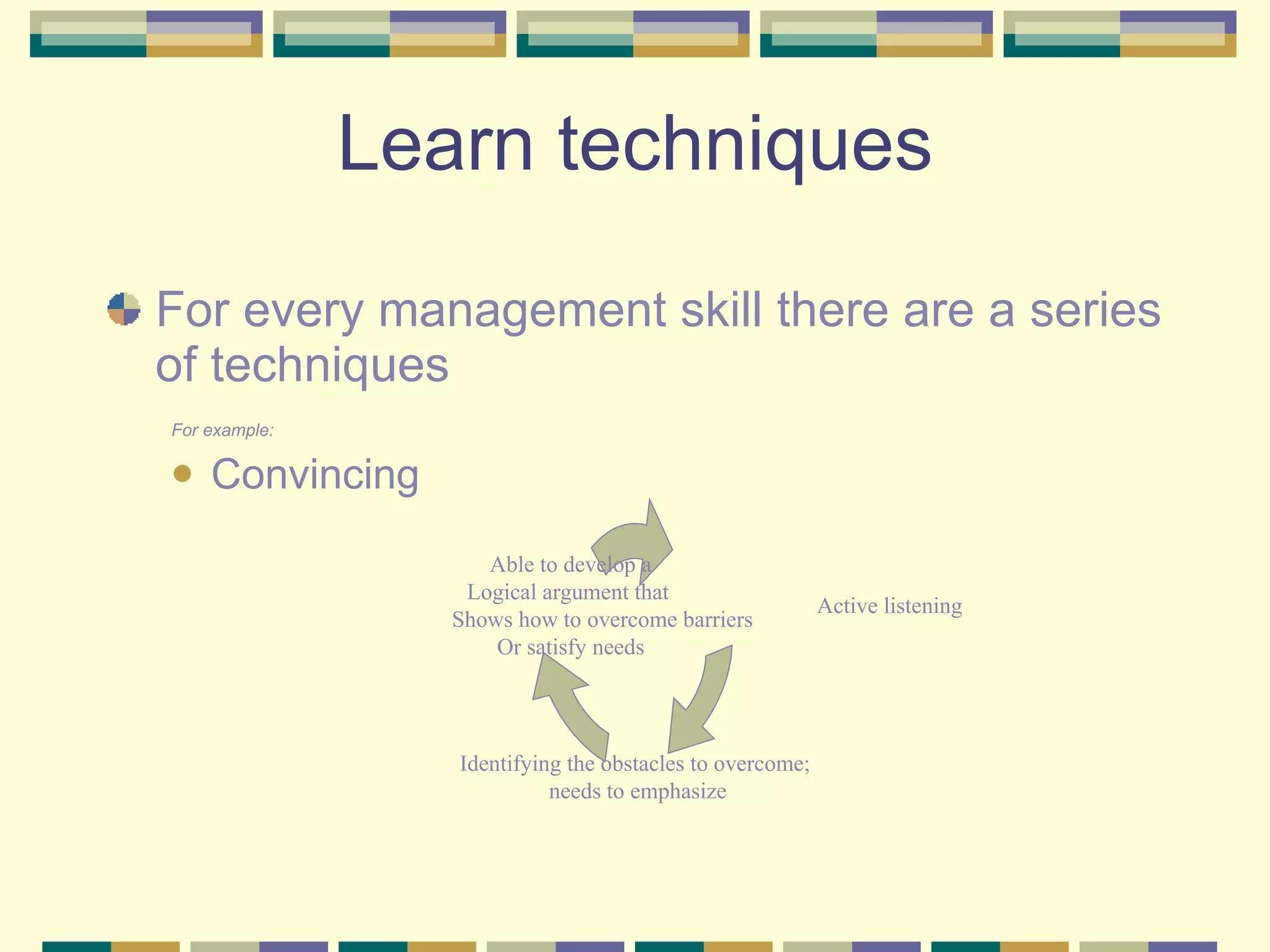
Learn techniques For every management skill there are a series of techniques For example: Convincing Active listening Identifying the obstacles to overcome; needs to emphasize Able to develop a Logical argument that  Shows how to overcome barriers Or satisfy needs
Other examples of  Techniques: Active listening Reformulation Matching Linking Cooperation communication
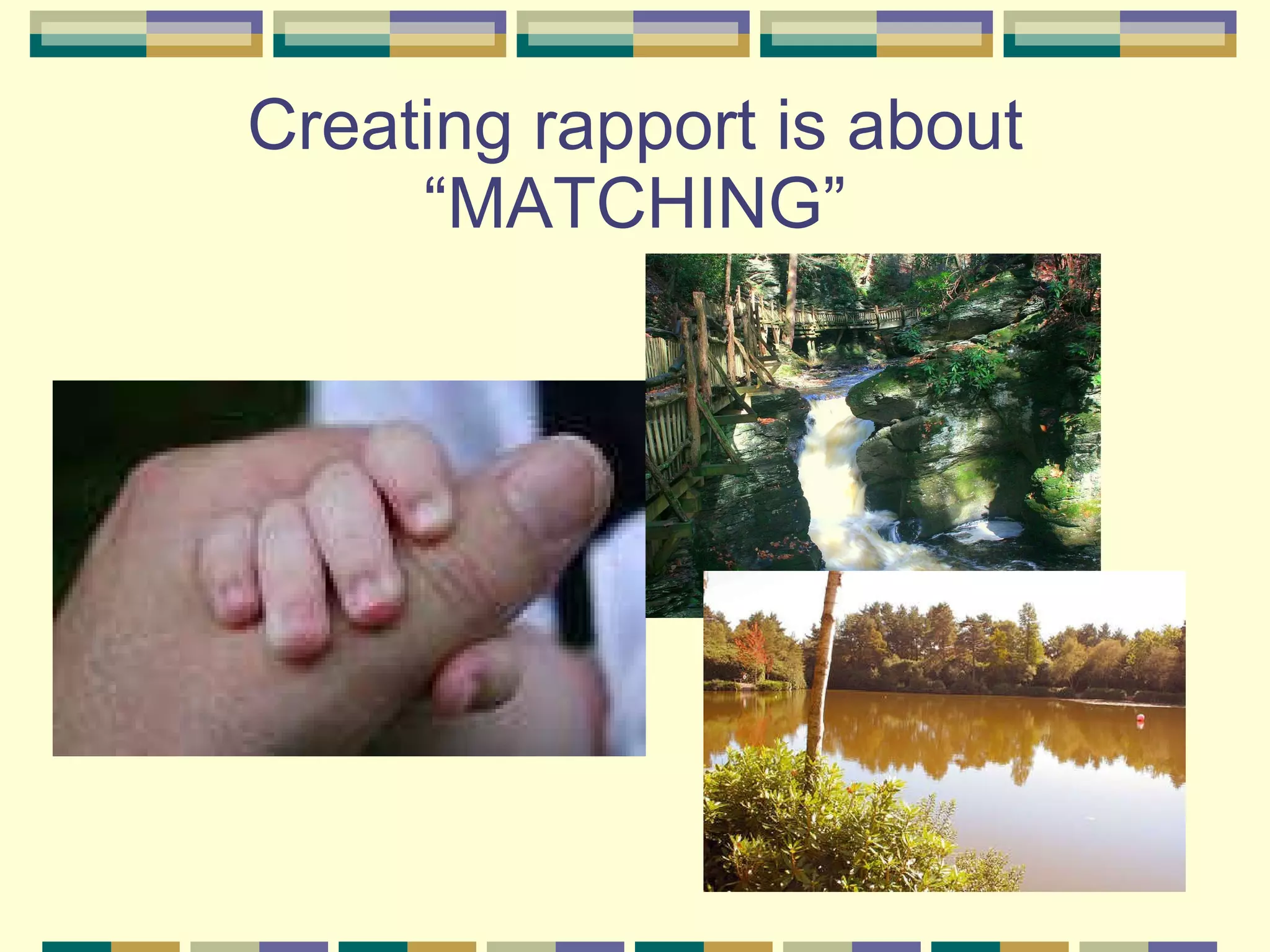
Creating rapport is about “MATCHING”
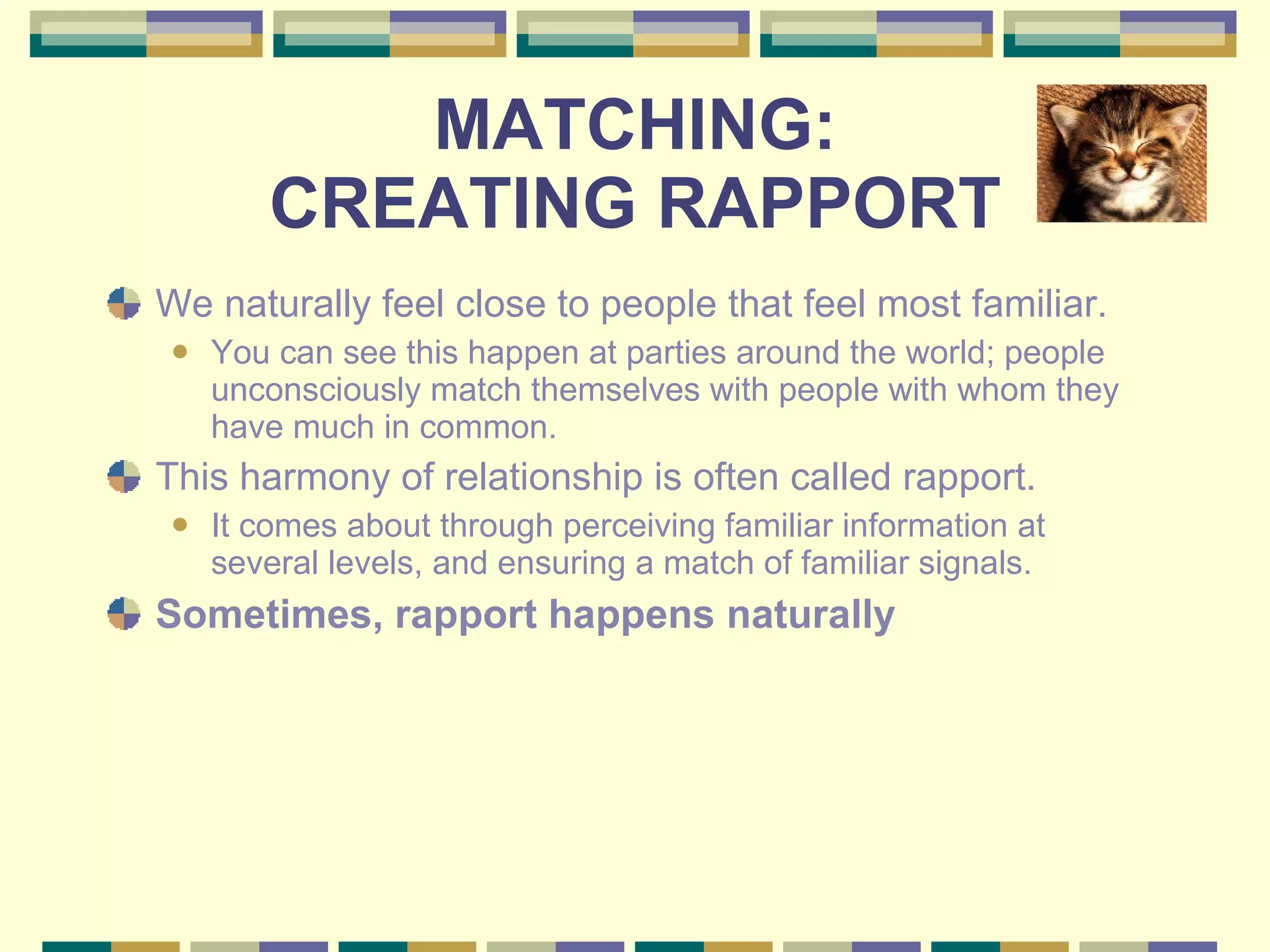
MATCHING: CREATING RAPPORT We naturally feel close to people that feel most familiar.  You can see this happen at parties around the world; people unconsciously match themselves with people with whom they have much in common.  This harmony of relationship is often called rapport.  It comes about through perceiving familiar information at several levels, and ensuring a match of familiar signals.  Sometimes, rapport happens naturally
But, if rapport doesn’t happen automatically, then it’s important to know how to create it! A technique is to try to find points in common and emphasize them. In America for example we make small talk and try to find things in common Complimenting is also seen as an opening to matching Insert nlp diagram to show matching
We need to be able to match with our colleagues in order to keep things running smoothly We can create rapport at two levels:  1: At the level of content: What is said  Do you explain vs making cold requests; Create a few words of small talk to make it personal Find ways to connect 2: At the level of context: The way it is said Do you use friendly language or formal language appropriately? Is the language stated in a shared/we/us fashion by John Hanley   MATCHING
MINIMIZING CONFLICT SAY WHAT YOU CAN DO AND NOT WHAT YOU CAN’T MAKE SUGGESTIONS INSTEAD OF HARSH CRITIQUES USE COOPERATIVE APPROACH-  BENEFIT OF THE DOUBT PUT YOURSELF IN THE OTHER’S SHOES
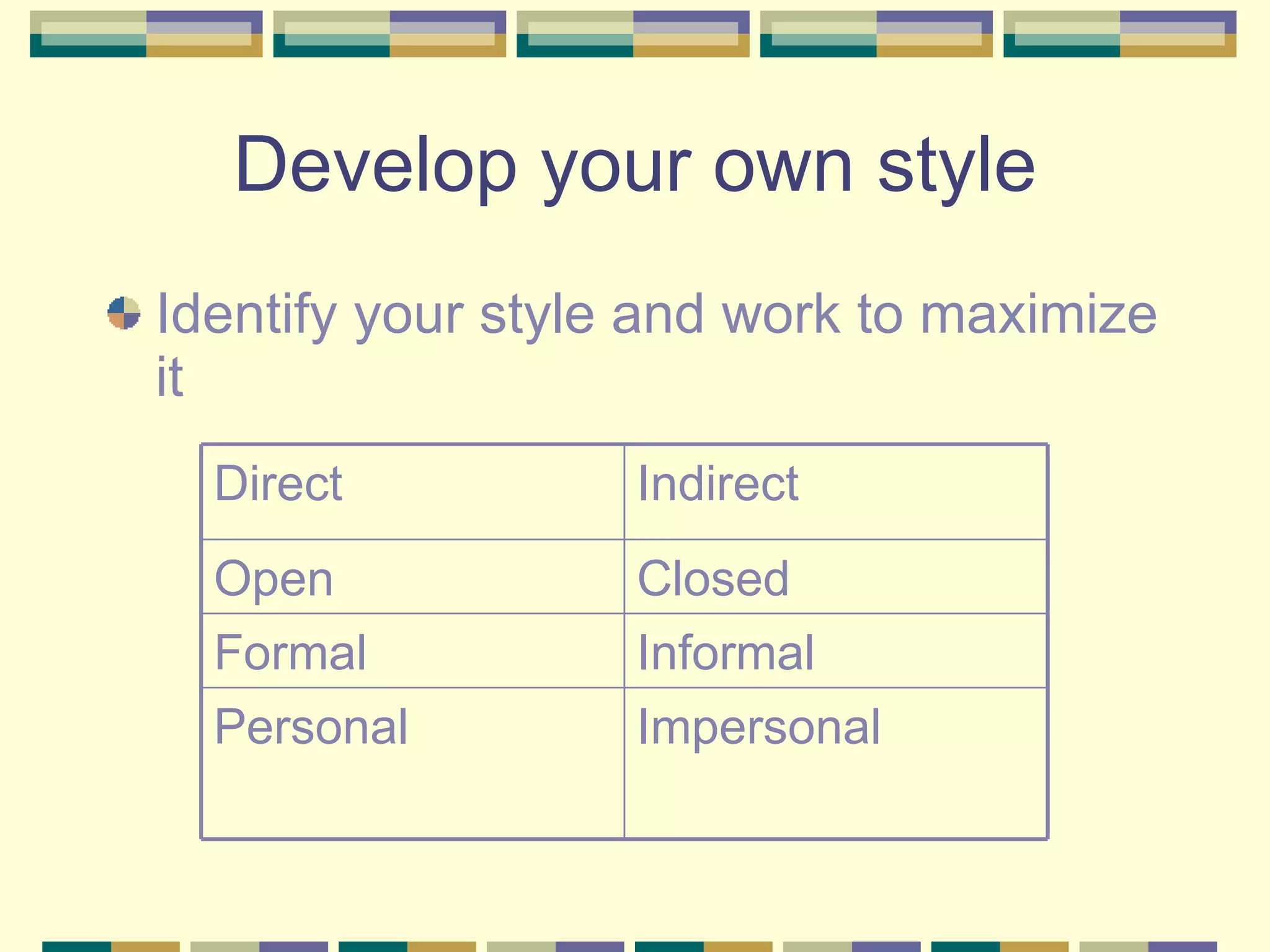
Develop your own style Identify your style and work to maximize it Impersonal Personal Informal Formal Closed Open Indirect Direct
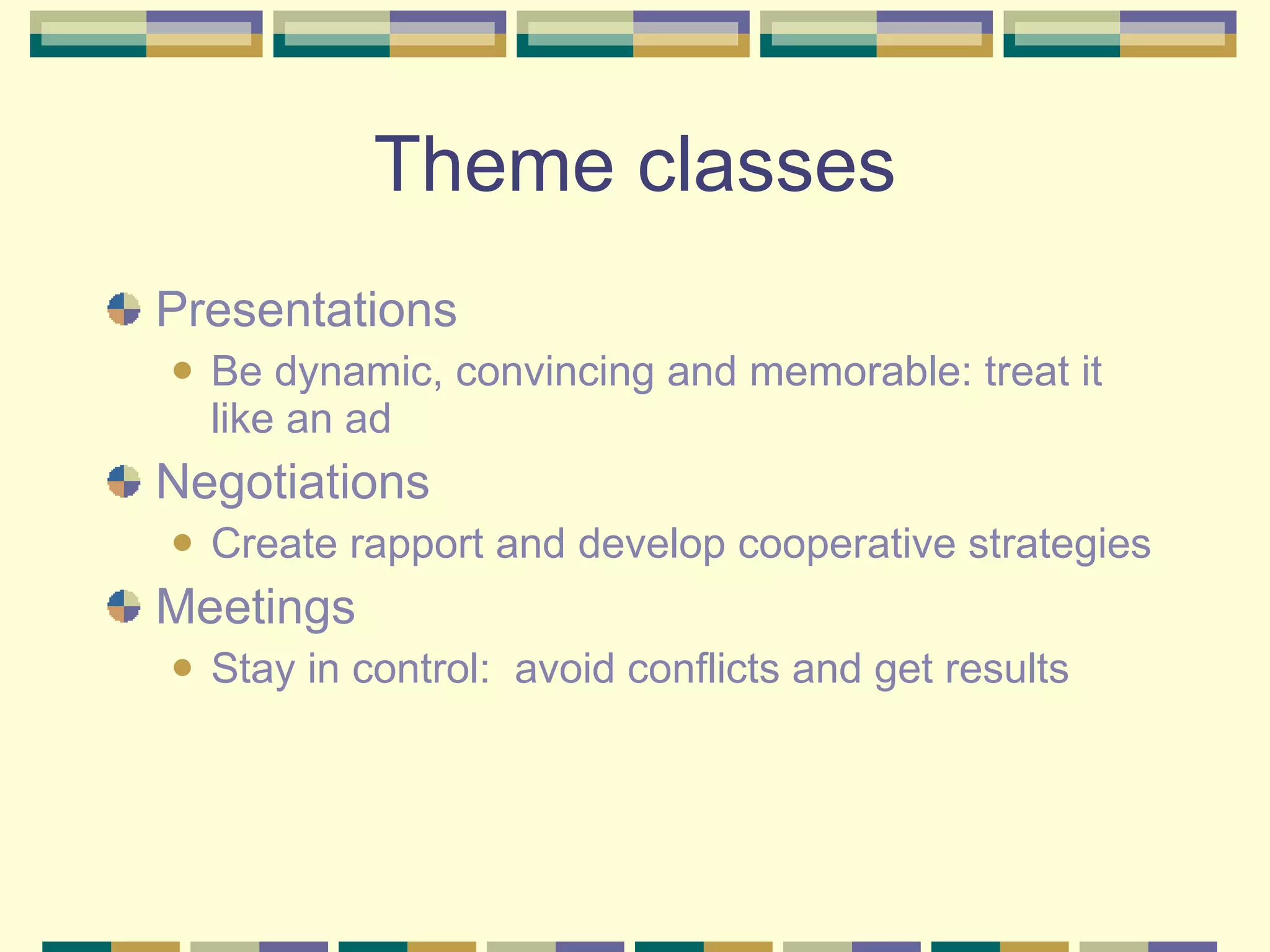
Theme classes Presentations Be dynamic, convincing and memorable: treat it like an ad Negotiations Create rapport and develop cooperative strategies Meetings Stay in control:  avoid conflicts and get results
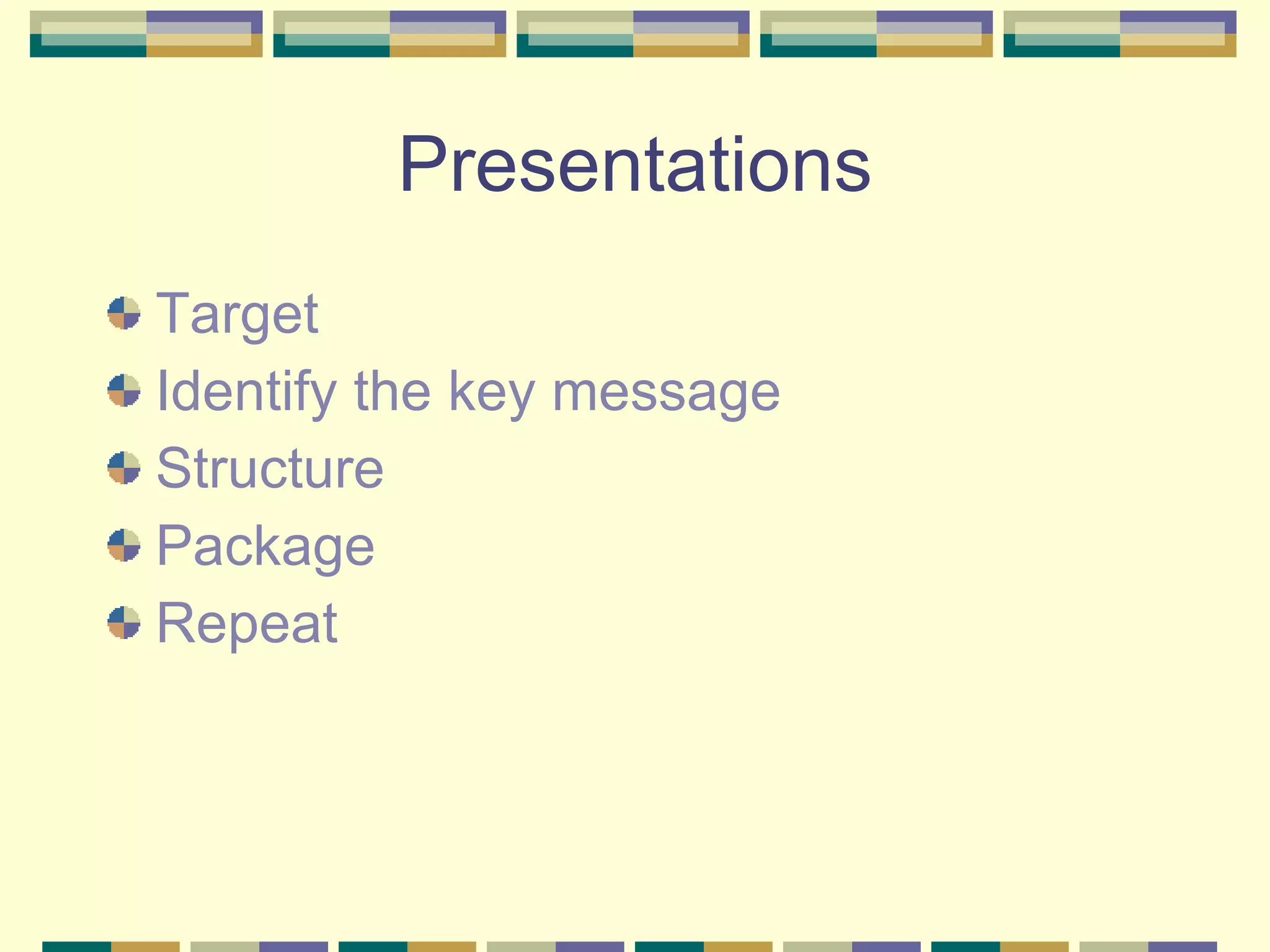
Presentations Target Identify the key message Structure Package Repeat
LIKE AN AD TREAT YOUR PRESENTATION
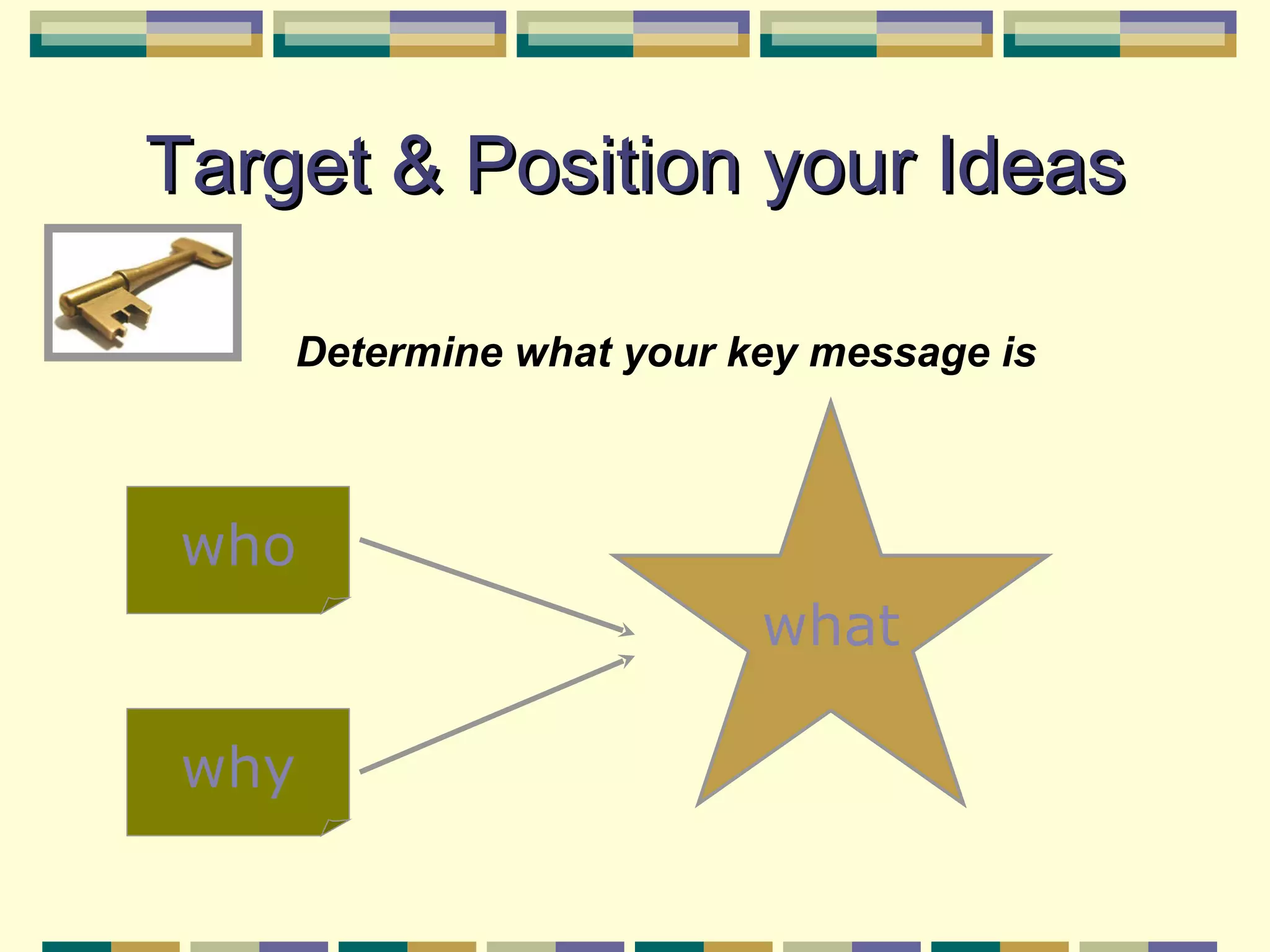
Target & Position your Ideas Determine what your key message is who why what
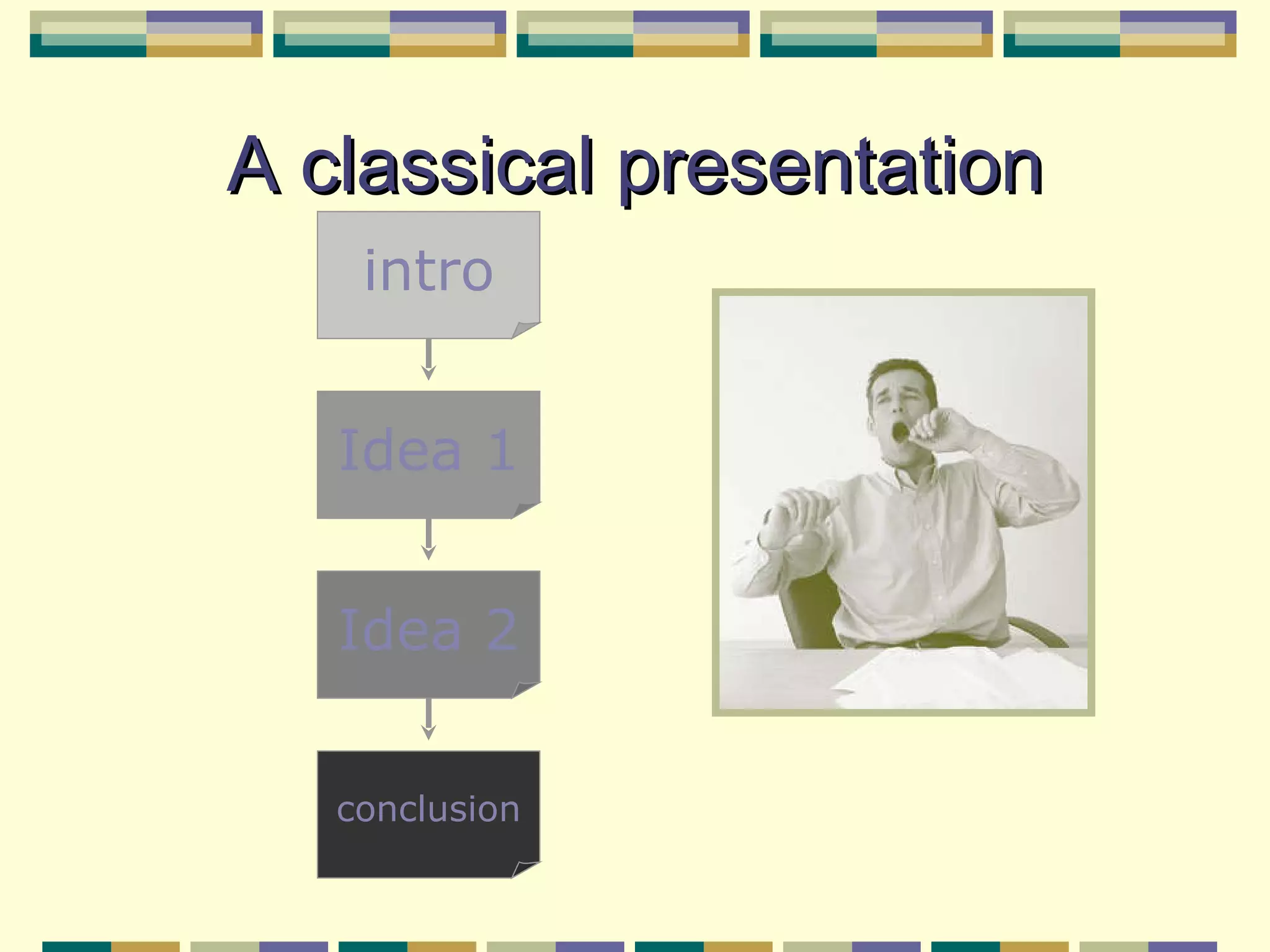
A classical presentation intro Idea 1 Idea 2 conclusion
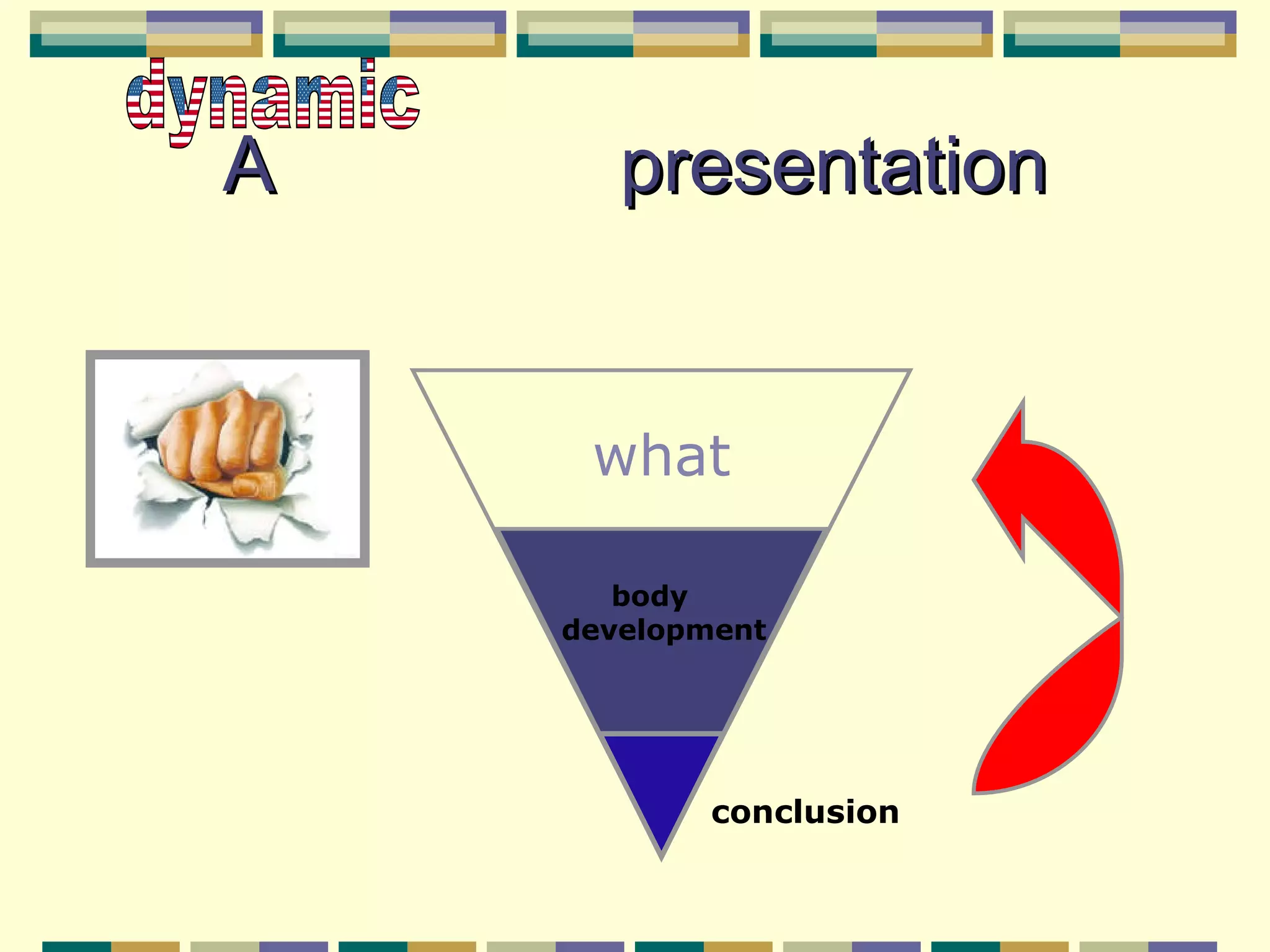
A  presentation what body  development conclusion dynamic
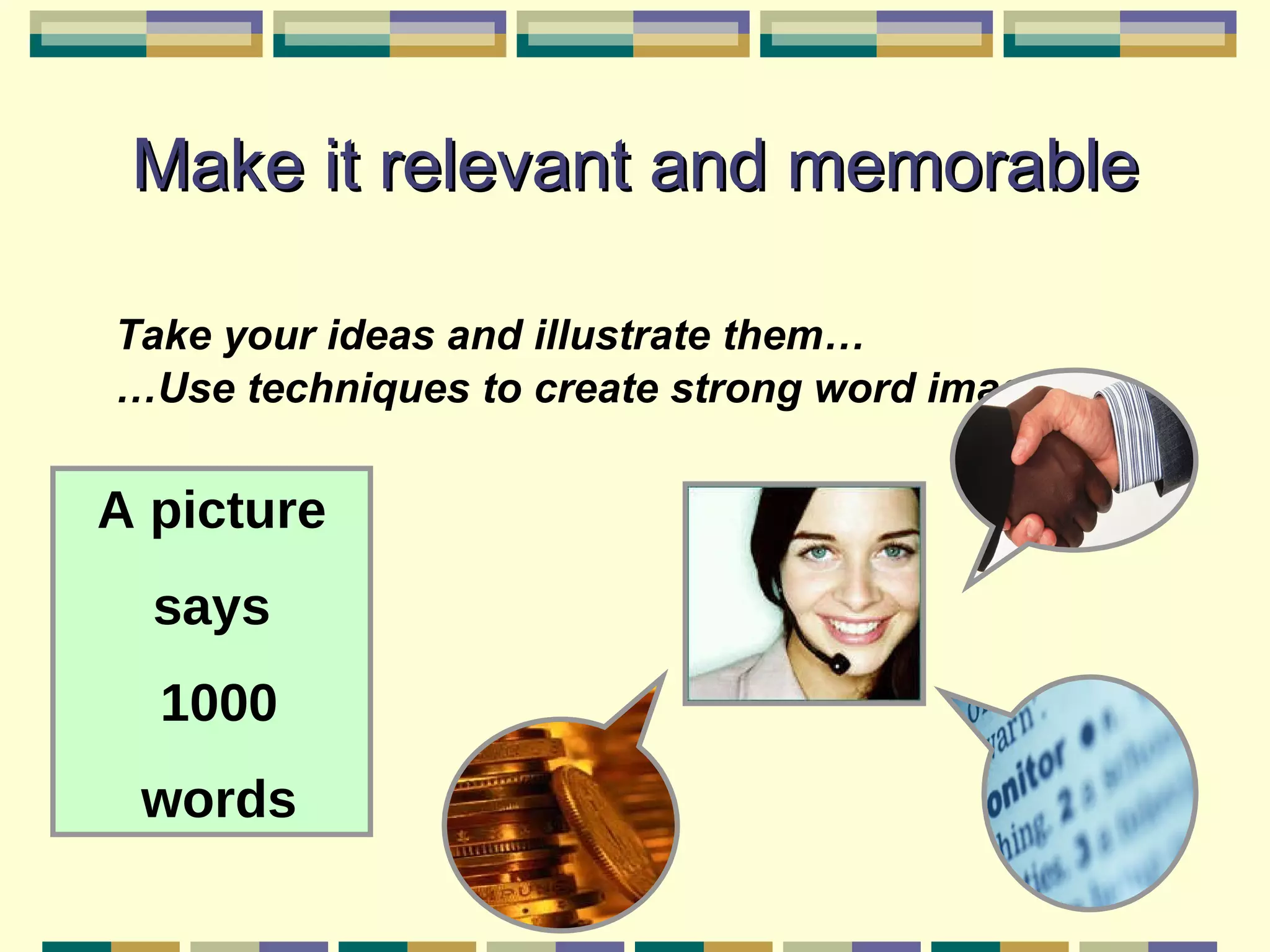
Make it relevant and memorable Take your ideas and illustrate them… … Use techniques to create strong word images A picture says  1000 words
Outline of other theme classes Negotiations Meetings
Negotiations Create rapport Identify parameters vis a vis questioning techniques Think out of the box/ lateral thinking Use active listening Identify opportunities to create win-win opportunities
Meetings Identify the hidden agenda Stay on target to reach objectives Encourage clear exchange Empower team members  Minimize conflicts

Communication Skills And Techniques

  • 1.
    ‘ LINKING’ Communicationskills and techniques Have the tools to express yourself and get it done
  • 2.
    Introduction Communication is not what is SAID……
  • 3.
  • 4.
    This is where“Communication” comes in To work on LINKING the synapse between what is said and what is heard
  • 5.
    Agenda Who Iam and my Philosophy Techniques Example of theme classes
  • 6.
    Who I amKaren Kotler Darmon [email_address] http://kdarmon.free.fr
  • 7.
    Communication is notwhat you say, but, what is heard: What does this mean? To be heard I have to communicate in a way that the other person can understand, using their references This means that I need to use language that is tailored to them To their way of seeing things; their culture and style
  • 8.
    Interpretation is inthe receiver They scream, they sing, they fall down, they take their clothes off, they cross-dress, they vomit." - KONSTANTINOS  LAGOUDAKIS, mayor of Malia on Crete, about young British tourists.
  • 9.
    It’s not whatyou say But HOW you say it, and you do have quite a reportoire to choose from
  • 10.
    Communication Skills Learntechniques Develop your own style Structuring Linking Active list e ning Know what you want to say
  • 11.
    Learn techniques Forevery management skill there are a series of techniques For example: Convincing Active listening Identifying the obstacles to overcome; needs to emphasize Able to develop a Logical argument that Shows how to overcome barriers Or satisfy needs
  • 12.
    Other examples of Techniques: Active listening Reformulation Matching Linking Cooperation communication
  • 13.
    Creating rapport isabout “MATCHING”
  • 14.
    MATCHING: CREATING RAPPORTWe naturally feel close to people that feel most familiar. You can see this happen at parties around the world; people unconsciously match themselves with people with whom they have much in common. This harmony of relationship is often called rapport. It comes about through perceiving familiar information at several levels, and ensuring a match of familiar signals. Sometimes, rapport happens naturally
  • 15.
    But, if rapportdoesn’t happen automatically, then it’s important to know how to create it! A technique is to try to find points in common and emphasize them. In America for example we make small talk and try to find things in common Complimenting is also seen as an opening to matching Insert nlp diagram to show matching
  • 16.
    We need tobe able to match with our colleagues in order to keep things running smoothly We can create rapport at two levels: 1: At the level of content: What is said Do you explain vs making cold requests; Create a few words of small talk to make it personal Find ways to connect 2: At the level of context: The way it is said Do you use friendly language or formal language appropriately? Is the language stated in a shared/we/us fashion by John Hanley MATCHING
  • 17.
    MINIMIZING CONFLICT SAYWHAT YOU CAN DO AND NOT WHAT YOU CAN’T MAKE SUGGESTIONS INSTEAD OF HARSH CRITIQUES USE COOPERATIVE APPROACH- BENEFIT OF THE DOUBT PUT YOURSELF IN THE OTHER’S SHOES
  • 18.
    Develop your ownstyle Identify your style and work to maximize it Impersonal Personal Informal Formal Closed Open Indirect Direct
  • 19.
    Theme classes PresentationsBe dynamic, convincing and memorable: treat it like an ad Negotiations Create rapport and develop cooperative strategies Meetings Stay in control: avoid conflicts and get results
  • 20.
    Presentations Target Identifythe key message Structure Package Repeat
  • 21.
    LIKE AN ADTREAT YOUR PRESENTATION
  • 22.
    Target & Positionyour Ideas Determine what your key message is who why what
  • 23.
    A classical presentationintro Idea 1 Idea 2 conclusion
  • 24.
    A presentationwhat body development conclusion dynamic
  • 25.
    Make it relevantand memorable Take your ideas and illustrate them… … Use techniques to create strong word images A picture says 1000 words
  • 26.
    Outline of othertheme classes Negotiations Meetings
  • 27.
    Negotiations Create rapportIdentify parameters vis a vis questioning techniques Think out of the box/ lateral thinking Use active listening Identify opportunities to create win-win opportunities
  • 28.
    Meetings Identify thehidden agenda Stay on target to reach objectives Encourage clear exchange Empower team members Minimize conflicts