Downloaded 94 times


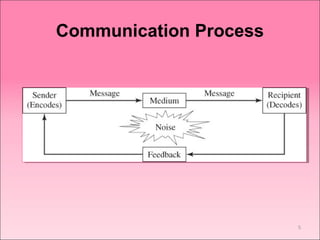

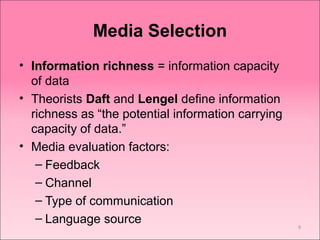


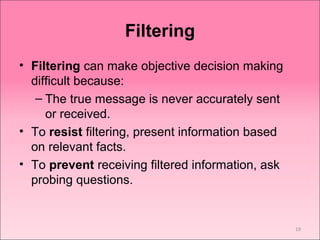


This document discusses effective interpersonal communication. It defines communication and outlines the communication process from encoding a message to sending it through a medium to the receiver decoding it. Two-way communication involves feedback. The choice of medium is important, and barriers like noise, assumptions, emotions, and filtering can hinder communication. Assertive communication respects all parties by being direct, fair, and honest while passive and aggressive styles are less effective. Body language conveys most of the message. Active listening through eye contact, questions, and paraphrasing checks understanding. Question types and assumption clarification improve communication. The "I" message format addresses behaviors, feelings, and effects assertively.


![Presentation [Full] Effective Communication Skills](https://cdn.slidesharecdn.com/ss_thumbnails/presentation-effectivecommunicationskills-131227024631-phpapp02-thumbnail.jpg?width=640&height=640&fit=bounds)


