Types of interpersonal
communication
Verbal communication, written
communication, Communicating with
gestures, Lip reading, Dancing,Intercultural
communication, mass communication etc.
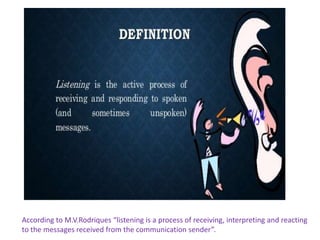
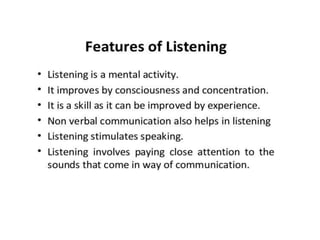
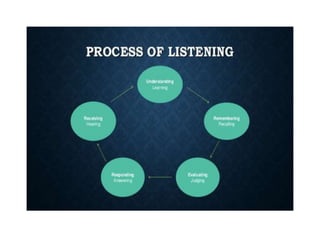
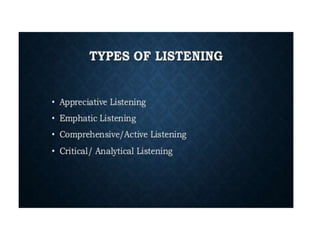
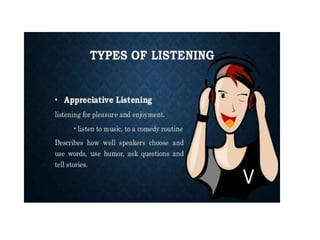
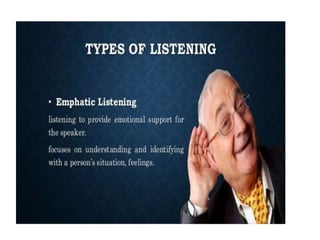
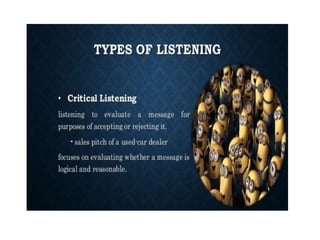
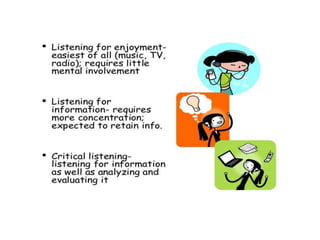
According to M.V.Rodriques “listening is a process of receiving, interpreting and reacting
to the messages received from the communication sender”.
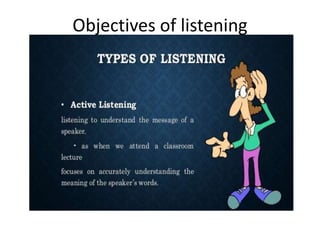
Objectives of listening
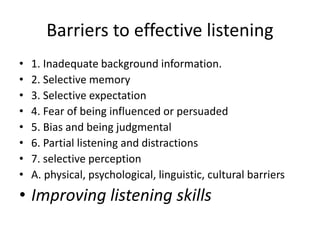
Barriers to effective listening
• 1. Inadequate background information.
• 2. Selective memory
• 3. Selective expectation
• 4. Fear of being influenced or persuaded
• 5. Bias and being judgmental
• 6. Partial listening and distractions
• 7. selective perception
• A. physical, psychological, linguistic, cultural barriers
• Improving listening skills
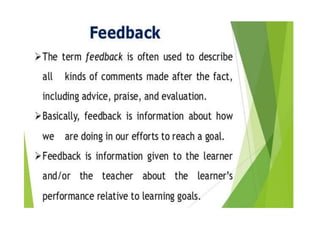
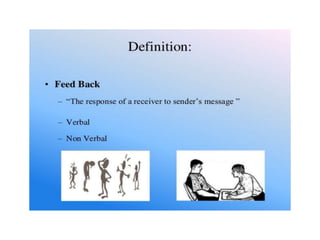
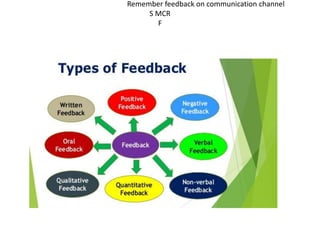
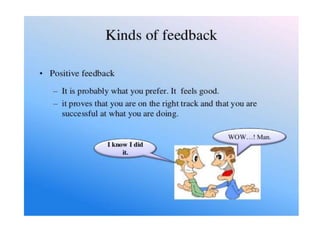
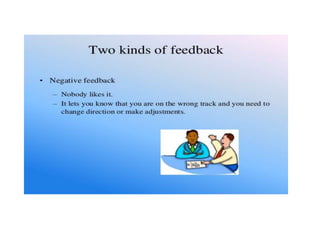
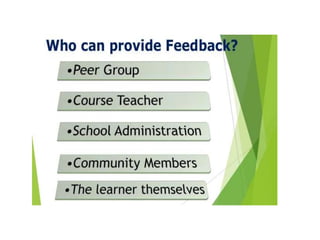
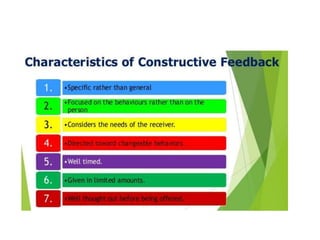
Remember feedback on communication channel
S MCR
F
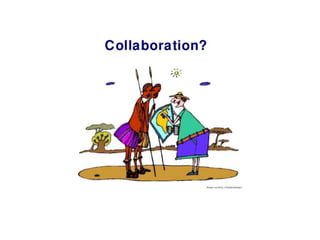
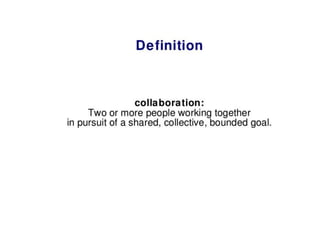
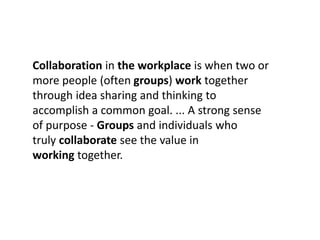
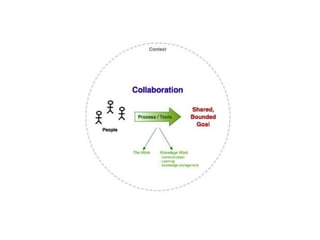
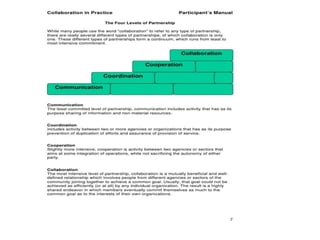
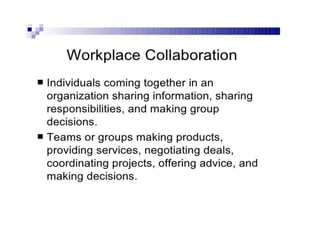
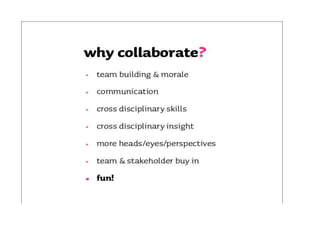
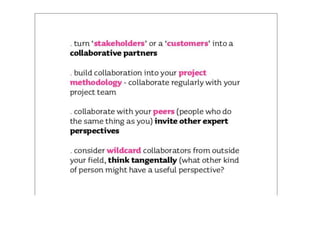
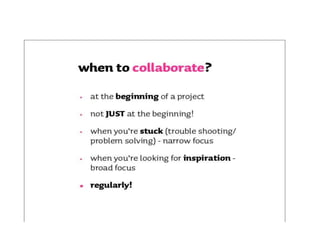
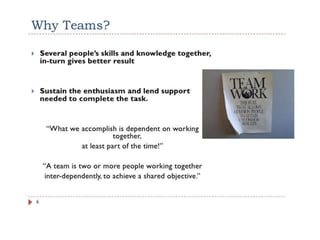
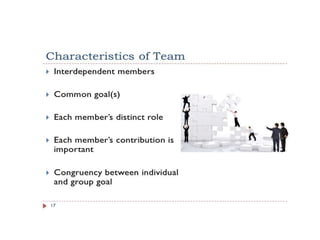
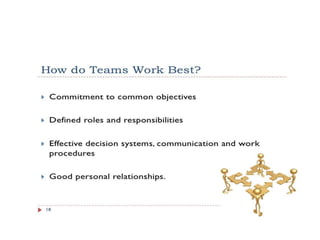
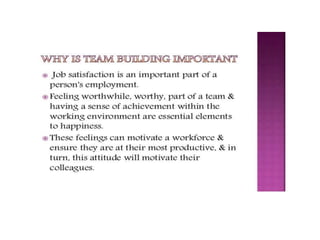
Collaboration in the workplace is when two or
more people (often groups) work together
through idea sharing and thinking to
accomplish a common goal. ... A strong sense
of purpose - Groups and individuals who
truly collaborate see the value in
working together.
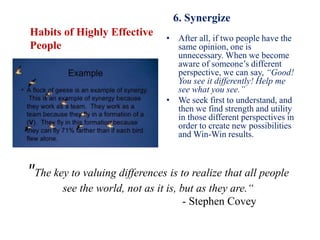
"The key to valuing differences is to realize that all people
see the world, not as it is, but as they are.“
- Stephen Covey
Habits of Highly Effective
People
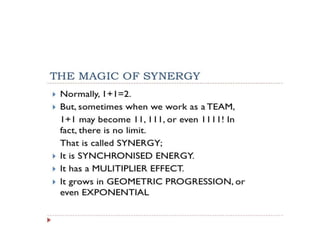
6. Synergize
• After all, if two people have the
same opinion, one is
unnecessary. When we become
aware of someone’s different
perspective, we can say, “Good!
You see it differently! Help me
see what you see.”
• We seek first to understand, and
then we find strength and utility
in those different perspectives in
order to create new possibilities
and Win-Win results.
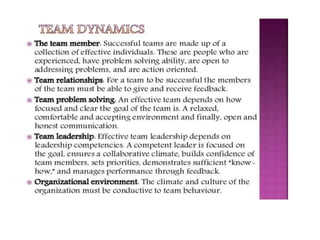
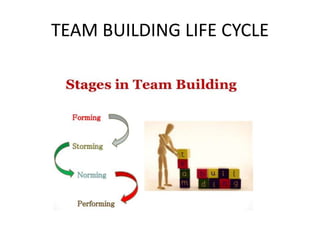
TEAM BUILDING LIFE CYCLE
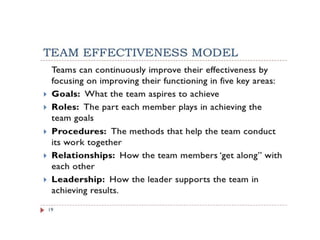
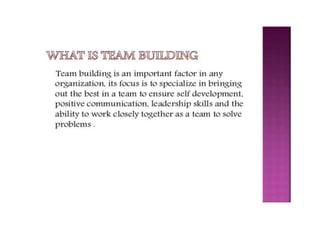
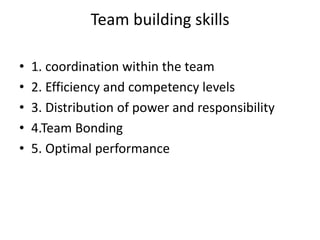
Team building skills
• 1. coordination within the team
• 2. Efficiency and competency levels
• 3. Distribution of power and responsibility
• 4.Team Bonding
• 5. Optimal performance
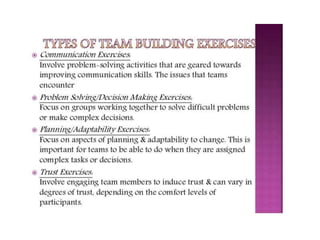
Effective decision making techniques
for teams and groups
• 1. brain storming
• 2. Nominal group technique
• 3.Electronic meeting
• 4. Delphi technique
• Positive as well as negative aspects of team or group decision
making
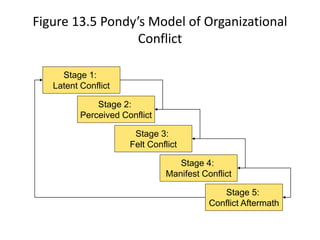
Figure 13.5 Pondy’s Model of Organizational
Conflict
Stage 1:
Latent Conflict
Stage 2:
Perceived Conflict
Stage 3:
Felt Conflict
Stage 4:
Manifest Conflict
Stage 5:
Conflict Aftermath
Interpersonal Communication

Interpersonal Communication

  • 3.
    Types of interpersonal communication Verbalcommunication, written communication, Communicating with gestures, Lip reading, Dancing,Intercultural communication, mass communication etc.
  • 8.
    According to M.V.Rodriques“listening is a process of receiving, interpreting and reacting to the messages received from the communication sender”.
  • 14.
  • 20.
    Barriers to effectivelistening • 1. Inadequate background information. • 2. Selective memory • 3. Selective expectation • 4. Fear of being influenced or persuaded • 5. Bias and being judgmental • 6. Partial listening and distractions • 7. selective perception • A. physical, psychological, linguistic, cultural barriers • Improving listening skills
  • 23.
    Remember feedback oncommunication channel S MCR F
  • 30.
    Collaboration in theworkplace is when two or more people (often groups) work together through idea sharing and thinking to accomplish a common goal. ... A strong sense of purpose - Groups and individuals who truly collaborate see the value in working together.
  • 43.
    "The key tovaluing differences is to realize that all people see the world, not as it is, but as they are.“ - Stephen Covey Habits of Highly Effective People 6. Synergize • After all, if two people have the same opinion, one is unnecessary. When we become aware of someone’s different perspective, we can say, “Good! You see it differently! Help me see what you see.” • We seek first to understand, and then we find strength and utility in those different perspectives in order to create new possibilities and Win-Win results.
  • 53.
  • 54.
    Team building skills •1. coordination within the team • 2. Efficiency and competency levels • 3. Distribution of power and responsibility • 4.Team Bonding • 5. Optimal performance
  • 59.
    Effective decision makingtechniques for teams and groups • 1. brain storming • 2. Nominal group technique • 3.Electronic meeting • 4. Delphi technique • Positive as well as negative aspects of team or group decision making
  • 66.
    Figure 13.5 Pondy’sModel of Organizational Conflict Stage 1: Latent Conflict Stage 2: Perceived Conflict Stage 3: Felt Conflict Stage 4: Manifest Conflict Stage 5: Conflict Aftermath