Presenter: Dr Anurag Yadav
Dept Of Biochemistry, FMMC
Insulin
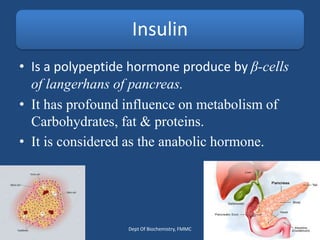
• Is a polypeptide hormone produce by β-cells
of langerhans of pancreas.
• It has profound influence on metabolism of
Carbohydrates, fat & proteins.
• It is considered as the anabolic hormone.
Dept Of Biochemistry, FMMC
• It was the first hormone to be isolated,
purified & synthesized.
• First hormone to be sequenced
• First hormone to be produced by recombinant
DNA technology.
Dept Of Biochemistry, FMMC
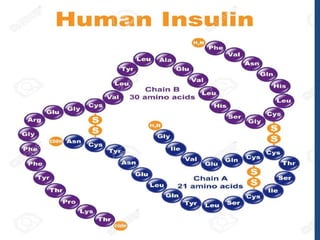
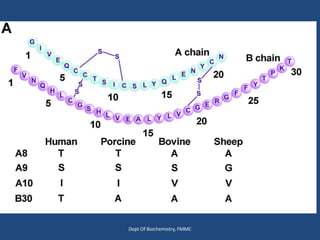
Structure
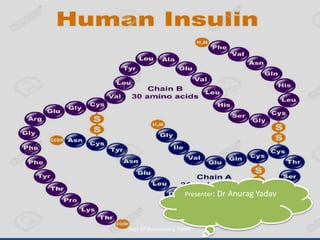
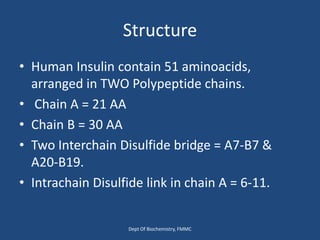
• Human Insulin contain 51 aminoacids,
arranged in TWO Polypeptide chains.
• Chain A = 21 AA
• Chain B = 30 AA
• Two Interchain Disulfide bridge = A7-B7 &
A20-B19.
• Intrachain Disulfide link in chain A = 6-11.
Dept Of Biochemistry, FMMC
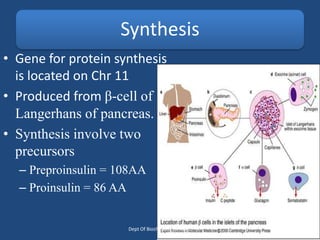
Synthesis
• Gene for protein synthesis
is located on Chr 11
• Produced from β-cell of
Langerhans of pancreas.
• Synthesis involve two
precursors
– Preproinsulin = 108AA
– Proinsulin = 86 AA
Dept Of Biochemistry, FMMC
• These are sequentially degraded to form the
active hormone Insulin and Connecting
peptide (C-Peptide)
• C-peptide has no biological activity, however
its estimation in plasma serves as the useful
index for endogenous production of insulin.
• In β-cells, Insulin combines with Zinc to form
a complex & stored in granules.
Dept Of Biochemistry, FMMC
Regulation of Insulin secretion
• About 40-50Units secreted daily by Human
pancreas.
• Normal value is = 20-30μU/mL
Dept Of Biochemistry, FMMC
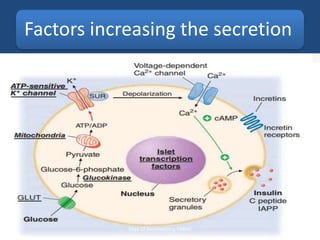
Factors increasing the secretion
– Stimulating the
secretion
• Glucose
• Aminoacids
• GI Hormone (secretin,
gastrin, pancreozymin)
• Parasympatheic
stimulation
• Incretin hormone
– Inhibiting secretion
• Epinephrine
• Alp-ha adrenergic
stimulaion
Dept Of Biochemistry, FMMC
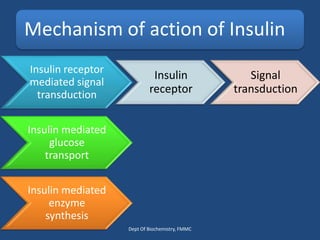
Mechanism of action of Insulin
Insulin receptor
mediated signal
transduction
Insulin
receptor
Signal
transduction
Insulin mediated
glucose
transport
Insulin mediated
enzyme
synthesis
Dept Of Biochemistry, FMMC
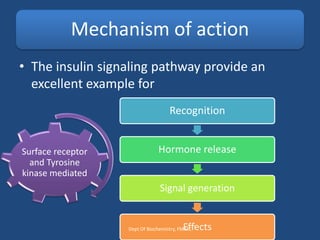
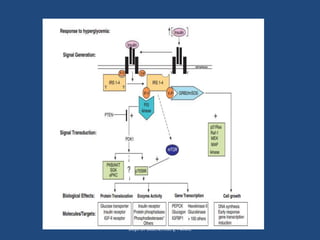
Mechanism of action
• The insulin signaling pathway provide an
excellent example for
Recognition
Hormone release
Signal generation
Effects
Surface receptor
and Tyrosine
kinase mediated
Dept Of Biochemistry, FMMC
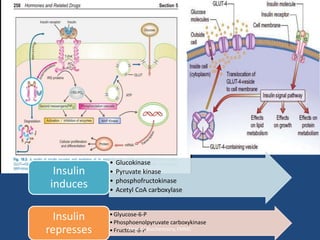
• Glucokinase
• Pyruvate kinase
• phosphofructokinase
• Acetyl CoA carboxylase
Insulin
induces
•Glyucose-6-P
•Phosphoenolpyruvate carboxykinase
•Fructose-6-P
Insulin
represses Dept Of Biochemistry, FMMC
Degradation of Insulin
• Half life is 4-5mins.
• A protease enzyme, namely insulinase
degrades Insulin (mainly found in liver and
kidney)
Dept Of Biochemistry, FMMC
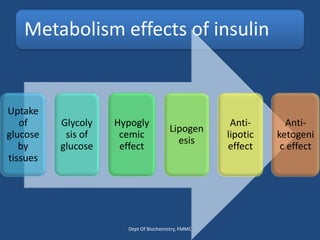
Metabolism effects of insulin
Uptake
of
glucose
by
tissues
Glycoly
sis of
glucose
Hypogly
cemic
effect
Lipogen
esis
Anti-
lipotic
effect
Anti-
ketogeni
c effect
Dept Of Biochemistry, FMMC
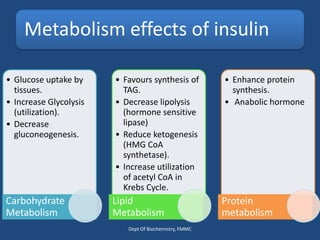
Metabolism effects of insulin
• Glucose uptake by
tissues.
• Increase Glycolysis
(utilization).
• Decrease
gluconeogenesis.
Carbohydrate
Metabolism
• Favours synthesis of
TAG.
• Decrease lipolysis
(hormone sensitive
lipase)
• Reduce ketogenesis
(HMG CoA
synthetase).
• Increase utilization
of acetyl CoA in
Krebs Cycle.
Lipid
Metabolism
• Enhance protein
synthesis.
• Anabolic hormone
Protein
metabolism
Dept Of Biochemistry, FMMC
Disorders
• Diabetes mellitus
– Type I DM
– Type II DM
– Type 1.5 DM
Dept Of Biochemistry, FMMC
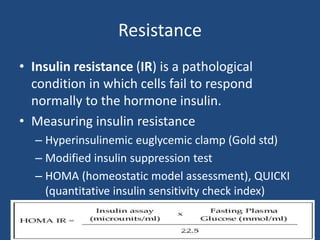
Resistance
• Insulin resistance (IR) is a pathological
condition in which cells fail to respond
normally to the hormone insulin.
• Measuring insulin resistance
– Hyperinsulinemic euglycemic clamp (Gold std)
– Modified insulin suppression test
– HOMA (homeostatic model assessment), QUICKI
(quantitative insulin sensitivity check index)
Dept Of Biochemistry, FMMC
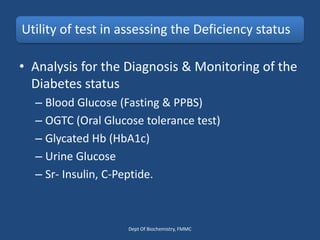
Utility of test in assessing the Deficiency status
• Analysis for the Diagnosis & Monitoring of the
Diabetes status
– Blood Glucose (Fasting & PPBS)
– OGTC (Oral Glucose tolerance test)
– Glycated Hb (HbA1c)
– Urine Glucose
– Sr- Insulin, C-Peptide.
Dept Of Biochemistry, FMMC
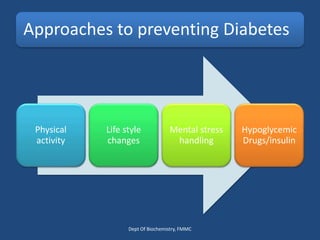
Approaches to preventing Diabetes
Physical
activity
Life style
changes
Mental stress
handling
Hypoglycemic
Drugs/insulin
Dept Of Biochemistry, FMMC
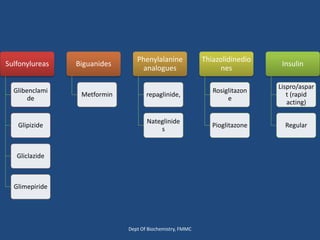
Sulfonylureas
Glibenclami
de
Glipizide
Gliclazide
Glimepiride
Biguanides
Metformin
Phenylalanine
analogues
repaglinide,
Nateglinide
s
Thiazolidinedio
nes
Rosiglitazon
e
Pioglitazone
Insulin
Lispro/aspar
t (rapid
acting)
Regular
Dept Of Biochemistry, FMMC
• Reference
– Vasudevan-Textbook of Biochemistry
– Harper’s-Illustrated Biochemistry
– Gyton-Human Physiology
– Internet sources
Dept Of Biochemistry, FMMC

Insulin by Dr. Anurag Yadav

  • 1.
    Presenter: Dr AnuragYadav Dept Of Biochemistry, FMMC
  • 2.
    Insulin • Is apolypeptide hormone produce by β-cells of langerhans of pancreas. • It has profound influence on metabolism of Carbohydrates, fat & proteins. • It is considered as the anabolic hormone. Dept Of Biochemistry, FMMC
  • 3.
    • It wasthe first hormone to be isolated, purified & synthesized. • First hormone to be sequenced • First hormone to be produced by recombinant DNA technology. Dept Of Biochemistry, FMMC
  • 4.
    Structure • Human Insulincontain 51 aminoacids, arranged in TWO Polypeptide chains. • Chain A = 21 AA • Chain B = 30 AA • Two Interchain Disulfide bridge = A7-B7 & A20-B19. • Intrachain Disulfide link in chain A = 6-11. Dept Of Biochemistry, FMMC
  • 5.
  • 6.
    Synthesis • Gene forprotein synthesis is located on Chr 11 • Produced from β-cell of Langerhans of pancreas. • Synthesis involve two precursors – Preproinsulin = 108AA – Proinsulin = 86 AA Dept Of Biochemistry, FMMC
  • 7.
    • These aresequentially degraded to form the active hormone Insulin and Connecting peptide (C-Peptide) • C-peptide has no biological activity, however its estimation in plasma serves as the useful index for endogenous production of insulin. • In β-cells, Insulin combines with Zinc to form a complex & stored in granules. Dept Of Biochemistry, FMMC
  • 8.
    Regulation of Insulinsecretion • About 40-50Units secreted daily by Human pancreas. • Normal value is = 20-30μU/mL Dept Of Biochemistry, FMMC
  • 9.
    Factors increasing thesecretion – Stimulating the secretion • Glucose • Aminoacids • GI Hormone (secretin, gastrin, pancreozymin) • Parasympatheic stimulation • Incretin hormone – Inhibiting secretion • Epinephrine • Alp-ha adrenergic stimulaion Dept Of Biochemistry, FMMC
  • 10.
    Mechanism of actionof Insulin Insulin receptor mediated signal transduction Insulin receptor Signal transduction Insulin mediated glucose transport Insulin mediated enzyme synthesis Dept Of Biochemistry, FMMC
  • 11.
    Mechanism of action •The insulin signaling pathway provide an excellent example for Recognition Hormone release Signal generation Effects Surface receptor and Tyrosine kinase mediated Dept Of Biochemistry, FMMC
  • 12.
  • 13.
    • Glucokinase • Pyruvatekinase • phosphofructokinase • Acetyl CoA carboxylase Insulin induces •Glyucose-6-P •Phosphoenolpyruvate carboxykinase •Fructose-6-P Insulin represses Dept Of Biochemistry, FMMC
  • 14.
    Degradation of Insulin •Half life is 4-5mins. • A protease enzyme, namely insulinase degrades Insulin (mainly found in liver and kidney) Dept Of Biochemistry, FMMC
  • 15.
    Metabolism effects ofinsulin Uptake of glucose by tissues Glycoly sis of glucose Hypogly cemic effect Lipogen esis Anti- lipotic effect Anti- ketogeni c effect Dept Of Biochemistry, FMMC
  • 16.
    Metabolism effects ofinsulin • Glucose uptake by tissues. • Increase Glycolysis (utilization). • Decrease gluconeogenesis. Carbohydrate Metabolism • Favours synthesis of TAG. • Decrease lipolysis (hormone sensitive lipase) • Reduce ketogenesis (HMG CoA synthetase). • Increase utilization of acetyl CoA in Krebs Cycle. Lipid Metabolism • Enhance protein synthesis. • Anabolic hormone Protein metabolism Dept Of Biochemistry, FMMC
  • 17.
    Disorders • Diabetes mellitus –Type I DM – Type II DM – Type 1.5 DM Dept Of Biochemistry, FMMC
  • 18.
    Resistance • Insulin resistance(IR) is a pathological condition in which cells fail to respond normally to the hormone insulin. • Measuring insulin resistance – Hyperinsulinemic euglycemic clamp (Gold std) – Modified insulin suppression test – HOMA (homeostatic model assessment), QUICKI (quantitative insulin sensitivity check index) Dept Of Biochemistry, FMMC
  • 19.
    Utility of testin assessing the Deficiency status • Analysis for the Diagnosis & Monitoring of the Diabetes status – Blood Glucose (Fasting & PPBS) – OGTC (Oral Glucose tolerance test) – Glycated Hb (HbA1c) – Urine Glucose – Sr- Insulin, C-Peptide. Dept Of Biochemistry, FMMC
  • 20.
    Approaches to preventingDiabetes Physical activity Life style changes Mental stress handling Hypoglycemic Drugs/insulin Dept Of Biochemistry, FMMC
  • 21.
  • 22.
  • 23.
  • 24.
    • Reference – Vasudevan-Textbookof Biochemistry – Harper’s-Illustrated Biochemistry – Gyton-Human Physiology – Internet sources Dept Of Biochemistry, FMMC

Editor's Notes

  • #11 satyanarayana
  • #12 Satyanarayana 672p
  • #15 KD Tripati 6ed, p258
  • #17 satyanarayan
  • #18 satyanarayan
  • #20 Wikipedia https://en.wikipedia.org/wiki/Insulin_resistance#Measuring_insulin_resistance