• Epinephrine
• Norepinephrine
• Dopamine
• Adrenaline
• Noradrenaline act on alpha and beta
adrenergic receptors
Catecholamines
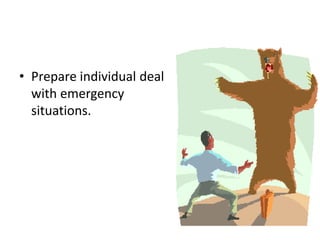
• Prepare individual deal
with emergency
situations.
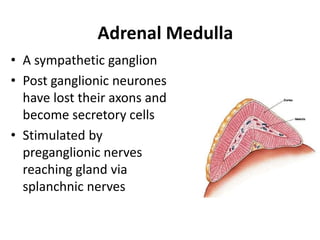
Adrenal Medulla
• A sympathetic ganglion
• Post ganglionic neurones
have lost their axons and
become secretory cells
• Stimulated by
preganglionic nerves
reaching gland via
splanchnic nerves
• Glucocorticoid concentration is high in blood
draining from cortex to medulla/
• After hyophysectomy glucocorticoid secretion
of blood falls.
• Glucocorticoids necessary for normal
development of adrenal medulla.
• In 21 b-hydoxylase deficiency, glucocorticoid
secretion is reduced during fetal life.
• In untreated b-hydoxylase deficiency,
circulating catecholemines are low after birth.
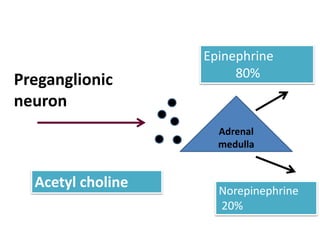
Adrenal
medulla
Preganglionic
neuron
Acetyl choline
Epinephrine
80%
Norepinephrine
20%
PHYSIOLOGIC ACTIONS
Metabolic
• Norephinephrine and ephinephrine:
• Increase glycogenoliysis in liver and skeletal
muscle.
• Increase insulin by ẞ receptors. Decrease insulin
by α- adrenergic receptors.
• Mobilization of FFA
• Increase plasma lactate
• Stimulation of metabolic rare
• Brought about by actions of α and ẞ adrenergic
receptors.
• The initial rise in metabolic rate due to
cutaneous vasoconstriction  decreases heat
loss and leads to rise in body temperature 
increased muscular activity.
• Second rise is due to oxidation of lactate in
liver.
• increase the force and rate of contraction of
the isolated heart. mediated via β1 receptors.
• Cardiac muscle. SA node
• force rate
• Increase myocardial contractility
• May cause extra-systoles and arrythmias.
Cardiovascular
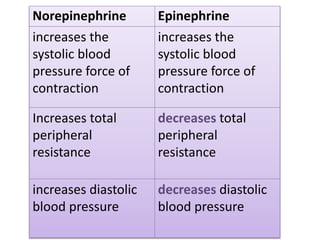
• Norepinephrine - vasoconstriction in most if
not all organs via α receptors.
• Increase total peripheral resistance increase .
• but epinephrine dilates the blood vessels in
skeletal muscle and the liver via β receptors.
• Decrease total peripheral resistance.
Norepinephrine Epinephrine
increases the
systolic blood
pressure force of
contraction
increases the
systolic blood
pressure force of
contraction
Increases total
peripheral
resistance
decreases total
peripheral
resistance
increases diastolic
blood pressure
decreases diastolic
blood pressure
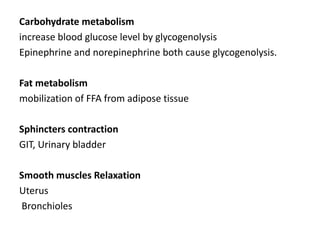
Carbohydrate metabolism
increase blood glucose level by glycogenolysis
Epinephrine and norepinephrine both cause glycogenolysis.
Fat metabolism
mobilization of FFA from adipose tissue
Sphincters contraction
GIT, Urinary bladder
Smooth muscles Relaxation
Uterus
Bronchioles
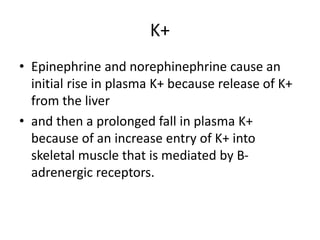
K+
• Epinephrine and norephinephrine cause an
initial rise in plasma K+ because release of K+
from the liver
• and then a prolonged fall in plasma K+
because of an increase entry of K+ into
skeletal muscle that is mediated by B-
adrenergic receptors.
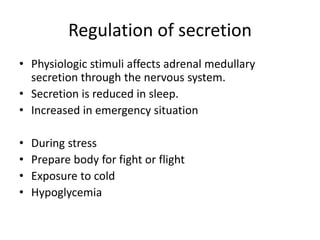
• Physiologic stimuli affects adrenal medullary
secretion through the nervous system.
• Secretion is reduced in sleep.
• Increased in emergency situation
• During stress
• Prepare body for fight or flight
• Exposure to cold
• Hypoglycemia
Regulation of secretion
DOPAMINE
• Renal and mesentry vasodialation by dopaminergic
receptor.
• Everywhere else, vasodialation by releasing
norephinephrine.
• Postive inotropic effect on heart by action of β
receptors.
• Increase the systolic blood pressure.
• Does not affect the diastolic blood.
• Used in treatment of traumatic and cardiogenic shock.
• Causes natriuresis, inhibit Na, K, ATPase.
• Deficiency in basal ganglia cause PARKINSONISM
• Methylated & oxydized to VMA
vanillylmandelic acid
excreted in urine.
• Epinephrine and norepinephrine are metabolized
by oxidation and methylation. The former
reaction is catalyzed by MAO and the latter by
catechol -O -methyltransferase (COMT
• After many steps
• vanillyl- mandelic acid (VMA)
Metabolism
• Cause-tumour in cells of adrenal medulla so
catecholamine secretion increase.
• Signs and symptoms-Headache
Tachycardia, Palpitation
Hyperglycaemia
Glucosuria
Anxiety
Pheochromocytoma

Catecholamines

  • 2.
    • Epinephrine • Norepinephrine •Dopamine • Adrenaline • Noradrenaline act on alpha and beta adrenergic receptors Catecholamines
  • 3.
    • Prepare individualdeal with emergency situations.
  • 4.
    Adrenal Medulla • Asympathetic ganglion • Post ganglionic neurones have lost their axons and become secretory cells • Stimulated by preganglionic nerves reaching gland via splanchnic nerves
  • 5.
    • Glucocorticoid concentrationis high in blood draining from cortex to medulla/ • After hyophysectomy glucocorticoid secretion of blood falls. • Glucocorticoids necessary for normal development of adrenal medulla. • In 21 b-hydoxylase deficiency, glucocorticoid secretion is reduced during fetal life. • In untreated b-hydoxylase deficiency, circulating catecholemines are low after birth.
  • 6.
  • 7.
  • 8.
    Metabolic • Norephinephrine andephinephrine: • Increase glycogenoliysis in liver and skeletal muscle. • Increase insulin by ẞ receptors. Decrease insulin by α- adrenergic receptors. • Mobilization of FFA • Increase plasma lactate • Stimulation of metabolic rare • Brought about by actions of α and ẞ adrenergic receptors.
  • 9.
    • The initialrise in metabolic rate due to cutaneous vasoconstriction  decreases heat loss and leads to rise in body temperature  increased muscular activity. • Second rise is due to oxidation of lactate in liver.
  • 10.
    • increase theforce and rate of contraction of the isolated heart. mediated via β1 receptors. • Cardiac muscle. SA node • force rate • Increase myocardial contractility • May cause extra-systoles and arrythmias. Cardiovascular
  • 11.
    • Norepinephrine -vasoconstriction in most if not all organs via α receptors. • Increase total peripheral resistance increase . • but epinephrine dilates the blood vessels in skeletal muscle and the liver via β receptors. • Decrease total peripheral resistance.
  • 12.
    Norepinephrine Epinephrine increases the systolicblood pressure force of contraction increases the systolic blood pressure force of contraction Increases total peripheral resistance decreases total peripheral resistance increases diastolic blood pressure decreases diastolic blood pressure
  • 13.
    Carbohydrate metabolism increase bloodglucose level by glycogenolysis Epinephrine and norepinephrine both cause glycogenolysis. Fat metabolism mobilization of FFA from adipose tissue Sphincters contraction GIT, Urinary bladder Smooth muscles Relaxation Uterus Bronchioles
  • 14.
    K+ • Epinephrine andnorephinephrine cause an initial rise in plasma K+ because release of K+ from the liver • and then a prolonged fall in plasma K+ because of an increase entry of K+ into skeletal muscle that is mediated by B- adrenergic receptors.
  • 15.
    • Physiologic stimuliaffects adrenal medullary secretion through the nervous system. • Secretion is reduced in sleep. • Increased in emergency situation • During stress • Prepare body for fight or flight • Exposure to cold • Hypoglycemia Regulation of secretion
  • 16.
    DOPAMINE • Renal andmesentry vasodialation by dopaminergic receptor. • Everywhere else, vasodialation by releasing norephinephrine. • Postive inotropic effect on heart by action of β receptors. • Increase the systolic blood pressure. • Does not affect the diastolic blood. • Used in treatment of traumatic and cardiogenic shock. • Causes natriuresis, inhibit Na, K, ATPase. • Deficiency in basal ganglia cause PARKINSONISM
  • 17.
    • Methylated &oxydized to VMA vanillylmandelic acid excreted in urine. • Epinephrine and norepinephrine are metabolized by oxidation and methylation. The former reaction is catalyzed by MAO and the latter by catechol -O -methyltransferase (COMT • After many steps • vanillyl- mandelic acid (VMA) Metabolism
  • 18.
    • Cause-tumour incells of adrenal medulla so catecholamine secretion increase. • Signs and symptoms-Headache Tachycardia, Palpitation Hyperglycaemia Glucosuria Anxiety Pheochromocytoma