Downloaded 184 times
- 1 / 20
- 2 / 20
- 3 / 20
 Most read
- 4 / 20
 Most read
- 5 / 20
 Most read
- 6 / 20
- 7 / 20
- 8 / 20
- 9 / 20
- 10 / 20
- 11 / 20
- 12 / 20
- 13 / 20
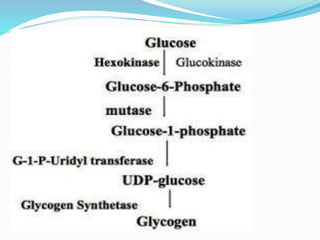
- 14 / 20
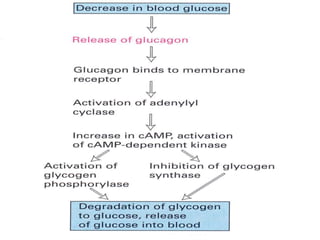
- 15 / 20
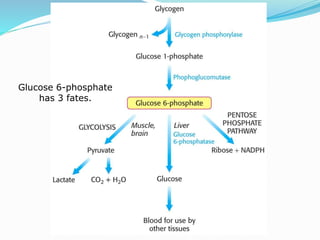
- 16 / 20
- 17 / 20
- 18 / 20
- 19 / 20
- 20 / 20


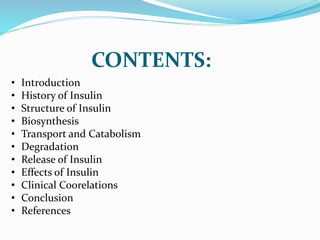
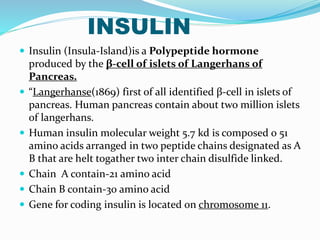
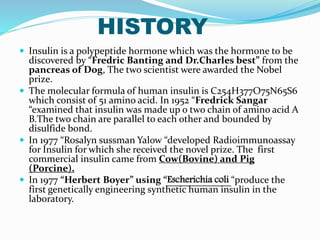
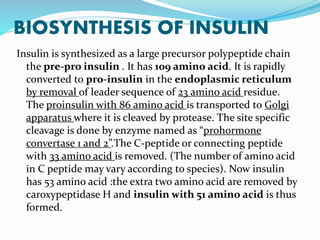
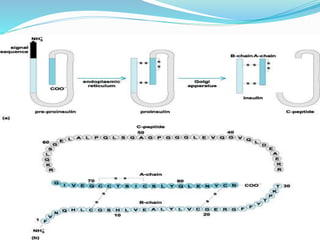
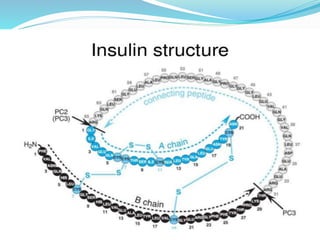
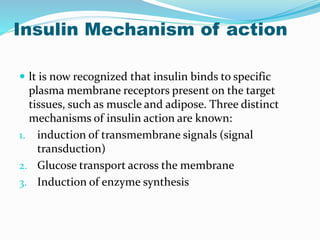
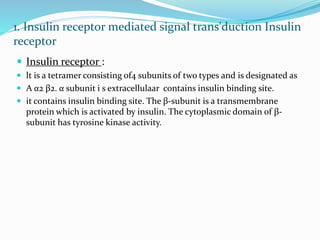
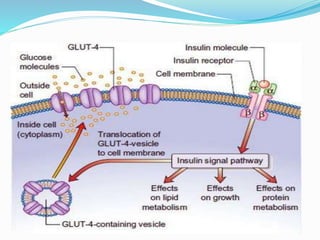
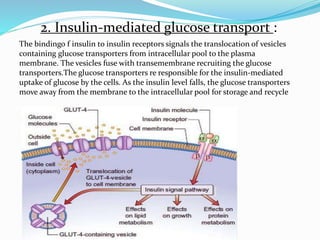
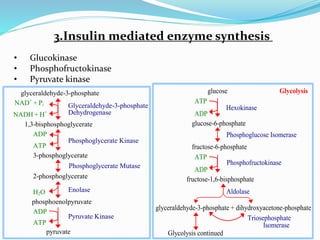
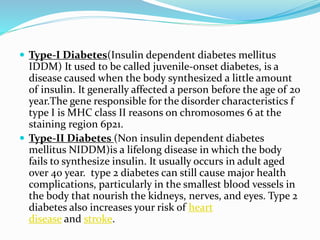
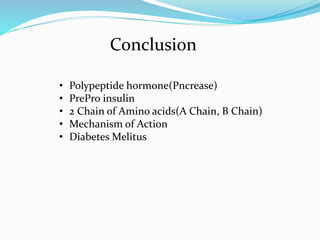
Insulin is a polypeptide hormone composed of two chains of amino acids that is produced by beta cells in the pancreas. It plays an important role in regulating blood glucose levels. Insulin binds to receptors on cells and signals the translocation of glucose transporters to cell membranes, allowing glucose uptake. It also stimulates the synthesis of enzymes involved in glycolysis. Diabetes occurs when the body does not produce enough insulin or the cells ignore the insulin signal, resulting in high blood glucose levels. The document provides details on the structure, function, biosynthesis and role of insulin.


