Model for Blending
Technology & Entrepreneurship
into Learning Design
Best Practices
Learning Design Frameworks

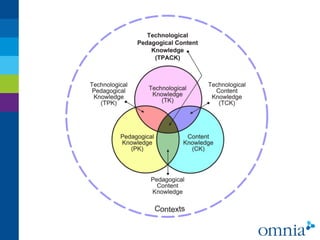
§  TPACK
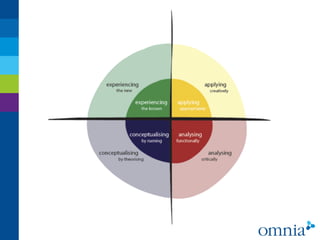
§  Learning by Design
§  Pedagogical Infrastructure Framework
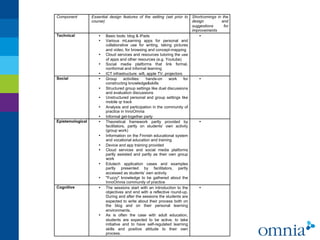
Component         Essential design features of the setting (set prior to       Shortcomings in the
                  course)                                                      design         and
                                                                               suggestions      for
                                                                               improvements
Technical             •   Basic tools: blog & iPads                                •
                      •   Various mLearning apps for personal and
                          collaborative use for writing, taking pictures
                          and video, for browsing and concept-mapping
                      •   Cloud services and resources tutoring the use
                          of apps and other resources (e.g. Youtube)
                      •   Social media platforms that link formal,
                          nonformal and informal learning
                      •   ICT infrastructure: wifi, apple TV, projectors
Social                •   Group       activities:  hands-on     work     for      •
                          constructing knowledge&skills
                      •   Structured group settings like duel discussions
                          and evaluation discussions
                      •   Unstructured personal and group settings like
                          mobile qr track
                      •   Analysis and participation in the community of
                          practice in InnoOmnia
                      •   Informal get-together party
Epistemological       •   Theoretical framework partly provided by                •
                          facilitators, partly on students’ own activity
                          (group work)
                      •   Information on the Finnish educational system
                          and vocational education and training
                      •   Device and app training provided
                      •   Cloud services and social media platforms
                          partly assisted and partly as their own group
                          work
                      •   Edutech application cases and examples
                          partly presented by facilitators, partly
                          accessed as students’ own activity
                      •   "Fuzzy" knowledge to be gathered about the
                          InnoOmnia community of practice
Cognitive             •   The sessions start with an introduction to the          •
                          objectives and end with a reflective round-up.
                          During and after the sessions the students are
                          expected to write about their process both on
                          the blog and on their personal learning
                          environments.
                      •   As is often the case with adult education,
                          students are expected to be active, to take
                          initiative and to have self-regulated learning
                          skills and positive attitude to their own
                          process.
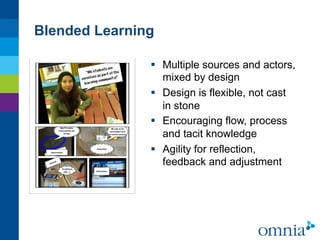
Blended Learning

               §  Multiple sources and actors,
                   mixed by design
               §  Design is flexible, not cast
                   in stone
               §  Encouraging flow, process
                   and tacit knowledge
               §  Agility for reflection,
                   feedback and adjustment
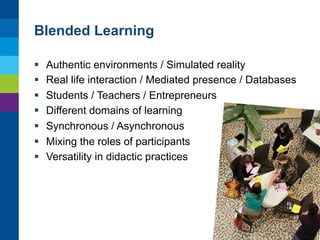
Blended Learning

§    Authentic environments / Simulated reality
§    Real life interaction / Mediated presence / Databases
§    Students / Teachers / Entrepreneurs
§    Different domains of learning
§    Synchronous / Asynchronous
§    Mixing the roles of participants
§    Versatility in didactic practices
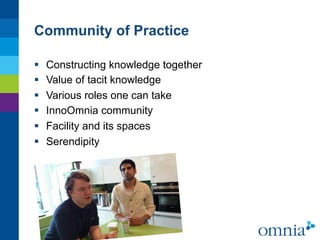
Community of Practice

§    Constructing knowledge together
§    Value of tacit knowledge
§    Various roles one can take
§    InnoOmnia community
§    Facility and its spaces
§    Serendipity
Knowledge Building Community

§    21st century skills
§    On-campus business partnerships
§    Young entrepreneur programmes
§    Cooperative arrangements

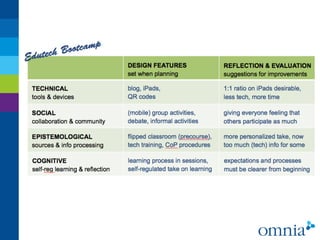
§  Example: Edupreneur Bootcamp
§  A journey to entrepreneurship...

InnoOmnia best practices

  • 1.
    Model for Blending Technology& Entrepreneurship into Learning Design Best Practices
  • 2.
    Learning Design Frameworks § TPACK §  Learning by Design §  Pedagogical Infrastructure Framework
  • 5.
    Component Essential design features of the setting (set prior to Shortcomings in the course) design and suggestions for improvements Technical • Basic tools: blog & iPads • • Various mLearning apps for personal and collaborative use for writing, taking pictures and video, for browsing and concept-mapping • Cloud services and resources tutoring the use of apps and other resources (e.g. Youtube) • Social media platforms that link formal, nonformal and informal learning • ICT infrastructure: wifi, apple TV, projectors Social • Group activities: hands-on work for • constructing knowledge&skills • Structured group settings like duel discussions and evaluation discussions • Unstructured personal and group settings like mobile qr track • Analysis and participation in the community of practice in InnoOmnia • Informal get-together party Epistemological • Theoretical framework partly provided by • facilitators, partly on students’ own activity (group work) • Information on the Finnish educational system and vocational education and training • Device and app training provided • Cloud services and social media platforms partly assisted and partly as their own group work • Edutech application cases and examples partly presented by facilitators, partly accessed as students’ own activity • "Fuzzy" knowledge to be gathered about the InnoOmnia community of practice Cognitive • The sessions start with an introduction to the • objectives and end with a reflective round-up. During and after the sessions the students are expected to write about their process both on the blog and on their personal learning environments. • As is often the case with adult education, students are expected to be active, to take initiative and to have self-regulated learning skills and positive attitude to their own process.
  • 7.
    Blended Learning §  Multiple sources and actors, mixed by design §  Design is flexible, not cast in stone §  Encouraging flow, process and tacit knowledge §  Agility for reflection, feedback and adjustment
  • 8.
    Blended Learning §  Authentic environments / Simulated reality §  Real life interaction / Mediated presence / Databases §  Students / Teachers / Entrepreneurs §  Different domains of learning §  Synchronous / Asynchronous §  Mixing the roles of participants §  Versatility in didactic practices
  • 9.
    Community of Practice §  Constructing knowledge together §  Value of tacit knowledge §  Various roles one can take §  InnoOmnia community §  Facility and its spaces §  Serendipity
  • 10.
    Knowledge Building Community §  21st century skills §  On-campus business partnerships §  Young entrepreneur programmes §  Cooperative arrangements §  Example: Edupreneur Bootcamp §  A journey to entrepreneurship...