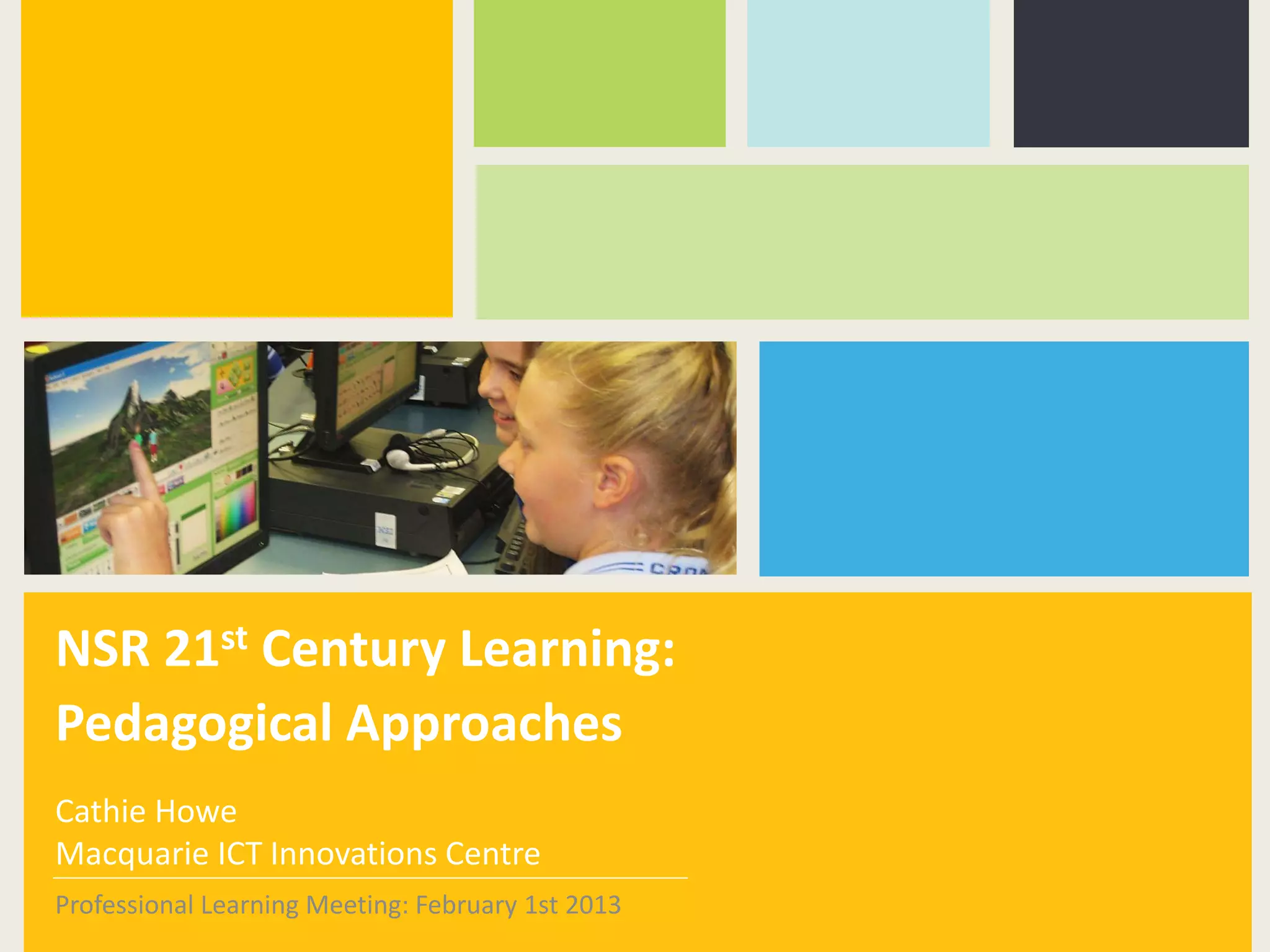

NSR 21st Century Learning:
Pedagogical Approaches
Cathie Howe
Macquarie ICT Innovations Centre
Professional Learning Meeting: February 1st 2013
What should learning look like?
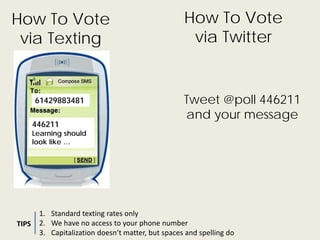
How To Vote                                         How To Vote
 via Texting                                         via Twitter


       61429883481                                  Tweet @poll 446211
                                                    and your message
       446211
       Learning should
       look like …


        1. Standard texting rates only
TIPS    2. We have no access to your phone number
        3. Capitalization doesn’t matter, but spaces and spelling do
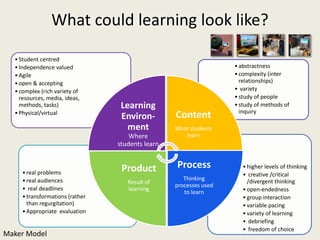
What could learning look like?

  • Student centred
  • Independence valued                                            • abstractness
  • Agile                                                          • complexity (inter
  • open & accepting                                                 relationships)
  • complex (rich variety of                                       • variety
    resources, media, ideas,                                       • study of people
    methods, tasks)               Learning                         • study of methods of
                                                                     inquiry
  • Physical/virtual
                                  Environ-        Content
                                    ment          What students
                                     Where           learn
                                 students learn


                                  Product         Process             • higher levels of thinking
     • real problems                                                  • creative /critical
     • real audiences                                Thinking           /divergent thinking
                                    Result of
                                                  processes used
     • real deadlines               learning                          • open-endedness
                                                     to learn
     • transformations (rather                                        • group interaction
       than regurgitation)                                            • variable pacing
     • Appropriate evaluation                                         • variety of learning
                                                                      • debriefing
                                                                      • freedom of choice
Maker Model
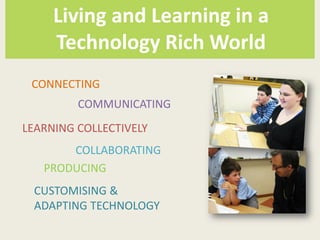
Living and Learning in a
     Technology Rich World
 CONNECTING
         COMMUNICATING
LEARNING COLLECTIVELY
       COLLABORATING
   PRODUCING
 CUSTOMISING &
 ADAPTING TECHNOLOGY
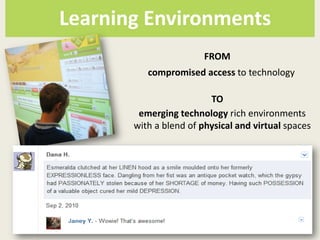
Learning Environments
                        FROM
          compromised access to technology

                         TO
        emerging technology rich environments
       with a blend of physical and virtual spaces
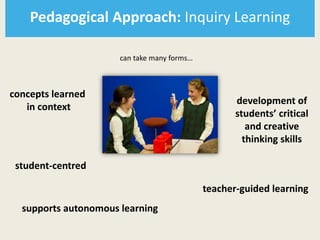
Pedagogical Approach: Inquiry Learning

                      can take many forms…


concepts learned
                                                    development of
   in context
                                                    students’ critical
                                                       and creative
                                                      thinking skills

 student-centred

                                             teacher-guided learning
  supports autonomous learning
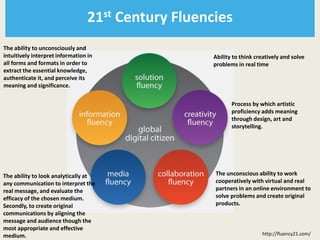
21st Century Fluencies
The ability to unconsciously and
intuitively interpret information in                Ability to think creatively and solve
all forms and formats in order to                   problems in real time
extract the essential knowledge,
authenticate it, and perceive its
meaning and significance.

                                                           Process by which artistic
                                                           proficiency adds meaning
                                                           through design, art and
                                                           storytelling.


The ability to look analytically at                 The unconscious ability to work
any communication to interpret the                  cooperatively with virtual and real
real message, and evaluate the                      partners in an online environment to
efficacy of the chosen medium.                      solve problems and create original
Secondly, to create original                        products.
communications by aligning the
message and audience though the
most appropriate and effective
medium.                                                                http://fluency21.com/
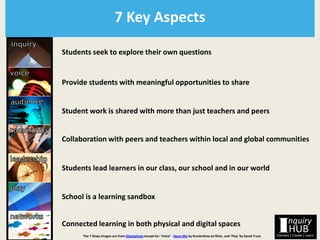
7 Key Aspects

Students seek to explore their own questions


Provide students with meaningful opportunities to share


Student work is shared with more than just teachers and peers


Collaboration with peers and teachers within local and global communities


Students lead learners in our class, our school and in our world


School is a learning sandbox


Connected learning in both physical and digital spaces
      The 7 Ways images are from iStockphoto except for: ‘Voice’ - Neon Mic by fensterbme on flickr, and ‘Play’ by David Truss
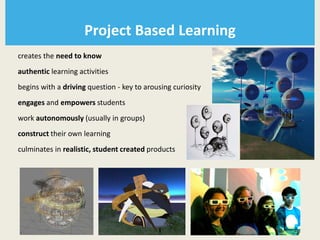
Project Based Learning
creates the need to know
authentic learning activities
begins with a driving question - key to arousing curiosity
engages and empowers students
work autonomously (usually in groups)
construct their own learning
culminates in realistic, student created products
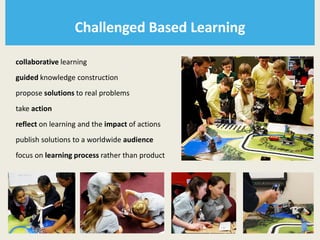
Challenged Based Learning

collaborative learning
guided knowledge construction
propose solutions to real problems
take action
reflect on learning and the impact of actions
publish solutions to a worldwide audience
focus on learning process rather than product
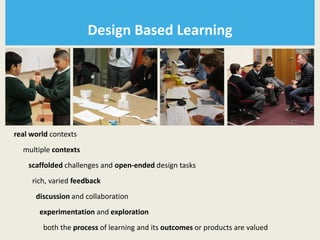
Design Based Learning


real world contexts
  multiple contexts
    scaffolded challenges and open-ended design tasks
     rich, varied feedback
      discussion and collaboration
       experimentation and exploration
        both the process of learning and its outcomes or products are valued
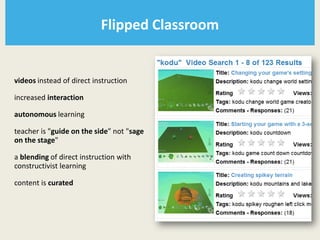
Flipped Classroom


videos instead of direct instruction

increased interaction

autonomous learning

teacher is "guide on the side” not "sage
on the stage"

a blending of direct instruction with
constructivist learning

content is curated
The future…


If people don’t really learn how to learn and
how to engage, and how to be flexible and
adaptive, how to find communities and have
ideas about things that they want to do now,
we’re just really in trouble.
                               Professor Katie Salen
George Siemens suggests that, when students
  “make their learning transparent, they
            become teachers.”
As teachers we are beginning
              to be urged to:

               Rethink access
            Rethink transparency
              Rethink openess
             Rethink ownership


Understanding Virtual Pedagogies For Contemporary Teaching & Learning
                                           AN IDEAS LAB WHITEPAPER
We are at the very beginning of what these new
           technologies will enable.
  Perhaps the question we should be asking
 ourselves is not how technology can improve
        what we are currently doing…

                              BUT

               what is now possible?

    Understanding Virtual Pedagogies For Contemporary Teaching & Learning
                                               AN IDEAS LAB WHITEPAPER

Nsr 21st c learning pedagogical approaches

  • 1.
    NSR 21st CenturyLearning: Pedagogical Approaches Cathie Howe Macquarie ICT Innovations Centre Professional Learning Meeting: February 1st 2013
  • 2.
  • 3.
    How To Vote How To Vote via Texting via Twitter 61429883481 Tweet @poll 446211 and your message 446211 Learning should look like … 1. Standard texting rates only TIPS 2. We have no access to your phone number 3. Capitalization doesn’t matter, but spaces and spelling do
  • 5.
    What could learninglook like? • Student centred • Independence valued • abstractness • Agile • complexity (inter • open & accepting relationships) • complex (rich variety of • variety resources, media, ideas, • study of people methods, tasks) Learning • study of methods of inquiry • Physical/virtual Environ- Content ment What students Where learn students learn Product Process • higher levels of thinking • real problems • creative /critical • real audiences Thinking /divergent thinking Result of processes used • real deadlines learning • open-endedness to learn • transformations (rather • group interaction than regurgitation) • variable pacing • Appropriate evaluation • variety of learning • debriefing • freedom of choice Maker Model
  • 6.
    Living and Learningin a Technology Rich World CONNECTING COMMUNICATING LEARNING COLLECTIVELY COLLABORATING PRODUCING CUSTOMISING & ADAPTING TECHNOLOGY
  • 7.
    Learning Environments FROM compromised access to technology TO emerging technology rich environments with a blend of physical and virtual spaces
  • 8.
    Pedagogical Approach: InquiryLearning can take many forms… concepts learned development of in context students’ critical and creative thinking skills student-centred teacher-guided learning supports autonomous learning
  • 9.
    21st Century Fluencies Theability to unconsciously and intuitively interpret information in Ability to think creatively and solve all forms and formats in order to problems in real time extract the essential knowledge, authenticate it, and perceive its meaning and significance. Process by which artistic proficiency adds meaning through design, art and storytelling. The ability to look analytically at The unconscious ability to work any communication to interpret the cooperatively with virtual and real real message, and evaluate the partners in an online environment to efficacy of the chosen medium. solve problems and create original Secondly, to create original products. communications by aligning the message and audience though the most appropriate and effective medium. http://fluency21.com/
  • 10.
    7 Key Aspects Studentsseek to explore their own questions Provide students with meaningful opportunities to share Student work is shared with more than just teachers and peers Collaboration with peers and teachers within local and global communities Students lead learners in our class, our school and in our world School is a learning sandbox Connected learning in both physical and digital spaces The 7 Ways images are from iStockphoto except for: ‘Voice’ - Neon Mic by fensterbme on flickr, and ‘Play’ by David Truss
  • 11.
    Project Based Learning createsthe need to know authentic learning activities begins with a driving question - key to arousing curiosity engages and empowers students work autonomously (usually in groups) construct their own learning culminates in realistic, student created products
  • 12.
    Challenged Based Learning collaborativelearning guided knowledge construction propose solutions to real problems take action reflect on learning and the impact of actions publish solutions to a worldwide audience focus on learning process rather than product
  • 13.
    Design Based Learning realworld contexts multiple contexts scaffolded challenges and open-ended design tasks rich, varied feedback discussion and collaboration experimentation and exploration both the process of learning and its outcomes or products are valued
  • 14.
    Flipped Classroom videos insteadof direct instruction increased interaction autonomous learning teacher is "guide on the side” not "sage on the stage" a blending of direct instruction with constructivist learning content is curated
  • 15.
    The future… If peopledon’t really learn how to learn and how to engage, and how to be flexible and adaptive, how to find communities and have ideas about things that they want to do now, we’re just really in trouble. Professor Katie Salen
  • 16.
    George Siemens suggeststhat, when students “make their learning transparent, they become teachers.”
  • 17.
    As teachers weare beginning to be urged to: Rethink access Rethink transparency Rethink openess Rethink ownership Understanding Virtual Pedagogies For Contemporary Teaching & Learning AN IDEAS LAB WHITEPAPER
  • 18.
    We are atthe very beginning of what these new technologies will enable. Perhaps the question we should be asking ourselves is not how technology can improve what we are currently doing… BUT what is now possible? Understanding Virtual Pedagogies For Contemporary Teaching & Learning AN IDEAS LAB WHITEPAPER