Trends in online education and
     the UTS experience
Teaching and Learning futures
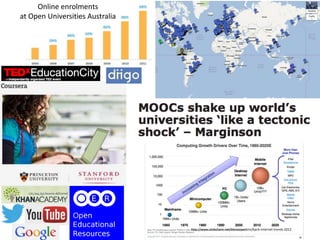
Online enrolments
at Open Universities Australia


                                 http://www.slideshare.net/kleinerperkins/kpcb-internet-trends-2012
MOOCs
• Learning is based on openly available content
  and resources
• Interactions are largely peer-to-peer
• Assessments and grading are handled
  automatically
• Learning is recognized, but not in traditional
  ways
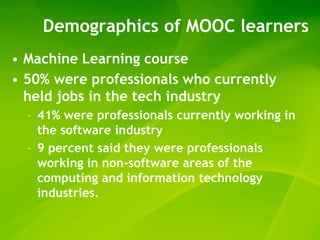
Demographics of MOOC learners
• Machine Learning course
• 50% were professionals who currently
  held jobs in the tech industry
  – 41% were professionals currently working in
    the software industry
  – 9 percent said they were professionals
    working in non-software areas of the
    computing and information technology
    industries.
Demographics of MOOC learners
• Many were already enrolled in some kind
  of traditional postsecondary education
  – ~ 20 percent were graduate students
  – 11.6 percent were undergraduates
  – 3.5 percent unemployed
  – 2.5 percent employed somewhere other
    than the tech industry
  – 1.0 percent enrolled in a K-12 school
Why they chose to take the course
• 39 percent were “just curious about the
  topic”
• 30.5 percent wanted to “sharpen the
  skills” they use in their current job
• 18 percent, said they wanted to
  “position themselves for a better job.”
Who are the
               learners?


  How to
 design the
curriculum?
                  Which
               technologies
              support aims?   Which learning
                              spaces support
                                curriculum
                                   and
                              technologies?
1. An integrated exposure to
The UTS       professional practice through
              dynamic and multifaceted
model of      modes of practice-oriented
              education
learning
           2. Professional practice situated
              in a global workplace, with
              international mobility and
              international and cultural
              engagement as centre piece
           3. Learning which is research-
              inspired and integrated,
              providing academic rigour with
              cutting edge technology to
              equip graduates for life-long
              learning
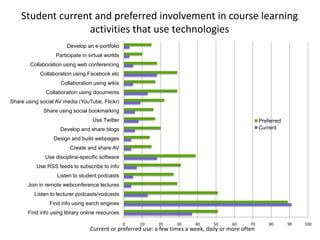
Student current and preferred involvement in course learning
                  activities that use technologies
                        Develop an e-portfolio
                   Participate in virtual worlds
        Collaboration using web conferencing
            Collaboration using Facebook etc
                     Collaboration using wikis
              Collaboration using documents
Share using social AV media (YouTube, Flickr)
             Share using social bookmarking
                                   Use Twitter                                                        Preferred
                     Develop and share blogs                                                          Current

                  Design and build webpages
                         Create and share AV
              Use discipline-specific software
          Use RSS feeds to subscribe to info
                   Listen to student podcasts
       Join in remote webconference lectures
          Listen to lecturer podcasts/vodcasts
                Find info using earch engines
       Find info using library online resources

                                                   0   10    20     30     40     50      60     70       80      90   100
                                  Current or preferred use: a few times a week, daily or more often
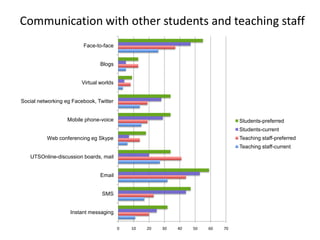
Communication with other students and teaching staff
                         Face-to-face


                                Blogs


                        Virtual worlds


Social networking eg Facebook, Twitter


                   Mobile phone-voice                                           Students-preferred
                                                                                Students-current
          Web conferencing eg Skype                                             Teaching staff-preferred
                                                                                Teaching staff-current
   UTSOnline-discussion boards, mail


                                Email


                                 SMS


                    Instant messaging

                                         0   10   20   30   40   50   60   70
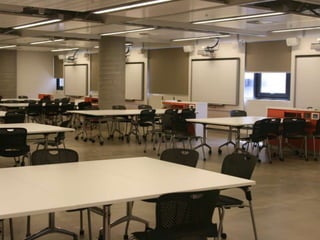
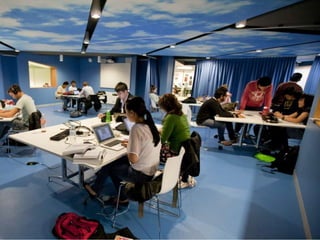
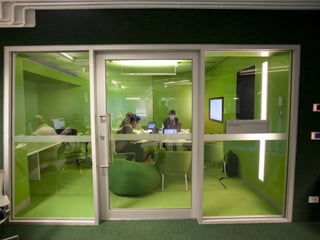
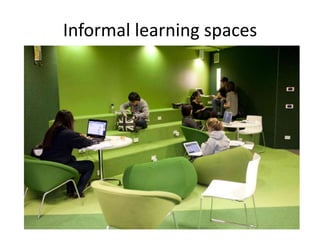
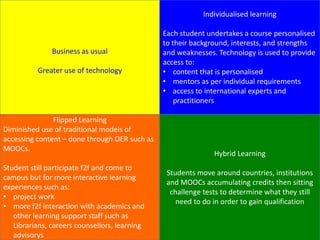
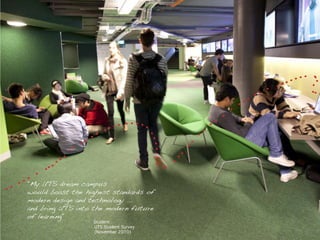
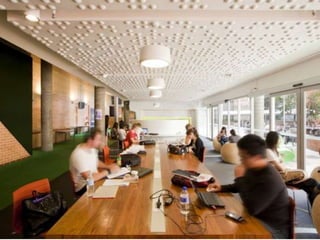
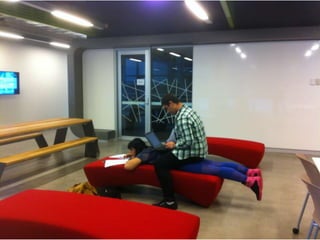
New learning spaces designed for:

•   Interaction and inquiry
•   Collaboration and project work
•   Flexibility
•   Using technology to
    engage, communicate, imagine, create, critiqu
    e, discuss, question …
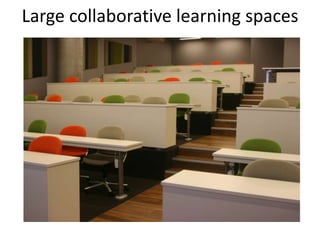
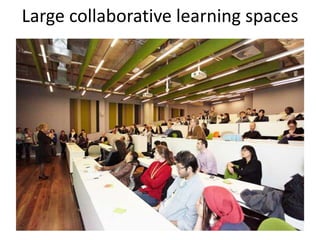
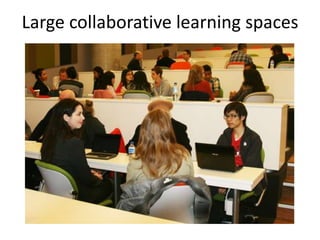
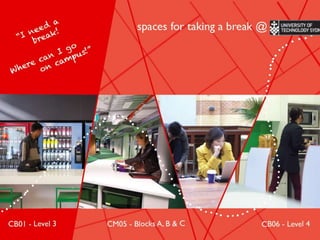
Large collaborative learning spaces
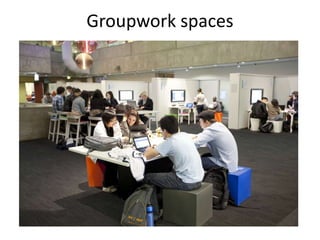
Groupwork spaces
Informal learning spaces
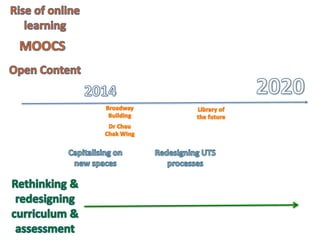
Learning2014
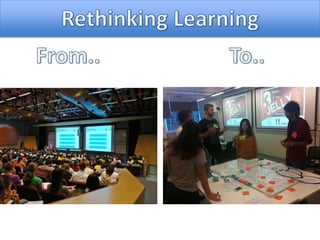
An initiative encouraging staff to:

• Explore interactive and collaborative
  approaches to learning
• Rethink the relevance of different teaching
  approaches in their disciplines
• Respond to new opportunities and needs
Learning2014 Plan
• 2012
  – Familiarisation with technologies & spaces
     • Demonstrations, workshops, cases, resources
  – VC’s T&L grants
  – Future Teaching Fellows applications October
  – UTS T&L Forum – strand on Learning2014
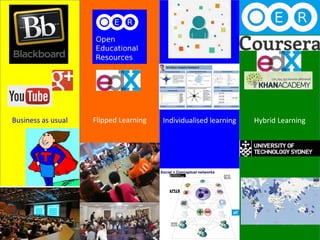
Business as usual   Flipped Learning   Individualised learning   Hybrid Learning
Individualised learning

                                               Each student undertakes a course personalised
                                               to their background, interests, and strengths
               Business as usual               and weaknesses. Technology is used to provide

                                               access to:
          Greater use of technology            • content that is personalised
                                               • mentors as per individual requirements
                                               • access to international experts and
                                                   practitioners

               Flipped Learning
Diminished use of traditional models of
accessing content – done through OER such as
MOOCs.
                                                              Hybrid Learning
Student still participate f2f and come to
                                                Students move around countries, institutions
campus but for more interactive learning
                                                and MOOCs accumulating credits then sitting
experiences such as:
                                                 challenge tests to determine what they still
• project work
                                                   need to do in order to gain qualification
• more f2f interaction with academics and
   other learning support staff such as
   Librarians, careers counsellors, learning
   advisorys
Sydney Institite TAFE

Sydney Institite TAFE

  • 1.
    Trends in onlineeducation and the UTS experience
  • 2.
  • 3.
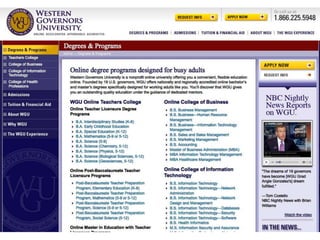
    Online enrolments at OpenUniversities Australia http://www.slideshare.net/kleinerperkins/kpcb-internet-trends-2012
  • 5.
    MOOCs • Learning isbased on openly available content and resources • Interactions are largely peer-to-peer • Assessments and grading are handled automatically • Learning is recognized, but not in traditional ways
  • 12.
    Demographics of MOOClearners • Machine Learning course • 50% were professionals who currently held jobs in the tech industry – 41% were professionals currently working in the software industry – 9 percent said they were professionals working in non-software areas of the computing and information technology industries.
  • 13.
    Demographics of MOOClearners • Many were already enrolled in some kind of traditional postsecondary education – ~ 20 percent were graduate students – 11.6 percent were undergraduates – 3.5 percent unemployed – 2.5 percent employed somewhere other than the tech industry – 1.0 percent enrolled in a K-12 school
  • 14.
    Why they choseto take the course • 39 percent were “just curious about the topic” • 30.5 percent wanted to “sharpen the skills” they use in their current job • 18 percent, said they wanted to “position themselves for a better job.”
  • 21.
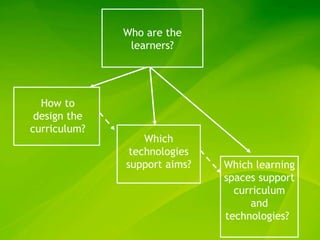
    Who are the learners? How to design the curriculum? Which technologies support aims? Which learning spaces support curriculum and technologies?
  • 22.
    1. An integratedexposure to The UTS professional practice through dynamic and multifaceted model of modes of practice-oriented education learning 2. Professional practice situated in a global workplace, with international mobility and international and cultural engagement as centre piece 3. Learning which is research- inspired and integrated, providing academic rigour with cutting edge technology to equip graduates for life-long learning
  • 24.
    Student current andpreferred involvement in course learning activities that use technologies Develop an e-portfolio Participate in virtual worlds Collaboration using web conferencing Collaboration using Facebook etc Collaboration using wikis Collaboration using documents Share using social AV media (YouTube, Flickr) Share using social bookmarking Use Twitter Preferred Develop and share blogs Current Design and build webpages Create and share AV Use discipline-specific software Use RSS feeds to subscribe to info Listen to student podcasts Join in remote webconference lectures Listen to lecturer podcasts/vodcasts Find info using earch engines Find info using library online resources 0 10 20 30 40 50 60 70 80 90 100 Current or preferred use: a few times a week, daily or more often
  • 25.
    Communication with otherstudents and teaching staff Face-to-face Blogs Virtual worlds Social networking eg Facebook, Twitter Mobile phone-voice Students-preferred Students-current Web conferencing eg Skype Teaching staff-preferred Teaching staff-current UTSOnline-discussion boards, mail Email SMS Instant messaging 0 10 20 30 40 50 60 70
  • 26.
    New learning spacesdesigned for: • Interaction and inquiry • Collaboration and project work • Flexibility • Using technology to engage, communicate, imagine, create, critiqu e, discuss, question …
  • 29.
  • 30.
  • 31.
  • 33.
  • 36.
  • 45.
    Learning2014 An initiative encouragingstaff to: • Explore interactive and collaborative approaches to learning • Rethink the relevance of different teaching approaches in their disciplines • Respond to new opportunities and needs
  • 46.
    Learning2014 Plan • 2012 – Familiarisation with technologies & spaces • Demonstrations, workshops, cases, resources – VC’s T&L grants – Future Teaching Fellows applications October – UTS T&L Forum – strand on Learning2014
  • 48.
    Business as usual Flipped Learning Individualised learning Hybrid Learning
  • 49.
    Individualised learning Each student undertakes a course personalised to their background, interests, and strengths Business as usual and weaknesses. Technology is used to provide access to: Greater use of technology • content that is personalised • mentors as per individual requirements • access to international experts and practitioners Flipped Learning Diminished use of traditional models of accessing content – done through OER such as MOOCs. Hybrid Learning Student still participate f2f and come to Students move around countries, institutions campus but for more interactive learning and MOOCs accumulating credits then sitting experiences such as: challenge tests to determine what they still • project work need to do in order to gain qualification • more f2f interaction with academics and other learning support staff such as Librarians, careers counsellors, learning advisorys

Editor's Notes

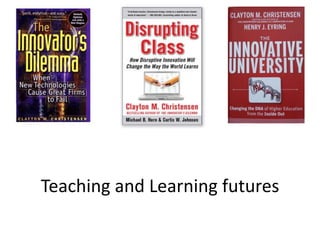
  • #3 Clayton Christenson’s book“The book’s core message is that fundamental change is coming to higher education.  We’re seeing the confluence of unsustainable cost increases in the traditional model and a disruptive technology, online learning, that makes it possible to serve many more students at high quality and affordable cost.  The result will be greater innovation than we’ve seen in higher education in more than a century.”
  • #6 Peer 2 Peer U and the Mozilla Foundation have been collaborating on the development of an ‘open badges’ architecture, a system that will allow any open education program to offer badges recognizing learning accomplishments. These badges will be displayable on personal Web pages and will link back to the sites that issued them and to the materials the learners developed in earning the badge. Winners of the recent Digital Media and Learning competition are currently developing a wide range of applications that will use the badges infrastructure.Many programs are experimenting with awarding non-credit certificates, a model used by many of the MOOCs.As learning takes place online, data that captures learner activity will increasingly be used as a proxy for learning.
  • #10 $16M venture Capital
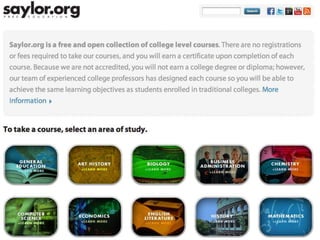
  • #19 http://www.saylor.org/
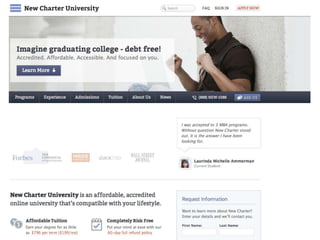
  • #21 Startups - Note cost of $800 per term AND accredited
  • #25 The question was ‘How often do you, and how often would you like to, engage in the following learning activities that use technologies as part of your course?’The responses represent students who checked ‘a few times a week’ or ‘daily or more often’Current use was lower than preferred use for every item except use of search engines, which is fully within students’ control. (I haven’t put the data through SPSS so am unsure whether all differences are significant.Biggest gaps between current and preferred use related to:listening to/watching podcasts/vodcasts made by lecturers RSS feeds to information relevant to your studiesusing webconferencing etc to join in remotely to lectures or tutorialsuse of discipline-specific softwareOne of the other questions asked ‘Use a tablet computer (egiPad) to access or contribute study-related information on the internet’ Only 5% of students currently do this, but 42% would like to!
  • #26 The responses represent students who checked ‘a few times a week’ or ‘daily or more often’Email, UTSOnline and face-to-face were the most popular current and preferred means of communicating with teaching staff.Methods of communicating with other students are more diverse. Email and F2F are still popular, but SMS comes in third followed by mobile phone calls and social networking sites like Facebook.
  • #28 2017