Personal Learning Management Systems:
Concept, Classification, Evaluation

F. Schanda, D. Dikke, N. Müller
information multimedia communication (imc) AG


                                         © www.role-project.eu
Agenda


1. PLMS: Basic Concepts

2. System Structure and Functionalities

3. Evaluation of the ROLE PLMS

4. Advantages and Potential Use

5. Future Development


21.06.2012                                © www.role-project.eu
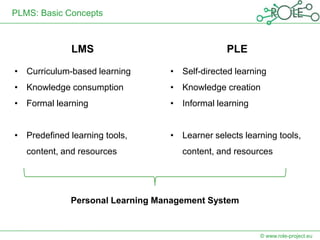
PLMS: Basic Concepts


              LMS                              PLE

• Curriculum-based learning      • Self-directed learning
• Knowledge consumption          • Knowledge creation
• Formal learning                • Informal learning


• Predefined learning tools,     • Learner selects learning tools,
   content, and resources           content, and resources


             Personal Learning Management System


                                                       © www.role-project.eu
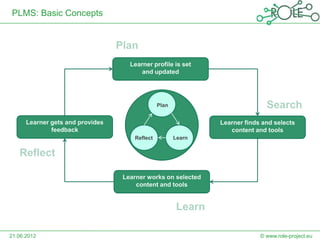
PLMS: Basic Concepts


                                    Learner profile is set
                                        and updated


                                               Plan


      Learner gets and provides                               Learner finds and selects
              feedback                                           content and tools
                                     Reflect          Learn


                                  Learner works on selected
                                      content and tools


21.06.2012                                                                 © www.role-project.eu
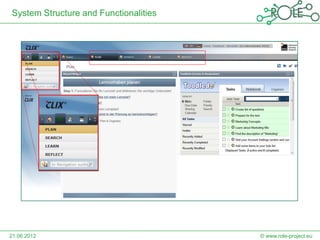
System Structure and Functionalities


21.06.2012                             © www.role-project.eu
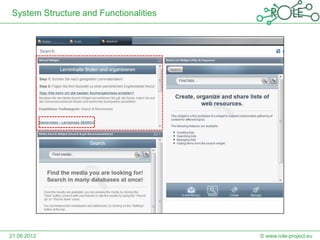
System Structure and Functionalities


21.06.2012                             © www.role-project.eu
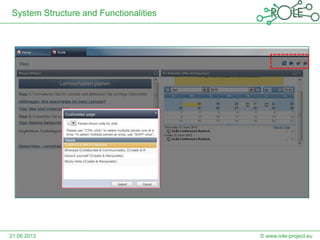
System Structure and Functionalities


21.06.2012                             © www.role-project.eu
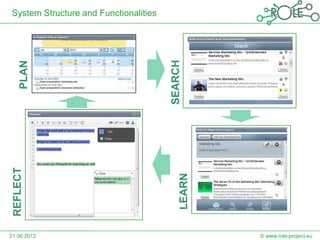
System Structure and Functionalities


                                       SEARCH
     PLAN
 REFLECT


                                           LEARN


21.06.2012                                         © www.role-project.eu
Evaluation of the ROLE PLMS


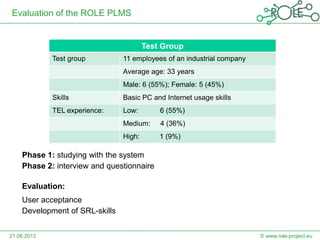
                                        Test Group
             Test group         11 employees of an industrial company
                                Average age: 33 years
                                Male: 6 (55%); Female: 5 (45%)
             Skills             Basic PC and Internet usage skills
             TEL experience:    Low:        6 (55%)
                                Medium:     4 (36%)
                                High:       1 (9%)

    Phase 1: studying with the system
    Phase 2: interview and questionnaire

    Evaluation:
    User acceptance
    Development of SRL-skills


21.06.2012                                                              © www.role-project.eu
Evaluation of the ROLE PLMS


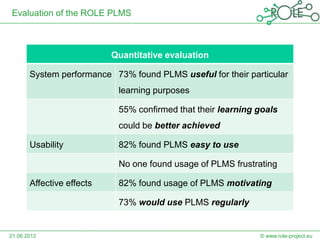
                           Quantitative evaluation

       System performance 73% found PLMS useful for their particular
                            learning purposes

                            55% confirmed that their learning goals
                            could be better achieved

       Usability            82% found PLMS easy to use

                            No one found usage of PLMS frustrating

       Affective effects    82% found usage of PLMS motivating

                            73% would use PLMS regularly


21.06.2012                                                    © www.role-project.eu
Evaluation of the ROLE PLMS


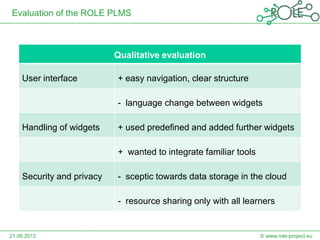
                           Qualitative evaluation

    User interface         + easy navigation, clear structure

                           - language change between widgets

    Handling of widgets    + used predefined and added further widgets

                           + wanted to integrate familiar tools

    Security and privacy   - sceptic towards data storage in the cloud

                           - resource sharing only with all learners


21.06.2012                                                        © www.role-project.eu
Advantages and Potential Use


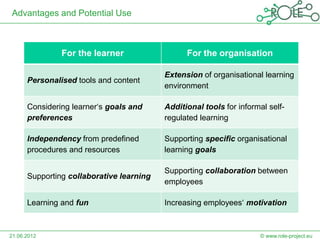
               For the learner                  For the organisation

                                          Extension of organisational learning
      Personalised tools and content
                                          environment

      Considering learner‘s goals and     Additional tools for informal self-
      preferences                         regulated learning

      Independency from predefined        Supporting specific organisational
      procedures and resources            learning goals

                                          Supporting collaboration between
      Supporting collaborative learning
                                          employees

      Learning and fun                    Increasing employees‘ motivation


21.06.2012                                                           © www.role-project.eu
Advantages and Potential Use


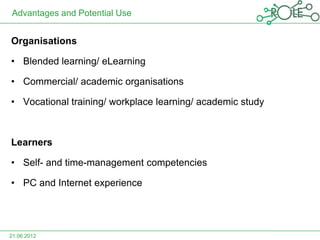
Organisations

• Blended learning/ eLearning

• Commercial/ academic organisations

• Vocational training/ workplace learning/ academic study


Learners

• Self- and time-management competencies

• PC and Internet experience


21.06.2012
Future Development


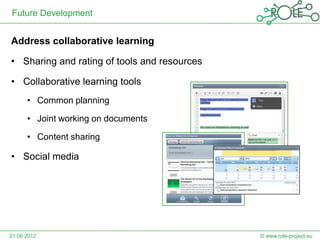
Address collaborative learning

• Sharing and rating of tools and resources

• Collaborative learning tools
      • Common planning

      • Joint working on documents

      • Content sharing

• Social media


21.06.2012                                    © www.role-project.eu
Summary


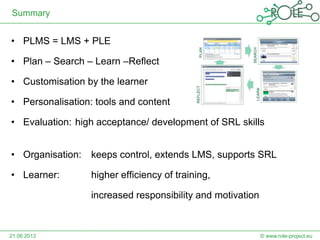
• PLMS = LMS + PLE

• Plan – Search – Learn –Reflect

• Customisation by the learner

• Personalisation: tools and content

• Evaluation: high acceptance/ development of SRL skills


• Organisation:   keeps control, extends LMS, supports SRL

• Learner:        higher efficiency of training,

                  increased responsibility and motivation


21.06.2012                                                  © www.role-project.eu
Thank you
             for your attention!


21.06.2012                         © www.role-project.eu

Personal Learning Management Systems: Concept, Classification, Evaluation

  • 1.
    Personal Learning ManagementSystems: Concept, Classification, Evaluation F. Schanda, D. Dikke, N. Müller information multimedia communication (imc) AG © www.role-project.eu
  • 2.
    Agenda 1. PLMS: BasicConcepts 2. System Structure and Functionalities 3. Evaluation of the ROLE PLMS 4. Advantages and Potential Use 5. Future Development 21.06.2012 © www.role-project.eu
  • 3.
    PLMS: Basic Concepts LMS PLE • Curriculum-based learning • Self-directed learning • Knowledge consumption • Knowledge creation • Formal learning • Informal learning • Predefined learning tools, • Learner selects learning tools, content, and resources content, and resources Personal Learning Management System © www.role-project.eu
  • 4.
    PLMS: Basic Concepts Learner profile is set and updated Plan Learner gets and provides Learner finds and selects feedback content and tools Reflect Learn Learner works on selected content and tools 21.06.2012 © www.role-project.eu
  • 5.
    System Structure andFunctionalities 21.06.2012 © www.role-project.eu
  • 6.
    System Structure andFunctionalities 21.06.2012 © www.role-project.eu
  • 7.
    System Structure andFunctionalities 21.06.2012 © www.role-project.eu
  • 8.
    System Structure andFunctionalities SEARCH PLAN REFLECT LEARN 21.06.2012 © www.role-project.eu
  • 9.
    Evaluation of theROLE PLMS Test Group Test group 11 employees of an industrial company Average age: 33 years Male: 6 (55%); Female: 5 (45%) Skills Basic PC and Internet usage skills TEL experience: Low: 6 (55%) Medium: 4 (36%) High: 1 (9%) Phase 1: studying with the system Phase 2: interview and questionnaire Evaluation: User acceptance Development of SRL-skills 21.06.2012 © www.role-project.eu
  • 10.
    Evaluation of theROLE PLMS Quantitative evaluation System performance 73% found PLMS useful for their particular learning purposes 55% confirmed that their learning goals could be better achieved Usability 82% found PLMS easy to use No one found usage of PLMS frustrating Affective effects 82% found usage of PLMS motivating 73% would use PLMS regularly 21.06.2012 © www.role-project.eu
  • 11.
    Evaluation of theROLE PLMS Qualitative evaluation User interface + easy navigation, clear structure - language change between widgets Handling of widgets + used predefined and added further widgets + wanted to integrate familiar tools Security and privacy - sceptic towards data storage in the cloud - resource sharing only with all learners 21.06.2012 © www.role-project.eu
  • 12.
    Advantages and PotentialUse For the learner For the organisation Extension of organisational learning Personalised tools and content environment Considering learner‘s goals and Additional tools for informal self- preferences regulated learning Independency from predefined Supporting specific organisational procedures and resources learning goals Supporting collaboration between Supporting collaborative learning employees Learning and fun Increasing employees‘ motivation 21.06.2012 © www.role-project.eu
  • 13.
    Advantages and PotentialUse Organisations • Blended learning/ eLearning • Commercial/ academic organisations • Vocational training/ workplace learning/ academic study Learners • Self- and time-management competencies • PC and Internet experience 21.06.2012
  • 14.
    Future Development Address collaborativelearning • Sharing and rating of tools and resources • Collaborative learning tools • Common planning • Joint working on documents • Content sharing • Social media 21.06.2012 © www.role-project.eu
  • 15.
    Summary • PLMS =LMS + PLE • Plan – Search – Learn –Reflect • Customisation by the learner • Personalisation: tools and content • Evaluation: high acceptance/ development of SRL skills • Organisation: keeps control, extends LMS, supports SRL • Learner: higher efficiency of training, increased responsibility and motivation 21.06.2012 © www.role-project.eu
  • 16.
    Thank you for your attention! 21.06.2012 © www.role-project.eu