Nutrigenomics of FAT: What is “good” or “bad” for human health?Michael MüllerNetherlands Nutrigenomics Centre& Nutrition, Metabolism and Genomics GroupDivision of Human Nutrition, Wageningen University
2 Meals a day, work as long as possible & embrace challengeWalter Breuning (1896 - 2011)
We have a tsunami of health problems
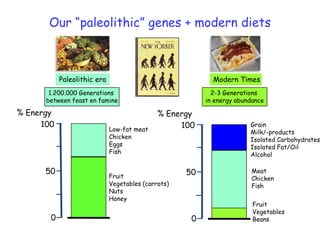
Our “paleolithic” genes + modern dietsPaleolithic eraModern Times1.200.000 Generations between feast en famine2-3 Generations in energy abundance% Energy% Energy100100GrainMilk/-productsIsolated CarbohydratesIsolated Fat/OilAlcoholLow-fat meatChickenEggsFish50MeatChickenFish50FruitVegetables (carrots)NutsHoneyFruitVegetablesBeans00
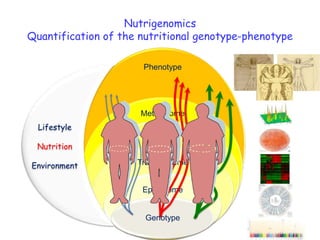
Nutrigenomics Quantification of the nutritional genotype-phenotype LifestyleNutritionEnvironment
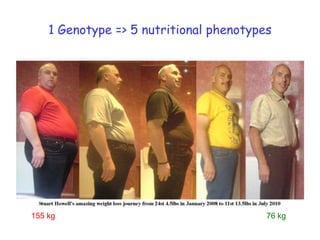
1 Genotype => 5 nutritional phenotypes155 kg76 kg
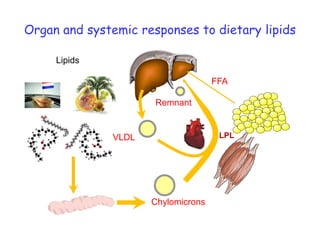
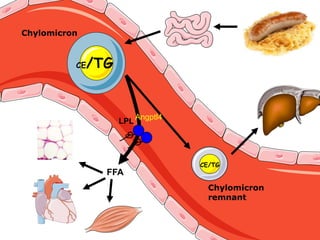
LipidsFFARemnantLPLVLDLChylomicronsOrgan and systemic responses to dietary lipids
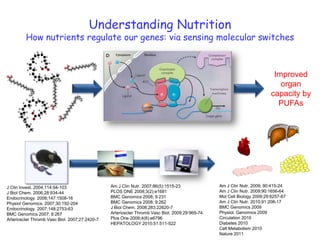
Understanding NutritionHow nutrients regulate our genes: via sensing molecular switchesImproved organcapacity by PUFAsAm J ClinNutr. 2009; 90:415-24Am J ClinNutr. 2009;90:1656-64Mol CellBiology2009;29:6257-67Am J ClinNutr. 2010;91:208-17BMC Genomics2009Physiol. Genomics2009Circulation 2010Diabetes 2010Cell Metabolism 2010Nature 2011Am J Clin Nutr. 2007;86(5):1515-23PLOS ONE 2008;3(2):e1681 BMC Genomics 2008; 9:231BMC Genomics 2008; 9:262J Biol Chem. 2008;283:22620-7Arterioscler Thromb Vasc Biol. 2009;29:969-74.Plos One 2009;4(8):e6796HEPATOLOGY 2010;51:511-522J Clin Invest. 2004;114:94-103J Biol Chem. 2006;28:934-44 Endocrinology. 2006;147:1508-16Physiol Genomics. 2007;30:192-204Endocrinology. 2007;148:2753-63 BMC Genomics 2007; 8:267 Arterioscler Thromb Vasc Biol. 2007;27:2420-7
ChylomicronCE/TGAngptl4LPLCE/TGFFAChylomicron remnant
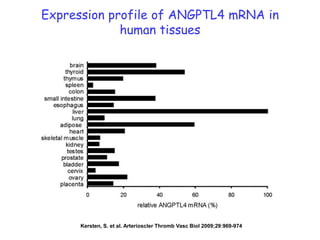
Kersten, S. et al. ArteriosclerThrombVascBiol 2009;29:969-974Expression profile of ANGPTL4 mRNA in human tissues
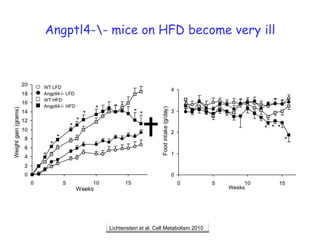
Angptl4-\- mice on HFD become very illLichtenstein et al. Cell Metabolism 2010
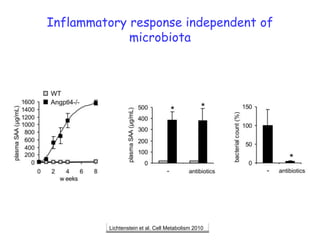
Inflammatory response independent of microbiotaLichtenstein et al. Cell Metabolism 2010
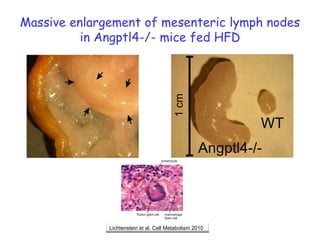
Massive enlargement of mesenteric lymph nodes in Angptl4-/- mice fed HFDLichtenstein et al. Cell Metabolism 2010
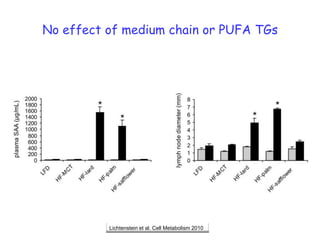
No effect of medium chain or PUFA TGsLichtenstein et al. Cell Metabolism 2010
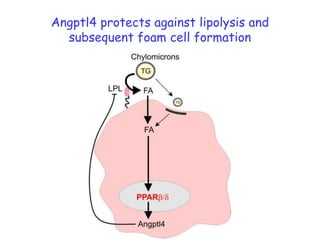
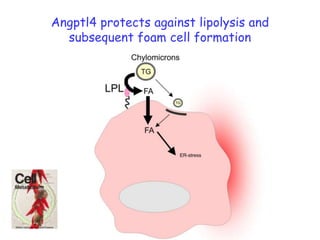
Angptl4 protects against lipolysis and subsequent foam cell formation
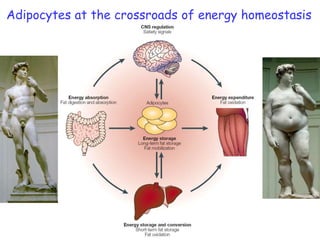
Adipocytes at the crossroads of energy homeostasis
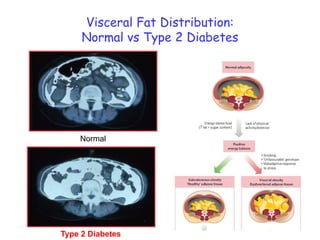
NormalType 2 DiabetesVisceral Fat Distribution:Normal vs Type 2 Diabetes
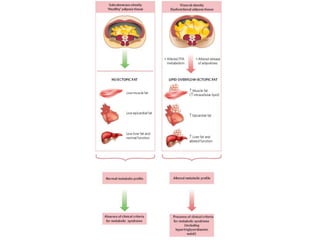
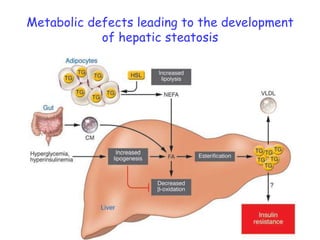
Metabolic defects leading to the development of hepatic steatosis
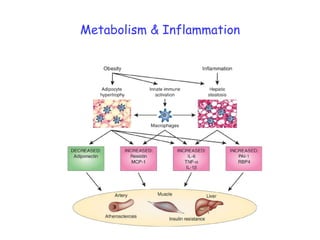
Metabolism & Inflammation
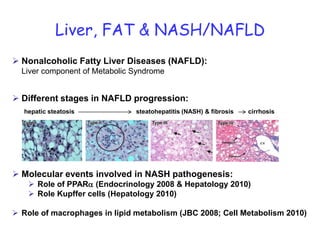
Liver, FAT & NASH/NAFLDNonalcoholic Fatty Liver Diseases (NAFLD):Liver component of Metabolic Syndrome
Different stages in NAFLD progression:
Molecular events involved in NASH pathogenesis:
Role of PPARa (Endocrinology 2008 & Hepatology 2010)
Role Kupffer cells (Hepatology 2010)
Role of macrophages in lipid metabolism (JBC 2008; Cell Metabolism 2010)hepatic steatosis 		              steatohepatitis (NASH) & fibrosis	cirrhosis
Interaction between WAT and liver tissue essential for NASH/NAFLD in C57Bl/6 miceObjective: Nonalcoholic fatty liver disease (NAFLD) is strongly linked to obesity and diabetes, suggesting an important role of adipose tissue in the pathogenesis of NAFLD. Here we aimed to investigate the interaction between adipose tissue and liver in NAFLD, and identify potential early plasma markers that predict NASH.
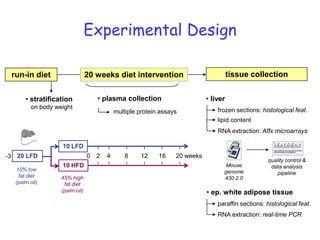
Experimental Designtissue collectionrun-in diet20 weeks diet interventionplasma collectionmultiple proteinassaysliver
stratification on body weightfrozen sections: histological feat.lipid contentRNA extraction:Affx microarrays10 LFD0248121620 weeks20 LFD-3quality control & data analysis pipeline10 HFDMouse  genome 430 2.010% low fat diet (palm oil)45% high fat diet (palm oil)ep. white adipose tissueparaffin sections: histological feat.RNA extraction: real-time PCR
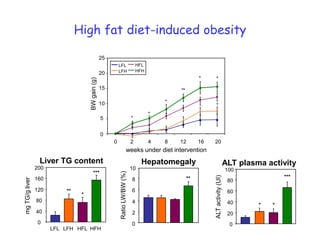
High fat diet-induced obesity0248121620HFLLFLHFHLFH2520**15**BW gain (g)*10****50weeks under diet interventionLiver TG contentHepatomegalyALT plasma activity20010100********160880**120660*Ratio LW/BW (%)mg TG/g liverALT activity (UI)80440**40220000LFLLFHHFLHFH
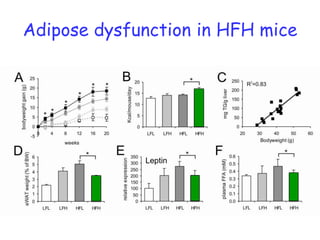
Adipose dysfunction in HFH miceLeptin
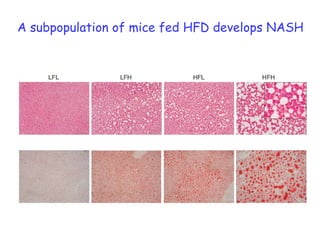
A subpopulation of mice fed HFD develops NASH
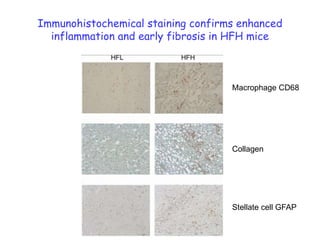
Immunohistochemicalstaining confirms enhanced inflammation and early fibrosis in HFH miceMacrophage CD68CollagenStellate cell GFAP
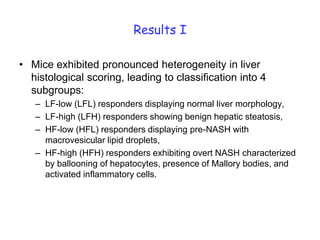
Results IMice exhibited pronounced heterogeneity in liver histological scoring, leading to classification into 4 subgroups: LF-low (LFL) responders displaying normal liver morphology, LF-high (LFH) responders showing benign hepatic steatosis, HF-low (HFL) responders displaying pre-NASH with macrovesicular lipid droplets, HF-high (HFH) responders exhibiting overt NASH characterized by ballooning of hepatocytes, presence of Mallory bodies, and activated inflammatory cells.
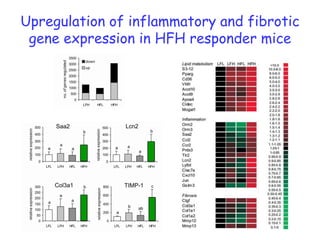
Upregulation of inflammatory and fibrotic gene expression in HFH responder mice
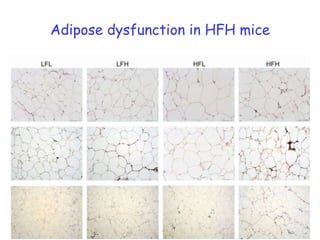
Adipose dysfunction in HFH mice
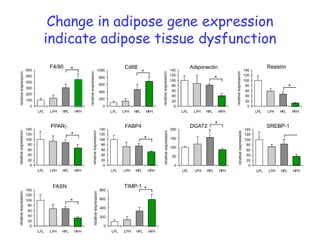
Change in adipose gene expression indicate adipose tissue dysfunction
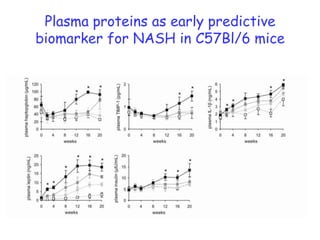
Plasma proteins as early predictive biomarker for NASH in C57Bl/6 mice
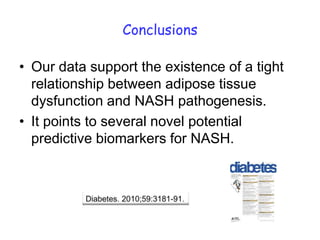
ConclusionsOur data support the existence of a tight relationship between adipose tissue dysfunction and NASH pathogenesis.It points to several novel potential predictive biomarkers for NASH.Diabetes. 2010;59:3181-91.

Nutrigenomics of FAT

  • 1.
    Nutrigenomics of FAT:What is “good” or “bad” for human health?Michael MüllerNetherlands Nutrigenomics Centre& Nutrition, Metabolism and Genomics GroupDivision of Human Nutrition, Wageningen University
  • 2.
    2 Meals aday, work as long as possible & embrace challengeWalter Breuning (1896 - 2011)
  • 3.
    We have atsunami of health problems
  • 4.
    Our “paleolithic” genes+ modern dietsPaleolithic eraModern Times1.200.000 Generations between feast en famine2-3 Generations in energy abundance% Energy% Energy100100GrainMilk/-productsIsolated CarbohydratesIsolated Fat/OilAlcoholLow-fat meatChickenEggsFish50MeatChickenFish50FruitVegetables (carrots)NutsHoneyFruitVegetablesBeans00
  • 5.
    Nutrigenomics Quantification ofthe nutritional genotype-phenotype LifestyleNutritionEnvironment
  • 6.
    1 Genotype =>5 nutritional phenotypes155 kg76 kg
  • 7.
  • 8.
    Understanding NutritionHow nutrientsregulate our genes: via sensing molecular switchesImproved organcapacity by PUFAsAm J ClinNutr. 2009; 90:415-24Am J ClinNutr. 2009;90:1656-64Mol CellBiology2009;29:6257-67Am J ClinNutr. 2010;91:208-17BMC Genomics2009Physiol. Genomics2009Circulation 2010Diabetes 2010Cell Metabolism 2010Nature 2011Am J Clin Nutr. 2007;86(5):1515-23PLOS ONE 2008;3(2):e1681 BMC Genomics 2008; 9:231BMC Genomics 2008; 9:262J Biol Chem. 2008;283:22620-7Arterioscler Thromb Vasc Biol. 2009;29:969-74.Plos One 2009;4(8):e6796HEPATOLOGY 2010;51:511-522J Clin Invest. 2004;114:94-103J Biol Chem. 2006;28:934-44 Endocrinology. 2006;147:1508-16Physiol Genomics. 2007;30:192-204Endocrinology. 2007;148:2753-63 BMC Genomics 2007; 8:267 Arterioscler Thromb Vasc Biol. 2007;27:2420-7
  • 9.
  • 10.
    Kersten, S. etal. ArteriosclerThrombVascBiol 2009;29:969-974Expression profile of ANGPTL4 mRNA in human tissues
  • 11.
    Angptl4-\- mice onHFD become very illLichtenstein et al. Cell Metabolism 2010
  • 12.
    Inflammatory response independentof microbiotaLichtenstein et al. Cell Metabolism 2010
  • 13.
    Massive enlargement ofmesenteric lymph nodes in Angptl4-/- mice fed HFDLichtenstein et al. Cell Metabolism 2010
  • 14.
    No effect ofmedium chain or PUFA TGsLichtenstein et al. Cell Metabolism 2010
  • 15.
    Angptl4 protects againstlipolysis and subsequent foam cell formation
  • 16.
    Angptl4 protects againstlipolysis and subsequent foam cell formation
  • 17.
    Adipocytes at thecrossroads of energy homeostasis
  • 18.
    NormalType 2 DiabetesVisceralFat Distribution:Normal vs Type 2 Diabetes
  • 20.
    Metabolic defects leadingto the development of hepatic steatosis
  • 21.
  • 22.
    Liver, FAT &NASH/NAFLDNonalcoholic Fatty Liver Diseases (NAFLD):Liver component of Metabolic Syndrome
  • 23.
    Different stages inNAFLD progression:
  • 24.
    Molecular events involvedin NASH pathogenesis:
  • 25.
    Role of PPARa(Endocrinology 2008 & Hepatology 2010)
  • 26.
    Role Kupffer cells(Hepatology 2010)
  • 27.
    Role of macrophagesin lipid metabolism (JBC 2008; Cell Metabolism 2010)hepatic steatosis steatohepatitis (NASH) & fibrosis cirrhosis
  • 28.
    Interaction between WATand liver tissue essential for NASH/NAFLD in C57Bl/6 miceObjective: Nonalcoholic fatty liver disease (NAFLD) is strongly linked to obesity and diabetes, suggesting an important role of adipose tissue in the pathogenesis of NAFLD. Here we aimed to investigate the interaction between adipose tissue and liver in NAFLD, and identify potential early plasma markers that predict NASH.
  • 29.
    Experimental Designtissue collectionrun-indiet20 weeks diet interventionplasma collectionmultiple proteinassaysliver
  • 30.
    stratification on bodyweightfrozen sections: histological feat.lipid contentRNA extraction:Affx microarrays10 LFD0248121620 weeks20 LFD-3quality control & data analysis pipeline10 HFDMouse genome 430 2.010% low fat diet (palm oil)45% high fat diet (palm oil)ep. white adipose tissueparaffin sections: histological feat.RNA extraction: real-time PCR
  • 31.
    High fat diet-inducedobesity0248121620HFLLFLHFHLFH2520**15**BW gain (g)*10****50weeks under diet interventionLiver TG contentHepatomegalyALT plasma activity20010100********160880**120660*Ratio LW/BW (%)mg TG/g liverALT activity (UI)80440**40220000LFLLFHHFLHFH
  • 32.
  • 33.
    A subpopulation ofmice fed HFD develops NASH
  • 34.
    Immunohistochemicalstaining confirms enhancedinflammation and early fibrosis in HFH miceMacrophage CD68CollagenStellate cell GFAP
  • 35.
    Results IMice exhibitedpronounced heterogeneity in liver histological scoring, leading to classification into 4 subgroups: LF-low (LFL) responders displaying normal liver morphology, LF-high (LFH) responders showing benign hepatic steatosis, HF-low (HFL) responders displaying pre-NASH with macrovesicular lipid droplets, HF-high (HFH) responders exhibiting overt NASH characterized by ballooning of hepatocytes, presence of Mallory bodies, and activated inflammatory cells.
  • 36.
    Upregulation of inflammatoryand fibrotic gene expression in HFH responder mice
  • 37.
  • 38.
    Change in adiposegene expression indicate adipose tissue dysfunction
  • 39.
    Plasma proteins asearly predictive biomarker for NASH in C57Bl/6 mice
  • 40.
    ConclusionsOur data supportthe existence of a tight relationship between adipose tissue dysfunction and NASH pathogenesis.It points to several novel potential predictive biomarkers for NASH.Diabetes. 2010;59:3181-91.

Editor's Notes

  • #22 Inflammation has been associated with many disease phenotypes including steatohepatitis or diabetes. This relationship is in particular when inflammation is chronic or non-resolving. There is an interaction between metabolism and inflammation with positive or negative consequences with respect to organ and systemic health.In my talk I will briefly discuss two unpublished studies, one investigating the important interaction of WAT and liver in particular under conditions of diet-induced obesity. Organ-specific macrophages in WAT and liver play an crucial role in progressing organ-specific inflammatory phenotypes. In the second study we found very interesting interaction between dietary fat and macrophages in mesenteric lymph nodes that are exposed postprandially to very high concentrations of chylomicrons. We used a k.o. mouse for ANGPTL4 and could show that chronic consumption of saturated fat can be deadly.
  • #27 A) Bodyweight changes in the 4 subgroups during the 21 week dietary intervention. White squares: LFL, Light grey squares: LFH, dark grey squares: HFL, black squares: HFH. B) Mean daily energy intake. C) Positive correlation between final bodyweight and liver triglyceride concentration (P<0.05). D) Weight of epididymal fat depot. E) Adipose tissue leptin mRNA expression as determined by qPCR. Mean expression in LFL mice was set at 100%. F) Plasma free fatty acid levels. Error bars reflect standard deviation. * = significantly different from HFL mice according to Student’s t-test (P<0.05). Number of mice per group: n=4 (LFL, HFL, HFH), n=6 (LFH).
  • #28 A subpopulation of mice fed HFD develops NASH. Haematoxylin and eosin staining (D) and oil red O staining (E) of representative liver sections of the 4 subgroups
  • #29  (Immuno)histochemical staining confirms enhanced inflammation and early fibrosis in HFH miceImmunohistochemical staining of macrophage activation in representative liver section of HFL and HFH mice using antibody against the specific macrophagemarker Cd68Collagen staining using fast green FCF/sirius red F3B. Staining of stellate cell activation using antibody against GFAP.
  • #31 - Number of genes up- or down-regulated in the various subgroups in comparison to the LFL mice, as determined by Affymetrix GeneChip analysis. Genes with a p-value below 0.05 were considered significantly regulated. - Heat map showing changes in expression of selected genes involved in lipid metabolism, inflammation and fibrosis in liver. Changes in gene expression of selected genes as determined by real-time quantitative PCR. Mean expression in LFL mice was set at 100%. Error bars reflect standard deviation. Bars with different letters are statistically different (P<0.05 according to Student’s t-test). Number of mice per group: n=4 (LFL, HFL, HFH), n=6 (LFH).
  • #32 Haematoxylin and eosin staining of representative adipose tissue sections. Immunohistochemical staining of macrophages using antibody against Cd68. Collagen staining using fast green FCF/sirius red F3B.
  • #33 Adipose tissue mRNA expression of a selected group of genes was determined by quantitative real-time PCR after 21 weeks of dietary intervention. Mean expression in LFL mice was set at 100%. Error bars reflect standard deviation. * = significantly different from HFL mice according to Student’s t-test (P<0.05). Number of mice per group: n=4 (LFL, HFL, HFH), n=6 (LFH).
  • #34 . A) Plasma concentration of haptoglobin, TIMP-1, IL-1β, leptin and insulin were determined by multiplex assay at specific time points during the 21 weeks of dietary intervention after a 6h fast. White squares: LFL, Light grey squares: LFH, dark grey squares: HFL, black squares: HFH. Error bars reflect standard deviation. * = significantly different from HFL mice according to Student’s t-test (P<0.05). Number of mice per group: n=4 (LFL, HFL, HFH), n=6 (LFH).