INNATE 
IMMUNITY 
Presented By: 
Preety Sweta Hembrom 
Subject- Immunology 
M.Sc. Genomic Science 
Central University Of Kerala
IMMUNE SYSTEM 
 The immune system is a system of biological 
structures and processes within an organism and 
protects against attacks by foreign invaders. 
 These invaders are primarily microbes. 
 The human body provides an ideal environment 
for many microbes.
IMMUNITY: 
 Immunity is the state of having sufficient 
biological defenses to avoid infection, diseases or 
other unwanted biological invasion. 
 It is the capability of the body to resist 
harmful microbes from entering it. 
 Immunity involves both specific and non-specific 
components.
CONTD… 
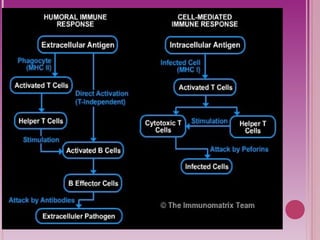
 The mechanism of immunity can be achieved by 
two types of immune response: 
1. Cell- mediated immune response 
2. Humoral immune response
COMPONENTS OF IMMUNITY: 
 Contains two major components: 
1. Innate Immunity (Non-specific) 
2. Adaptive Immunity (Specific)
Innate ImmunIty
INNATE IMMUNITY: 
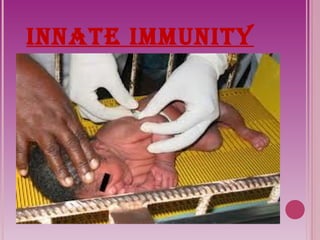
 The innate immune system, also known 
as non-specific immune system. 
 Innate immune systems provide immediate 
defense against infection, and are found in all 
classes of plant and animal life.
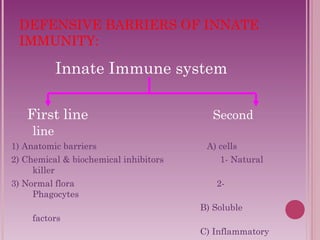
DEFENSIVE BARRIERS OF INNATE 
IMMUNITY: 
Innate Immune system 
First line Second 
line 
1) Anatomic barriers A) cells 
2) Chemical & biochemical inhibitors 1- Natural 
killer 
3) Normal flora 2- 
Phagocytes 
B) Soluble 
factors 
C) Inflammatory
FIRST LINE: 
1) Anatomic barriers: 
 Intact skin 
 Mucous coat 
 Mucous secretion 
 Blinking reflex and tears 
 The hair at the nares 
 Coughing and sneezing reflex
CONTD: 
2) Chemical & biochemical inhibitors 
 Sweat and sebaceous secretion 
 Hydrolytic enzymes in saliva 
 HCl of the stomach 
 Proteolytic enzyme in small intestine 
 Lysozyme in tears 
 Acidic pH in the adult vagina
CONTD: 
3) Normal bacterial flora: 
 Competition for essential nutrients 
 Production of inhibitory substances
SECOND LINE: 
1. CELLS: 
a) Natural Killer Cells (NK): 
 Effectors of innate immunity 
 Cytotoxic lymphocyte 
 Differentiate and mature in the bone 
marrow, lymph node, spleen, tonsils and 
thymus.
FUNCTIONS: 
 Cytolytic Granule Mediated Cell Apoptosis. 
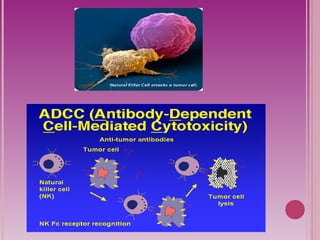
 Antibody-Dependent Cell-Mediated Cytotoxicity 
(ADCC). 
 Cytokine induced NK and CTL activation 
 Tumor cell surveillance
Immune System - Natural Killer Cell.mp4
CONTD: 
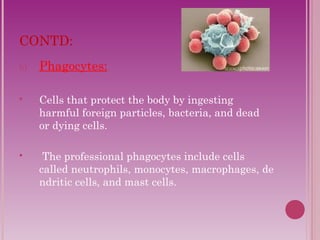
b) Phagocytes: 
 Cells that protect the body by ingesting 
harmful foreign particles, bacteria, and dead 
or dying cells. 
 The professional phagocytes include cells 
called neutrophils, monocytes, macrophages, de 
ndritic cells, and mast cells.
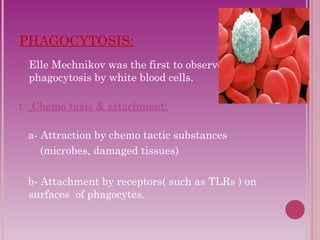
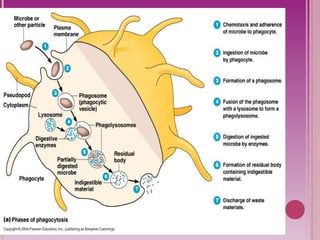
PHAGOCYTOSIS: 
 Elle Mechnikov was the first to observe 
phagocytosis by white blood cells. 
I. Chemo taxis & attachment: 
a- Attraction by chemo tactic substances 
(microbes, damaged tissues) 
b- Attachment by receptors( such as TLRs ) on 
surfaces of phagocytes.
CONTD: 
II. Ingestion: 
* Phagocyte pseudopodia surround 
organism forming phagosome. 
* Opsonin and co-factors enhance 
phagocytosis. 
* Fusion with phagocyte granules and release 
digestive, toxic contents
CONTD: 
III. Killing : 
 Digestion and killing by Lysozyme.
2. SOLUBLE FACTORS: 
 Acute phase protein (Plasma protein, CRP=C 
reactive protein, Fibrin.) 
 Complement (proteins in serum, body fluids) 
 Interferon (Proteins against viral infections) 
 Properdin (Complement activation) 
 Lactoferrrin, Transferrin (Iron binding 
protein) 
 Lactoperoxidase (Saliva & Milk) 
 Lysozyme (Hydrolyze cell wall)
3. INFLAMMATORY BARRIERS: 
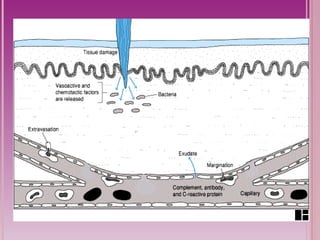
 Tissue damage caused by a wound or by an 
invading pathogenic microorganism induces a 
complex sequence of events collectively known as 
Inflammatory response. 
 Inflammation is stimulated by chemical factors 
released by injured cells and serves to establish a 
physical barrier against the spread of infection, 
and to promote healing of any damaged tissue 
following the clearance of pathogens. 
 Chemical factors produced during inflammation 
are 
histamine, bradykinin, serotonin, leukotrienes, 
and prostaglandins.
The Inflammatory Response.mp4
Innate immunity

Innate immunity

  • 1.
    INNATE IMMUNITY PresentedBy: Preety Sweta Hembrom Subject- Immunology M.Sc. Genomic Science Central University Of Kerala
  • 2.
    IMMUNE SYSTEM The immune system is a system of biological structures and processes within an organism and protects against attacks by foreign invaders.  These invaders are primarily microbes.  The human body provides an ideal environment for many microbes.
  • 3.
    IMMUNITY:  Immunityis the state of having sufficient biological defenses to avoid infection, diseases or other unwanted biological invasion.  It is the capability of the body to resist harmful microbes from entering it.  Immunity involves both specific and non-specific components.
  • 4.
    CONTD…  Themechanism of immunity can be achieved by two types of immune response: 1. Cell- mediated immune response 2. Humoral immune response
  • 6.
    COMPONENTS OF IMMUNITY:  Contains two major components: 1. Innate Immunity (Non-specific) 2. Adaptive Immunity (Specific)
  • 7.
  • 8.
    INNATE IMMUNITY: The innate immune system, also known as non-specific immune system.  Innate immune systems provide immediate defense against infection, and are found in all classes of plant and animal life.
  • 9.
    DEFENSIVE BARRIERS OFINNATE IMMUNITY: Innate Immune system First line Second line 1) Anatomic barriers A) cells 2) Chemical & biochemical inhibitors 1- Natural killer 3) Normal flora 2- Phagocytes B) Soluble factors C) Inflammatory
  • 10.
    FIRST LINE: 1)Anatomic barriers:  Intact skin  Mucous coat  Mucous secretion  Blinking reflex and tears  The hair at the nares  Coughing and sneezing reflex
  • 11.
    CONTD: 2) Chemical& biochemical inhibitors  Sweat and sebaceous secretion  Hydrolytic enzymes in saliva  HCl of the stomach  Proteolytic enzyme in small intestine  Lysozyme in tears  Acidic pH in the adult vagina
  • 12.
    CONTD: 3) Normalbacterial flora:  Competition for essential nutrients  Production of inhibitory substances
  • 13.
    SECOND LINE: 1.CELLS: a) Natural Killer Cells (NK):  Effectors of innate immunity  Cytotoxic lymphocyte  Differentiate and mature in the bone marrow, lymph node, spleen, tonsils and thymus.
  • 14.
    FUNCTIONS:  CytolyticGranule Mediated Cell Apoptosis.  Antibody-Dependent Cell-Mediated Cytotoxicity (ADCC).  Cytokine induced NK and CTL activation  Tumor cell surveillance
  • 16.
    Immune System -Natural Killer Cell.mp4
  • 17.
    CONTD: b) Phagocytes:  Cells that protect the body by ingesting harmful foreign particles, bacteria, and dead or dying cells.  The professional phagocytes include cells called neutrophils, monocytes, macrophages, de ndritic cells, and mast cells.
  • 18.
    PHAGOCYTOSIS:  ElleMechnikov was the first to observe phagocytosis by white blood cells. I. Chemo taxis & attachment: a- Attraction by chemo tactic substances (microbes, damaged tissues) b- Attachment by receptors( such as TLRs ) on surfaces of phagocytes.
  • 19.
    CONTD: II. Ingestion: * Phagocyte pseudopodia surround organism forming phagosome. * Opsonin and co-factors enhance phagocytosis. * Fusion with phagocyte granules and release digestive, toxic contents
  • 20.
    CONTD: III. Killing:  Digestion and killing by Lysozyme.
  • 22.
    2. SOLUBLE FACTORS:  Acute phase protein (Plasma protein, CRP=C reactive protein, Fibrin.)  Complement (proteins in serum, body fluids)  Interferon (Proteins against viral infections)  Properdin (Complement activation)  Lactoferrrin, Transferrin (Iron binding protein)  Lactoperoxidase (Saliva & Milk)  Lysozyme (Hydrolyze cell wall)
  • 23.
    3. INFLAMMATORY BARRIERS:  Tissue damage caused by a wound or by an invading pathogenic microorganism induces a complex sequence of events collectively known as Inflammatory response.  Inflammation is stimulated by chemical factors released by injured cells and serves to establish a physical barrier against the spread of infection, and to promote healing of any damaged tissue following the clearance of pathogens.  Chemical factors produced during inflammation are histamine, bradykinin, serotonin, leukotrienes, and prostaglandins.
  • 25.