18 RA 45
ELECTRICAL DRIVES & CONTROL
Dr. G. Ezhilarasan, Professor, EEE
UNIT 2: AC MOTOR FOR DRIVES
Types of AC Motors
• INDUCTION MOTORS
 Squirrel Cage
 Slip Ring or Wound Rotor
 Single Phase
 Three Phase
• SYNCHRONOUS MOTORS
https://www.youtube.com/watch?v=AQqyGNOP_3o
AC MOTOR BASICS
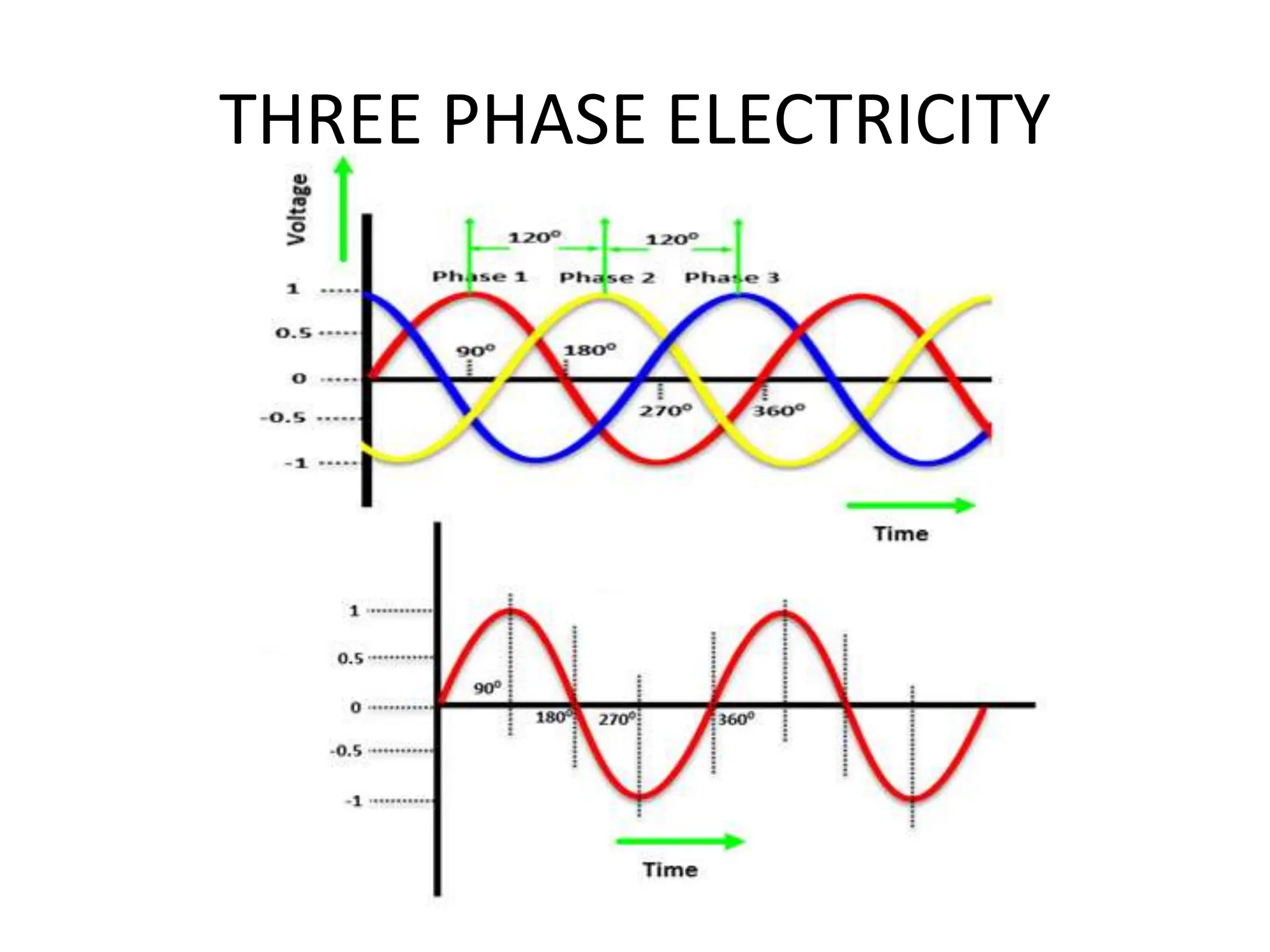
• THREE PHASE ELECTRICITY
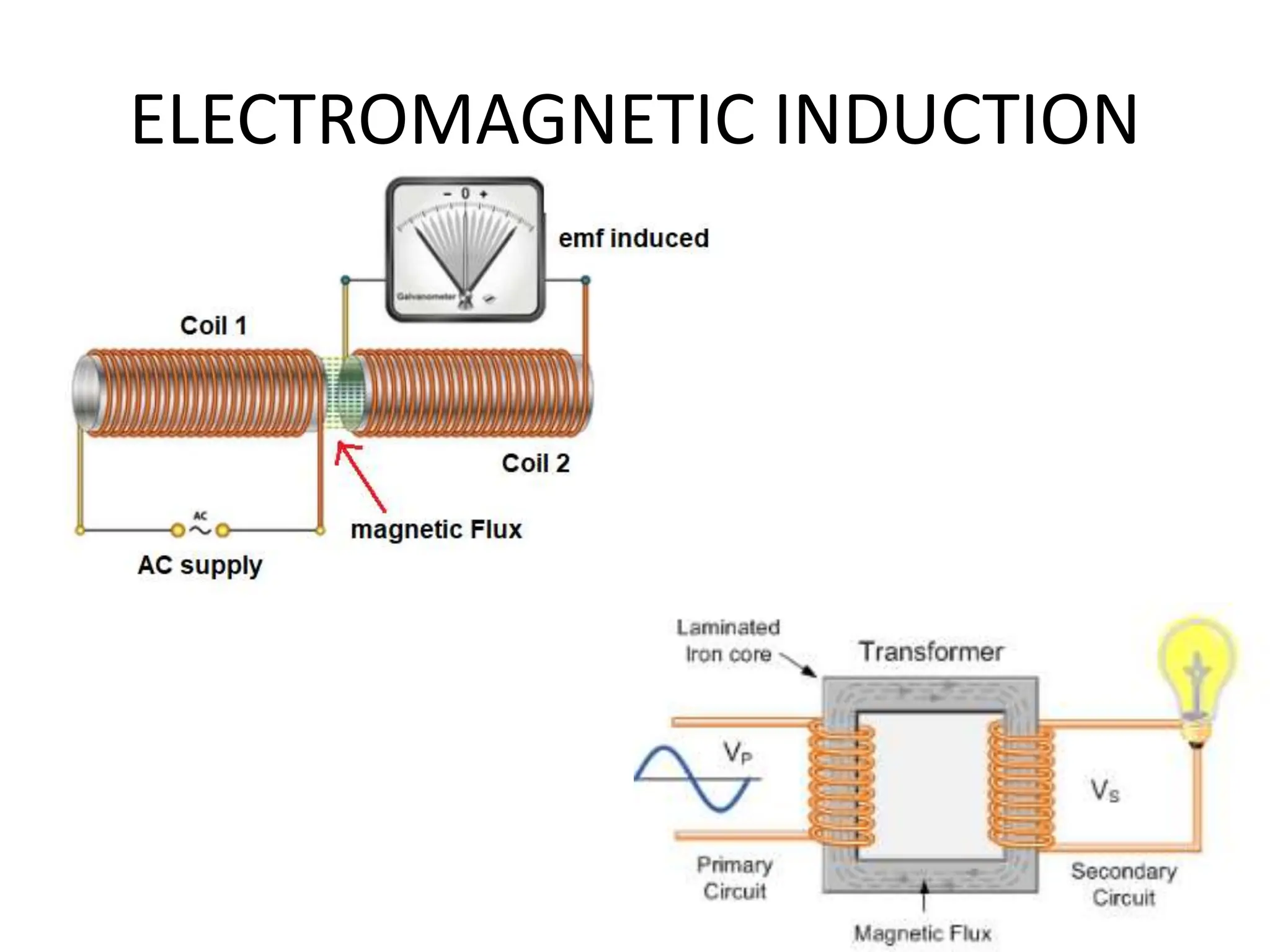
• ELECTROMAGNETIC INDUCTION
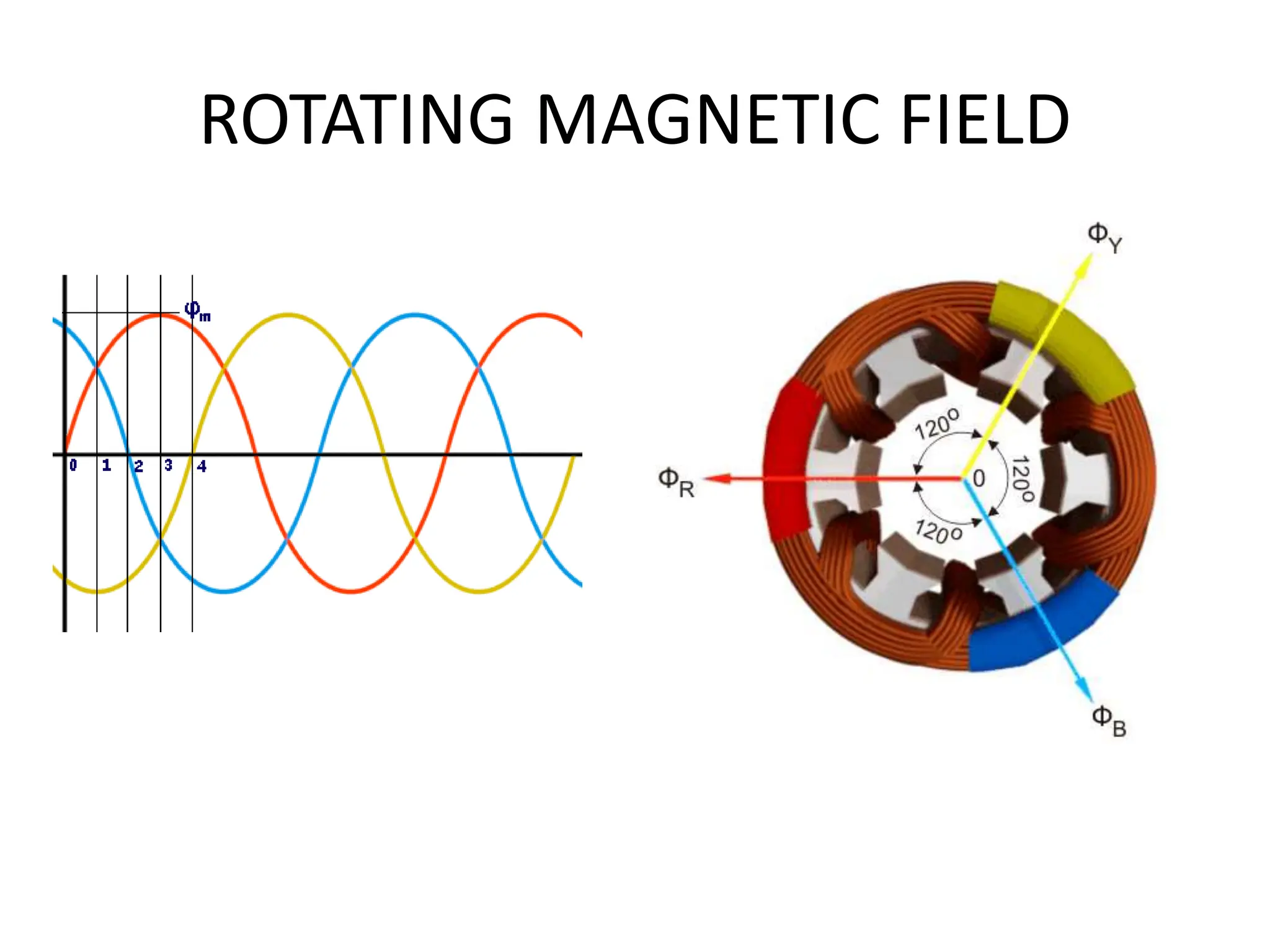
• ROTATING MAGNETIC FIELD
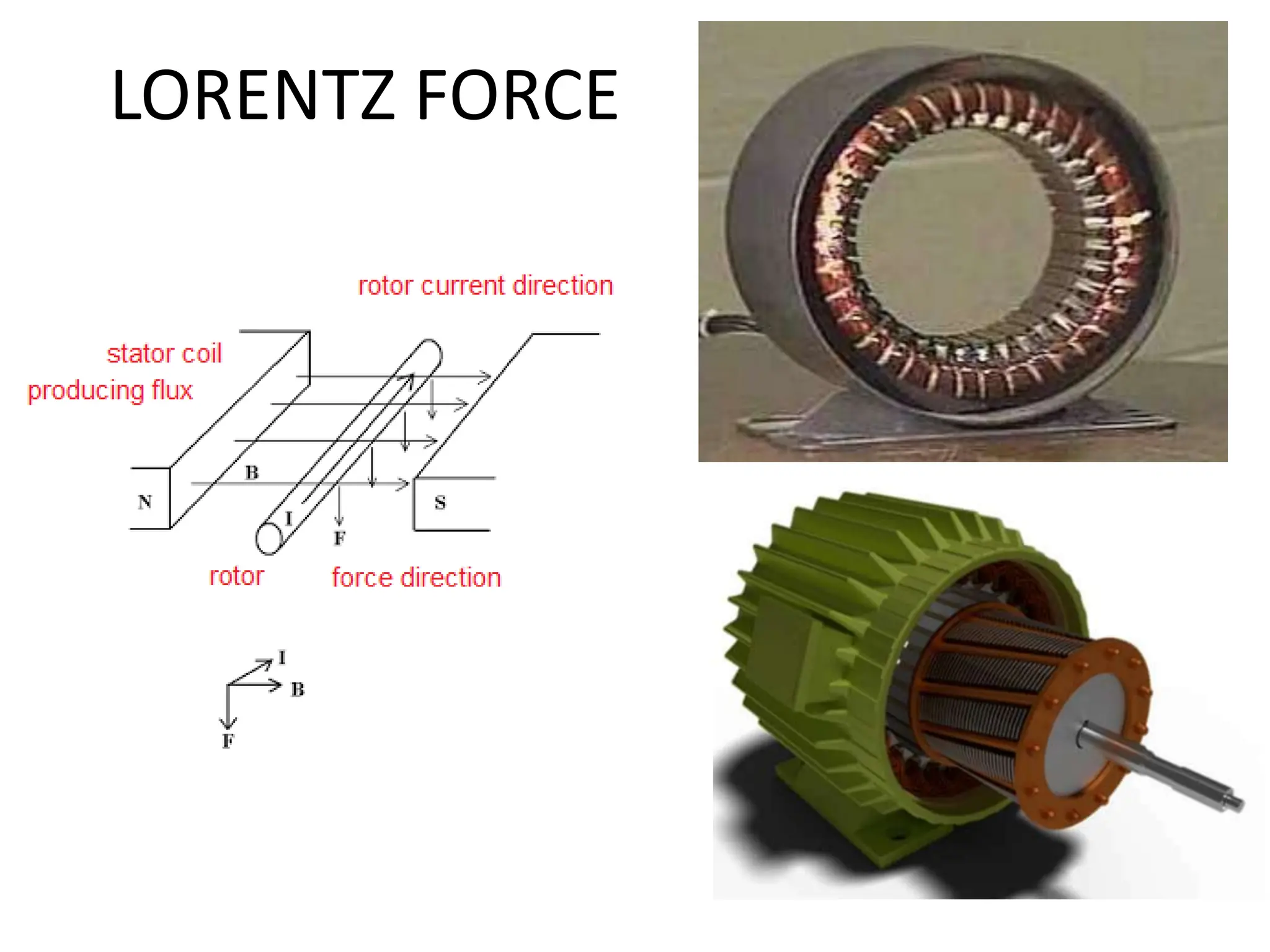
• LORENTZ FORCE
• SYNCHRONOUS SPEED
• SLIP
• SYNCHRONOUS OPERATION
• ASYNCHRONOUS OPERATION
THREE PHASE ELECTRICITY
ELECTROMAGNETIC INDUCTION
ROTATING MAGNETIC FIELD
LORENTZ FORCE
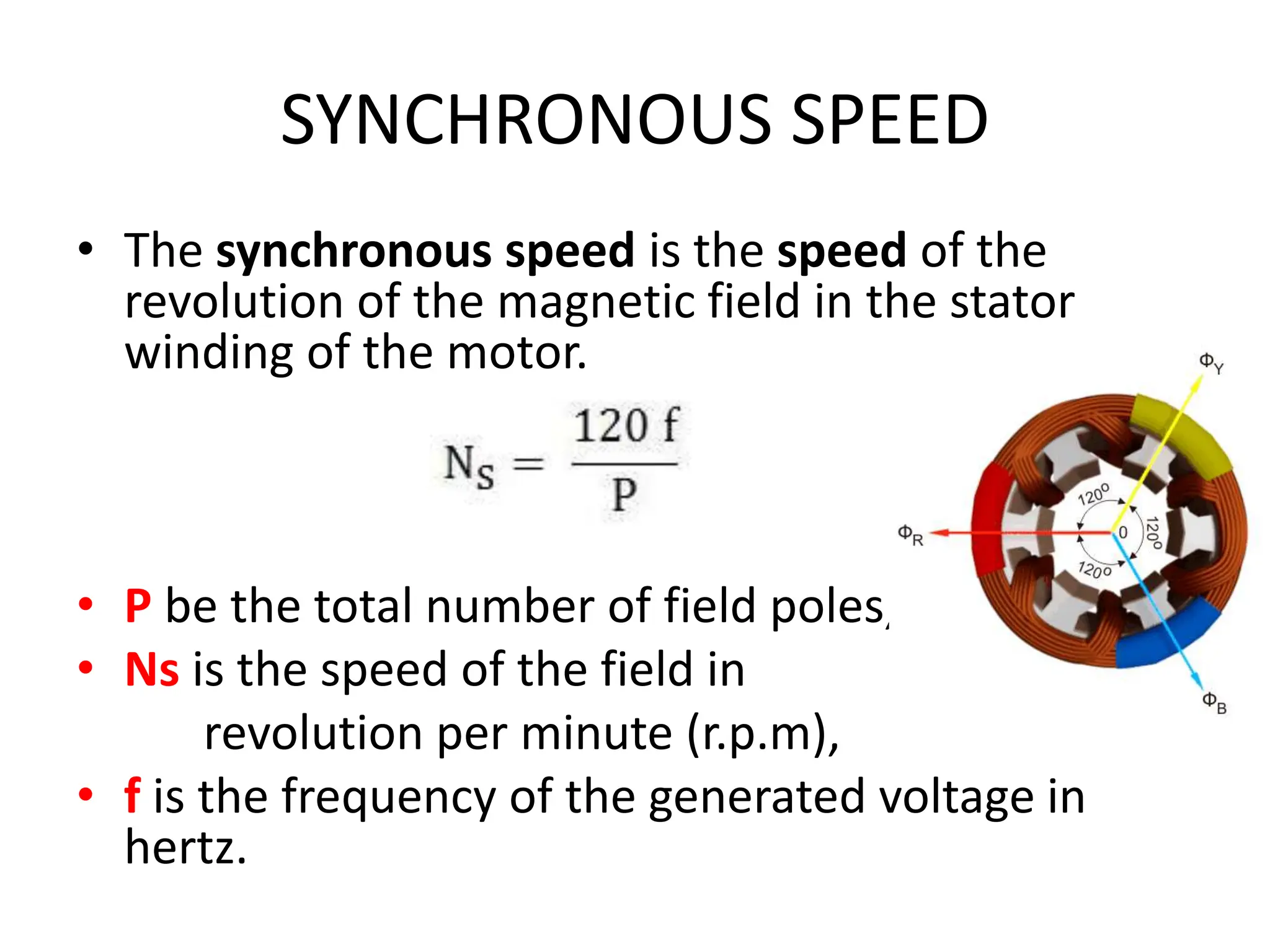
SYNCHRONOUS SPEED
• The synchronous speed is the speed of the
revolution of the magnetic field in the stator
winding of the motor.
• P be the total number of field poles,
• Ns is the speed of the field in
revolution per minute (r.p.m),
• f is the frequency of the generated voltage in
hertz.
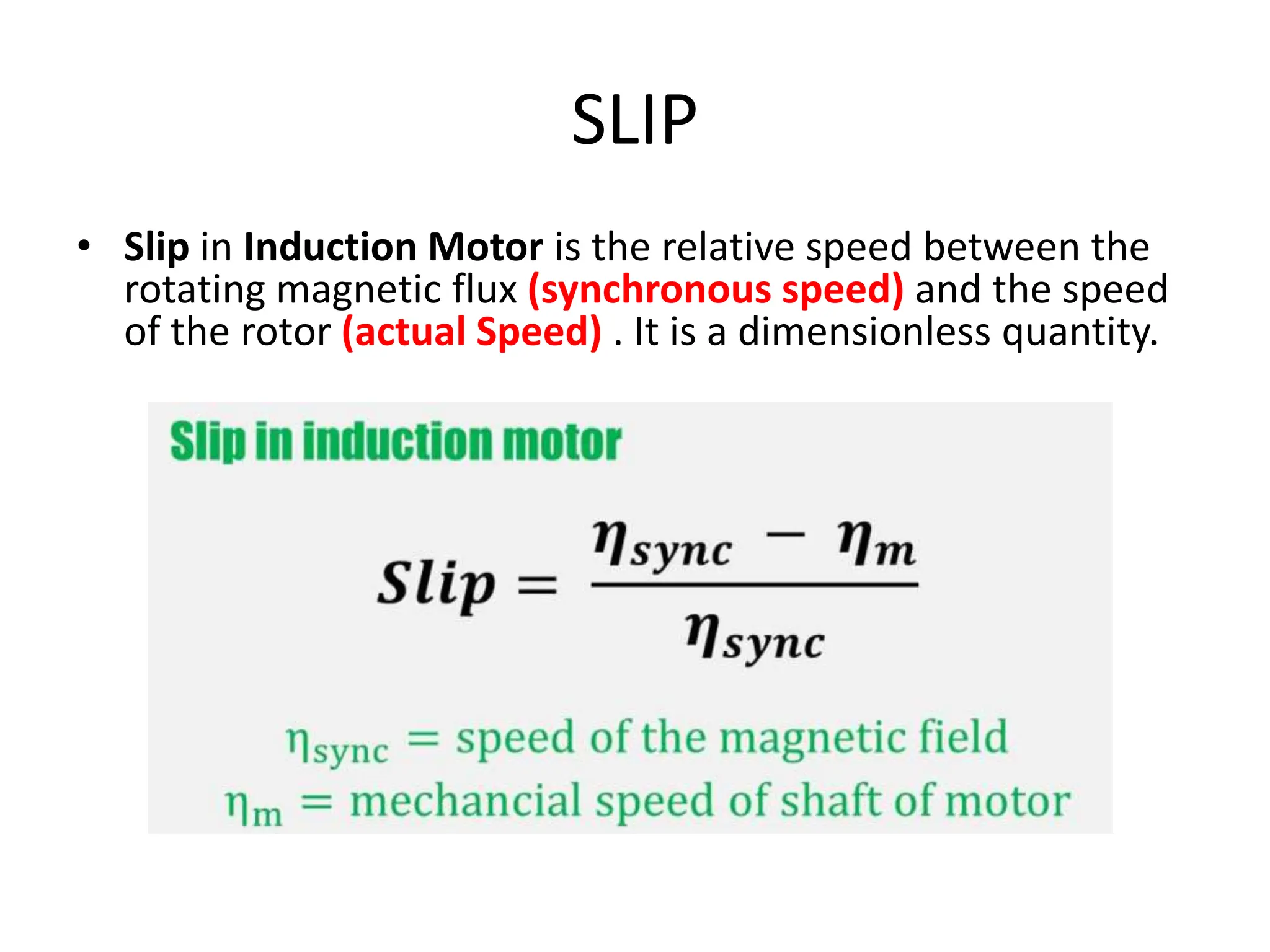
SLIP
• Slip in Induction Motor is the relative speed between the
rotating magnetic flux (synchronous speed) and the speed
of the rotor (actual Speed) . It is a dimensionless quantity.
SYNCHRONOUS SPEED TERMS
• SYNCHRONOUS SPEED
• ASYNCHRONOUS SPEED
• SUPER SYNCHRONOUS OPERATION
• SUB-SYNCHRONOUS OPERATION
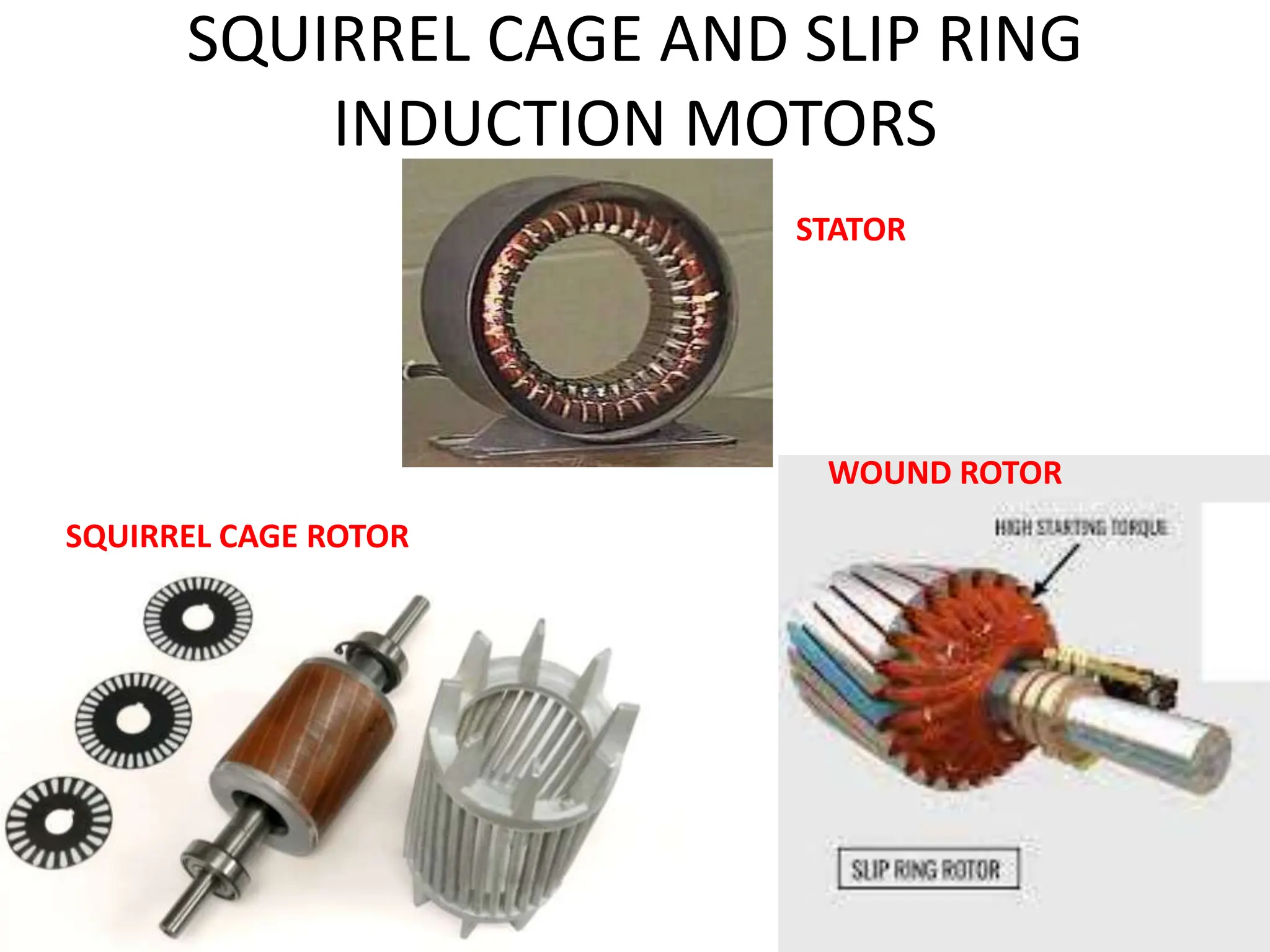
SQUIRREL CAGE AND SLIP RING
INDUCTION MOTORS
SQUIRREL CAGE ROTOR
WOUND ROTOR
STATOR
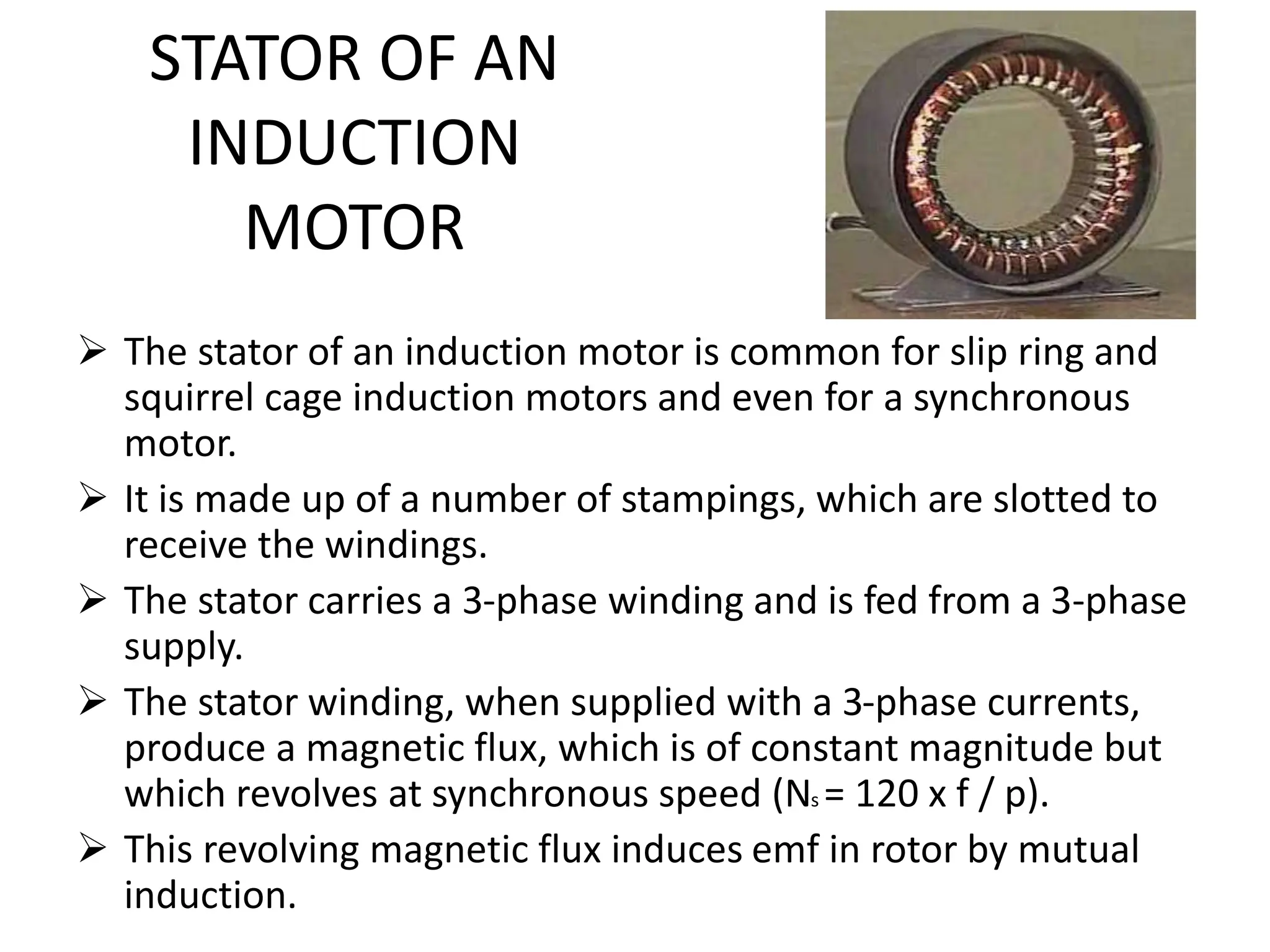
STATOR OF AN
INDUCTION
MOTOR
 The stator of an induction motor is common for slip ring and
squirrel cage induction motors and even for a synchronous
motor.
 It is made up of a number of stampings, which are slotted to
receive the windings.
 The stator carries a 3-phase winding and is fed from a 3-phase
supply.
 The stator winding, when supplied with a 3-phase currents,
produce a magnetic flux, which is of constant magnitude but
which revolves at synchronous speed (Ns = 120 x f / p).
 This revolving magnetic flux induces emf in rotor by mutual
induction.
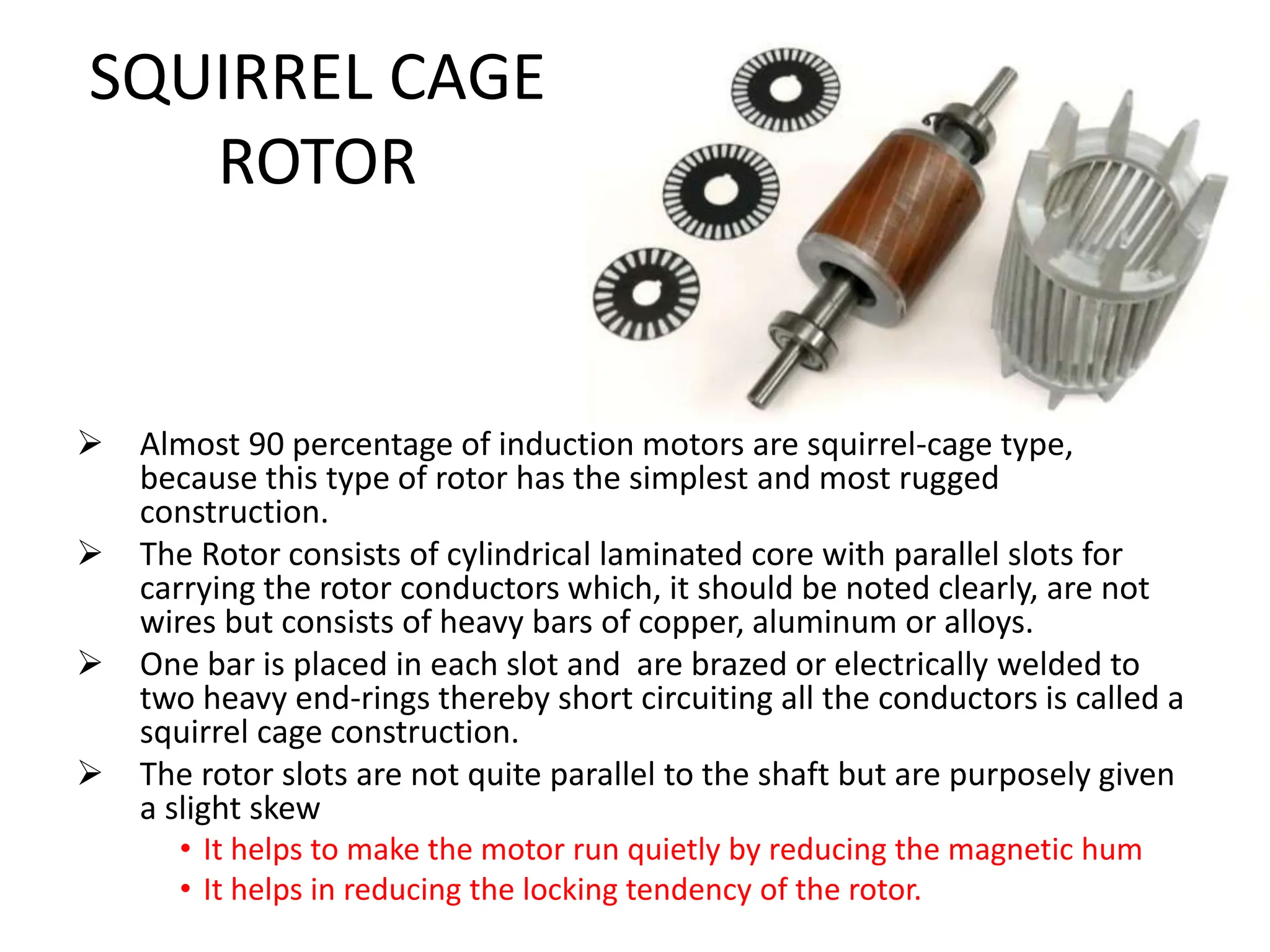
SQUIRREL CAGE
ROTOR
 Almost 90 percentage of induction motors are squirrel-cage type,
because this type of rotor has the simplest and most rugged
construction.
 The Rotor consists of cylindrical laminated core with parallel slots for
carrying the rotor conductors which, it should be noted clearly, are not
wires but consists of heavy bars of copper, aluminum or alloys.
 One bar is placed in each slot and are brazed or electrically welded to
two heavy end-rings thereby short circuiting all the conductors is called a
squirrel cage construction.
 The rotor slots are not quite parallel to the shaft but are purposely given
a slight skew
• It helps to make the motor run quietly by reducing the magnetic hum
• It helps in reducing the locking tendency of the rotor.
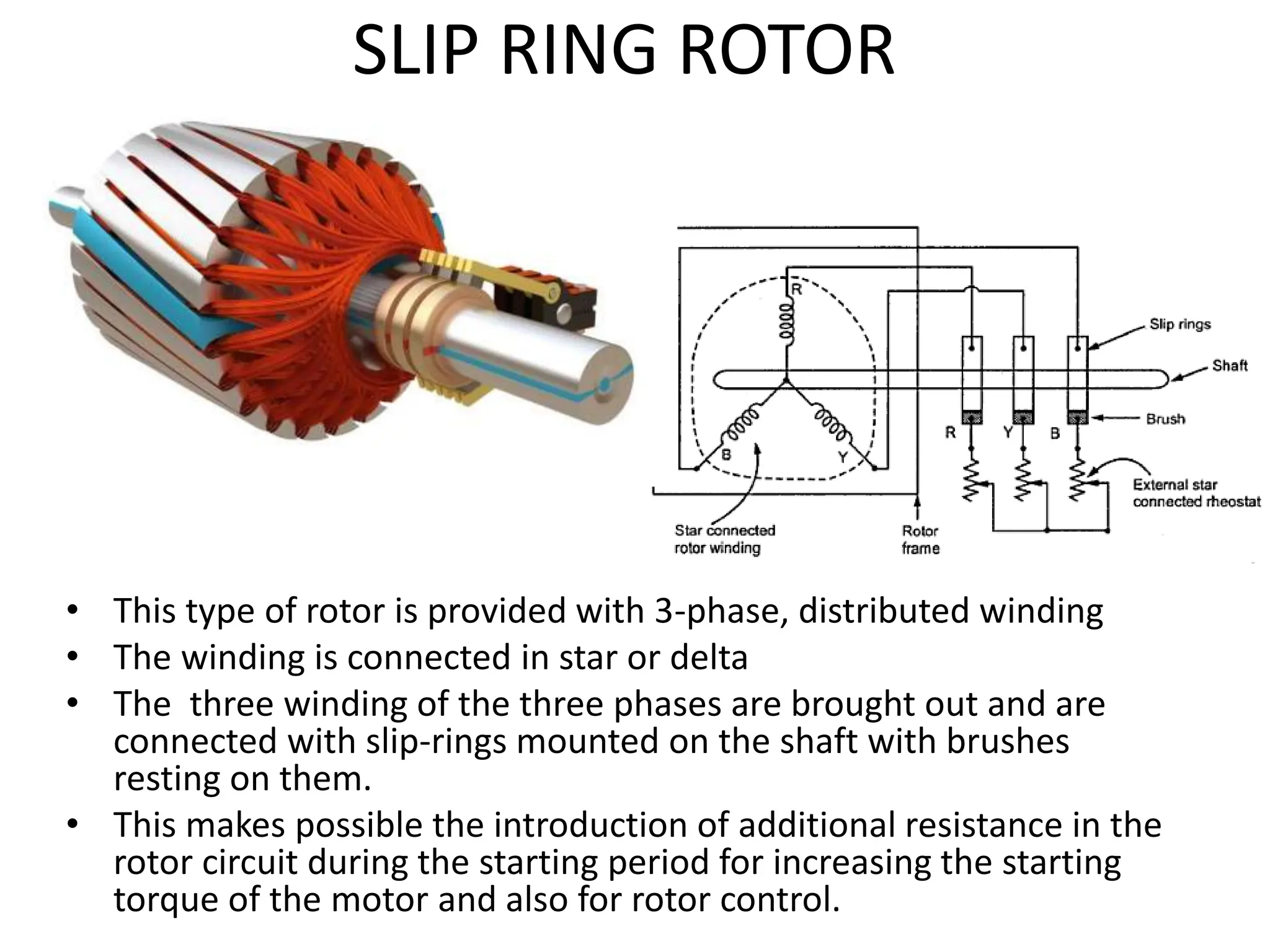
SLIP RING ROTOR
• This type of rotor is provided with 3-phase, distributed winding
• The winding is connected in star or delta
• The three winding of the three phases are brought out and are
connected with slip-rings mounted on the shaft with brushes
resting on them.
• This makes possible the introduction of additional resistance in the
rotor circuit during the starting period for increasing the starting
torque of the motor and also for rotor control.
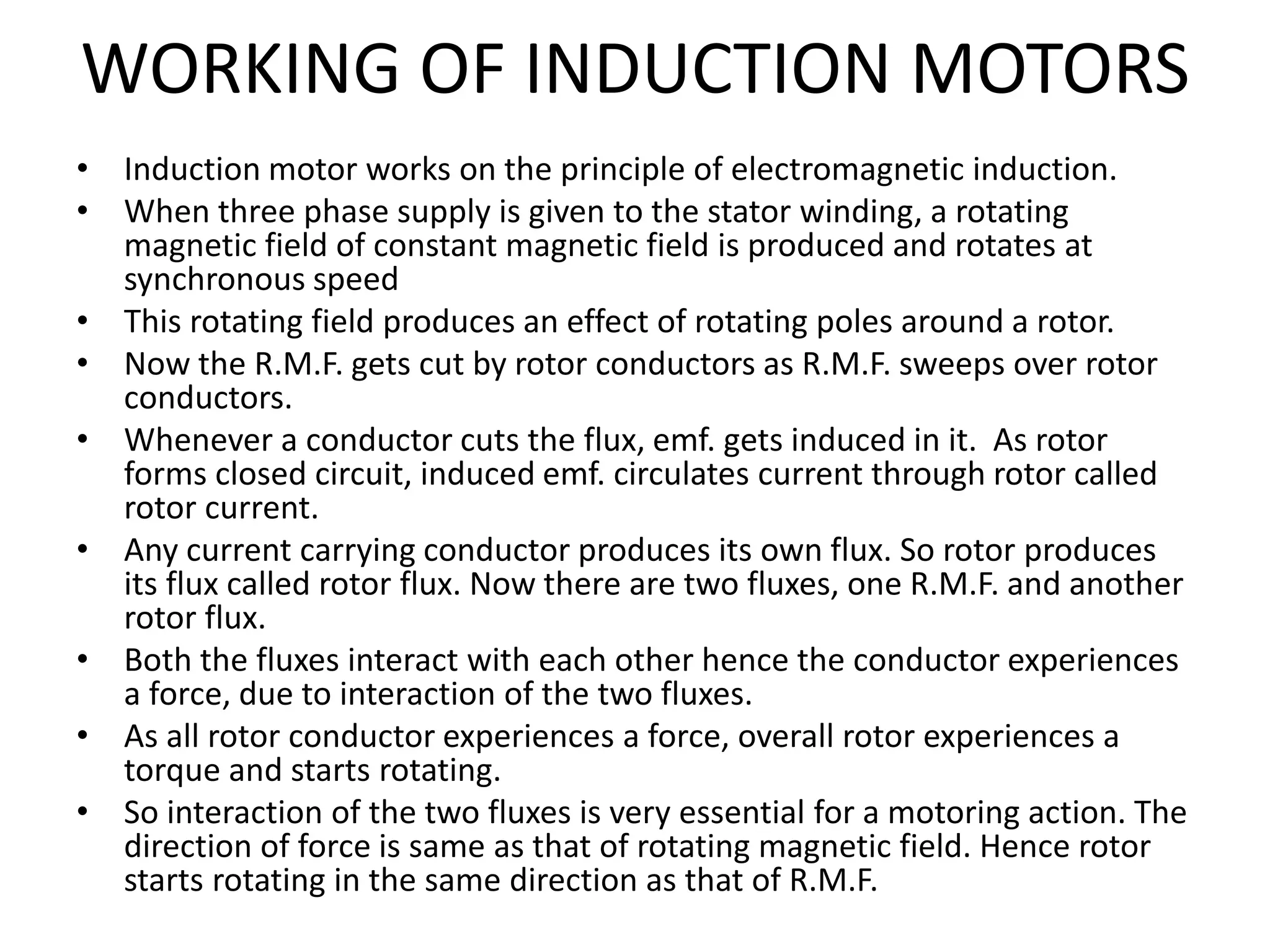
WORKING OF INDUCTION MOTORS
• Induction motor works on the principle of electromagnetic induction.
• When three phase supply is given to the stator winding, a rotating
magnetic field of constant magnetic field is produced and rotates at
synchronous speed
• This rotating field produces an effect of rotating poles around a rotor.
• Now the R.M.F. gets cut by rotor conductors as R.M.F. sweeps over rotor
conductors.
• Whenever a conductor cuts the flux, emf. gets induced in it. As rotor
forms closed circuit, induced emf. circulates current through rotor called
rotor current.
• Any current carrying conductor produces its own flux. So rotor produces
its flux called rotor flux. Now there are two fluxes, one R.M.F. and another
rotor flux.
• Both the fluxes interact with each other hence the conductor experiences
a force, due to interaction of the two fluxes.
• As all rotor conductor experiences a force, overall rotor experiences a
torque and starts rotating.
• So interaction of the two fluxes is very essential for a motoring action. The
direction of force is same as that of rotating magnetic field. Hence rotor
starts rotating in the same direction as that of R.M.F.
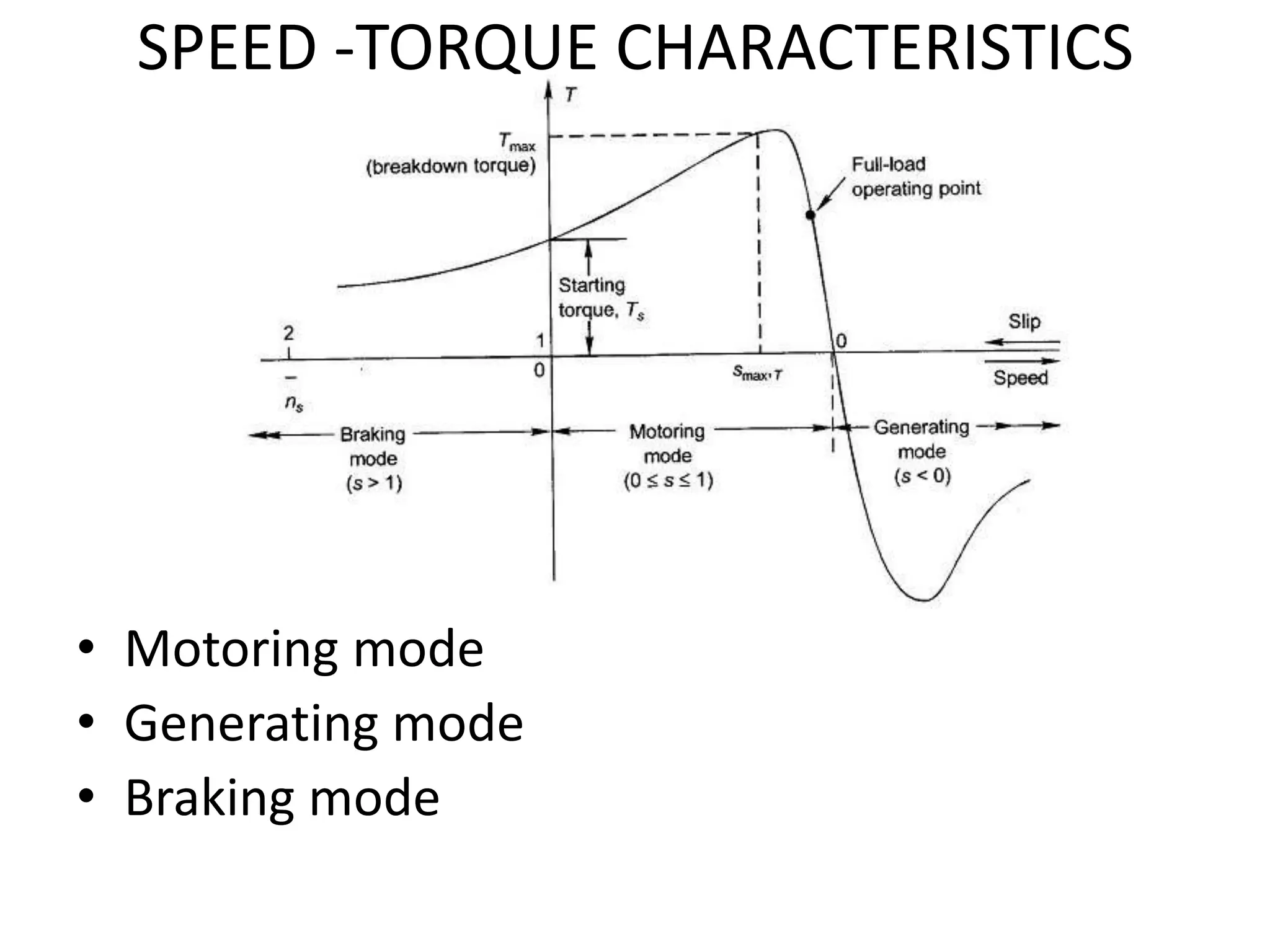
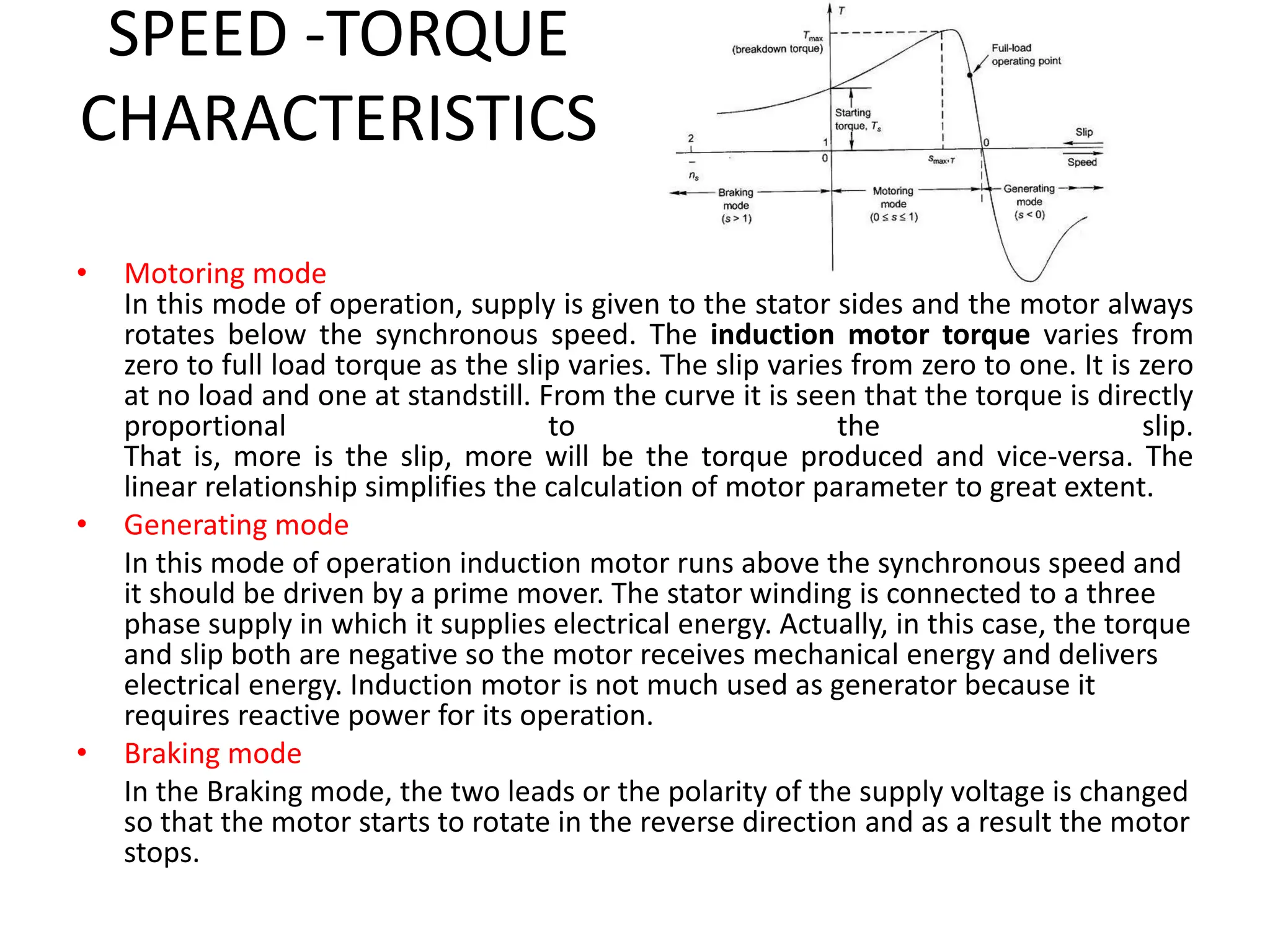
SPEED -TORQUE CHARACTERISTICS
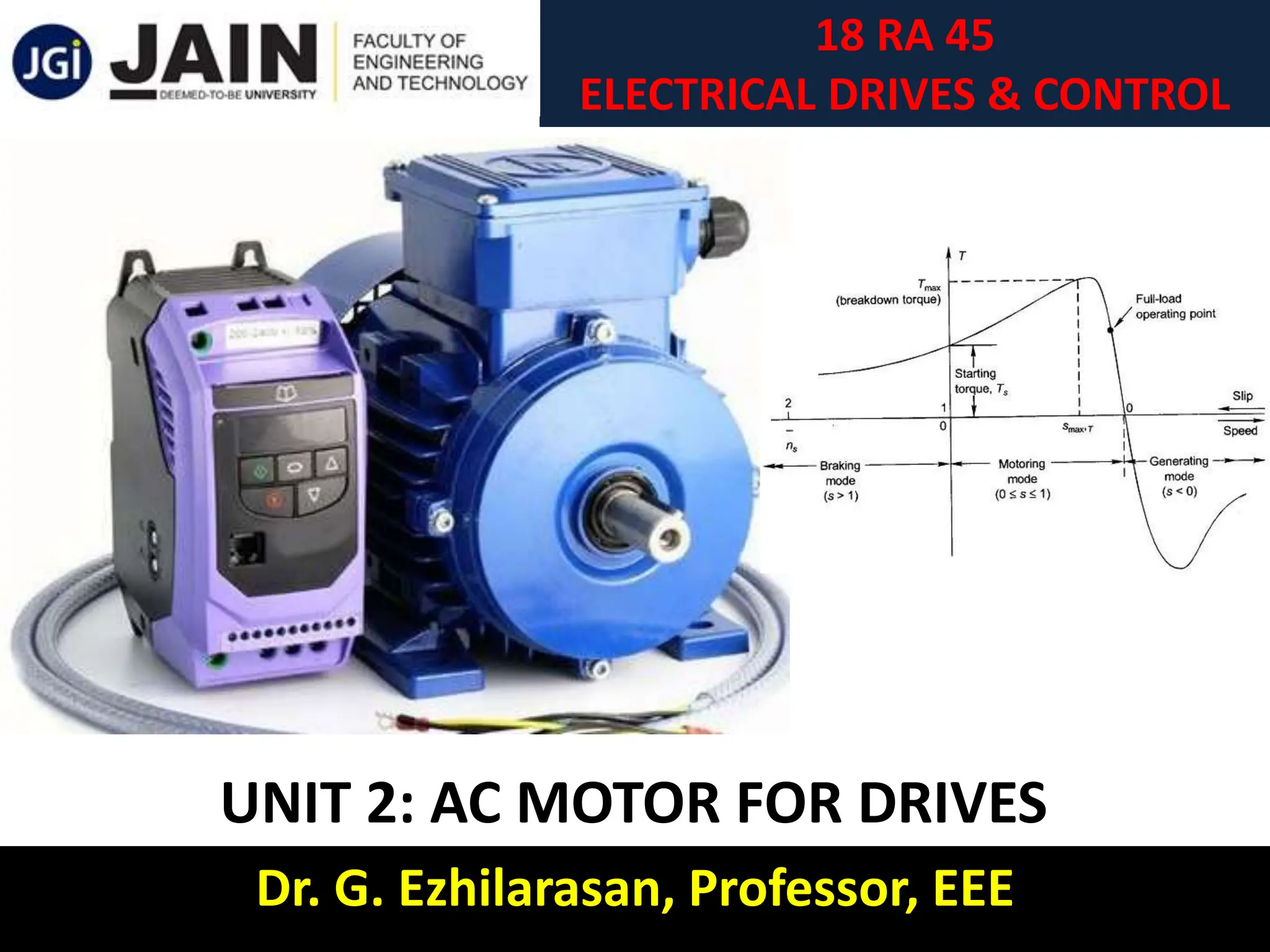
• Motoring mode
• Generating mode
• Braking mode
SPEED -TORQUE
CHARACTERISTICS
• Motoring mode
In this mode of operation, supply is given to the stator sides and the motor always
rotates below the synchronous speed. The induction motor torque varies from
zero to full load torque as the slip varies. The slip varies from zero to one. It is zero
at no load and one at standstill. From the curve it is seen that the torque is directly
proportional to the slip.
That is, more is the slip, more will be the torque produced and vice-versa. The
linear relationship simplifies the calculation of motor parameter to great extent.
• Generating mode
In this mode of operation induction motor runs above the synchronous speed and
it should be driven by a prime mover. The stator winding is connected to a three
phase supply in which it supplies electrical energy. Actually, in this case, the torque
and slip both are negative so the motor receives mechanical energy and delivers
electrical energy. Induction motor is not much used as generator because it
requires reactive power for its operation.
• Braking mode
In the Braking mode, the two leads or the polarity of the supply voltage is changed
so that the motor starts to rotate in the reverse direction and as a result the motor
stops.
STEPPER MOTORS
UNIVERSAL MOTOR
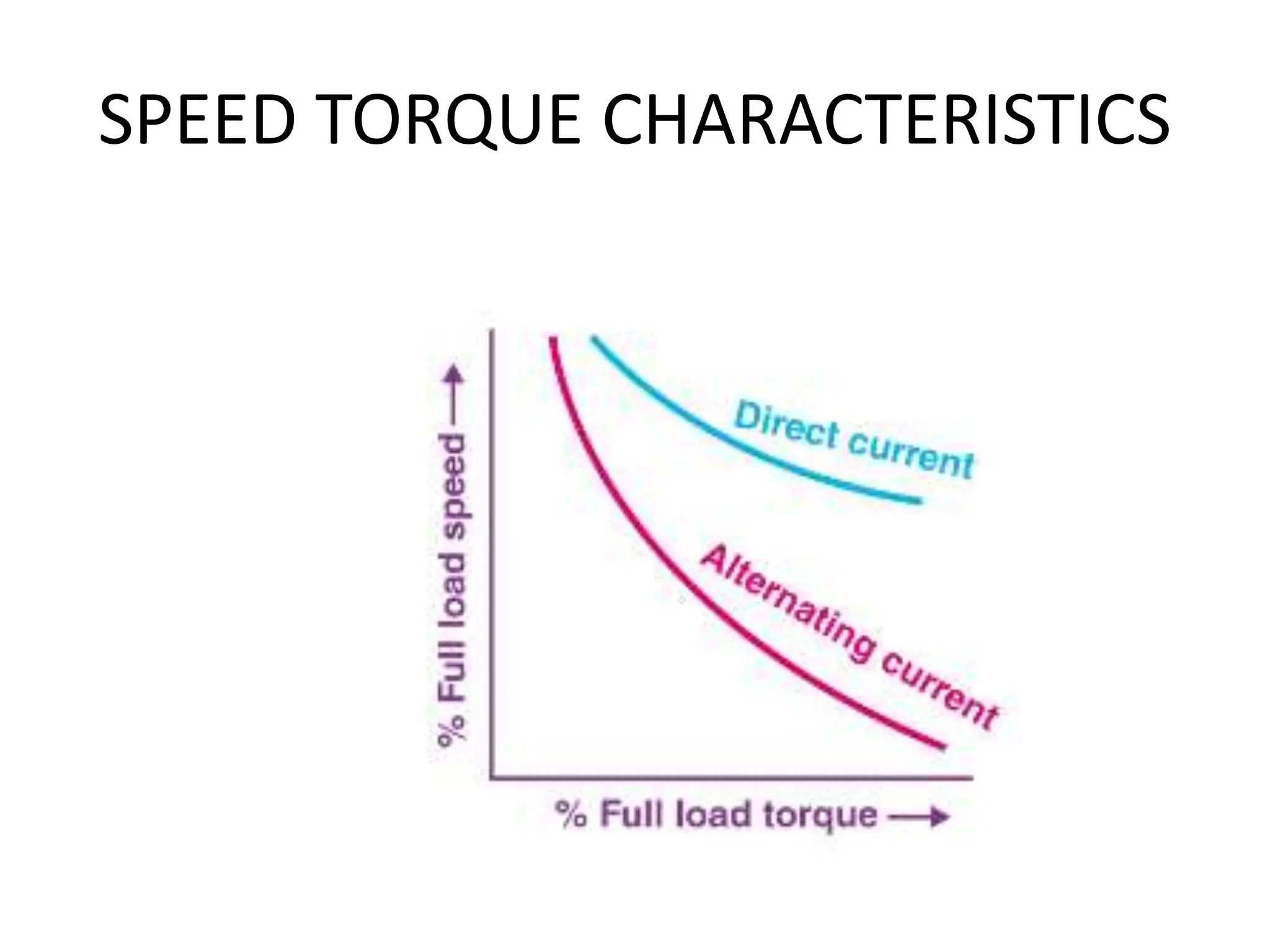
• A universal motor is a special type of
motor that runs on both AC and DC power
supplies. Universal motors are series-
wound (the armature and field windings
are in series). The series connection
allows them to generate high torque;
hence the universal motors are generally
built into the device they are meant to
drive.
• Most of the universal motors are meant
to operate at speeds as high as 3500
RPM. These motors run at a higher speed
on DC supply than they run on AC supply
of the same voltage. This is due to the
reactance voltage drop that is present
only in AC and not in DC.
SPEED TORQUE CHARACTERISTICS
Applications
Universal motors are used in
applications where high speed and
good speed control is necessary.
Following are the various
applications of universal motor:
• Universal Motors are used in
table fans, hairdryers and
grinders.
• They are used in portable drill
machines.
• They are used in polishers,
blowers and kitchen appliances.

PRINCIPLES OF AC MOTORS AND THEIR TYPESS

  • 1.
    18 RA 45 ELECTRICALDRIVES & CONTROL Dr. G. Ezhilarasan, Professor, EEE UNIT 2: AC MOTOR FOR DRIVES
  • 2.
    Types of ACMotors • INDUCTION MOTORS  Squirrel Cage  Slip Ring or Wound Rotor  Single Phase  Three Phase • SYNCHRONOUS MOTORS https://www.youtube.com/watch?v=AQqyGNOP_3o
  • 3.
    AC MOTOR BASICS •THREE PHASE ELECTRICITY • ELECTROMAGNETIC INDUCTION • ROTATING MAGNETIC FIELD • LORENTZ FORCE • SYNCHRONOUS SPEED • SLIP • SYNCHRONOUS OPERATION • ASYNCHRONOUS OPERATION
  • 4.
  • 5.
  • 6.
  • 7.
  • 8.
    SYNCHRONOUS SPEED • Thesynchronous speed is the speed of the revolution of the magnetic field in the stator winding of the motor. • P be the total number of field poles, • Ns is the speed of the field in revolution per minute (r.p.m), • f is the frequency of the generated voltage in hertz.
  • 9.
    SLIP • Slip inInduction Motor is the relative speed between the rotating magnetic flux (synchronous speed) and the speed of the rotor (actual Speed) . It is a dimensionless quantity.
  • 10.
    SYNCHRONOUS SPEED TERMS •SYNCHRONOUS SPEED • ASYNCHRONOUS SPEED • SUPER SYNCHRONOUS OPERATION • SUB-SYNCHRONOUS OPERATION
  • 11.
    SQUIRREL CAGE ANDSLIP RING INDUCTION MOTORS SQUIRREL CAGE ROTOR WOUND ROTOR STATOR
  • 12.
    STATOR OF AN INDUCTION MOTOR The stator of an induction motor is common for slip ring and squirrel cage induction motors and even for a synchronous motor.  It is made up of a number of stampings, which are slotted to receive the windings.  The stator carries a 3-phase winding and is fed from a 3-phase supply.  The stator winding, when supplied with a 3-phase currents, produce a magnetic flux, which is of constant magnitude but which revolves at synchronous speed (Ns = 120 x f / p).  This revolving magnetic flux induces emf in rotor by mutual induction.
  • 13.
    SQUIRREL CAGE ROTOR  Almost90 percentage of induction motors are squirrel-cage type, because this type of rotor has the simplest and most rugged construction.  The Rotor consists of cylindrical laminated core with parallel slots for carrying the rotor conductors which, it should be noted clearly, are not wires but consists of heavy bars of copper, aluminum or alloys.  One bar is placed in each slot and are brazed or electrically welded to two heavy end-rings thereby short circuiting all the conductors is called a squirrel cage construction.  The rotor slots are not quite parallel to the shaft but are purposely given a slight skew • It helps to make the motor run quietly by reducing the magnetic hum • It helps in reducing the locking tendency of the rotor.
  • 14.
    SLIP RING ROTOR •This type of rotor is provided with 3-phase, distributed winding • The winding is connected in star or delta • The three winding of the three phases are brought out and are connected with slip-rings mounted on the shaft with brushes resting on them. • This makes possible the introduction of additional resistance in the rotor circuit during the starting period for increasing the starting torque of the motor and also for rotor control.
  • 15.
    WORKING OF INDUCTIONMOTORS • Induction motor works on the principle of electromagnetic induction. • When three phase supply is given to the stator winding, a rotating magnetic field of constant magnetic field is produced and rotates at synchronous speed • This rotating field produces an effect of rotating poles around a rotor. • Now the R.M.F. gets cut by rotor conductors as R.M.F. sweeps over rotor conductors. • Whenever a conductor cuts the flux, emf. gets induced in it. As rotor forms closed circuit, induced emf. circulates current through rotor called rotor current. • Any current carrying conductor produces its own flux. So rotor produces its flux called rotor flux. Now there are two fluxes, one R.M.F. and another rotor flux. • Both the fluxes interact with each other hence the conductor experiences a force, due to interaction of the two fluxes. • As all rotor conductor experiences a force, overall rotor experiences a torque and starts rotating. • So interaction of the two fluxes is very essential for a motoring action. The direction of force is same as that of rotating magnetic field. Hence rotor starts rotating in the same direction as that of R.M.F.
  • 16.
    SPEED -TORQUE CHARACTERISTICS •Motoring mode • Generating mode • Braking mode
  • 17.
    SPEED -TORQUE CHARACTERISTICS • Motoringmode In this mode of operation, supply is given to the stator sides and the motor always rotates below the synchronous speed. The induction motor torque varies from zero to full load torque as the slip varies. The slip varies from zero to one. It is zero at no load and one at standstill. From the curve it is seen that the torque is directly proportional to the slip. That is, more is the slip, more will be the torque produced and vice-versa. The linear relationship simplifies the calculation of motor parameter to great extent. • Generating mode In this mode of operation induction motor runs above the synchronous speed and it should be driven by a prime mover. The stator winding is connected to a three phase supply in which it supplies electrical energy. Actually, in this case, the torque and slip both are negative so the motor receives mechanical energy and delivers electrical energy. Induction motor is not much used as generator because it requires reactive power for its operation. • Braking mode In the Braking mode, the two leads or the polarity of the supply voltage is changed so that the motor starts to rotate in the reverse direction and as a result the motor stops.
  • 18.
  • 26.
    UNIVERSAL MOTOR • Auniversal motor is a special type of motor that runs on both AC and DC power supplies. Universal motors are series- wound (the armature and field windings are in series). The series connection allows them to generate high torque; hence the universal motors are generally built into the device they are meant to drive. • Most of the universal motors are meant to operate at speeds as high as 3500 RPM. These motors run at a higher speed on DC supply than they run on AC supply of the same voltage. This is due to the reactance voltage drop that is present only in AC and not in DC.
  • 27.
  • 28.
    Applications Universal motors areused in applications where high speed and good speed control is necessary. Following are the various applications of universal motor: • Universal Motors are used in table fans, hairdryers and grinders. • They are used in portable drill machines. • They are used in polishers, blowers and kitchen appliances.