The Era of Imperialism: Chapter 25 1870-1914
Late Nineteenth Century European Imperialism
Objective To understand the causes of European imperialism of the late 19 th  century To understand the extent of European imperial expansion To understand the consequences of European imperialism for Europe and the developing world
Definitions Imperialism “ extending a nation’s influence directly or indirectly over weaker areas” Colonialism Taking direct control of an area and turning it into a colony under a nation’s authority Nationalism Belief that an ethnic group should rule itself Belief that one nation is better than all the others
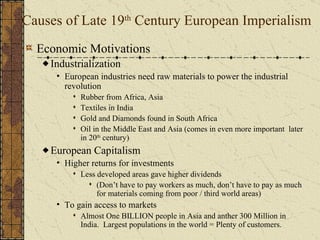
Industrial Revolution Source for Raw Materials Markets for Finished Goods European Nationalism Missionary Activity Military & Naval Bases European Motives For Colonization Places to Dump Unwanted/ Excess Popul. Soc. & Eco. Opportunities Humanitarian Reasons European Racism “ White Man’s Burden” Social Darwinism
Motivations for Imperialism Money / Resources Raw materials Cotton, Oil, Rubber, Tea, Iron, gold, diamonds, silk, copper etc People (cheap workers) Markets Colonies with people who will buy your stuff Dumping Ground Send your excess population / criminals there Canada, Australia Strategic  Control strategic seas and land areas to gain power Keep OTHER countries from gaining them
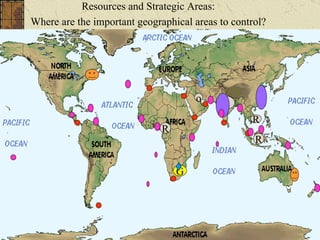
Resources and Strategic Areas: Where are the important geographical areas to control? C o R R G R
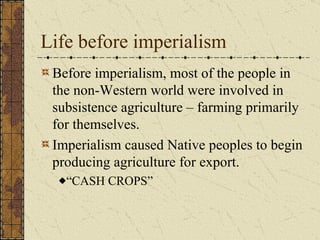
British Landlords want to make  money Require farmers to grow crops they can sell for money – not for food “ Cash Crops”
Cash Crops”. The agricultural products are grown primarily for exporting purposes. Products such as indigo, banana, pineapple, coffee or sugar cane are grown to be exported to developed countries.  But what will we eat?
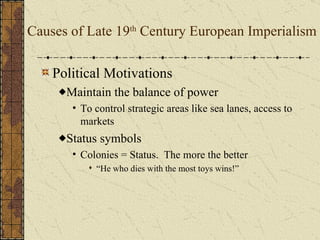
Causes of Late 19 th  Century European Imperialism Culture / Religion Belief in European / Christian superiority Desire to “spread civilization and Christianity to the heathens” Social Darwinism Prestige Whoever has the most must be the best “ He who dies with the most toys wins!”
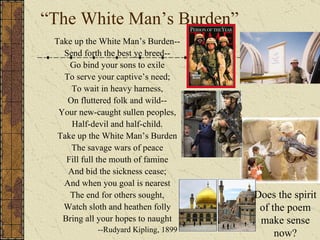
“ The White Man’s Burden” Take up the White Man’s Burden-- Send forth the best ye breed-- Go bind your sons to exile To serve your captive’s need; To wait in heavy harness, On fluttered folk and wild-- Your new-caught sullen peoples, Half-devil and half-child. Take up the White Man’s Burden The savage wars of peace Fill full the mouth of famine And bid the sickness cease; And when you goal is nearest The end for others sought, Watch sloth and heathen folly Bring all your hopes to naught --Rudyard Kipling, 1899
  Take up the White Man's burden- No iron rule of kings,  But toil of serf and sweeper-- The tale of common things.  The ports ye shall not enter, The roads ye shall not tread,  Go, make them with your living And mark them with your dead.    Take up the White Man's burden, And reap his old reward- The blame of those ye better The hate of those ye guard- The cry of hosts ye humor (Ah, slowly!) toward the light:- "Why brought ye us from bondage,  Our loved Egyptian night?"     Take up the White Man's burden! Have done with childish days The lightly-proffered laurel, The easy ungrudged praise:  Comes now, to search your manhood  Through all the thankless years,  Cold, edged with dear-bought wisdom, The judgment of your peers.
Take up the White Man's burden- Ye dare not stoop to less- Nor call too loud on Freedom To cloak your weariness.  By all ye will or whisper, By all ye leave or do,  The silent sullen peoples Shall weigh your God and you.    Does the spirit of the poem make sense now?
Social Darwinism and Imperialism Some thought the theory of evolution justified the exploitation of “lesser breeds” by “superior races.” Europeans (and Americans) would suggest that they had evolved more than Indians, Africans and Asians After all, our countries are more developed and richer – doesn’t that prove it? Thus, nature gave them the right to rule others.
Social Darwinism Social Darwinists – sounds rather racist.  They applied evolution to the social order. Europeans felt they must “save the savages” and “civilize” them Missionaries sought to convert “heathen” unbelievers in faraway lands.  “The white man’s burden” – introducing civilization to the “colored” races of the world. In their view, war was nature’s way of eliminating the unfit. Using terms such as “survival of the fittest” Social Darwinists insisted that nations and races were engaged in a struggle for survival in which only the fittest survive and deserve to win.
Social Darwinism: Lasting Implications It promoted the military build-up that led to World War I.  It would become the core doctrine of the Nazi party before World War II. Holocaust and Eugenics Provided a “scientific” and “ethical” justification for genocides in the 20 th  century.
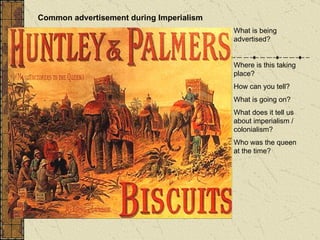
What is being advertised?  Where is this taking place? How can you tell? What is going on? What does it tell us about imperialism / colonialism? Who was the queen at the time? Common advertisement during Imperialism
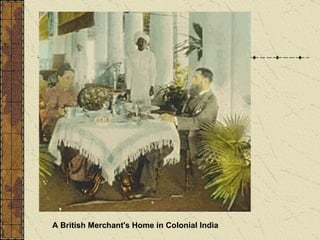
A British Merchant's Home in Colonial India
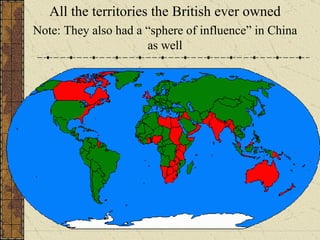
Britain (United Kingdom) Includes England, Scotland, Wales, Ireland Largest colonial empire  “ Sun never sets on the British Empire” Colonies established to protect trading interests in Africa and Asia Two kinds of colonies “ White” Colonies (Canada, Australia, New Zealand, South Africa) Populated mainly by people that moved there from Britain Given self-rule “ Non-white” Colonies (India, Africa)  Under indirect rule Populated mainly by people who are native to the area Few people from Britain actually live there – but control the government
All the territories the British ever owned Note: They also had a “sphere of influence” in China as well
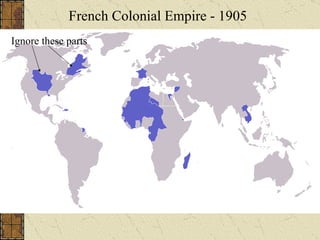
France Northwest Africa and Southeast Asia Took colonies to make up for loss of Alsace-Lorraine in 1870 Tended to use “Direct Rule” Control all aspects of the colony from Paris.
French Colonial Empire - 1905 Ignore these parts
Germany Bismarck originally opposed colonial expansion Unnecessary for Germany Did not want to threaten France or Britain Germany eventually took colonies in 1880s for status symbols In Africa and Asia
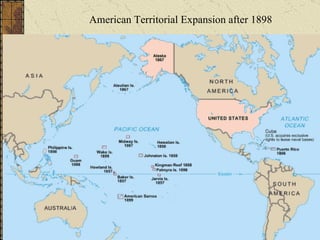
United States Did not get involved in European affairs  Became colonial power after 1898 Spanish-American War U.S. gains control of Puerto Rico, Guam, Philippines Monroe Doctrine allows US to extend influence into Latin America
American Territorial Expansion after 1898
Case Study #1 Imperialism in Africa
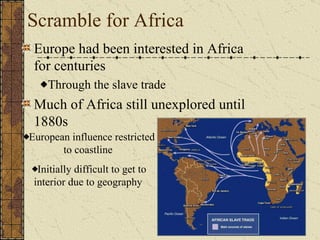
Scramble for Africa Europe had been interested in Africa for centuries Through the slave trade Much of Africa still unexplored until 1880s European influence restricted to coastline Initially difficult to get to interior due to geography Diseases made exploration difficult.  (malaria, yellow fever etc)
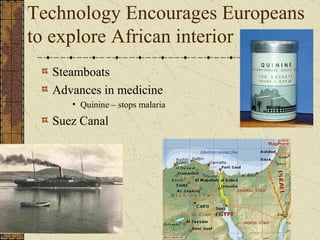
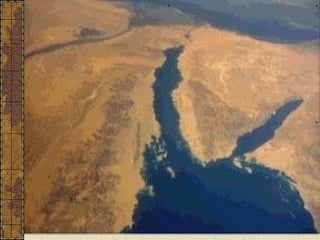
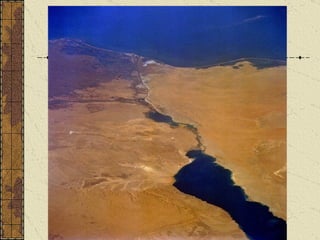
Technology Encourages Europeans to explore African interior Steamboats Advances in medicine Quinine – stops malaria Suez Canal
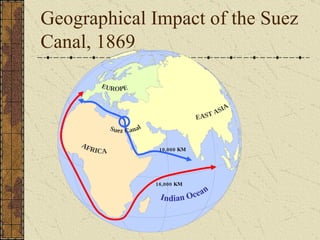
Geographical Impact of the Suez Canal, 1869 See why the Suez canal is a “strategic” location? AFRICA EUROPE Suez Canal EAST ASIA Indian Ocean 16,000 KM 10,000 KM
 
 
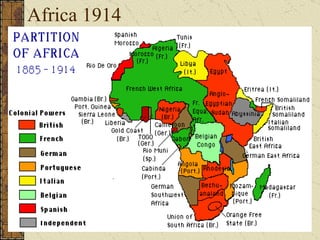
Scramble for Africa By 1914, 90% of Africa under European control France Northwest Africa Britain from Egypt to South Africa Belgium in the Congo (central Africa) Italy in Libya and Eastern Africa Portugal in southern Africa Germany in scattered areas Berlin Conference in 1885 sets ground rules for European colonization of Africa
Berlin Conference The scramble threatened European stability.  Bismarck called an international conference in Berlin in 1884 to lay some ground rules for the development of Africa. They made the Congo a free trade zone  Outlawed slavery and the slave trade that the Arabs and Africans were still practicing.
Before  European colonization of Africa in 1880
Africa 1914
Scramble for Africa Consequences  Traditional way of life disrupted Economic exploitation of Africans European racism imported into Africa Spread of European culture Spread of Western technology
Conquest of Africa The consequences of European partitioning (dividing up) of the continent were devastating to Africa newly drawn borders don’t match up with  ethnicity, language, culture of people living there. In the decades before World War I, opposition to European colonial rule in Africa gathered strength.
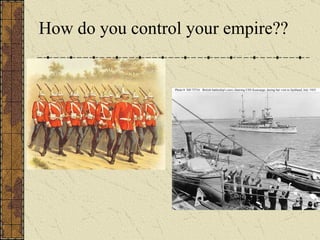
How do you control your empire??                                                                                                                                                     
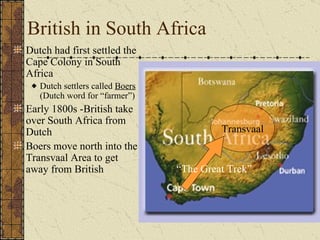
British in South Africa Dutch had first settled the Cape Colony in South Africa Dutch settlers called  Boers  (Dutch word for “farmer”) Early 1800s -British take over South Africa from Dutch Boers move north into the Transvaal Area to get away from British Transvaal “ The Great Trek”
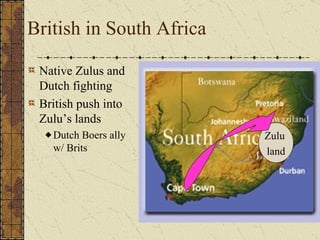
British in South Africa Native Zulus and Dutch fighting British push into Zulu’s lands Dutch Boers ally w/ Brits Zulu  land
The Zulu Wars British pick a fight with Zulus You lose some, you win some Isandlwana Rorke’s Drift
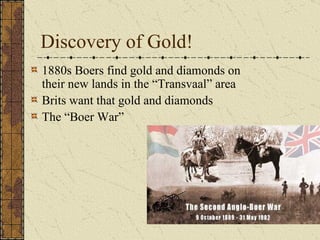
Discovery of Gold! 1880s Boers find gold and diamonds on their new lands in the “Transvaal” area Brits want that gold and diamonds The “Boer War”
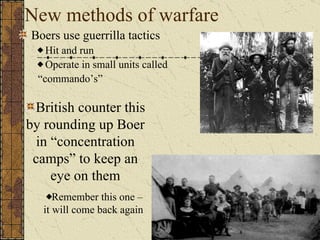
New methods of warfare Boers use guerrilla tactics Hit and run Operate in small units called “ commando’s” British counter this by rounding up Boer in “concentration camps” to keep an eye on them Remember this one – it will come back again
End of the  Boer War British win and consolidate their lands in South Africa Eventually South Africa is given autonomy Most of the white settlers in South Africa are Dutch, but the land is owned by Britain. Most of the population is black Minority, white dominated, government establishes system of  “Apartheid”   Complete separation of the races Non-whites made into second class citizens in their own land Stays in place until 1996 when international pressure forces South Africa to eliminate Apartheid
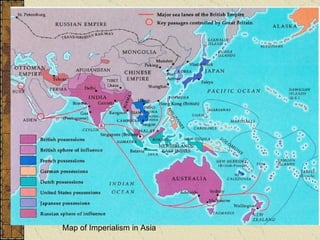
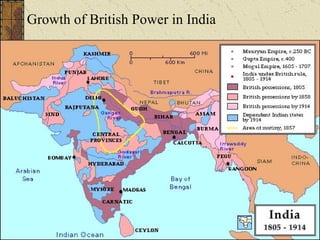
European Imperialism in Asia India Britain trading in India since 1600s British East India Co.  gradually took over parts of India British government gradually took over India in the 1800s Sepoy  Mutiny Indian soldiers revolt against British East India Co Rebellion put down by British army British government takes over control from British East India Co.
Map of Imperialism in Asia
Growth of British Power in India
European Imperialism in India Consequences of British Imperialism in India British educational system established Spread of English language Railroads tie India together Rise of Indian middle class
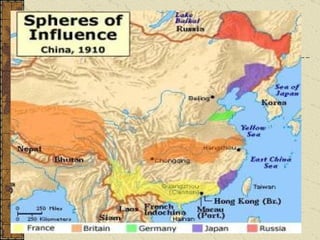
European Imperialism in Asia China Potentially huge market Closed to European trade until 1800s Opium War  (1840) Britain forces China to open trade to opium Millions of addicts Unequal Treaties (Treaty of Nanking) – China forced open By 1900, China divided into European  “spheres of influence” Parts of China under European control Chinese monarchy seriously weakened
 
Reaction to Imperialism Rise of Nationalist Movements India  Indian National Congress (1885) Group of middle class Indians begin to demand independence (Mohandas Gandhi) China Boxer Rebellion (1900) Nationalist Party
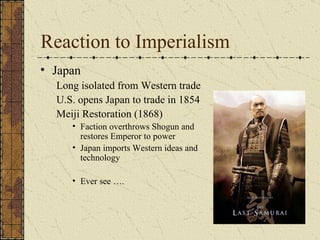
Reaction to Imperialism Japan Long isolated from Western trade U.S. opens Japan to trade in 1854 Meiji Restoration (1868) Faction overthrows Shogun and restores Emperor to power Japan imports Western ideas and technology Ever see ….
Reaction to Imperialism Japan adopts imperialism by 1890s Defeats China in 1895 Takes over Taiwan  Defeats Russia in 1905 Gains control of Korea Japanese imperialism worries Europeans “ Yellow Peril”
Conclusion Different reasons for European imperialism during late nineteenth century European imperialism causes reactions in Africa and Asia  European imperialism disrupts traditional way of life and continues to affect the world today
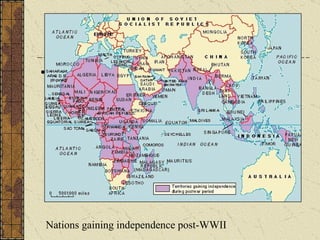
Nations gaining independence post-WWII
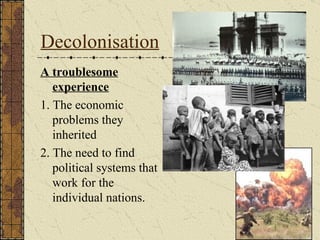
Decolonisation A troublesome experience 1. The economic problems they inherited 2. The need to find political systems that work for the individual nations.
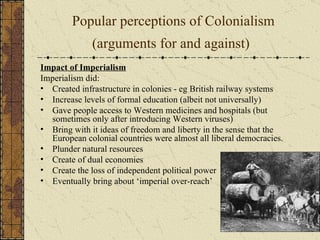
Popular perceptions of Colonialism (arguments for and against)   Impact of Imperialism Imperialism did: Created infrastructure in colonies - eg British railway systems  Increase levels of formal education (albeit not universally)  Gave people access to Western medicines and hospitals (but sometimes only after introducing Western viruses)  Bring with it ideas of freedom and liberty in the sense that the European colonial countries were almost all liberal democracies.  Plunder natural resources  Create of dual economies  Create the loss of independent political power  Eventually bring about ‘imperial over-reach’
Criticisms of Imperialism Colonialism as a Theory of oppression:  Colonialism is a distinctly western evil The west became rich and the colonies  became impoverished.  The descendants of colonialism are worse off than  they would’ve been if colonialism had never occurred. Walter Rodney : “White hoards have sallied forth from  their western homelands to assault, loot, occupy, rule  and exploit the world. Even now the fury of their  expansionist assault on the rest of us has not abated” Activists such as Jesse Jackson have called on the west to pay repatriations for slavery and colonialism to minorities of the third world. The West is in possession of the ‘stolen goods’ of other cultures and has a moral and legal obligation to make some form of repayment. The above notions suggest that the west  became dominant because it was oppressive.
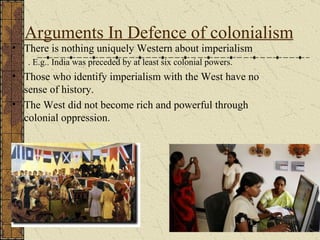
Arguments In Defence of colonialism There is nothing uniquely Western about imperialism . E.g.. India was preceded by at least six colonial powers. Those who identify imperialism with the West have no sense of history.  The West did not become rich and powerful through colonial oppression.
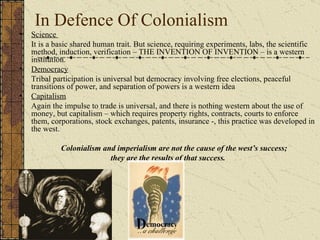
In Defence Of Colonialism Science  It is a basic shared human trait. But science, requiring experiments, labs, the scientific method, induction, verification – THE INVENTION OF INVENTION – is a western institution. Democracy Tribal participation is universal but democracy involving free elections, peaceful transitions of power, and separation of powers is a western idea Capitalism Again the impulse to trade is universal, and there is nothing western about the use of money, but capitalism – which requires property rights, contracts, courts to enforce them, corporations, stock exchanges, patents, insurance -, this practice was developed in the west.   Colonialism and imperialism are not the cause of the west’s success;  they are the results of that success.
THE END DON’T BE COLONISING ANYONE!!!

Imperialism Spring 2010

  • 1.
    The Era ofImperialism: Chapter 25 1870-1914
  • 2.
    Late Nineteenth CenturyEuropean Imperialism
  • 3.
    Objective To understandthe causes of European imperialism of the late 19 th century To understand the extent of European imperial expansion To understand the consequences of European imperialism for Europe and the developing world
  • 4.
    Definitions Imperialism “extending a nation’s influence directly or indirectly over weaker areas” Colonialism Taking direct control of an area and turning it into a colony under a nation’s authority Nationalism Belief that an ethnic group should rule itself Belief that one nation is better than all the others
  • 5.
    Industrial Revolution Sourcefor Raw Materials Markets for Finished Goods European Nationalism Missionary Activity Military & Naval Bases European Motives For Colonization Places to Dump Unwanted/ Excess Popul. Soc. & Eco. Opportunities Humanitarian Reasons European Racism “ White Man’s Burden” Social Darwinism
  • 6.
    Motivations for ImperialismMoney / Resources Raw materials Cotton, Oil, Rubber, Tea, Iron, gold, diamonds, silk, copper etc People (cheap workers) Markets Colonies with people who will buy your stuff Dumping Ground Send your excess population / criminals there Canada, Australia Strategic Control strategic seas and land areas to gain power Keep OTHER countries from gaining them
  • 7.
    Resources and StrategicAreas: Where are the important geographical areas to control? C o R R G R
  • 8.
    British Landlords wantto make money Require farmers to grow crops they can sell for money – not for food “ Cash Crops”
  • 9.
    Cash Crops”. Theagricultural products are grown primarily for exporting purposes. Products such as indigo, banana, pineapple, coffee or sugar cane are grown to be exported to developed countries. But what will we eat?
  • 10.
    Causes of Late19 th Century European Imperialism Culture / Religion Belief in European / Christian superiority Desire to “spread civilization and Christianity to the heathens” Social Darwinism Prestige Whoever has the most must be the best “ He who dies with the most toys wins!”
  • 11.
    “ The WhiteMan’s Burden” Take up the White Man’s Burden-- Send forth the best ye breed-- Go bind your sons to exile To serve your captive’s need; To wait in heavy harness, On fluttered folk and wild-- Your new-caught sullen peoples, Half-devil and half-child. Take up the White Man’s Burden The savage wars of peace Fill full the mouth of famine And bid the sickness cease; And when you goal is nearest The end for others sought, Watch sloth and heathen folly Bring all your hopes to naught --Rudyard Kipling, 1899
  • 12.
      Take upthe White Man's burden- No iron rule of kings, But toil of serf and sweeper-- The tale of common things. The ports ye shall not enter, The roads ye shall not tread, Go, make them with your living And mark them with your dead.   Take up the White Man's burden, And reap his old reward- The blame of those ye better The hate of those ye guard- The cry of hosts ye humor (Ah, slowly!) toward the light:- "Why brought ye us from bondage, Our loved Egyptian night?"     Take up the White Man's burden! Have done with childish days The lightly-proffered laurel, The easy ungrudged praise: Comes now, to search your manhood Through all the thankless years, Cold, edged with dear-bought wisdom, The judgment of your peers.
  • 13.
    Take up theWhite Man's burden- Ye dare not stoop to less- Nor call too loud on Freedom To cloak your weariness. By all ye will or whisper, By all ye leave or do, The silent sullen peoples Shall weigh your God and you.   Does the spirit of the poem make sense now?
  • 14.
    Social Darwinism andImperialism Some thought the theory of evolution justified the exploitation of “lesser breeds” by “superior races.” Europeans (and Americans) would suggest that they had evolved more than Indians, Africans and Asians After all, our countries are more developed and richer – doesn’t that prove it? Thus, nature gave them the right to rule others.
  • 15.
    Social Darwinism SocialDarwinists – sounds rather racist. They applied evolution to the social order. Europeans felt they must “save the savages” and “civilize” them Missionaries sought to convert “heathen” unbelievers in faraway lands. “The white man’s burden” – introducing civilization to the “colored” races of the world. In their view, war was nature’s way of eliminating the unfit. Using terms such as “survival of the fittest” Social Darwinists insisted that nations and races were engaged in a struggle for survival in which only the fittest survive and deserve to win.
  • 16.
    Social Darwinism: LastingImplications It promoted the military build-up that led to World War I. It would become the core doctrine of the Nazi party before World War II. Holocaust and Eugenics Provided a “scientific” and “ethical” justification for genocides in the 20 th century.
  • 17.
    What is beingadvertised? Where is this taking place? How can you tell? What is going on? What does it tell us about imperialism / colonialism? Who was the queen at the time? Common advertisement during Imperialism
  • 18.
    A British Merchant'sHome in Colonial India
  • 19.
    Britain (United Kingdom)Includes England, Scotland, Wales, Ireland Largest colonial empire “ Sun never sets on the British Empire” Colonies established to protect trading interests in Africa and Asia Two kinds of colonies “ White” Colonies (Canada, Australia, New Zealand, South Africa) Populated mainly by people that moved there from Britain Given self-rule “ Non-white” Colonies (India, Africa) Under indirect rule Populated mainly by people who are native to the area Few people from Britain actually live there – but control the government
  • 20.
    All the territoriesthe British ever owned Note: They also had a “sphere of influence” in China as well
  • 21.
    France Northwest Africaand Southeast Asia Took colonies to make up for loss of Alsace-Lorraine in 1870 Tended to use “Direct Rule” Control all aspects of the colony from Paris.
  • 22.
    French Colonial Empire- 1905 Ignore these parts
  • 23.
    Germany Bismarck originallyopposed colonial expansion Unnecessary for Germany Did not want to threaten France or Britain Germany eventually took colonies in 1880s for status symbols In Africa and Asia
  • 24.
    United States Didnot get involved in European affairs Became colonial power after 1898 Spanish-American War U.S. gains control of Puerto Rico, Guam, Philippines Monroe Doctrine allows US to extend influence into Latin America
  • 25.
  • 26.
    Case Study #1Imperialism in Africa
  • 27.
    Scramble for AfricaEurope had been interested in Africa for centuries Through the slave trade Much of Africa still unexplored until 1880s European influence restricted to coastline Initially difficult to get to interior due to geography Diseases made exploration difficult. (malaria, yellow fever etc)
  • 28.
    Technology Encourages Europeansto explore African interior Steamboats Advances in medicine Quinine – stops malaria Suez Canal
  • 29.
    Geographical Impact ofthe Suez Canal, 1869 See why the Suez canal is a “strategic” location? AFRICA EUROPE Suez Canal EAST ASIA Indian Ocean 16,000 KM 10,000 KM
  • 30.
  • 31.
  • 32.
    Scramble for AfricaBy 1914, 90% of Africa under European control France Northwest Africa Britain from Egypt to South Africa Belgium in the Congo (central Africa) Italy in Libya and Eastern Africa Portugal in southern Africa Germany in scattered areas Berlin Conference in 1885 sets ground rules for European colonization of Africa
  • 33.
    Berlin Conference Thescramble threatened European stability. Bismarck called an international conference in Berlin in 1884 to lay some ground rules for the development of Africa. They made the Congo a free trade zone Outlawed slavery and the slave trade that the Arabs and Africans were still practicing.
  • 34.
    Before Europeancolonization of Africa in 1880
  • 35.
  • 36.
    Scramble for AfricaConsequences Traditional way of life disrupted Economic exploitation of Africans European racism imported into Africa Spread of European culture Spread of Western technology
  • 37.
    Conquest of AfricaThe consequences of European partitioning (dividing up) of the continent were devastating to Africa newly drawn borders don’t match up with ethnicity, language, culture of people living there. In the decades before World War I, opposition to European colonial rule in Africa gathered strength.
  • 38.
    How do youcontrol your empire??                                                                                                                                                  
  • 39.
    British in SouthAfrica Dutch had first settled the Cape Colony in South Africa Dutch settlers called Boers (Dutch word for “farmer”) Early 1800s -British take over South Africa from Dutch Boers move north into the Transvaal Area to get away from British Transvaal “ The Great Trek”
  • 40.
    British in SouthAfrica Native Zulus and Dutch fighting British push into Zulu’s lands Dutch Boers ally w/ Brits Zulu land
  • 41.
    The Zulu WarsBritish pick a fight with Zulus You lose some, you win some Isandlwana Rorke’s Drift
  • 42.
    Discovery of Gold!1880s Boers find gold and diamonds on their new lands in the “Transvaal” area Brits want that gold and diamonds The “Boer War”
  • 43.
    New methods ofwarfare Boers use guerrilla tactics Hit and run Operate in small units called “ commando’s” British counter this by rounding up Boer in “concentration camps” to keep an eye on them Remember this one – it will come back again
  • 44.
    End of the Boer War British win and consolidate their lands in South Africa Eventually South Africa is given autonomy Most of the white settlers in South Africa are Dutch, but the land is owned by Britain. Most of the population is black Minority, white dominated, government establishes system of “Apartheid” Complete separation of the races Non-whites made into second class citizens in their own land Stays in place until 1996 when international pressure forces South Africa to eliminate Apartheid
  • 45.
    European Imperialism inAsia India Britain trading in India since 1600s British East India Co. gradually took over parts of India British government gradually took over India in the 1800s Sepoy Mutiny Indian soldiers revolt against British East India Co Rebellion put down by British army British government takes over control from British East India Co.
  • 46.
  • 47.
    Growth of BritishPower in India
  • 48.
    European Imperialism inIndia Consequences of British Imperialism in India British educational system established Spread of English language Railroads tie India together Rise of Indian middle class
  • 49.
    European Imperialism inAsia China Potentially huge market Closed to European trade until 1800s Opium War (1840) Britain forces China to open trade to opium Millions of addicts Unequal Treaties (Treaty of Nanking) – China forced open By 1900, China divided into European “spheres of influence” Parts of China under European control Chinese monarchy seriously weakened
  • 50.
  • 51.
    Reaction to ImperialismRise of Nationalist Movements India Indian National Congress (1885) Group of middle class Indians begin to demand independence (Mohandas Gandhi) China Boxer Rebellion (1900) Nationalist Party
  • 52.
    Reaction to ImperialismJapan Long isolated from Western trade U.S. opens Japan to trade in 1854 Meiji Restoration (1868) Faction overthrows Shogun and restores Emperor to power Japan imports Western ideas and technology Ever see ….
  • 53.
    Reaction to ImperialismJapan adopts imperialism by 1890s Defeats China in 1895 Takes over Taiwan Defeats Russia in 1905 Gains control of Korea Japanese imperialism worries Europeans “ Yellow Peril”
  • 54.
    Conclusion Different reasonsfor European imperialism during late nineteenth century European imperialism causes reactions in Africa and Asia European imperialism disrupts traditional way of life and continues to affect the world today
  • 55.
  • 56.
    Decolonisation A troublesomeexperience 1. The economic problems they inherited 2. The need to find political systems that work for the individual nations.
  • 57.
    Popular perceptions ofColonialism (arguments for and against) Impact of Imperialism Imperialism did: Created infrastructure in colonies - eg British railway systems Increase levels of formal education (albeit not universally) Gave people access to Western medicines and hospitals (but sometimes only after introducing Western viruses) Bring with it ideas of freedom and liberty in the sense that the European colonial countries were almost all liberal democracies. Plunder natural resources Create of dual economies Create the loss of independent political power Eventually bring about ‘imperial over-reach’
  • 58.
    Criticisms of ImperialismColonialism as a Theory of oppression: Colonialism is a distinctly western evil The west became rich and the colonies became impoverished. The descendants of colonialism are worse off than they would’ve been if colonialism had never occurred. Walter Rodney : “White hoards have sallied forth from their western homelands to assault, loot, occupy, rule and exploit the world. Even now the fury of their expansionist assault on the rest of us has not abated” Activists such as Jesse Jackson have called on the west to pay repatriations for slavery and colonialism to minorities of the third world. The West is in possession of the ‘stolen goods’ of other cultures and has a moral and legal obligation to make some form of repayment. The above notions suggest that the west became dominant because it was oppressive.
  • 59.
    Arguments In Defenceof colonialism There is nothing uniquely Western about imperialism . E.g.. India was preceded by at least six colonial powers. Those who identify imperialism with the West have no sense of history. The West did not become rich and powerful through colonial oppression.
  • 60.
    In Defence OfColonialism Science It is a basic shared human trait. But science, requiring experiments, labs, the scientific method, induction, verification – THE INVENTION OF INVENTION – is a western institution. Democracy Tribal participation is universal but democracy involving free elections, peaceful transitions of power, and separation of powers is a western idea Capitalism Again the impulse to trade is universal, and there is nothing western about the use of money, but capitalism – which requires property rights, contracts, courts to enforce them, corporations, stock exchanges, patents, insurance -, this practice was developed in the west. Colonialism and imperialism are not the cause of the west’s success; they are the results of that success.
  • 61.
    THE END DON’TBE COLONISING ANYONE!!!

Editor's Notes

  • #8 Questions: Europe wants trade with India and China – Why? materials, markets – huge populations, cheap goods What do you need to control in order to get back and forth to India and Asia? Coaling stations, sea routes, Suez Canal, Panama Canal, control the straits (indonesia, red sea, persian gulf, Gibraltar)