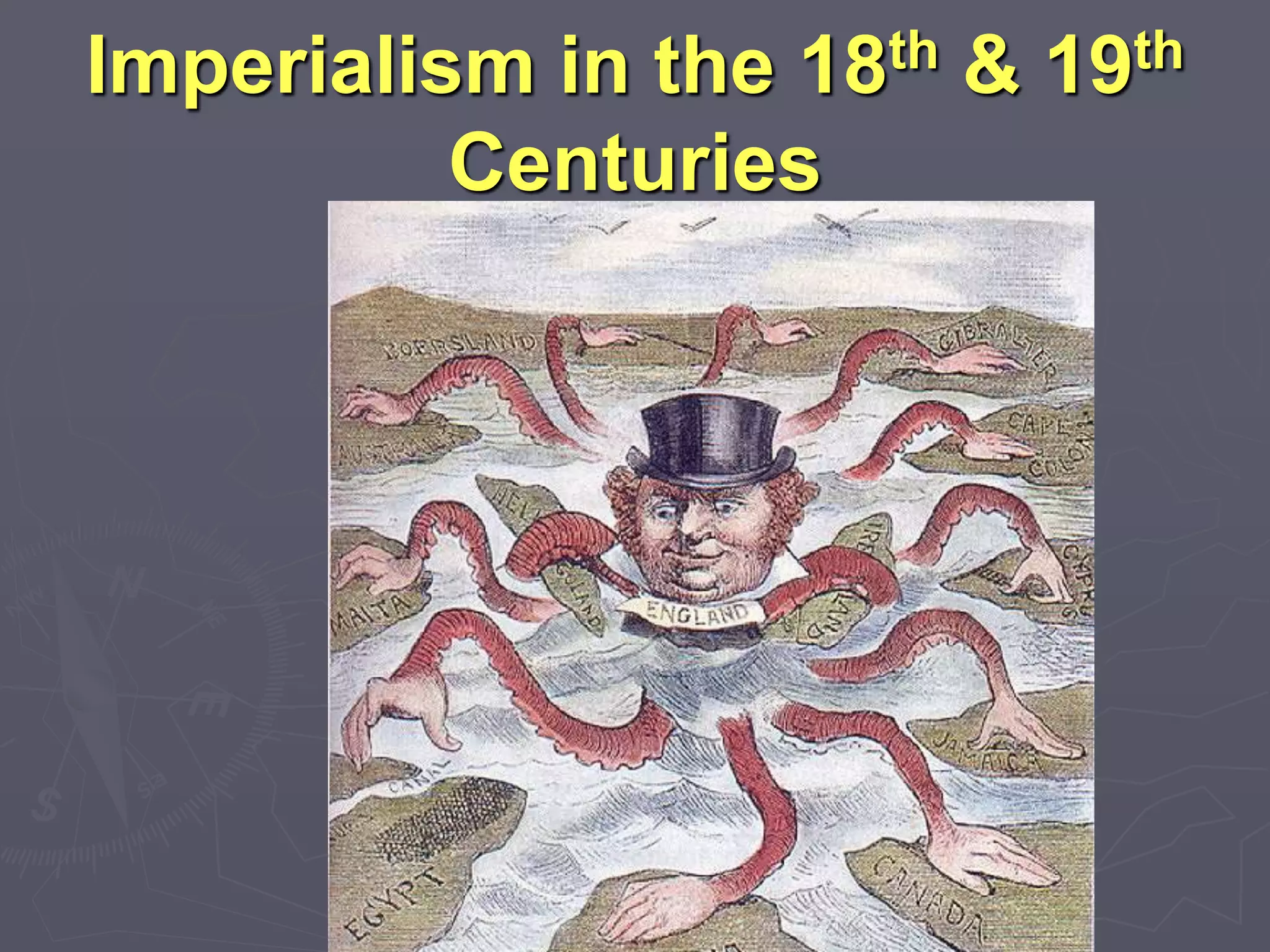
Imperialism in the 18th & 19th
Centuries
IMPERIALISM (1770s-1914)
Industrialized nations (Europe, U.S.,
Russia, and later Japan)
strengthened their control over their
colonies AND established
transoceanic empires throughout
Asia, the Pacific, and Africa.
Imperialism is this extension of
political and economic control of
stronger nations over weaker nations
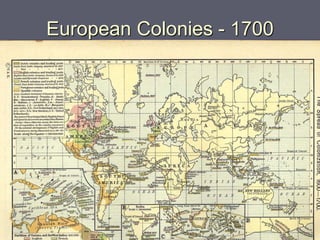
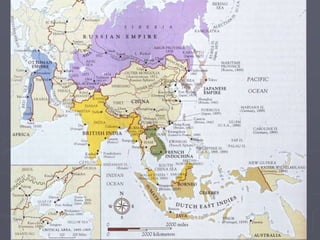
European Colonies - 1700
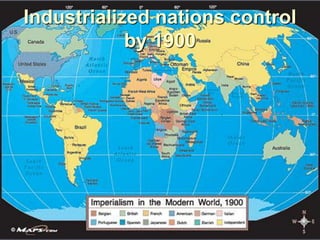
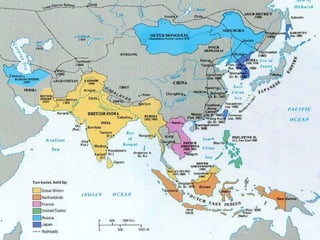
Industrialized nations control
by 1900
WHY did industrialized
nations seek to control
other areas of the world in
the 18th and 19th centuries?
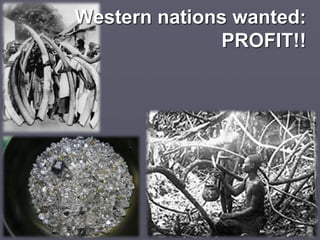
Western nations wanted:
PROFIT!!
 To control the trade of valuable
products around the world-
industrialization and growing affluence
led to the need for extensive raw
materials and agricultural products
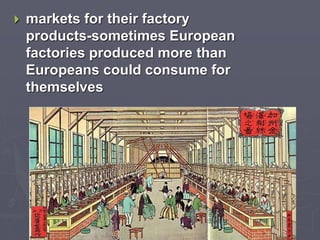
 markets for their factory
products-sometimes European
factories produced more than
Europeans could consume for
themselves
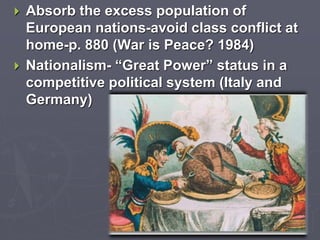
 Absorb the excess population of
European nations-avoid class conflict at
home-p. 880 (War is Peace? 1984)
 Nationalism- “Great Power” status in a
competitive political system (Italy and
Germany)
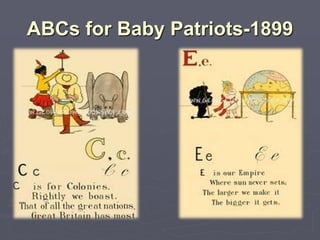
ABCs for Baby Patriots-1899
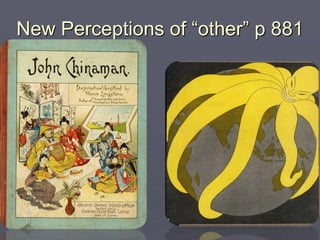
New Perceptions of “other” p 881
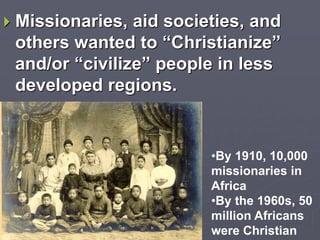
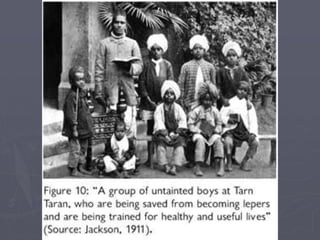
 Missionaries, aid societies, and
others wanted to “Christianize”
and/or “civilize” people in less
developed regions.
•By 1910, 10,000
missionaries in
Africa
•By the 1960s, 50
million Africans
were Christian
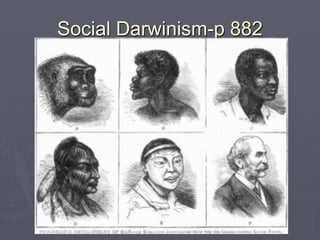
Social Darwinism-p 882
HOW did they do it?
Industrialized nations:
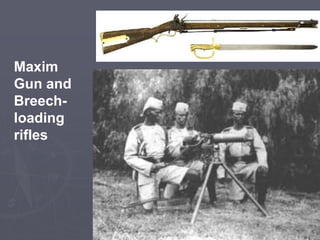
 Used their stronger militaries
(using superior firepower,
military technology, & navies)
 Relied on native elites who were
Western educated
Maxim
Gun and
Breech-
loading
rifles
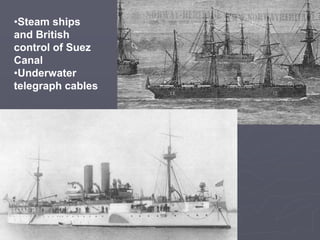
•Steam ships
and British
control of Suez
Canal
•Underwater
telegraph cables
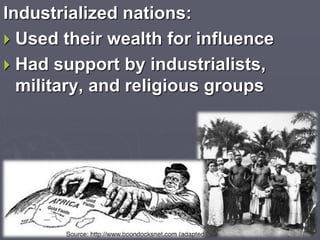
Industrialized nations:
 Used their wealth for influence
 Had support by industrialists,
military, and religious groups
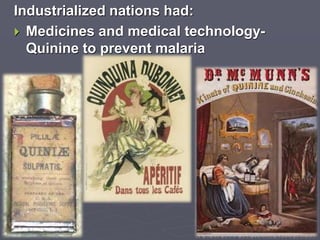
Industrialized nations had:
 Medicines and medical technology-
Quinine to prevent malaria
JUSTIFICATION for
Imperialism
 Widespread belief among
imperial powers that European
races SHOULD dominate the
world.
 SOCIAL DARWINISM – survival
of the world’s best races
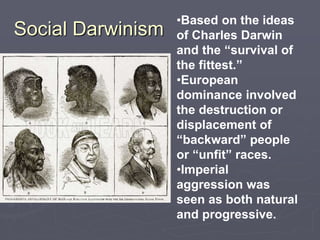
Social Darwinism
•Based on the ideas
of Charles Darwin
and the “survival of
the fittest.”
•European
dominance involved
the destruction or
displacement of
“backward” people
or “unfit” races.
•Imperial
aggression was
seen as both natural
and progressive.
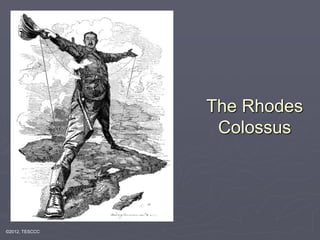
The Rhodes
Colossus
©2012, TESCCC
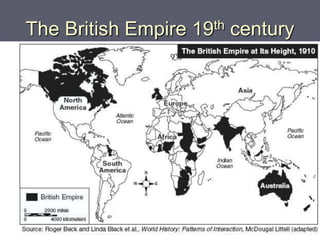
The British Empire 19th century
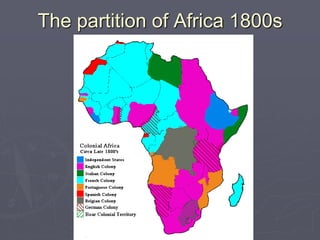
The partition of Africa 1800s
Scramble for Africa
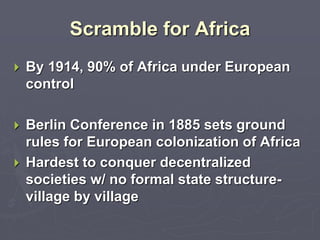
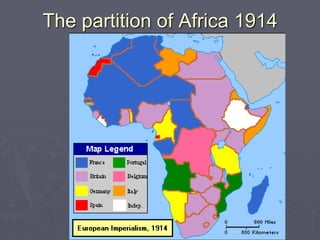
 By 1914, 90% of Africa under European
control
 Berlin Conference in 1885 sets ground
rules for European colonization of Africa
 Hardest to conquer decentralized
societies w/ no formal state structure-
village by village
The partition of Africa 1914
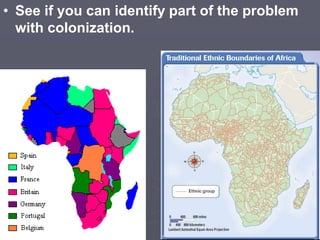
• See if you can identify part of the problem
with colonization.
Scramble for Africa
 Consequences
 Traditional way of life disrupted
 Economic exploitation of Africans
 European racism imported into Africa
 Spread of European culture-education
and religion
 Spread of Western technology
 Change to women’s roles
Scramble for Africa
 Economic Consequences-Rise in forced
labor within Africa
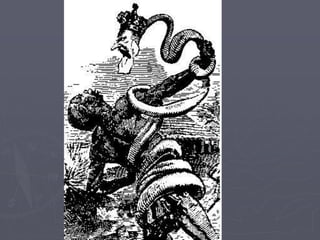
 Forced Labor-Belgian Congo most infamous
case of abuse
 Cash-Crop agriculture-often led to famine
for local people and dependence on foreign
markets
 Wage Labor-migration of labor, urbanization,
mines
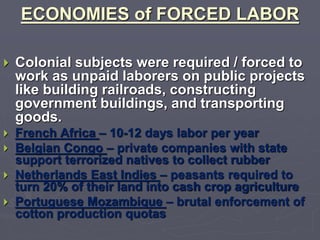
ECONOMIES of FORCED LABOR
 Colonial subjects were required / forced to
work as unpaid laborers on public projects
like building railroads, constructing
government buildings, and transporting
goods.
 French Africa – 10-12 days labor per year
 Belgian Congo – private companies with state
support terrorized natives to collect rubber
 Netherlands East Indies – peasants required to
turn 20% of their land into cash crop agriculture
 Portuguese Mozambique – brutal enforcement of
cotton production quotas
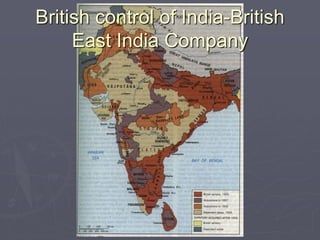
British control of India-British
East India Company
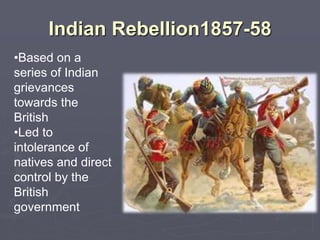
Indian Rebellion1857-58
•Based on a
series of Indian
grievances
towards the
British
•Led to
intolerance of
natives and direct
control by the
British
government
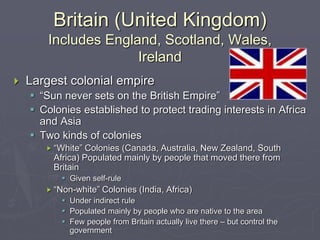
Britain (United Kingdom)
Includes England, Scotland, Wales,
Ireland
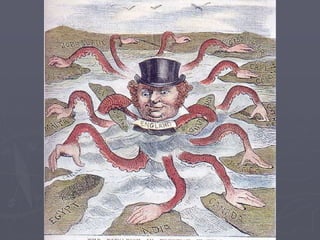
 Largest colonial empire
 “Sun never sets on the British Empire”
 Colonies established to protect trading interests in Africa
and Asia
 Two kinds of colonies
 “White” Colonies (Canada, Australia, New Zealand, South
Africa) Populated mainly by people that moved there from
Britain
 Given self-rule
 “Non-white” Colonies (India, Africa)
 Under indirect rule
 Populated mainly by people who are native to the area
 Few people from Britain actually live there – but control the
government
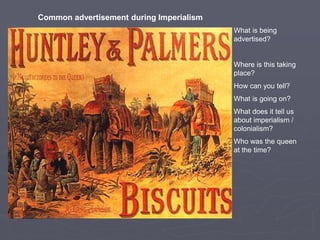
What is being
advertised?
Where is this taking
place?
How can you tell?
What is going on?
What does it tell us
about imperialism /
colonialism?
Who was the queen
at the time?
Common advertisement during Imperialism
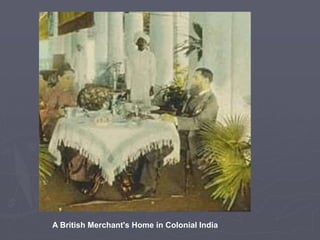
A British Merchant's Home in Colonial India
European Imperialism in India
 Consequences of British Imperialism in India
 British educational system established-creates
cultural divide between educated and
uneducated
 Spread of English language
 Railroads tie India together
 Rise of Indian middle class-Western educated
and eventually politically active

Imperialism 2014

  • 1.
    Imperialism in the18th & 19th Centuries
  • 2.
    IMPERIALISM (1770s-1914) Industrialized nations(Europe, U.S., Russia, and later Japan) strengthened their control over their colonies AND established transoceanic empires throughout Asia, the Pacific, and Africa. Imperialism is this extension of political and economic control of stronger nations over weaker nations
  • 3.
  • 4.
  • 7.
    WHY did industrialized nationsseek to control other areas of the world in the 18th and 19th centuries?
  • 8.
  • 9.
     To controlthe trade of valuable products around the world- industrialization and growing affluence led to the need for extensive raw materials and agricultural products
  • 10.
     markets fortheir factory products-sometimes European factories produced more than Europeans could consume for themselves
  • 11.
     Absorb theexcess population of European nations-avoid class conflict at home-p. 880 (War is Peace? 1984)  Nationalism- “Great Power” status in a competitive political system (Italy and Germany)
  • 12.
    ABCs for BabyPatriots-1899
  • 13.
    New Perceptions of“other” p 881
  • 14.
     Missionaries, aidsocieties, and others wanted to “Christianize” and/or “civilize” people in less developed regions. •By 1910, 10,000 missionaries in Africa •By the 1960s, 50 million Africans were Christian
  • 16.
  • 17.
    HOW did theydo it? Industrialized nations:  Used their stronger militaries (using superior firepower, military technology, & navies)  Relied on native elites who were Western educated
  • 18.
  • 19.
    •Steam ships and British controlof Suez Canal •Underwater telegraph cables
  • 20.
    Industrialized nations:  Usedtheir wealth for influence  Had support by industrialists, military, and religious groups
  • 21.
    Industrialized nations had: Medicines and medical technology- Quinine to prevent malaria
  • 22.
    JUSTIFICATION for Imperialism  Widespreadbelief among imperial powers that European races SHOULD dominate the world.  SOCIAL DARWINISM – survival of the world’s best races
  • 23.
    Social Darwinism •Based onthe ideas of Charles Darwin and the “survival of the fittest.” •European dominance involved the destruction or displacement of “backward” people or “unfit” races. •Imperial aggression was seen as both natural and progressive.
  • 25.
  • 26.
    The British Empire19th century
  • 28.
    The partition ofAfrica 1800s
  • 29.
    Scramble for Africa By 1914, 90% of Africa under European control  Berlin Conference in 1885 sets ground rules for European colonization of Africa  Hardest to conquer decentralized societies w/ no formal state structure- village by village
  • 30.
    The partition ofAfrica 1914
  • 31.
    • See ifyou can identify part of the problem with colonization.
  • 32.
    Scramble for Africa Consequences  Traditional way of life disrupted  Economic exploitation of Africans  European racism imported into Africa  Spread of European culture-education and religion  Spread of Western technology  Change to women’s roles
  • 33.
    Scramble for Africa Economic Consequences-Rise in forced labor within Africa  Forced Labor-Belgian Congo most infamous case of abuse  Cash-Crop agriculture-often led to famine for local people and dependence on foreign markets  Wage Labor-migration of labor, urbanization, mines
  • 34.
    ECONOMIES of FORCEDLABOR  Colonial subjects were required / forced to work as unpaid laborers on public projects like building railroads, constructing government buildings, and transporting goods.  French Africa – 10-12 days labor per year  Belgian Congo – private companies with state support terrorized natives to collect rubber  Netherlands East Indies – peasants required to turn 20% of their land into cash crop agriculture  Portuguese Mozambique – brutal enforcement of cotton production quotas
  • 36.
    British control ofIndia-British East India Company
  • 37.
    Indian Rebellion1857-58 •Based ona series of Indian grievances towards the British •Led to intolerance of natives and direct control by the British government
  • 38.
    Britain (United Kingdom) IncludesEngland, Scotland, Wales, Ireland  Largest colonial empire  “Sun never sets on the British Empire”  Colonies established to protect trading interests in Africa and Asia  Two kinds of colonies  “White” Colonies (Canada, Australia, New Zealand, South Africa) Populated mainly by people that moved there from Britain  Given self-rule  “Non-white” Colonies (India, Africa)  Under indirect rule  Populated mainly by people who are native to the area  Few people from Britain actually live there – but control the government
  • 39.
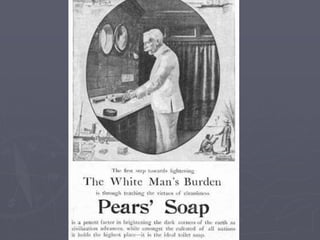
    What is being advertised? Whereis this taking place? How can you tell? What is going on? What does it tell us about imperialism / colonialism? Who was the queen at the time? Common advertisement during Imperialism
  • 40.
    A British Merchant'sHome in Colonial India
  • 41.
    European Imperialism inIndia  Consequences of British Imperialism in India  British educational system established-creates cultural divide between educated and uneducated  Spread of English language  Railroads tie India together  Rise of Indian middle class-Western educated and eventually politically active