Imperialism and colonialism
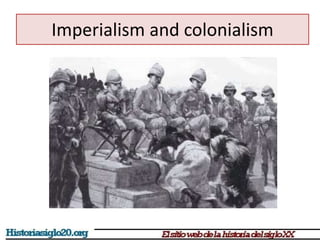
Imperialism and colonialism 
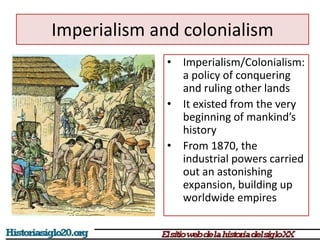
• Imperialism/Colonialism: 
a policy of conquering 
and ruling other lands 
• It existed from the very 
beginning of mankind’s 
history 
• From 1870, the 
industrial powers carried 
out an astonishing 
expansion, building up 
worldwide empires
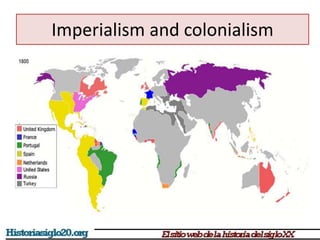
Imperialism and colonialism
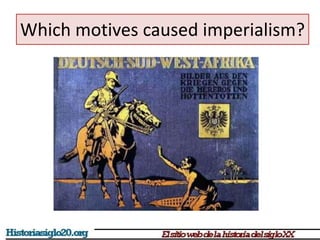
Which motives caused imperialism? 
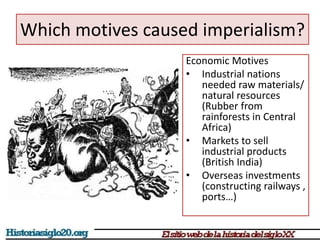
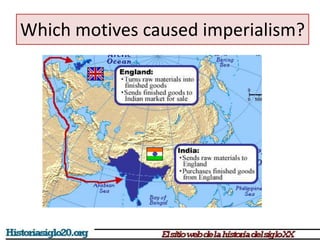
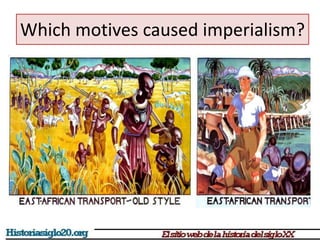
Economic Motives 
• Industrial nations 
needed raw materials/ 
natural resources 
(Rubber from 
rainforests in Central 
Africa) 
• Markets to sell 
industrial products 
(British India) 
• Overseas investments 
(constructing railways , 
ports…)
Which motives caused imperialism?
Which motives caused imperialism? 
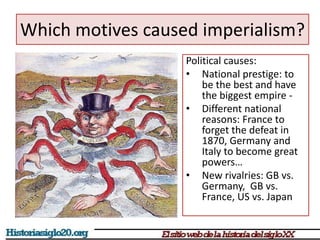
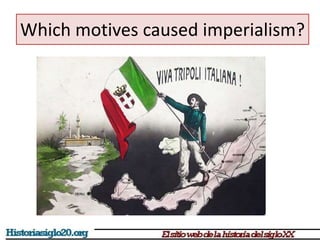
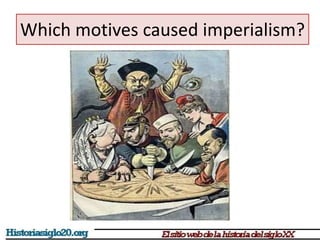
Political causes: 
• National prestige: to 
be the best and have 
the biggest empire - 
• Different national 
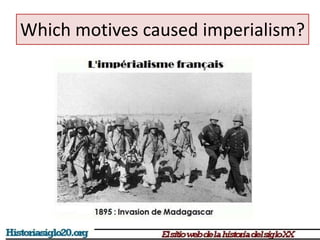
reasons: France to 
forget the defeat in 
1870, Germany and 
Italy to become great 
powers… 
• New rivalries: GB vs. 
Germany, GB vs. 
France, US vs. Japan
Which motives caused imperialism?
Which motives caused imperialism? 
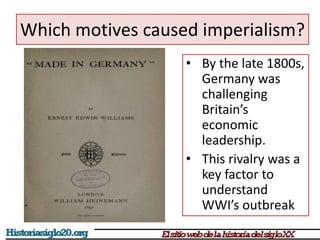
• By the late 1800s, 
Germany was 
challenging 
Britain’s 
economic 
leadership. 
• This rivalry was a 
key factor to 
understand 
WWI’s outbreak
Which motives caused imperialism? 
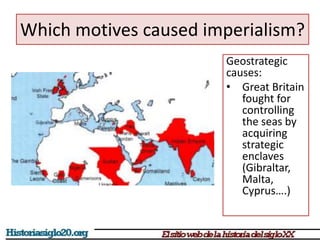
Geostrategic 
causes: 
• Great Britain 
fought for 
controlling 
the seas by 
acquiring 
strategic 
enclaves 
(Gibraltar, 
Malta, 
Cyprus….)
Which motives caused imperialism? 
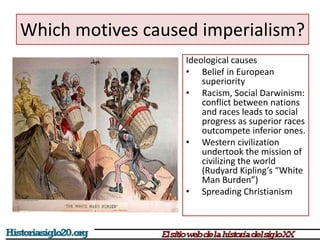
Ideological causes 
• Belief in European 
superiority 
• Racism, Social Darwinism: 
conflict between nations 
and races leads to social 
progress as superior races 
outcompete inferior ones. 
• Western civilization 
undertook the mission of 
civilizing the world 
(Rudyard Kipling’s “White 
Man Burden”) 
• Spreading Christianism
Which motives caused imperialism? 
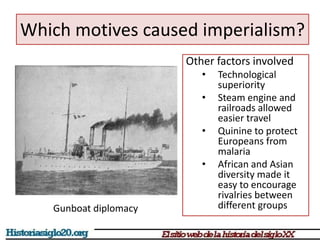
Other factors involved 
• Technological 
superiority 
• Steam engine and 
railroads allowed 
easier travel 
• Quinine to protect 
Europeans from 
malaria 
• African and Asian 
diversity made it 
easy to encourage 
rivalries between 
different groups 
Gunboat diplomacy
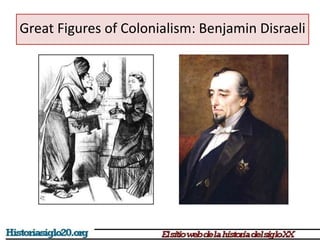
Great Figures of Colonialism: Benjamin Disraeli
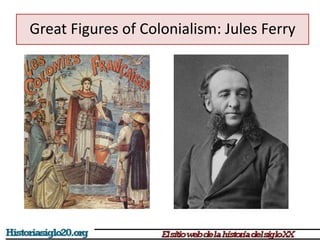
Great Figures of Colonialism: Jules Ferry
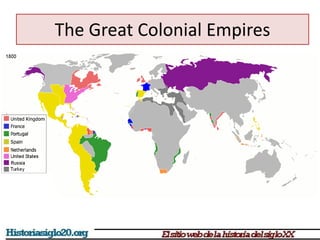
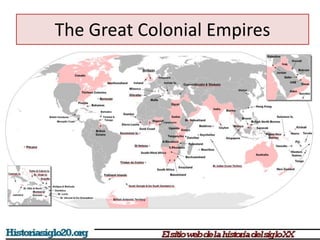
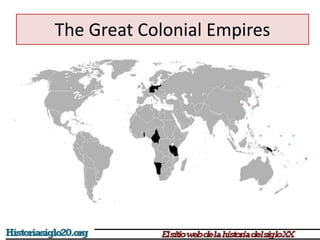
The Great Colonial Empires
The Great Colonial Empires 
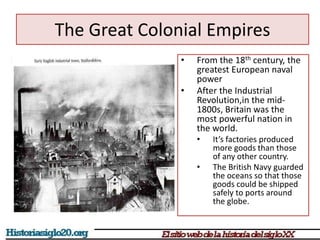
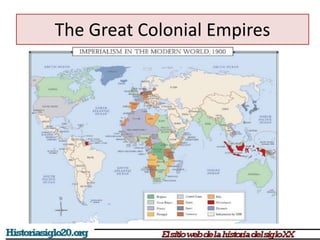
• From the 18th century, the 
greatest European naval 
power 
• After the Industrial 
Revolution,in the mid- 
1800s, Britain was the 
most powerful nation in 
the world. 
• It’s factories produced 
more goods than those 
of any other country. 
• The British Navy guarded 
the oceans so that those 
goods could be shipped 
safely to ports around 
the globe.
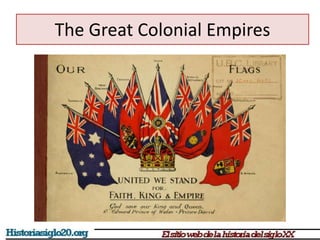
The Great Colonial Empires
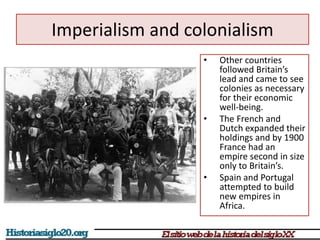
Imperialism and colonialism 
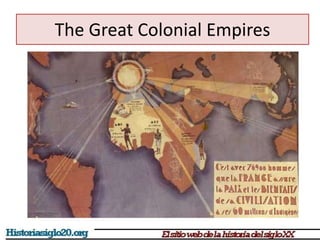
• Other countries 
followed Britain’s 
lead and came to see 
colonies as necessary 
for their economic 
well-being. 
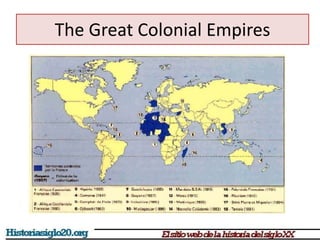
• The French and 
Dutch expanded their 
holdings and by 1900 
France had an 
empire second in size 
only to Britain’s. 
• Spain and Portugal 
attempted to build 
new empires in 
Africa.
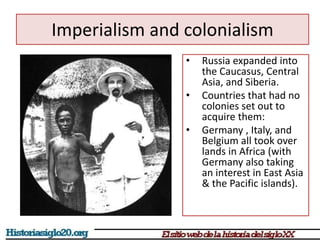
Imperialism and colonialism 
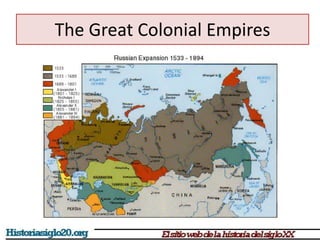
• Russia expanded into 
the Caucasus, Central 
Asia, and Siberia. 
• Countries that had no 
colonies set out to 
acquire them: 
• Germany , Italy, and 
Belgium all took over 
lands in Africa (with 
Germany also taking 
an interest in East Asia 
& the Pacific islands).
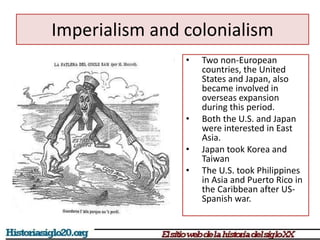
Imperialism and colonialism 
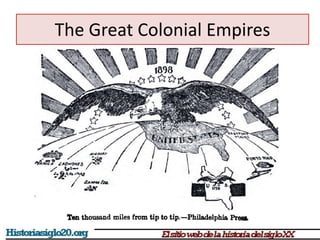
• Two non-European 
countries, the United 
States and Japan, also 
became involved in 
overseas expansion 
during this period. 
• Both the U.S. and Japan 
were interested in East 
Asia. 
• Japan took Korea and 
Taiwan 
• The U.S. took Philippines 
in Asia and Puerto Rico in 
the Caribbean after US-Spanish 
war.
The Great Colonial Empires
The carve up of Africa 
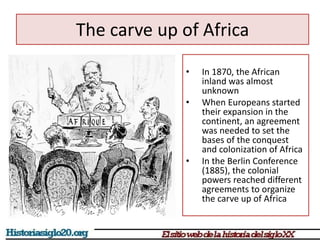
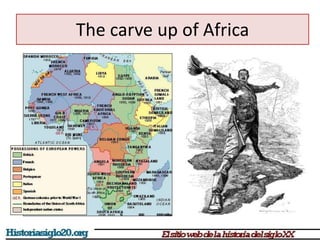
• In 1870, the African 
inland was almost 
unknown 
• When Europeans started 
their expansion in the 
continent, an agreement 
was needed to set the 
bases of the conquest 
and colonization of Africa 
• In the Berlin Conference 
(1885), the colonial 
powers reached different 
agreements to organize 
the carve up of Africa
The carve up of Africa 
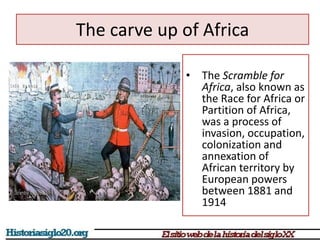
• The Scramble for 
Africa, also known as 
the Race for Africa or 
Partition of Africa, 
was a process of 
invasion, occupation, 
colonization and 
annexation of 
African territory by 
European powers 
between 1881 and 
1914
The carve up of Africa
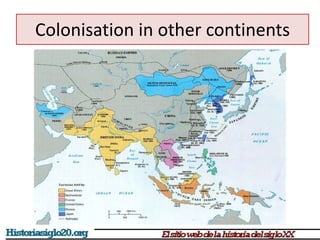
Colonisation in other continents 
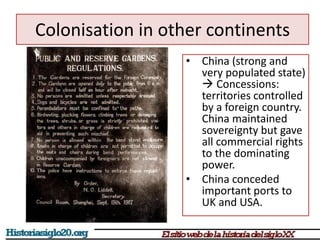
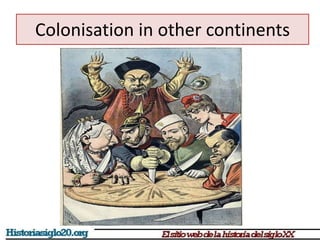
• China (strong and 
very populated state) 
 Concessions: 
territories controlled 
by a foreign country. 
China maintained 
sovereignty but gave 
all commercial rights 
to the dominating 
power. 
• China conceded 
important ports to 
UK and USA.
Colonisation in other continents
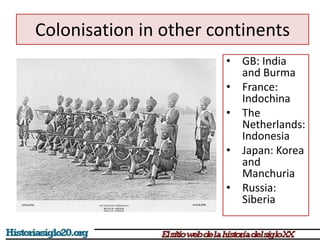
Colonisation in other continents 
• GB: India 
and Burma 
• France: 
Indochina 
• The 
Netherlands: 
Indonesia 
• Japan: Korea 
and 
Manchuria 
• Russia: 
Siberia
Colonisation in other continents
Mixed consequences of imperialism 
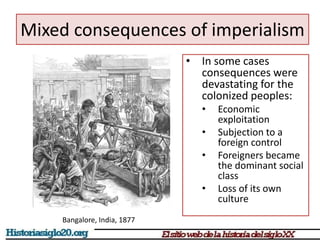
• In some cases 
consequences were 
devastating for the 
colonized peoples: 
• Economic 
exploitation 
• Subjection to a 
foreign control 
• Foreigners became 
the dominant social 
class 
• Loss of its own 
culture 
Bangalore, India, 1877
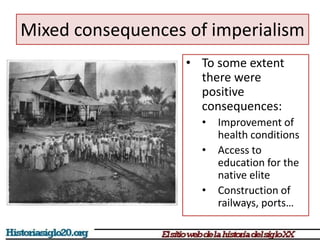
Mixed consequences of imperialism 
• To some extent 
there were 
positive 
consequences: 
• Improvement of 
health conditions 
• Access to 
education for the 
native elite 
• Construction of 
railways, ports…
Mixed consequences of imperialism 
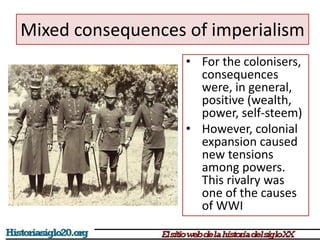
• For the colonisers, 
consequences 
were, in general, 
positive (wealth, 
power, self-steem) 
• However, colonial 
expansion caused 
new tensions 
among powers. 
This rivalry was 
one of the causes 
of WWI

Colonialism and imperialism

  • 1.
  • 2.
    Imperialism and colonialism • Imperialism/Colonialism: a policy of conquering and ruling other lands • It existed from the very beginning of mankind’s history • From 1870, the industrial powers carried out an astonishing expansion, building up worldwide empires
  • 3.
  • 4.
    Which motives causedimperialism? Economic Motives • Industrial nations needed raw materials/ natural resources (Rubber from rainforests in Central Africa) • Markets to sell industrial products (British India) • Overseas investments (constructing railways , ports…)
  • 5.
  • 6.
  • 7.
    Which motives causedimperialism? Political causes: • National prestige: to be the best and have the biggest empire - • Different national reasons: France to forget the defeat in 1870, Germany and Italy to become great powers… • New rivalries: GB vs. Germany, GB vs. France, US vs. Japan
  • 8.
  • 9.
  • 10.
  • 11.
  • 12.
    Which motives causedimperialism? • By the late 1800s, Germany was challenging Britain’s economic leadership. • This rivalry was a key factor to understand WWI’s outbreak
  • 13.
    Which motives causedimperialism? Geostrategic causes: • Great Britain fought for controlling the seas by acquiring strategic enclaves (Gibraltar, Malta, Cyprus….)
  • 14.
    Which motives causedimperialism? Ideological causes • Belief in European superiority • Racism, Social Darwinism: conflict between nations and races leads to social progress as superior races outcompete inferior ones. • Western civilization undertook the mission of civilizing the world (Rudyard Kipling’s “White Man Burden”) • Spreading Christianism
  • 15.
    Which motives causedimperialism? Other factors involved • Technological superiority • Steam engine and railroads allowed easier travel • Quinine to protect Europeans from malaria • African and Asian diversity made it easy to encourage rivalries between different groups Gunboat diplomacy
  • 16.
    Great Figures ofColonialism: Benjamin Disraeli
  • 17.
    Great Figures ofColonialism: Jules Ferry
  • 18.
  • 19.
    The Great ColonialEmpires • From the 18th century, the greatest European naval power • After the Industrial Revolution,in the mid- 1800s, Britain was the most powerful nation in the world. • It’s factories produced more goods than those of any other country. • The British Navy guarded the oceans so that those goods could be shipped safely to ports around the globe.
  • 20.
  • 21.
  • 22.
    Imperialism and colonialism • Other countries followed Britain’s lead and came to see colonies as necessary for their economic well-being. • The French and Dutch expanded their holdings and by 1900 France had an empire second in size only to Britain’s. • Spain and Portugal attempted to build new empires in Africa.
  • 23.
    Imperialism and colonialism • Russia expanded into the Caucasus, Central Asia, and Siberia. • Countries that had no colonies set out to acquire them: • Germany , Italy, and Belgium all took over lands in Africa (with Germany also taking an interest in East Asia & the Pacific islands).
  • 24.
    Imperialism and colonialism • Two non-European countries, the United States and Japan, also became involved in overseas expansion during this period. • Both the U.S. and Japan were interested in East Asia. • Japan took Korea and Taiwan • The U.S. took Philippines in Asia and Puerto Rico in the Caribbean after US-Spanish war.
  • 25.
  • 26.
  • 27.
  • 28.
  • 29.
  • 30.
  • 31.
  • 32.
    The carve upof Africa • In 1870, the African inland was almost unknown • When Europeans started their expansion in the continent, an agreement was needed to set the bases of the conquest and colonization of Africa • In the Berlin Conference (1885), the colonial powers reached different agreements to organize the carve up of Africa
  • 33.
    The carve upof Africa • The Scramble for Africa, also known as the Race for Africa or Partition of Africa, was a process of invasion, occupation, colonization and annexation of African territory by European powers between 1881 and 1914
  • 34.
    The carve upof Africa
  • 35.
    Colonisation in othercontinents • China (strong and very populated state)  Concessions: territories controlled by a foreign country. China maintained sovereignty but gave all commercial rights to the dominating power. • China conceded important ports to UK and USA.
  • 36.
  • 37.
    Colonisation in othercontinents • GB: India and Burma • France: Indochina • The Netherlands: Indonesia • Japan: Korea and Manchuria • Russia: Siberia
  • 38.
  • 39.
    Mixed consequences ofimperialism • In some cases consequences were devastating for the colonized peoples: • Economic exploitation • Subjection to a foreign control • Foreigners became the dominant social class • Loss of its own culture Bangalore, India, 1877
  • 40.
    Mixed consequences ofimperialism • To some extent there were positive consequences: • Improvement of health conditions • Access to education for the native elite • Construction of railways, ports…
  • 41.
    Mixed consequences ofimperialism • For the colonisers, consequences were, in general, positive (wealth, power, self-steem) • However, colonial expansion caused new tensions among powers. This rivalry was one of the causes of WWI