The Atlantic Slave Trade
The Main Idea
To Meet their growing labor needs,
Europeans enslaved millions of Africans in
forced labor in the Americas.
Terms and Names
Atlantic Slave Trade
Triangular trade
Middle Passage
Setting the Stage
Sugar plantations and tobacco farms
required a large supply of workers to make
them profitable for their owners. Since
most of the Native Americans that were
used for labor had died, they turned to
Africa for a new source of labor.
The Evolution of African Slavery
Slavery in Africa, as in other parts of the world,
had existed for ages
Slavery is thought to be as old as civilization itself
New agricultural techniques created a need for
more labor, and prisoners of war were put to use
Evolution of African Slavery
African rulers justified the sale of slaves through
their Muslim beliefs.
Between the years 650 and 1600, black and white
Muslims transported 4.8 million African to
Muslim lands in SW Asia.
In African and Muslim societies, slaves had rights
and the opportunity for social mobility.
Slavery in African and Muslim societies was NOT
hereditary.
The Desire for Africans
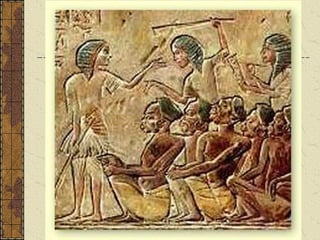
The Portuguese were the first Europeans to
Explore Africa.
They were more interested in trading for
gold than for slaves.
The colonization of the Americas changed
the focus of trade.
WHY???? Answer with partner.
The Desire for Africans
There were several advantages in using
Africans:
They had been exposed to European diseases
They had experience in farming
They had little knowledge of the land and there
were no familiar tribes
The Desire for Africans
This trade for slaves became the Atlantic
Slave Trade
Between 1500 and 1600, about 300,000
slaves were taken to the Americas.
During the next 100 years, the number
jumped to 1.5 million, and by 1870 the
number was about 9.5 million.
Spain and Portugal lead the way
During the 1600’s, Brazil dominated the sugar
market – and as it grew, so did the need for
slaves.
During the late 17th
century, nearly 40% of
the slaves from Africa were taken to Brazil.
Brazil, by the end of the slave trade, had 10
times the amount of slaves than in North
America.
Slavery Spreads
England then dominated the slave trade
from the 1690 until 1807.
By 1830, there were nearly 2 million
African slaves in North America.
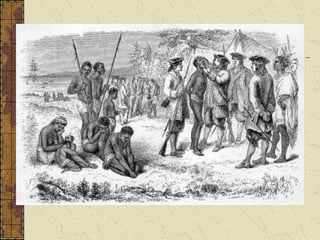
African merchants, with the help of local
rulers, captured fellow Africans to be
enslaved.
They delivered them to the Europeans in
exchange for gold, guns and other goods.
Forced Journey
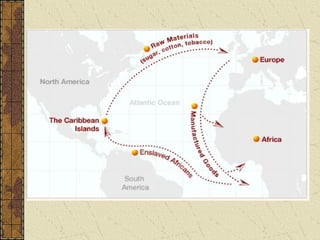
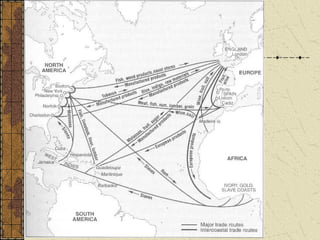
The trade routes formed a Triangle,
becoming known as the triangular trade.
Manufactured goods from Europe to Africa
Slaves from Africa to the Americas
Rum, and other goods from the Americas to
Europe
Forced Journey
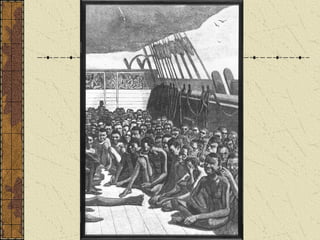
The voyage across the Atlantic was
dehumanizing, and deadly
Nearly 1/3 died between capture and sailing
Another 1/3 died in the crossing
Forced Journey
Many Africans jumped overboard to their
deaths rather than be enslaved.
Diseases ravaged the “passengers”
Cruel treatment ravaged more
Forced Journey
The second part of the journey, from Africa
to the Americas was known as the Middle
Passage.
Formula – 2 slaves per tonne
Loose Pack and Tight Pack
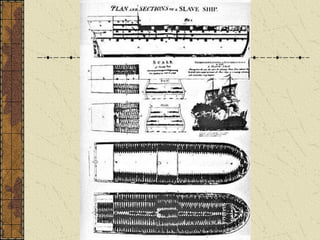
The Slavers
Small and narrow ships
Two slaves per ship tonnage formula
Most captains are “tight packers”
ignored formula in the name of profits
The Slavers (cont.)
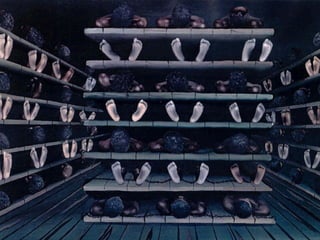
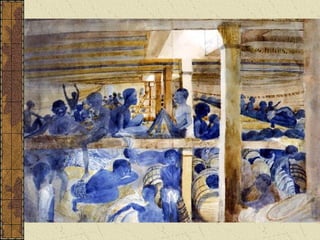
Crowded, unsanitary conditions
Slaves ride on planks 66” x 15”
• only 20”– 25” of headroom
Males chained together in pairs
Kept apart from women and children
High mortality rates
• 1/3 perish between capture and embarkation
Provisions for the Middle
Passage
Slaves fed twice per day
Poor and insufficient diet
• Vegetable pulps, stews, and fruits
• Denied meat or fish
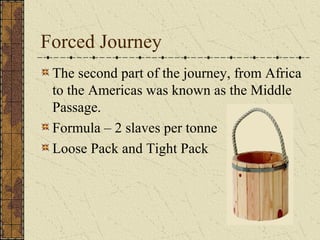
• Ten people eating from one bucket
• Unwashed hands spread disease
• Malnutrition ~ weakness ~ depression ~ death
The Crossing
Canary Islands to the Windward Islands
40 to 180 days to reach the Caribbean
Pirates attacked Spanish ships
Frightening experience
Growth of the Atlantic Slave
Trade
Harsher in the Americas
Based on race
Most were males
Believed they were stronger laborers than
females
Agricultural workers
Resistance and Revolt at Sea
Uprisings were common
Most rebellions before sailing
Some preferred death to bondage
Justification for harsh treatment by slavers
Cruelty
Middle passage horrors exaggerated
Exceptionally cruel
Slaves had half the space allowed indentured
servants and convicts
Slavery suitable only for non-Christians
Brutal treatment by crew members
African Women on Slave Ships
Less protection against unwanted sexual
attention from European men
African women worth half the price of
African men in the Caribbean markets
Separation from male slaves made them
easier targets
The End of the Journey
Survival
One-third died
• men died at a greater rate than women
Adapt to new foods
Learn a new language
• Creole dialect well enough to obey commands
Psychological ~ no longer suicidal
• Africans retain culture despite the hardships and
cruel treatment
• Created bonds with shipmates that replaced blood
kinship
Landing and Sale in the
West Indies
Pre-sale
Bathe and exercise
Oil bodies to conceal blemishes and bruises
Hemp plugs
Seasoning
Modify behavior and attitude
Preparation for north American planters
Seasoning
Creoles
slaves born in the Americas
worth three times price unseasoned Africans
Old Africans
Lived in the Americas for some time
New Africans
Had just survived the middle passage
Creoles and old Africans instruct new
Africans
IX. The Ending of the Atlantic
Slave Trade
Cruelties help end Atlantic slave trade
Great Britain bans Atlantic slave trade in
1807
Patrols African coast to enforce
United states congress outlaws slave trade
in 1808
Guinea and western central African
kingdoms oppose banning slave trade
Conclusion
Nine to eleven million Africans brought to
the Americas during three centuries of trade
Millions more died
Most arrived between 1701 and 1810
Only 600,000 reached the British colonies of
north America
Consequences of the Atlantic
Slave Trade
In Africa, numerous cultures lost generations of
their strongest members, both men and women.
The slave trade introduced guns to the African
continent
African slaves contributed greatly to the cultural
and economic development of the Americas.
Africans brought their culture to the Americas

The atlantic slave trade

  • 1.
  • 2.
    The Main Idea ToMeet their growing labor needs, Europeans enslaved millions of Africans in forced labor in the Americas.
  • 3.
    Terms and Names AtlanticSlave Trade Triangular trade Middle Passage
  • 4.
    Setting the Stage Sugarplantations and tobacco farms required a large supply of workers to make them profitable for their owners. Since most of the Native Americans that were used for labor had died, they turned to Africa for a new source of labor.
  • 5.
    The Evolution ofAfrican Slavery Slavery in Africa, as in other parts of the world, had existed for ages Slavery is thought to be as old as civilization itself New agricultural techniques created a need for more labor, and prisoners of war were put to use
  • 7.
    Evolution of AfricanSlavery African rulers justified the sale of slaves through their Muslim beliefs. Between the years 650 and 1600, black and white Muslims transported 4.8 million African to Muslim lands in SW Asia. In African and Muslim societies, slaves had rights and the opportunity for social mobility. Slavery in African and Muslim societies was NOT hereditary.
  • 8.
    The Desire forAfricans The Portuguese were the first Europeans to Explore Africa. They were more interested in trading for gold than for slaves. The colonization of the Americas changed the focus of trade. WHY???? Answer with partner.
  • 9.
    The Desire forAfricans There were several advantages in using Africans: They had been exposed to European diseases They had experience in farming They had little knowledge of the land and there were no familiar tribes
  • 10.
    The Desire forAfricans This trade for slaves became the Atlantic Slave Trade Between 1500 and 1600, about 300,000 slaves were taken to the Americas. During the next 100 years, the number jumped to 1.5 million, and by 1870 the number was about 9.5 million.
  • 11.
    Spain and Portugallead the way During the 1600’s, Brazil dominated the sugar market – and as it grew, so did the need for slaves. During the late 17th century, nearly 40% of the slaves from Africa were taken to Brazil. Brazil, by the end of the slave trade, had 10 times the amount of slaves than in North America.
  • 12.
    Slavery Spreads England thendominated the slave trade from the 1690 until 1807. By 1830, there were nearly 2 million African slaves in North America. African merchants, with the help of local rulers, captured fellow Africans to be enslaved. They delivered them to the Europeans in exchange for gold, guns and other goods.
  • 14.
    Forced Journey The traderoutes formed a Triangle, becoming known as the triangular trade. Manufactured goods from Europe to Africa Slaves from Africa to the Americas Rum, and other goods from the Americas to Europe
  • 17.
    Forced Journey The voyageacross the Atlantic was dehumanizing, and deadly Nearly 1/3 died between capture and sailing Another 1/3 died in the crossing
  • 23.
    Forced Journey Many Africansjumped overboard to their deaths rather than be enslaved. Diseases ravaged the “passengers” Cruel treatment ravaged more
  • 24.
    Forced Journey The secondpart of the journey, from Africa to the Americas was known as the Middle Passage. Formula – 2 slaves per tonne Loose Pack and Tight Pack
  • 25.
    The Slavers Small andnarrow ships Two slaves per ship tonnage formula Most captains are “tight packers” ignored formula in the name of profits
  • 28.
    The Slavers (cont.) Crowded,unsanitary conditions Slaves ride on planks 66” x 15” • only 20”– 25” of headroom Males chained together in pairs Kept apart from women and children High mortality rates • 1/3 perish between capture and embarkation
  • 31.
    Provisions for theMiddle Passage Slaves fed twice per day Poor and insufficient diet • Vegetable pulps, stews, and fruits • Denied meat or fish • Ten people eating from one bucket • Unwashed hands spread disease • Malnutrition ~ weakness ~ depression ~ death
  • 32.
    The Crossing Canary Islandsto the Windward Islands 40 to 180 days to reach the Caribbean Pirates attacked Spanish ships Frightening experience
  • 33.
    Growth of theAtlantic Slave Trade Harsher in the Americas Based on race Most were males Believed they were stronger laborers than females Agricultural workers
  • 34.
    Resistance and Revoltat Sea Uprisings were common Most rebellions before sailing Some preferred death to bondage Justification for harsh treatment by slavers
  • 35.
    Cruelty Middle passage horrorsexaggerated Exceptionally cruel Slaves had half the space allowed indentured servants and convicts Slavery suitable only for non-Christians Brutal treatment by crew members
  • 36.
    African Women onSlave Ships Less protection against unwanted sexual attention from European men African women worth half the price of African men in the Caribbean markets Separation from male slaves made them easier targets
  • 37.
    The End ofthe Journey Survival One-third died • men died at a greater rate than women Adapt to new foods Learn a new language • Creole dialect well enough to obey commands Psychological ~ no longer suicidal • Africans retain culture despite the hardships and cruel treatment • Created bonds with shipmates that replaced blood kinship
  • 38.
    Landing and Salein the West Indies Pre-sale Bathe and exercise Oil bodies to conceal blemishes and bruises Hemp plugs
  • 40.
    Seasoning Modify behavior andattitude Preparation for north American planters
  • 41.
    Seasoning Creoles slaves born inthe Americas worth three times price unseasoned Africans Old Africans Lived in the Americas for some time New Africans Had just survived the middle passage Creoles and old Africans instruct new Africans
  • 42.
    IX. The Endingof the Atlantic Slave Trade Cruelties help end Atlantic slave trade Great Britain bans Atlantic slave trade in 1807 Patrols African coast to enforce United states congress outlaws slave trade in 1808 Guinea and western central African kingdoms oppose banning slave trade
  • 43.
    Conclusion Nine to elevenmillion Africans brought to the Americas during three centuries of trade Millions more died Most arrived between 1701 and 1810 Only 600,000 reached the British colonies of north America
  • 44.
    Consequences of theAtlantic Slave Trade In Africa, numerous cultures lost generations of their strongest members, both men and women. The slave trade introduced guns to the African continent African slaves contributed greatly to the cultural and economic development of the Americas. Africans brought their culture to the Americas