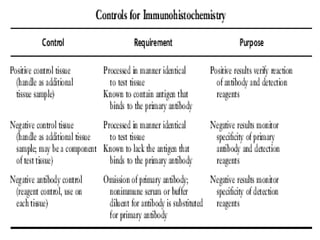
IMMUNOHISTOCHEMISTRY
Dr. Jayalakshmi V.
Dept of Pathology
BARCH
Immunohistochemistry
• Application of immunologic principles and
techniques to the study of cells and tissues
• The method for in situ detection of
antigens in tissues by Ag-Ab recognition,
by using specificity provided by Ab with its
Ag at a light microscopic level.
Principle of IHC
• The basic critical principle of IHC, as with
any other special staining method, is a
sharp visual localization of target
components in the cell and tissue, based
on a satisfactory signal-to-noise ratio.
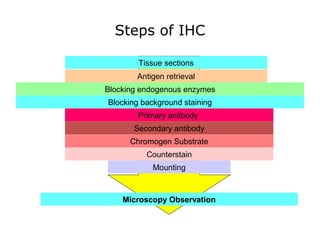
Steps of IHC
Slide 3 of 23
Tissue sections
Antigen retrieval
Blocking endogenous enzymes
Secondary antibody
Primary antibody
Microscopy Observation
Blocking background staining
Chromogen Substrate
Counterstain
Mounting
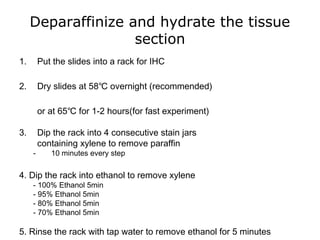
Deparaffinize and hydrate the tissue
section
1. Put the slides into a rack for IHC
2. Dry slides at 58℃ overnight (recommended)
or at 65℃ for 1-2 hours(for fast experiment)
3. Dip the rack into 4 consecutive stain jars
containing xylene to remove paraffin
- 10 minutes every step
4. Dip the rack into ethanol to remove xylene
- 100% Ethanol 5min
- 95% Ethanol 5min
- 80% Ethanol 5min
- 70% Ethanol 5min
5. Rinse the rack with tap water to remove ethanol for 5 minutes
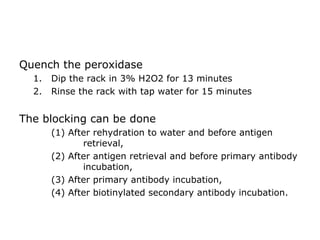
Quench the peroxidase
1. Dip the rack in 3% H2O2 for 13 minutes
2. Rinse the rack with tap water for 15 minutes
The blocking can be done
(1) After rehydration to water and before antigen
retrieval,
(2) After antigen retrieval and before primary antibody
incubation,
(3) After primary antibody incubation,
(4) After biotinylated secondary antibody incubation.
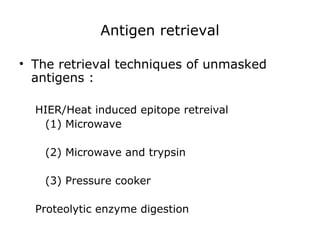
Antigen retrieval
• The retrieval techniques of unmasked
antigens :
HIER/Heat induced epitope retreival
(1) Microwave
(2) Microwave and trypsin
(3) Pressure cooker
Proteolytic enzyme digestion
HIER
• Buffer solutions for heat-induced epitope
retrieval
– Sodium Citrate Buffer (10mM Sodium Citrate,
0.05% Tween 20, pH 6.0)
– 1 mM EDTA, adjusted to pH 8.0
– Tris-EDTA Buffer (10mM Tris Base, 1mM EDTA
Solution, 0.05% Tween 20, pH 9.0)
• Put citrate buffer into a pressure cooker or
heat it without a lid in the microwave for 5
minutes (Prewarming)
• Put the rack into the citrate buffer
• Put a lid on the cooker and heat the
cooker for 10~15 minutes
• Remove the cooker and cool it down at RT
for 30 minutes
• Rinse the rack with tap water for 10
minutes
• Dip the slides in PBS buffer (at RT) for 10
minutes
• Enzymatic method
– Pepsin
– Trypsin
– Proteinase K
– Pronase
• Cover the slide with the above working
solutions for 10-20 min at 37degC
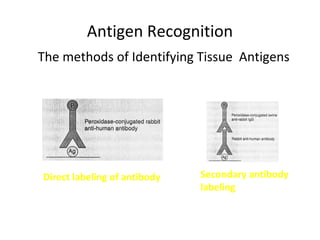
Antigen Recognition
Direct labeling of antibody Secondary antibody
labeling
The methods of Identifying Tissue Antigens
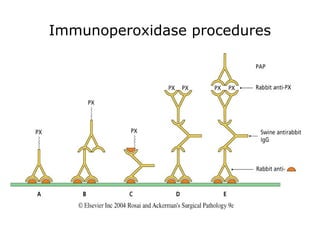
Immunoperoxidase procedures
• Put the two photographs from
Ackermann
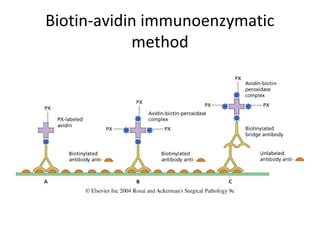
Biotin-avidin immunoenzymatic
method
Procedure for application of primary
and secondary Ab
• Primary Ab - Apply the appropriately diluted marker specific
Ab, incubate in a moist chamber for 1 hour
• Rinse slides in TBS for 5 min
• Secondary Ab – Apply 1:100 diluted biotinylated species
specific secondary Ab.
• Incubate the sections in a moist chamber for 30 min.
• Rinse the slides in TBS for 5 min.
• ABC incubation – Apply 1:1:100 diluted pre made avidin-
biotin complex
• Incubate at RT in moist chamber for 1 hr
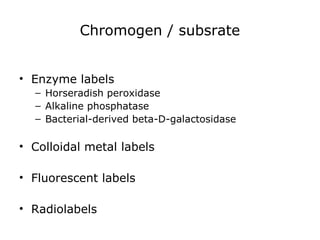
Chromogen / subsrate
• Enzyme labels
– Horseradish peroxidase
– Alkaline phosphatase
– Bacterial-derived beta-D-galactosidase
• Colloidal metal labels
• Fluorescent labels
• Radiolabels
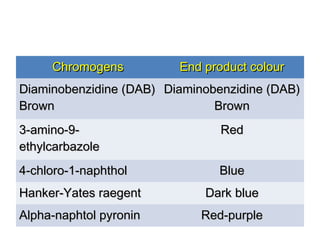
ChromogensChromogens End product colourEnd product colour
Diaminobenzidine (DAB)Diaminobenzidine (DAB)
BrownBrown
Diaminobenzidine (DAB)Diaminobenzidine (DAB)
BrownBrown
3-amino-9-3-amino-9-
ethylcarbazoleethylcarbazole
RedRed
4-chloro-1-naphthol4-chloro-1-naphthol BlueBlue
Hanker-Yates raegentHanker-Yates raegent Dark blueDark blue
Alpha-naphtol pyroninAlpha-naphtol pyronin Red-purpleRed-purple
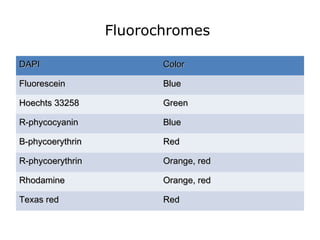
Fluorochromes
DAPIDAPI ColorColor
FluoresceinFluorescein BlueBlue
Hoechts 33258Hoechts 33258 GreenGreen
R-phycocyaninR-phycocyanin BlueBlue
B-phycoerythrinB-phycoerythrin RedRed
R-phycoerythrinR-phycoerythrin Orange, redOrange, red
RhodamineRhodamine Orange, redOrange, red
Texas redTexas red RedRed
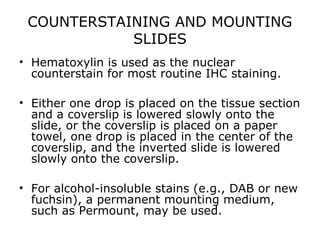
COUNTERSTAINING AND MOUNTING
SLIDES
• Hematoxylin is used as the nuclear
counterstain for most routine IHC staining.
• Either one drop is placed on the tissue section
and a coverslip is lowered slowly onto the
slide, or the coverslip is placed on a paper
towel, one drop is placed in the center of the
coverslip, and the inverted slide is lowered
slowly onto the coverslip.
• For alcohol-insoluble stains (e.g., DAB or new
fuchsin), a permanent mounting medium,
such as Permount, may be used.
Reporting
• Focus on what type of cells are staining
( tumor cells, endothelial cells,
stromal cells).
• Pattern of immunoreactivity must follow
anatomic distribution of antigen before
it is called +ve.
• Note the no. of cells staining, intensity
of staining & pattern of staining
(cytoplasmic, membranous, nuclear, dot
like).
Interpreting positivity
• Localisation of the Ag
– Nuclear – ER/PR, S-100, TTF1
– Cytoplasm – S-100, synaptophysin
– Membrane - CD20, CD45, Her-2, CD99
– ECM, basal laminae
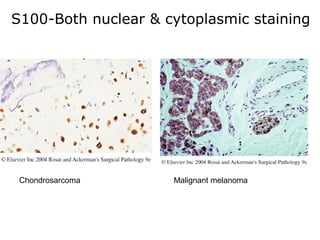
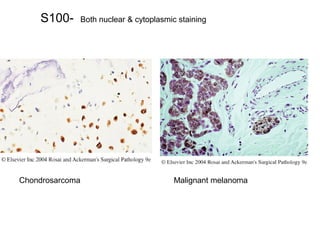
S100-Both nuclear & cytoplasmic staining
Chondrosarcoma Malignant melanoma
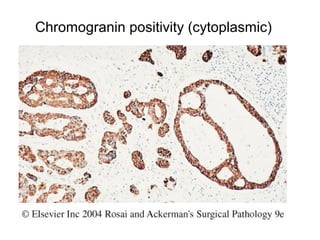
Chromogranin positivity (cytoplasmic)
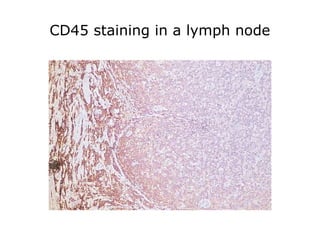
CD45 staining in a lymph node
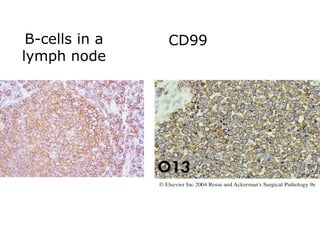
B-cells in a
lymph node
CD99
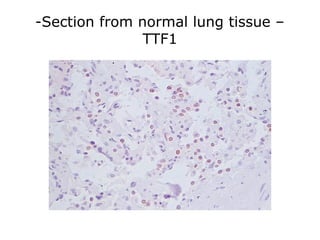
-Section from normal lung tissue –
TTF1
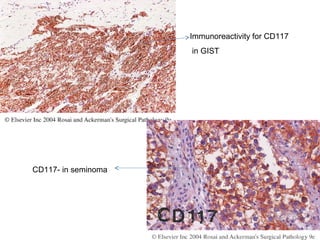
Immunoreactivity for CD117
in GIST
CD117- in seminoma
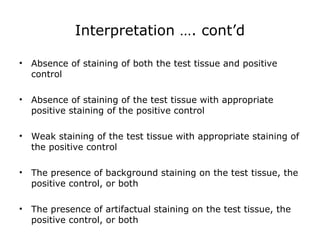
Interpretation …. cont’d
• Absence of staining of both the test tissue and positive
control
• Absence of staining of the test tissue with appropriate
positive staining of the positive control
• Weak staining of the test tissue with appropriate staining of
the positive control
• The presence of background staining on the test tissue, the
positive control, or both
• The presence of artifactual staining on the test tissue, the
positive control, or both
False negative results
• Ab is inappropriate, denatured or used at
wrong conc.
• Loss of Ag – through autolysis or diffusion.
• Presence of Ag at a low density, below the
level of detection with the reagents
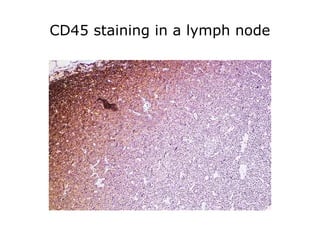
CD45 staining in a lymph node
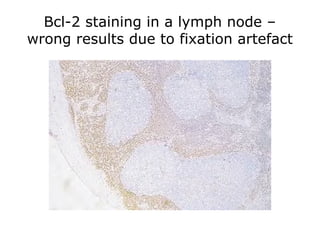
Bcl-2 staining in a lymph node –
wrong results due to fixation artefact
False positive results
• Cross reactivity of the Ab
• Non specific binding of the Ab to the tissue
• Presence of endogenous peroxidases in –
or avidity for avidin-biotin complex by –
some cellular elements
• Entrapment of normal tissue by tumor
cells
• Release of proteins from the cytoplasm of
the normal cells invaded by the tumor,
with subsequent permeation of the
interstitium and non specific absorption by
the tumor cells.
• “Chromogen freckles”
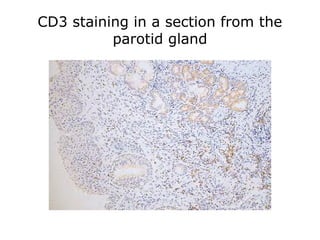
CD3 staining in a section from the
parotid gland
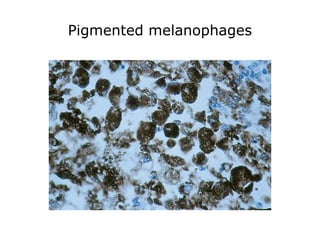
Pigmented melanophages
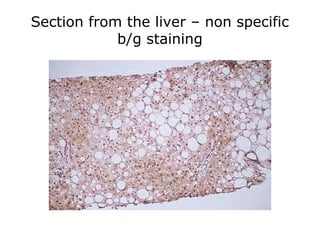
Section from the liver – non specific
b/g staining
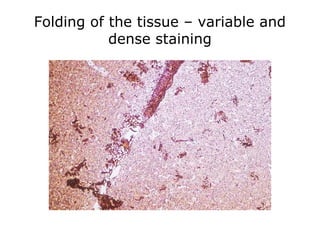
Folding of the tissue – variable and
dense staining
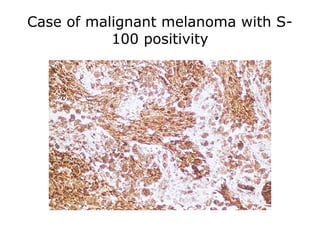
Case of malignant melanoma with S-
100 positivity
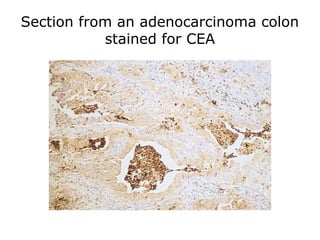
Section from an adenocarcinoma colon
stained for CEA
Some examples of utility of IHC in the
diagnosis and management of malignant
tumors
• Categorization of malignant tumors
• Categorization of leukemia/lymphoma
• Determination of origin of metastatic tumors
• Detection of molecules that have prognostic or
therapeutic importance
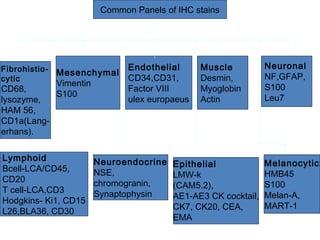
Common Panels of IHC stains
Epithelial
LMW-k
(CAM5.2),
AE1-AE3 CK cocktail,
CK7, CK20, CEA,
EMA
Mesenchymal
Vimentin
S100
Endothelial
CD34,CD31,
Factor VIII
ulex europaeus
Muscle
Desmin,
Myoglobin
Actin
Melanocytic
HMB45
S100
Melan-A,
MART-1
Neuroendocrine
NSE,
chromogranin,
Synaptophysin
Fibrohistio-
cytic
CD68,
lysozyme,
HAM 56,
CD1a(Lang-
erhans).
Lymphoid
Bcell-LCA/CD45,
CD20
T cell-LCA,CD3
Hodgkins- Ki1, CD15
L26,BLA36, CD30
Neuronal
NF,GFAP,
S100
Leu7
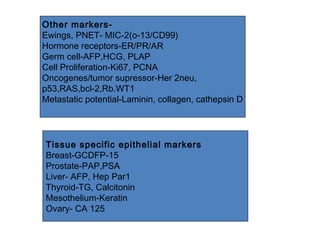
Other markers-
Ewings, PNET- MIC-2(o-13/CD99)
Hormone receptors-ER/PR/AR
Germ cell-AFP,HCG, PLAP
Cell Proliferation-Ki67, PCNA
Oncogenes/tumor supressor-Her 2neu,
p53,RAS,bcl-2,Rb.WT1
Metastatic potential-Laminin, collagen, cathepsin D
Tissue specific epithelial markers
Breast-GCDFP-15
Prostate-PAP,PSA
Liver- AFP, Hep Par1
Thyroid-TG, Calcitonin
Mesothelium-Keratin
Ovary- CA 125
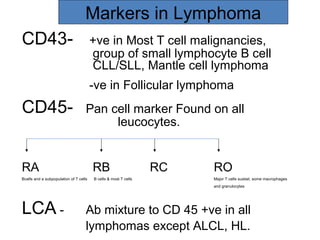
Markers in Lymphoma
CD43- +ve in Most T cell malignancies,
group of small lymphocyte B cell
CLL/SLL, Mantle cell lymphoma
-ve in Follicular lymphoma
CD45- Pan cell marker Found on all
leucocytes.
RA RB RC RO
Bcells and a subpopulation of T cells B cells & most T cells Major T cells susbet, some macrophages
and granulocytes
LCA - Ab mixture to CD 45 +ve in all
lymphomas except ALCL, HL.
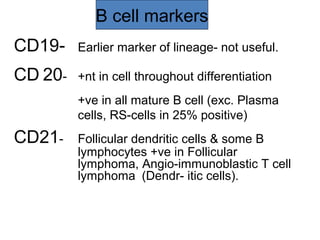
B cell markers
CD19- Earlier marker of lineage- not useful.
CD 20- +nt in cell throughout differentiation
+ve in all mature B cell (exc. Plasma
cells, RS-cells in 25% positive)
CD21- Follicular dendritic cells & some B
lymphocytes +ve in Follicular
lymphoma, Angio-immunoblastic T cell
lymphoma (Dendr- itic cells).
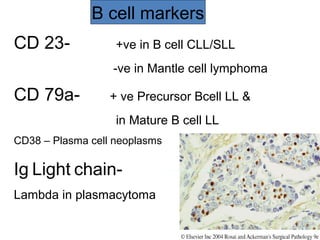
CD 23- +ve in B cell CLL/SLL
-ve in Mantle cell lymphoma
CD 79a- + ve Precursor Bcell LL &
in Mature B cell LL
CD38 – Plasma cell neoplasms
Ig Light chain-
Lambda in plasmacytoma
B cell markers
T cells
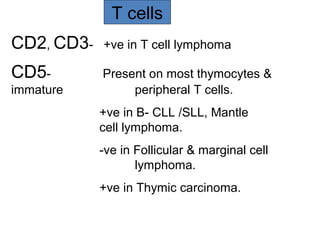
CD2, CD3- +ve in T cell lymphoma
CD5- Present on most thymocytes &
immature peripheral T cells.
+ve in B- CLL /SLL, Mantle
cell lymphoma.
-ve in Follicular & marginal cell
lymphoma.
+ve in Thymic carcinoma.
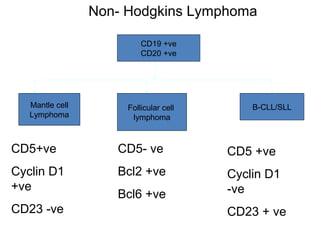
CD19 +ve
CD20 +ve
Mantle cell
Lymphoma
Follicular cell
lymphoma
B-CLL/SLL
CD5+ve
Cyclin D1
+ve
CD23 -ve
CD5- ve
Bcl2 +ve
Bcl6 +ve
CD5 +ve
Cyclin D1
-ve
CD23 + ve
Non- Hodgkins Lymphoma
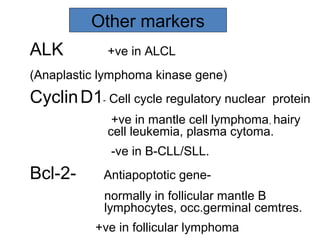
ALK +ve in ALCL
(Anaplastic lymphoma kinase gene)
CyclinD1- Cell cycle regulatory nuclear protein
+ve in mantle cell lymphoma, hairy
cell leukemia, plasma cytoma.
-ve in B-CLL/SLL.
Bcl-2- Antiapoptotic gene-
normally in follicular mantle B
lymphocytes, occ.germinal cemtres.
+ve in follicular lymphoma
Other markers
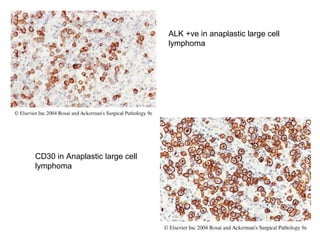
ALK +ve in anaplastic large cell
lymphoma
CD30 in Anaplastic large cell
lymphoma
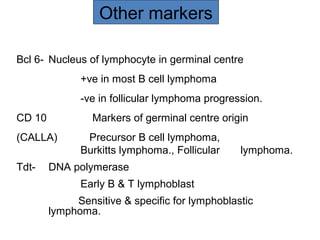
Bcl 6- Nucleus of lymphocyte in germinal centre
+ve in most B cell lymphoma
-ve in follicular lymphoma progression.
CD 10 Markers of germinal centre origin
(CALLA) Precursor B cell lymphoma,
Burkitts lymphoma., Follicular lymphoma.
Tdt- DNA polymerase
Early B & T lymphoblast
Sensitive & specific for lymphoblastic
lymphoma.
Other markers
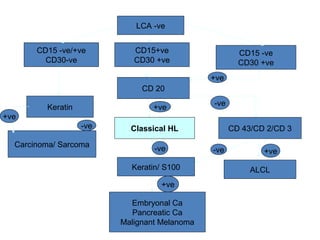
LCA -ve
CD15+ve
CD30 +ve
CD 20
Classical HL
CD15 -ve/+ve
CD30-ve
CD 43/CD 2/CD 3
Keratin/ S100 ALCL
Embryonal Ca
Pancreatic Ca
Malignant Melanoma
CD15 -ve
CD30 +ve
+ve
+ve
-ve
+ve-ve
+ve
-ve
Keratin
Carcinoma/ Sarcoma
+ve
-ve
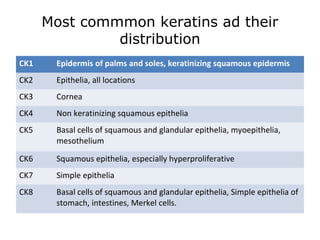
Most commmon keratins ad their
distribution
CK1 Epidermis of palms and soles, keratinizing squamous epidermis
CK2 Epithelia, all locations
CK3 Cornea
CK4 Non keratinizing squamous epithelia
CK5 Basal cells of squamous and glandular epithelia, myoepithelia,
mesothelium
CK6 Squamous epithelia, especially hyperproliferative
CK7 Simple epithelia
CK8 Basal cells of squamous and glandular epithelia, Simple epithelia of
stomach, intestines, Merkel cells.
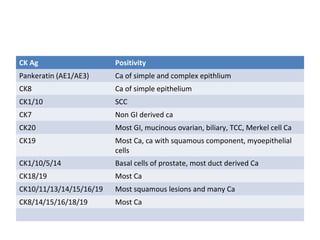
CK Ag Positivity
Pankeratin (AE1/AE3) Ca of simple and complex epithlium
CK8 Ca of simple epithelium
CK1/10 SCC
CK7 Non GI derived ca
CK20 Most GI, mucinous ovarian, biliary, TCC, Merkel cell Ca
CK19 Most Ca, ca with squamous component, myoepithelial
cells
CK1/10/5/14 Basal cells of prostate, most duct derived Ca
CK18/19 Most Ca
CK10/11/13/14/15/16/19 Most squamous lesions and many Ca
CK8/14/15/16/18/19 Most Ca
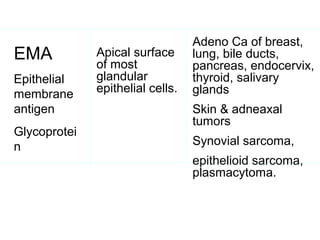
EMA
Epithelial
membrane
antigen
Glycoprotei
n
Apical surface
of most
glandular
epithelial cells.
Adeno Ca of breast,
lung, bile ducts,
pancreas, endocervix,
thyroid, salivary
glands
Skin & adneaxal
tumors
Synovial sarcoma,
epithelioid sarcoma,
plasmacytoma.
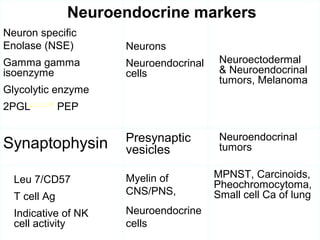
Neuron specific
Enolase (NSE)
Gamma gamma
isoenzyme
Glycolytic enzyme
2PGL PEP
Neurons
Neuroendocrinal
cells
Neuroectodermal
& Neuroendocrinal
tumors, Melanoma
Synaptophysin Presynaptic
vesicles
Neuroendocrinal
tumors
Leu 7/CD57
T cell Ag
Indicative of NK
cell activity
Myelin of
CNS/PNS,
Neuroendocrine
cells
MPNST, Carcinoids,
Pheochromocytoma,
Small cell Ca of lung
Neuroendocrine markers
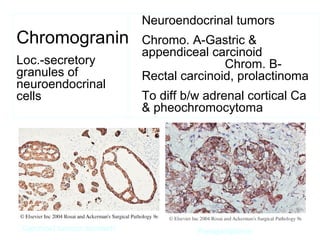
Chromogranin
Loc.-secretory
granules of
neuroendocrinal
cells
Neuroendocrinal tumors
Chromo. A-Gastric &
appendiceal carcinoid
Chrom. B-
Rectal carcinoid, prolactinoma
To diff b/w adrenal cortical Ca
& pheochromocytoma
Carcinoid tumour stomach Paraganglioma
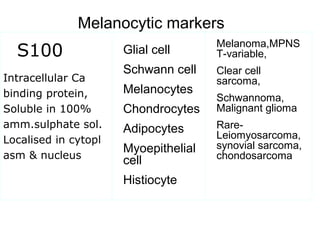
S100
Intracellular Ca
binding protein,
Soluble in 100%
amm.sulphate sol.
Localised in cytopl
asm & nucleus
Glial cell
Schwann cell
Melanocytes
Chondrocytes
Adipocytes
Myoepithelial
cell
Histiocyte
Melanoma,MPNS
T-variable,
Clear cell
sarcoma,
Schwannoma,
Malignant glioma
Rare-
Leiomyosarcoma,
synovial sarcoma,
chondosarcoma
Melanocytic markers
S100- Both nuclear & cytoplasmic staining
Chondrosarcoma Malignant melanoma
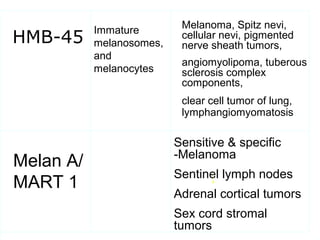
HMB-45
Immature
melanosomes,
and
melanocytes
Melanoma, Spitz nevi,
cellular nevi, pigmented
nerve sheath tumors,
angiomyolipoma, tuberous
sclerosis complex
components,
clear cell tumor of lung,
lymphangiomyomatosis.
Melan A/
MART 1
Sensitive & specific
-Melanoma
Sentinel lymph nodes
Adrenal cortical tumors
Sex cord stromal
tumors
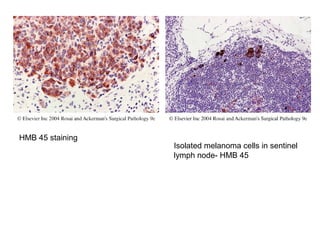
HMB 45 staining
Isolated melanoma cells in sentinel
lymph node- HMB 45
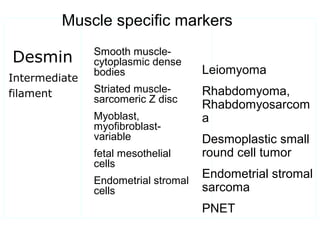
Desmin
Intermediate
filament
Smooth muscle-
cytoplasmic dense
bodies
Striated muscle-
sarcomeric Z disc
Myoblast,
myofibroblast-
variable
fetal mesothelial
cells
Endometrial stromal
cells
Leiomyoma
Rhabdomyoma,
Rhabdomyosarcom
a
Desmoplastic small
round cell tumor
Endometrial stromal
sarcoma
PNET
Muscle specific markers
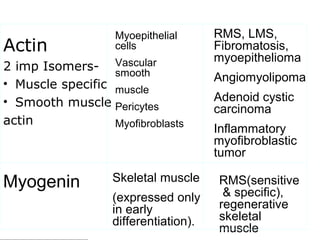
Actin
2 imp Isomers-
• Muscle specific
• Smooth muscle
actin
Myoepithelial
cells
Vascular
smooth
muscle
Pericytes
Myofibroblasts
RMS, LMS,
Fibromatosis,
myoepithelioma
Angiomyolipoma
Adenoid cystic
carcinoma
Inflammatory
myofibroblastic
tumor
Myogenin Skeletal muscle
(expressed only
in early
differentiation).
RMS(sensitive
& specific),
regenerative
skeletal
muscle
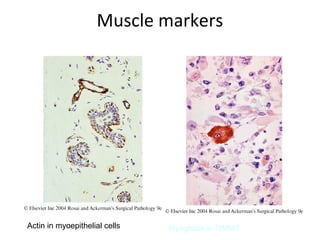
Muscle markers
Actin in myoepithelial cells Myoglobin in MMMT
Applications in Ca breast
• Presence of ER/PR – treatment and
prognosis
• Traditionally measured using dextrn
coated charcoal and sucrose gradient
assay
• Two paramertes are evaluated in IHC
– Number of tumor cell nuclei stained
– Percentage of entire tumor cell nuclei
population
• Not much correlation between type of breast ca
and hormone receptors noted
• However, most medullary, intraductal and
comedoca are negative
• Mucinous ca – highest rates of positivity
• DCIS with a predominance of large cells – best
morphological predictor of ER-neg status
• Percentage of ER and androgen receptors
are LOWER in premenopausal women
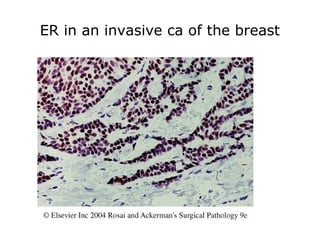
• Presence of ER – high nuclear and low
histologic grade, absence of tumor
necrosis, marked tumor elastosis and
older patient’s age
ER in an invasive ca of the breast
Her2/neu
• Her2 /neu is an oncogene
• Tranmembrane GP with TK activity known as
p185
• Belongs to EGFR
• Detected by IHC, FISH
• Importance lies in the fact that Her2 positive
tumors are sensitive to t/t with monoclonal Ab
(Trastuzumab) to it.
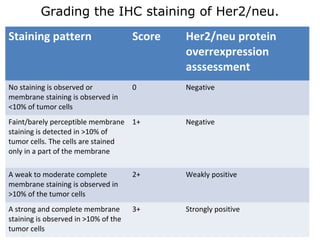
Grading the IHC staining of Her2/neu.
Staining pattern Score Her2/neu protein
overrexpression
asssessment
No staining is observed or
membrane staining is observed in
<10% of tumor cells
0 Negative
Faint/barely perceptible membrane
staining is detected in >10% of
tumor cells. The cells are stained
only in a part of the membrane
1+ Negative
A weak to moderate complete
membrane staining is observed in
>10% of the tumor cells
2+ Weakly positive
A strong and complete membrane
staining is observed in >10% of the
tumor cells
3+ Strongly positive
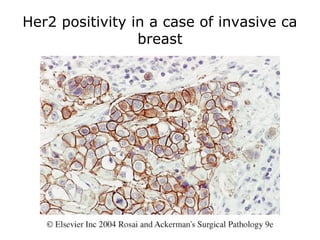
Her2 positivity in a case of invasive ca
breast
Application in Infectious diseases
• Viral infection-HBV, HCV, HHV8, HSV,
Adenovirus, CMV,HPV,Rabies, Parvovirus
B19
• Bacterial infection-H pylori, Rickettsia,
Bartonella, Leptospira.
• Fungi & parasite-aspergillus, Pneumocystis
carinii, toxoplasma, cryptosporidium.
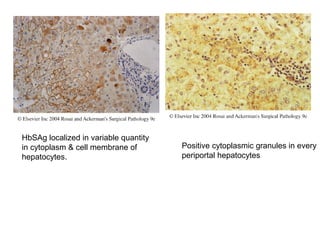
HbSAg localized in variable quantity
in cytoplasm & cell membrane of
hepatocytes.
Positive cytoplasmic granules in every
periportal hepatocytes.
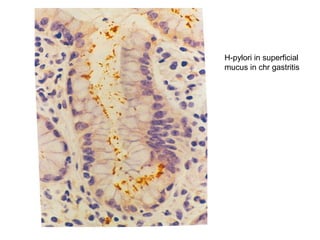
H-pylori in superficial
mucus in chr gastritis
Immunohistochemistry

Immunohistochemistry

  • 1.
  • 2.
    Immunohistochemistry • Application ofimmunologic principles and techniques to the study of cells and tissues • The method for in situ detection of antigens in tissues by Ag-Ab recognition, by using specificity provided by Ab with its Ag at a light microscopic level.
  • 3.
    Principle of IHC •The basic critical principle of IHC, as with any other special staining method, is a sharp visual localization of target components in the cell and tissue, based on a satisfactory signal-to-noise ratio.
  • 4.
    Steps of IHC Slide3 of 23 Tissue sections Antigen retrieval Blocking endogenous enzymes Secondary antibody Primary antibody Microscopy Observation Blocking background staining Chromogen Substrate Counterstain Mounting
  • 5.
    Deparaffinize and hydratethe tissue section 1. Put the slides into a rack for IHC 2. Dry slides at 58℃ overnight (recommended) or at 65℃ for 1-2 hours(for fast experiment) 3. Dip the rack into 4 consecutive stain jars containing xylene to remove paraffin - 10 minutes every step 4. Dip the rack into ethanol to remove xylene - 100% Ethanol 5min - 95% Ethanol 5min - 80% Ethanol 5min - 70% Ethanol 5min 5. Rinse the rack with tap water to remove ethanol for 5 minutes
  • 6.
    Quench the peroxidase 1.Dip the rack in 3% H2O2 for 13 minutes 2. Rinse the rack with tap water for 15 minutes The blocking can be done (1) After rehydration to water and before antigen retrieval, (2) After antigen retrieval and before primary antibody incubation, (3) After primary antibody incubation, (4) After biotinylated secondary antibody incubation.
  • 7.
    Antigen retrieval • Theretrieval techniques of unmasked antigens : HIER/Heat induced epitope retreival (1) Microwave (2) Microwave and trypsin (3) Pressure cooker Proteolytic enzyme digestion
  • 8.
    HIER • Buffer solutionsfor heat-induced epitope retrieval – Sodium Citrate Buffer (10mM Sodium Citrate, 0.05% Tween 20, pH 6.0) – 1 mM EDTA, adjusted to pH 8.0 – Tris-EDTA Buffer (10mM Tris Base, 1mM EDTA Solution, 0.05% Tween 20, pH 9.0)
  • 9.
    • Put citratebuffer into a pressure cooker or heat it without a lid in the microwave for 5 minutes (Prewarming) • Put the rack into the citrate buffer • Put a lid on the cooker and heat the cooker for 10~15 minutes
  • 10.
    • Remove thecooker and cool it down at RT for 30 minutes • Rinse the rack with tap water for 10 minutes • Dip the slides in PBS buffer (at RT) for 10 minutes
  • 11.
    • Enzymatic method –Pepsin – Trypsin – Proteinase K – Pronase • Cover the slide with the above working solutions for 10-20 min at 37degC
  • 12.
    Antigen Recognition Direct labelingof antibody Secondary antibody labeling The methods of Identifying Tissue Antigens
  • 13.
    Immunoperoxidase procedures • Putthe two photographs from Ackermann
  • 14.
  • 15.
    Procedure for applicationof primary and secondary Ab • Primary Ab - Apply the appropriately diluted marker specific Ab, incubate in a moist chamber for 1 hour • Rinse slides in TBS for 5 min • Secondary Ab – Apply 1:100 diluted biotinylated species specific secondary Ab. • Incubate the sections in a moist chamber for 30 min. • Rinse the slides in TBS for 5 min. • ABC incubation – Apply 1:1:100 diluted pre made avidin- biotin complex • Incubate at RT in moist chamber for 1 hr
  • 16.
    Chromogen / subsrate •Enzyme labels – Horseradish peroxidase – Alkaline phosphatase – Bacterial-derived beta-D-galactosidase • Colloidal metal labels • Fluorescent labels • Radiolabels
  • 17.
    ChromogensChromogens End productcolourEnd product colour Diaminobenzidine (DAB)Diaminobenzidine (DAB) BrownBrown Diaminobenzidine (DAB)Diaminobenzidine (DAB) BrownBrown 3-amino-9-3-amino-9- ethylcarbazoleethylcarbazole RedRed 4-chloro-1-naphthol4-chloro-1-naphthol BlueBlue Hanker-Yates raegentHanker-Yates raegent Dark blueDark blue Alpha-naphtol pyroninAlpha-naphtol pyronin Red-purpleRed-purple
  • 18.
    Fluorochromes DAPIDAPI ColorColor FluoresceinFluorescein BlueBlue Hoechts33258Hoechts 33258 GreenGreen R-phycocyaninR-phycocyanin BlueBlue B-phycoerythrinB-phycoerythrin RedRed R-phycoerythrinR-phycoerythrin Orange, redOrange, red RhodamineRhodamine Orange, redOrange, red Texas redTexas red RedRed
  • 19.
    COUNTERSTAINING AND MOUNTING SLIDES •Hematoxylin is used as the nuclear counterstain for most routine IHC staining. • Either one drop is placed on the tissue section and a coverslip is lowered slowly onto the slide, or the coverslip is placed on a paper towel, one drop is placed in the center of the coverslip, and the inverted slide is lowered slowly onto the coverslip. • For alcohol-insoluble stains (e.g., DAB or new fuchsin), a permanent mounting medium, such as Permount, may be used.
  • 20.
    Reporting • Focus onwhat type of cells are staining ( tumor cells, endothelial cells, stromal cells). • Pattern of immunoreactivity must follow anatomic distribution of antigen before it is called +ve. • Note the no. of cells staining, intensity of staining & pattern of staining (cytoplasmic, membranous, nuclear, dot like).
  • 21.
    Interpreting positivity • Localisationof the Ag – Nuclear – ER/PR, S-100, TTF1 – Cytoplasm – S-100, synaptophysin – Membrane - CD20, CD45, Her-2, CD99 – ECM, basal laminae
  • 22.
    S100-Both nuclear &cytoplasmic staining Chondrosarcoma Malignant melanoma
  • 23.
  • 24.
    CD45 staining ina lymph node
  • 25.
  • 26.
    -Section from normallung tissue – TTF1
  • 27.
    Immunoreactivity for CD117 inGIST CD117- in seminoma
  • 29.
    Interpretation …. cont’d •Absence of staining of both the test tissue and positive control • Absence of staining of the test tissue with appropriate positive staining of the positive control • Weak staining of the test tissue with appropriate staining of the positive control • The presence of background staining on the test tissue, the positive control, or both • The presence of artifactual staining on the test tissue, the positive control, or both
  • 30.
    False negative results •Ab is inappropriate, denatured or used at wrong conc. • Loss of Ag – through autolysis or diffusion. • Presence of Ag at a low density, below the level of detection with the reagents
  • 31.
    CD45 staining ina lymph node
  • 32.
    Bcl-2 staining ina lymph node – wrong results due to fixation artefact
  • 33.
    False positive results •Cross reactivity of the Ab • Non specific binding of the Ab to the tissue • Presence of endogenous peroxidases in – or avidity for avidin-biotin complex by – some cellular elements
  • 34.
    • Entrapment ofnormal tissue by tumor cells • Release of proteins from the cytoplasm of the normal cells invaded by the tumor, with subsequent permeation of the interstitium and non specific absorption by the tumor cells. • “Chromogen freckles”
  • 35.
    CD3 staining ina section from the parotid gland
  • 36.
  • 37.
    Section from theliver – non specific b/g staining
  • 38.
    Folding of thetissue – variable and dense staining
  • 39.
    Case of malignantmelanoma with S- 100 positivity
  • 40.
    Section from anadenocarcinoma colon stained for CEA
  • 41.
    Some examples ofutility of IHC in the diagnosis and management of malignant tumors • Categorization of malignant tumors • Categorization of leukemia/lymphoma • Determination of origin of metastatic tumors • Detection of molecules that have prognostic or therapeutic importance
  • 42.
    Common Panels ofIHC stains Epithelial LMW-k (CAM5.2), AE1-AE3 CK cocktail, CK7, CK20, CEA, EMA Mesenchymal Vimentin S100 Endothelial CD34,CD31, Factor VIII ulex europaeus Muscle Desmin, Myoglobin Actin Melanocytic HMB45 S100 Melan-A, MART-1 Neuroendocrine NSE, chromogranin, Synaptophysin Fibrohistio- cytic CD68, lysozyme, HAM 56, CD1a(Lang- erhans). Lymphoid Bcell-LCA/CD45, CD20 T cell-LCA,CD3 Hodgkins- Ki1, CD15 L26,BLA36, CD30 Neuronal NF,GFAP, S100 Leu7
  • 43.
    Other markers- Ewings, PNET-MIC-2(o-13/CD99) Hormone receptors-ER/PR/AR Germ cell-AFP,HCG, PLAP Cell Proliferation-Ki67, PCNA Oncogenes/tumor supressor-Her 2neu, p53,RAS,bcl-2,Rb.WT1 Metastatic potential-Laminin, collagen, cathepsin D Tissue specific epithelial markers Breast-GCDFP-15 Prostate-PAP,PSA Liver- AFP, Hep Par1 Thyroid-TG, Calcitonin Mesothelium-Keratin Ovary- CA 125
  • 44.
    Markers in Lymphoma CD43-+ve in Most T cell malignancies, group of small lymphocyte B cell CLL/SLL, Mantle cell lymphoma -ve in Follicular lymphoma CD45- Pan cell marker Found on all leucocytes. RA RB RC RO Bcells and a subpopulation of T cells B cells & most T cells Major T cells susbet, some macrophages and granulocytes LCA - Ab mixture to CD 45 +ve in all lymphomas except ALCL, HL.
  • 45.
    B cell markers CD19-Earlier marker of lineage- not useful. CD 20- +nt in cell throughout differentiation +ve in all mature B cell (exc. Plasma cells, RS-cells in 25% positive) CD21- Follicular dendritic cells & some B lymphocytes +ve in Follicular lymphoma, Angio-immunoblastic T cell lymphoma (Dendr- itic cells).
  • 46.
    CD 23- +vein B cell CLL/SLL -ve in Mantle cell lymphoma CD 79a- + ve Precursor Bcell LL & in Mature B cell LL CD38 – Plasma cell neoplasms Ig Light chain- Lambda in plasmacytoma B cell markers
  • 47.
    T cells CD2, CD3-+ve in T cell lymphoma CD5- Present on most thymocytes & immature peripheral T cells. +ve in B- CLL /SLL, Mantle cell lymphoma. -ve in Follicular & marginal cell lymphoma. +ve in Thymic carcinoma.
  • 48.
    CD19 +ve CD20 +ve Mantlecell Lymphoma Follicular cell lymphoma B-CLL/SLL CD5+ve Cyclin D1 +ve CD23 -ve CD5- ve Bcl2 +ve Bcl6 +ve CD5 +ve Cyclin D1 -ve CD23 + ve Non- Hodgkins Lymphoma
  • 49.
    ALK +ve inALCL (Anaplastic lymphoma kinase gene) CyclinD1- Cell cycle regulatory nuclear protein +ve in mantle cell lymphoma, hairy cell leukemia, plasma cytoma. -ve in B-CLL/SLL. Bcl-2- Antiapoptotic gene- normally in follicular mantle B lymphocytes, occ.germinal cemtres. +ve in follicular lymphoma Other markers
  • 50.
    ALK +ve inanaplastic large cell lymphoma CD30 in Anaplastic large cell lymphoma
  • 51.
    Bcl 6- Nucleusof lymphocyte in germinal centre +ve in most B cell lymphoma -ve in follicular lymphoma progression. CD 10 Markers of germinal centre origin (CALLA) Precursor B cell lymphoma, Burkitts lymphoma., Follicular lymphoma. Tdt- DNA polymerase Early B & T lymphoblast Sensitive & specific for lymphoblastic lymphoma. Other markers
  • 52.
    LCA -ve CD15+ve CD30 +ve CD20 Classical HL CD15 -ve/+ve CD30-ve CD 43/CD 2/CD 3 Keratin/ S100 ALCL Embryonal Ca Pancreatic Ca Malignant Melanoma CD15 -ve CD30 +ve +ve +ve -ve +ve-ve +ve -ve Keratin Carcinoma/ Sarcoma +ve -ve
  • 53.
    Most commmon keratinsad their distribution CK1 Epidermis of palms and soles, keratinizing squamous epidermis CK2 Epithelia, all locations CK3 Cornea CK4 Non keratinizing squamous epithelia CK5 Basal cells of squamous and glandular epithelia, myoepithelia, mesothelium CK6 Squamous epithelia, especially hyperproliferative CK7 Simple epithelia CK8 Basal cells of squamous and glandular epithelia, Simple epithelia of stomach, intestines, Merkel cells.
  • 54.
    CK Ag Positivity Pankeratin(AE1/AE3) Ca of simple and complex epithlium CK8 Ca of simple epithelium CK1/10 SCC CK7 Non GI derived ca CK20 Most GI, mucinous ovarian, biliary, TCC, Merkel cell Ca CK19 Most Ca, ca with squamous component, myoepithelial cells CK1/10/5/14 Basal cells of prostate, most duct derived Ca CK18/19 Most Ca CK10/11/13/14/15/16/19 Most squamous lesions and many Ca CK8/14/15/16/18/19 Most Ca
  • 55.
    EMA Epithelial membrane antigen Glycoprotei n Apical surface of most glandular epithelialcells. Adeno Ca of breast, lung, bile ducts, pancreas, endocervix, thyroid, salivary glands Skin & adneaxal tumors Synovial sarcoma, epithelioid sarcoma, plasmacytoma.
  • 56.
    Neuron specific Enolase (NSE) Gammagamma isoenzyme Glycolytic enzyme 2PGL PEP Neurons Neuroendocrinal cells Neuroectodermal & Neuroendocrinal tumors, Melanoma Synaptophysin Presynaptic vesicles Neuroendocrinal tumors Leu 7/CD57 T cell Ag Indicative of NK cell activity Myelin of CNS/PNS, Neuroendocrine cells MPNST, Carcinoids, Pheochromocytoma, Small cell Ca of lung Neuroendocrine markers
  • 57.
    Chromogranin Loc.-secretory granules of neuroendocrinal cells Neuroendocrinal tumors Chromo.A-Gastric & appendiceal carcinoid Chrom. B- Rectal carcinoid, prolactinoma To diff b/w adrenal cortical Ca & pheochromocytoma Carcinoid tumour stomach Paraganglioma
  • 58.
    S100 Intracellular Ca binding protein, Solublein 100% amm.sulphate sol. Localised in cytopl asm & nucleus Glial cell Schwann cell Melanocytes Chondrocytes Adipocytes Myoepithelial cell Histiocyte Melanoma,MPNS T-variable, Clear cell sarcoma, Schwannoma, Malignant glioma Rare- Leiomyosarcoma, synovial sarcoma, chondosarcoma Melanocytic markers
  • 59.
    S100- Both nuclear& cytoplasmic staining Chondrosarcoma Malignant melanoma
  • 60.
    HMB-45 Immature melanosomes, and melanocytes Melanoma, Spitz nevi, cellularnevi, pigmented nerve sheath tumors, angiomyolipoma, tuberous sclerosis complex components, clear cell tumor of lung, lymphangiomyomatosis. Melan A/ MART 1 Sensitive & specific -Melanoma Sentinel lymph nodes Adrenal cortical tumors Sex cord stromal tumors
  • 61.
    HMB 45 staining Isolatedmelanoma cells in sentinel lymph node- HMB 45
  • 62.
    Desmin Intermediate filament Smooth muscle- cytoplasmic dense bodies Striatedmuscle- sarcomeric Z disc Myoblast, myofibroblast- variable fetal mesothelial cells Endometrial stromal cells Leiomyoma Rhabdomyoma, Rhabdomyosarcom a Desmoplastic small round cell tumor Endometrial stromal sarcoma PNET Muscle specific markers
  • 63.
    Actin 2 imp Isomers- •Muscle specific • Smooth muscle actin Myoepithelial cells Vascular smooth muscle Pericytes Myofibroblasts RMS, LMS, Fibromatosis, myoepithelioma Angiomyolipoma Adenoid cystic carcinoma Inflammatory myofibroblastic tumor Myogenin Skeletal muscle (expressed only in early differentiation). RMS(sensitive & specific), regenerative skeletal muscle
  • 64.
    Muscle markers Actin inmyoepithelial cells Myoglobin in MMMT
  • 65.
    Applications in Cabreast • Presence of ER/PR – treatment and prognosis • Traditionally measured using dextrn coated charcoal and sucrose gradient assay • Two paramertes are evaluated in IHC – Number of tumor cell nuclei stained – Percentage of entire tumor cell nuclei population
  • 66.
    • Not muchcorrelation between type of breast ca and hormone receptors noted • However, most medullary, intraductal and comedoca are negative • Mucinous ca – highest rates of positivity • DCIS with a predominance of large cells – best morphological predictor of ER-neg status
  • 67.
    • Percentage ofER and androgen receptors are LOWER in premenopausal women • Presence of ER – high nuclear and low histologic grade, absence of tumor necrosis, marked tumor elastosis and older patient’s age
  • 68.
    ER in aninvasive ca of the breast
  • 69.
    Her2/neu • Her2 /neuis an oncogene • Tranmembrane GP with TK activity known as p185 • Belongs to EGFR • Detected by IHC, FISH • Importance lies in the fact that Her2 positive tumors are sensitive to t/t with monoclonal Ab (Trastuzumab) to it.
  • 70.
    Grading the IHCstaining of Her2/neu. Staining pattern Score Her2/neu protein overrexpression asssessment No staining is observed or membrane staining is observed in <10% of tumor cells 0 Negative Faint/barely perceptible membrane staining is detected in >10% of tumor cells. The cells are stained only in a part of the membrane 1+ Negative A weak to moderate complete membrane staining is observed in >10% of the tumor cells 2+ Weakly positive A strong and complete membrane staining is observed in >10% of the tumor cells 3+ Strongly positive
  • 71.
    Her2 positivity ina case of invasive ca breast
  • 72.
    Application in Infectiousdiseases • Viral infection-HBV, HCV, HHV8, HSV, Adenovirus, CMV,HPV,Rabies, Parvovirus B19 • Bacterial infection-H pylori, Rickettsia, Bartonella, Leptospira. • Fungi & parasite-aspergillus, Pneumocystis carinii, toxoplasma, cryptosporidium.
  • 73.
    HbSAg localized invariable quantity in cytoplasm & cell membrane of hepatocytes. Positive cytoplasmic granules in every periportal hepatocytes.
  • 74.

Editor's Notes

  • #29 Section of lymph node stained with CD45, where the tissue is adequately fixed.
  • #30 Sections of lymph node stained with CD20 showing bright cytoplasmic membrane staining of the B cells in the germinal center.
  • #31 Section of normal lung tissue stained with TTF-1 (thyroid transcription factor), exhibiting specific nuclear positivity of the alveolar lining cells (pneumocytes
  • #36 Section of lymph node stained with CD45 showing variable fixation artifact. Well-defined cytoplasmic membrane staining is seen in the subcapsular region
  • #37 Another lymph node section stained with Bcl-2 showing similar variable fixation artifact with gradual loss of staining appreciated toward the center of the node.
  • #40 Section of parotid gland stained with CD3 showing scattered T-lymphocyte and non-specific cytoplasmic granular staining in the glandular epithelium.
  • #41 Pigmented melanophages, not to be confused with chromogen.
  • #42 Section of liver illustrating endogenous biotin resulting in non-specific background staining.
  • #43 Section of lymph node stained with CD43 demonstrating processing problem with cleavage and folding of the tissue, which subsequently resulted in variable staining intensity and precipitation of the chromogen. All these artifacts can adversely affect interpretation.
  • #44 Sections of malignant melanoma stained with S-100. The spindle-shaped neoplastic cells are overstained to the extent that it is difficult to appreciate true nuclear staining.
  • #45 Section of adenocarcinoma stained with CEA demonstrating positive polymorphonuclear neutrophils showing strong endogenous peroxidase staining, which are also seen scattered in the stroma.