1
 Definition
 Principles Of Immunohistochemistry
 Procedures Of Immunohistochemistry
 Steps To Better Immunohistochemistry
 Application Of Immunohistochemistry
 Markers In Immunohistochemistry And
Application
 Conclusion
 References
2
 Immunohistochemistry (IHC) is an important application of
monoclonal as well as polyclonal antibodies to determine the tissue
distribution of an antigen of interest in health and disease
 The antibody-antigen interaction is visualized using either
chromogenic detection with a colored enzyme substrate such as
Horseradish Peroxidase (HRP), Alkaline Phosphatase (AP), or
fluorescent detection with a fluorescent dye (Duraiyan et al., 2012).
3
 The principle of IHC has existed since the 1930s, but it was not
until 1941 that the first IHC study was reported. Coons and his
colleagues used Fluorescein isothiocyanate (FITC)-labeled
antibodies with a fluorescent dye to localize pneumococcal antigens
in infected tissues. Immunohistochemistry is carried out by
exploiting the principle that antibodies bind specifically to an
antigen in biological tissues, for example in the jaw, gonads or
heart (Duraiyan et al., 2012).
4
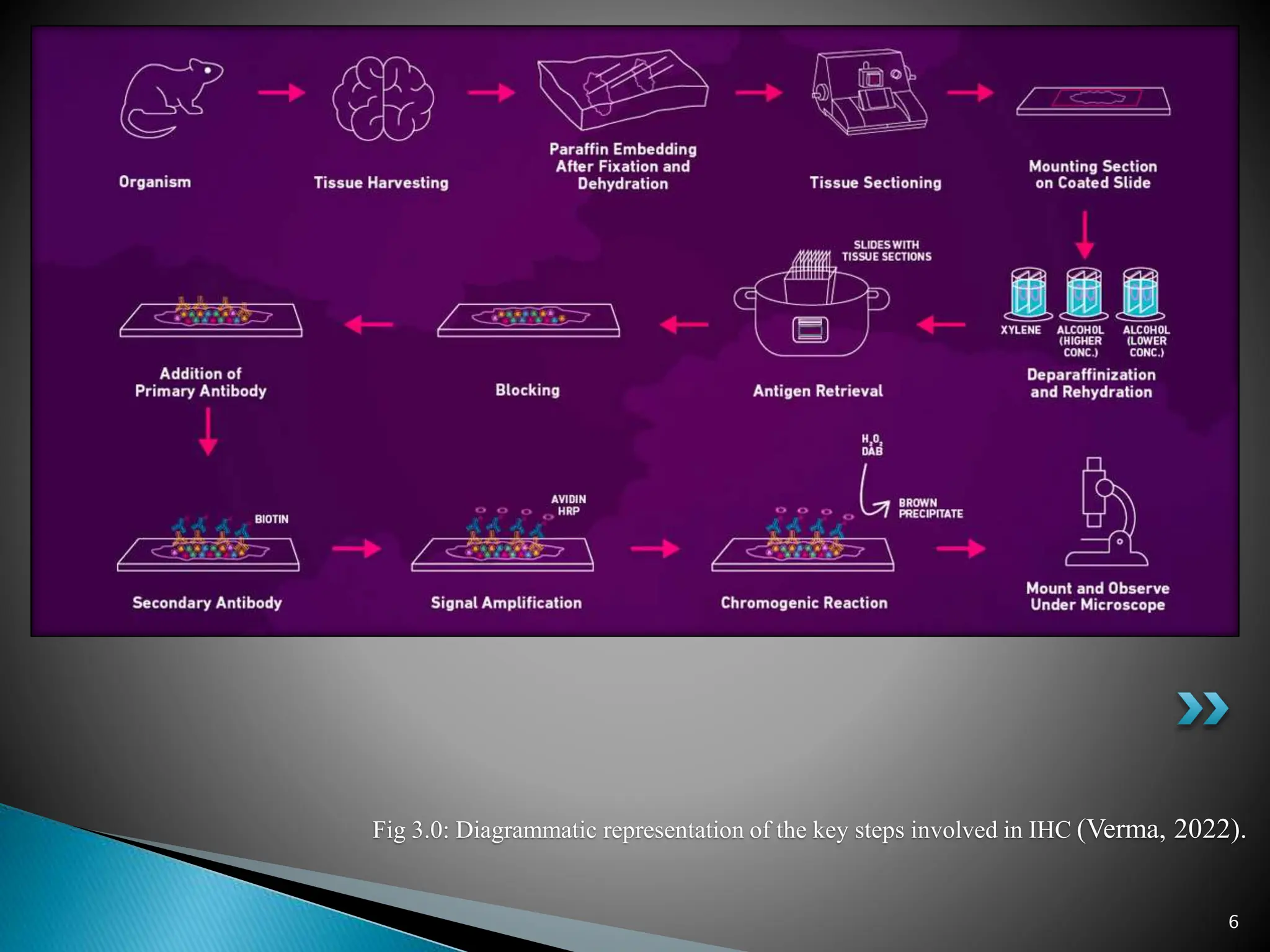
TISSUE PROCESSING, FIXATION AND SECTIONING
 Tissue fixation preserves antigens and prevents autolysis and
necrosis of harvested tissues.
 Paraffin embedding is the most common method, but frozen and
floating sections are also available.
 Section tissue at 4-7 μm thickness, and mount on adhesion-treated
slides (Abcam, 2022).
5
6
Fig 3.0: Diagrammatic representation of the key steps involved in IHC (Verma, 2022).
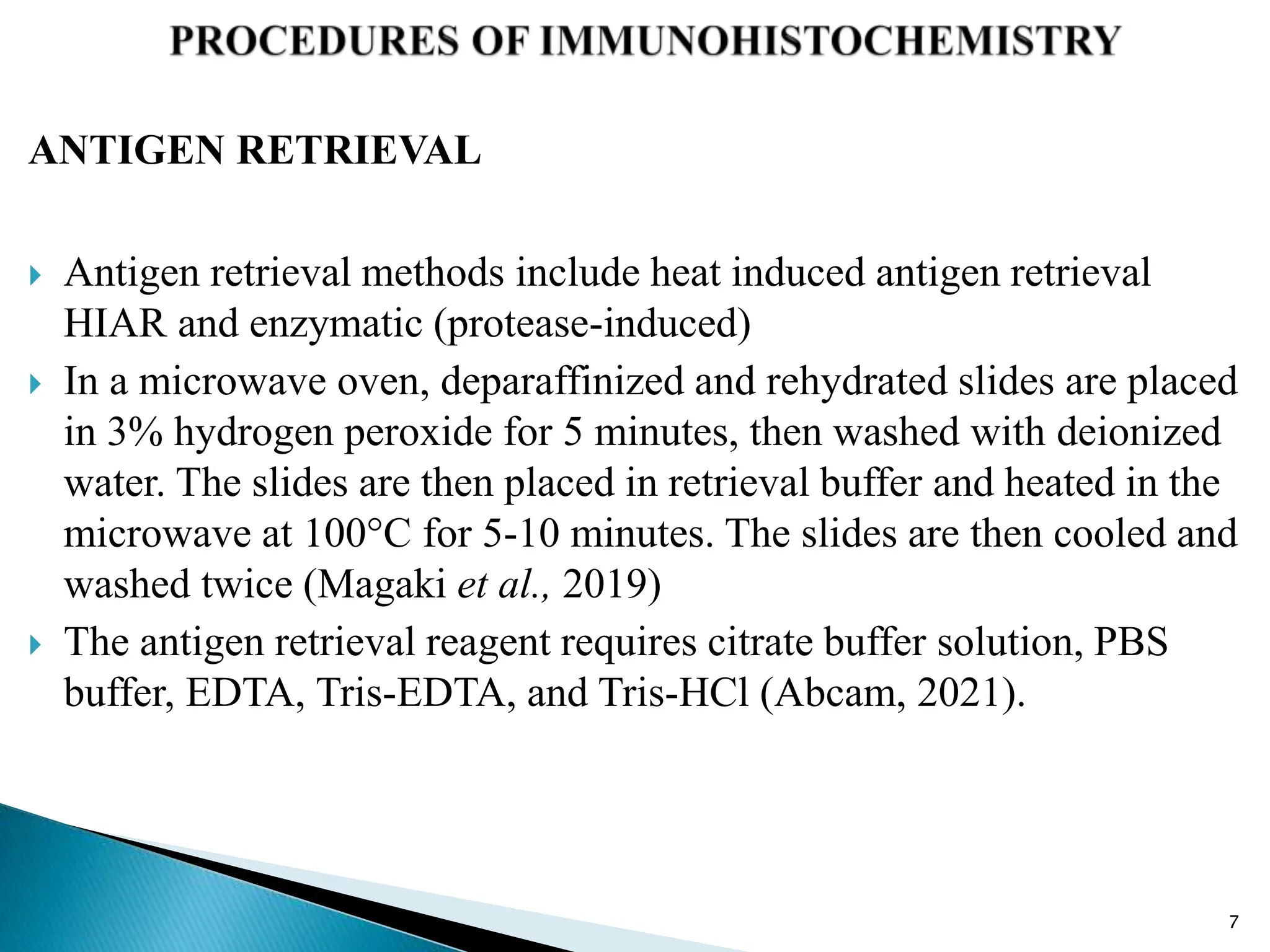
ANTIGEN RETRIEVAL
 Antigen retrieval methods include heat induced antigen retrieval
HIAR and enzymatic (protease-induced)
 In a microwave oven, deparaffinized and rehydrated slides are placed
in 3% hydrogen peroxide for 5 minutes, then washed with deionized
water. The slides are then placed in retrieval buffer and heated in the
microwave at 100°C for 5-10 minutes. The slides are then cooled and
washed twice (Magaki et al., 2019)
 The antigen retrieval reagent requires citrate buffer solution, PBS
buffer, EDTA, Tris-EDTA, and Tris-HCl (Abcam, 2021).
7
BLOCKING PROTEINS
 Protein blocking step is required to reduce unwanted background
staining.
 An ideal agent for the protein blocking is 5%–10% normal serum
from the same species of secondary antibody. Other agents
include protein buffers such as 0.1%–0.5% bovine serum
albumin, gelatin, or non-fat dry milk (Kim et al., 2016).
8
ANTIBODY SELECTION AND VALIDATION
 Polyclonal and monoclonal antibodies are used for specific detection,
with polyclonal antibodies created by injecting a protein or peptide
fragment into animals, isolating antibodies from serum, and
recognizing multiple epitopes, respectively, monoclonal antibodies
react to a single epitope in an antigen (Kim et al., 2016).
9
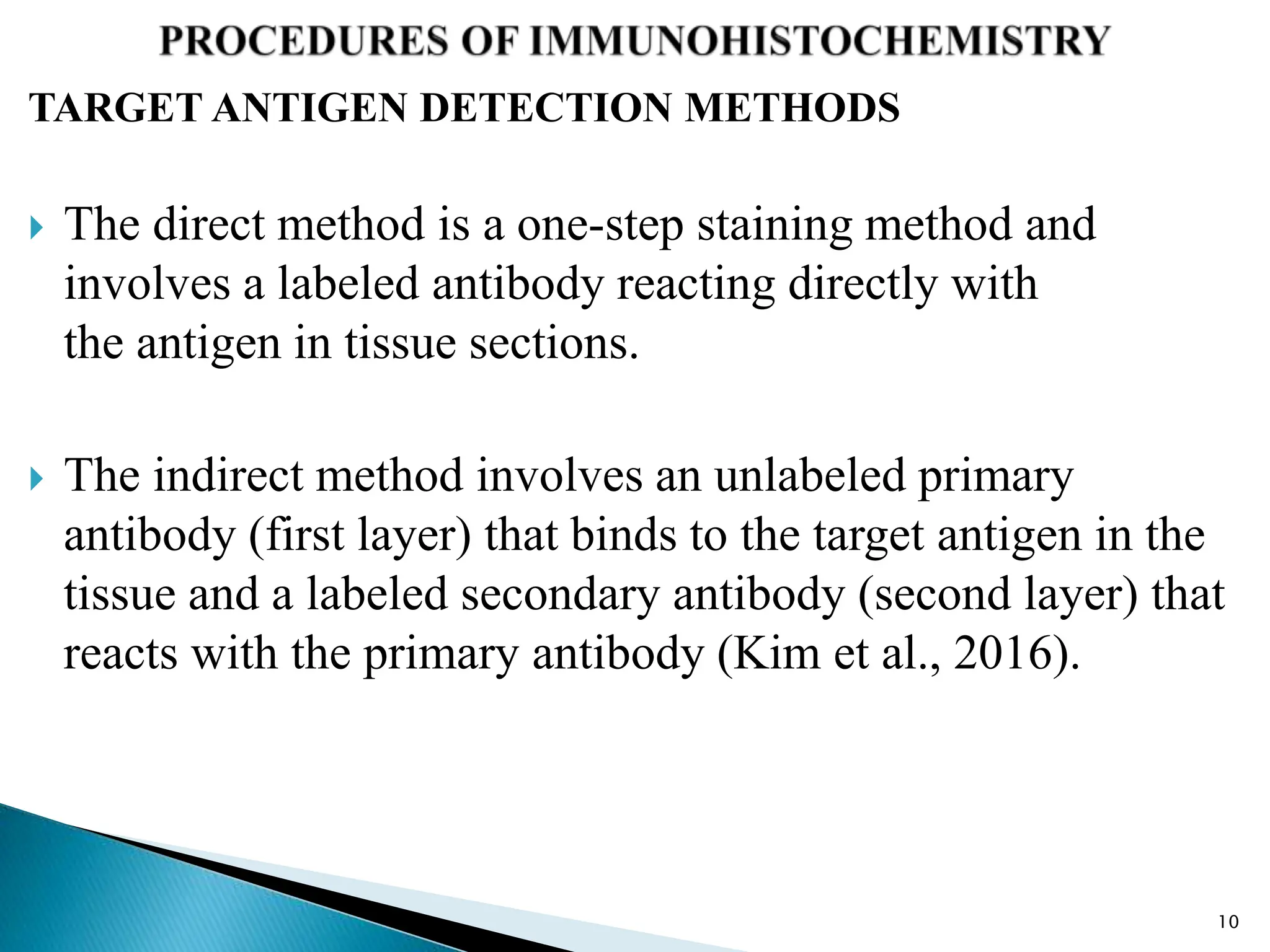
TARGET ANTIGEN DETECTION METHODS
 The direct method is a one-step staining method and
involves a labeled antibody reacting directly with
the antigen in tissue sections.
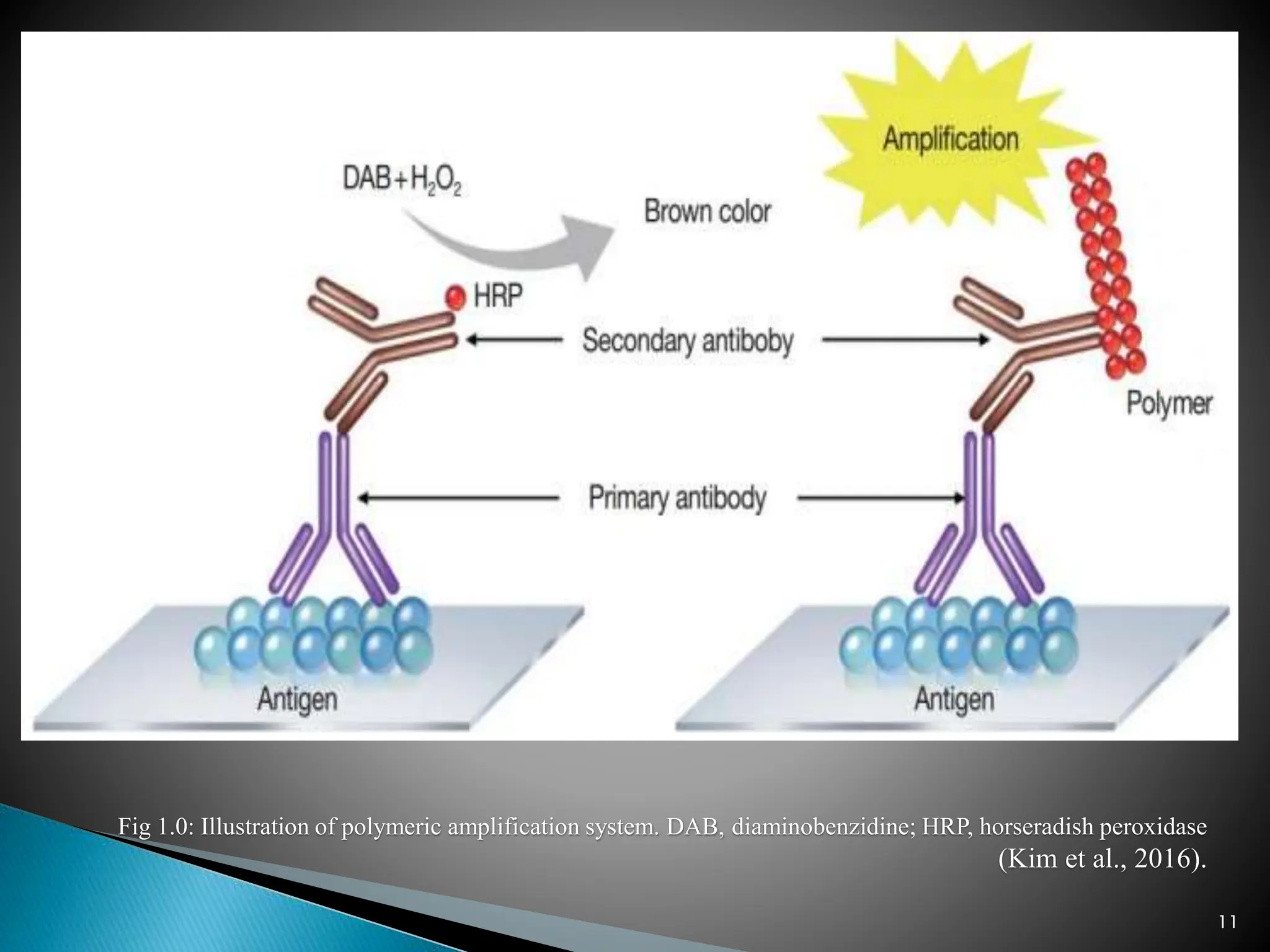
 The indirect method involves an unlabeled primary
antibody (first layer) that binds to the target antigen in the
tissue and a labeled secondary antibody (second layer) that
reacts with the primary antibody (Kim et al., 2016).
10
11
Fig 1.0: Illustration of polymeric amplification system. DAB, diaminobenzidine; HRP, horseradish peroxidase
(Kim et al., 2016).
ANTIBODY APPLICATION
 Use serial dilutions of a concentrated antibody to determine the
optimal concentration of an antibody .
 Apply 200μl of diluted primary antibody to slides and incubate at
room temperature for 80 minutes.
 Wash in three changes of 0.1% TBS-Tween using different staining
dishes for each wash.
 Apply species-specific secondary antibody and let sit for 15
minutes.
 Wash with 0.1% TBS-Tween, add orange horseradish peroxidase,
and wash in three changes of 0.1% TBS-Tween for each wash
(Magaki et al., 2019).
12
13
Fig 2.0: Chromogenic immunohistochemistry (Leica, 2020).
COUNTERSTAINING, DEHYDRATION, CLEARING, AND
MOUNTING
 Slides are placed in hematoxylin, rinsed in distilled water, and
incubated in Bluing solution.
 After drying, they are immersed in three washes of Xylene, each
lasting 5 minutes.
 The slides are then mounted in a permount and coverslip (Kim et al.,
2016).
14
15
Fig 4.0: Immunohistochemical staining for tryptophan hydroxylase 2 (Verma, 2022).
16
Fig 5.0: Main staining patterns on chromogenic immunohistochemistry (Wikipedia, 2018).
 Use high-quality sections
 Ensure proper fixation
 Avoid section adhesion issues
 Choose appropriate antibodies
 Optimize retrieval methods
 Consider cross-reactivity
 Block endogenous peroxidase
 Use appropriate detection systems
 Carefully evaluate results (Leica, 2020)
17
 Prognostic markers in cancers
 Tumors of uncertain histogenesis
 Prediction of response to therapy
 Infections
 In genetics
 Neurodegenerative disorders
 In muscle diseases
 Research application
(Duraiyan et al., 2012)
18
◦ Kiel (ki-67) is a prognostic indicator for tumors
◦ Cytokeratin identifies epithelial cells
◦ Cluster of differentiation (CD20) detect B-cells, especially in
lymphomas
◦ Estrogen Receptors evaluate hormonal status in breast cancer
(Umphress, 2023)
19
◦ Human epidermal growth factor receptor 2 (HER2) status for breast
and gastric cancers
◦ Glial fibrillary acidic protein (GFAP) for astrocytic tumors
◦ CD4 for T-helper cells
◦ CD8 for cytotoxic T-cells
◦ CD15 for granulocytes (Umphress, 2023).
20
IHC is a crucial tool for pathologists to understand disease
pathophysiology and validate biomarker discovery, leading to
personalized medicine. Despite recent automation and
standardization, optimization and interpretation are essential for
newly discovered molecules or antibodies. Validating specificity and
sensitivity is crucial, and a full literature review is recommended
before starting experiments. Careful planning and stabilizing inter
observer consistency are also essential for objectifying IHC results.
21
 Buza, N., & Hui, P. (2017). Immunohistochemistry in Gynecologic Pathology: An Example-Based
Practical Update. Arch Pathol Lab Med, 141(8), 1052–1071.
 Duraiyan, J., Govindarajan, R., Kaliyappan, K., and Palanisamy, M. (2012). Applications of
immunohistochemistry. Journal of Pharmacy & Bioallied Sciences, 4( 2), S307–S309.
 Hawes, D., Shi, S.-R., Dabbs, D. J., Taylor, C. R., & Cote, R. J. (2009). Modern Surgical Pathology
(Second Edition), Volume 1, 48–70.
 Kim, S.-W., Roh, J., and Park, C.-S. (2016). Immunohistochemistry for Pathologists: Protocols, Pitfalls,
and Tips. Journal of Pathology and Translational Medicine, 50(6), 411–418.
 Magaki, S., Hojat, S. A., Wei, B., So, A., and Yong, W. H. (2019). An Introduction to the Performance of
Immunohistochemistry. Methods Mol Biol, 1897, 289–298.
 Masuda, S., & Nakanishi, Y. (2023). Application of Immunohistochemistry in Clinical Practices as a
Standardized Assay for Breast Cancer. Acta Histochem Cytochem, 56(1), 1–8.
 Sheffield, B. S. (2016). Immunohistochemistry as a Practical Tool in Molecular Pathology. Arch Pathol
Lab Med, 140(8), 766–769.
22

IMMUNOHISTOCHEMISTRY IN PATHOLOGY-1-2.pptx

  • 1.
  • 2.
     Definition  PrinciplesOf Immunohistochemistry  Procedures Of Immunohistochemistry  Steps To Better Immunohistochemistry  Application Of Immunohistochemistry  Markers In Immunohistochemistry And Application  Conclusion  References 2
  • 3.
     Immunohistochemistry (IHC)is an important application of monoclonal as well as polyclonal antibodies to determine the tissue distribution of an antigen of interest in health and disease  The antibody-antigen interaction is visualized using either chromogenic detection with a colored enzyme substrate such as Horseradish Peroxidase (HRP), Alkaline Phosphatase (AP), or fluorescent detection with a fluorescent dye (Duraiyan et al., 2012). 3
  • 4.
     The principleof IHC has existed since the 1930s, but it was not until 1941 that the first IHC study was reported. Coons and his colleagues used Fluorescein isothiocyanate (FITC)-labeled antibodies with a fluorescent dye to localize pneumococcal antigens in infected tissues. Immunohistochemistry is carried out by exploiting the principle that antibodies bind specifically to an antigen in biological tissues, for example in the jaw, gonads or heart (Duraiyan et al., 2012). 4
  • 5.
    TISSUE PROCESSING, FIXATIONAND SECTIONING  Tissue fixation preserves antigens and prevents autolysis and necrosis of harvested tissues.  Paraffin embedding is the most common method, but frozen and floating sections are also available.  Section tissue at 4-7 μm thickness, and mount on adhesion-treated slides (Abcam, 2022). 5
  • 6.
    6 Fig 3.0: Diagrammaticrepresentation of the key steps involved in IHC (Verma, 2022).
  • 7.
    ANTIGEN RETRIEVAL  Antigenretrieval methods include heat induced antigen retrieval HIAR and enzymatic (protease-induced)  In a microwave oven, deparaffinized and rehydrated slides are placed in 3% hydrogen peroxide for 5 minutes, then washed with deionized water. The slides are then placed in retrieval buffer and heated in the microwave at 100°C for 5-10 minutes. The slides are then cooled and washed twice (Magaki et al., 2019)  The antigen retrieval reagent requires citrate buffer solution, PBS buffer, EDTA, Tris-EDTA, and Tris-HCl (Abcam, 2021). 7
  • 8.
    BLOCKING PROTEINS  Proteinblocking step is required to reduce unwanted background staining.  An ideal agent for the protein blocking is 5%–10% normal serum from the same species of secondary antibody. Other agents include protein buffers such as 0.1%–0.5% bovine serum albumin, gelatin, or non-fat dry milk (Kim et al., 2016). 8
  • 9.
    ANTIBODY SELECTION ANDVALIDATION  Polyclonal and monoclonal antibodies are used for specific detection, with polyclonal antibodies created by injecting a protein or peptide fragment into animals, isolating antibodies from serum, and recognizing multiple epitopes, respectively, monoclonal antibodies react to a single epitope in an antigen (Kim et al., 2016). 9
  • 10.
    TARGET ANTIGEN DETECTIONMETHODS  The direct method is a one-step staining method and involves a labeled antibody reacting directly with the antigen in tissue sections.  The indirect method involves an unlabeled primary antibody (first layer) that binds to the target antigen in the tissue and a labeled secondary antibody (second layer) that reacts with the primary antibody (Kim et al., 2016). 10
  • 11.
    11 Fig 1.0: Illustrationof polymeric amplification system. DAB, diaminobenzidine; HRP, horseradish peroxidase (Kim et al., 2016).
  • 12.
    ANTIBODY APPLICATION  Useserial dilutions of a concentrated antibody to determine the optimal concentration of an antibody .  Apply 200μl of diluted primary antibody to slides and incubate at room temperature for 80 minutes.  Wash in three changes of 0.1% TBS-Tween using different staining dishes for each wash.  Apply species-specific secondary antibody and let sit for 15 minutes.  Wash with 0.1% TBS-Tween, add orange horseradish peroxidase, and wash in three changes of 0.1% TBS-Tween for each wash (Magaki et al., 2019). 12
  • 13.
    13 Fig 2.0: Chromogenicimmunohistochemistry (Leica, 2020).
  • 14.
    COUNTERSTAINING, DEHYDRATION, CLEARING,AND MOUNTING  Slides are placed in hematoxylin, rinsed in distilled water, and incubated in Bluing solution.  After drying, they are immersed in three washes of Xylene, each lasting 5 minutes.  The slides are then mounted in a permount and coverslip (Kim et al., 2016). 14
  • 15.
    15 Fig 4.0: Immunohistochemicalstaining for tryptophan hydroxylase 2 (Verma, 2022).
  • 16.
    16 Fig 5.0: Mainstaining patterns on chromogenic immunohistochemistry (Wikipedia, 2018).
  • 17.
     Use high-qualitysections  Ensure proper fixation  Avoid section adhesion issues  Choose appropriate antibodies  Optimize retrieval methods  Consider cross-reactivity  Block endogenous peroxidase  Use appropriate detection systems  Carefully evaluate results (Leica, 2020) 17
  • 18.
     Prognostic markersin cancers  Tumors of uncertain histogenesis  Prediction of response to therapy  Infections  In genetics  Neurodegenerative disorders  In muscle diseases  Research application (Duraiyan et al., 2012) 18
  • 19.
    ◦ Kiel (ki-67)is a prognostic indicator for tumors ◦ Cytokeratin identifies epithelial cells ◦ Cluster of differentiation (CD20) detect B-cells, especially in lymphomas ◦ Estrogen Receptors evaluate hormonal status in breast cancer (Umphress, 2023) 19
  • 20.
    ◦ Human epidermalgrowth factor receptor 2 (HER2) status for breast and gastric cancers ◦ Glial fibrillary acidic protein (GFAP) for astrocytic tumors ◦ CD4 for T-helper cells ◦ CD8 for cytotoxic T-cells ◦ CD15 for granulocytes (Umphress, 2023). 20
  • 21.
    IHC is acrucial tool for pathologists to understand disease pathophysiology and validate biomarker discovery, leading to personalized medicine. Despite recent automation and standardization, optimization and interpretation are essential for newly discovered molecules or antibodies. Validating specificity and sensitivity is crucial, and a full literature review is recommended before starting experiments. Careful planning and stabilizing inter observer consistency are also essential for objectifying IHC results. 21
  • 22.
     Buza, N.,& Hui, P. (2017). Immunohistochemistry in Gynecologic Pathology: An Example-Based Practical Update. Arch Pathol Lab Med, 141(8), 1052–1071.  Duraiyan, J., Govindarajan, R., Kaliyappan, K., and Palanisamy, M. (2012). Applications of immunohistochemistry. Journal of Pharmacy & Bioallied Sciences, 4( 2), S307–S309.  Hawes, D., Shi, S.-R., Dabbs, D. J., Taylor, C. R., & Cote, R. J. (2009). Modern Surgical Pathology (Second Edition), Volume 1, 48–70.  Kim, S.-W., Roh, J., and Park, C.-S. (2016). Immunohistochemistry for Pathologists: Protocols, Pitfalls, and Tips. Journal of Pathology and Translational Medicine, 50(6), 411–418.  Magaki, S., Hojat, S. A., Wei, B., So, A., and Yong, W. H. (2019). An Introduction to the Performance of Immunohistochemistry. Methods Mol Biol, 1897, 289–298.  Masuda, S., & Nakanishi, Y. (2023). Application of Immunohistochemistry in Clinical Practices as a Standardized Assay for Breast Cancer. Acta Histochem Cytochem, 56(1), 1–8.  Sheffield, B. S. (2016). Immunohistochemistry as a Practical Tool in Molecular Pathology. Arch Pathol Lab Med, 140(8), 766–769. 22